The oil price hike riddle
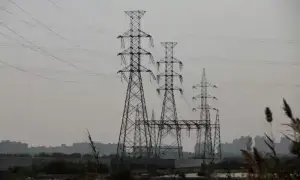
ON Tuesday, the World price of oil touched a new high of $71 a barrel, making it ever more difficult for official economic managers the world over to keep a grip on the economies of their respective countries. There are two sides to this story of oil prices. According to the latest estimates, exporters are producing 28.1 million barrels a day. There is a 56 days’ forward cover stock plus an over-supply of one million barrels in the market. Also, the 11 Opec countries have a spare production capacity of another million barrels a day. Saudi Arabia, the largest producer, has pledged to increase its supply by about 1.5 million barrels per day (bpd). The chairman of Opec has said that at the organization’s next meeting on September 19, he would propose a hike in production by 500,000 bpd and also an increase in the ceiling of total production by the same quantity.
Perhaps the acting Opec Secretary-general, Adnan Shihab-Eldin, had all these figures and estimates in mind when he said the other day that the fundamentals do not justify the current price levels. Then why this unprecedented price spiral in the oil market? Perhaps the on-going Iraq war, the Iranian crisis, storms like Katrina in oil-producing Gulf of Mexico and the static international refining capacity in the face of rising oil demand (especially from growing economies like China) have combined to create a psychological fear among the consumers and therefore the rising speculative demand. However, looking at the current capacity of the producers, the future demand is likely to be matched by an equivalent increase in supplies. But the current refining capacity is not likely to match the increase in the demand for oil products unless new capacities are added to it. But that would depend on the risk estimates of investors. Even if they were ready to take the risk, it would take some years before adequate expansions can be made in the current capacities. This is what is worrying the consumers more.
The president of Nigeria, an Opec member, said the other day that he expected oil prices to stabilize at about $50-55 in due course of time and he thought the floor price should be around $40 a barrel. This projection is enough to discourage prospective investors from investing in new refining capacities. This is a complex market riddle and only the experts in the field can resolve it. The earlier they do it the better it would be for the world economy. Meanwhile, let us look at the other side of the coin. The consumers will be left with no alternative but to hike the domestic price of oil, which in turn would raise the cost of doing business. This would certainly retard the overall world economic growth, causing the economies of developing countries like Pakistan to suffer the most. There is then no escape in the short run from passing a part of the burden to the consumers. Meanwhile, we must take steps to conserve energy, say, by reducing the workweek from six to five days and following it strictly. At the same time, we must keep a tight leash on prices of essential food items and be careful with imports of capital goods. In the medium term we must have a well thought out energy strategy, which should aim at increasing the ratio of hydropower, gas, coal and the nuclear power in the overall energy mix.
Good news for prisoners
IT IS heartening to know that as they move towards a detente, India and Pakistan are adopting a more humane approach to issues that were previously treated only in their politico-legal context. The most important of these is the case of hundreds of citizens who are taken prisoner by the other government for various reasons such as overstaying, straying into alien territory or fishing in the territorial waters of the other. Although their crimes are usually not of a very grave nature, these prisoners end up languishing in jail away from their home country for years. The home secretaries of India and Pakistan agreed on Tuesday to release hundreds of fishermen and other civilians held in each other’s prisons to strengthen amity and goodwill. Now that a start has been made - all the prisoners who have completed their terms and their nationality has been confirmed are to be released on September 12 — one hopes that the other cases that are more complicated will also receive the attention they deserve.
In the absence of a mechanism to deal with the issue of prisoners taken by the other side, it is not surprising that the matter is riddled with complexities. Thus, India claims that there are 1,348 Indian civilians, fishermen and soldiers in Pakistani jails while Pakistan acknowledges the presence of only 182 Indian prisoners. Pakistan claims that 700 of its nationals are in Indian jails. Obviously the two sides are aware of the need for a mechanism to notify the other government when a prisoner is taken, provide its diplomatic mission consular access and work out a system for identifying him, verifying his nationality and repatriating him after his sentence is completed. According to reports, some arrangement has been worked out. While this will humanize the suffering of future prisoners, one hopes that the case of those already in jail will not be pushed to the backburner. It would be good if this is taken up on a priority basis because one knows that given the weaknesses in the legal processes in both countries, many of the victims are paying a heavy price for a minor lapse or error of judgment.
Drop in opium cultivation
THERE is finally some good news from Afghanistan. Opium production in the war-ravaged country has dropped — although by a negligible 2.4 per cent (from 4,200 to 4,100 tons) — while the area under poppy cultivation has decreased from 131,000 hectares last year to 103,000 hectares. Considering the alarming level that the opium scourge had come to assume there in recent years following the ouster of the Taliban in 2001, even a small drop in production and trafficking should be welcomed. The Taliban had managed to restrict opium production to just a handful of provinces. However, following their overthrow, poppy cultivation spread to most of the country’s 32 provinces, and Afghanistan today is responsible for nearly 90 per cent of the world’s total opium production. Poor law enforcement has created a situation where drug barons operate with impunity in most areas outside Kabul, while poverty-stricken farmers are forced to cultivate the crop for a living.
The UN has acknowledged that it could take Afghanistan up to 20 years to eradicate opium production. This means that the international community must make coordinated efforts to boost security in Afghanistan, especially in those areas where the government has been unable to extend its authority and where warlords and drug barons hold sway. Efforts must also be made to implement large-scale poverty alleviation measures so that people do not have to depend critically on poppy growing for sustenance. This is not impossible as evident in the case of the Golden Triangle in South-east Asia where alternative development schemes have led to a big decrease in opium production. However, the challenge remains greater in Afghanistan, which is still in the early stages of recovery from decades of war and civil strife.
Contradictions in the devolution plan
ELECTIONS in transitional democracies are typically marred by systematic irregularities and fraud. As an election observer in the first two phases of the local government elections 2005, however, I saw at close range the blatant form rigging can take in authoritarian states where military rulers are desperate to consolidate their ill-gotten powers.
The scope, means and objectives of all the officially-sponsored rigging have been well documented in the national media and projected by various opposition parties. These are simply too enormous to be captured in one article. To put it mildly, these elections were the epitome of state-sanctioned electoral fraud that defines Musharraf’s military rule. It is not merely a question of the blatant violations of the election commission’s code of conduct or even that of widespread polling irregularities. It is not even just about the open use of state resources for partisan electioneering or police intimidation of opposition candidates. Nor is it just a matter of poll-related violence and the loss of precious lives or the government’s criminal denials accompanying it. These are all bad enough.
The real troubling part is the desperate intensity with which the military-led state apparatus has tried to undermine the mainstream, moderate opposition parties especially the PPP (and even what remains of the PML-N) in Punjab and Sindh. To cite just one example, I visited Hyderabad district in the second phase on August 25.
The night before polling, one district officer told me helplessly that the administration had received “loud and clear” instructions from the political and military high-ups in the province to extend “full cooperation” to the electoral campaigns of government-sponsored groups. The same night, I interviewed scores of PPP-backed candidates, their supporters and party activists who had either been receiving threats to change their loyalties or had been the victims of either police or of MQM harassment.
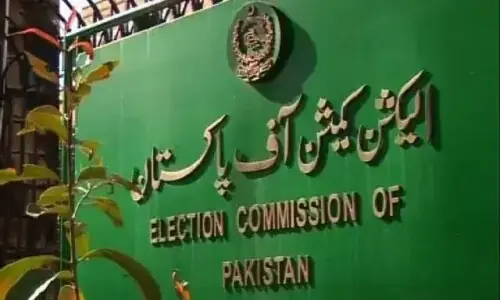
The MQM’s threat to opposition candidates was clear and simple: “betho or laito” (withdraw or die). In the 12 polling stations of Hyderabad city and tehsil Latifabad that I observed on the polling day, it was hard to figure out if the election was being conducted by the hooligans of a political party or the election commission. Most of the “sensitive” stations were virtually under MQM capture with opposition polling agents either forcefully evicted or denied entry under the very nose of the law “enforcing” agencies. The blatant rigging that I witnessed during polling and later in the counting of ballots was quite horrific in itself.
But to cut a long story short, the entire polling process served as a frightening testament to the fact that the government had franchized the election for the MQM. This was only the logical next step following the division of Hyderabad district along ethnic lines under which the city was outsourced to the MQM.
Similar outsourcing of districts to different factions of the PML took place in interior Sindh and Punjab. Even though opposition parties were able to score localized victories throughout Pakistan, their government-sponsored decimation has ensured an “excellent” outcome for the military-led government and his civilian allies. Even as I write these lines, the government is busy laying the groundwork for more arm twisting and manipulation for the third round of indirect elections for tehsil and district nazims.
As part of that plan, successful candidates of the PPP (and PML-N) around the country are being forced to switch loyalties. With the Supreme Court’s intervention declaring madressah degrees unacceptable as an educational qualification for holding local office, the fate of the MMA-backed candidates too seems to hang in the balance.
All this and General Musharraf still claims that he has introduced “sustainable” democracy in Pakistan. The contrasting reality is that five and a half years after the army deposed the democratically elected government of Prime Minister Nawaz Sharif, Pakistan remains under authoritarian rule under which the military continues to openly use its coercive powers to manipulate the electoral and constitutional processes for its political ends. The latest round of local government elections presents no less than clear example of this.
The main aim is to further strengthen the military’s hold on power by displacing opposition parties and planting its civilian allies at different levels to manage the next general elections. Indications are that if Gen Musharraf is able to secure a two-thirds majority in the next parliament, he is likely to distort the constitution further in the direction of a presidential system. Even if that option does not work out, some critics predict, using nazims as an electoral college is always available.
What does all this mean for the devolution of power to the grassroots level? While it was already deeply contested internally, the devolution scheme has lost even a modicum of legitimacy in light of all the officially sponsored rigging. Already distorted by recent legal changes, the local government scheme has regressed into a breeding ground for all the contradictions and conflicts inherent in a centralized system in a multi-ethnic polity: the fragmentation of political parties, the distortion of the state’s institutional structures, the fanning of regional tensions over the denial of provincial autonomy and the reinforcement of ethnic and clan-based rivalries. No less troubling, these deeply flawed local elections have further eroded public faith in the fairness of the electoral process and the institutions of the state.
The government’s message to voters is that no matter what their choice, it will determine the ultimate outcome.
The implications are clear: as long as the military retains the ability to circumvent the genuine democratic aspirations of the people of Pakistan, we are likely to witness many more of open and violent electoral frauds.
The only viable solution to the complex political problems of our fragile polity is a sustained democratic process in which the rules of the political game are set by consensual bargaining between the federating units. For that to happen the military’s expanding political and economic role must be contained. The generals must be confined to their role of external defence.
With the international community and most donor-financed civil society organizations squarely backing Musharraf’s “liberal” military rule, that task rests mainly with our political forces. They should go beyond holding regular “All-Parties Conferences” and issuing vacuous threats to the regime. As a first step, they should commit themselves to, and organize around, a common minimum platform of democratic restoration and control over the military.
Given their own divisions and the high costs of opposition in an authoritarian state, that is easier said than done. But there are simply no other options left. The military is busy consolidating its acquired political dominance for the next round. Now is the time to challenge that dominance and prevent the perpetuation of military rule by democratic means.
The writer was an election observer for the International Crisis Group. The views expressed in this article are his own.
Spirit of Gdansk
THE trademark walrus moustache is greyer and less bushy, and the figure more portly. But there has been no mistaking the features of Lech Walesa, star turn at this week’s events marking the 25th birthday of Solidarity, the free trade union that put Poland on the path to democracy and set in train the events that led to the total collapse of communism a few years later.
Outside Marxist eschatology, history is always unfinished business, and there is plenty to grumble about in today’s free-market Poland, including inequality, sleaze and high unemployment, though farmers are doing well out of EU subsidies. And Mr Walesa, now the former president, has been waspishly staving off criticism from former colleagues and reformed communists who suddenly sound radical.
But August 1980 is rightly remembered as the month when a determined electrician in Gdansk’s Lenin shipyard changed the world by founding eastern Europe’s first independent workers’ movement. Solidarity challenged the Polish state in the name of the workers until it was outlawed under martial law - the alternative to armed Soviet intervention - before going on to win free elections in 1989.
Ironies abound: Solidarity, with 10 million members at the height of its popularity, became a victim of its own success, ending up marginalised as Mr Walesa took the rap for unpopular economic reforms. He was also accused by conspiracy theorists of being a communist pawn acting under orders to prevent a “real” anti-communist revolution. Yet that revolution is real enough: Poland’s private sector, which now accounts for 70% of national output and jobs, is hostile to trade unions and membership is well below the EU average; the Gdansk shipyard workforce has shrunk.
Russian representatives, though, are conspicuously absent, alarming evidence of strains between Moscow and Warsaw.
—The Guardian, London
| © DAWN Group of Newspapers, 2005 |