0
0

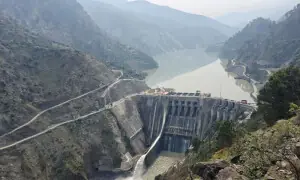
ISLAMABAD, Nov 17: Pakistan will use all diplomatic and legal channels to stop India from completing the controversial Baglihar hydro-electric project which violates Pakistan's rights over the Chenab river waters given under the 1960 Indus Waters Treaty, Dawn learnt on Wednesday.
The 450mw project is expected to be completed by April 2005. President Gen Pervez Musharraf will take a formal decision on the issue at a meeting to be held here on Thursday, official sources said.
Ministers and senior officials of the ministries of water and power, foreign affairs, law and justice and interior and representatives of Pakistan's Commissioner on Permanent Indus Commission (PIC), Wapda, Nespak, Irsa and security agencies concerned will attend the meeting.
An inter-ministerial meeting on Oct 21 had requested President Musharraf to use all channels to stop India from building the dam as Pakistan could no more expect a bilateral solution to the issue.
Experts of the PIC are of the opinion that Pakistan's case is strong and it should immediately move the International Court of Arbitration or seek appointment of a neutral expert to protect its interests.
They proposed that every possible option should be employed to stop India from violating the decades-old treaty, the sources said. The Foreign Office has informed the government that chances of a bilateral solution to the dispute are slim because India is continuing the construction work despite giving assurances about satisfying Islamabad's concerns in what appears to be a move to gain time to complete the project.
However, the sources said, the attorney-general of Pakistan had pointed out some negative aspects of the legal battle, one being the time-consuming process, and had called for the launching of a diplomatic offensive simultaneously.
Repeated calls by Pakistan to suspend work on the project till the resolution of pending issues have so far been ignored by India. In November, Pakistan formally put India on notice and asked the World Bank to appoint a neutral expert to resolve the dispute.
India, however, managed to persuade Islamabad, in the wake of the composite dialogue process, not to pursue the option of neutral expert and promised to address its concerns on bilateral level. New Delhi, however, did not honour the commitment and continued construction work.
During the June 24 meeting between the water secretaries of the two countries, both sides had agreed on a timeframe to resolve the issue by November. In line with the understanding reached between the two secretaries, the Indian government was supposed to provide necessary data to Pakistan by the end of July. However, despite reminders, India had not provided the data, the sources said.
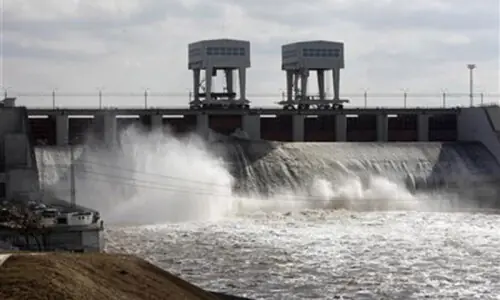
At the heart of the dispute is the design of the project which, according to Pakistan, provides for submerged gate spillways which give India control over Pakistani waters in breach of the water treaty. Pakistan will lose 7,000-8,000 cusecs of water a day if the Baglihar project is allowed to be completed.
The bilateral water-sharing treaty gives both countries the third-party option in case of a deadlock over any issue. Article IX of the treaty provides for settling disputes through neutral experts or arbitration if the disputes cannot be resolved by the two sides.
The Baglihar hydro-electric plant project was launched in June 1999. Work on the project is said to be in the advanced stage of completion.