


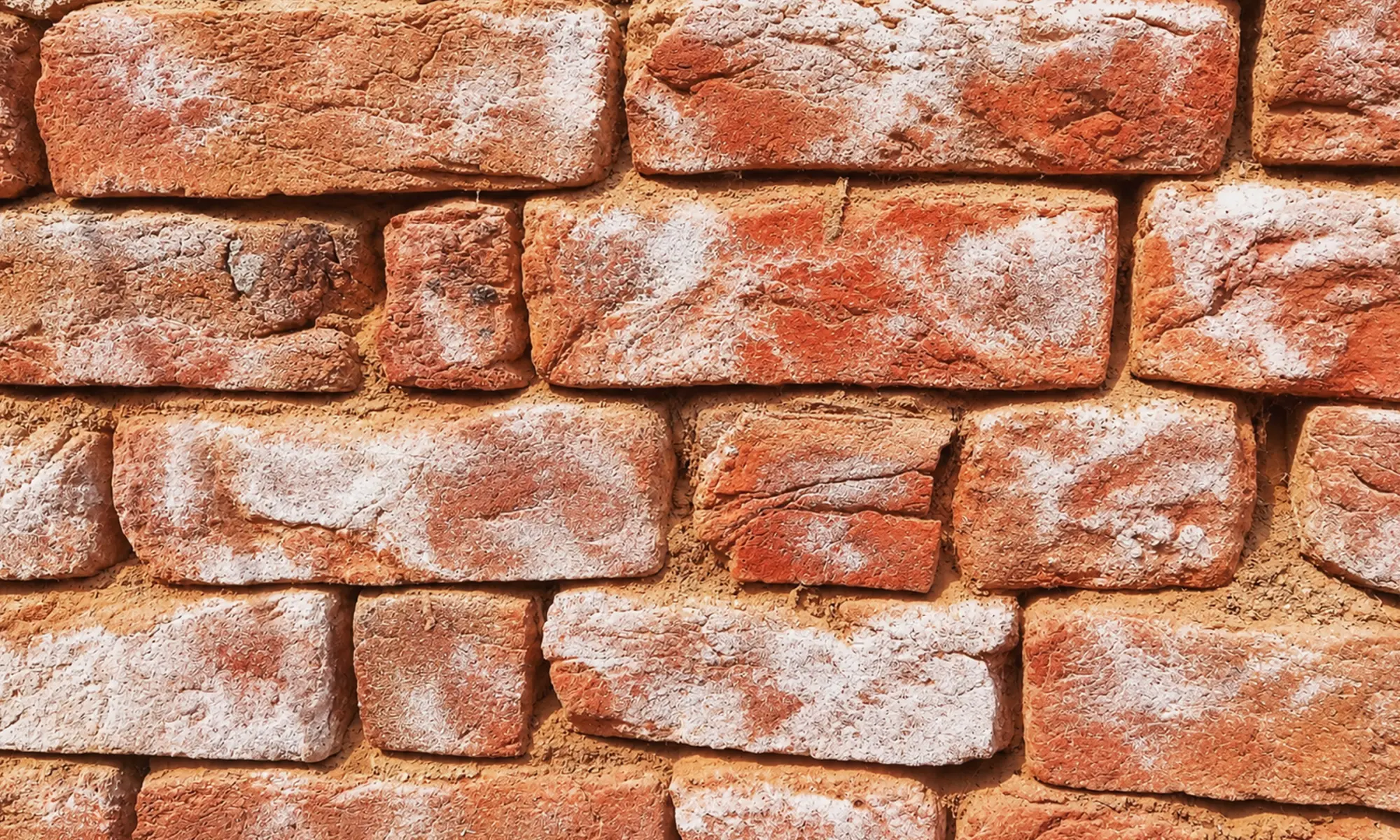
A very sweet piece on khara pani from someone in Mandi Bahauddin
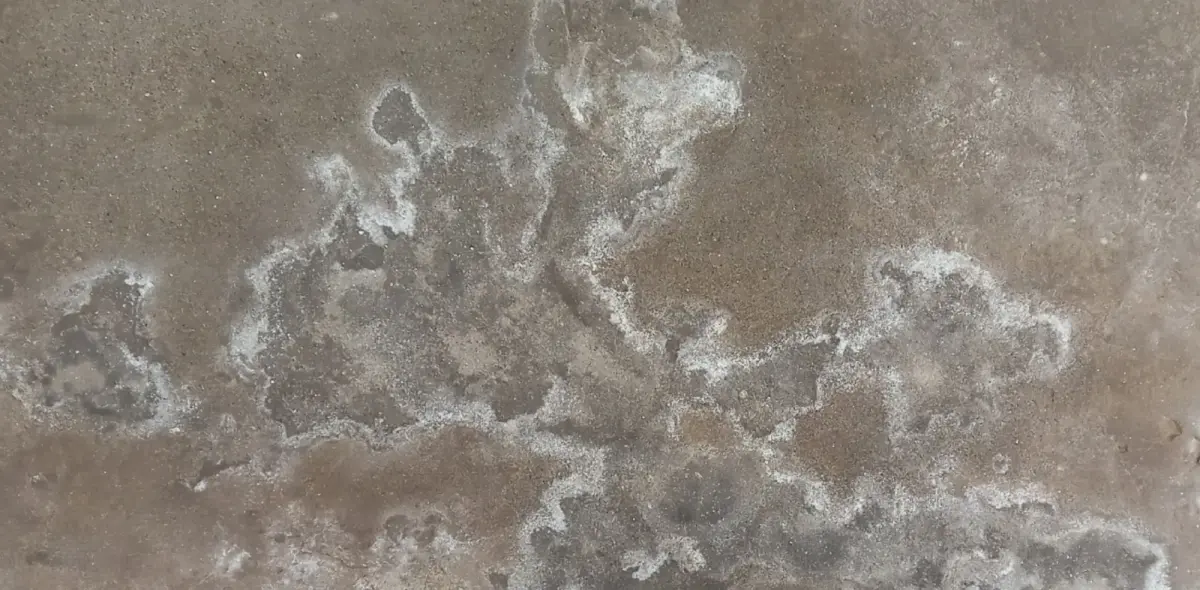
Our tap water is salty and heavy and has a dull metallic smell. It leaves a white ring on steel that comes back the next morning, no matter how hard you scrub. Nobody can drink it. It tastes that bad.
In my town we have a name for it: khara pani. No one asks why.
On a map, Mandi Bahauddin wants for nothing. It sits in the Chaj Doab, the land between the Jhelum on one side and the Chenab on the other. Canals cut through the fields, green with wheat and sugarcane. But the rivers that gave the province Punjab its name are not the water that comes out of our taps. That water has to be pulled from deeper and deeper, and what comes up is increasingly undrinkable.
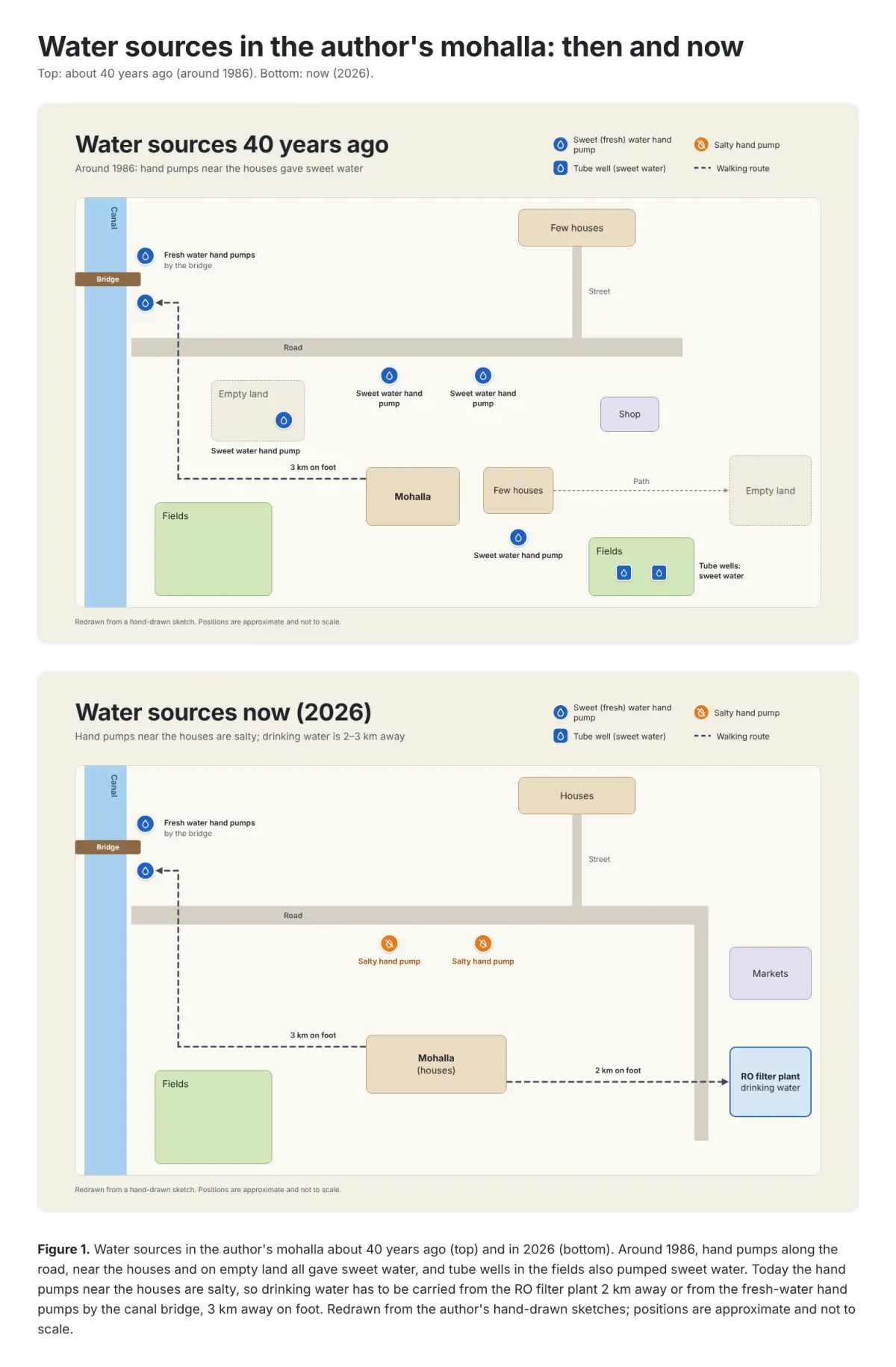
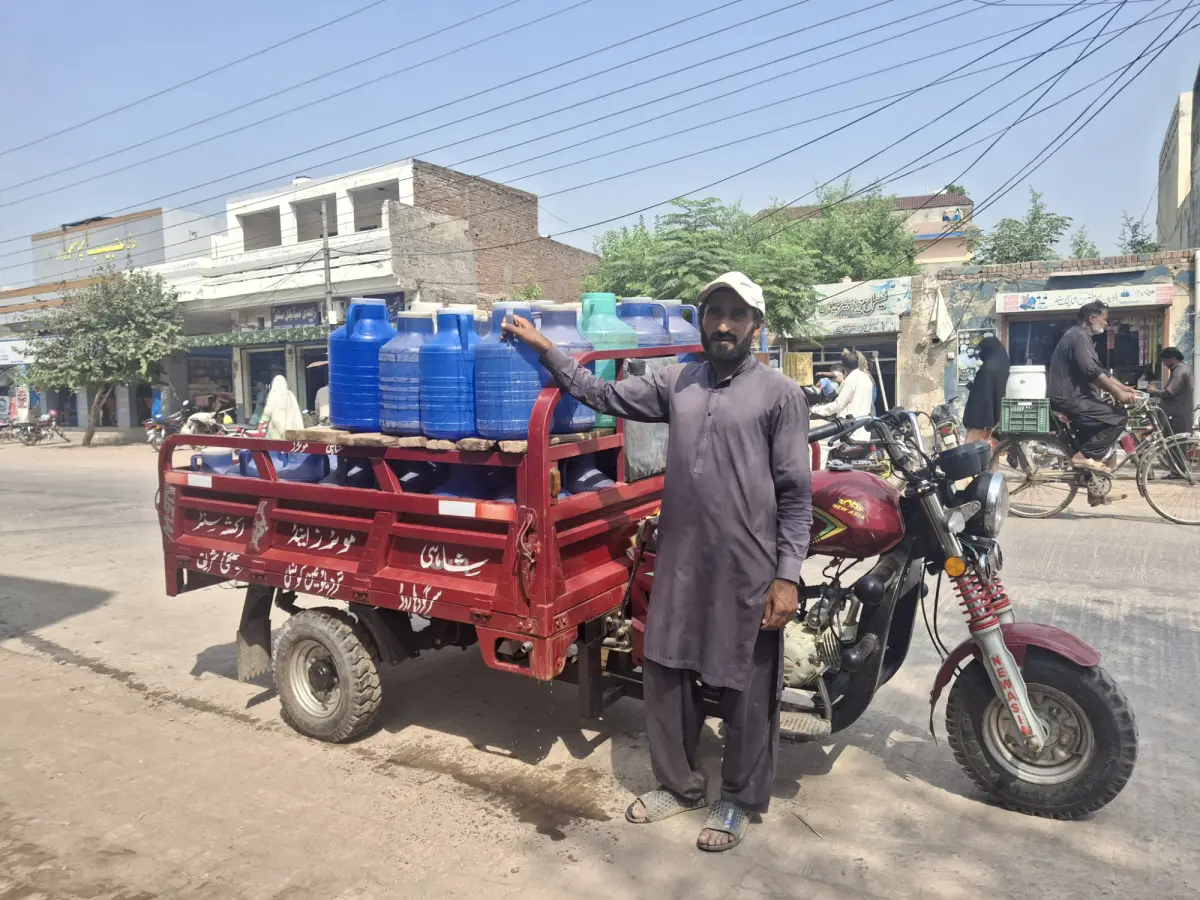
In the corner, next to the kitchen door, sit two blue plastic cans. In winter, one is enough. In summer, we need two a day. Seventy rupees for thirty litres. My mother no longer comments on the expense. That is nearly 4,200 rupees a month, just for drinking water—and that is before tea, before cooking, before washing. The tap water is free and undrinkable. The clean water is not free at all. My mother remembers a different time. “Pehle handpumps hote the, har koi wahan se pani peeta tha**.** There were handpumps once, she says, and everyone drank from them. The water was sweet and fresh. Now the handpumps are fewer, and further away.
In our town, the arrangement is simple. A rickshaw comes through the lanes every morning, collecting empty cans and leaving full ones. Some households wait for him at the door. Those with a bike or a car go to the RO plant themselves. But everyone buys. No one drinks what comes out of their own ground anymore. I asked the operator at the local RO shop how many customers he has. Around 150 a day, he said. Thirty litres a can. That is 4,500 litres of water, sold every day, in one small town.
Sometimes the cans run dry in the middle of the day. If a guest arrives then, the house grows uncomfortable. You cannot offer them tap water. You know they will not be able to drink it. In a place where offering water to a guest was once the simplest thing in the world, we now pause. We calculate. We hand it over anyway. And they drink it, and they say it: “Kitna namkeen hai pani.”
What I find strange is that no one questions it.
Everyone says, “*Pani khara hai.*****” No one says, “Hum paise de kar pani khareed rahe hain.” We are paying for water, and we have accepted that we must buy it to live, in a place between two rivers. We go to the shop and hand over our rupees as though it has always been this way. I don’t know what to call it. Not injustice, exactly. Something else. I have stood on the banks of both rivers. They are wide and full. But I cannot drink from them, and I cannot drink from the ground between them.
This is not only our town’s problem. Across parts of Punjab, people say the groundwater has been turning brackish, a consequence of over-pumping, canal seepage and the salts that have always lain beneath the soil.
I asked a farmer, about 58 years old, who has worked these fields all his life. He says the water began to change about forty years ago. For the last seven or eight years, it has been too salty to drink by choice. When he was a boy, people dug 100 or 120 feet and found sweet water. Now, he says, at three or four hundred feet the water is salty, but not so salty that people cannot drink it if they have no choice. The sweet, drinkable water lies at five hundred or six hundred feet. But digging that deep costs so much that an ordinary family cannot afford it. So we pay someone else to fetch it for us, a man with a rickshaw and a load of cans. He believes the land itself is part of the reason. Our area sits low, like a bowl. Dirty water from higher ground used to drain here and stand until it dried, leaving open drains behind. Then people settled, the area became a town, and houses were built on that ground. The water that comes up now, he says, carries that dirt and that smell.
I cannot say whether he is right. No one in my family could tell me either. I only know that Punjab means the land of five rivers. And I live between two of them, with two blue cans in my kitchen.
The author is from Mandi Bahauddin, Punjab. She writes on a range of subjects, from the environment to everyday life in Pakistan.



