


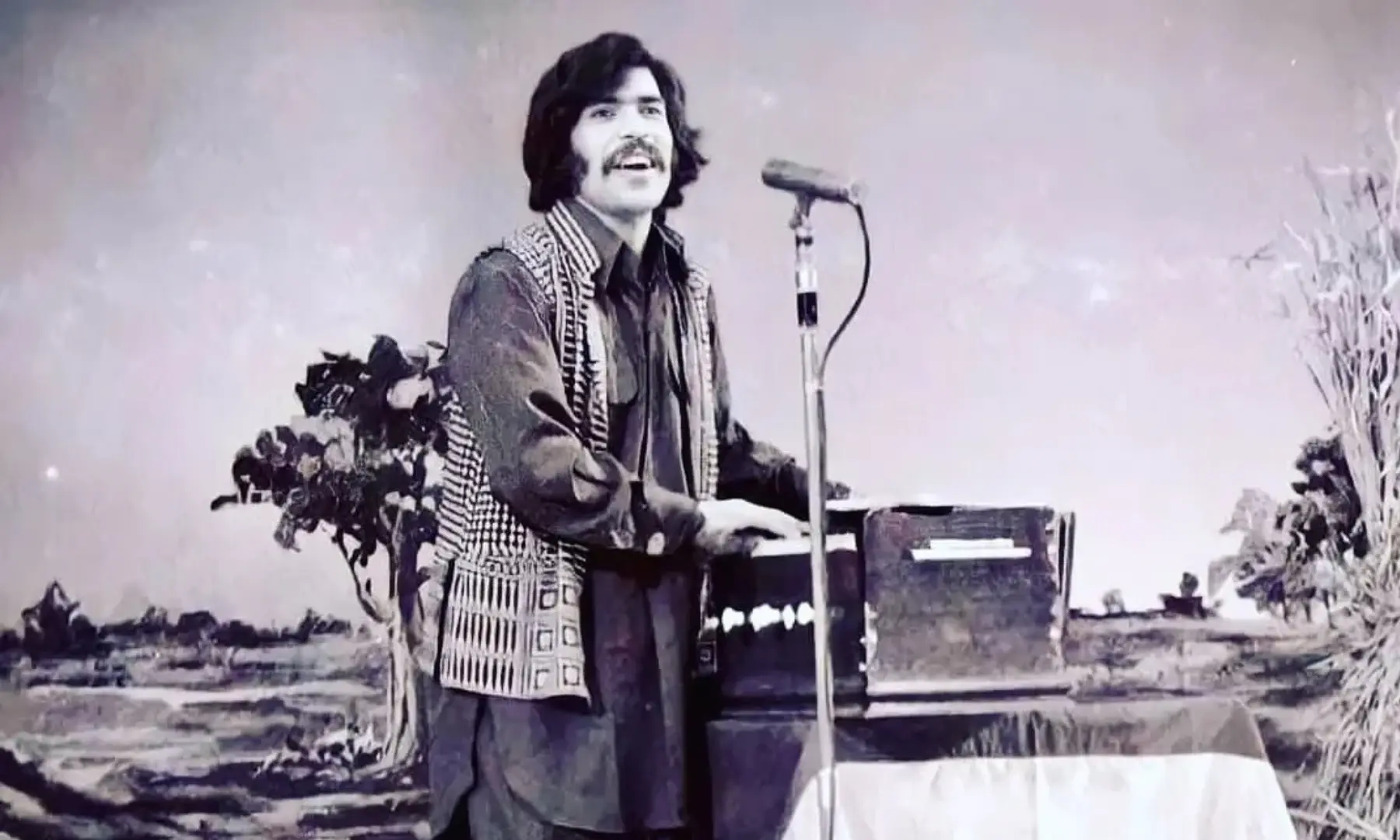
Paperwork for the Heer singer with Punjab's new drama bill
Take a mela in any village in Jhang once the wheat is in: Mela Baisakhi, celebrated across Punjab since time immemorial. There’s kabaddi, a bit of neza bazi, bull racing, sometimes the Lucky Irani Circus, and swings for the kids. A dhol wallah, the dholi, keeps the beat for the kabaddi, as he does at every mela and urs. In the evening someone sings Heer, and a pair of bhands go after the thanedar, the patwari and, if they’re any good, the MPA and the road he promised two elections ago, or the government itself.
Under the proposed Punjab Dramatic and Theatrical Performances Bill, 2026, the bull can race and the kabaddi player can raid. Nobody needs permission for that. The dholi is another story. He’s giving a “musical show” in the “open air” for “entertainment,” so he has to register with the Punjab Council of the Arts and pay Rs10,000 a year, and the registration is only good for one area.
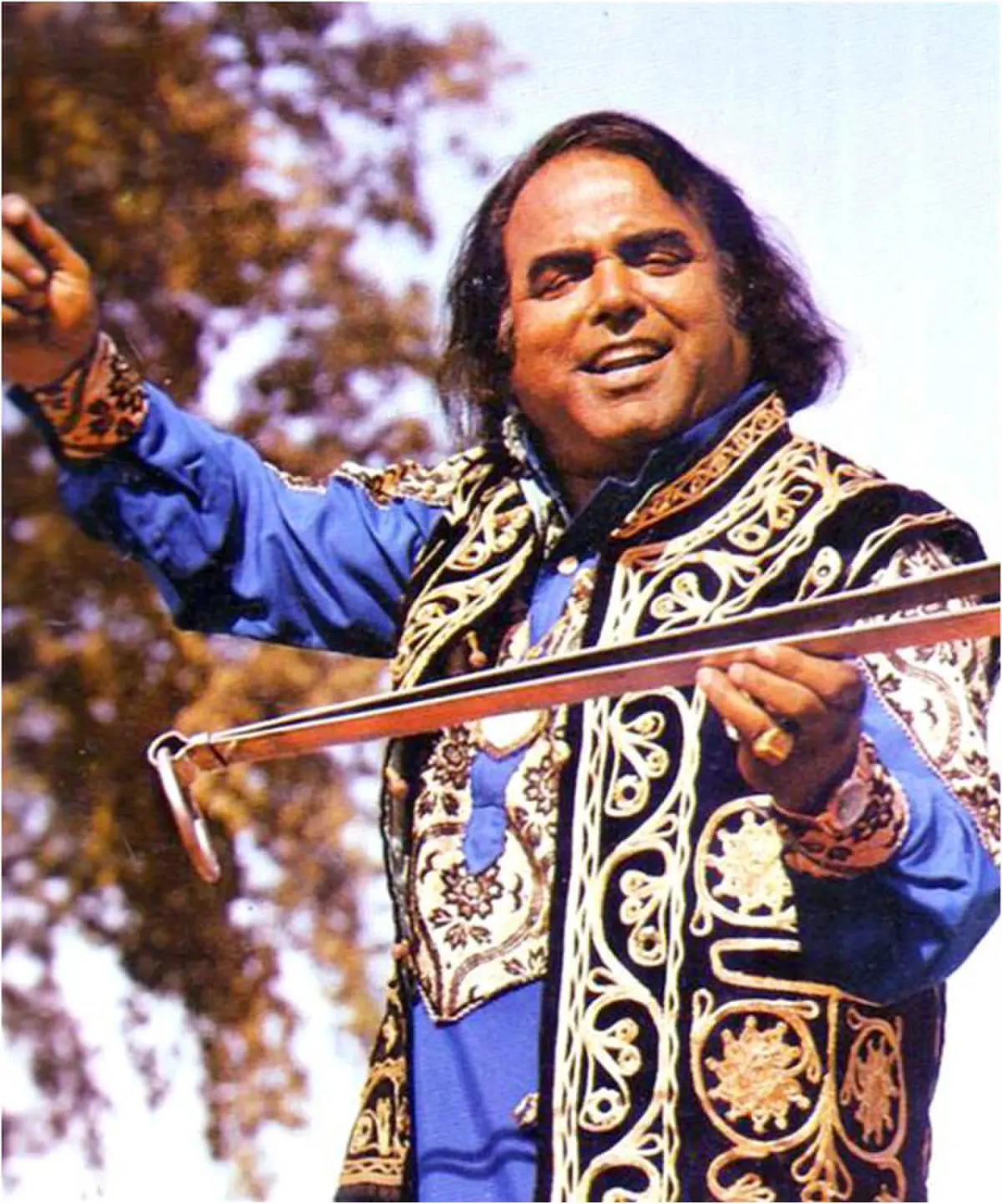
The mela ground needs a licence from the Information and Culture Secretary in Lahore. The only licence the bill offers runs for a year, so the numberdar pays Rs25,000 for a three-day fair. Until he has it, nothing can be performed on that ground: no qawwali, no naqal, no drama. The tent theatres that follow the melas from one district to the next would need a licence for every ground they pitch on, and performers registered for every area they play in.
The bhands have to send in their jokes, or a “comprehensive description” of them, fifteen days ahead, with a Rs35,000 fee. The Heer singer has to send in Waris Shah. The poem was finished in 1766, but it still needs the Arts Council’s approval a fortnight before he sings it, and if he slips in a verse of his own, as mela singers do, that’s an offence.
The Heer singer has to send in Waris Shah. The poem was finished in 1766, but it still needs the Arts Council’s approval a fortnight before
A committee of grade 16 officers comes out to watch them rehearse the day before. The whole thing has to be streamed live to the Arts Council and recorded, and the recording kept for a month. If a bhand says something that wasn’t approved or takes a jibe at the government or some official, that’s an offence. And if the other dhara in the village has a grudge, anyone in the crowd can file a complaint.
I looked for the exemption that would make all this silly. There isn’t one.
The bill came out of the Information and Culture Department, went through the cabinet and was tabled on October 28, 2026. The government’s argument is a familiar one: the Punjabi commercial stage has grown vulgar, families don’t come anymore, something has to be done. The information minister has spent two years announcing bans on dancers, blacklists of songs and a “revival of family theatre” built on “registration of artists”. This bill turns all of that into law.
The standing committee’s meeting on the bill is on YouTube, and members raised much of what follows. They asked about melas, and whether registration valid for one area would tie artists to a few approved venues. They called the Rs10,000 annual fee too much for artists who don’t get steady work, children and old people among them, and suggested a one-time fee. The chairperson and others wanted local MPAs on the monitoring and censoring committees, and Kanwal Nauman, the only artist on the committee and in the Assembly, wanted artists on them. More than once, the answer from the department was that the point had been noted. The committee cleared the bill with some minor amendments; we will see what was noted when it reaches the floor.
Some of the complaint about the stage is fair. Many shows in Lahore were hard to watch, and not because they were brave. But the preamble says plainly what the bill is for: “adequate supervision and control.” There’s nothing in there about theatre being worth having, or about the people who make it.
How far does it reach? Very far
In the bill, a “dramatic or theatrical performance” is any act of performing art in a public place, a public building or the open air “for the purpose of entertainment”. That covers plays, and also any “cultural show”, “musical show”, “artistic show” or “musical concert”. A public place is any building, land or enclosure the public is let into, ticket or no ticket.
So the bill catches a qawwali night on a food-street rooftop, a college play, an open mic in a café, the blind man in Anarkali who sings old Noor Jehan songs for coins, and the magician at a birthday in Jilani Park or Liberty Market. Every one of them needs a licensed venue, registered performers, a cleared script, a censored rehearsal and a live feed to the Arts Council. The face-painter at that birthday has to register too, because the bill names “makeup artiste”.
Take the blind singer on his own. He has to register with the Arts Council, pay Rs10,000 a year and sing only in the area his certificate names. His patch of pavement counts as a “public place” and needs a licence from the Secretary in Lahore. His songs have to be cleared a fortnight ahead, and if a passer-by asks for one that isn’t on the list and he obliges, he has broken the law.
Then there is what cannot be performed. Anything “scandalous or defamatory” is out. So is anything “likely to excite feelings of disaffection to the Government”, my personal favourite, or likely to “deprave and corrupt”, anything “obscene or vulgar”, and anything that incites hatred or hurts religious feelings. Last comes “any other performance as may be prescribed”, meaning whatever the government adds later through rules. That clause lets the government add to the list of banned performances by notification, without coming back to the Assembly, and staging something it covers carries the same six months as anything else in the Act. The blacklist of songs the department already keeps would slot straight in.
Break the rules and the Culture Department can fine you up to Rs500,000, cancel your licence or ban you as an artist. The deputy commissioner can seal the hall or the park, in some cases before you’ve been heard. A magistrate can give you six months in jail and a fine of up to Rs1 million. Appeals go to the secretary and then to the chief secretary, whose decision is final. As the bill stands, there is no artist and nobody elected on any of the committees it creates.
The ghost of the Dramatic Performances Act of 1876
The law being repealed is the Dramatic Performances Act of 1876, and the new bill keeps its skeleton. In early 1876, while the Prince of Wales was touring India, a Calcutta lawyer called Jagadananda Mukherjee welcomed him into his home, women’s quarters included, and the city’s stage pounced. A farce called Gajadananda and the Young Prince went after Mukherjee. Another, The Police of Pig and Sheep, went after the police commissioner, Hogg, and his superintendent, Lamb. At the end of February the viceroy, Lord Northbrook, issued an ordinance, and a few days later the police raided the Great National Theatre and arrested its people on obscenity charges, over a different play. By December the ordinance was an Act.
So satire by the “subjects” stung our colonial masters, and they reached for decency. Obscenity was the polite excuse. What actually bothered them was that officials, and the natives who flattered them, didn’t like being laughed at. Plenty of respectable Bengalis cheered. “All honour to Lord Northbrook for the prompt action taken by him,” wrote the Indian Mirror.
The Victorian part survives in our bill almost word for word. “Deprave and corrupt” comes from R v Hicklin, an English case of 1868, where the test was whether something might corrupt “those whose minds are open to such immoral influences”: women, the young and the poor and, out here, the natives. India’s Supreme Court threw out the Hicklin test in 2014. We’re about to put it back on the law books.
The political part survives too. “Disaffection to the Government” is sedition with the label peeled off. In 2023, Justice Shahid Karim of the Lahore High Court, one of the two judges on the special court that sentenced Pervez Musharraf to death for high treason in 2019, struck down section 124-A of the Penal Code, calling it “a relic of autocracies and colonial subjugation”. “We cannot define freedom of speech as freedom to say what is welcome to authority,” he wrote. Disaffection, he pointed out, only means the absence of affection or goodwill. Three years later the same province wants to use it as a reason to stop a play.
What ought to worry us as citizens is that the colonial Act, written to keep native subjects in line, was the more restrained law. It covered only “play, pantomime or other drama”, and only where people paid to get in. Licences and scripts were required only in areas the government had notified, with three days’ notice, and performances at religious festivals were left alone.
Our bill covers music and free shows, wants fifteen days’ notice instead of three, and drops the religious-festival exemption, which is why a qawwali stage at an urs, never touched by the old law, now sits in a grey zone. It adds registration for every performer, a censor at the rehearsal and a camera in every hall. Lord Northbrook would have recognised it. I suspect even he’d have thought it was a bit much.
What the Constitution allows (if it matters much these days)
Article 19, which is already broad and vague, lets the state restrict speech for a specified list of reasons: the glory of Islam, security and defence, friendly relations with foreign states, public order, decency or morality, contempt of court, and incitement to an offence. “Scandalous” isn’t on that list, and neither is “disaffection”. “Any other performance as may be prescribed” isn’t a reason of any kind. Defamation used to be, until a constitutional amendment took it out in 1975.
Decency and morality are on the list, and that is where the government will dig in. But the Supreme Court has already said how those words are to be read, in a case about a television drama. In 2020 PEMRA banned ARY’s serial Jalan after complaints on the prime minister’s citizen portal. In 2023 Justice Mansoor Ali Shah held that plays are protected expression even when they “offend, shock or disturb”, that decency is “a standard of tolerance, not taste”, and that a work must be judged as a whole, “not on the basis of pick and choose”. If one part is obscene, you cut that part and let the rest be shown.
Compare the bill with the Supreme Court’s ruling and it doesn’t hold up. “Vulgar” is a matter of taste, and the bill defines neither it nor “scandalous”. When the theatres were sealed in 2023, an official from the information department told Geo News, “Vulgarity has not been defined [in the law] but it has been sufficiently implied in the Act.” He meant it as a defence. The audience complaint clause is the Jalan episode turned into a statute.
Whose vulgarity? The joke’s on the women and the poor
These powers have never been used evenly in Punjab. When the caretaker government sealed the theatres in 2023, it was women performers who were banned, while the men who wrote, produced and owned the shows went back to work. “Women are an easy target,” Nayab Khan, one of those banned, said at the time. This bill gives that habit a register and a camera.
The camera worries me most. Every show is recorded and handed to a monitoring team on request, and nothing in the bill says who may watch, copy or leak it. Last year police in Kasur raided a private party and filmed the people they picked up, women among them, and the videos ended up online.
Class comes into it as well. A lot of the noise about vulgarity is about whose jokes these are; as a PIDE essay put it, “For a State of the pure, Pakistan is obsessed with the obscene.” Rs35,000 to vet a script and Rs10,000 a head every year is nothing to a big commercial house. For a student group or a qawwal party from DG Khan it can decide whether the show happens at all.
Then there’s improvisation. Punjabi stage comedy runs on jugat, the unscripted line thrown back at the crowd, and qawwali runs on the girah, a couplet from another poem slipped in when the room calls for it. Under the bill, departing from the approved script is an offence, and the script committees are to send theatres suggested “subjects” every quarter. The state approves the jokes, then tells you what to write next. It cannot get more paternalist than this.
Orwell wrote in 1945, in an essay called, of all things, “Funny, but not Vulgar”, that a thing is funny when it upsets the established order. “Every joke is a tiny revolution.” In Punjab that work has belonged for centuries to the bhand (itinerant folk satirists) and the mirassi (hereditary folk performers and genealogists). They kept the family histories and sang at the weddings, and they were allowed, more or less, to say to the chaudhry’s face what nobody else in the village could. That licence is what this bill would take away.
The government’s favourite court ruling gives the game away. In 2008, when the Lahore High Court banned dancing on stage altogether, the judge admitted that earlier orders had failed partly because of “malpractice prevailing in the Government departments and underhand deals with the drama producers and monitoring teams”. The bill’s answer is more monitoring teams and more committees, each another office where somebody can be paid off.
Merit! Whose merit?
There’s one word you hear over and over in the rooms where these decisions are made, and that word is merit. The idea behind it, which I have heard stated outright more than once, is that civil servants know what merit is and look after it, while voters, and the people they send to the assemblies, are its enemies, always after a favour, a transfer or a job for a cousin. So the permanent state decides what merit means, and elected representatives get no say. Merit, defined this way, keeps working out as more power for the bureaucracy, and nobody outside the service gets to check the marking. The theatre bill runs on the same idea: it trusts officers of grade 16 and above to tell a decent play from an indecent one, and doesn’t ask a single playwright.
From Lucknow to Dhaka, the law is dead
In June 1953 the Indian People’s Theatre Association in Lucknow put on Idgah, Premchand’s story of a small boy who buys his grandmother a pair of tongs at the Eid fair. It was stopped mid-performance under the 1876 Act and the organisers prosecuted, among them Razia Sajjad Zaheer, wife of Sajjad Zaheer, Faiz’s comrade in the Rawalpindi Conspiracy case. In 1956 the Allahabad High Court threw the case out, holding that the Act left far too much to an officer’s whim and that the disaffection clause had died with British India. Since then Bangladesh has repealed the Act, the Madras High Court has struck down Tamil Nadu’s version, and India’s Parliament has repealed the original. Punjab, as far as I can tell, is the only place in the region making this law stronger.
What a better law would look like
Commercial theatres are businesses and can be regulated as such, for safety, wages and harassment, with a clear obscenity standard applied after a show, by a magistrate. The bill’s minimum-wage clause is worth keeping, as is its dropping of the colonial power to send police in “by force”.
The rest needs serious work. The law should cover only ticketed commercial theatre, the problem the government says it has, and say plainly that melas, urs, festivals, folk and devotional music, and schools are outside it. “Scandalous”, “disaffection” and “vulgar” should go, with the power to add bans by rules. Officials could get a week to object to a script, with reasons, and then the show goes ahead. Registration should be voluntary and tied to welfare and pensions or, at the very least, as committee members suggested, a one-time fee with concessions for children and the old. The live feed should go. Artists and elected members should sit on the boards, appeals should go to a court, and nobody should face jail over a play.
I keep coming back to the dholi. He has never heard of this bill. Nobody from the Arts Council has ever been to his village, and if this passes, the first visit will be to watch him rehearse. The British left him alone because they didn’t think he mattered. Our own officials have finally noticed him, and the first thing they want is his paperwork.
Header image source: https://hamnawa.net/p/shaukat-ali
Usama Khawar Ghumman is a lawyer practicing in Lahore, having an LL.B (Hons.) from Lums and an LL.M from Columbia University.

