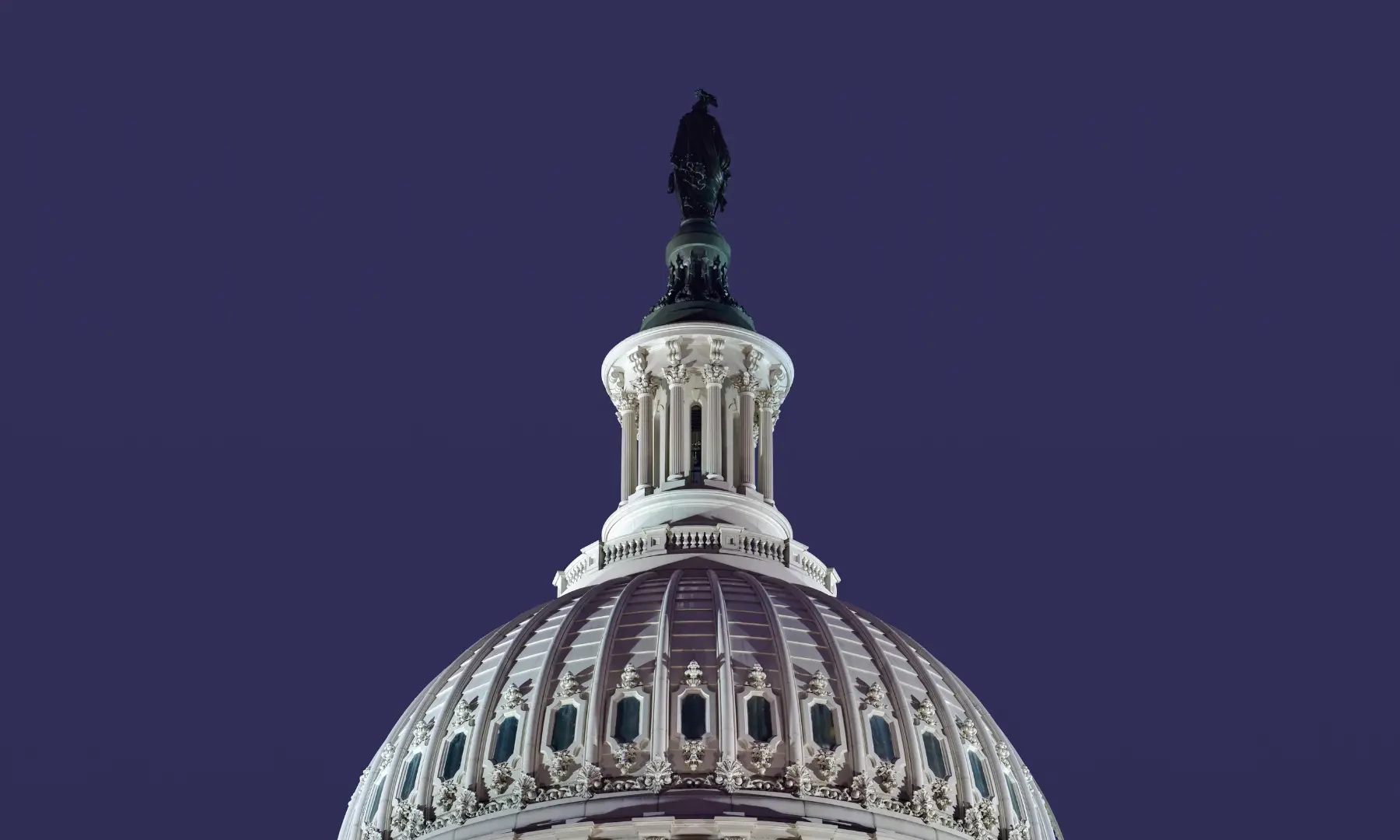
The America midterm elections as explained by a Pakistani journalist
My first encounter with democracy outside Pakistan took place on a freezing American night whose headlines rocked the world. Thirty-four-year-old Muslim democrat socialist, Zohran Mamdani, had beaten well-funded establishment figure Andrew Cuomo and was delivering his victory speech at the Brooklyn Paramount theatre as the youngest mayor of New York. For someone like me, who had just covered a general election in Pakistan, this was brain-altering.
I had come to the US to pursue a Master’s in data journalism and continue reporting. I had just published a comprehensive account of the widely alleged rigging in Pakistan’s general election 2024. And so I was even more keenly watching the lead-up to the New York mayoral race, how it unfolded, was reported and analysed. Thus far, the president had called the candidate “a Communist Lunatic,” questioned his American citizenship, and called Jews who voted for him “Jew haters.”
Donald Trump, a Queens native, and technically the most powerful person in the country, had been consumed by a bubbling hatred for Mamdani. Despite all that, Mamdani won, and in his first meeting as mayor of Trump’s city, at the Oval Office, Mamdani charmed Trump so thoroughly that when a reporter asked Mamdani whether he still considered the president a fascist, Trump told the young mayor he could just say yes. Speaking to the press on Nov 21, Trump congratulated the mayor-elect and expressed his desire to help the city beat the rising affordability crisis, Mamdani’s biggest campaign promise.
Even the most powerful person in the country was ultimately powerless before the people’s mandate.
Now I have the opportunity to report on another general election, the one the Americans call the midterms.
What are the midterms?
America’s central or federal arm of government that makes laws is called Congress, and like Pakistan’s Parliament, it has two chambers: the House of Representatives and the Senate.
The House is roughly the equivalent of our National Assembly. Its 435 members are elected from districts drawn by population, and each member serves a two-year term, so every seat is contested every two years.
The Senate has 100 members, two from each state regardless of size, serving staggered six-year terms, so about a third of these seats are up at each election. Unlike our Senate, which is chosen by the provincial assemblies, American senators are elected directly by voters.
Presidential elections are held every four years in the US. The congressional elections that fall halfway through a president’s term are called the midterms.
The midterms decide whether the Democrats (blue) or the Republicans (red) will control Congress for the remainder of President Donald Trump’s term. This will impact how Trump is able to implement decisions until the next presidential election in 2028.
Midterms are widely read as a referendum on the sitting president, and it appears Trump is not doing very well.
His approval fell to its lowest point of his second term after the US and Israel launched coordinated strikes on Iran on February 28, leading to rising fuel prices and cost of living.
By fall, America’s war with Iran became the most unpopular policy decision made by this Republican administration, with 65 per cent of Americans disapproving of Trump’s handling of the Iran conflict, according to the Pew Research Center.
A blue or Democrat-heavy Congress could open investigations into allegations of corruption against the president, push for the release of the remaining Epstein files, block funding for Trump’s illegal war in Iran, and determine the status of the American people’s access to healthcare among several significant policy decisions.
Who is on the ballot?
All 435 seats in the House are up for grabs, while 35 of 100 seats in the Senate are being contested. As of Tuesday, the Republicans hold 53 of the Senate’s 100 seats, so the Democrats need a net gain of four to reach a majority. A 50-50 split would leave the Republican vice president, JD Vance, with the tie-breaking votes.
In the House, Republicans hold a narrow 218-214 majority, and 218 seats are needed to control the chamber.
Apart from the Congressional election, the gubernatorial race will also play out in 36 states, including California, Florida, Georgia, and Michigan.
In Pakistan, party leadership hands out tickets to candidates they want to field in the constituencies. In America, voters choose each party’s nominee in an earlier election called a primary.
What do the forecasts say?
In functional democracies, statisticians, data journalists, and pollsters put their heads together, survey the population and create a bloated economy of its own.
North America accounts for a whopping 42 per cent of the global polling market, according to a January 2026 report by Research and Markets.
Nate Silver, America’s most popular election bookie and founder of the now defunct FiveThirtyEight, gives Democrats a 95 per cent chance of retaking the House and a 77.7 per cent chance of winning back the Senate. National polls two days out had Democrats at 51.5 per cent and Republicans at 43.1.
A lot of states allow voters to vote before election day or mail their signed ballots, this generally helps elderly voters participate and increase the overall turnout for elections. With more than 53 million Americans voting early by Sunday morning, it appears the forecasters are predicting a blue tsunami.
What makes this year unusual is where the fight is happening. The states Trump won by double digits in 2024 are now being slated for a Democratic flip. Drop Site News reports that rural voters, by staying home or switching sides, could cost Republican Kansas, Nebraska, Iowa, Texas, Alaska, and even Florida and Mississippi.
Money in politics
Unlike in Pakistan, where campaign financing is largely opaque, granular data exists in the US to show campaign contributions.
Candidates raise funds directly, although under limits. Super PACs (Political Action Committees), created after a 2010 Supreme Court ruling, can raise and spend unlimited amounts as long as they don’t coordinate with campaigns, and they must report their spending to the Federal Election Commission.
The most important group making political contributions is the American Israel Public Affairs Committee (AIPAC), whose super PAC is called United Democracy Project (UDP).
In 2025-2026, UDP alone made political contributions worth over $108 million, according to their Federal Election Commission filings, and almost all of it was spent on Democratic primaries. This shows both that AIPAC is able to influence the Democrats just as much as Republicans and that they are also expecting a blue wave.
Key Senate races
Michigan has become the most expensive test of pro-Israel political money in the country. In the Democratic primary, UDP spent more than $20 million against Abdul El-Sayed, a physician, former head of Detroit’s health department, and vocal critic of Israel’s war on Gaza, and more than $10 million supporting his rival, Representative Haley Stevens. El-Sayed won by about 14,000 votes.
Stevens, who lost the primary to El-Sayed, spent three months refusing to endorse him. She eventually appeared with Mike Rogers, the Republican candidate fighting El-Sayed, and endorsed Rogers instead, a move Senate Democratic leader Chuck Schumer called a “despicable betrayal.”
Despite incurring serious damage to her own reputation within the party, Stevens’ decision to endorse Mike Rogers against El-Sayed has surprised everyone. It is an exceedingly rare political event historically for sitting Democrats to cross party lines to endorse Republicans after a primary loss.
El-Sayed had appeared on the campaign trail with Barack Obama and Kamala Harris, illustrating the Democratic Party establishment’s support behind his campaign.
Another significant race is taking place in Maine, where Republican Susan Collins is seeking a sixth term against Democratic nominee Troy Jackson.
Troy Jackson is a logger from Allagash and a former president of the Maine Senate. He didn’t even win the primary for his seat, which was handed to him when the original nominee, Graham Platner, was forced to withdraw over allegations of sexual assault, which he denies.
Jackson now has a 6-point lead in the polls.
In South Carolina, Lindsey Graham, the state’s senator for more than two decades, died celebrating Trump’s illegal war on Iran. The baton was naturally passed to his younger sister, Darline Graham.
Alaska has two candidates named Dan Sullivan on the ballot: the Republican incumbent and a retired schoolteacher who, according to a New York Times investigation, was recruited as a spoiler candidate by aides to Democratic challenger Mary Peltola. She has denied knowing anything about the effort. The New York Times noted that ballot stacking is legal and has been used by both parties in Alaska, and its investigation did not establish any criminal wrongdoing.
The House, the redistricting and a rising American left
Unlike the Senate, all 435 House seats are up for election, and Republicans are clinging to a 218-214 majority. But the congressional districts look considerably different in 2026.
But many districts look different this year, because several states redrew their maps mid-decade to favour one party, a practice known as gerrymandering.
Trump forced Texas to add five additional seats for the Republicans, and Florida to add four. He also made Tennessee cut through the last Black-majority district. Californian Democrats have responded by carving out five new districts of their own.
In Pakistan, constituency boundaries are drawn by the Election Commission after each census, and the 2023 delimitation was contested in its own right. In America, state legislatures, which means politicians, draw the lines themselves.
Despite the redraws, the national environment favours Democrats, among those are candidates endorsed by groups such as Justice Democrats (JD) and Democratic Socialists of America (DSA). These progressive groups have also backed rising candidates such as Mamdani.
Justice Democrats was responsible for recruiting Alexandria Ocasio-Cortez, the waitress-turned-politician who might now be eyeing the 2028 presidential race. This cycle, Justice Democrats endorsed 15 candidates; seven won, three of them by unseating sitting members of Congress.
Former Columbia University encampment organizer Darializa Avila Chevalier managed to unseat Adriano Espaillat in New York City. Melat Kiros, a 29-year-old lawyer fired from her firm for her advocacy for Palestine, toppled the 30-year incumbent in Denver.
With Mamdani’s endorsement, union organizer Claire Valdez won the primary in Queens, New York City. Barring an asteroid, these young politicians will make their congressional debut. And when they win, they will be seated, sworn in.
While Trump refused to accept his 2020 defeat, and his supporters stormed the Capitol on January 6, 2021, the courts held them accountable, and power changed hands. It was only when Trump was re-elected in 2024, he pardoned the Jan 6 rioters en masse.
The United States has the most powerful military in human history, and it is nowhere to be found near the electoral process.
No matter who the American people eventually end up coming out for, come Nov 3, some of the most powerful people in the country will lose, and they will stand in front of the media, accept defeat, and live to fight another day in the court of public opinion. Abdul El-Sayed might win or lose, but he will not end up behind bars, soon to be joined by his family members, just because he dared to believe a vote could change a nation’s destiny.
The writer is an investigative data journalist, misinformation researcher and co-founder of Kitab Ghar.