KP Governor's Rule: An emergency in the street and state
Back in 2024, the political future of Khyber Pakhtunkhwa, and perhaps of Pakistan itself, looked like a coin toss. There were two broad possibilities. One was a grand political settlement, perhaps involving a period of exile for Imran Khan, with the United Kingdom replacing Saudi Arabia as the preferred destination. The other was the eventual termination of the last PTI provincial government through constitutional intervention. One of these possibilities has now materialised.
There was a third option but this was not the 1990s when you could break a party with defections as its leader served time. No, political loyalties have not surged since, we just have tighter rules for turncoats. This gambit would not have worked in KP anyway. Floor crossing can’t be engineered when there has been a landslide.
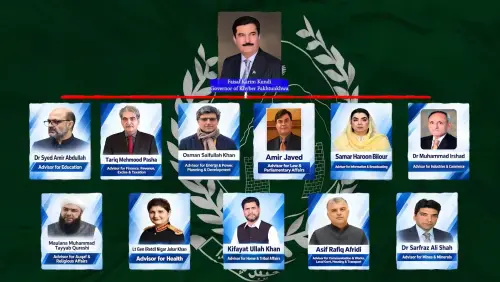
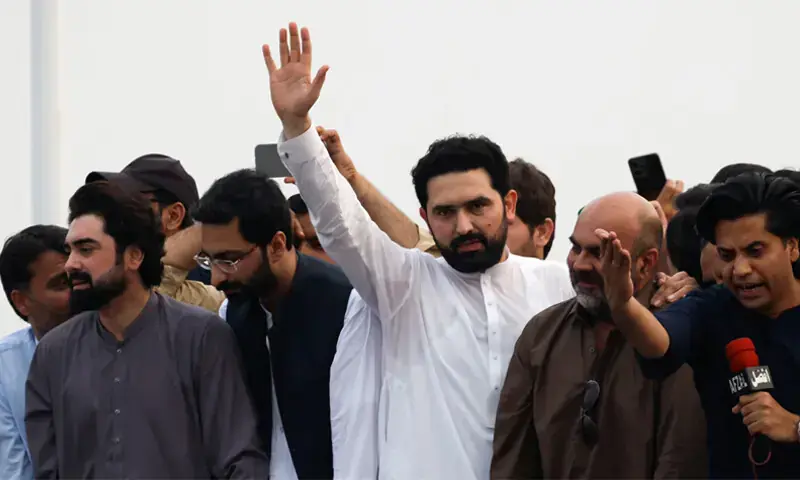
What we did not know back then was how the PTI government in KP could be dislodged when push came to shove. Indeed, only one of these options has come to pass two years later. The federal government has declared an emergency and Governor’s Rule. There are reports that Chief Minister Sohail Afridi has been arrested. The justification is a law-and-order situation, terrorism and the breakdown in negotiations with the government.
The constitutional justification for federal intervention must be distinguished from its political rationale. Articles 232 and 234 provide extraordinary powers in different circumstances, and their invocation is subject to procedural requirements and limitations. A deterioration in security is an important consideration, but it does not automatically establish that constitutional government has become impossible.
There is also the question of consistency. Balochistan, immediately south and southwest of KP, has experienced its own severe deterioration in security since the 2024 elections. The two provinces face different insurgencies and different political circumstances, but the comparison is unavoidable. If terrorism alone establishes the necessity for extraordinary intervention, why is the constitutional response different in Balochistan?
This does not mean the security challenges in KP are imaginary, or that the provincial government bears no responsibility for its response. It means that the justification for governor’s rule must explain something more specific than the existence of terrorism. It must establish why the existing constitutional machinery could no longer deal with it.
There is, however, another security crisis that helps explain the political context of this decision. It began in 2023, and its protagonists were not militants.
May 9, 2023
May 9 remains consequential for Pakistan’s establishment in ways that subsequent and more lethal security incidents have not been. The attacks on military installations following Imran Khan’s arrest challenged assumptions about the relationship between the military and sections of the public that had traditionally been regarded as politically sympathetic to it.
Since the Arab Spring began in 2010, Pakistan’s security establishment had reason to contemplate the possibility that mass mobilisation might produce consequences beyond the capacity of conventional political management. Pakistan had different institutions, a different political history and a military with a different relationship to the state, especially compared to say Egypt. The spectacle of governments losing control of public spaces, and sometimes their own institutions, had become part of the political imagination of the region.
May 9 tested a version of that fear. The subsequent response suggested that the state possessed a greater capacity to suppress political mobilisation than PTI had anticipated. Arrests, prosecutions, restrictions on political activity and the disruption of party organisation altered the costs of confrontation. A serious underestimation had come to pass.
The implications were particularly significant in Punjab. Although the May 9 incidents were concentrated in several parts of Punjab and KP, the attacks in Lahore carried considerable symbolic weight. A city long associated with the military’s institutional presence and political influence had witnessed an extraordinary breach.
The state’s subsequent response changed the political environment in Punjab. Whatever the underlying level of support for PTI, public participation in confrontational politics became a much more consequential personal decision. The rules of political mobilisation had changed.
Against this background, PTI’s victory in KP in February 2024 was an enormous morale booster. Despite the imprisonment of Imran Khan, the loss of its electoral symbol and substantial impediments to electioneering, the party demonstrated that its electoral appeal remained formidable. KP supplied PTI with something it had lost elsewhere: an elected government, an institutional base and a territory from which to organise its politics, but it also inherited the unresolved strategic problem of May 9.
The failures of 2024
If there was uncertainty about PTI’s intended response, its choice of chief minister provided an early indication. Ali Amin Gandapur was a combative political figure, selected at a time when the party wanted to confront the federal government and demonstrate that its capacity for street mobilisation had survived. The threat of protest was that it would halt the business of the state.
He attempted to deliver on that expectation. In October and November 2024, PTI organised major efforts to reach Islamabad’s D-Chowk, the second involving Bushra Bibi. Both ended in retreats, and the November confrontation involved casualties, injuries and a disputed account of the security operation: however, the consequences went beyond the failure to occupy a public square.
For the federal government, the confrontations demonstrated that the capital could be defended against a determined political mobilisation. For PTI, they exposed the distance between the ability to assemble supporters and the ability to sustain a confrontation against a state willing to escalate.
Gandapur too suffered the burden of May 9. The people in Punjab were no longer willing to protest in the same way after being subjected to preemptive arrests and controls. KP’s electorate were tired as well, but the effort it made was rewarded with abandonment and careless endangerment when the party leadership abruptly left both protests in late 2024. A year later, CM Gandapur was asked to resign.
There was also resentment over the comparatively limited mobilisation from Punjab. Workers from KP were being asked to shoulder risks that supporters elsewhere were either unwilling or unable to assume.
The official explanation for Gandapur’s resignation centred on the deteriorating security situation and disagreements over counterterrorism policy, but the failures of 2024 had already weakened his political standing. The larger problem survived his departure. PTI’s electoral mandate in KP remained substantial, but its capacity to convert that mandate into sustained national mobilisation was less certain. Electoral popularity and street power are different political assets. A party can retain the overwhelming loyalty of its voters while finding that those same voters are unwilling to risk arrest, injury or death in repeated attempts at confrontation. That distinction is central to the present crisis.
It is entirely possible that a large proportion of KP’s electorate would vote for PTI again in 2029. That does not establish that the same electorate will respond to every call for another march on Islamabad. The failures of 2024, the disappointment with the leadership and the personal costs of confrontation have changed the calculation for at least some of its supporters.
Yet PTI has frequently negotiated as though the political circumstances of 2014 still prevail, and every neighbourhood can be mobilised on command. The risk is that the party mistakes enduring loyalty to Imran Khan for an unlimited willingness to undertake increasingly costly political action. Its strategy has become difficult to revise, partly because the organisation itself has become increasingly fragmented.
The division
The state has not succeeded in producing a decisive split in PTI through defections. The party has nevertheless experienced substantial organic internal division. Imran Khan’s family, ideological loyalists, pragmatists, provincial politicians and competing organisational factions have struggled to establish authority in his absence. They have not had the discipline for their disagreements not to become public, weakening the possibility of a coherent alternative strategy.
The only strategy capable of commanding broad agreement has often been the one Imran Khan pursued when he was free. But that strategy was developed in a different political environment, when PTI enjoyed greater institutional access and faced a state whose response to political mobilisation was less restrictive.
The party has also overestimated the practical importance of international support. Expectations that foreign governments, including a returning Donald Trump administration, might intervene decisively on Khan’s behalf were never a substitute for domestic political negotiation.
The diaspora has presented another complication. Overseas PTI supporters have sustained the party’s international visibility and political messaging, but sections of its external support base have also resisted compromises that might appear insufficiently loyal to Khan. Those living outside Pakistan do not necessarily bear the same immediate costs as party workers, officeholders and families confronting the state at home.
This is not an argument against the diaspora’s political participation. It is an argument about the consequences of allowing those least exposed to the costs of confrontation to exercise disproportionate influence over the terms of compromise.
In KP, these pressures contributed to an increasingly confrontational political vocabulary. References to Bangladesh’s history, suggestions that the provincial budget might be withheld to produce a constitutional crisis, and proposals involving direct engagement with Afghanistan all raised the stakes.
Some of these ideas were unlikely to be carried through, they were the bluster of maximalist rhetoric aimed at eliciting pressure. That did not make them harmless though, especially the threat of a province conducting its own foreign policy as soverign. They made it easier for the federal government to see provincial dissent as a challenge to the constitutional order, even when the underlying disagreement was milder than the rhetoric.
The clearest example is the controversy over counterterrorism operations in the former tribal areas.
Opposition to another major military operation should not automatically be interpreted as sympathy for militants. Communities in the merged districts have lived through displacement, the destruction of homes and livelihoods, and the prolonged uncertainty of returning to places that had ceased to resemble the homes they left.
Their demand to be consulted before another operation is grounded in that experience. For families who have already lost homes, businesses and years of ordinary life, assurances that displacement will be temporary are no longer sufficient. Many residents also question the durability of earlier security gains, particularly when militant activity subsequently returned to areas that had been cleared at enormous human cost by inviting them back.
PTI has not always articulated these concerns effectively when they conflated these with demands of the release of Imran Khan. This unfortunately obscured the legitimate demands of the population it represents. But the underlying argument deserves to be taken seriously: a security operation that depends on the cooperation of local communities cannot treat their fears as evidence of disloyalty.
A dangerous neighbourhood
Pakistan is operating in a more dangerous neighbourhood than it was when PTI first assumed power in KP in 2013. The military confrontation with India in May 2025 demonstrated how quickly a terrorist attack and subsequent military retaliation could escalate into direct conflict between two nuclear-armed states. The crisis involved strikes against military targets and created risks that extended well beyond the immediate battlefield.
To the west, relations with Afghanistan have deteriorated from uneasy coexistence into recurring military confrontation. Pakistan has carried out cross-border strikes against what it identifies as militant sanctuaries. These disputes have produced armed exchanges, disrupted border communities and further complicated the security situation in KP.
The wider Middle East adds another layer of uncertainty. Israel’s expanding regional confrontations and its security relationships with India are relevant to Pakistan’s strategic calculations, particularly when viewed against Pakistan’s established diplomatic position on Palestine. In such circumstances, effective coordination between federal and provincial authorities becomes more important, while political confrontation makes that coordination harder. But is this a legitimate canvass for an emergency?
The federal government cannot expect unquestioning provincial compliance merely by invoking national security. The provincial government cannot treat every security initiative as an extension of its political dispute with Islamabad. Both have obligations that extend beyond their immediate political interests.
PTI’s failure to build broader coalitions has made this confrontation more difficult to manage. The party has historically preferred strategies that demonstrate the moral certainty of its position, including electoral boycotts and resignations, even when those decisions have weakened its institutional influence. In the present circumstances, coalition-building was arguably more valuable than another attempt to occupy D-Chowk. A PTI whose street mobilisation had weakened needed the support of parties such as JUI-F and other political actors capable of broadening the dispute beyond the fate of Imran Khan.
This loss of the street made keeping the provincial government exceptionally important. Even as its national mobilisation capacity weakened, PTI retained the administrative and political resources of KP. The chief minister’s office gave it visibility, authority and the ability to sustain political activity that an opposition party operating without provincial power would find much harder to organise.
The distinction between legitimate government activity and partisan mobilisation therefore became increasingly contested. Orders by the Peshawar and Islamabad High Courts restricting the use of public resources for political protests reduced the room for treating provincial administrative machinery as an extension of party organisation.
The pressure was no longer confined to political leaders. Civil servants and police officers faced increasingly explicit expectations that they should not facilitate partisan protests through official resources. This mattered because the institutional advantages of holding provincial office were becoming more difficult to deploy. A mobilisation that could be restricted within KP itself would face considerable difficulties reaching Islamabad.
The trigger
So why has the Federal Government finally pulled the trigger? Security deterioration supplied the stated constitutional justification. The confrontation over provincial authority, political mobilisation and the limits of federal tolerance supplied its immediate political context. The decision has now changed the incentives for everyone involved.
PTI has lost its provincial government, but the federal authorities have also relieved it of the immediate responsibility of governing KP. This is the central paradox of the intervention.
For years, PTI had to reconcile its position as a party of confrontation with its obligations as the government of a province facing terrorism, fiscal constraints and difficult relations with the federation. Its opponents could point to failures in policing, administration and economic management. PTI could blame Islamabad, but it could not entirely escape responsibility for the province it governed – such are the dangers of incumbency. Now Governor’s rule changes that calculation.
The federal government and the establishment now assume a much greater share of responsibility for what happens in KP. They have reduced PTI’s ability to use the provincial government as an instrument of political mobilisation, but they have also reduced the extent to which PTI can be held directly accountable for provincial administration during the intervention.
Every administrative failure, disruption in services or deterioration in security risks becoming an argument against the intervention. Every improvement, meanwhile, will be claimed by the federal authorities as evidence that their decision was necessary. PTI does not need to demonstrate that it could govern better under the new arrangement. It needs to persuade its supporters that the elected government was displaced and that the federal authorities have failed to justify the consequences.
The asymmetry is important. The federal government faces a considerably more demanding test. It must demonstrate that extraordinary constitutional intervention can deliver results that ordinary provincial government could not. That means improvements in security, administrative performance and the everyday conditions of people living in KP. It must also demonstrate that the intervention is constitutionally defensible and proportionate to the circumstances that prompted it.
Success in administration would strengthen the political argument for the decision. It would not, by itself, settle the constitutional question. An intervention cannot acquire legality retrospectively merely because some of its outcomes are favourable. Nor can political success be measured solely by the restoration of order in Islamabad. Preventing another march on D-Chowk may address an immediate federal concern, but it does little to resolve the insecurity of communities in southern KP or the governance challenges confronting the province.
Recent political history offers a warning about the burden of raised expectations. After Imran Khan’s removal in 2022, supporters of the succeeding political arrangement expected a more competent management of the economy. The caretaker period that followed did not produce the transformation many had anticipated. Economic conditions remained difficult, and the political cost of unmet expectations was substantial. The same danger now confronts those assuming responsibility for KP.
PTI’s record in the province stretches back to 2013. It has had ample opportunity to establish its own standards of governance, and its performance deserves scrutiny. But replacing an elected government through extraordinary constitutional measures raises expectations that the replacement arrangement will achieve something demonstrably better.
That is an exceptionally demanding proposition in a province facing persistent militancy, displacement, unemployment, fiscal dependence and difficult terrain. It is also a proposition that cannot be fulfilled by security measures alone. A durable improvement would require political legitimacy, functioning civilian institutions and a relationship with local communities that extends beyond the demands of counterterrorism.
The possibility of renewed protest remains. Removing PTI from provincial office may strengthen its account of political exclusion and give its supporters a grievance around which to organise. Whether that produces sustained mobilisation is uncertain. The disappointments of 2024 have not disappeared, and the willingness to vote for PTI should not be mistaken for a willingness to participate in another confrontation.
But the removal of governmental responsibility changes the party’s incentives. PTI may find it easier to reject compromises when it no longer bears the immediate costs of administering the province. The federal government may therefore discover that it has constrained one source of PTI’s power while strengthening another source of its political appeal.
Constitutionally, governor’s rule under Article 234 is limited to six months, with parliamentary approval required for its continuation within that period. The simultaneous invocation of Article 232 creates a more complicated legal situation, but it does not automatically eliminate the limitations attached to Article 234. Any attempt to prolong extraordinary federal control would have to confront those distinctions.
PTI consequently retains several possible courses of action. It can challenge the intervention in court, attempt to mobilise opposition through protests, or negotiate a new political arrangement that preserves its long-term position while accepting the limits of its immediate power. None of these is without difficulty.
Legal proceedings may be prolonged or unsuccessful. Street protests may fail to achieve their objectives while imposing further costs on supporters. Negotiation would require a willingness to accept outcomes short of PTI’s maximal demands, and a party whose internal factions disagree over the meaning of compromise may struggle to sustain such an approach.
The federal authorities face choices of their own. If the intervention fails to achieve its stated objectives, they may seek to extend extraordinary measures or consider further restrictions on PTI, including renewed efforts to prohibit the party’s activities. Such measures would introduce additional legal, political and polarisation risks.
There is also an external dimension in these tough times. In a country already exposed to confrontation with India and instability along the Afghan border, prolonged internal political exclusion can create opportunities for hostile actors to exploit public grievances. To be clear, that is a risk to be assessed, not a licence to attribute domestic dissent to foreign sponsorship.
The deeper question is whether Pakistan’s political institutions can still produce a negotiated settlement between parties that increasingly regard compromise as surrender. For PTI, the challenge is to recognise that electoral popularity does not confer unlimited bargaining power because that is poor strategy which is not serving them well anymore given how much is stacked against it, and that preserving a political movement may require a different strategy from the one that sustained it during Imran Khan’s years in opposition.
For the federal government and establishment, the challenge is to recognise that administrative control does not necessarily suppress a mobilisation does not settle the grievances from which it emerged. Both sides have repeatedly demonstrated an ability to impose costs on the other. Neither has yet demonstrated a convincing ability to end the confrontation. But Governor’s rule changes the distribution of those costs. It also changes the burden of accountability.
PTI has lost the government it regarded as its last institutional stronghold. The federal authorities have acquired direct responsibility for a province whose difficulties are unlikely to yield to extraordinary powers alone.
The next six months will test the proposition that federal control can succeed where elected provincial government was judged to have failed. The result will depend on measurable outcomes, the legality of the intervention and the ability to restore a functioning political relationship. Unfortunately, in Pakistan, a mandate, power or success have never been entirely synonymous. What’s changed now is that the federal government is willing to impose enhanced costs on the PTI – and it’s unlikely to stop here because PTI’s electoral strength, organisational capacity and ability to mobilise protesters are no longer necessarily moving in tandem. The federal government has taken away the PTI’s power, but also taken away their reasons for restraint while burdening the new government with extraordinary expectations of delivery to justify the use of emergency provisions.
Fasi Zaka is a political columnist.