A year on, where does Trump's Gaza peace plan stand?
On Oct 10, 2025, Israel began pulling its troops from parts of Gaza as a peace agreement it signed with Hamas went into effect. A year later, it has expanded its occupation to about 70 per cent of the Palestinian territory — one of its many violations of that ceasefire.
The 20-point peace plan envisaged by United States President Donald Trump, titled ‘Comprehensive Plan to End Gaza Conflict’, has not just remained stalled; it has been torn apart by Washington’s own ally Israel.
At the time, Trump had touted the plan as a breakthrough that would bring “eternal peace” to the Middle East. He later launched his own military campaign alongside Israel in the war against Iran.
The initial phase resulted in a ceasefire on Oct 10, 2025 and secured the release of the last remaining captives seized in Hamas’s Oct 7, 2023 attack on Israel, along with freedom for hundreds of Palestinian prisoners and detainees held by Israel.
While the October 10 agreement pertained only to the first phase of the peace plan, the roadmap laid out by Trump had offered the world a glimmer of hope for some semblance of calm in the shattered Palestinian territory.
Yet a year on, many of the plan’s goals have yet to materialise, including securing an Israeli withdrawal and rebuilding Gaza.
Dawn takes a look at which guarantees have been achieved and what remain unfulfilled promises to the Palestinians, and to peace.
What was the plan?
The first phase of Trump’s 20-point plan included a suspension of all military operations, Israeli withdrawal from part of the enclave, captive and prisoner releases and a surge in aid.
While the first phase of the plan remains incomplete due to the large presence of Israeli troops, the US had announced moving on to the second phase in January, which also remains stalled.
How well has the ceasefire held?
Barely.
The plan aimed to bring a halt to Israeli military operations after a two-year bombing campaign — widely determined to be a genocide — killed over 74,000 Palestinians.
However, near-daily attacks have killed more than 1,460 Palestinians, including 300 children, since the ceasefire took effect on Oct 10.
Israel attacked the enclave on 337 of the past 365 days, based on a tally compiled by Al Jazeera and reports by AFP and Palestinian Wafa news agency. This leaves only 28 days without reported attacks over the year-long period up to Oct 9.
Israel claims its strikes have targeted Hamas, accusing the group of trying to carry out attacks and rearm. Hamas denies this, and forums such as the United Nations have also condemned Israel’s continued violence.
On the other side, five Israeli soldiers have been killed by Palestinian fighters or in combat since the ceasefire, according to the Israeli military.
Has Israel withdrawn from Gaza?
The first phase of Trump’s plan foresaw Israel withdrawing to a so-called “yellow line”, allowing Israeli forces to retain control of 53 per cent of Gaza.
However, as of July, it had expanded its occupation to nearly 70pc of the besieged enclave, according to maps analysed by NPR.
This isn’t just covert movement; Israel’s Prime Minister Benjamin Netanyahu unabashedly directed his military in May to expand its control to 70pc of the strip.
Part of this was already done in March — when the world’s attention was caught by the US-Israel war against Iran — and Israel marked a new “orange line”, taking effective control of 11pc of Gaza’s territory beyond the yellow line.
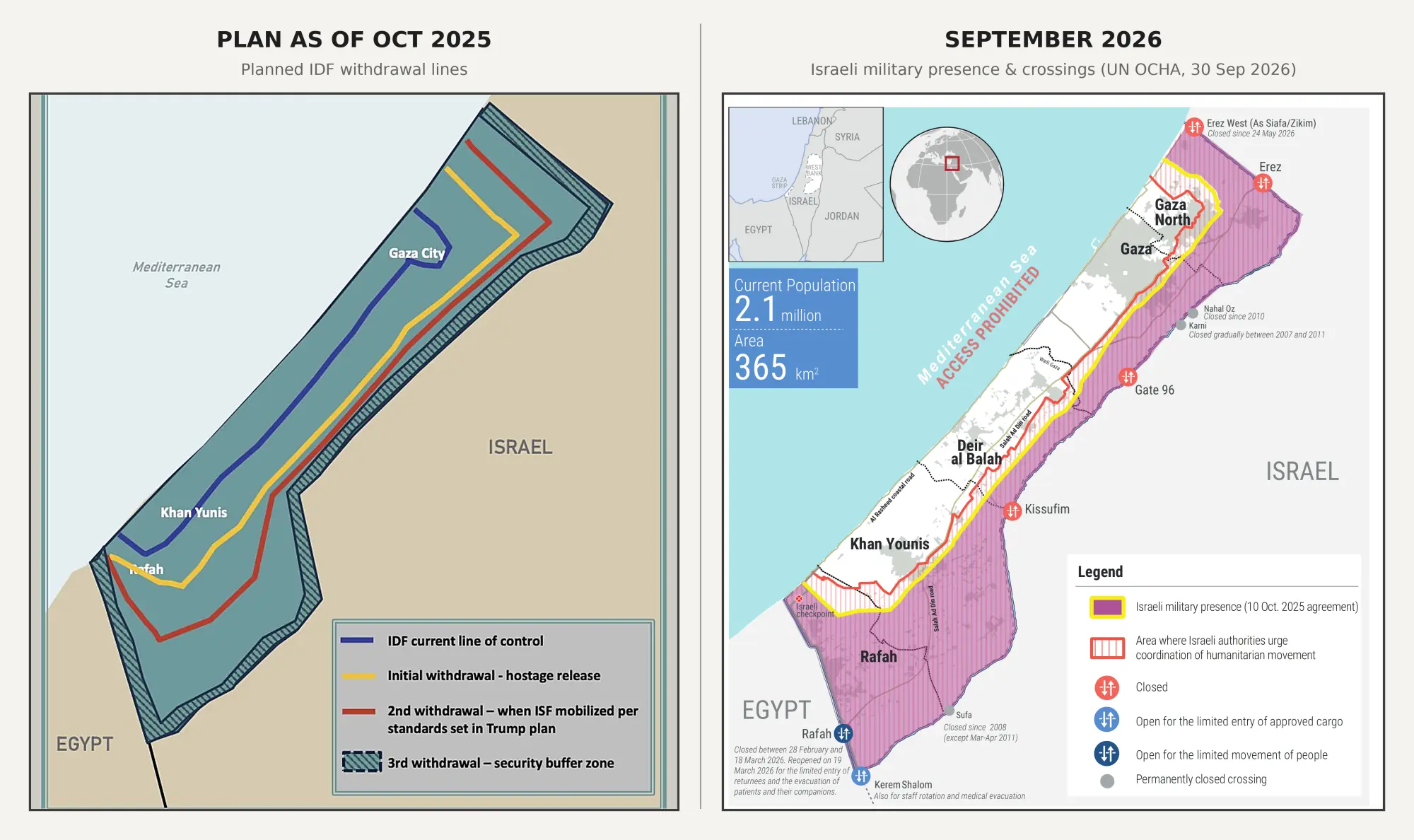
The creeping military presence has uprooted more Palestinians, squeezing the population of 2 million into a shrinking coastal strip where they shelter in tents and damaged buildings.
A September report by The New York Times based on satellite images said Israel constructed six new military outposts in its self-designated orange zone after the ceasefire, many on the rubble of homes and villages.
Moreover, Israel-backed Palestinian militias and opposed to Hamas use the Israeli-held zone to launch attacks on the area where most of the Palestinian population lives.
From the start of the ceasefire through April, at least 196 Palestinians, including 18 women and 43 children, were killed near the Yellow Line, according to figures verified by the United Nations’ rights office.
Since October 2025, accessible and undamaged cropland has fallen from 601 hectares to 448 hectares, according to a June assessment by the UN’s Food and Agriculture Organisation (FAO).
It noted that the loss of 25.5pc reflected reduced access to farmland since the ceasefire, “associated primarily” with the expansion of the yellow line.
As recently as last month, members of Israel’s far-right government called for the annexation of parts of the Gaza Strip and for forces to “go to war” in the occupied West Bank.
“I would like us to annex at least as far as the yellow line in Gaza and as far as the Litani River in Lebanon, because if a war ends along the same lines where it began, what will deter the enemy from going to war again?” Finance Minister Bezalel Smotrich said in a podcast for the Israeli news site Ynet.
Has the flow of aid resumed?
After Israeli policies led to a famine in Gaza City during the war and starved hundreds to death across the strip, the first phase of Trump’s peace plan was supposed to enable the entry of “full aid” into the territory.
“Entry of distribution and aid in the Gaza Strip will proceed without interference from the two parties through the United Nations and its agencies, and the Red Crescent, in addition to other international institutions not associated in any manner with either party,” read the plan.
However, while the flow has resumed, many foreign aid groups still struggle to work in the territory and say their staff or supplies continue to be rejected.
In Gaza, humanitarian assistance is the key lifeline for most families. Remember that “orange line” Israel drew?
International organisations, including humanitarian groups, are required to coordinate their movements with the Israeli military to deliver aid in the area between the orange line and the yellow line.
According to a report by global hunger watchdog IPC, expansion of humanitarian assistance improved household food consumption since a December 2025 IPC analysis, shifting from IPC Phase 4 (Emergency) to Phase 3 (Crisis) levels.
However, all five governorates — Rafah, Khan Younis, Deir al-Balah, Gaza and north Gaza — are still classified in IPC Phase 3, with 212,000 people remaining in Phase 4.
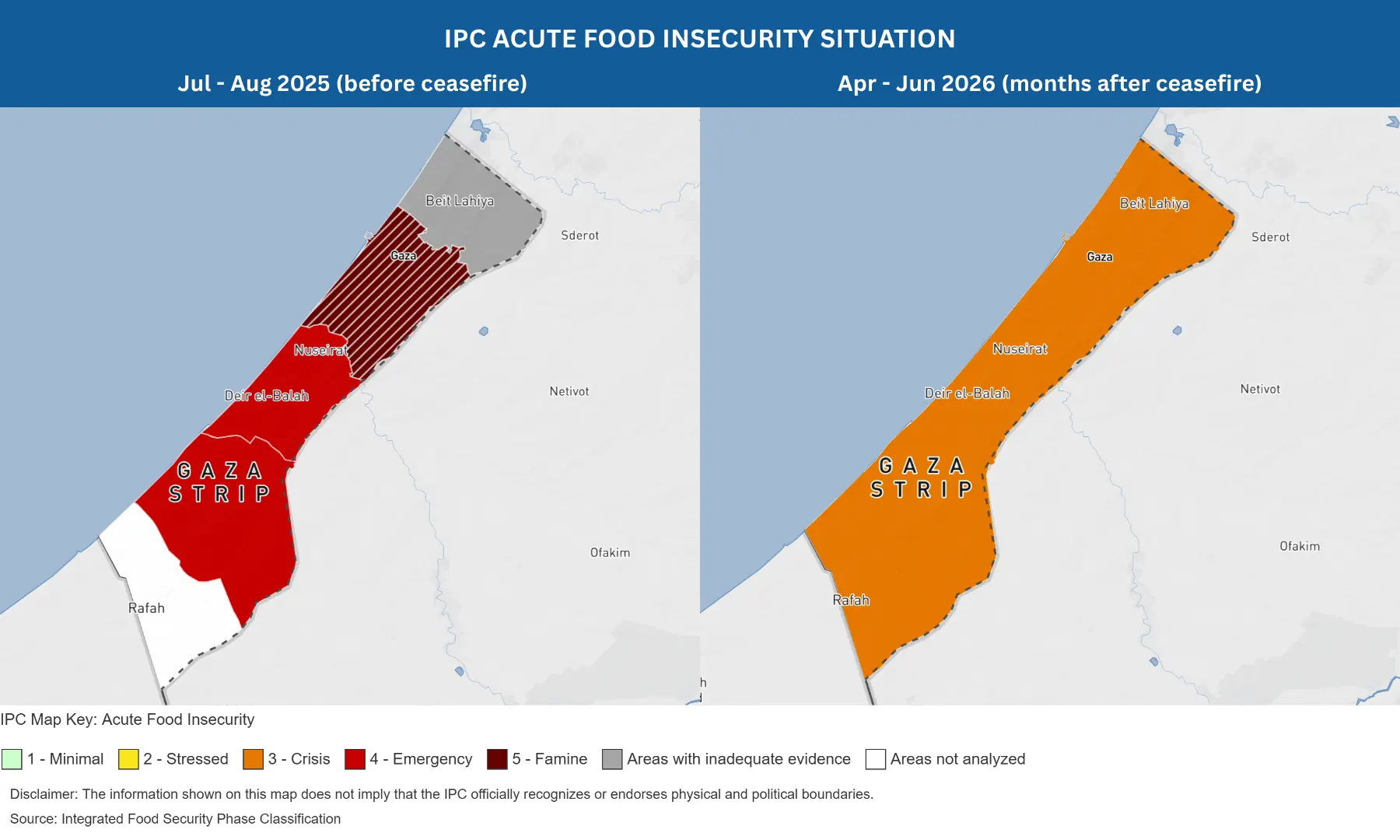
More than 1.4m people (67pc of the population) were expected to face high levels of acute food insecurity (Phase 3 or above) through December 2026, up from 1.2m in the mid-April–June period, IPC said.
It noted that despite the flow of aid, food security coverage has largely declined, falling from a peak of 2.13m people reached in November 2025 to 1.49m people in May 2026.
Further reductions were also expected due to funding constraints and uncertainty surrounding the renewal of operational authorisations for 37 international non-governmental organisations (INGOs).
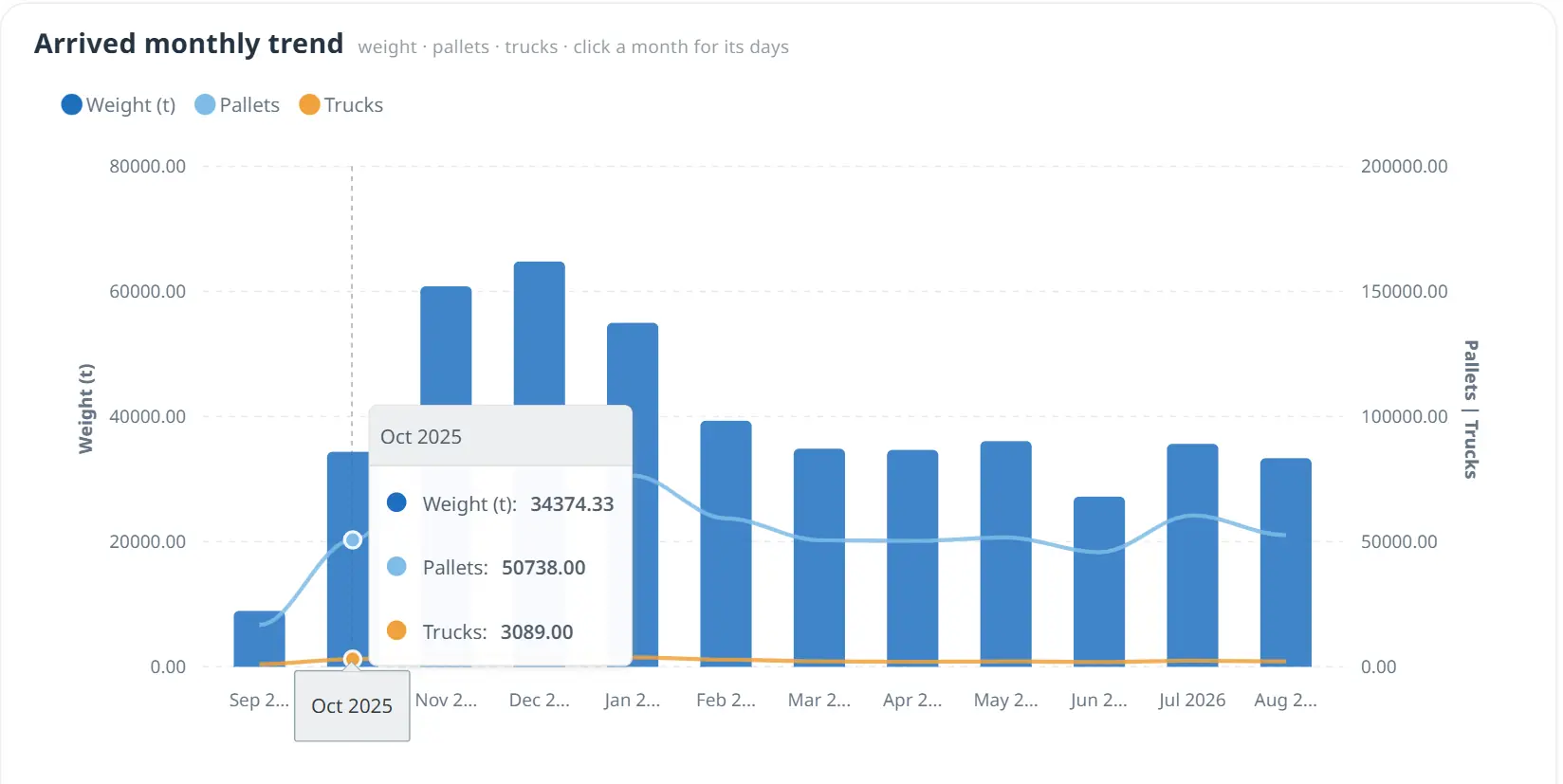
The IPC report further said that, on average, Gaza received 227 aid trucks per day, as opposed to the requirement of 600 daily trucks outlined in the peace plan.
According to a UN monitor, the highest number of trucks arriving in Gaza between October 2025 and August 2026 was 334, recorded on Dec 20.
With winter approaching, UN Resident and Humanitarian Coordinator Ramiz Alakbarov told the UN Security Council (UNSC) last month that “the health situation remains critical” in Gaza.
He noted that “restrictions on the entry of critical humanitarian items continue to impede the scale-up of the humanitarian response”, including preparations for the rainy season.
Last week, the UN-run World Health Organisation (WHO) also urged Israeli authorities to “release the pressure on medical supplies”.
Essential medicines and even prosthetics — needed widely after Israel’s war left about 5,000 amputees — are denied by Israel, which insists that they could be used by Hamas fighters.
Disarmament of Hamas
Later phases of the peace plan foresaw Hamas disarming and new governance by a Palestinian body overseen by the Trump-led Board of Peace. Israel was to gradually withdraw based on milestones linked to demilitarisation, handing territory to a temporary International Stabilisation Force (ISF).
However, those plans have also stalled despite Trump hailing a “historic” agreement in July on the disarmament of Hamas and other groups.
Hamas had agreed in July to hand over its weapons to be stored under the control of the Palestinian technocratic government, but the Israeli occupation appears to be a sticking point as both sides dispute the sequencing of the plan’s implementation.
Tel Aviv objected to the Board of Peace’s text that called for it to begin a phased withdrawal and demanded “full demilitarisation” of Hamas before it pulled back its troops.
The Trump-led board then assured Netanyahu that Israel’s withdrawal from Gaza would only begin after Hamas’s complete disarmament.
Subsequently, Trump’s son-in-law Jared Kushner met with Hamas and Israeli leaders in August, but without any breakthrough as both sides stuck to their demands.
Israel insisted on not withdrawing until Hamas surrendered all its weapons — a condition reportedly agreed to by Kushner — and on continuing military operations as it saw fit. On the other hand, the Palestinian group wanted Israel to abide by the ceasefire first.
Where is the ISF?
Under Trump’s plan, the Israeli military was to “progressively hand over the Gaza territory it occupies” to the multinational ISF. “The ISF will work with Israel and Egypt to help secure border areas, along with newly trained Palestinian police forces,” the text stated.
While some plans for the ISF have taken shape, the force has yet to be assembled.
There is a commander — US Major General Jasper Jeffers — and Indonesia, Morocco, Kazakhstan, Albania, Kosovo and Uganda have committed personnel. Each contingent requires individual Israeli approval to enter Gaza.
Jeffers has said that the long-term plan is for the ISF to comprise 20,000 troops and train 12,000 Palestinian police officers.
The plan has reportedly been marred by countries’ concerns over the legitimacy and the mandate of the mission.
Just a day after Trump unveiled the text of his peace plan, Deputy Prime Minister Ishaq Dar seemingly distanced Pakistani decision-makers from the roadmap and called for the inclusion of amendments proposed by a group of Muslim countries.
The remarks came amid reports that the deal before Hamas was significantly different from the one the US and a group of Muslim countries had previously agreed on, due to Netanyahu’s intervention.
About two months later, he said Pakistan was ready to commit its troops to ISF, but distanced the country from any role in disarming the Palestinian resistance group.
“We are not ready for that. This is not our job, but of the Palestinian law enforcement agencies. Our job is peacekeeping, not peace enforcement.” — Dar
The deputy premier also maintained that the decision on deploying forces could only be taken once ISF’s mandate was decided. The US held a conference in December 2025 to discuss the force’s key aspects, but it failed to produce a mandate that would satisfy both Israel and potential troop contributors.
The July plan, called the Gaza Roadmap, said the ISF is to be deployed to “separate the Israeli forces” from areas controlled by the technocratic Palestinian governing body, as well as “monitor compliance by all parties with the ceasefire”.
Meanwhile, the technocratic National Committee for the Administration of Gaza (NCAG) has also yet to enter the enclave.
Appointed in January, the US-backed NCAG is led by Ali Shaath, who formerly served as a deputy minister in the Ramallah-based Palestinian Authority.
Living among ruins
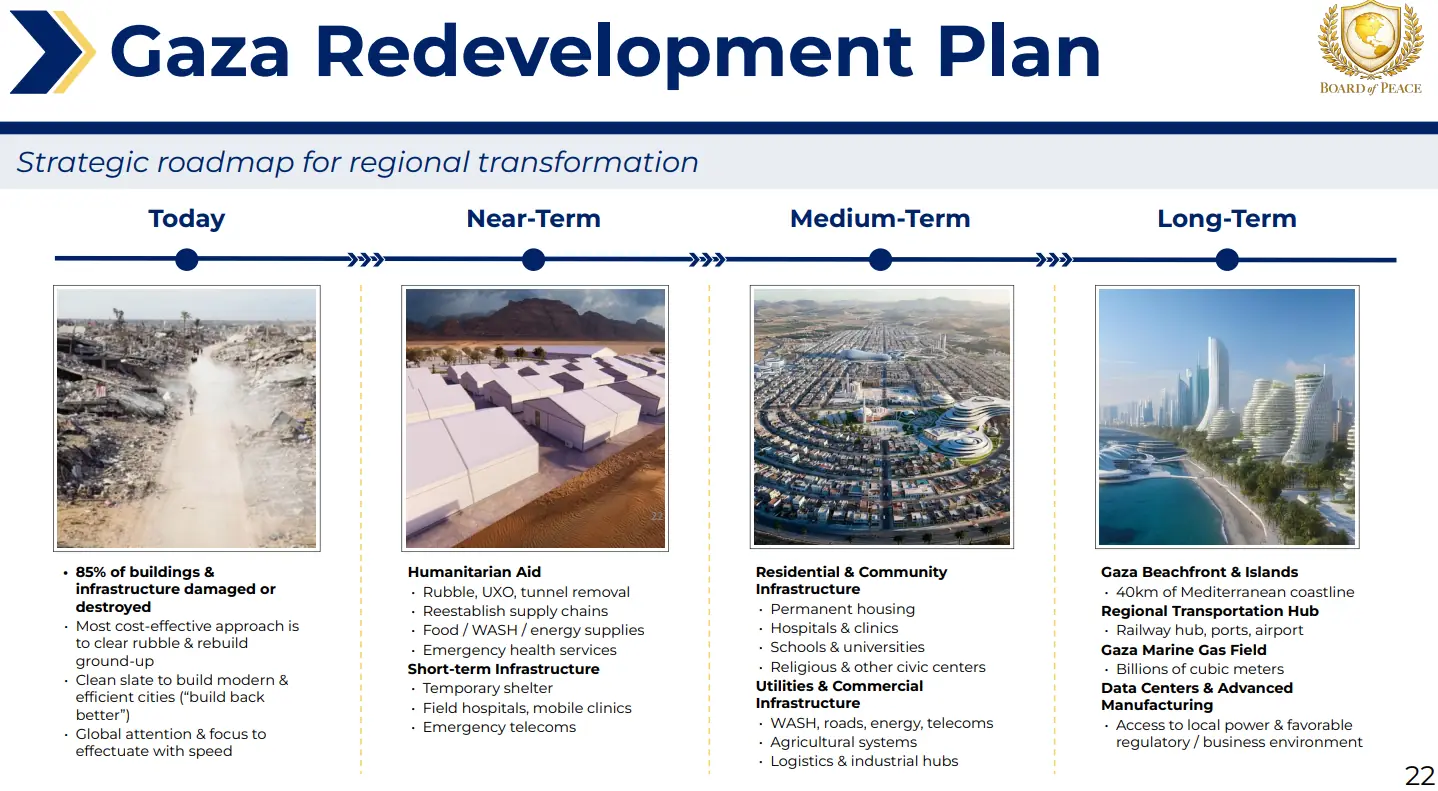
“Gaza will be redeveloped for the benefit of the people of Gaza, who have suffered more than enough,” was what Trump’s peace plan promised.

A year on, Palestinians are still scavenging in the rubble of wrecked buildings for materials to prop up tents and other shelters.
A UN assessment in April estimated the recovery and reconstruction needs at $71.4 billion over the next 10 years, with $26.3bn to restore essential services and critical infrastructure.
In sharp contrast to the estimate, the Board of Peace in September unveiled a $2.45bn Gaza recovery plan meant to span over six months, covering only a fraction of the cost outlined by the UN.
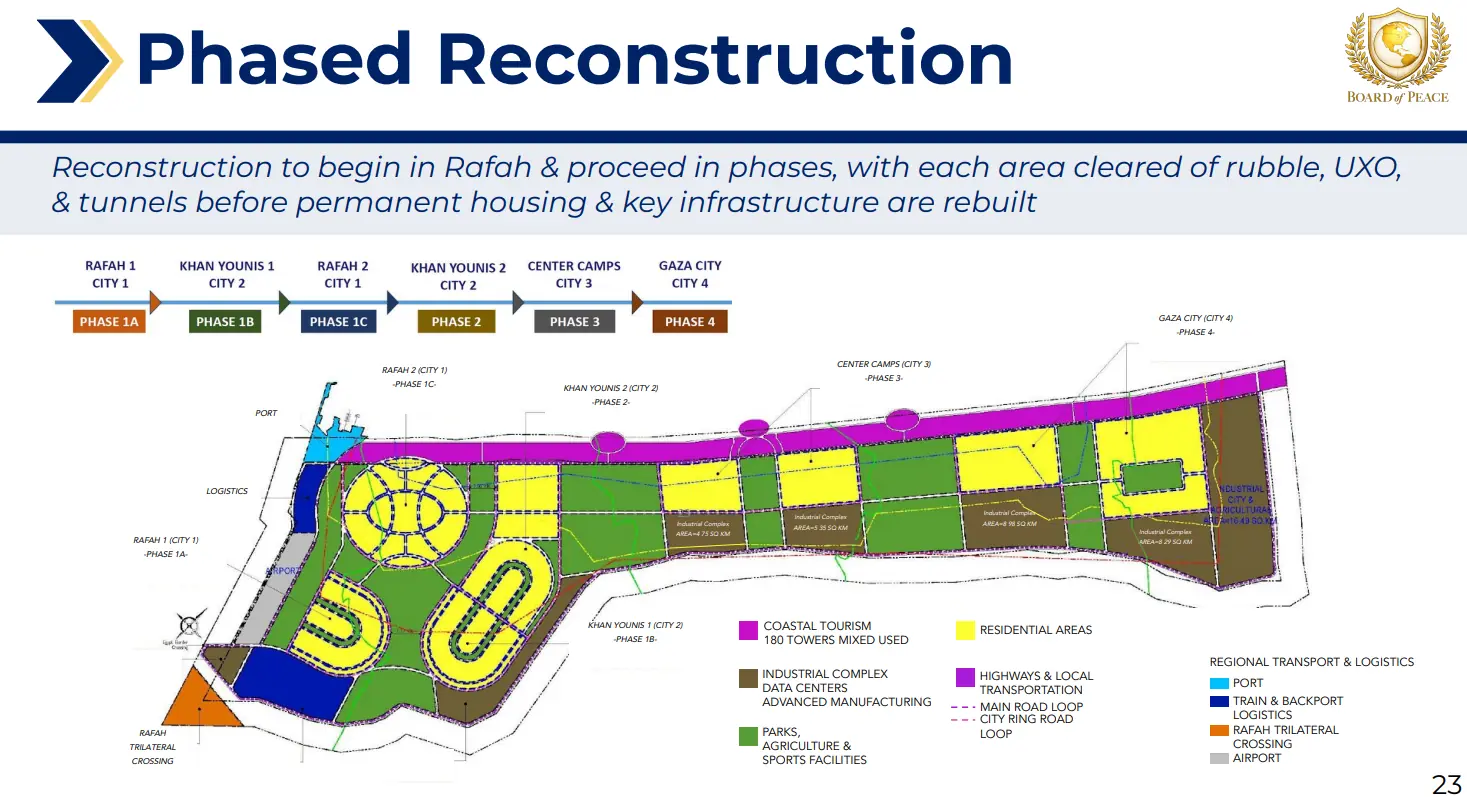
As per the UN report, Gaza’s economy contracted by 84pc while 50pc of the hospitals in the strip remained non-functional; and nearly all schools were destroyed or damaged, along with more than 371,888 housing units.
UN further estimated that the impact of the two-year-long assault had set Gaza back by 77 years and displaced about 60pc of its population.
Thousands of Palestinians live in an estimated 2,000 damaged, bombed-out buildings that are at risk of collapse. Just last month, at least 20 people, including five children, died after an apartment building in Gaza City collapsed from damage sustained in earlier Israeli strikes.
Future of Gaza
For now, the future appears grim.
Israel’s right-wing politicians have been ramping up momentum against mass removal of Palestinians through “voluntary emigration”. Last month, Israeli ministers Itamar Ben-Gvir and Israel Katz called for the expulsion of Palestinians from Gaza, which would be a clear violation of the US-led plan to resolve the conflict.
“We are fully prepared to move them out if it becomes possible — by sea, by air, by every way possible. Egypt is not willing, so it won’t be through them,“ Katz said.
The calls also came ahead of the Oct 27 general elections in Israel — the first since the 2023 Hamas attacks, over which Netanyahu faces criticism within his country.
On the global level, Pakistan, along with Egypt, Turkiye, Indonesia, Jordan, Qatar, Saudi Arabia and the UAE, has repeatedly called on Israel to fulfil outstanding commitments under the peace plan — which was also endorsed by the UNSC.
A joint statement issued last month stressed that Israel should ensure the immediate, safe and unhindered delivery of humanitarian assistance and early recovery supplies, as well as facilitate the rehabilitation of critical infrastructure.
Just days earlier, the Board of Peace had shared comments by Biden-era envoy Brett McGurk, who stressed the roadmap laid out by Trump and backed by the UNSC: Hamas has to relinquish its authority over Gaza; Israeli forces must ultimately withdraw from the territory; the ISF is to provide interim security; and a credible pathway towards Palestinian self-determination must be established.
With the Muslim bloc’s attention now largely on other Middle East conflicts, and Trump’s “peacemaker” mode overtaken by his threatening posture towards Iran, it remains to be seen when the Palestinians of Gaza will get the promised peace, let alone freedom from occupation.
Additional input from Reuters

Header image: Made with pictures of an Israeli tank on Israeli side of the Gaza border on Aug 20, 2025, Board of Peace meeting on Feb 19, 2026 and a map of Gaza. — via Reuters
Muskaan Mujahid is a senior sub-editor on Dawn’s online news desk with over three years of experience in journalism. A communication and design graduate, her reporting focuses on arts, social issues, and maps. She can be found on X at @MuskaanMujahid.

Shifa is a senior sub-editor on Dawn’s online news desk. Her reporting focuses on human rights, social justice, and climate change.