
Dunki 2.0 goes Crypto: hawala in Pakistan's $300 million smuggling machine
In a busy Italian town square, a man dances to a hip-shaking Punjabi song. People gather around him in delight. Two tourists take part in his vlog and lean in to kiss his cheek. Others pause, watch, smile, and move on.
On TikTok, over 1.8 million followers watch his content. Within minutes of the videos going live, the comments section explodes. WhatsApp numbers are dropped into the feed.
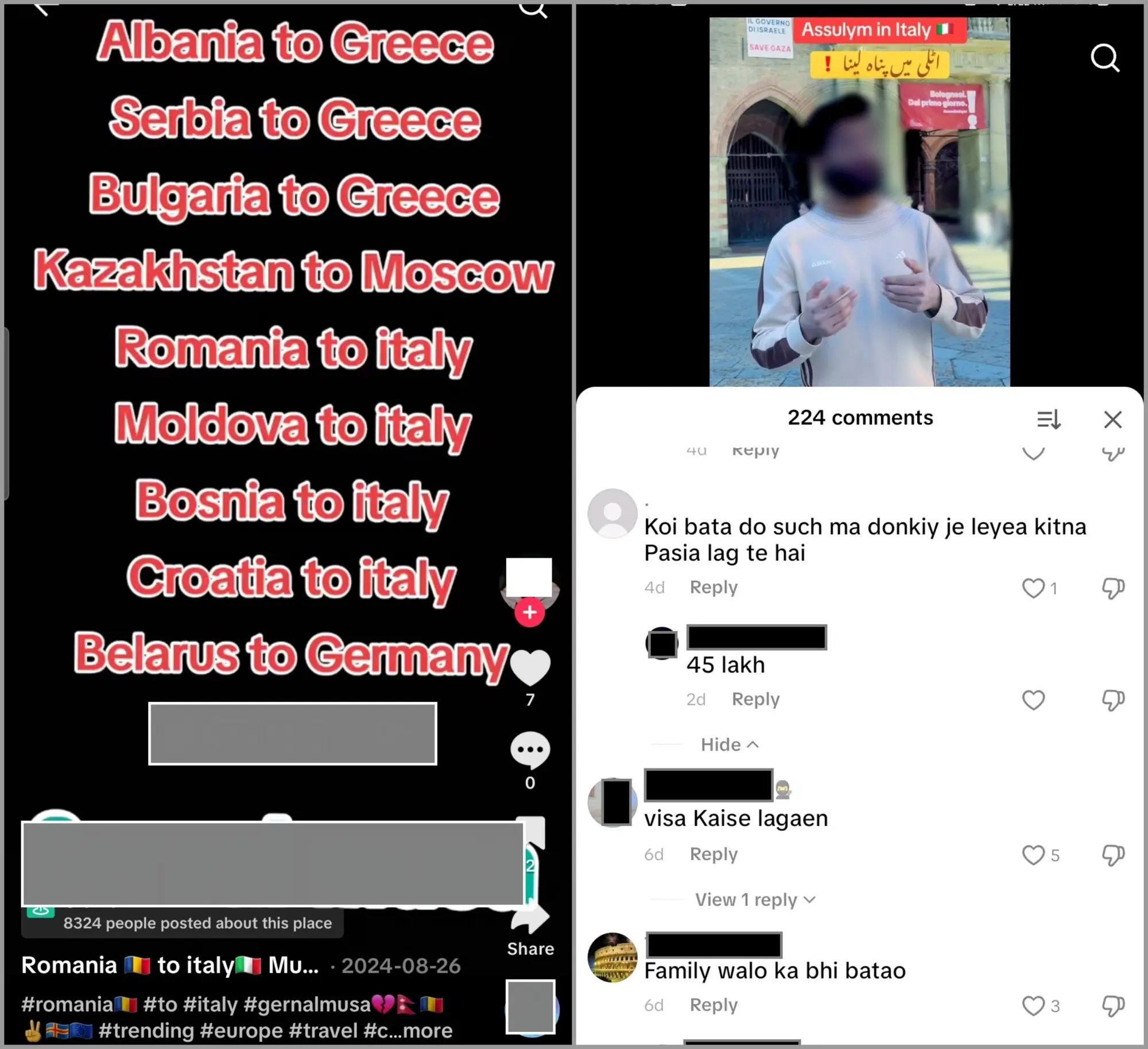
“Europe is my dream,” says one person. “Koi visa lagwade,” says another (Someone please help me with a visa). Another one chimes in with, “Brother, guide me on how to reach Pavia.”
Not everyone online is impressed with this dancer, however. He is accused of immorality, forgetting his roots, and giving Pakistan a “bad image abroad”. He smiles into the camera and claps back, “Saddo shareeko,” a line meant for jealous relatives watching back home.
For the young ones watching from Pakistan, the Italian square, the attention, is proof that he made it, which is all that matters. These yearning souls are the human grist that keeps the mill of Pakistan’s human smuggling machine running as an 80-billion-rupee industry. Social media recruits for it; cash, hawala, and cryptocurrency fund it; and smugglers now rely on valid passports to execute it.
The boy from Kharian
In Gujrat’s Kharian Tehsil, 17-year-old Arif is one of these hopefuls. A pseudonym protects his identity.
In his village, migration is a rite of passage. Arif spends his nights scrolling vlogs and reels of Pakistanis abroad. “Ever since I grew up, I have wanted to go abroad,” he tells Dawn. “My relatives and villagers have also gone, but my dreams came from the lifestyle I saw online. They are living in heaven. And what are we doing here?”
The money is his first hurdle. His mother has jewellery, but his sister is getting married next year, and his father has gone into debt. He believes, however, that once he is in Belgium, it won’t be tight anymore because he will earn.
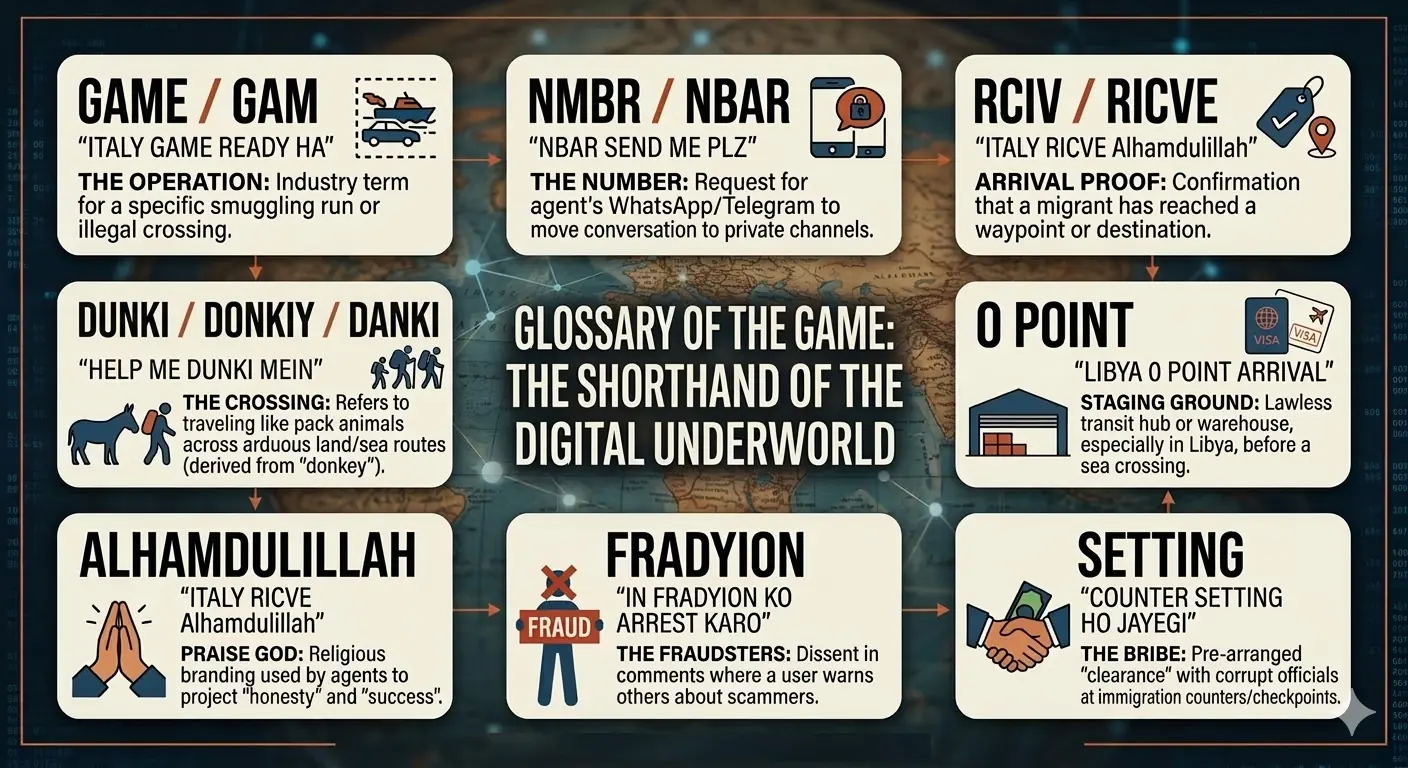
The agent he contacted online, Munawwar, or Raja, from Mandi Bahauddin, told Arif he could not go legally because he had failed his matriculation exams. “Toh game lagani paregi,“ he told him, using the code word for crossing borders illegally. We’ll have to game it. Of course, it was dangerous, but Arif shrugs off the risk and invokes God as his protector. Have others not succeeded after all?
Human smuggling networks are lighting up because in April 2026, Spain launched a large-scale regularisation process, offering legal status to approximately 500,000 undocumented migrants in response to a domestic labour shortage, with applications open until June 30, 2026.
The royal decree strictly applies to people already in Spain before the end of 2025, but digital feeds reaching villages in Punjab have stripped away that detail. ‘Good News for Pakistanis’ posts followed the announcement, according to Kausar Abbas of the Sustainable Social Development Organisation (SSDO), a non-governmental organisation working to combat smuggling and trafficking.
A gamble worth billions
The world outside Gujrat is negotiated as a series of calculations based on who to trust and whether the ‘Munawwars or Rajas’ of the trade can deliver. These names are aliases masking actors in a global, multi-billion-dollar industry.
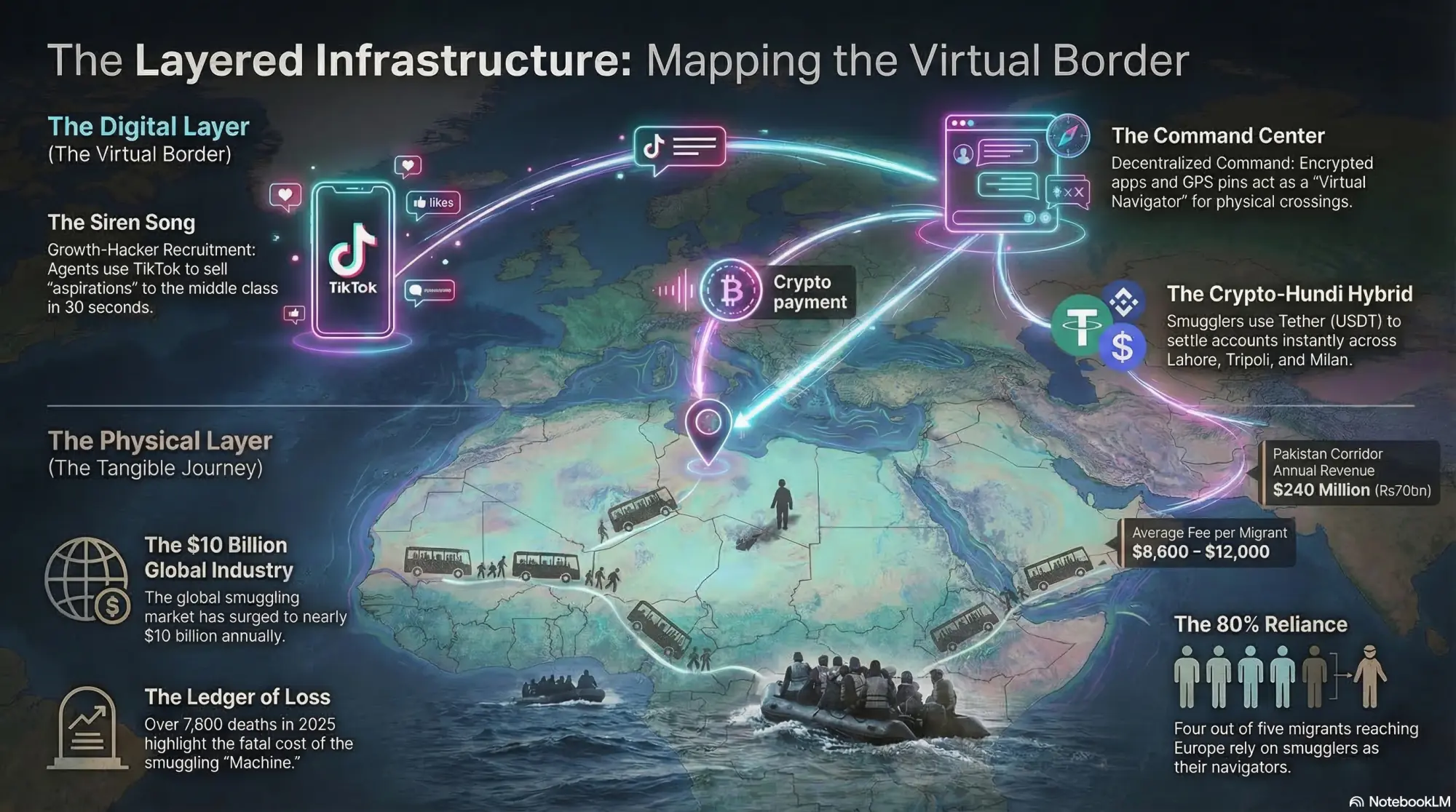
The United Nations Office on Drugs and Crime and the Financial Action Task Force (FATF) value the worldwide human smuggling market at nearly $10 billion annually. The Pakistani corridor alone has become a mini regional economy within it. The trade generates an estimated Rs80 billion ($288 million) in yearly revenue, with agents charging up to Rs3.5 million ($12,600) per head, according to law-enforcement officials and researchers.
Kausar Abbas of SSDO has seen families routinely pay more than what the agents demand. In the Adriana migrant boat tragedy in 2023, in which more than 300 Pakistanis died, it turned out that each person had paid from Rs4 million to Rs8 million. For many, that kind of cash only comes if you sell your land, he explains.
This financial gamble is born from a systemic “skill emergency,” according to Dr Abid Qaiyum Suleri of the Sustainable Development Policy Institute. Nearly 60 per cent of these migrants are unskilled, making them uncompetitive for formal overseas employment. As a result, the agents selling illegal routes win by default.
Journalist Aoun Sahi, who has reported on the trade, argues that these agents are rarely sketchy loners operating from the shadows, and more often than not, a part of the local scene.
Those at the top of the chain are influential locally with political and bureaucratic connections. This explains why even the Federal Investigation Agency (FIA) fired some of its own officials for their involvement in the trade after the 2023 Greek boat tragedy.
The money handed over by families, often their life savings, is laundered back into the local economy through real estate, grain markets, and gold, a pattern the FATF documented in its 2022 report on money-laundering risks arising from migrant smuggling. “The state always goes after the low-hanging fruit,” he says. “But the rest of the mafia, including the businesses associated with the trade, continue to operate with impunity.”
How to get on a boat
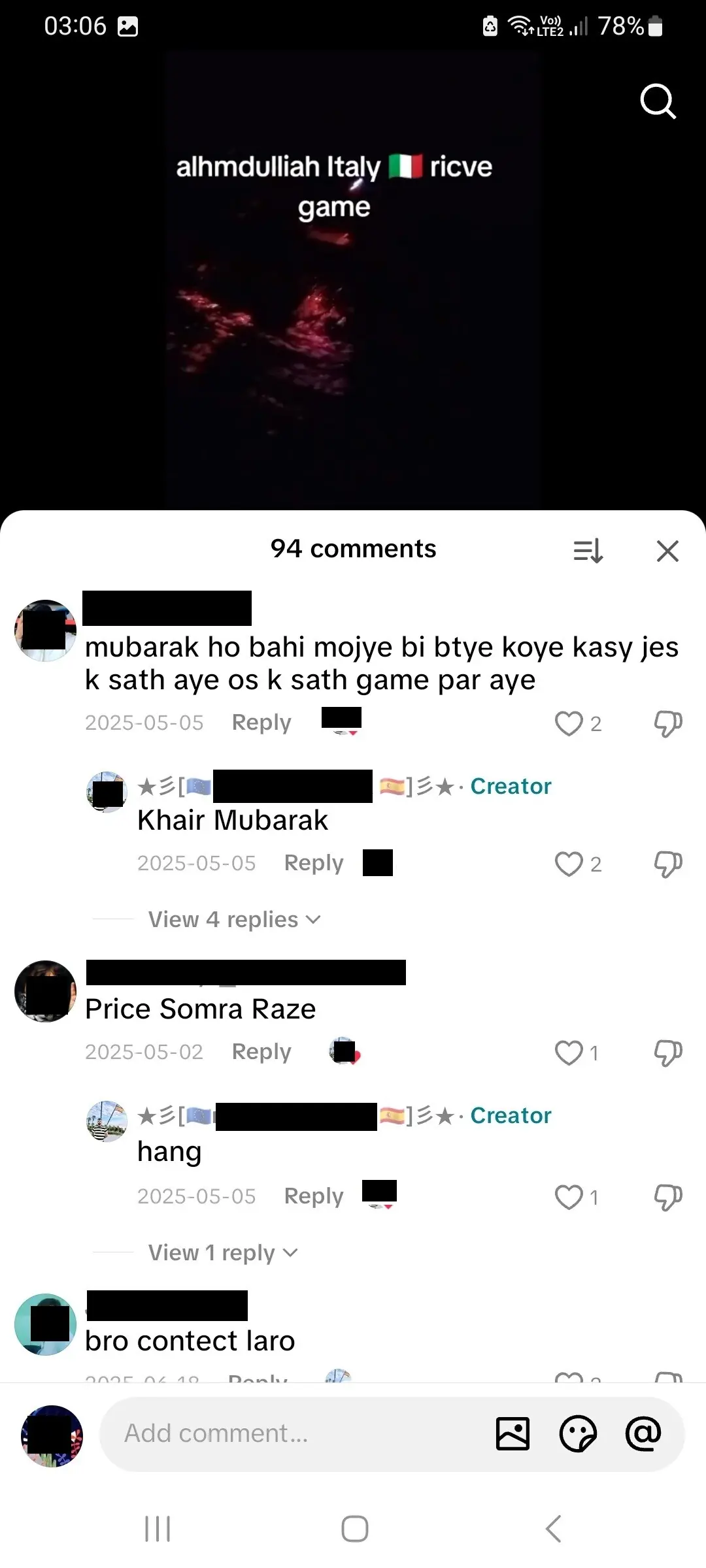
The FATF’s 2022 report documents the chain. Families pay smugglers mainly in cash, deposited through intermediaries in small amounts and quickly withdrawn. The hawala system, operating through mini-markets, travel agencies, and mobile phone shops, receives the payment and holds it until arrival is confirmed (sometimes via videos uploaded to social media), releasing funds to the smuggler only once the crossing is complete. Dawn’s review of social media content found several cases of migrants uploading videos to announce their arrival.
Proceeds are integrated into the white economy through shops, car dealerships, restaurants, and real estate, often run by relatives recruited as front operators. In Pakistan, FIA’s Deputy Director for Immigration, Shahzad Akbar, confirms that this pattern has evolved. “They generally collect initial payments in cash from the passenger or their family, with funds transferred to overseas coordinators through informal hawala/hundi channels, which operate outside the formal banking system.“ Families are rarely provided receipts, making the trail difficult to trace.
Recent cases, Akbar tells Dawn, indicate a gradual shift toward digital payment mechanisms, particularly cryptocurrency. In one case involving Pakistani victims trapped in scam operations in Cambodia, families transferred over $5,000 each in USDT (Tether) through a cryptocurrency wallet in order to secure their release. The USDT is a digital stablecoin pegged to the US dollar.
Brokers appear to mediate between scam operations, cryptocurrency wallets, and hawala channels, which makes the financial flows more complex and difficult to investigate.
B*, a Pakistani migrant who made the journey through Iran and Turkiye to reach Spain and spoke to Dawn on condition of anonymity, describes payments. Out of a total deal of Rs2 million, Rs0.5 million is paid upfront in Pakistan, and at each checkpoint, a new handler takes over and collects the next instalment.
“When the money is received, they take you ahead. This is how it is done, stepwise, as you reach your checkpoints.”
Migrants are asked to pay in cash or through online bank transfers at each stage. “They don’t trust cryptocurrency,” B says. The digital currency and hawala networks operate at a different level, between agents rather than between migrants and agents. When a handler in Pakistan needs to settle with a handler in Turkiye, that is when crypto and informal transfers come into play.
The prisons of Benghazi
Tabassum Shehzad, 34, from Mandi Bahauddin, came back from Libya with nothing but debt and the memory of a prison cell.
His family scraped together Rs2.6 million ($9,350) to send him on a zigzagging route through Dubai and Saudi Arabia before he was dropped into the transit hubs of Libya, where smuggling networks and armed gangs control the movement of migrants. The demands did not stop.
“When we reached Libya, they (the agents) took another Rs1 million ($3,600) from my father,” he says.
After a seven-hour drive to the coast, Shehzad was pushed into a leaky boat that faltered almost immediately. The vessel never made it to international waters as it was intercepted by the Libyan Coast Guard.
“When we were caught, there were about four or five boys in the boat who died,” he says. The survivors were hauled to the Qanfoodah Detention Centre in Benghazi, where Shehzad spent two and a half months being beaten by guards while his family scrambled to wire more cash just to keep him fed.
Qanfoodah is part of a constantly shifting network of 27 to 33 officially recognised immigration detention facilities across Libya, according to United Nations data and the Global Detention Project.
He eventually returned to Pakistan with no fortune, only a debt of Rs2.8 million and the memory of 700 other Pakistanis still trapped in those cells. According to IOM Libya’s Migrant Report Key Findings 60, Pakistani nationals made up 0.5 per cent of the 939,638 migrants identified across the country as of December 2025. The figure suggests nearly 4,700 Pakistanis were part of the migrant population in Libya at that time.
A source working on the ground in Libya confirmed to Dawn that Pakistani nationals continue to be held in detention facilities across the country, though exact, centralised figures remain difficult to verify.
When asked if he would try to leave again, however, Shehzad does not hesitate. “What’s there for us in Pakistan?” he says, though he warns others to seek legal routes. In the circular logic of the GT Road belt, a rigged gamble is still seen as better than no gamble at all.
Abbas of SSDO, who has worked extensively with deportees, says this is the pattern. “They are victims because they fall into that trap; they don’t know what will happen,” he says. “Fake dreams and false commitments of employment lure them in.”
In 2025, the International Organisation for Migration recorded 7,667 deaths on migration routes, including 44 Pakistanis on the Atlantic route in January alone. At least 20 Pakistanis were feared missing off the Italian coast this April.
Lawyer Azwar Shakeel, who has worked on migrant rights cases, argues that this makes assuming consent the wrong framework to judge these cases. “Misinformation and deception are standard practices deployed by smugglers,” he says. “Can acts borne out of such desperation truly be considered consensual?”
The cost of Balochistan’s borders
In February 2026, the families of six young men from Mandi Bahauddin and Gujranwala learned what had happened to their sons on the night of December 19, 2025, near the Iranian border city of Kerman.
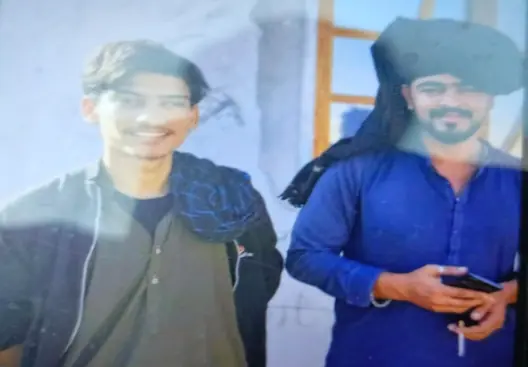
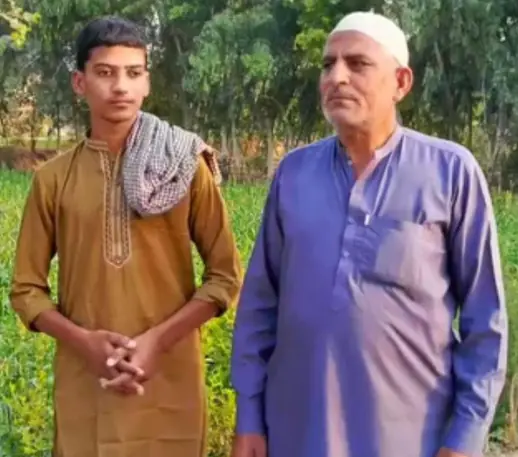
Two of the deceased, whose fathers spoke to Dawn, were identified as Muhammad Abdul Basit, 17, and Aliyan Ishaq, 25. They had all been passed from one sub-agent to the next, all the way to the Iranian border, in what those in the trade call the ‘handover’.
For the young men, the journey comprised a series of anonymous transfers. According to Aliyan’s father, Muhammad Ishaq Butt, his only son was moved through difficult terrain in vehicles arranged by an agent specifically to bypass paramilitary checkpoints.
Basit’s father, Muhammad Mansha Gondal, maintains that his son was shot by the Iranian border force while trying to cross the border with Aliyan. He describes how quickly things moved once his son made up his mind. While he was still trying to arrange a legal route, his 17-year-old, convinced by the older Aliyan, “took the money from home without my permission” and left for Balochistan in mid-December.
Their last contact came on December 19, 2025. “I haven’t spoken to him since then,” Aliyan’s father says. Both families confirmed to Dawn that they received their sons’ bodies in mid-February and have since laid them to rest. Butt adds that his son was headed to Iraq but died in Iran, a discrepancy his family only discovered afterwards.
Gondal identified the smuggling agent as Adnan, from Lakhanwal village in Gujrat, operating from Qatar. “I demand the government arrest him,” he says.
The FIA has since acted on at least part of that demand. According to BBC Urdu, an FIA spokesperson in Gujranwala confirmed that the main local handler who arranged the journey — not Adnan himself, who remains at large in Qatar — was arrested at Lahore airport while attempting to flee to Turkiye. He had charged each young man Rs0.27 million ($970) to take them to Iran.
The official account of what happened at the border, however, differs from Gondal’s. While he says his son was shot by Iranian security forces, BBC Urdu reported that the deputy commissioner of Gujranwala told families the deaths were caused by a snowstorm. The question of how these young men died remains unresolved.
Status anxiety and the ‘martyrdom’ narrative
Basit was 17, and his father was still arranging a legal route when he left. The question his death leaves behind is the same one every family in the GT Road belt eventually faces: why does the illegal path win?
Gondal, speaking to BBC Urdu, described his son’s obsession. “He kept saying to me, ‘When so many people have gone to Europe, why can’t I go?’ He used to say that one day I would send you so many pounds that you wouldn’t have to work.” Yet Gondal had always sensed the danger and did not want his son to make the journey. “I always told him to stay in front of my eyes,” he told the outlet.
The father himself had lived in Germany for years before returning home permanently, which makes his son’s death all the more painful. The boy was chasing something his own father had once had and chosen to leave behind.
The answer, according to psychologist Maha Iftikhar Nagi, rarely comes down to absolute poverty but is driven by something harder to see, what she calls “social comparison”. Migration is rarely about adventure. “It is less about adventure and more about reclaiming dignity and self-worth.”
In Punjab, this comparison has a physical form. B, the 28-year-old migrant now living in Spain, explains the appeal behind going abroad: “The large, brightly painted cement mansions in villages built by families with relatives abroad serve as permanent, community-wide advertisements for the game.”
But money is not the only factor. “It is about the poverty of opportunity,” Sahi, the journalist, says. Families spending up to Rs4 million ($14,400) to send their sons abroad clearly have the capital to start a local business, but they choose the ‘game’ instead.
“Locally, migration isn’t just about survival; it is a way to tell your neighbours and relatives: we made it too,” Sahi adds. “They see the freedom on social media and decide that the gamble is the only way to truly live.”
In these communities, identity is socially constructed. “When peers migrate and display economic progress, staying behind feels like stagnation, which translates into shame and a wounded sense of self, even if material survival is secure,” explains counsellor Farwa Naqvi.
This pressure, she continues, forces the mind to reorganise risk. It struggles to hold the tension between ‘this opportunity will improve my life’ and ‘this could kill me’, and consequently resolves the discomfort by filtering out threatening information.
As Nagi puts it: “The danger is not ignored. It is reframed, allowing hope to keep us moving forward.”
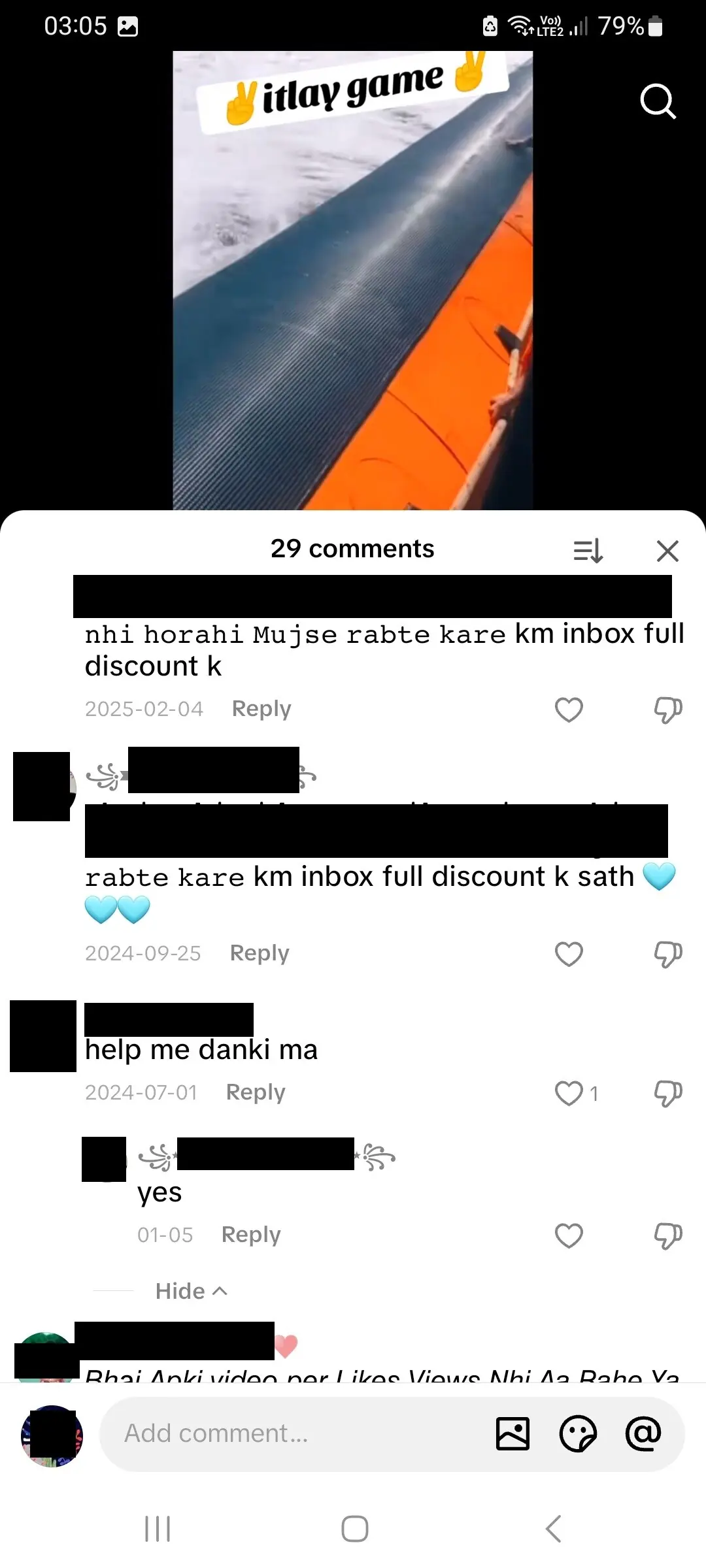
At the community level, that reframing has a name. Nazakat Hussain, who worked on a migration project at the European Research Institute, calls it a “martyrdom narrative”. A death on the dunki route is frequently framed not as a tragedy but as a sacrifice for family uplift. “Migration is seen as responsibility and courage while staying can bring social stigma.”
In this skewed moral economy, the young man who dies at a border or at sea is hailed as a martyr, while the one who stays for a local job is seen as a failure. Smugglers have exploited this “prestige standard”.
Agents also use religious references and phrases like ‘insha Allah’ (God willing), ‘hijrat’ (a term deeply rooted in Islamic history, culture, and theology), and ‘Allah ke karam se game kamyab hogaya hai’ (the game has been successful with the blessing of God) to appeal to people and legitimise the journey.
In the eyes of the community, they are not criminals but the only ones who deliver.
When one makes it, everyone wants to go
In Sialkot’s Daska tehsil, Ibrar Hasher, 31, has seen this unfold for years — young men choosing the irregular route while he underwent the painstaking documentation required to move to Saudi Arabia legally.
Even the death of hundreds of Pakistani migrants en route to Europe didn’t break the spell in his village. “When the Libyan boat sinking incident took place in 2025, there were three men from my village in that boat,” Hasher recalls. “Two of them died, but one made it through and somehow reached his destination.”
At the time of the sinking, around 30 to 35 boys from his village were already in Libya, waiting to move forward. “Most of them came back to Pakistan, but some stayed there, hoping that they would make it … they had already sold everything before leaving, even their houses.”
But back home, people did not see the lone survivor’s story as a warning. For them, it was a success story, one of those exploited by agents who lure people into believing that they would choose safe routes.
To these young men, the documentation Hasher went through for his Saudi visa appears as a wall they have no patience to climb. Instead, they opt for easier, albeit illegal routes. It starts with them pestering their families, who then do everything to help them realise their dreams.
But Hasher is clear: the legal route is the only route worth taking. He applied for a European visa himself from Riyadh recently and received a rejection. “Our country’s reputation is not good compared to other countries,” he says. “That is why they refuse to give us a visa.”
For the young men watching from Hasher’s village, that rejection is its own kind of answer.
Governing the algorithm
While migration to Europe is a common topic at village gatherings, and people tend to trust agents vouched for by relatives, much of the actual recruitment now happens over a phone screen.
A 2025 study titled “The Use of Social Media in Irregular Migration and Migrant Smuggling”, published in the Journal of Borderlands Studies, identifies this digital layer as a “semi-public online marketplace”, arguing that social media has become the “critical infrastructure” of modern smuggling.
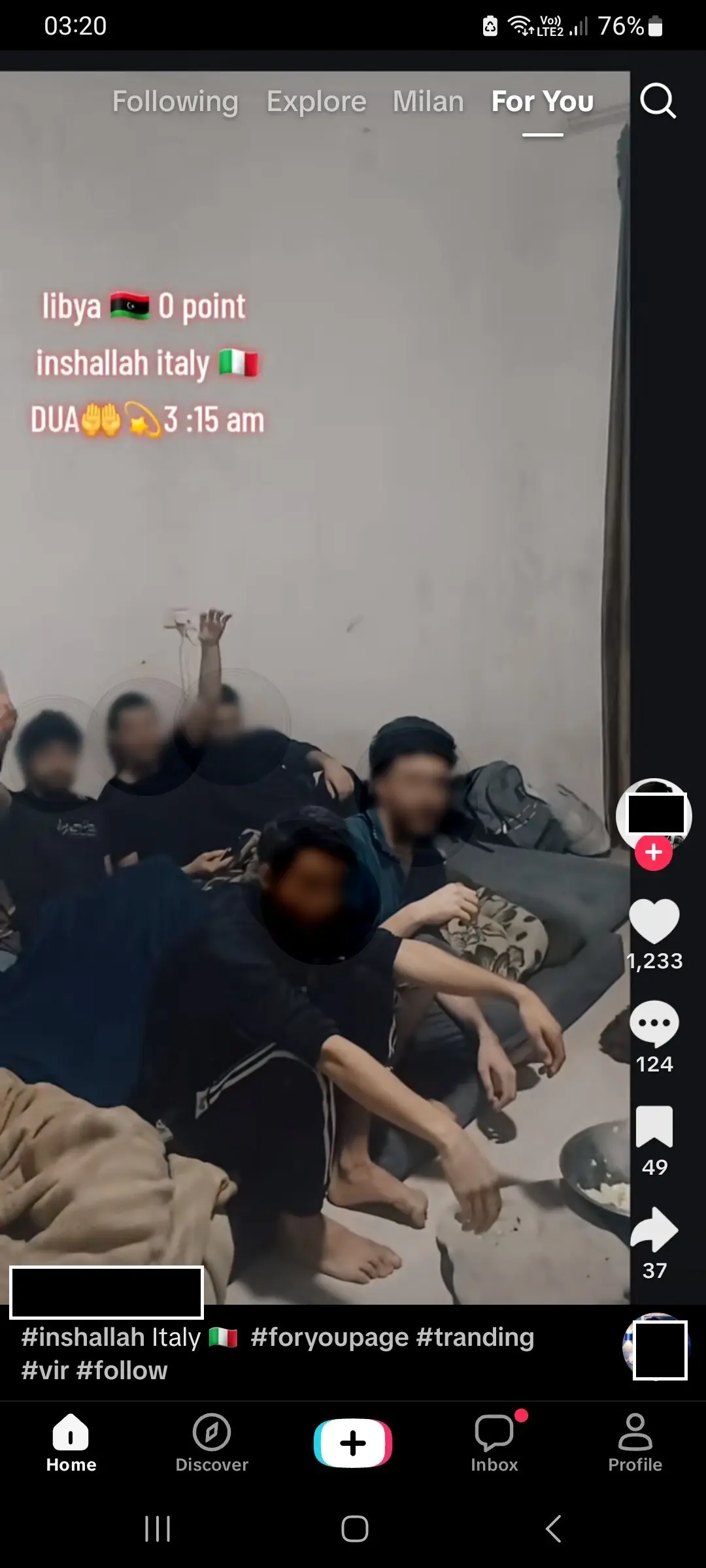
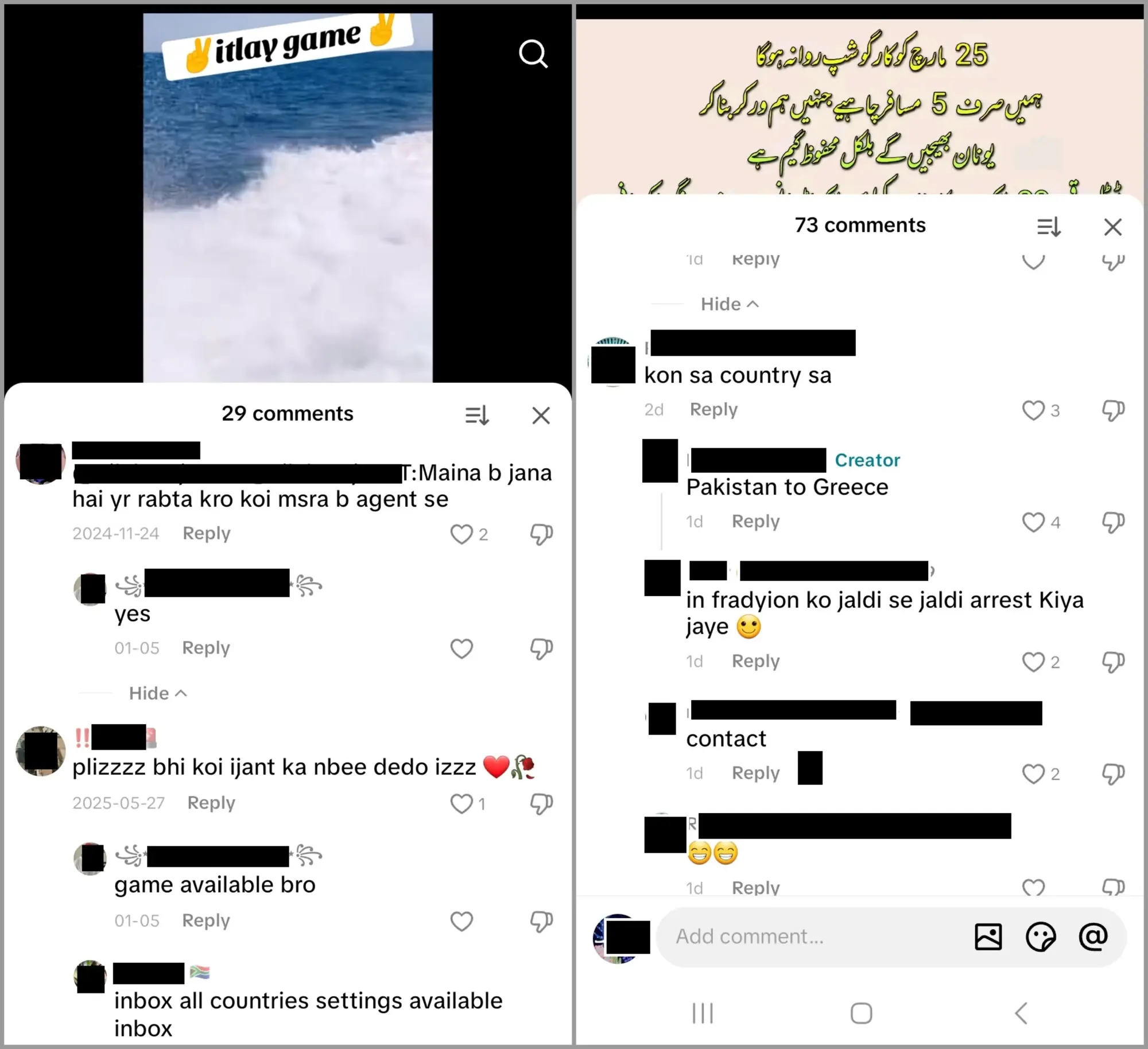
Earlier in 2023, a Dawn investigation found how smuggling networks were actively recruiting on TikTok. Three years on, the trade is still advertising on the same platform, as seen in the screenshots embedded throughout this piece.
Dawn reviewed multiple social media platforms, including Facebook and YouTube, between December 2025 and February 2026 to trace accounts advertising illegal routes. On Facebook, recruitment was largely confined to closed groups or buried in old posts. On YouTube, content was sporadic and inconsistent.
The most active, systemic recruitment and advertising was found on TikTok, where dozens of accounts were seen openly advertising smuggling packages, with agents listing prices, routes, and contact details in plain sight. Despite removals, new accounts advertising identical services appeared within days, revealing how the social media platform’s content moderation is reactive rather than preventive.
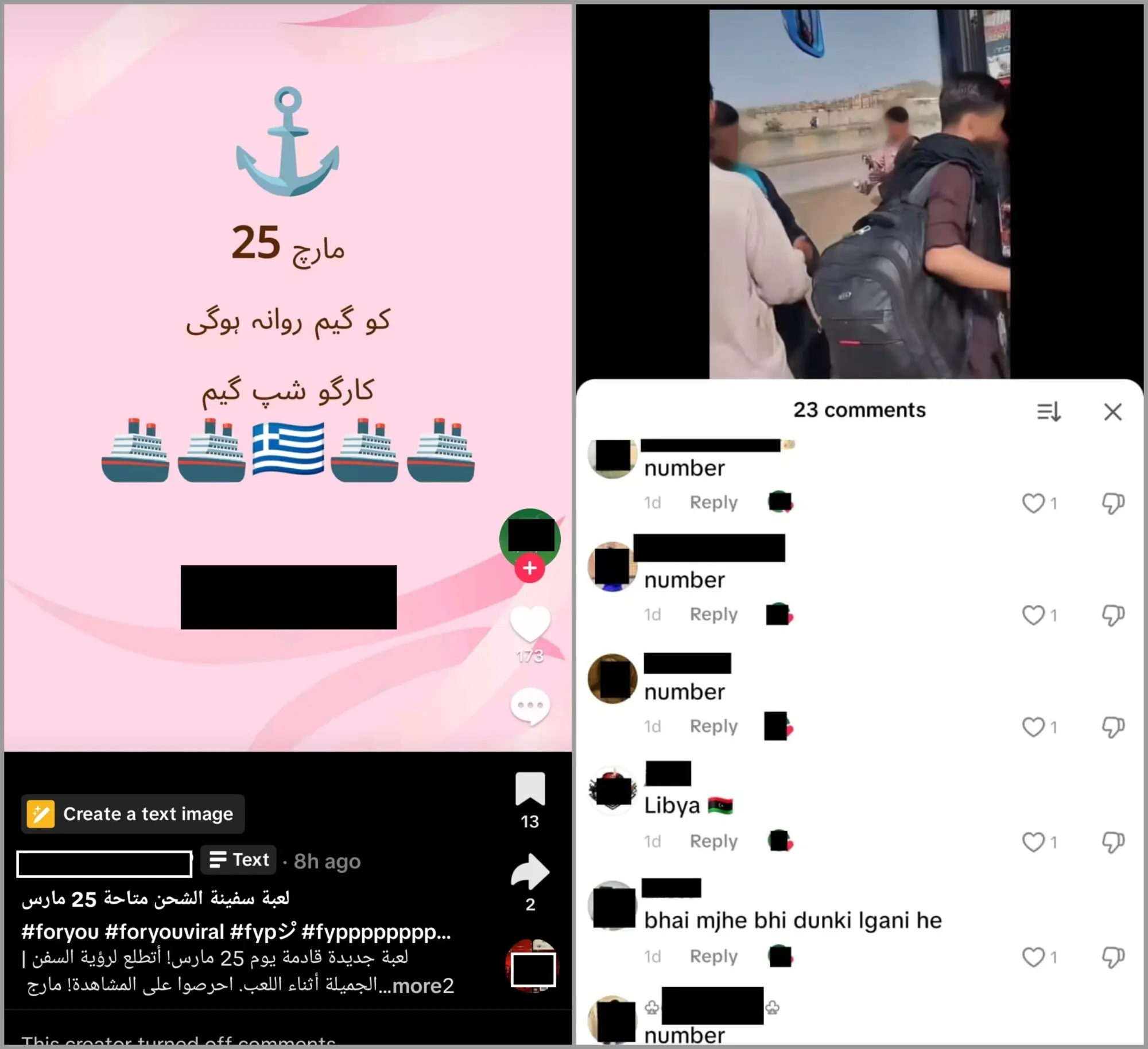
In one post reviewed by Dawn, a TikTok account advertised a cargo ship departure to Greece on March 25, offering passage to five passengers for Rs2m with Rs0.2m ($720) required upfront. A Pakistani passport was listed as mandatory. A second post from the same account announced the same departure with comments disabled — a sign that such accounts are aware of the scrutiny they attract.
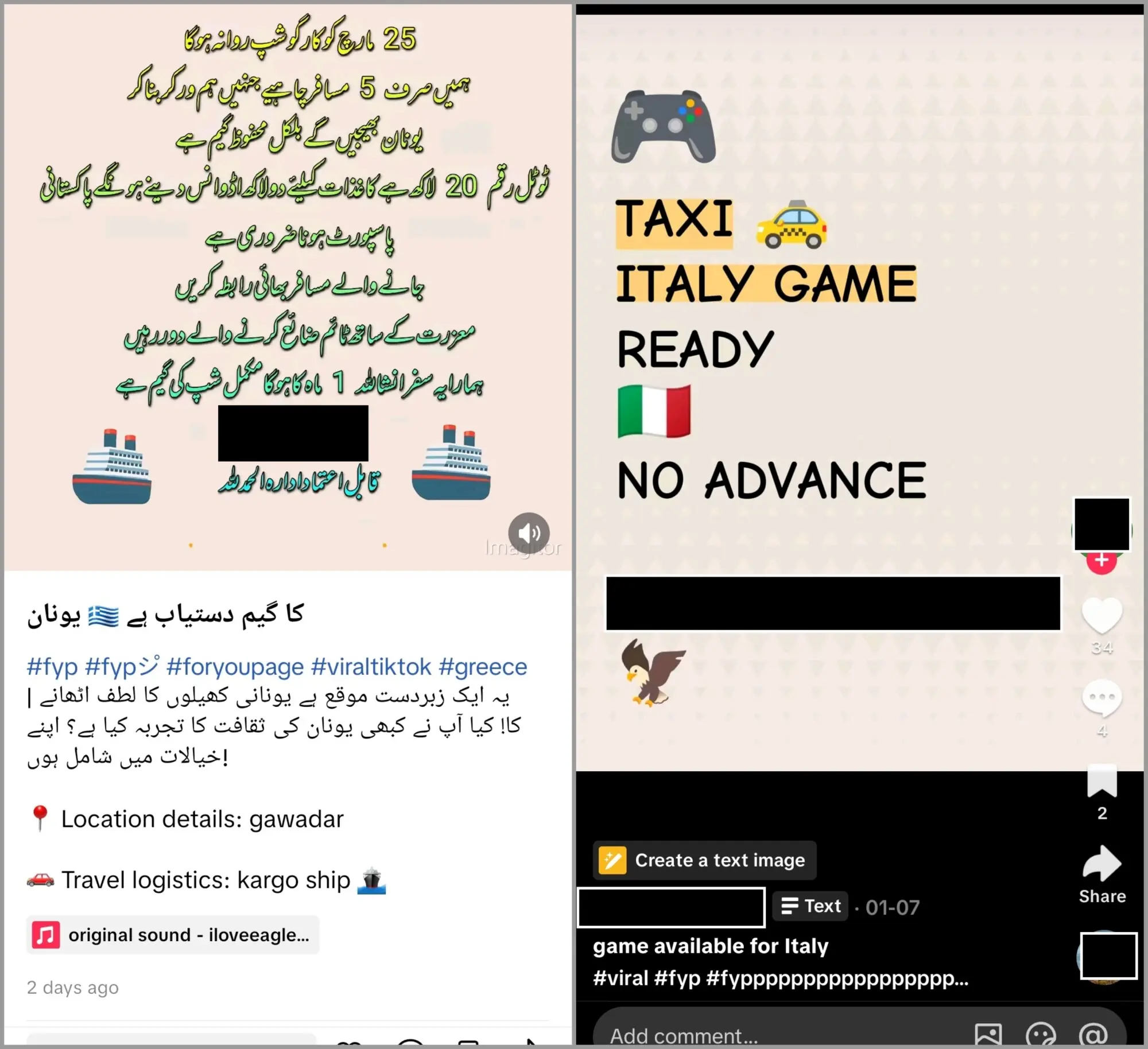
“Not only is Europe’s life being glorified on TikTok, but all the struggles there are also being cut off from it,” Sahi says. The influencers are not just organic migrants sharing their journeys but now serve as a “calculated marketing arm” of the smuggling cartels. TikTokers and vloggers are also getting business by promoting brands and money transfer services through their videos.
TikTok says it does not allow content that facilitates or coordinates human smuggling. Between October and December last year, 98.6pc of content violating the platform’s exploitation policies was removed.
The company says it continually strengthens enforcement by reviewing emerging trends and working with external partners, adding that it has banned all flagged accounts for breaching community guidelines on human trafficking.
TikTok also works with Pakistani law enforcement, including the FIA, the National Cyber Crime Investigation Agency, and the Pakistan Telecommunications Authority, to identify and remove such content.
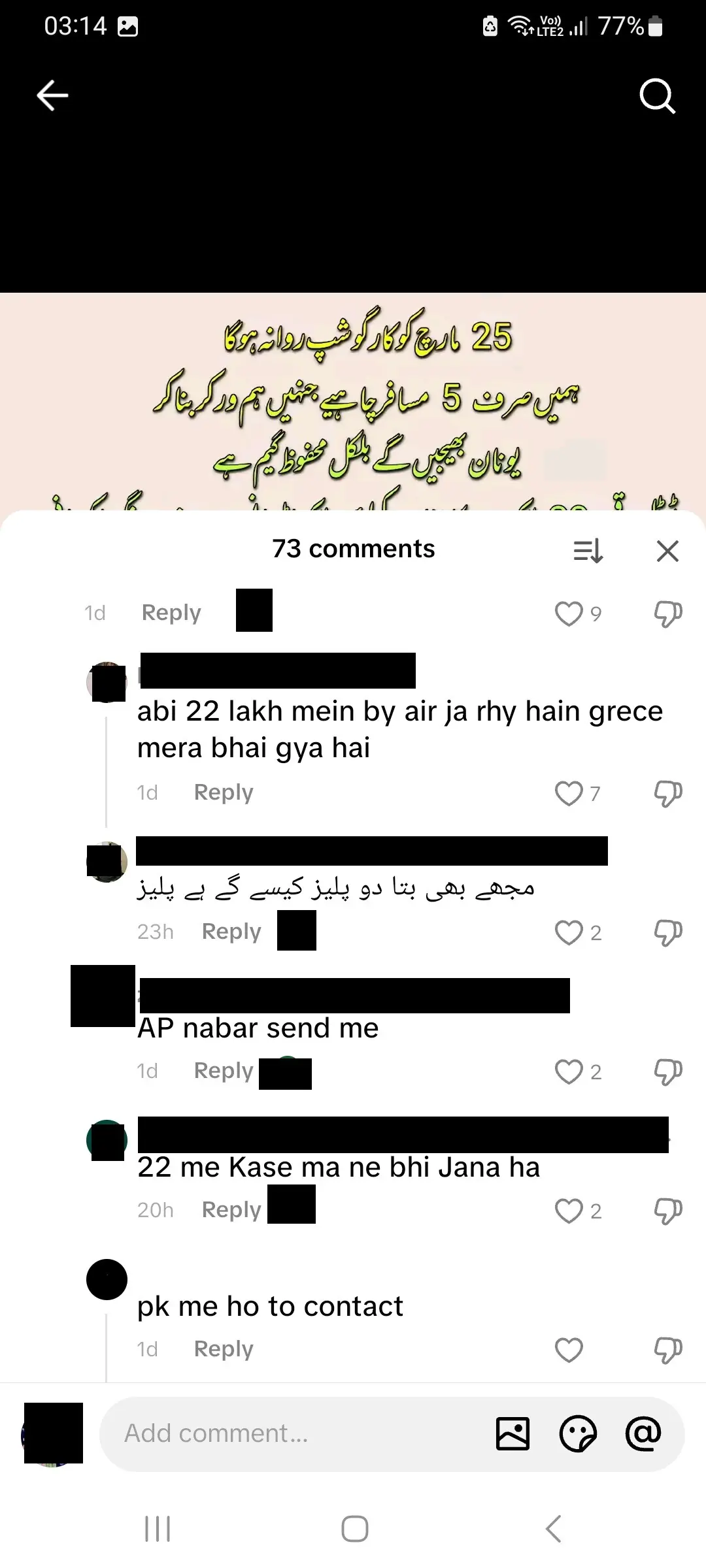
Meanwhile, the International Organisation for Migration, Pakistan, has been cautious about claiming a direct correlation between social media use and irregular migration “unless supported by methodologically robust, consent-based research”.
In a written explanation provided to Dawn, IOM notes that where data exists, it “more often shows associations: social media can amplify aspirations and smuggler marketing”, while drivers such as livelihood, debt, and family networks are equally at play. The organisation acknowledges the need to “further expand reach and strengthen digital presence to promote safe, regular, and orderly migration” and to “effectively counter the high volume of misinformation promoted by smuggling networks”.
Saad ur Rehman Khan, project manager at the International Centre for Migration Policy Development’s Migrant Resource Centre in Pakistan, is candid about the limits of such efforts. “Structural inequalities and limited access to legal migration pathways, particularly for low-skilled workers, are broader policy challenges that cannot be resolved by awareness initiatives alone,” he says.
FIA’s Lahore Director Muhammad Ali Zia adds that the agency is “actively monitoring online platforms like TikTok, Facebook, and WhatsApp to combat human smuggling networks“ using AI-powered tools to track suspicious activity.
“The FIA is working with social media companies to remove content that promotes human smuggling and to identify operators,” he adds.
For now, the algorithm moves faster than the institution. By the time a policy response is drafted, another wave of ‘Good News for Pakistanis’ posts has already found its audience in a Punjab village.
Geography versus enforcement
If the airports are a filter, the land borders of Balochistan are a sieve.
B, who crossed into Spain this way, says his group was taken through routes specifically chosen to avoid thermal detection. They moved only at night, so border patrols would not spot them.
Professor Hafeez Jamali, an anthropologist and former faculty member at Habib University in Karachi, says human smuggling networks operating in Balochistan are not simply repurposed fuel-smuggling infrastructure but a “super, super secretive” chain operating on its own terms.
“While vehicles used for oil smuggling may be repurposed for trafficking migrants, the economic networks involved are different,” he tells Dawn. “The oil smugglers are not, based on my research, necessarily dealing with human trafficking, and the human traffickers are not necessarily dealing with oil smuggling.”
In districts like Chaghi, the largest in Pakistan by area, a handful of FIA, Levies, and Frontier Corps personnel are tasked with covering vast swaths of territory. Stopping human trafficking and smuggling comes on top of counterinsurgency and border management duties.
The ‘machine’ does not need to bypass the state. It simply exploits the gaps left by overstretched resources, operating in terrain where personnel are, in Jamali’s words, “barely able to survive in this waterless wasteland themselves”.
He is careful to distinguish between individual corruption and systemic collusion, saying that, “there is no evidence to suggest that there is a systemic involvement of any particular law enforcement agency in facilitating such an illegal activity”. Based on his 2017-18 fieldwork, corruption exists, but individual lapses are different from institutional facilitation.
Those lapses converge in Turbat.
Kech-based journalist Asad Baloch has documented nearly 150 to 200 arrests in a single month in Turbat alone. The network, he says, is almost certainly very large and influential and involves both local and outside operators working in coordination, with locals responsible for the final leg of the journey. Migrants typically travel by pick-up vehicles or passenger buses rather than the Zamyad vehicles associated with diesel smuggling, which he says are rarely used for human smuggling. Most are caught hiding or travelling openly.
He says that over the years, due to the crackdown from law enforcement, the routes have also shifted. Migrants once used land routes through the Mand, Boleda, and Zamoran areas of Balochistan toward Iran, but those are now largely abandoned. “Most people want to go to the coast via the highway on the road to the river,” Baloch adds.
Some are caught. Some make it through.
The assumption that migrants use mountain roads and rough terrain to evade security is only partially true. “Obviously, they use mountainous and rough roads as well, but the people who have been caught, around 200 in one month, were not on rough roads. They were using regular roads and were caught at the main highway.”
In January this year, he says, around 70 people were apprehended on the same route. “They were also travelling on the main highways and thoroughfares, not on the kachha roads.”
How these migrants reach Turbat at all, Baloch says, remains unanswered. “I spoke to the authorities, to the police, about how these people come here, but they, too, do not have an effective answer to this.”
90-second scan and the ‘legal fake-out’
At Pakistan’s immigration counters, an officer has less than 90 seconds to decide a traveller’s fate. It is a system built on a contradiction that the state has not resolved.
FIA Director General Shahzad Nadeem Bukhari points to the “added scrutiny” as a force testing the very limits of airport infrastructure. FIA Lahore Director Zia tells Dawn that while the agency uses AI-powered risk analysis, the scale is immense, with 66,154 passengers offloaded in 2025.
Sahi questions what those numbers actually represent. In his reporting experience, only 30pc to 40pc of offloadings are based on genuine suspicion. The rest involve passengers who could not pay the ‘setting’, the bribe at the immigration counter, or officials completing quotas. “When an order comes from above, they have to complete the numbers,” he says. “A lot of cases will be mismanaged.”
Abbas of the SSDO adds that, “if 300 people are being recruited from a village, it did not happen overnight. The recruitment drive had to be carefully surveilled.”
But stopping people at airports is not enough.
“Offloading is an enforcement tactic, not a migration strategy,” says Dr Suleri of the Sustainable Development Policy Institute. “If the underlying drivers remain, the demand will simply re-route.” Rather than just guarding gates, using AI to flag the money itself, tracking small, repeated remittances and unusual cash withdrawals will make the dunki product harder to sell.
Even when the gate holds, the ‘machine’ finds ways through it or simply buys its way past. Zia is blunt about the cost of integrity, saying that in 2025, 76 officials were dismissed and another 71 arrested. “They were the black sheep greasing the wheels of the very trade they were paid to stop.”
In 2025, the FIA arrested 2,167 agents, of whom 1,648 were convicted.
The ‘machine’ has evolved to exploit the very legality the state enforces. As digital passports and biometric records make forged documents increasingly difficult to use, smugglers found a more elegant solution.
A former FIA official explains that they now meticulously distinguish between frequented and unfrequented routes, turning airport immigration counters into the front line of what he calls a “legal fake-out”.
“It is a paradox of documentation,” the official tells Dawn, requesting anonymity. “A person will present a genuine work permit for Libya, complete with a mandatory protector stamp. On paper, everything aligns with the regulatory framework.”
The officer at the counter is under immense pressure. If they stop a traveller whose papers are technically perfect, they risk complaints to higher authorities and financial lawsuits. “Yet if that same person is later filmed drowning in the Mediterranean, the ‘failure’ falls squarely on the official who authorised the boarding.”
Bukhari recalls one such case where people were going to Europe while carrying what appeared to be official letters from the Federal Board of Revenue (FBR), apparently to attend a conference. “When questioned, they failed to provide basic details, and it later emerged that they had paid Rs2.3 million each to an agent,” he says.
This deception extends to pilgrimages, according to a former FIA official. Migrants, he says, often join large delegations to Iraq or Iran under the guise of Ziarat, only to leave the group once across the border, moving toward illegal channels leading to Turkiye and Greece. In this ecosystem, a valid passport is not a travel document but a Trojan horse.
The FIA knows the gate is not enough. Because the masterminds live abroad and operate in the cloud, the agency has been forced to go past the terminal, setting up immigration liaison offices in Turkiye, Iran, Italy, Greece, and Spain. These officers recover missing nationals and interview victims in foreign jails while tracking financiers who operate with impunity.
According to the ex-FIA official, the physical chase is being outpaced. The trail rarely ends at a bank counter anymore, and by the time authorities flag a suspicious transaction, the money has often been tumbled through multiple crypto wallets, leaving investigators staring at dead ends.
The ‘machine’ is a global circuit. If you only cut the wire in Daska, the current simply finds a new path.
The feed
Back in Gujrat, the ‘machine’ still finds Arif and those like him in the dark.
He scrolls through an endless loop of TikTok videos and reels, nameless faces posing in European piazzas, high-energy music over grainy footage of the Mediterranean, and “success stories” that never mention the price of the ticket.
For those watching from the migration belt, these are not just videos but maps that leave out the Balochistan desert and the silence of Basit’s grave.
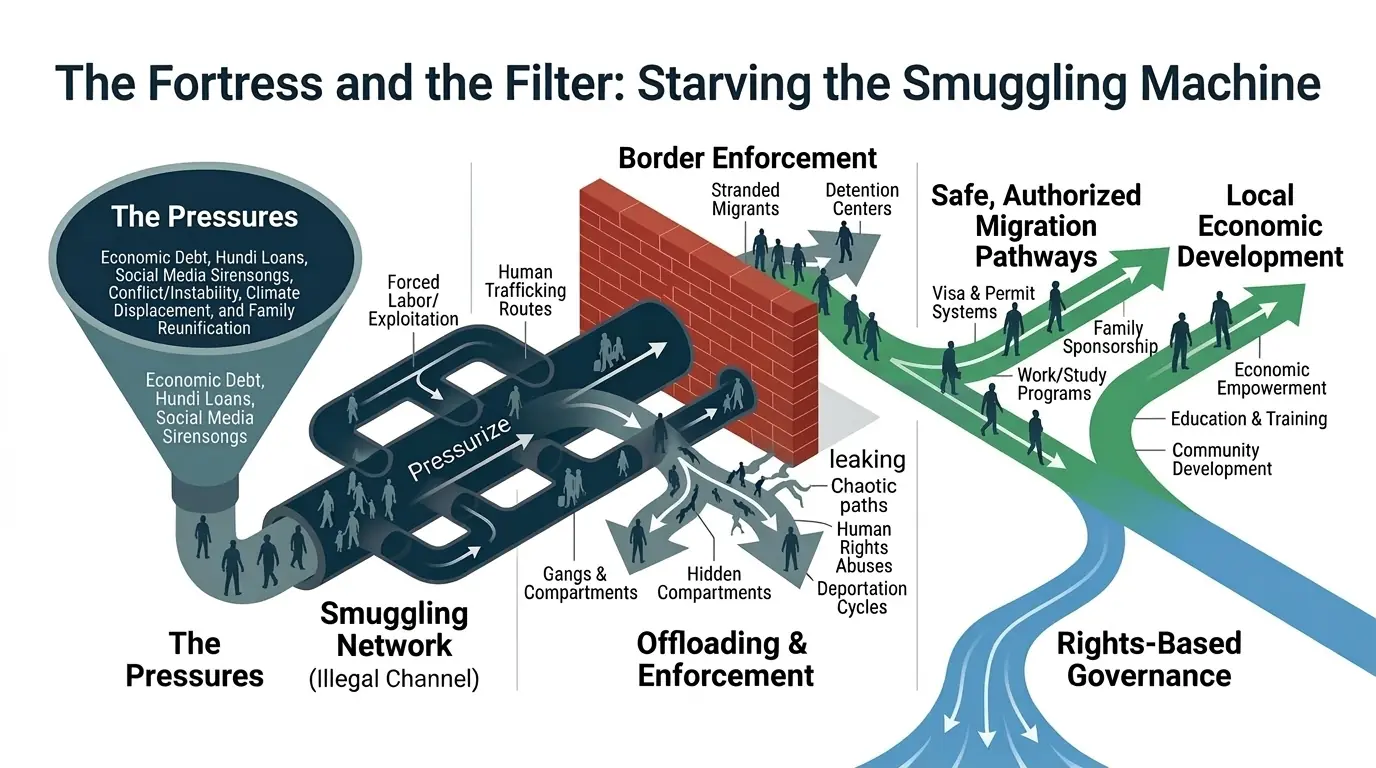
The real ‘machine’ is in the comments section. Underneath every video of a sunset in Italy or a street in Germany, a secondary world unfolds. Arif sees the trail of questions: “How much? Which route? Bhai, check WhatsApp! Plz DM me your number.” He sees the replies from anonymous accounts, the Telegram links in private messages, and the promises of a “guaranteed” crossing.
Arif knows the risks. He has seen the wooden boxes come home to families who will never be the same. But in the silence of the village, the ‘machine’ offers a rhythm of possibility that the state cannot yet silence.
The algorithms whisper the same promise they made to the dancer in the Italian square: that the ‘game’ is worth the gamble and that fate, unlike the FIA, might just let him through.
Imran Gabol from Lahore and Imtiaz Ali from Karachi contributed to this story.
The real name of a minor has been anonymised to Arif, and the full name of B* has been concealed to protect privacy. Exchange rate: $1 = Rs278
Sarah B. Haider is a former news editor on Dawn’s online news desk with more than a decade of experience in journalism. Her work primarily covers women’s issues and social justice. She can be found on X at @bohotsaara.

Zahir Abbas Sial has been reporting for Dawn News (TV) since 2011. His coverage spans investigative reports, crime, and social justice issues across multiple Punjab districts. He can be found on X at @ZaheerAbasSial.