The binary trap: How narratives of ‘Us vs Them’ manufacture consent for war
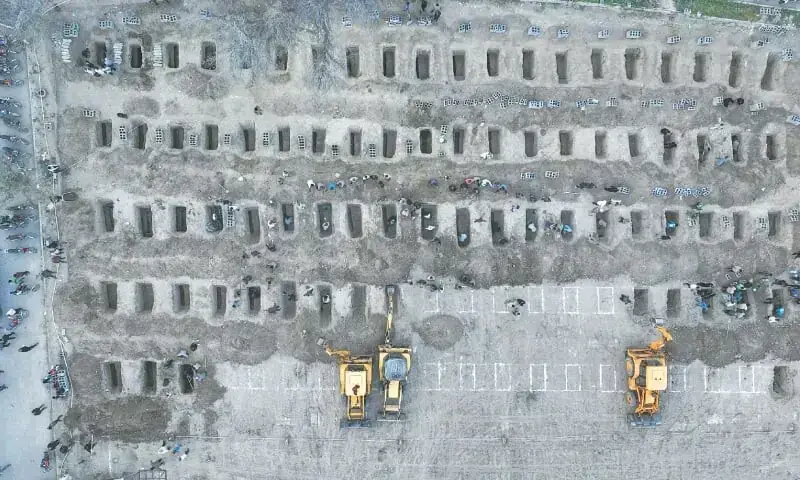
A persistent, lung-searing rain of fire is currently cauterising the nerves of the Iranian landscape, exposing the jagged vulnerability of a nation under the reach of a rampaging superpower and the unrestrained fury of its regional spearhead. Above, the indifference of the sky; below, people caught in the crossfire of history.
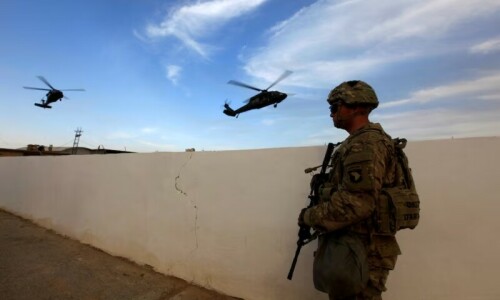
Far from this flayed earth, in antiseptic foreign situation rooms, the conflict is reduced to a clinical simplicity that pits “civilised stability” against a “rogue state.” The nuances of a nation of 92 million people are flattened into targetable dots on a digital map.
Again.
If Donald Trump’s Pentagon sees only targets, the “Axis of Resistance” diorama is often viewed only as heroic defiance. One might ask why, amidst the visceral horror of falling masonry and the killing of civilians, we should pause to critique the architecture of such a binary. The answer is that this bloodbath was made possible by that very architecture.
The politics of othering
Scholars addressing securitisation point out that once a population is moved out of the realm of politics and seen as an “existential threat,” any measure, no matter how violent, is deemed permissible. By characterising Iran through the lens of a permanent emergency, the West moves it beyond the reach of negotiation and into a realm where raw power projection is the solitary remaining logic.
The “us vs them” framework, the division of the world into light and dark, is the fertile ground in which public consent for devastation is nurtured. Edward Said’s foundational writings illustrate how rendering the ‘East’ as a featureless monolith creates the ideological clearance to justify Western conquest. By constructing the “Other” as inherently irrational or backward, the West grants itself a moral mandate for violence.
This logic allows figures like Pete Hegseth to frame the destruction of cultural sites as a strategic necessity. Destruction becomes a form of mercy, whereby a civilisation must be reduced to ash for it to be saved. When proponents of this war suggest that the schoolgirls killed by strikes in Minab are better off dead than in a burqa, they reveal the cruel heart of this zero-sum logic. Such an ideological posture serves as a violent manifestation of Mahmood Mamdani’s ‘Culture Talk’, the practice of explaining politics as a consequence of a culture’s essence rather than historical reality (the “Bad Muslim”).
Iran has been chiseled into minds as a monochromatic threat, a land ruled by ‘mad mullahs’ with their fingers on nuclear detonators. The caricature has been cultivated since the 1979 Islamic Revolution, serving to justify decades of isolation. By viewing Iran through a purely theocratic lens, the West relegates its own interventionist history to the margins, conveniently omitting the 1953 overthrow of the democratically elected Mossadegh and the Iran-Iraq War, where Western powers actively sustained a war of attrition which devastated an entire generation.
Such framing strips away the context of past provocations from the current crisis. By the time the first American missile is launched, the “Other” has already been dehumanised into a total abstraction.
Over the years, the Atlanticist powers have rendered the Middle East a laboratory for intervention, while remaining wilfully blind to the humanitarian debris left in its wake. We have seen this script before: in the shattered statehood of Libya following the 2011 intervention, the sectarian firestorm of Iraq triggered by a “preventative” invasion in 2003, and the hollowed-out remains of Afghanistan after 20 years of failed nation-building. In these cases, ‘liberation’ served merely as a mask for a process of institutional and social liquidation, leaving systemic disorder in its wake.
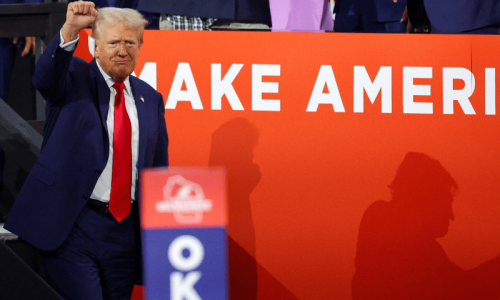
We are told this is a war for Western security, erasing 70 years of causality. The moral clarity claimed by the West is a fiction sustained by collective amnesia. Donald Trump built a brand on the promise of “no more forever wars,” but his “Epic Fury“ looks suspiciously like a Bush-era crusade. While the rhetoric is of liberating the Iranian people, the ledger speaks of oil. The scramble for energy dominance reveals the extractive heart of the operation; behind the talk of “rogue states” lies a cynical play for resource capture.
Similarly, Netanyahu, mired in domestic scandal and international warrants, has found in the bombardment of Tehran an escape from the legal fallout of his actions in Gaza. By exporting the logic of “total victory,” he ensures that violence remains the only political currency, effectively drowning out the global calls for a ceasefire and accountability for war crimes.
Washington and its allies have spent years discarding their own multilateral frameworks, most notably through the 2018 unilateral withdrawal from the Joint Comprehensive Plan of Action (JCPOA), or the Iran nuclear deal. By trashing a verified diplomatic agreement that curtailed uranium enrichment in favour of a “maximum pressure” campaign, the US corroded diplomacy into a stalling tactic, leaving use of force as the only binding mandate. This erosion of the international order allows power to operate in a state of exception, where the Geneva Convention is treated as a menu of options rather than a mandatory code of conduct.
However, casting Iran solely as a victim of imperialists ignores the internal decay of a theocratic authoritarian state that clamped down on its youth and its movements for reform. Ignoring the Iranian state’s violence against its own is a different kind of erasure. But there is no liberation in liquidation. Consequently, a government that has survived by upholding a permanent state of emergency and the specter of “the Great Satan”, has just been handed a revitalised version of both.
Rethinking a world order that needs enemies to survive
This same binary trap finds a devastating application in the ongoing genocide in Palestine.
Acknowledging the complexity of a settler-colonial struggle would require admitting the failure of the global legal order. Palestinians are a security threat to be managed where possible, annihilated where not. With perennial victimhood on the Israeli side and dehumanisation on the other, the binary exempts.
As long as the Middle East is viewed through the lens of a civilisational struggle, we will remain trapped in a cycle of violence. True nuance requires us to look into the abyss of the other and see not a monster or a saint, but a mirror of global historical failures. It requires us to see the Iranian student protesting for dignity, and the Palestinian child under the rubble, as humans deserving of a future that is not dictated by the reach of a missile.
Until we move beyond the binary, we are merely managing the intervals between massacres. The rubble of Tehran and the silence of Gaza are the final gasps of an old world order that would rather burn the map than learn how to read it.
The author is a researcher and student of global politics based in Brussels.