Pakistan hosts the first round of face-to-face talks between the US and Iran in 47 years in April; the talks end without a breakthrough, but also without a breakdown
US, Iran hold high-level talks in Switzerland on June 20 after signingpreliminary agreement to end the war; hold talks in Doha on July 1, with mediators citing “positive progress”
US launches strikes on Iran on July 8 in response to attacks on ships in Hormuz, Tehran retaliates as Hormuz heats up again; Trump says ceasefire is “over” on July 10 but talks ongoing
The Iranian army said that it targeted US military facilities in Jordan with drones, state media reported, after the United States carried out another wave of strikes on Iran, AFP reports.
“The Army of the Islamic Republic of Iran announced that… in response to the enemy aggression, it targeted the communication systems and fuel storage facilities of the US military in Jordan using suicide (kamikaze) drones,” state television IRIB said.
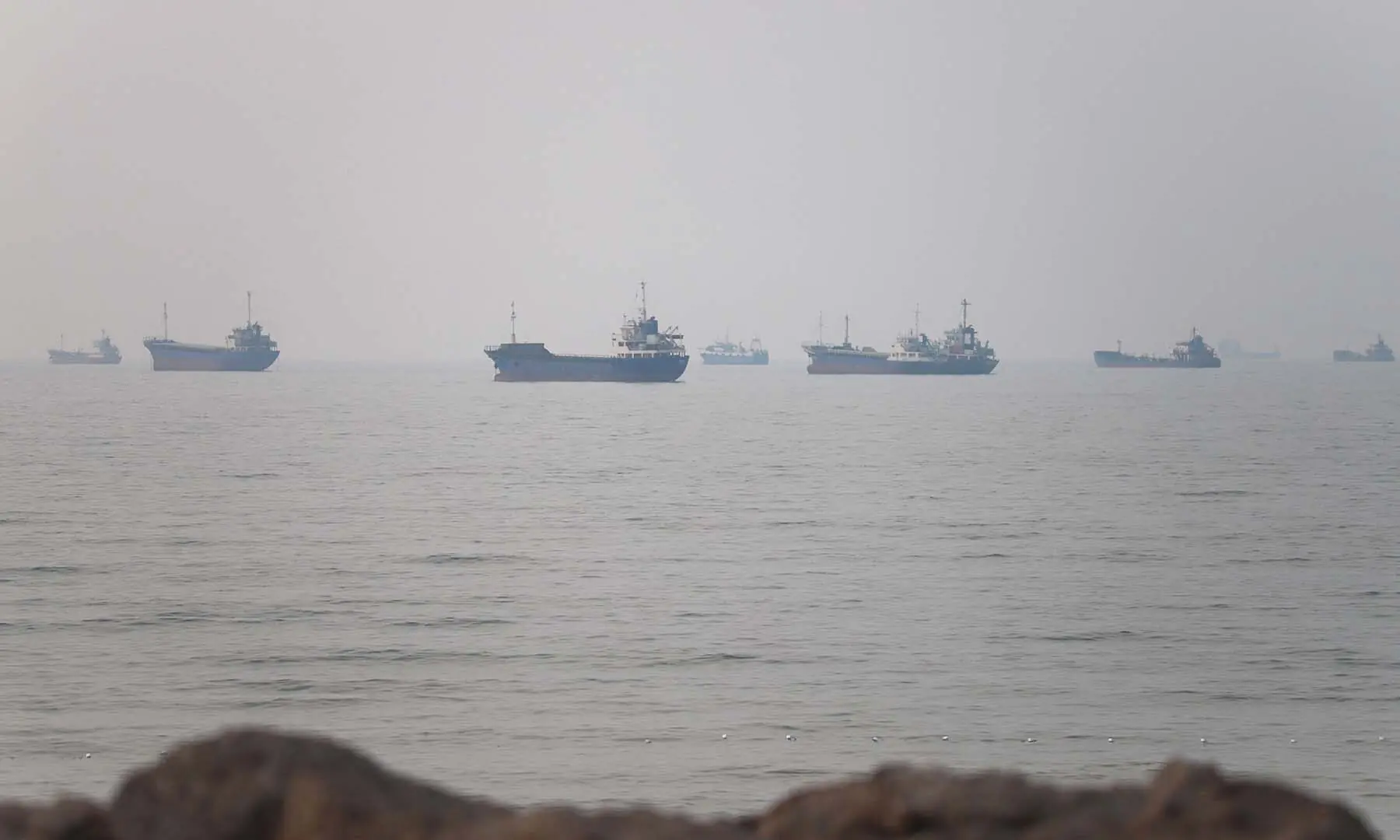
Fewer vessels travelled through the Strait of Hormuz on Wednesday, the first day after the US reimposed its naval blockade on Iranian ports with both countries escalating strikes across the Gulf, reports Reuters, citing shipping data.
Seven vessels crossed the strait on Wednesday, mostly on the Iranian route, down from 13 the previous day, Kpler data showed.
Four empty vessels entered the Gulf, including three small oil tankers and a dry bulk carrier for grains, the data showed. The three vessels that exited the strait on Wednesday carried liquefied petroleum gas, coal and fuel oil.
The Islamic Revolutionary Guard Corps says it carried out a combined missile and drone attack on Ali Al Salem Air Base in Kuwait, Al Jazeera reports.
In a statement carried by the IRIB broadcaster, the IRGC said it targeted a C-RAM early-warning radar and a gathering point for US soldiers during the eighth wave of its “Nasr 2” operation.
It also accused the US of using Kuwaiti territory to launch attacks against Iran and called on Kuwaitis to demand the removal of US forces from the country.
The US Central Command says that the US military completed its latest wave of strikes on Iran that it carried out at President Donald Trump’s direction, Reuters reports.
“US forces struck Iranian command centers, air defense sites, missile and drone capabilities, and coastal surveillance facilities,” it said in a statement, adding it also hit targets in Bandar Abbas, home to Iran’s largest port and key navy and Revolutionary Guards facilities on the Strait of Hormuz.
Oil prices rise for a fourth straight day after a new wave of US strikes on Iranian military installations fuelled fears of renewed full-scale conflict and supply disruptions in the Strait of Hormuz, according to Reuters.
Brent crude futures climb 33 cents, or 0.4 per cent, to $85.28 a barrel by 0026 GMT, while US West Texas Intermediate futures rise 42 cents, or 0.5pc, to $80.02 a barrel.
“With tensions in the Middle East flaring up again, buying is taking the lead,” said Hiroyuki Kikukawa, chief strategist of Nissan Securities Investment.
“While mediation efforts by neighbouring countries continue and the consensus view is that a full-scale war is unlikely, WTI could still rise to $85-$87 depending on how the conflict develops,” he said.
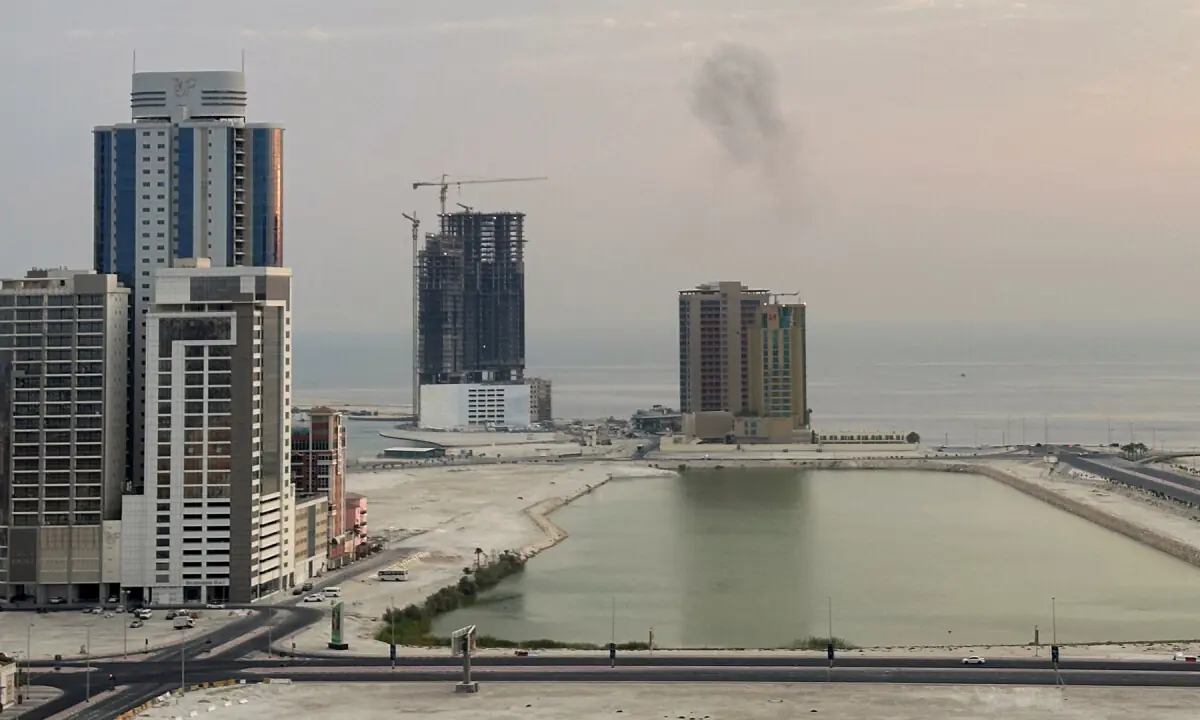
Kuwait says it was intercepting Iranian drones, while air raid sirens rang out in Bahrain, following another night of American strikes on Iranian territory, according to AFP.
In a statement on X, the Kuwaiti army said they were “engaging hostile drone attacks following the nefarious Iranian aggression”.
Bahrain’s interior ministry urges citizens and residents to “remain calm and head to the nearest safe place”.
India has raised windfall taxes on exports of diesel and aviation turbine fuel as global oil prices surge amid an escalation of the US-Iran conflict, Reuters reports citing a government order.
The duty on diesel exports has been raised to 15.5 rupees ($0.1610) per litre from 8.5 rupees per litre, while the aviation turbine fuel duty has been increased to 14.5 rupees per litre from 7.5 rupees.
Iraqi air defences have intercepted three drones in the vicinity of the US consulate in Erbil, in northern Iraq, Al Jazeera correspondents on the ground are reporting.
Lebanese President Joseph Aoun says that a US-sponsored framework for negotiations with Israel is “the best possible option” and has already begun producing results, Anadolu reports citing a statement from the Lebanese presidency.
Aoun has made the remarks during a meeting with a delegation from the Orthodox Gathering.
“Our goals are clear, and we will not be lenient when it comes to Lebanon’s rights,” he says.
Aoun adds that disagreement is legitimate, but conflict is not, further adding that dialogue among Lebanese should serve the national interest rather than personal agendas.
“Hatred does not build a state or institutions. It destroys,” he says. “The road is not paved and there are difficulties, but hope is great for achieving results that end the bloodbath.”
Iran’s top negotiator Mohammad Bagher Ghalibaf has vowed that the country will give a “definitive response” to the US for their “crimes”, according to the Tasnim news agency.
“We have pledged our jugular vein for the defence of this homeland,” Ghalibaf, also the speaker of Iran’s parliament, is quoted as saying.
“We have achieved great honours in a complex war with the greatest material power in the world, and our thinking and action must be equally great, complex, and resilient,” Ghalibaf adds. “Our position of strength in the Strait of Hormuz is the result of the same field strength that the people have created for us.”
In his statement, Iran’s top negotiator Mohammad Bagher Ghalibaf stresses that the country’s national security lies in “preserving the ‘Iranian arrangements’ over the Strait of Hormuz and ensuring the maximum safe and harmless passage of commercial ships through this waterway”.
“America, which is legally empty-handed, wants to diminish the Iranian arrangements in the Strait of Hormuz by force, but we must stand firm so that the rights of the nation are realised,” he is quoted as saying by the Tasnim news agency.
Iran’s top negotiator Mohammad Baqer Ghalibaf says that if his country does not benefit from its memorandum of understanding with the US, “we have no reason to adhere to such an understanding”.
Iran’s national security depends on maintaining “Iranian arrangements” in the Strait of Hormuz, Qalibaf adds in a statement posted on Telegram.
He adds that Iran’s approach to its war with the US and negotiations to end it should be based on national interests, national security and a long-term perspective, adding that Tehran has no choice but to rely on its own strength.
A very long disruption to energy supplies from the war will clearly affect the global economy, the IMF’s strategy director has warned, according to Al Jazeera.
Christian Mumssen says it will be very difficult to plot the IMF’s October forecast if hostilities between the US and Iran continue.
“Internally, we will have to continue to think in scenarios. And for some countries, the question of energy prices … is, of course, extremely important,” he stresses.
Shipping companies are avoiding using a US military-guided transit scheme through the Strait of Hormuz after a wave of Iranian attacks on vessels sparked safety concerns, Reuters reports citing seven maritime security and shipping industry sources.
The US-assisted Traffic Separation Scheme has enabled the export of tens of millions of barrels of oil, helping dampen the impact on energy prices of the largest-ever disruption in oil and gas supplies. Yet shippers are evaluating the route on the Omani side of the strait as increasingly dangerous after a wave of attacks on ships.
It is unclear if the recently attacked commercial ships were sailing under the US scheme, the sources say.
“The US doesn’t seem to have any control over the situation,” one shipping source says, adding that their company opted not to sail through the strait due to crew safety concerns and the deteriorating security situation.
“Iran’s continued ability to target ships sailing through the Omani route means the Trump administration’s proposed solution to keep ships moving is unlikely to work,” says Torbjorn Solvedt, principal Middle East analyst with risk intelligence company Verisk Maplecroft.
White House officials did not immediately respond to a request for comment.
Iran’s education ministry has delayed exams for students across six provinces after the renewed US attacks, Al Jazeera reports.
The ministry says “final exams for all academic tracks in the 12th grade” are postponed. The exams had been scheduled to take place on Thursday and Saturday.
The US government has issued sanctions targeting individuals and entities that it says are a part of an international network helping Iran procure weapons, Reuters reports.
The sanction targets include Iranian and Russian nationals, as well as entities based in Iran, Russia and Nigeria, the US Treasury Department says in a statement.
Today’s sanctions targets “exemplify Iran’s use of foreign aviation and transport firms, financial conduits, and travel coordinators to obscure the Iran’s Islamic Revolutionary Guard Corps’ (IRGC) role in illicit procurement and to move material and personnel globally,” the Treasury adds.
They add to US actions in May against individuals and companies, including several in China and Hong Kong, over accusations of aiding Iran’s weapons sector.
In June, the US imposed sanctions against 11 people and entities for helping weapons procurement by the IRGC and the Iranian military.
The White House is weighing another extension of waivers allowing foreign ships to transport goods between US ports as renewed conflict with Iran raises concerns about energy prices and supply disruptions, Reuters reports citing two sources familiar with the discussions.
The Trump administration is considering whether to extend the waivers with geographic restrictions, limiting where foreign-flagged vessels can transport goods between US ports, as officials seek to preserve a tool they say has helped ease supply pressures while addressing criticism from maritime industry groups and Republican allies.
A White House official says that no decision has been made on whether to issue a third waiver extension, noting the current waiver doesn’t expire until August 16.
“President Trump’s decisive action to waive the Jones Act has helped prevent supply chain shortages across the country. The Administration is regularly monitoring how the waiver is being used,” the official adds.
At least 35 people have been killed and 300 wounded in the US attacks on Iran this month, Al Jazeera reports citing Iran’s health ministry spokesperson.
Most of the casualties have been reported in Iran’s southern provinces.
Oil prices have slipped back from recent gains that had accompanied fresh US attacks on Iran, according to AFP.
Rates have come off the highs of the past two sessions, as Brent sheds 1.2 per cent, despite US forces again hitting sites in Iran and US President Donald Trump reimposing a naval blockade of ships sailing to and from the country’s ports.
“Oil prices are being held in check by a supposition that President Trump’s combative rhetoric is more of a negotiating strategy than a precursor to hard-line military action that would destroy Iran’s oil infrastructure,” says Briefing.com analyst Patrick O’Hare.
As of 1530 GMT (8:30pm PKT), Brent North Sea Crude is down by 1.2pc at $83.74 a barrel, while West Texas Intermediate is down by 0.8pc at $78.69 a barrel.
United Nations Under-Secretary-General for Humanitarian Affairs and Emergency Relief Coordinator Tom Fletcher has commended Pakistan’s diplomatic efforts to bring peace between the US and Iran during meetings with Prime Minister Shehbaz Sharif and Deputy Prime Minister and Foreign Minister Ishaq Dar.
According to the Prime Minister’s Office, Fletcher thanked the premier for receiving him and appreciated the longstanding partnership and close cooperation between Pakistan and OCHA.
“He also commended the prime minister’s efforts to promote regional peace and stability, noting that sustainable peace was essential to addressing the humanitarian and economic consequences of conflicts,” a statement reads.
Meanwhile, the Foreign Office says Fletcher commended Pakistan’s ongoing efforts for regional peace and stability, and “appreciated its invaluable contributions to the United Nations over the years”.