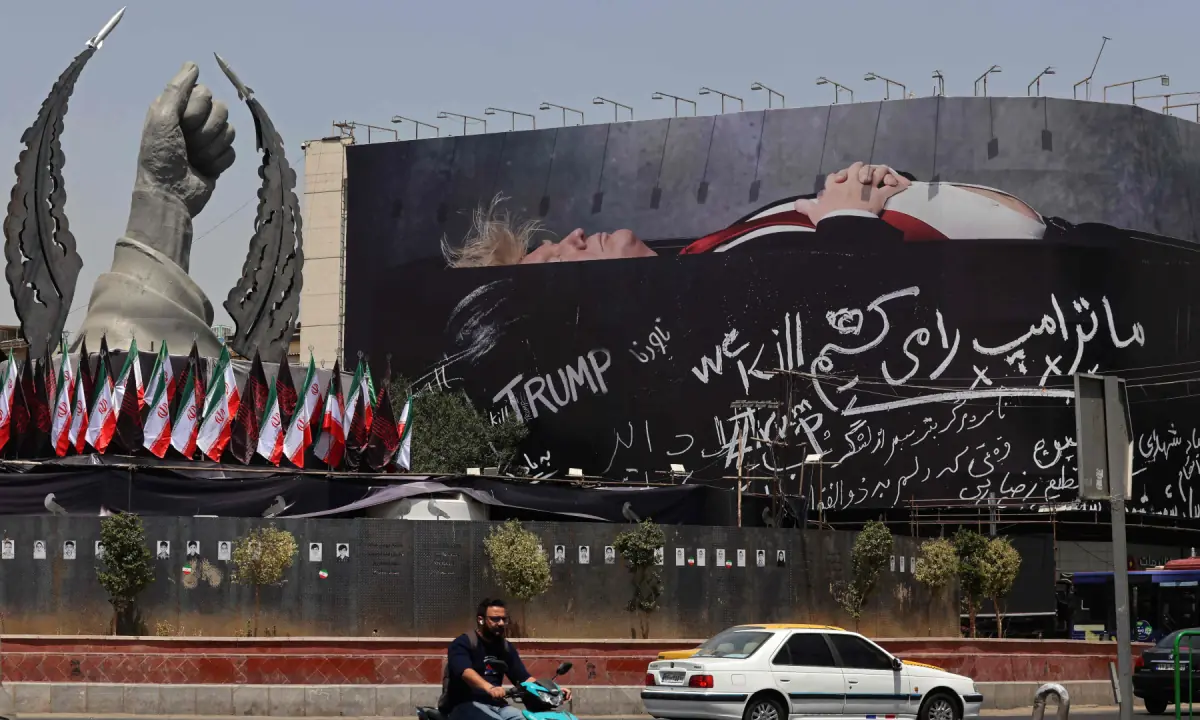
Pakistan hosts the first round of face-to-face talks between the US and Iran in 47 years in April; the talks end without a breakthrough, but also without a breakdown
US, Iran hold high-level talks in Switzerland on June 20 after signingpreliminary agreement to end the war; hold talks in Doha on July 1, with mediators citing “positive progress”
US launches strikes on Iran on July 8 in response to attacks on ships in Hormuz, Tehran retaliates as strait heats up again
As the US military bombed targets across Iran for an 11th straight night, Tehran residents reported hearing explosions in the early hours of Wednesday as Iran activated its air defences over the capital, Reuters quotes Iran’s semi-official Fars news agency as saying.*
Three locations in Iran’s Bushehr Province, home to Iran’s only nuclear power plant, were hit by US attacks earlier today, an official told Iran’s state news agency IRNA, including an electricity post close to the plant.
Al Jazeera reported that the provincial deputy governor for security affairs told Fars that two explosions occurred in the city of Bushehr and a third took place near Khormoj. He said the attack resulted in no loss of life or injuries.
He said power was temporarily knocked out in Bandar-e Gah village after missiles struck an electrical substation near the Bushehr Nuclear Power Plant but was restored within two hours.
A statement from Iran’s military has said Jordan’s Muwaffaq Salti Air Base in Azraq and Bahrain’s Isa Air Base have been targeted with drones, Al Jazeera reports.
“The army targeted the ‘housing and welfare buildings’ and ‘equipment warehouses’ of the terrorist US army at the Azraq base in Jordan with drones in the morning,” the statement, cited by the Mehr News Agency, said.
The army said it later targeted equipment warehouses and aircraft maintenance hangars of the US army at Sheikh Isa Air Base in Bahrain using Arash suicide drones, AFP reported.
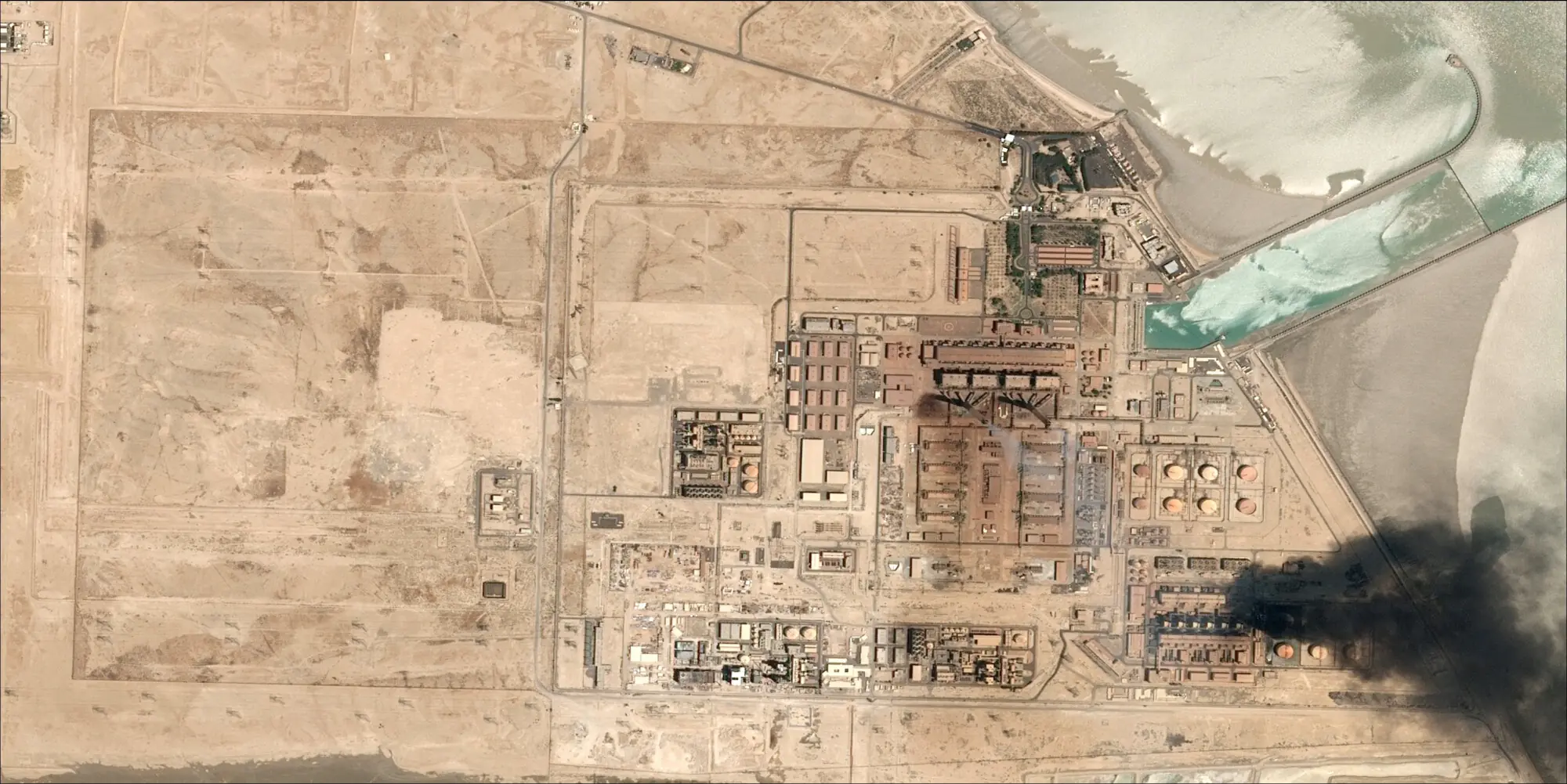
Satellite image shows smoke rising from Subiya Power and Water Desalination Plant, in Subiya, Kuwait, on July 18, 2026. — CNES 2026, Distribution Airbus DS via Reuters
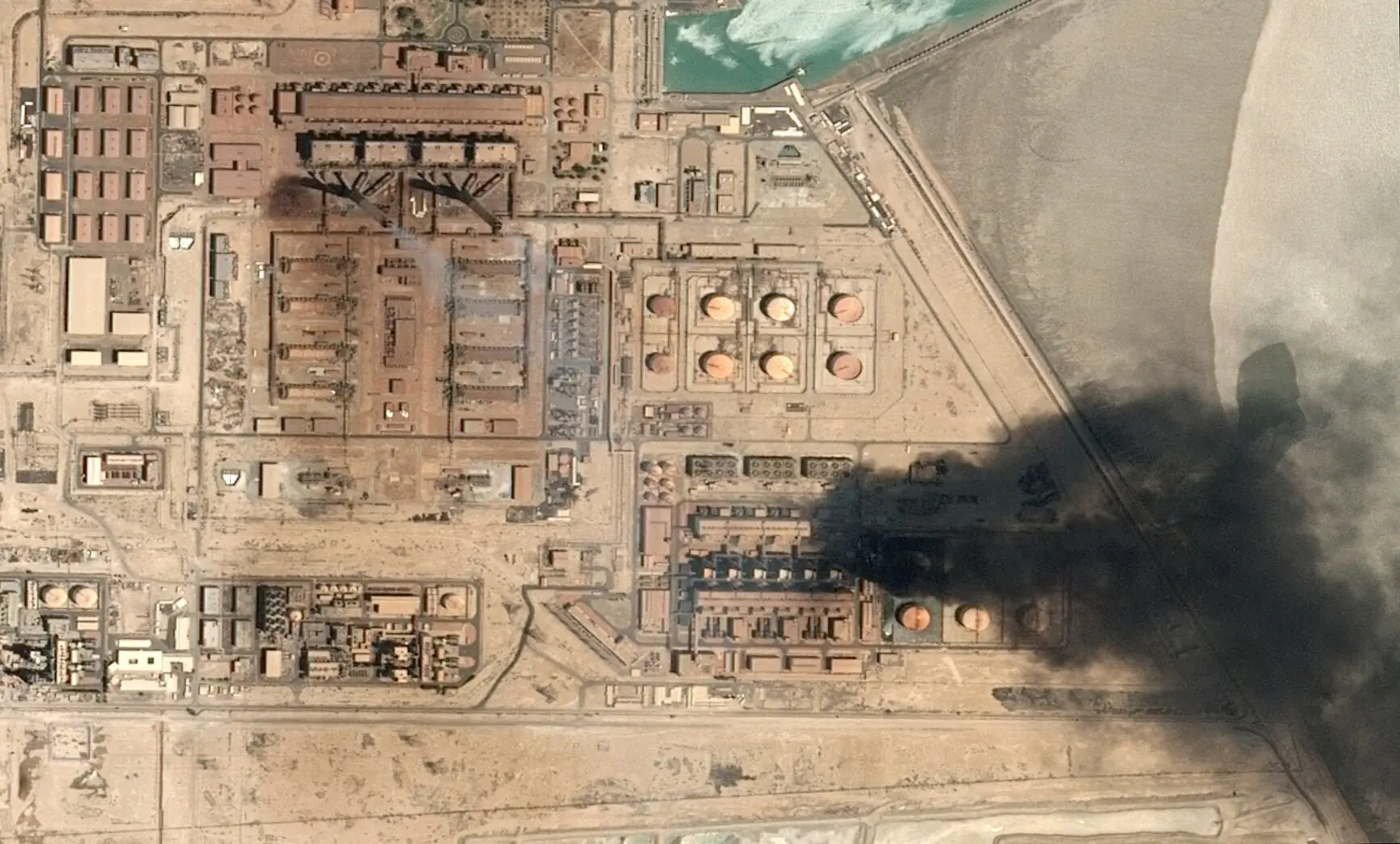
Satellite image shows smoke rising from Subiya Power and Water Desalination Plant, in Subiya, Kuwait, on July 18, 2026. — CNES 2026, Distribution Airbus DS via Reuters
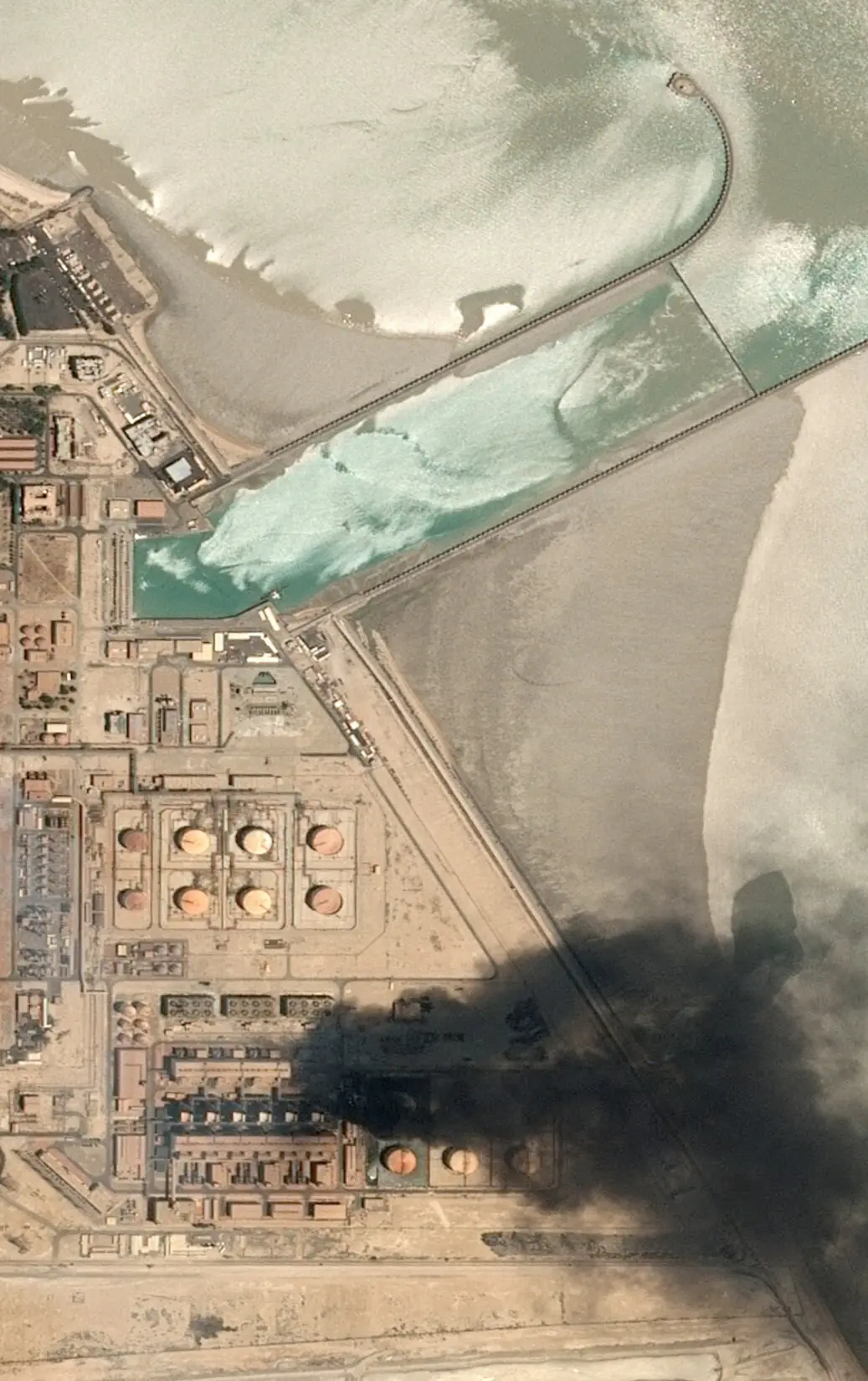
Satellite image shows smoke rising from Subiya Power and Water Desalination Plant, in Subiya, Kuwait, on July 18, 2026. — CNES 2026, Distribution Airbus DS via Reuters
The Indian rupee has weakened today as oil prices climbed to a more than one-month high on mounting fears of supply disruptions in the Middle East, although intermittent dollar sales by state-run banks limited the local currency’s losses, Reuters reports.
The renewed escalation in the Iran conflict has driven oil prices up more than 25pc this month, leaving the rupee increasingly vulnerable as higher energy costs threaten to lift India’s inflation and widen the current account deficit.
On the day, the rupee declined 0.2pc to 96.44 as of 11am IST (10:30am PKT). The currency’s 15-day correlation to Brent crude prices has climbed to 0.9, indicating the rupee is increasingly tracking moves in oil prices.
“Our model analysis suggests that the INR remains one of the Asian currencies most exposed to higher oil prices,” Barclays analysts said in a note, adding that even after controlling for broad dollar strength or weakness, two-year yield differentials and local equity performance, the rupee’s sensitivity to oil prices has increased in 2026.
Iranian media cites the IRGC as alerting residents that there is a possibility of hearing the sound of a “controlled explosion” in Lordegan city of Chaharmahal and Bakhtiari Province till 3pm.
US forces have launched a missile strike on an area near the city of Baneh in Kurdistan Province, the province’s deputy governor for political, security, and social affairs says, IRNA reports.
A Houthi threat to impose a naval blockade against Saudi Arabia in the Red Sea could significantly widen the Iran war and strain a US military already focused on stopping Tehran’s attacks across the region, current and former US officials say, according to Reuters.
Saudi Arabia, which hosts US forces, has not yet requested military assistance from Washington. But Trump suggested yesterday that a move by the group to obstruct shipping in the Red Sea, a vital corridor for global trade, could draw the United States in.
“If something like that happens, we’ll take care of it. We’ve done that with the Houthis before,” Trump told reporters.
For the US military, it may not be so simple. The Houthis have earned a reputation as hardened, nimble fighters who have successfully resisted earlier Saudi and US bombing campaigns.
Taking them on would mean stretching American resources already focused on fighting Iran and maintaining the United States’ own blockade of Iranian ports in the Gulf.
A satellite imagery shows Bab el Mandeb Strait, a key shipping waterway and the gateway to the Red Sea, as Houthis threaten to shut the Bab el-Mandeb gateway to the Red Sea, in this handout picture dated July 12, 2026. — Nasa Worldview/Handout via Reuters
The United Nations has said that more than 400,000 people are still displaced in Lebanon, with many families unable to “return home safely due to continued attacks”, Al Jazeera reports.
Thousands of families still living in shelters have said they are experiencing “worsening shelter conditions, reduced access to water and hygiene services, and limited opportunities to earn an income,” UN spokesperson Stephane Dujarric told reporters.
“Many also said they are increasingly relying on borrowing funds to meet basic needs, including the purchase of essential medicines,” Dujarric said.
Their “repeated attempts to return home have often been reversed due to insecurity, damaged infrastructure and limited access to basic services back in their home areas,” he added.
Iran’s military claims to have launched drones at US military facilities at Camp Doha in western Kuwait, Al Jazeera reports.
In a statement carried by the semi-official Tasnim news agency, the Iranian military said its forces struck “ammunition depots” and “ground forces command logistics equipment” at the base in response to the US’s “repeated aggression”.
Vessel crossings via the Strait of Hormuz dropped further, shipping data showed, as security concerns lingered amid ongoing attacks by the United States and Iran, AFP reports.
A total of three commodity vessels crossed the strait on Tuesday, down from four the previous day, Kpler data showed.
The general cargo ship the Kaiser exited the strait loaded with cargo, while the dry bulk carrier H7 Smb8 entered the strait in ballast, Kpler data showed, meaning it will take on a cargo in the Gulf.
The United Arab Emirates has condemned the Houthis’ threat to impose a maritime blockade on Saudi Arabia, warning that it could undermine freedom of navigation in the Red Sea.
In a statement, the UAE Foreign Ministry called for the enforcement of relevant UN Security Council resolutions and reaffirmed its “full solidarity” with Saudi Arabia.
US Defence Secretary Pete Hegseth said the Iran war has cost the country $37.5 billion so far, up from a previous estimate of nearly $29 billion in mid-May, AFP reports.
“The estimate we have as of today is $37.5bn,” Hegseth testified during a Senate Appropriations Committee hearing at which he defended a request for some $67bn in supplemental funding for the Pentagon.
Hegseth and General Dan Caine, chairman of the Joint Chiefs of Staff, told Congress the funding request is “urgent” and “necessary” to pay the Pentagon’s costs for the Iran war through the end of September.
But Democratic Senator Jeanne Shaheen challenged that assessment, saying Hegseth still has $75bn available in unspent funding.
Oil prices inch higher in early trading as fears of further supply disruptions intensified after US forces said it began striking Iranian military targets for the 11th straight night and Kuwait reported attacks by Iranian drones, according to Reuters.
Brent crude futures rise 0.55 per cent, or 50 cents, to $91.51 after markets opened, while US West Texas Intermediate crude climbs 0.36pc, or 30 cents, to $84.64 in low volume trading.
United States State Secretary Marco Rubio said that the US is open-minded on the Middle East conflict and willing to engage, negotiate and settle differences with Iran, but Tehran was not serious about talks, Reuters reports.
“If they’re serious, we’re serious. If they’re not, then we will do what’s necessary to protect our interests, and also the interests of our allies,” Rubio said in remarks in a meeting with Southeast Asian counterparts in Manila, who have expressed serious concern about the renewed hostilities.
The United States military said that it carried out strikes in Iran for the 11th consecutive night.
“Centcom assets targeted Iranian military operations centres, maritime capabilities, aircraft hangars, drone storage facilities, and military logistics infrastructure to further degrade Iran’s ability to threaten commercial shipping in the Strait of Hormuz,” it said.
“Over the past three months, Iran has attacked more than 30 commercial vessels transiting the international waterway vital for regional and global trade. The unwarranted attacks have endangered hundreds of innocent mariners and undermined freedom of navigation,” it said.
“Despite Iranian aggression, the Strait of Hormuz remains open for commercial vessel transit. Since early May, Centcom forces have helped facilitate the transit of approximately 900 commercial vessels and 450 million barrels of crude oil,” it added.
Anadolu reports that Erbil International Airport has suspended all arrivals and departures after a wave of attacks targeting city, airspace, the airport director tells the Iraqi state news agency.
Lebanese President Joseph Aoun has expressed gratitude for the United States’ support of his country, following his meeting in Washington with his American counterpart Donald Trump at the White House, AFP reports.
In a statement, the presidency says Aoun wrote in the White House guest book that he felt “deep appreciation for President Trump’s friendship and for the support the United States of America provides to Lebanon, its sovereignty, its legitimate institutions, and the Lebanese Armed Forces”.
Lebanese President Joseph Aoun has urged his US counterpart Donald Trump to maintain American support for his country’s military, warning that southern Lebanon could see a return of the chaos of the 1970s without Washington’s backing, AFP reports.
“We don’t want to see that back again. All we’re asking is, keep supporting the LAF,” Aoun tells reporters of the Lebanese Armed Forces during a White House meeting with Trump. “All we’re asking is, keep supporting the LAF … I fully trust the LAF. I fully trust the leadership of the LAF.”