The US and Israel on Feb 28 launched what they described as a “pre-emptive” joint strike against Iranian targets, with Trump announcing start of “major combat operations”
Pakistan hosted the first round of face-to-face talks between the US and Iran in 47 years in April; the talks ended without a breakthrough, but also without a breakdown
Ceasefire falters as US, Iran exchange attacks on each other’s military sites; Kuwait, Bahrain intercept drones
Trump seeks to reinforceIsrael-Hezbollah truce as Tel Aviv’s escalated strikes in Lebanon raise global alarm
Israeli politician and former army general Benny Gantz has welcomed the US-brokered Israel-Lebanon agreement saying it “could constitute a significant diplomatic breakthrough in the war against Hezbollah”.
“But this agreement will be tested in the reality on the ground,” Gantz said on X.
“And, therefore, the [Israeli army] must remain deployed within Lebanese territory until the full implementation of the agreement, and the state of Israel must respond aggressively to any violation by Hezbollah – even the smallest one.”
Israel will continue its operations on the ground in southern Lebanon for the time being and Lebanese residents forced from their homes by Israel would not be able to return, Defence Minister Israel Katz has said, Reuters reports.
His comments came a day after Lebanon and Israel said they had agreed to implement a ceasefire during talks in Washington. The deal is contingent on a cessation of fire from militant group Hezbollah.
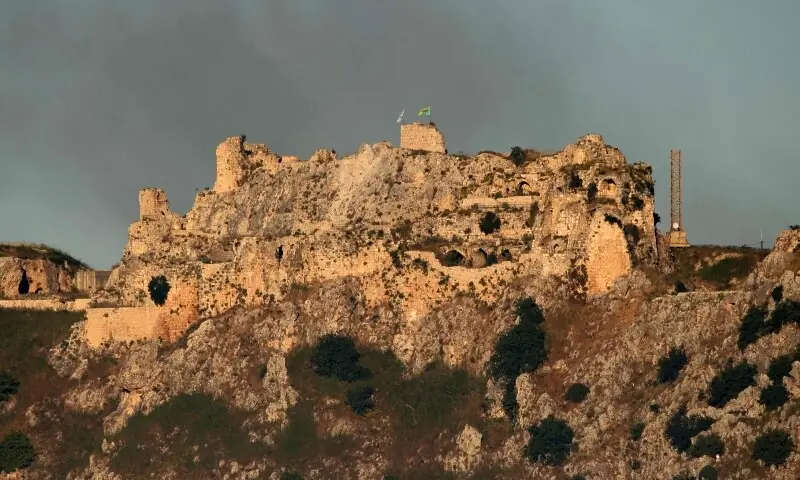
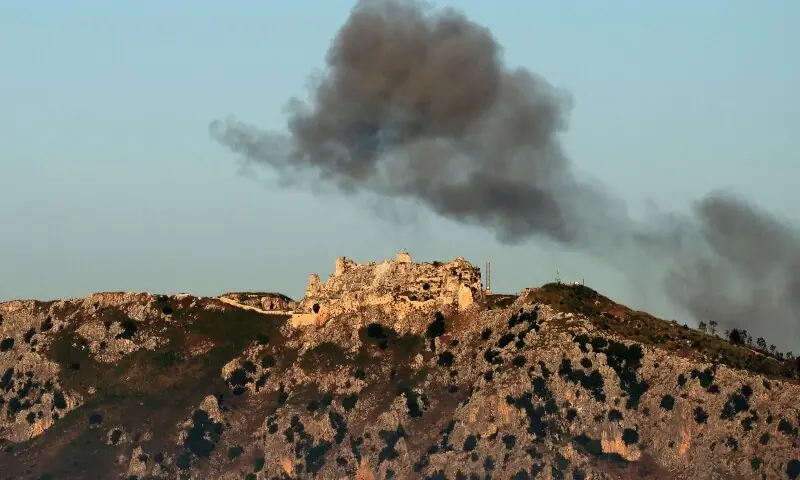
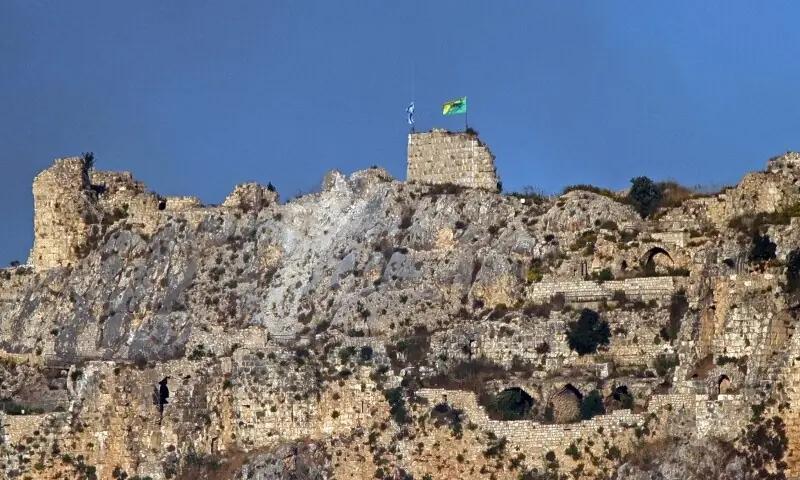
In a statement, Katz said troops would remain in its so-called security zone in southern Lebanon, including in the area of Beaufort Castle, a 900-year-old fortress captured by Israel on Saturday.
He said Israel would continue to “dismantle terrorist infrastructure in the area” while Israel had “freedom of action, backed by the United States, to strike in Beirut in response to attacks on Israeli communities and territory”.
Israel’s acting foreign minister Israel Katz, who also serves as intelligence and transport minister, attends the weekly cabinet meeting in Jerusalem on February 24, 2019. — Reuters
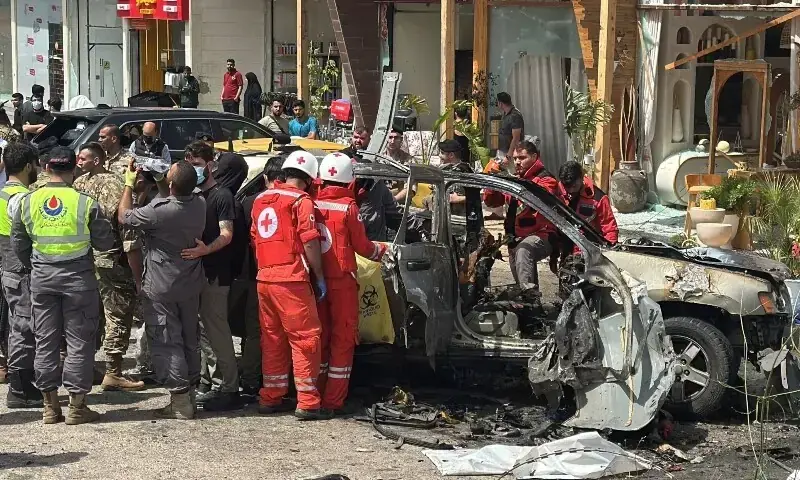
Several people have been wounded in an Israeli drone attack that targeted a vehicle on the Zefta-Kfarwa road in southern Lebanon, the National News Agency reports.
The strike came after Israel’s and Lebanon’s governments agreed to halt the war after a series of meetings in Washington, DC, mediated by US officials.
Hardline Israeli National Security Minister Itamar Ben-Gvir has criticised the US-brokered Israel-Lebanon agreement, calling it a “serious mistake and the pipe dream of advisers who are dragging the prime minister into incorrect decisions”.
“Hezbollah will only grow stronger and instead of defeating it Israel is coming to terms with its very existence,” the far-right minister said on X.
Ben Gvir insisted that the deal, which would see Hezbollah withdraw from southern Lebanon, cannot be enforced and the Lebanese state cannot be trusted.
He also chastised Netanyahu for giving in to US pressures to reach a deal.
“The prime minister should have told President Trump: We love and appreciate you, but Israel is a sovereign and independent state,” Ben Gvir wrote.
“There are moments when one must know how to say ‘no’ even to the president of the United States, and when we don’t do so we will meet Hezbollah next time when it is much stronger and more dangerous.”
Lebanese official media has reported Israeli strikes on the country’s south, hours after an announcement that Israel and Lebanon had agreed to implement a conditional ceasefire, AFP reports.
The state-run National News Agency(NNA) reported Israeli drone strikes along roads at several south Lebanon locations, saying at least one caused casualties.
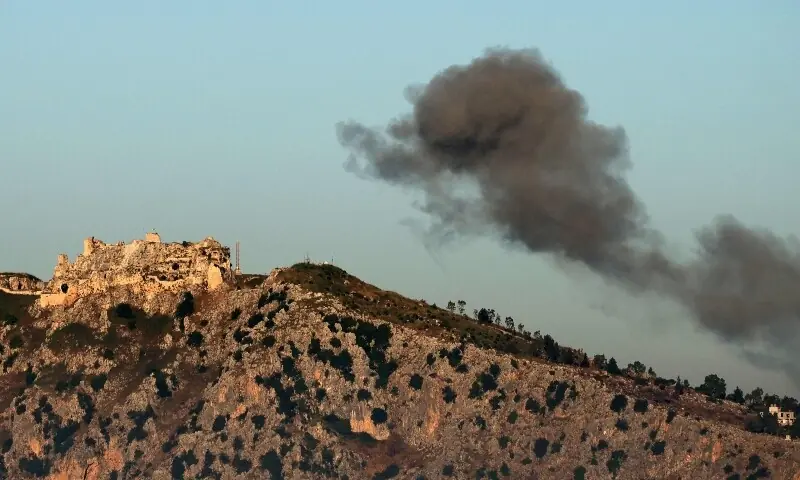
This photograph taken from the southern Lebanese area of Marjayoun shows smoke flying above the medieval Beaufort Castle, locally known as Qalaat al-Shaqif or Shaqif Arnoun, near the site of an Israeli strike that targeted the village of Arnoun on June 3, 2026. —AFP
This photograph taken from the southern Lebanese area of Marjayoun shows smoke flying above the medieval Beaufort Castle, locally known as Qalaat al-Shaqif or Shaqif Arnoun, near the site of an Israeli strike that targeted the village of Arnoun on June 3, 2026. —AFP
This photograph taken from the southern Lebanese area of Marjayoun shows smoke flying above the medieval Beaufort Castle, locally known as Qalaat al-Shaqif or Shaqif Arnoun, near the site of an Israeli strike that targeted the village of Arnoun on June 3, 2026. —AFP
This photograph taken from the southern Lebanese area of Marjayoun shows smoke flying above the medieval Beaufort Castle, locally known as Qalaat al-Shaqif or Shaqif Arnoun, near the site of an Israeli strike that targeted the village of Arnoun on June 3, 2026. —AFP
The Israeli military said a “suspicious aerial target was identified” following the activation of warning sirens due to the presence of “hostile” aircraft over northern Israel’s Kfar Yuval area, Al Jazeera reports.
According to the military, the incident was concluded and no injuries were reported.
The Israeli military reported that air raid sirens were sounded in northern Israel, saying one incident was resolved and another found to be a false alarm, AFP reports.
“Following the sirens that sounded a short while ago regarding a hostile aircraft infiltration in the area of Kfar Yuval, a suspicious aerial target was identified. The incident has concluded. No injuries were reported,” the Israeli military said, adding that another alert in the Arab al-Aramshe area was a “false identification”.
Oil prices eased as Israel and Lebanon’s ceasefire agreement boosted hopes for a broader deal to end the US-Israeli war with Iran, while the U.S. House approved a resolution seeking to curb President Donald Trump’s war powers, Reuters reports.
Brent futures were down 67 cents, or 0.69 per cent, at $97.14 a barrel by 0015 GMT, while US West Texas Intermediate CLc1 crude fell 62 cents, or 0.65pc, to $95.4.
Both benchmarks rose about 2pc on Wednesday, extending the previous session’s gains, after renewed Middle East hostilities including Iranian attacks on Kuwait and US military strikes near the Strait of Hormuz.
An Israeli strike in southern Lebanon killed a paramedic, the state-run National News Agency (NNA) reports.
“The Israeli enemy, in what marks the fourth attack in less than 24 hours on paramedics and healthcare facilities, directly targeted an ambulance team affiliated with the Islamic Health Committee in the town of Zibdine in the Nabatieh district, resulting in the death of one paramedic and the injury of another,” the NNA reported.
US President Donald Trump has told aides privately that he would consider ending the ceasefire with Iran if Tehran kills American troops, the Wall Street Journalreported, citing US officials, according to Reuters.
Israel and Lebanon have agreed to implement a ceasefire but said it would require a “complete cessation” of fire by Hezbollah, according to a joint statement after US-led talks in Washington, AFP reports.
The two sides, which do not have formal diplomatic relations, also agreed to create “pilot zones” in which the Lebanese armed forces “will take exclusive control of the territory to the exclusion of all non-state actors”.
The joint statement said the ceasefire was “contingent on a complete cessation” of fire by Hezbollah as well as evacuation of the group’s operatives from southern Lebanon.
The meetings in Washington were the fourth round of direct talks by Lebanese and Israeli diplomats since fighting erupted on March 2, when Hezbollah renewed attacks against Israel in support of Iran.
The Republican-led US House of Representatives approved a resolution on Wednesday to block President Donald Trump from continuing the war against Iran, reflecting growing concern among members of his party about the three-month-old conflict.
The House voted 215 to 208, as four Republicans voted with Democrats in favor of the war powers resolution, which directs Trump to withdraw US troops from Iran unless Congress declares war or authorises the use of military force.
The move marked the first time the Republican-controlled House had approved a measure seeking to force Trump to wind down military operations against Tehran since the war began three months ago.
Iran’s ambassador to Turkiye, Mohammad-Hassan Habibollahzadeh, says visas have been issued for the country’s national football team to participate in the upcoming World Cup, which begins next week, Al Jazeera reports.
State-run news agency IRNA reports comments from Habibollahzadeh confirming that Mexico had granted visas to all players and staff members travelling with the team.
In comments shared by Iran’s Tasnim news agency, Iranian Foreign Minister Abbas Araghchi says Tehran has made it clear that it “will not remain silent” in the face of an attack on Beirut, according to Al Jazeera.
“Any attack on Beirut will have grave consequences and lead to a full resumption of war,” Araghchi says in an interview with Lebanese news outlet Al Mayadeen.
“At the moment when Israel threatened to attack the suburbs of Beirut, we adopted a decisive stance and the Iranian armed forces were put on full alert for a counterattack.”
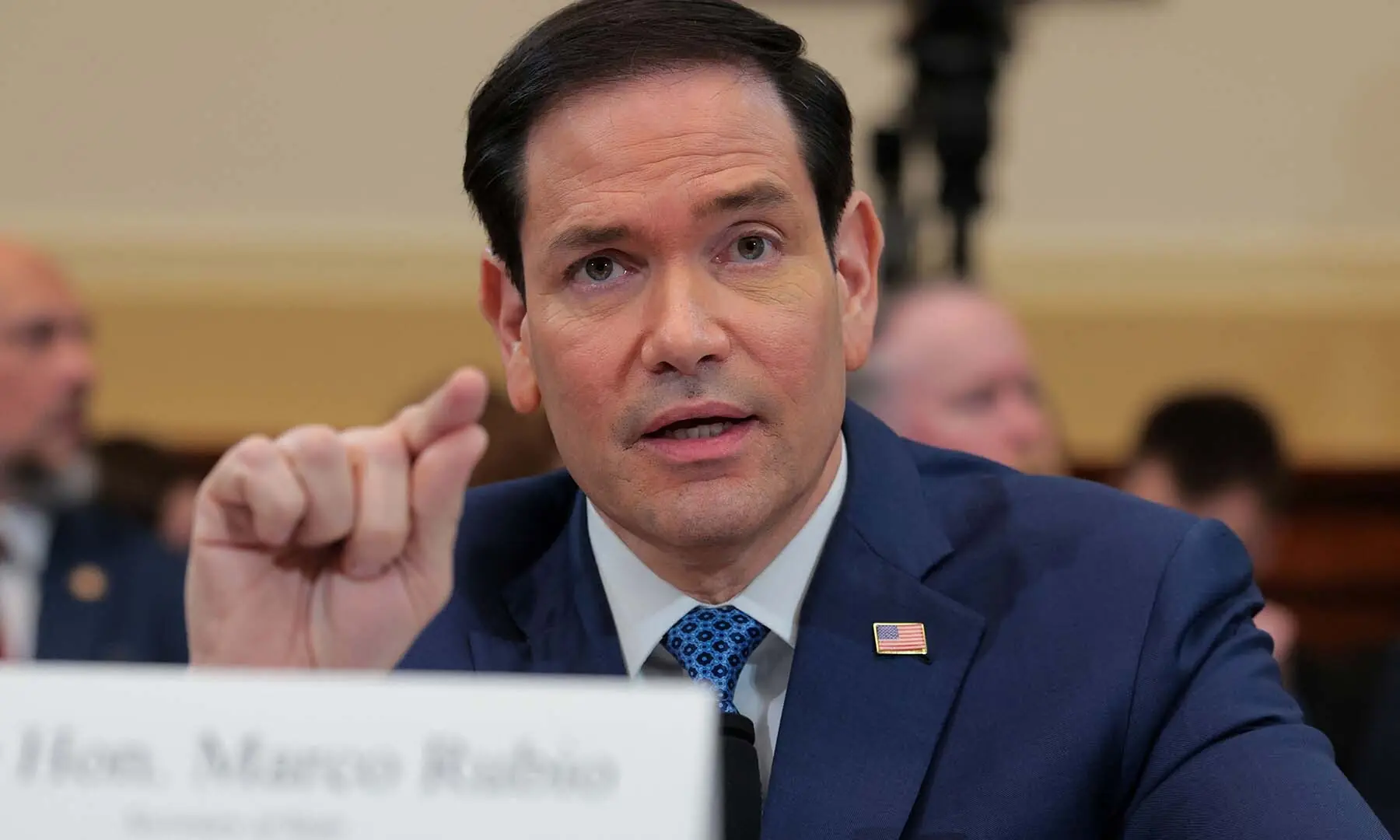
US Secretary of State Marco Rubio has told lawmakers that Washington’s military campaign against Iran, codenamed “Operation Epic Fury”, has concluded and that any subsequent American military action will be defensive in nature rather than part of an ongoing offensive operation.
Rubio made the remarks during a House Foreign Affairs Committee hearing when members of Congress questioned the administration’s assessment of the conflict and its aftermath.
During the hearing, Rubio announced, “We’re no longer conducting sustained strikes inside of Iran to degrade their military, because Epic Fury is over.”
According to the secretary, the United States had destroyed Iran’s defence industrial base, significantly reduced its missile launchers and drone stockpile, destroyed what remained of its air force and wiped out its conventional navy.
“Those are all gone,” Rubio said. “So, I consider that victory, and we did, too. And that was the purpose of Epic Fury.”
US Secretary of State Marco Rubio testifies during a House Committee on Foreign Affairs hearing in the Rayburn House Office Building in Washington DC, the US on June 3, 2026. — AFP
Bahrain has arrested 15 people accused of working for Iran’s Islamic Revolutionary Guard Corps (IRGC), hours after Tehran launched attacks on the country and neighbouring Kuwait, Al Jazeera reports.
The interior ministry says investigations are ongoing to identify all individuals connected to the alleged Iranian cell.
Bahrain has launched a security crackdown since Iran began attacking the country in late February, arresting dozens of people accused of collaborating with Tehran.
Qatar’s former prime minister says it is “astonishing” that Iran continues to respond to attacks by striking its Gulf neighbours, Al Jazeera reports.
In a post on X, Sheikh Hamad bin Jassim bin Jaber Al Thani has described Iran’s latest attacks on Bahrain and Kuwait as “unjustifiable” and questioned whether they had been premeditated.
Al Thani says Qatar remains committed to maintaining positive relations with Iran, but stresses that Doha would not be “blackmailed” by its neighbour. He has also called on Gulf states to adopt a unified stance towards Tehran, arguing that such solidarity would demonstrate that Iranian attacks will not weaken them.