Pakistan hosts the first round of face-to-face talks between the US and Iran in 47 years in April; the talks end without a breakthrough, but also without a breakdown
US, Iran hold high-level talks in Switzerland on June 20 after signingpreliminary agreement to end the war; hold talks in Doha on July 1, with mediators citing “positive progress”
US launches strikes on Iran on July 8 in response to attacks on ships in Hormuz, Tehran retaliates as strait heats up again
Yemen’s civil war flares up after Saudi-backed government attacks Sanaa airport
Iran’s President Masoud Pezeshkian has said Tehran must exit the state of “neither war nor peace”, Isna reports.
He said at a ceremony: “But these cowards broke the rule. But I still believe that we must go and get out of the ‘no war, no peace’ situation, because Iran and our land are very rich and exceptional in minerals, geography, and human resources, and each of these is gold.“
Pezeshkian added that it was “necessary to correct our mentality and get on the right path”, and called for unity and cohesion.
“Let us compete with each other on this path and take useful, efficient, and effective measures.“
Ras Al Khaimah authorities have announced that all beaches in the emirate will be closed until further notice, a day after an offshore oil leak prompted beach closures in neighbouring Umm Al Quwain and Sharjah, Reuters reports.
The Public Services Department has announced the closures in a statement shared by Ras Al Khaimah Police General Headquarters, with no reason given.
A Saudi airstrike on Yemen’s Houthi-controlled capital Sanaa killed three people and wounded several others, Houthi media said, adding that the toll remained preliminary, AFP reports.
The Iran-backed group’s Al-Masirah station said “the Saudi enemy targeted a house in Asr,” in the west of the capital.
It came after Saudi forces said they had intercepted two missiles fired at western Saudi Arabia.
Saudi forces launched deadly airstrikes on Yemen’s Houthi-controlled Sanaa governorate, media belonging to the group said, while also reporting around 20 strikes on Mocha, AFP reports.
The Houthis’s Al-Masirah reported a series of “Saudi enemy airstrikes” targeting Sanaa, as well as “a number of martyrs and wounded” at a cement factory in the same governorate.
The Saudi-led coalition fighting in Yemen announces that it has intercepted two missiles fired by the Houthis towards its western provinces of Taiz and Yanbu, AFP reports.
Earlier, the Saudi civil defence agency issued alerts for four western areas of the country, including Yanbu and Taif. The former is a major oil export hub on the Red Sea coast that has allowed Riyadh to bypass Iran’s blockade of the Strait of Hormuz.
Saudi Arabia’s civil defence agency has broadcast warnings of “potential danger” for four of its western provinces, including that of Makkah, home to Islam’s holiest city, AFP reports.
The alerts, which also covered the major Red Sea city of Jeddah, nearby Taif and the coastal oil hub of Yanbu, were all rescinded minutes later.
Residents were instructed to “proceed to the nearest safe place” by the agency. The agency also repeated a legal warning against sharing images or information related to “countering missiles and drones”.
Severe shortages of fuel, medicines and medical supplies threaten hospitals in Yemen’s Taiz amid a renewed Houthi siege, forcing doctors to shorten dialysis sessions and threatening the lives of more than 1,100 kidney failure patients, Al Jazeera reports.
President Donald Trump said the US may carry out another military operation against Iran at just as the Iran war nears its eight-month mark and rising fuel prices weigh on the US midterm elections, Reuters reports.
Major General Ali Abdollahi, the chief of staff of the Iranian Armed Forces, has said that the US Navy is no longer capable of approaching the waters surrounding the Persian Gulf or Iran’s territorial waters, Press TV reports.
The US president should only dream of seeing his military and armed forces enter the Persian Gulf again, he said, adding, “They will take this wish to their graves.”
“Under no circumstances and at no time will we allow US military vessels to enter the Persian Gulf.”
Iran’s judiciary chief, Gholam-Hossein Mohseni-Eje’i, says that the country’s policies and public conduct must reflect wartime realities, adding that Iran’s enemies seek to destroy the country, Press TV reports.
“You cannot act as if it is not wartime when you are at war.”
Iranian President Masoud Pezeshkian will pay a visit to Moscow this week to continue talks with his Russian counterpart Vladimir Putin on bilateral relations and key regional and international issues, Foreign Minister Abbas Araghchi has announced, IRNA reports.
In a post on his Instagram account on Friday, Araghchi said he had hosted Russian Foreign Minister Sergey Lavrov during the past week. The two diplomats held detailed discussions on the latest developments in bilateral relations and major regional and international issues.
Iran has “substantially increased” its efforts to target Americans in the Middle East and beyond, US national intelligence chief Jay Clayton warned, reports AFP.
In a memo sent to Secretary of State Marco Rubio, Clayton said that “we have received intelligence that Iran has substantially increased efforts to target US personnel,” according to a US official.
“The lethal plotting efforts by the Iranians against US citizens have reached advanced stages in both the Middle East and certain other countries,” said the memo, which was first reported by Axios.
The Saudi-led coalition fighting Yemen’s Houthis said on Saturday it had intercepted a ballistic missile launched towards Riyadh by the Iran-backed group, AFP reports.
Two explosions rang out in Riyadh early Saturday, an AFP journalist in the Saudi capital said, as the Houthis keep up strikes on the kingdom.
An early warning system was activated to alert residents to a potential threat, the Saudi civil defence said.
Oil prices have risen again, with Brent crude touching its highest since late April, after Houthi attacks in Saudi Arabia stoke concerns over further disruption to energy supplies from the Middle East, while UAE authorities report an oil spill, Reuters reports.
Brent crude futures have gained $3.18, or 2.81 per cent, to $116.35 a barrel as of 1806 GMT (11:06pm PKT). Brent’s session high of $117.45 iss the highest in nearly six months.
US West Texas Intermediate crude has climbed $3.50, or 3.52pc, to $102.97.
Iranian President Masoud Pezeshkian will travel to Russia next week to meet his Russian counterpart Vladimir Putin, Reuters reports citing Iran’s Foreign Minister Abbas Araghchi.
The European Commission has announced an additional €22.5 million ($25m) in humanitarian assistance for Yemen as renewed fighting deepens needs and forces thousands from their homes, Anadolu reports.
The funding comes on top of €87.5m previously allocated for 2026, bringing the total to €110m.
“Yemen is once again caught in the violence of war, while its humanitarian crisis remains largely forgotten,” says Hadja Lahbib, the EU commissioner for preparedness and crisis management.
“Families cannot wait for a ceasefire to put food on the table or find a safe place to sleep. Civilians on all sides are paying a terrible price.”
US Treasury Secretary Scott Bessent claims Washington’s economic campaign against Iran has “decimated every layer of Iran’s oil lifeline”, Al Jazeera reports.
“Its shadow tanker fleet stands depleted. Its main oil terminal sits empty. And its offshore reserves are now exhausted,” Bessent writes on X. “Meanwhile, ordinary Iranians continue to endure a deepening economic crisis because the regime squanders its resources on violence and terrorism abroad instead of the prosperity of its people at home.”
The United States could strike Iran as soon as this weekend, AFP reports quoting a US envoy, after mounting threats by both Washington and Israel.
“Could there be a strike this weekend? Absolutely,” Tom Barrack, the US ambassador to Turkiye — who does not have a direct role on Iran — says in an interview with podcast host Mario Nawfal.
President Donald Trump “is very clear. He’s open and available and accessible to a deal and we’ve been at the table for months and months and months,” Barrack says.
Deputy Prime Minister and Foreign Minister Ishaq Dar and French Foreign Minister Jean-Noel Barrot have held a meeting on the sidelines of the R4+E3 moot in Istanbul, with the ongoing energy crisis among the topics discussed.
According to the Foreign Office (FO), both sides “exchanged views on current regional and international developments, including the wider economic and social repercussions of ongoing crises, particularly the impact on energy costs”.
“Both sides emphasised the importance of dialogue and diplomacy in addressing regional challenges and promoting peace and international cooperation,” the FO adds.
It further says that Barrot appreciated Pakistan’s role in promoting sustained engagement and advancing diplomatic efforts.
The US Department of Energy says that Secretary of Energy Chris Wright has designated helium as a critical material under the Energy Act of 2020 to strengthen American manufacturing and supply chain security, Reuters reports.
The designation advances the Trump administration’s push to reduce US reliance on foreign critical minerals, bolster domestic manufacturing and secure key materials for economic and national security, it says in a statement.
The department determines that helium meets the statutory definition of a critical material due to its essential role in American manufacturing and growing exposure to supply chain risks.
“Helium is essential to producing the semiconductors and advanced technologies that power our economy. By designating helium as a critical material, we are taking another step toward securing our supply chains, creating American jobs, and ensuring the United States leads the world in energy and technological innovation,” the statement reads, quoting Wright.
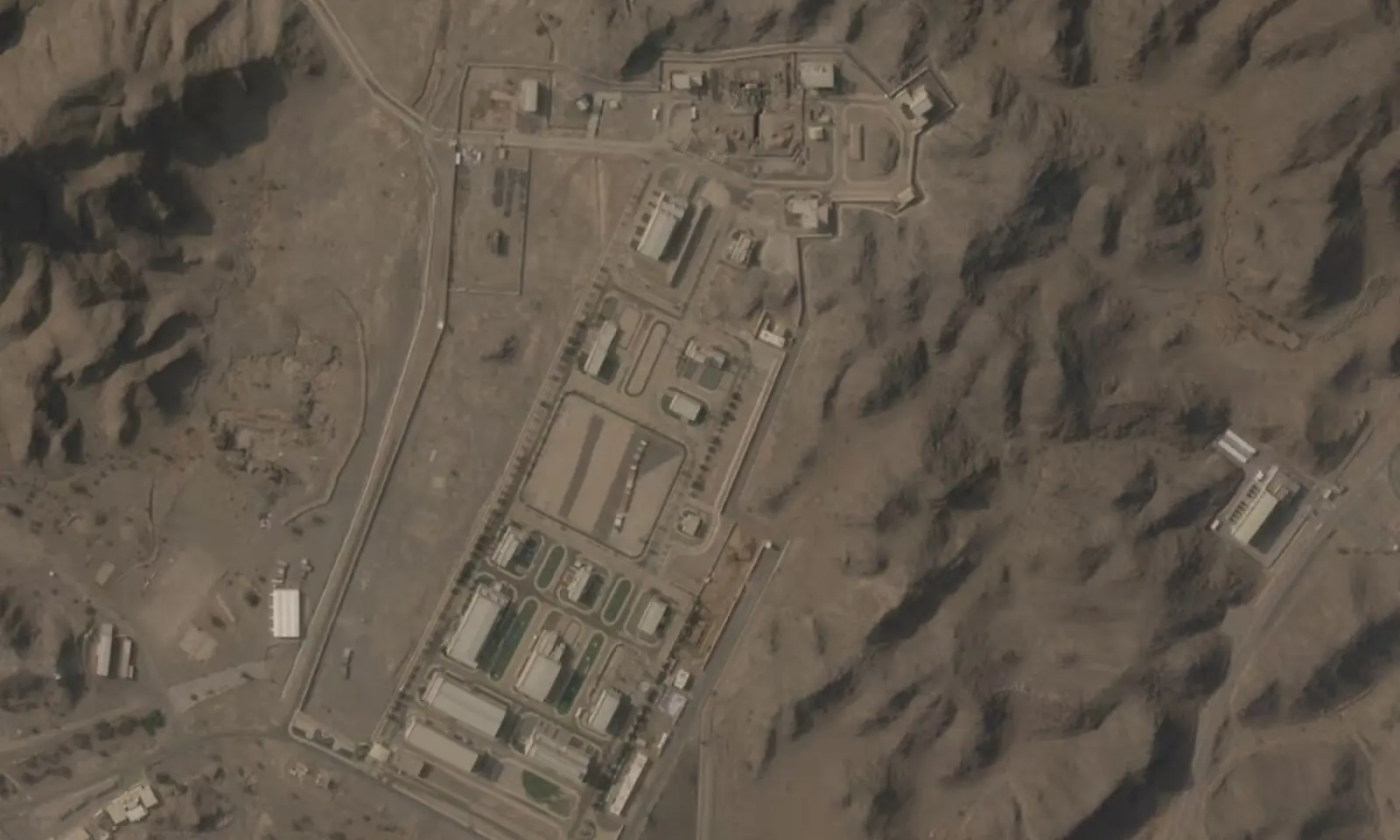
Saudi Arabia appears to be expanding its ballistic missile factory to build larger solid-fuel missiles that could fly farther or carry heavier payloads, Reuters reports citing two US researchers who analysed more than a year of commercial satellite images.
More capable missiles could help Saudi Arabia to deter attacks by Iran and make its military more self-reliant, while possibly strengthening its position in a deadly conflict with Yemen’s Tehran-backed Houthi fighters.
But they risk fueling a regional missile race and could deepen opposition in the US Congress to a US-Saudi civilian nuclear agreement that has already raised concerns about proliferation.
Satellite company Planet Labs, based in the US, took images of the al-Duwadimi complex about 200 kilometres west of Riyadh between April 2025 and September 2026.
The two researchers, Sam Lair and Michael Duitsman of the Foreign Policy Research Institute, assess that those images show a new building that houses casting pits and wells, in which a mixture of fuel ingredients is poured into missile motor casings and allowed to harden.
The Saudi embassy and Information Ministry did not respond to requests for comment.
The United Kingdom Maritime Trade Operations Centre (UKMTO) has confirmed an attack on an oil tanker took place off the coast of Oman yesterday, stating in an advisory that the vessel was struck by an unknown projectile.
“The tanker was able to continue its voyage to the next port of call,” the advisory reads.
Speaking to reporters on the White House South Lawn as he leaves on a trip to Florida, US President Donald Trump says oil is getting out through the Strait of Hormuz, Reuters reports.
Turkish Foreign Minister Hakan Fidan says a renewed attack on Iran could exacerbate tensions and further expand the conflict, adding that diplomacy and dialogue were the only way to end the war, Reuters reports.
Speaking after meeting his counterparts from Egypt, Pakistan, Saudi Arabia, Germany, France, Britain and Italy in Istanbul, Fidan said none of the countries in the meeting approve of another military intervention or attack on Iran.