Pakistan hosts the first round of face-to-face talks between the US and Iran in 47 years in April; the talks end without a breakthrough, but also without a breakdown
US, Iran hold high-level talks in Switzerland on June 20 after signingpreliminary agreement to end the war; hold talks in Doha on July 1, with mediators citing “positive progress”
US launches strikes on Iran on July 8 in response to attacks on ships in Hormuz, Tehran retaliates as Hormuz heats up again; Trump says ceasefire is “over” on July 10 but talks ongoing
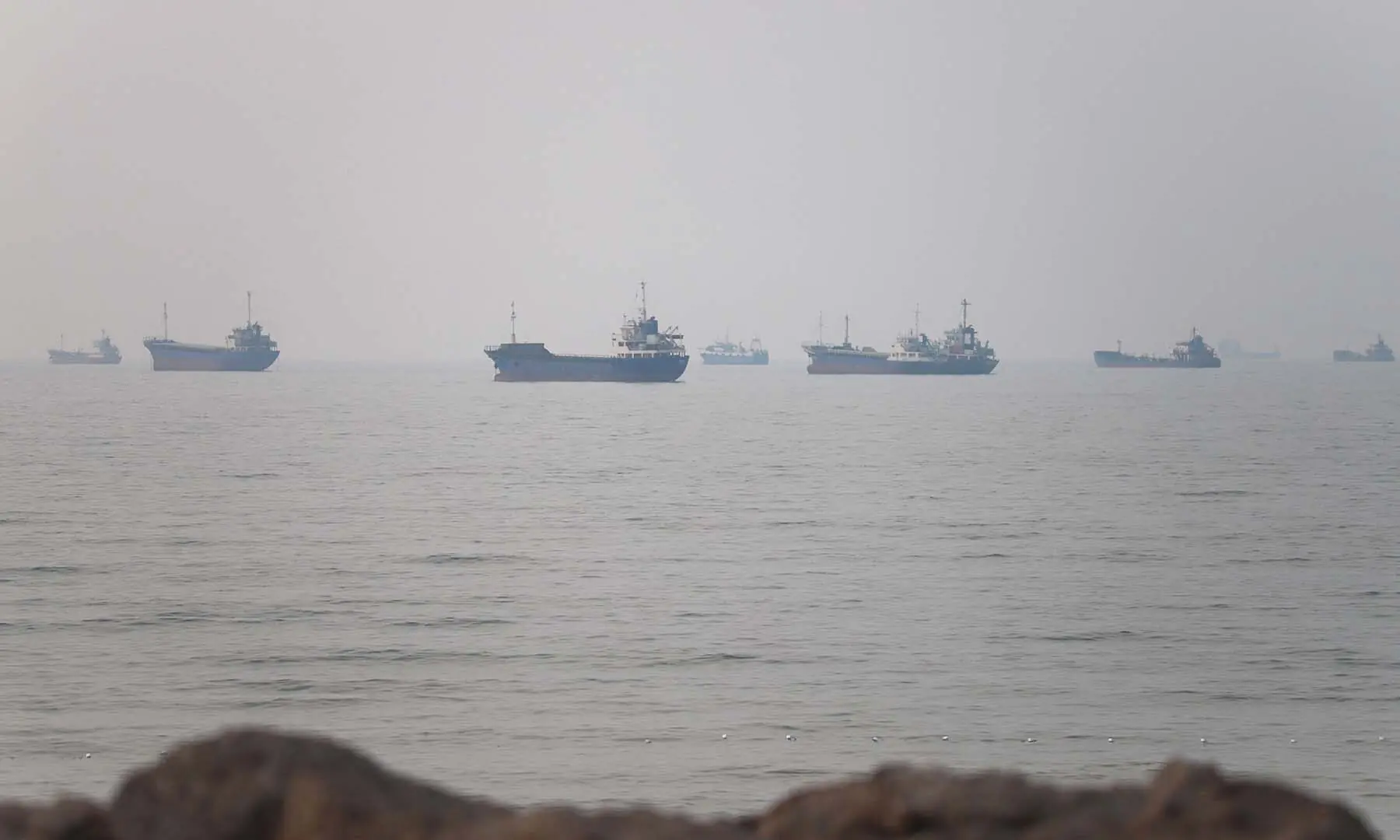
Shipping companies are avoiding using a US military-guided transit scheme through the Strait of Hormuz after a wave of Iranian attacks on vessels sparked safety concerns, Reuters reports citing seven maritime security and shipping industry sources.
The US-assisted Traffic Separation Scheme has enabled the export of tens of millions of barrels of oil, helping dampen the impact on energy prices of the largest-ever disruption in oil and gas supplies. Yet shippers are evaluating the route on the Omani side of the strait as increasingly dangerous after a wave of attacks on ships.
It is unclear if the recently attacked commercial ships were sailing under the US scheme, the sources say.
“The US doesn’t seem to have any control over the situation,” one shipping source says, adding that their company opted not to sail through the strait due to crew safety concerns and the deteriorating security situation.
“Iran’s continued ability to target ships sailing through the Omani route means the Trump administration’s proposed solution to keep ships moving is unlikely to work,” says Torbjorn Solvedt, principal Middle East analyst with risk intelligence company Verisk Maplecroft.
White House officials did not immediately respond to a request for comment.
Iran’s education ministry has delayed exams for students across six provinces after the renewed US attacks, Al Jazeera reports.
The ministry says “final exams for all academic tracks in the 12th grade” are postponed. The exams had been scheduled to take place on Thursday and Saturday.
The US government has issued sanctions targeting individuals and entities that it says are a part of an international network helping Iran procure weapons, Reuters reports.
The sanction targets include Iranian and Russian nationals, as well as entities based in Iran, Russia and Nigeria, the US Treasury Department says in a statement.
Today’s sanctions targets “exemplify Iran’s use of foreign aviation and transport firms, financial conduits, and travel coordinators to obscure the Iran’s Islamic Revolutionary Guard Corps’ (IRGC) role in illicit procurement and to move material and personnel globally,” the Treasury adds.
They add to US actions in May against individuals and companies, including several in China and Hong Kong, over accusations of aiding Iran’s weapons sector.
In June, the US imposed sanctions against 11 people and entities for helping weapons procurement by the IRGC and the Iranian military.
The White House is weighing another extension of waivers allowing foreign ships to transport goods between US ports as renewed conflict with Iran raises concerns about energy prices and supply disruptions, Reuters reports citing two sources familiar with the discussions.
The Trump administration is considering whether to extend the waivers with geographic restrictions, limiting where foreign-flagged vessels can transport goods between US ports, as officials seek to preserve a tool they say has helped ease supply pressures while addressing criticism from maritime industry groups and Republican allies.
A White House official says that no decision has been made on whether to issue a third waiver extension, noting the current waiver doesn’t expire until August 16.
“President Trump’s decisive action to waive the Jones Act has helped prevent supply chain shortages across the country. The Administration is regularly monitoring how the waiver is being used,” the official adds.
At least 35 people have been killed and 300 wounded in the US attacks on Iran this month, Al Jazeera reports citing Iran’s health ministry spokesperson.
Most of the casualties have been reported in Iran’s southern provinces.
Oil prices have slipped back from recent gains that had accompanied fresh US attacks on Iran, according to AFP.
Rates have come off the highs of the past two sessions, as Brent sheds 1.2 per cent, despite US forces again hitting sites in Iran and US President Donald Trump reimposing a naval blockade of ships sailing to and from the country’s ports.
“Oil prices are being held in check by a supposition that President Trump’s combative rhetoric is more of a negotiating strategy than a precursor to hard-line military action that would destroy Iran’s oil infrastructure,” says Briefing.com analyst Patrick O’Hare.
As of 1530 GMT (8:30pm PKT), Brent North Sea Crude is down by 1.2pc at $83.74 a barrel, while West Texas Intermediate is down by 0.8pc at $78.69 a barrel.
United Nations Under-Secretary-General for Humanitarian Affairs and Emergency Relief Coordinator Tom Fletcher has commended Pakistan’s diplomatic efforts to bring peace between the US and Iran during meetings with Prime Minister Shehbaz Sharif and Deputy Prime Minister and Foreign Minister Ishaq Dar.
According to the Prime Minister’s Office, Fletcher thanked the premier for receiving him and appreciated the longstanding partnership and close cooperation between Pakistan and OCHA.
“He also commended the prime minister’s efforts to promote regional peace and stability, noting that sustainable peace was essential to addressing the humanitarian and economic consequences of conflicts,” a statement reads.
Meanwhile, the Foreign Office says Fletcher commended Pakistan’s ongoing efforts for regional peace and stability, and “appreciated its invaluable contributions to the United Nations over the years”.
Iran’s foreign ministry spokesperson says Tehran has no plans to engage in talks with the US and is focused solely on defending the country, Al Jazeera reports.
Speaking to reporters, Esmail Baqaei says Iran will honour its international commitments only if the US does the same.
“Our commitments remain in effect only as long as the other side fulfils its pledges,” Baghaei stresses, adding that Iran abandoned its commitments under the MoU after the US failed to uphold its side of the temporary agreement.
“After the other party violated its obligations, we also refrained from implementing ours in any area where it was required.”
US Central Command (Centcom) has dismissed Iranian claims that it struck a wheat storage facility in Hoveyzeh yesterday.
“On July 14, US forces hit Iranian military targets in Bandar Abbas, Khormuj, Ahvaz, Qeshm, Tunb, Bushehr and Kuh-i-Stak to degrade Iran’s ability to attack commercial shipping in the Strait of Hormuz,” Centcom says in a post on X, accusing Iran of targeting civilians transiting the strait and in neighbouring Gulf countries.
A senior cleric has called on the government not to return to talks with the US after President Donald Trump’s threats to strike Iran’s civilian infrastructure, Al Jazeera reports.
“Officials must not retreat from the legitimate rights of the Islamic nation under the pretext of economic problems, fear of the costs of war or strikes on infrastructure, and they must not continue the path of negotiations and the memorandum with the infidels any further,” Alireza Arafi says in a statement.
Arafi is an influential figure in Iran and a member of the Assembly of Experts, the body tasked with appointing the supreme leader. He also serves as a jurist on the Guardian Council, which vets electoral candidates.
Lebanon and Israel have completed a new round of Washington-mediated negotiations in Rome, agreeing to implement the “pilot zones” in southern Lebanon agreed under a recent framework deal, AFP reports quoting a US official.
“Talks concluded after two days of productive and positive discussions,” the official said, adding that the participants “agreed on the structure and guidelines for the pilot zone process, to be finalised and implemented in the coming days”.
The Israeli army has continued its attacks on southern Lebanon, carrying out a series of explosions in border towns as the sixth round of Rome talks between Lebanon and Israel entered its second day.
Israeli forces carried out a large explosion at around 3am (5am PKT) in the eastern neighbourhood of Khiam in Marjayoun district, before carrying out another blast in the town of Qantara in the same district later in the morning, Lebanon’s National News Agency (NNA) said.
The agency reports that Israeli forces also conducted wide-scale explosions targeting valleys and homes in the town of Beit Yahoun in the Bint Jbeil district.
The blasts coincides with Israeli bulldozing of roads leading from Bint Jbeil city to the border town of Maroun al-Ras.
Separately, Israeli forces have opened fire on residents as they tried to check their orchards near the towns of Majdal Zoun and Mansouri in southern Lebanon. No injuries have been reported.
Israeli drones also continue flying over Beirut and its southern suburbs.
An Al Jazeera report says that the US has spent billions on weapons and ammunition during the Iran war.
“[US] President [Donald] Trump is scheduled to address a defence summit at the US Army War College, where he’s expected to laud US investments in the armed forces that he argued helped add a new edge to history’s most powerful military,” Al Jazeera’s Shola Lawal writes.
“But his speech comes at a time when the US’s war on Iran has significantly depleted the military’s weapons stockpiles.”
According to the report, the United States has expended half of at least four of its most critical munitions since fighting began on February 28, and has racked up billions of dollars in weapons expenses.
US Central Command (Centcom) says that since the naval blockade of Iranian ports was reinstated, American forces have redirected two commercial vessels.
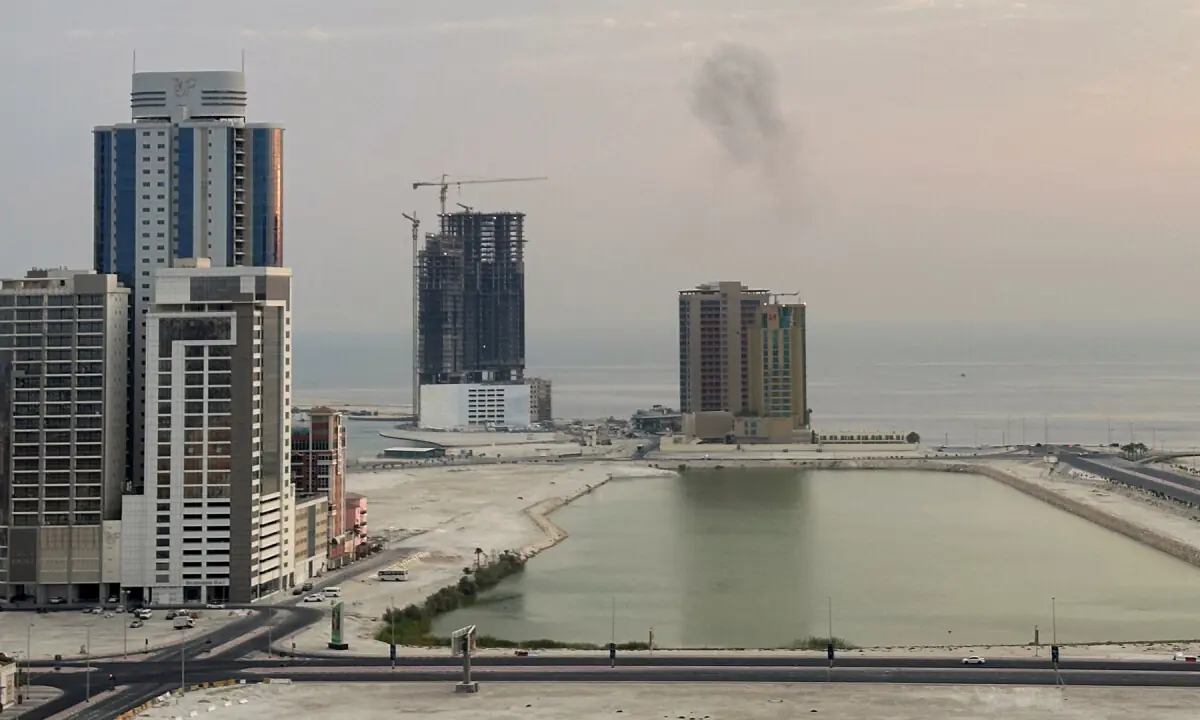
The United Arab Emirates has condemned in the strongest terms the renewed hostile attacks by Iran targeting Bahrain, Kuwait, and Jordan with missiles and drones.
In a statement posted on X, the Ministry of Foreign Affairs affirms that these hostile attacks “constitute a flagrant violation of the sovereignty of the brotherly nations and a threat to their security and stability”.
“The ministry reiterated the UAE’s full solidarity with the Kingdom of Bahrain, the State of Kuwait, and the Hashemite Kingdom of Jordan, and its support for all measures aimed at safeguarding their security and stability,” the statement reads.
Iranian Foreign Minister Abbas Araghchi has landed in the Qatari capital, Doha, to express condolences after the passing of the former emir Sheikh Hamad bin Khalifa Al Thani, Al Jazeera reports citing Araghchi’s official Telegram page and Iran’s state media.
Tehran’s top diplomat is also expected to meet Qatari officials during the visit.
Iran’s Foreign Minister Abbas Araghchi has travelled to Doha to attend the funeral of the late Qatari emir Sheikh Hamad bin Khalifa Al-Thani, days after Iran attacked Qatar, Reuters reports citing Iran’s ISNA news agency.
Iran has attacked what it says are US targets in Qatar — a mediator between Washington and Tehran in the Iran war - most recently on Sunday.
Iran’s Islamic Revolutionary Guard Corps said on Sunday it was targeting Qatar’s Al Udeid Airbase, the biggest US base in the Middle East, with ballistic missiles.
The Strait of Hormuz is impassable for commercial shipping, Al Jazeera reports citing Iran’s state media.
At least two vessels were stopped with “warning shots” from the IRGC over the past 24 hours, a Tasnim News Agency correspondent reports from the strait.
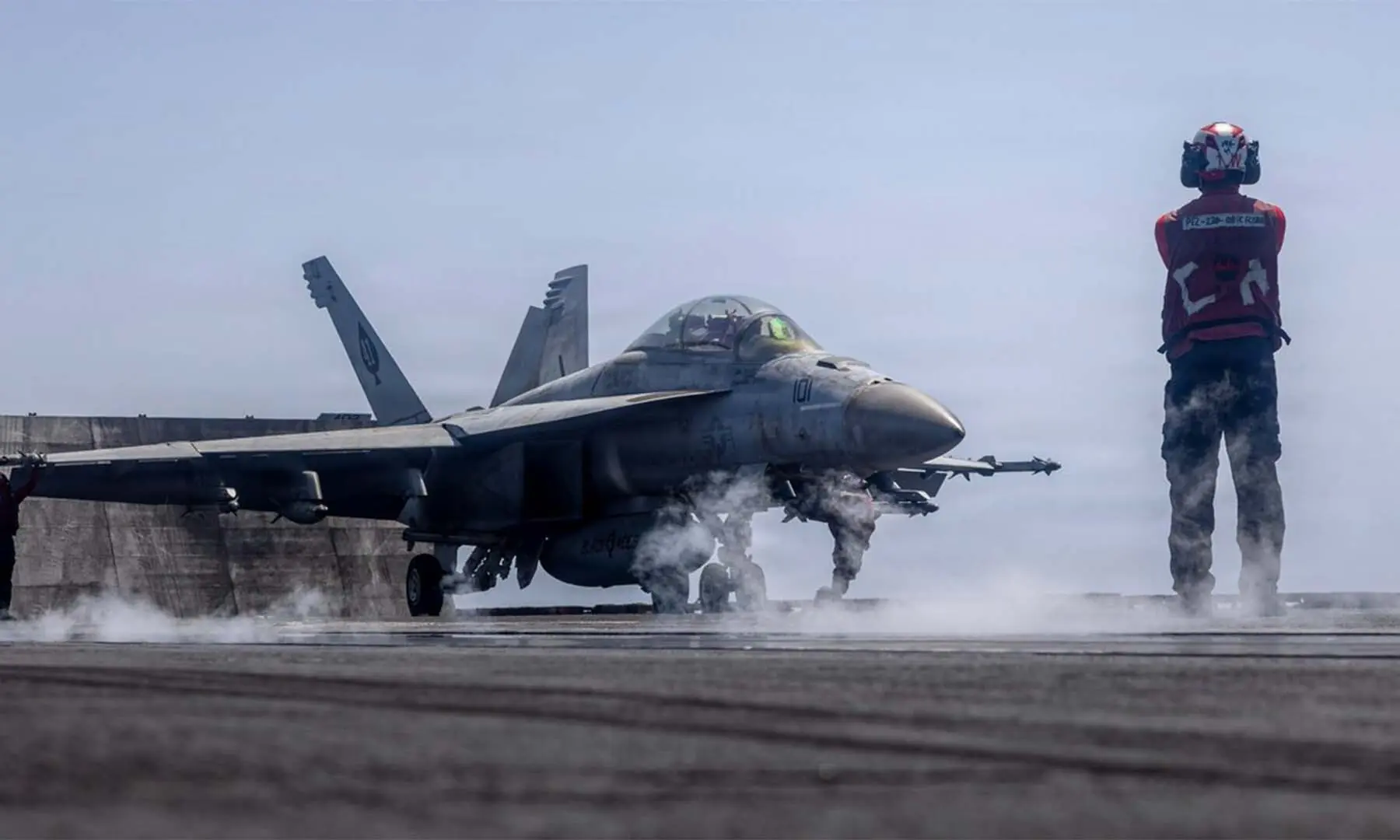
United States Central Command (Centcom) says it launched a fresh wave of strikes on Iran’s Greater Tunb Island at 7:30am Eastern time (4:30pm PKT).
“Centcom launched precision munitions against coastal defence systems and cruise missile storage and launch sites on Greater Tunb Island during the 90-minute wave,” the military says on X. “The strikes further degraded Iran’s ability to attack commercial shipping in the Strait of Hormuz.”
GCC Secretary-General Jasem Albudaiwi has condemned Iranian attacks on Bahrain, Kuwait and Jordan, including strikes on infrastructure and facilities that injured Kuwaiti military personnel, Al Jazeera reports.
“The treacherous Iranian attacks on Bahrain, Kuwait, and Jordan reveal Iran’s determination to drag the region into further chaos and instability, and its targeting of infrastructure is a dangerous escalation that the international community cannot remain silent about,” Albudaiwi says in a statement.
The secretary-general describes the attacks as an unprecedented escalation threatening regional security and accuses Iran of disregarding international norms.
Albudaiwi urges the international community to take practical deterrent measures, halt further attacks and hold those responsible accountable. He affirms the GCC’s solidarity with Bahrain, Kuwait and Jordan and its support for measures taken to defend their security, sovereignty and territorial integrity.
The number of vessels crossing the Strait of Hormuz has slightly increased, “with 21 monitored transits recorded, dominated by commercial traffic carrying crude, LPG, methanol and iron ore”, Al Jazeera reports citing shipping data monitor Kpler.
“However, the security outlook deteriorated further as three additional attacks off Oman were verified, bringing the reported toll to 56 confirmed incidents and 17 seafarer fatalities,” it says on X.
“The absence of Omani route transits highlights a growing loss of confidence in that corridor, while shipping continues to favour Iranian-approved routing,” the company adds.
The strait “remains passable, but the operating environment is becoming increasingly complex and unstable”.