The US and Israel on Feb 28 launched what they described as a “pre-emptive” joint strike against Iranian targets, with Trump announcing start of “major combat operations”
Pakistan hosted the first round of face-to-face talks between the US and Iran in 47 years in April; the talks ended without a breakthrough, but also without a breakdown
Ceasefire falters as US, Iran exchange attacks on each other’s military sites; Kuwait intercepts drones
Trump seeks to reinforceIsrael-Hezbollah truce as Tel Aviv’s escalated strikes in Lebanon raise global alarm
A medical source in south Lebanon’s Tyre tells AFP that Israeli strikes near the coastal city killed six people, as Israel keeps up attacks on the country’s south.
Four Syrian nationals and two Palestinians were killed in two strikes on the Al-Hawsh area, the source tells AFP on condition of anonymity, after the state-run National News Agency reported two Israeli airstrikes on roads in the area.
Iran’s Foreign Ministry has condemned what it described as US attacks on an Iranian oil tanker in the Strait of Hormuz and a telecommunications tower on Qeshm Island, saying they violated a ceasefire understanding and international law, according to Reuters.
The ministry said Kuwait and Bahrain bore “direct and clear responsibility” for the attacks, alleging their territory and facilities had been used to support US military operations against Iran.
Tehran said it reserved the right to self-defence and would use all available means to respond, including by targeting the source of any future attacks.
A top Emirati official calls for a united stance from the Gulf after renewed attacks on Kuwait and Bahrain that were blamed on Iran, according to AFP.
“In light of Iran’s repeated aggression against the brotherly states of Kuwait and Bahrain, a firm, unified and cohesive Gulf stance is imperative. No Gulf state should be left to face these attacks alone, because the security of the Gulf Cooperation Council (GCC) states is interconnected, their interests are shared, and their destiny is one and the same,” said UAE presidential advisor Anwar Gargash in a post on X.
“This aggression does not just target one country, it targets us all,” he added.
The Israeli army has ordered more forced displacements in southern Lebanon as it expands its ground invasion.
People living in Sidon, Mazra’at Kawkariya al-Riz and al-Zarariya must leave their homes “immediately” and move north of the Zahrani River, a military spokesperson said in a post on X.
The spokesperson blamed Hezbollah for violating an April ceasefire and attacking northern Israel, telling residents Israel’s military was “compelled to act against it forcefully, especially in your areas”.
Kuwait Airways has announced suspension of its flight operations until further notice, Kuwait News reports.
The airways has said the decision was taken “due to the current circumstances, in compliance with safety standards and in coordination with civil aviation authorities”, the report states.
IAEA chief Rafael Grossi has said that last month’s drone strike at the UAE’s Barakah Nuclear Power Plant “showed the importance of preparedness and swift action”.
“The UAE’s peaceful nuclear energy programme is built on the highest standards of safety, transparency and international cooperation,” he wrote on X after visiting the power plant.
Grossi affirmed that the IAEA will “continue supporting the UAE in maintaining the highest standards of nuclear safety and security”.
Iran’s Foreign Minister Abbas Araghchi and his Egyptian counterpart Dr Badr Abdelatty have discussed tensions in the Middle East and the ongoing diplomatic processes to ease them, IRNA reports, citing the Iranian foreign ministry.
Araghchi and Abdelatty spoke by phone last evening and discussed the latest developments in the region.
Bahrain’s army has said it intercepted three missiles and several drones targeting civilian infrastructure, attributing the attacks to Iran and its “systematic aggression”, Al Jazeera reports.
The military condemned the Iranian strikes as a violation of international law and said it stands ready to continue protecting Bahrain.
“The general command of the Bahrain defence force announces Iran continues its systematic hostile campaign through its criminal attacks using missiles and drones targeting civilian facilities in the Kingdom of Bahrain,” it said in a statement.
Lebanon’s Civil Defence agency tells Al Jazeera that six people were killed in two attacks by Israeli drones on the al-Hawsh area in the Tyre district.
Separately, paramedic Ali Salman Nader from the Al-Risala Ambulance Association in Arab Salim was killed in an Israeli drone strike on the al-Ain neighbourhood.
Furthermore, in Israeli attacks over 24 hours in the Bint Jbeil area, five people were killed and 48 wounded, including a doctor and health workers at Tebnine Hospital, the health ministry said.
Israeli warplanes also launched an air strike after midnight on the town of Deir Qanoun-Ras al-Ain in the Tyre district.
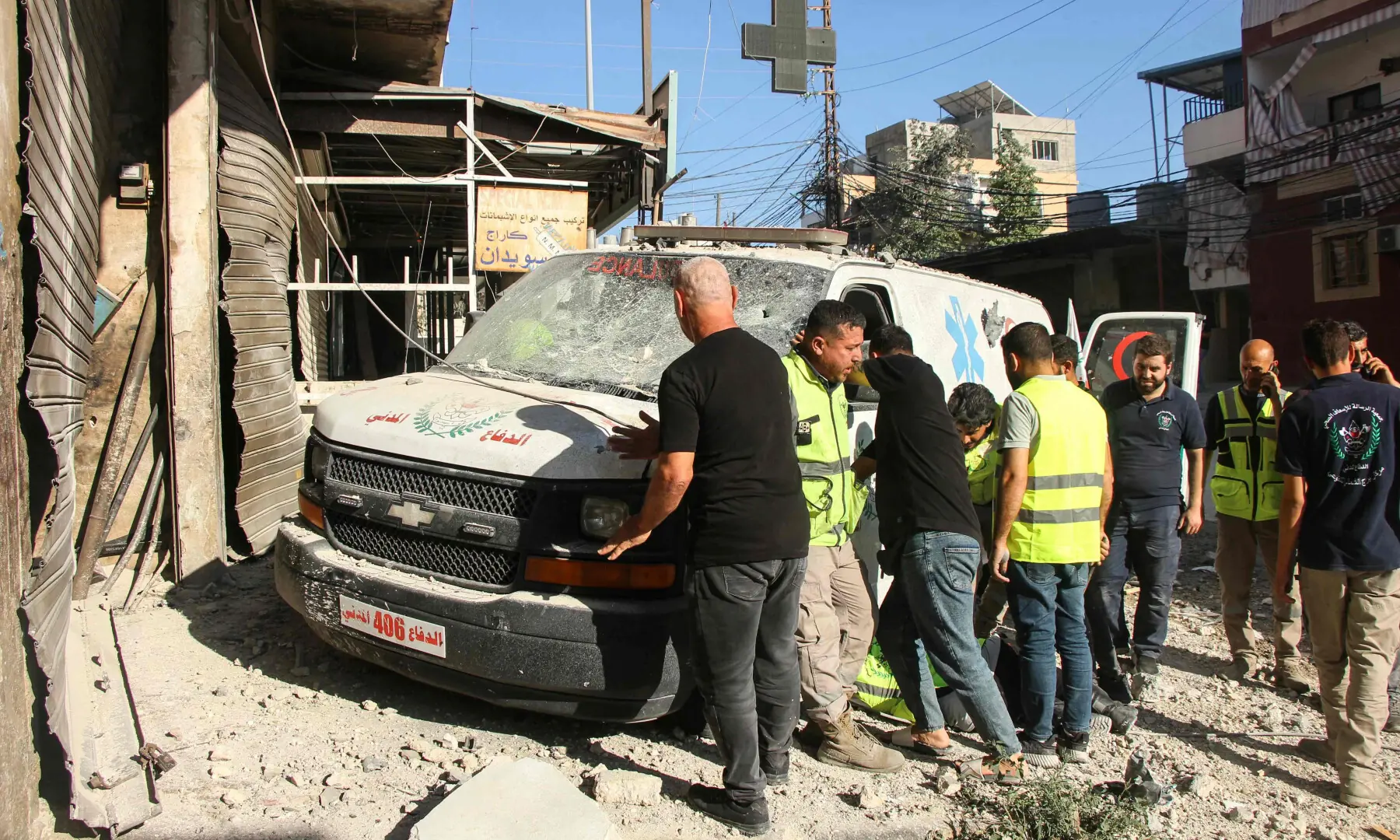
Emergency personnel inspect damage to an ambulance following Israeli airstrikes in the Burj al-Chamali area near the southern city of Tyre, on June 2, 2026. — AFP
The IRGC’s public relations department has released a statement on the overnight attacks in the Gulf, Al Jazeera reports.
“Late last night, the aggressive US military struck an Iranian oil tanker near the Strait of Hormuz with an aerial projectile, causing damage to the tanker’s engine room,” it said.
“In response to this act of aggression and the violation of regulations governing the Strait of Hormuz, a vessel belonging to the American-Zionist enemy, named Panaya, was targeted by missiles launched by the IRGC Navy.”
It said the US military then targeted an IRGC communications tower on Qeshm Island.
“In response, the IRGC Aerospace Force carried out missile and drone strikes against their air and helicopter base located in one of the countries of the region, as well as against the headquarters of the US Fifth Fleet,” the statement added.
“We had previously warned that any act of aggression would be met with a different and more severe response, and we have acted accordingly. These responses should serve as a lesson. We reiterate that disrupting the security of the Strait of Hormuz will carry a heavy price for the aggressive US military.”
Iran has carried out a drone strike on a passenger terminal at Kuwait International Airport, wounding several people and forcing air traffic to be suspended, according to Kuwaiti officials, AFP reports.
Ministry of Defence spokesman Brigadier General Saud Abdulaziz Al-Atwan described the attack as “criminal Iranian aggression which resulted in significant material damage to the building and injuries”.
Al-Atwan, in a social media post, did not say how many people were hurt but said those wounded had received medical care.
The US has announced sanctions on Iran’s biggest cryptocurrency exchange, accusing it of enabling the Iranian government and state institutions to circumvent Western sanctions, Reuters reports.
The new sanctions follow a Reuters investigation which showed that Nobitex processed hundreds of millions of dollars for Iran’s central bank and the Islamic Revolutionary Guard Corps (IRGC).
In an emailed statement to Reuters in April, Nobitex said it had no direct government connections and denied assisting the state.
A drone and missile attack struck Kuwait’s international airport, causing injuries as well as flight suspensions and diversions, Reuters reports, citing Kuwait’s state news agency.
The attack hit the T1 building at the international airport, and flights were diverted to alternative airports, the report said, citing the General Civil Aviation Authority.
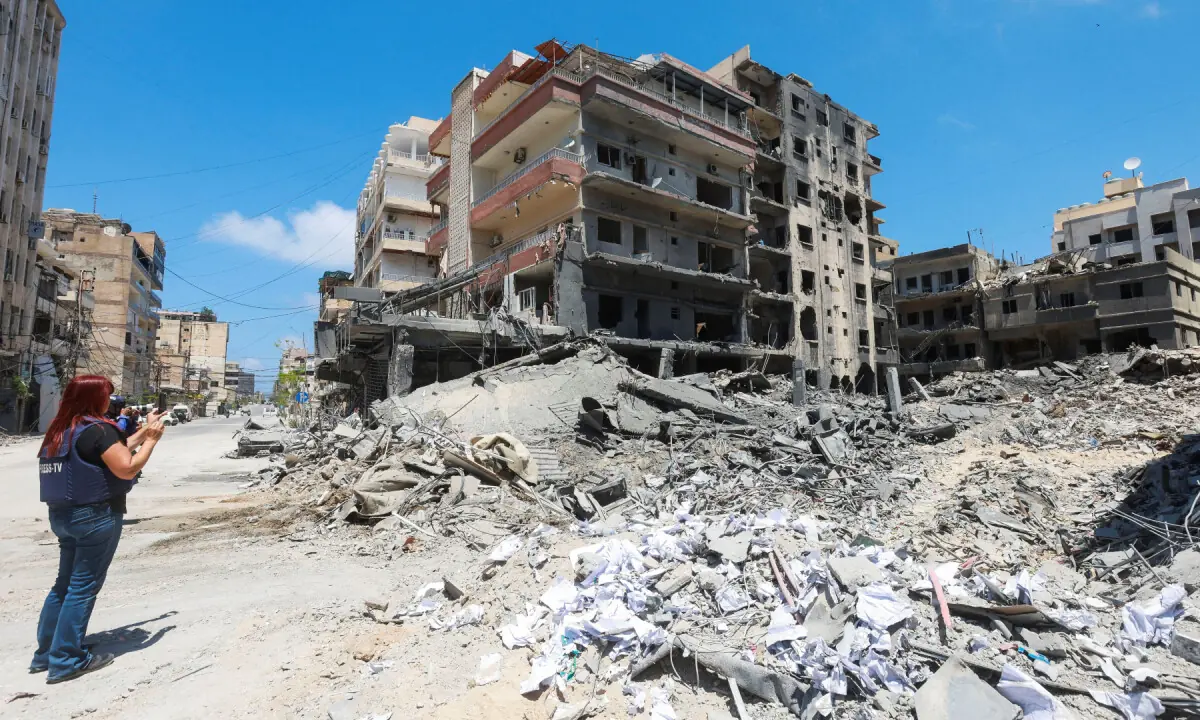
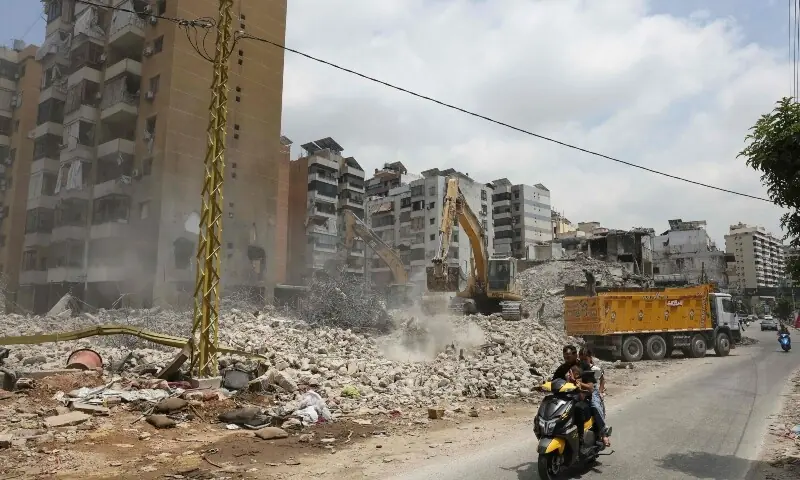
People walk past a destroyed building at a neighbourhood in Beirut’s southern suburbs on June 2, 2026. —Reuters
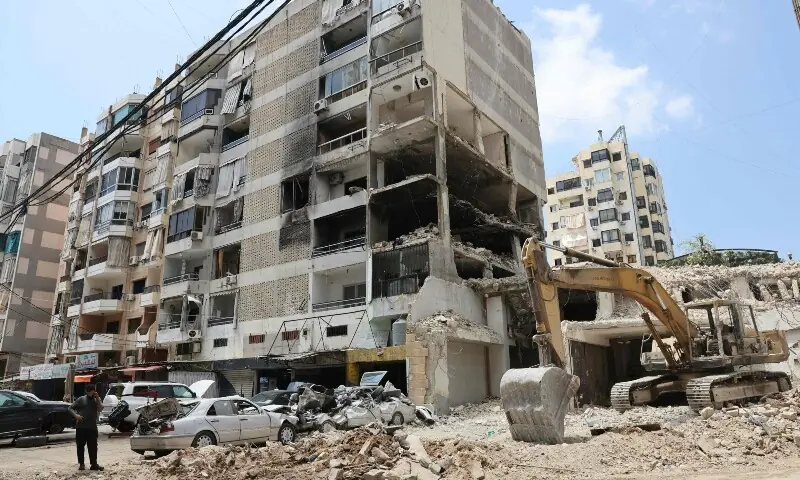
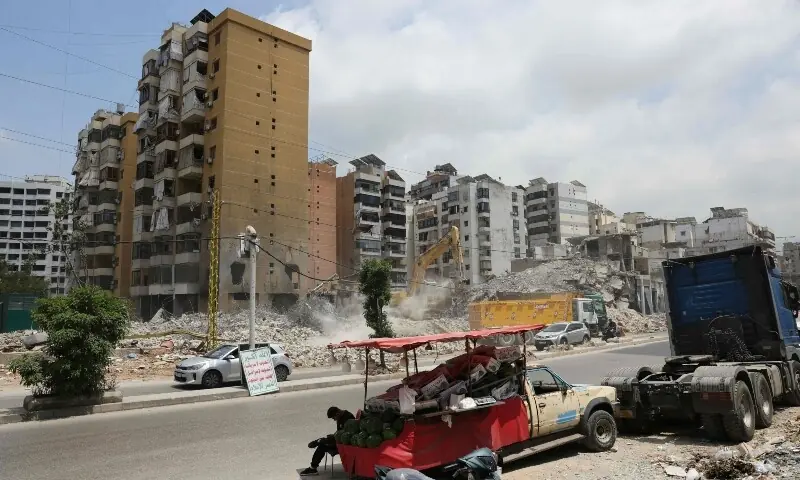
A man speaks on a mobile phone while standing near a destroyed building at a neighbourhood in Beirut’s southern suburbs on June 2, 2026. —AFP
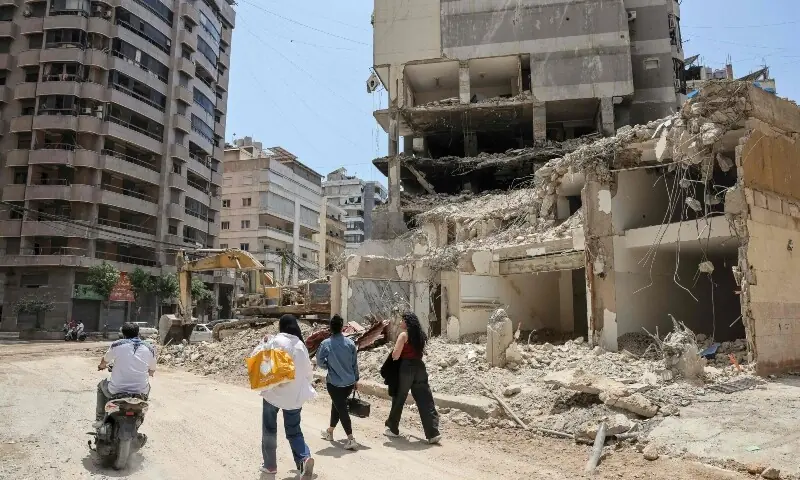
People ride a motorbike past a destroyed building at a neighbourhood in Beirut’s southern suburbs on June 2, 2026. —AFP
A street vendor waits for customers to buy watermelons opposite a destroyed building at a neighbourhood in Beirut’s southern suburbs on June 2, 2026. —AFP
The European Bank for Reconstruction and Development downgraded its economic forecasts Wednesday, noting that the energy price shock triggered by the Middle East war penalised Europe more than the United States, AFP reports.
“Electricity prices in Europe are also much higher than in the United States,” the London-based EBRD said in its latest outlook report, which also focused on countries in the Middle East and Africa where it invests.
The bank predicted that gross domestic product would slow to 3.1 per cent across its regions of operation this year from 3.4pc in 2025, with Europe more dependent on hydrocarbon imports than the United States.
Emerging-market central banks are leading a wave of interest-rate hikes as the war in Iran reignites inflation, moving faster than most developed-world peers, which remain on hold to assess the economic fallout, Bloomberg reports.
Since fighting began in late February, at least 10 emerging- and frontier-market central banks have raised rates, with Indonesia, Rwanda, South Africa and Sri Lanka tightening policy in the past two weeks.
‘It’s the tail that is wagging the dog’ aptly describes the ongoing conflict in the Middle East. The reality is that America is fighting Israel’s war. The Zionist state not only acts as a spoiler but also effectively dictates the terms of war and peace in the region. A recent example of this is Israel’s military escalation in Lebanon, which has not only complicated diplomatic efforts to resolve the US-Iran conflict, but has also broadened the theatre of war.
Despite President Donald Trump’s claims of having halted the conflict, the war continues. Israeli forces have occupied a significant portion of Lebanon, and relentless bombings have devastated Beirut, effectively undermining the US-brokered ceasefire.
Incensed by Israel’s blatant violation of the ceasefire, Iran has suspended its back-channel negotiations with the US and warned that it could “completely block” the Strait of Hormuz, aggravating tensions. Tehran asserts that any peace talks are directly linked to a ceasefire in Lebanon and Israel’s withdrawal from the region. Additionally, Iran has threatened to strike Israel if the war in Lebanon is not halted. Hours later, Trump stated that he had urged Israel to cease its offensive; however, there are no signs of an end to the hostilities.
Oil prices extended gains as Middle East peace talks stuttered, though stocks mostly rose on the back of continued demand for all things linked to artificial intelligence, AFP reports.
Uncertainty about a peace deal pushed oil prices up more than one per cent, with both main contracts up around five percent this week. However, stocks extended their breathtaking rally, fuelled by the tech sector and AI demand.
Tokyo climbed more than two percent, helped by a more than 11 percent surge in chipmaker Tokyo Electron, while Advantest also jumped.
Taipei was up a similar amount thanks to Taiwan Semiconductor Manufacturing Company’s strong advance.
Shanghai, Sydney, Singapore and Manila were also up, though Hong Kong, Wellington and Jakarta retreated. Seoul was closed for a holiday.
Two tankers carrying oil products exited the Strait of Hormuz over the past week, while a liquefied natural gas carrier loaded cargo in the United Arab Emirates, shipping data showed — rare movements as traffic through the chokepoint remains limited, Reuters reports.
Aframax tanker Cy Victorious, carrying at least 80,000 metric tons (over 508,000 barrels) of high-sulphur straight-run fuel oil, exited the strait on May 30, ship-tracking data from Kpler and LSEG showed.
Another Long-Range 2 tanker Sti Elysees, loaded with clean products from Kuwait in late February, exited the strait on May 29, according to Kpler data. Its destination is unclear.
Meanwhile, the Marigold LNG tanker, managed by Abu Dhabi National Oil Company, loaded a cargo at UAE’s Das Island on May 24-25, analytics firm Vortexa said.
Japan’s cabinet approved a $19 billion supplementary budget to support households struggling with soaring everyday costs driven by the Iran war, AFP reports.
The extra budget was “decided” at a cabinet meeting, the prime minister’s office said on its website.
Top government spokesman Minoru Kihara told reporters at a news conference that the cabinet had allocated a total of 3.1135 trillion yen.
Kuwait’s military said its air defences were intercepting “hostile” missile and drone attacks, AFP reports.
“Any sounds of explosions heard are the result of air defense systems intercepting these hostile attacks,” the military said on X, without specifying their origin.