The US and Israel on Feb 28 launched what they described as a “pre-emptive” joint strike against Iranian targets, with Trump announcing start of “major combat operations”
Pakistan hosted the first round of face-to-face talks between the US and Iran in 47 years in April; the talks ended without a breakthrough, but also without a breakdown
Trump rejects Iran’s response to latest US proposal that would stop the fighting but leave the most contentious issues unresolved for now
Global oil supply will not meet total demand this year as the US-Israel war on Iran wreaks havoc on Middle East oil production, the International Energy Agency (IEA) has said in its monthly oil market report, according to Reuters.
“With Hormuz tanker traffic still restricted, cumulative supply losses from Gulf producers already exceed 1 billion barrels with more than 14 million (barrels per day) of oil now shut in, an unprecedented supply shock,” the agency has said.
Its base-case forecast is for a gradual resumption of traffic through the Strait of Hormuz from the third quarter onwards, it has said.
Supply will fall by around 3.9 million bpd across 2026 due to the war, the agency has said, slashed from its previous forecast of a 1.5 million bpd drop.
Meanwhile, the IEA now sees demand falling by 420,000 bpd this year, compared to a previous forecast of an 80,000 bpd drop. Consumption is also under pressure from the war as price spikes lead to demand destruction and slower economic growth, it has added.
Siemens’ orders rose more than expected in the first three months of the year, although its sales and profits slipped behind forecast and the Iran war has created what the chief executive officer (CEO) termed a “very tense geopolitical environment”, according to Reuters.
Orders, a metric of future performance for one of Germany’s biggest engineering companies, rose 11 per cent in the January-to-March period, driven by strong demand, particularly from the US, as well as from data centres, power utilities and defence manufacturers.
CEO Roland Busch told reporters “customer buying behaviour” had not yet been noticeably affected by the disruption caused by the US-Israel war on Iran that began at the end of February.
But he said Siemens was monitoring developments and the possible impact on inflation, supply chains and sentiment.
Italy has said it was sending two warships closer to the Gulf but would only deploy them as part of an international mission in case of a lasting truce in the region, according to AFP.
Speaking to parliament, Defence Minister Guido Crosetto has also said that a possible mission to the Strait of Hormuz could only happen with prior approval from lawmakers.
Crosetto has said that the pre-condition for any deployment would be not the ceasefire currently in place “but a real, credible and stable truce or, even better, a definitive peace”.
He said it would take weeks for the minesweepers to reach the region and Italy was therefore “pre-positioning” them, initially to the eastern Mediterranean and then the Red Sea.
“Solely as a precaution… we are arranging for two minehunter units to be positioned relatively closer to the Strait,” Crosetto said.
The United Kingdom says it will contribute autonomous mine-hunting equipment, Typhoon fighter jets and the warship HMS Dragon to a multinational defensive mission aimed at securing shipping in the Strait of Hormuz, Reuters reports.
Defence minister John Healey has announced the commitment during a virtual summit with more than 40 of his counterparts from other nations involved in the mission, which he says will become operational when conditions allow.
“With our allies, this multinational mission will be defensive, independent, and credible,” he has said in a statement.
An Israeli strike has targeted a car on a major highway linking Beirut to southern Lebanon, AFP reports, citing state media National News Agency (NNA), despite a truce in the war between Israel and Hezbollah.
The attack took place in the Jiyeh area, about 20 kilometres south of the capital, NNA says.
Iran has rejected Kuwait’s stance of IRGC members attempting to infiltrate into Kuwait for hostile actions as “baseless allegations”.
In a statement carried by IRNA, the foreign ministry “strongly condemned the Kuwaiti government’s inappropriate action in exploiting the case of four Iranian forces who were performing their duties within the framework of a routine maritime patrol mission and had entered Kuwait’s territorial waters due to a navigation system malfunction”.
While recalling Iran’s principled policy of respecting the sovereignty and territorial integrity of all countries in the region, including Kuwait, the foreign minister said it expected Kuwaiti authorities, while “refraining from hasty comments and making baseless claims, to pursue the existing issues through official channels”, IRNA said.
It also emphasised the necessity of granting the Iranian embassy in Kuwait the fastest possible access to the detained Iranian nationals in accordance with international legal norms, as well as their immediate release.
The Trump administration’s public portrayal of a shattered Iranian military is sharply at odds with what US intelligence agencies are telling policymakers behind closed doors, according to classified assessments from early this month that show Iran has regained access to most of its missile sites, launchers and underground facilities, the New York Times reports.
Most alarming to some senior officials is evidence that Iran has restored operational access to 30 of the 33 missile sites it maintains along the Strait of Hormuz, which could threaten American warships and oil tankers transiting the narrow waterway, the publication said.
People with knowledge of the assessments said they show — to varying degrees, depending on the level of damage incurred at the different sites — that the Iranians can use mobile launchers that are inside the sites to move missiles to other locations. In some cases they can launch missiles directly from launchpads that are part of the facilities. Only three of the missile sites along the strait remain totally inaccessible, according to the assessments, the report said.
British car dealer Vertu Motors warns that a prolonged Iran war could drive up vehicle prices and dampen consumer sentiment further, although it has not yet seen any direct impact, according to Reuters.
Vertu says trading has been strong at the start of its fiscal year, which began in March.
The Israeli military issued the forced displacement orders for the residents of Meiss el-Jabal, Yanouh, Borj El Chmali, Hula, Debl, and Aabbasiyyeh warning that it will soon act against the southern Lebanese towns and villages “forcefully”, Al Jazeera reports.
Anyone who remains “endangers their life,” the military said, warning residents to move at least 1,000 metres (0.6 of a mile) away to “open areas”.
European Union energy ministers are discussing the creation of a tax on energy companies’ windfall profits from the price hikes that followed the eruption of the Iran war, Greek Energy Minister Nikos Taragas said, Al Jazeera reports.
Spanish Energy Minister Sara Aagesen said five EU countries, including Spain, are in favour of such a tax.
EU energy ministers are set to meet on Thursday in Nicosia
Israel’s military carried out a bombing operation in the town of Khiam, in southern Lebanon, overnight and swept the town with heavy machineguns, Al Jazeera reports citing Lebanon’s National News Agency (NNA).
Israeli soldiers also reportedly fired bursts of machinegun fire towards the Wadi al-Hujeir valley area and the outskirts of the town of Ghandouriyeh this morning.
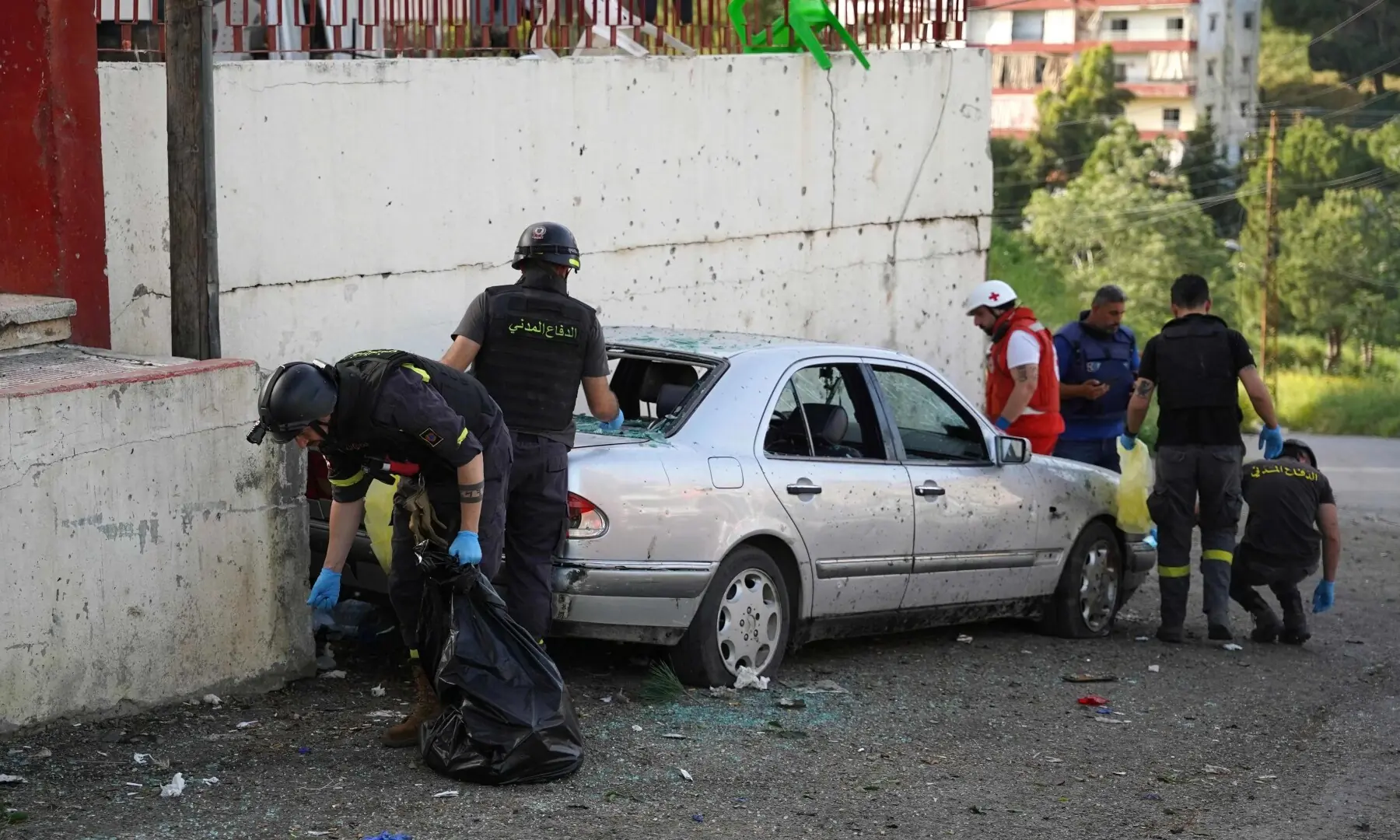
Lebanese first responders search the site of an Israeli strike that targeted first aid responders as they were attending to a wounded person in the southern Lebanese city of Nabatieh on May 12, 2026. —AFP
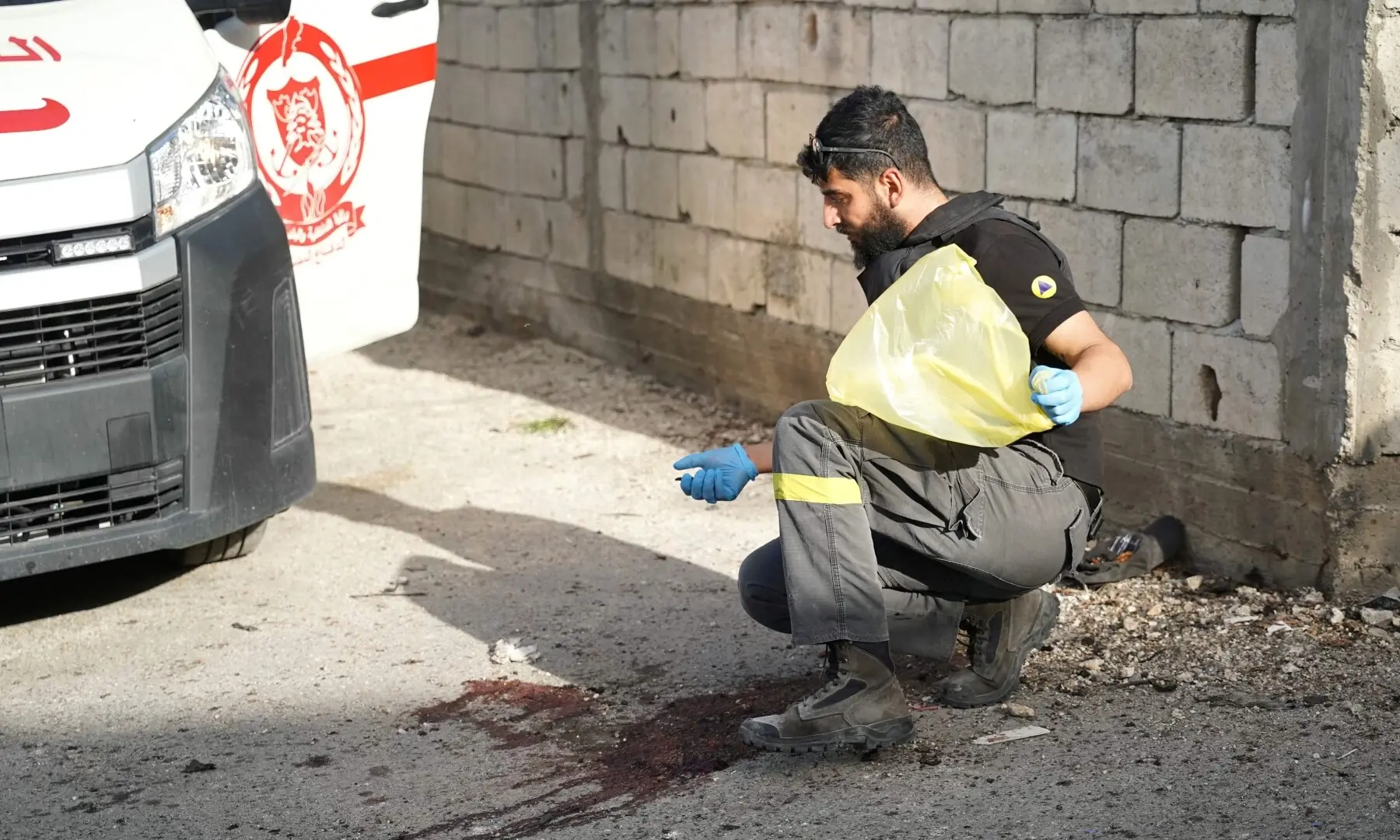
A Lebanese first responder searches the site of an Israeli strike that targeted first aid responders as they were attending to a wounded person in the southern Lebanese city of Nabatieh on May 12, 2026. —AFP
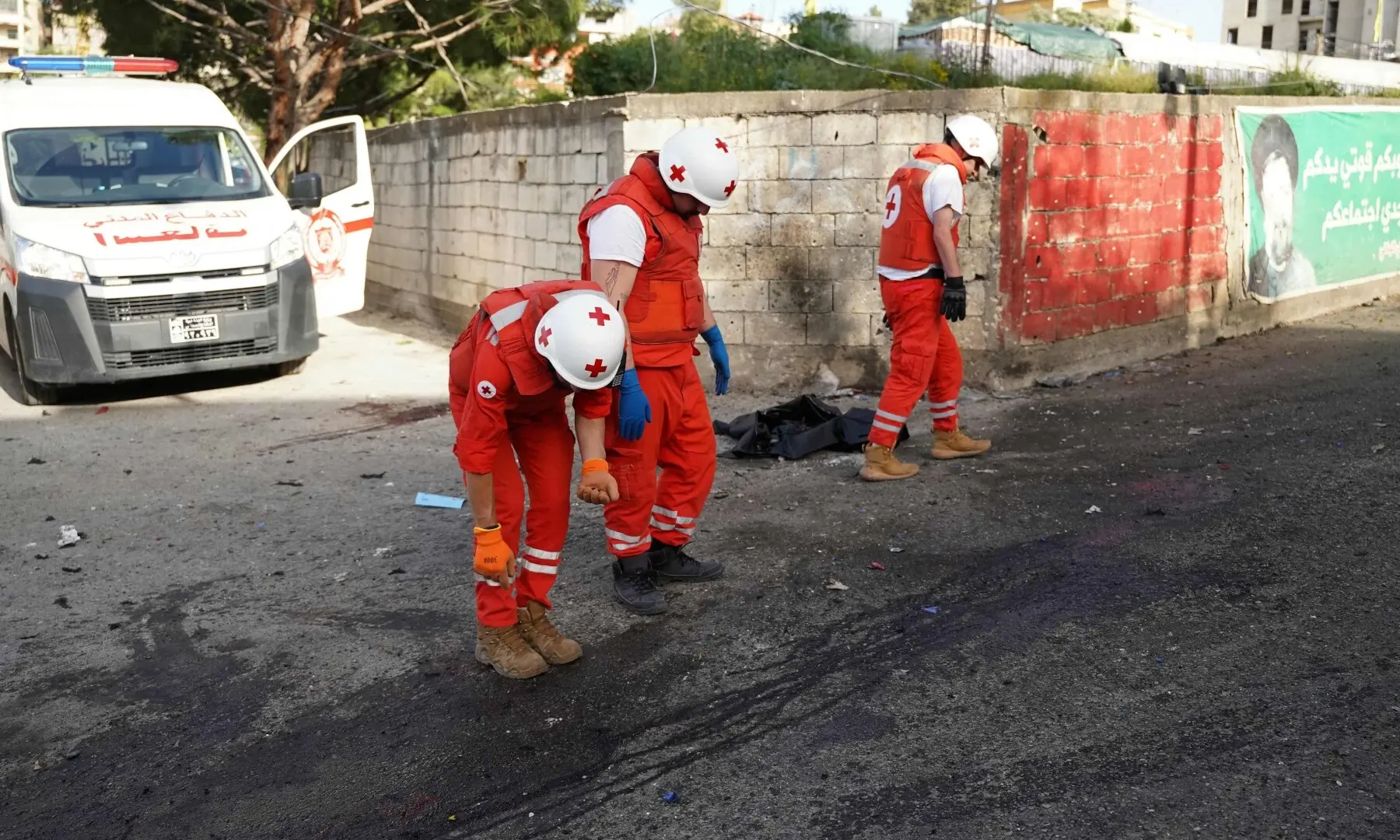
Lebanese Red Cross workers search the site of an Israeli strike that targeted first aid responders as they were attending to a wounded person in the southern Lebanese city of Nabatieh on May 12, 2026. —AFP
Chinese crude oil supertanker, Yuan Hua Hu, appears to be sailing out of the Gulf region, marking a rare crossing through the Strait of Hormuz, according to media reports and ship-tracking monitors, Al Jazeera reports.
Ship-tracking data shows the supertanker moving through the volatile waterway on Wednesday morning.
According to the reports, the vessel passed Iran’s Lark Island on the eastern side of the strait while heading south away from Hormuz.
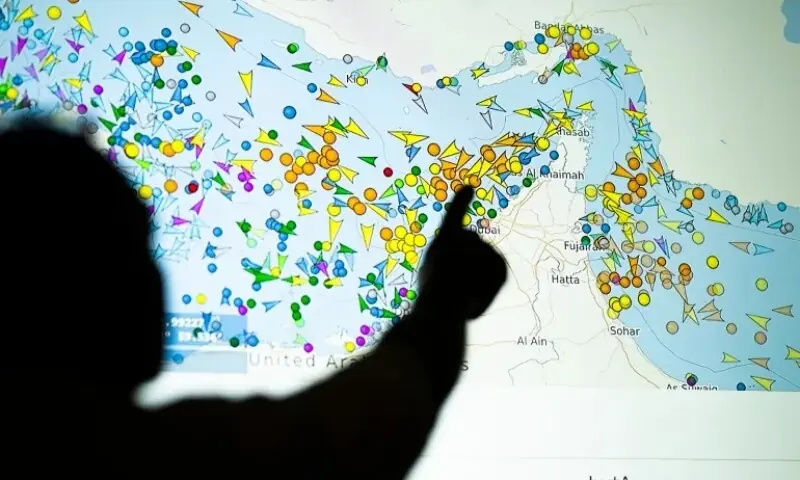
Vessel movements in the Strait of Hormuz on a ship-tracking website. —AFP
Iran executed a man convicted of spying for Israel’s intelligence service after the Supreme Court upheld his death sentence, the judiciary’s Mizan news outlet reports.
According to rights group HRANA, the 32-year-old defendant named Ehsan Afrashteh was arrested in 2024 and sentenced to death in 2025 based on confessions that were fabricated.
The Israeli military said that it intercepted a “suspicious aerial target” identified in an area where Israeli soldiers are currently operating in southern Lebanon, Al Jazeera reports.
No sirens were sounded in accordance with protocol, the statement added.
Saudi Arabia has condemned the “infiltration carried out by an armed group from the Islamic Revolutionary Guard Corps of the Islamic Republic of Iran into Kuwait’s Bubiyan Island”.
In a statement, the Ministry of Foreign Affairs stressed the kingdom’s categorical rejection of hostilities that violate Kuwait’s sovereignty.
Oil prices fell after rising in three consecutive sessions, as investors awaited developments around the fragile ceasefire in the Iran war and US President Donald Trump headed to China for a high-stakes summit with President Xi Jinping, Reuters reports.
Brent crude futures lost 82 cents, or 0.76 per cent, to trade at $106.95 a barrel at 0051 GMT, and US West Texas Intermediate futures fell 66 cents, or 0.65pc, to $101.52.
Both benchmarks have largely hovered around or above the $100 per barrel mark since the US and Israel began attacks on Iran at the end of February and Tehran effectively shut the Strait of Hormuz.
Global suffering continues as uncertainty over the fate of the war in the Middle East refuses to dissipate. Market analysts and decision-makers have repeatedly warned that the economic damage already wrought — and worsening daily as vital shipping routes through the Strait of Hormuz remain closed — could take months, in some cases years, to reverse.
Every day that passes without clarity on how and when the war will end introduces fresh intensity to the uncertainty roiling global markets and adds to the economic turmoil the world must bear because of it. Iran may have been pummelled militarily but refuses to accept defeat.
The consensus in foreign intelligence circles is that it may be able to endure for a lot longer before economic pressure forces it to reconsider its position. The US, for its part, seems to be losing the endgame, with its leadership’s obduracy drawing it deeper into a quagmire which is not easy to exit.
India’s travel industry fears that an appeal by Prime Minister Narendra Modi to avoid unnecessary foreign travel will squeeze new bookings after inflationary pressure knocked down summer overseas inquiries by as much as 15 per cent, industry and analysts say, according to Reuters.
The pullback is set to hit the peak season for outbound tourism, when affluent families seek cooler locations in Europe and Australia, during school holidays that run from April to June.
“The prime minister has a great following, and people sometimes take his advice very seriously … they may postpone it to next year,” said Ravi Gosain, president of the Indian Association of Tour Operators, with more than 2,000 members.
Esmaeil Baghaei has released a lengthy statement on X, warning that the US-Israel war on Iran “will determine the very meaning of ‘good’ and ‘evil’ in our time and for future”, Al Jazeera reports.
“This is a war between professional liars who fabricate justifications for atrocity, and a proud people who defend their homeland and human dignity relying solely on their own strength and resolve,” the Iranian foreign ministry spokesman wrote.
“This is a war between those whose decisions are shadowed by moral compromise, and those who act with a clear conscience.
“This is a defining struggle for the future of humankind. It will decide whether civilization’s hard-won achievements—human rights, the rule of law, and basic morality—will survive or be swept away.”
He ended by urging those who “reject the path of barbarism and domination” to “find the moral courage to speak, to act, and to stand on the right side of history”.
US PRESIDENT Donald Trump is doing what he does best: keeping the world guessing with his puzzling declarations. He has rejected Iran’s latest proposal for peace talks, stating, “I don’t like it”. He has also threatened Iran with more strikes. He claims the ceasefire is now on “massive life support”. At the same time, he has asserted that he has achieved all his war objectives. What are we to make of such, often conflicting, statements? One thing that can be deduced from Trump’s declarations is that there is not going to be an end to one of the most consequential conflicts in recent history anytime soon.
Interestingly, Trump’s public rejection of Iran’s peace proposal reportedly followed a telephone call with Israeli Prime Minister Benjamin Netanyahu. Speaking to an American TV channel, Netanyahu warned that the war was not over and nuclear material still had to be taken out of Iran. According to him, “If necessary, we [the US and Israel] can re-engage them [Iran] militarily”. This reinforces suspicions that Israel is not in favour of any peace talks with Iran and is pushing the American president to end the ceasefire, just as it pressed him to launch the war. The ceasefire meant to facilitate peace talks came into effect in April and has been largely observed despite exchanges of fire and reports of strikes in the strategic Strait of Hormuz, which Iran has effectively continued to block.
US President Donald Trump said that Americans’ financial struggles are not a factor in his decision-making as he seeks to negotiate an end to the Iran war, saying that preventing Tehran from acquiring a nuclear weapon is his top priority, Reuters reports.
Asked by a reporter to what extent Americans’ financial situations were motivating him to strike a deal, Trump said: “Not even a little bit.”
“The only thing that matters, when I’m talking about Iran, they can’t have a nuclear weapon,” Trump said before departing the White House for a trip to China.
“I don’t think about America’s financial situation. I don’t think about anybody. I think about one thing: We cannot let Iran have a nuclear weapon. That’s all. That’s the only thing that motivates me.”
China’s top diplomat urged Pakistan to step up mediation efforts between Iran and the United States, and help to “properly” address the reopening of the Hormuz strait, Chinese state media said, according to AFP.
Foreign Minister Wang Yi spoke to his Deputy Prime Minister and Foreign Minister Ishaq Dar on a call, state news agency Xinhua reported, ahead of US President Donald Trump’s visit to Beijing.