Pakistan must clear the air on smog. Here’s how
As the winter of 2025 approaches, the genie of smog is preparing to escape its bottle in South Asia, especially in India, Pakistan, and Bangladesh. This phenomenon occurs every year during the late autumn and winter months when temperature inversions cap the lower atmosphere across the Indus and Ganges plains.
With shallow mixing heights and weak winds, emissions accumulate under the skies in the region, causing severe health hazards for vulnerable populations. The principal health burden from particulate matter is often accompanied by ground-level ozone.
According to the Sixth Assessment Report of the United Nations Intergovernmental Panel on Climate Change (IPCC AR6), these pollutants are key contributors to cardiopulmonary diseases, exposing elderly people and children in particular to higher health risks.
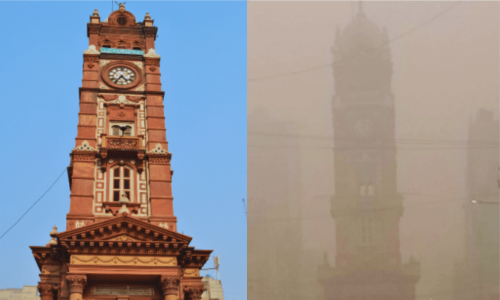
In Pakistan, alarm bells are ringing in policy and governance circles, which have increasingly failed to provide any clear-cut vision to control the persistent issue of smog that affects major cities across the country including Lahore, Karachi, Islamabad, Faisalabad, Gujranwala, Multan, and their surrounding towns.
It’s been done before, it can be done again
Last year, the Air Quality Index (AQI) of Lahore exceeded 700. In November 2024, it even reached over 1,500, making Lahore one of the most polluted cities in the world. The question now is: how do we control it with the available resources. Let’s look at two major examples, China and England, where comprehensive policies were enforced in the 1950s to control smog and emissions.
In December 1952, a stagnant weather pattern in London trapped coal smoke in the atmosphere for several days. Sunlight was blotted out, visibility plummeted, and thousands lost their lives to respiratory and cardiovascular complications. Recognising the gravity of the crisis, the British government enacted the Clean Air Act of 1956 — a landmark move that demonstrated how timely regulation can effectively curb the menace of smog.
Years later, several Chinese megacities faced similar episodes of acute smog. The government responded with stricter fuel and industrial standards, and within a few years, citizens previously exposed to dangerously high levels of PM2.5 began to experience marked improvements in air quality.
These two examples offer valuable lessons for Pakistan in formulating its own strategy to curb emissions. The country shares similar atmospheric conditions and potential policy tools, even if the sources of pollution differ.
However, while regulatory frameworks exist, Pakistan continues to grapple with severe policy implementation challenges. Effective execution demands strong governance mechanisms, a trained and committed bureaucracy, public support, and transparent enforcement — all of which remain lacking. As a result, the threats of smog and air pollution continue to loom large.
Engines of Pakistan’s smog crisis
In Pakistan, the transport sector remains the leading contributor to the smog crisis. Although national fuel standards have improved over the years, much of the existing fleet is outdated and poorly regulated.
Pre Euro and Euro-II diesel trucks and buses dominate long-haul corridors while the inspection and maintenance of all other types of vehicles are inconsistent. The use of substandard lubricants and widespread reliance on backup diesel generators further exacerbate emissions. In urban areas, two- and three-wheelers, along with small engines, release significant amounts of black carbon and nitrogen oxides which are key drivers of the winter haze and precursors of secondary particulate matter.

Furthermore, brick kilns encircling many cities in the Punjab often burn low-grade coal and in some cases, waste fuels, which significantly contribute to emissions due to continuous intensive burning and high impurities such as sulphur, moisture, and heavy metals. To reduce the release of greenhouse gas (GHG) emissions and fuel requirements, a low hanging fruit is to convert fixed chimney kilns into zig zag designs.
Industrial clusters, including cement, steel re-rolling, textiles, foundries, and glass manufacturing, are major emitters of sulphur dioxide, nitrogen oxides, and particulate matter. Despite existing emission limits, continuous monitoring and third-party audits are rarely carried out.
Filtration systems and low nitrogen oxide (Nox) technologies, where installed, are often poorly maintained or inconsistently operated. During periods of temperature inversion, emissions from these clusters can push entire regions into hazardous air quality levels. Strengthening monitoring systems and ensuring transparent reporting have, therefore, emerged as key priorities in recent policy documents and reviews of air quality governance.
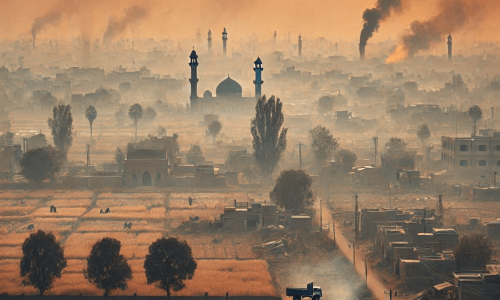
The agricultural sector also poses one of the biggest threats to Pakistan’s air quality. The open burning of crop residues leads to predictable pollution spikes during October and November each year. In Punjab, these fires often coincide with similar burning across the border in India’s Punjab.
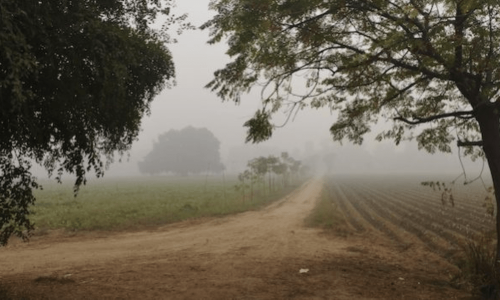
Under the influence of northeasterly winds and stable, cool air, the resulting smoke blankets Lahore and much of the central plains. Satellite based analysis and sector studies highlight that residue burning worsens winter smog episodes and underscores the need for in situ management and ex situ markets for straw.
The road to cleaner air
The health consequences stemming from smog aren’t just limited to breathing issues. Fine particles penetrate deep into lungs and bloodstreams, elevating the risk of heart attacks, strokes, chronic obstructive pulmonary disease, asthma, lung cancer, adverse pregnancy outcomes, and various metabolic disease.
The elderly population, outdoor workers, children, and people with pre-existing cardiopulmonary conditions are especially subjected to higher risks during short durations of smog. In coastal cities such as Karachi, high humidity and heat can exacerbate health risks.
Air pollution and climate change intersect in the same chimneys and tailpipes. Several short-lived climate forcers such as black carbon, methane, and ozone precursors degrade air quality and contribute to rising atmospheric temperatures.
In such alarming circumstances, Pakistan needs to make significant changes in its transport as well as industrial, and agricultural sectors to make them environment-friendly and sustainable so as to align with sustainable development goal 13 (SDG-13), which accounts for climate action. IPCC AR6 finds that targeting these pollutants can yield rapid health improvements and climate benefits when combined with sustained carbon dioxide reductions.
In the case of transport, emphasis needs to be placed on vehicle (cars and 2/3 wheelers) inspection and maintenance, compliance to registration and toll access, and retirement of heavy commercial vehicles (HCVs) that release harmful emissions. Simultaneously, fuel quality at oil refineries must be enhanced to meet emission limits as per Euro 5 and Euro 6 fuel standards. Prioritising clean buses for high-demand routes is the need of hour to maximise public health benefits.
As far as the industrial sector is concerned, Pakistan must complete transition to cleaner brick kiln designs as suggested above. Continuous and real-time emissions monitoring must be made mandatory for large industrial stacks so they can measure their emissions and take necessary action when required.
To further reinforce these actions, there is a need to establish standardised third-party audits and release compliance reports to enable regulators, communities, and investors to monitor progress of industrial zones.
Pakistan must ban crop waste burning with strict monitoring and transparent reporting. Instead, there is a need to replace open burning of crop residues with viable alternatives by scaling in situ residue management and building ex situ markets for industrial boilers, compressed biogas, and pellets. Coordinate across borders and prioritise ending waste burning because smoke does not respect administrative lines.
London showed the world how quickly air can be improved when public policy bows to science. China proved that large-scale transformation is possible when standards, monitoring, and enforcement mechanisms are aligned.
Pakistan, too, can breathe easier by curbing transport emissions, modernising kilns and industries, prohibiting the open burning of crop waste, and guiding public behaviour. The science is clear; what remains clouded is resolve. Once we begin to implement the proposed changes with consistency, our grey horizons could once again turn blue.
Header image: Vehicles move amid dense smog in Lahore, Pakistan November 24, 2021. REUTERS/Mohsin Raza/File Photo