Emergency to emergency, the capture of the Lawyers’ Movement
“The first two days in Attock were the worst moments of my life,” senior lawyer Muneer A. Malik writes of his imprisonment during General Pervez Musharraf’s emergency rule in 2007. “I was completely cut off from the rest of the world, and my only contact was with the mushaqati.”
But the mushaqati—who was serving the final two weeks of his two-year narcotics possession sentence—had been around long enough to know how to smuggle messages out. Though he had no pen or paper, he plucked a red rose, squeezed the petals to fashion a nib, and had Mr Malik write a phone number “in rose ink” on his undershirt.
Soon enough, the terrible conditions of Mr Malik’s confinement were beamed to the public on private television channels. Word reached as far as a brother in the United States.
The press, then and now
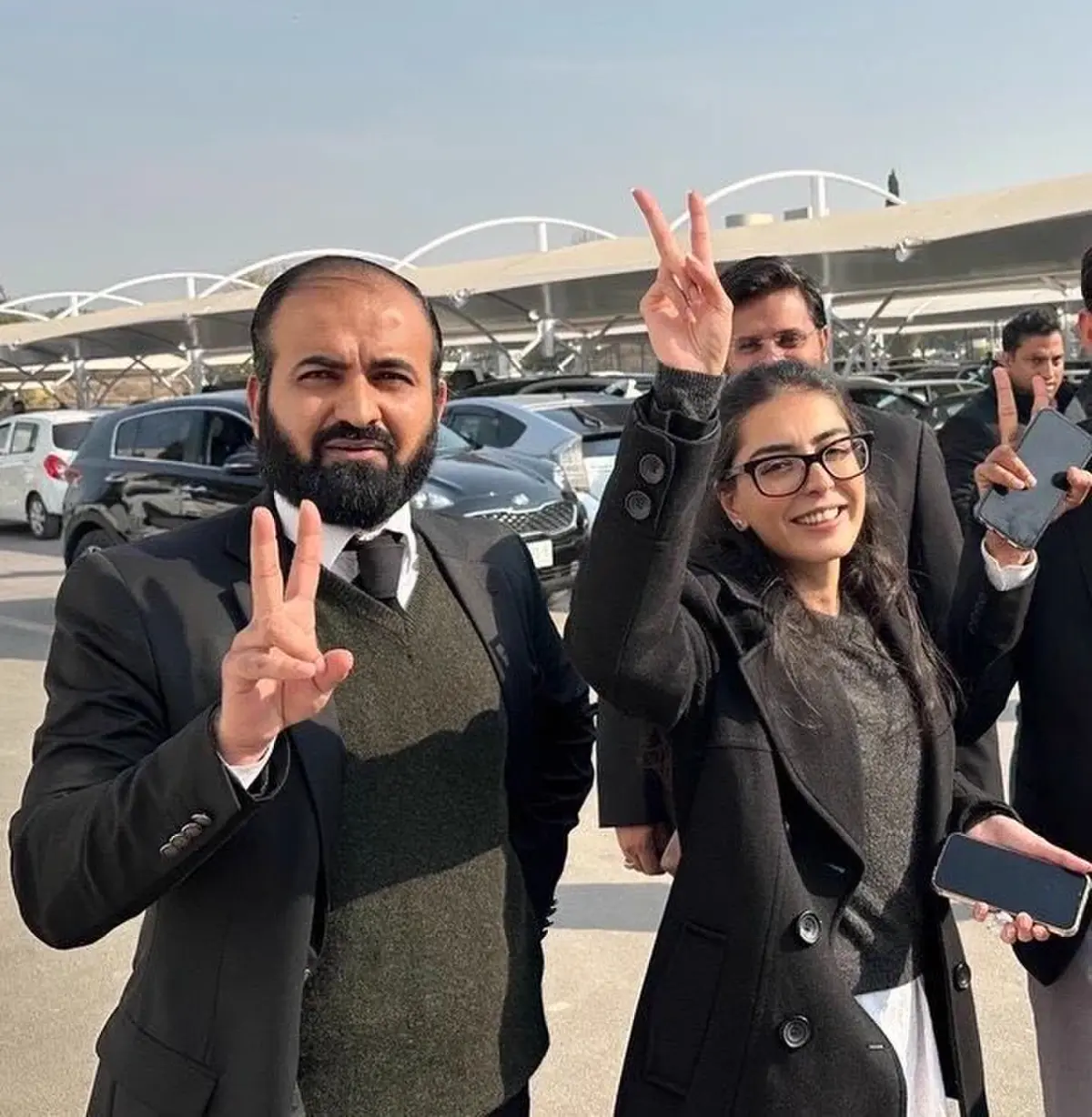
The press, in fact, played a key role in the Lawyers’ Movement that Mr Malik helped lead. The movement exploded over visuals of a serving chief justice being yanked by the hair, and would be sustained by live coverage of marches and court proceedings. This is hard to overstate: without the media, there would have been no movement.
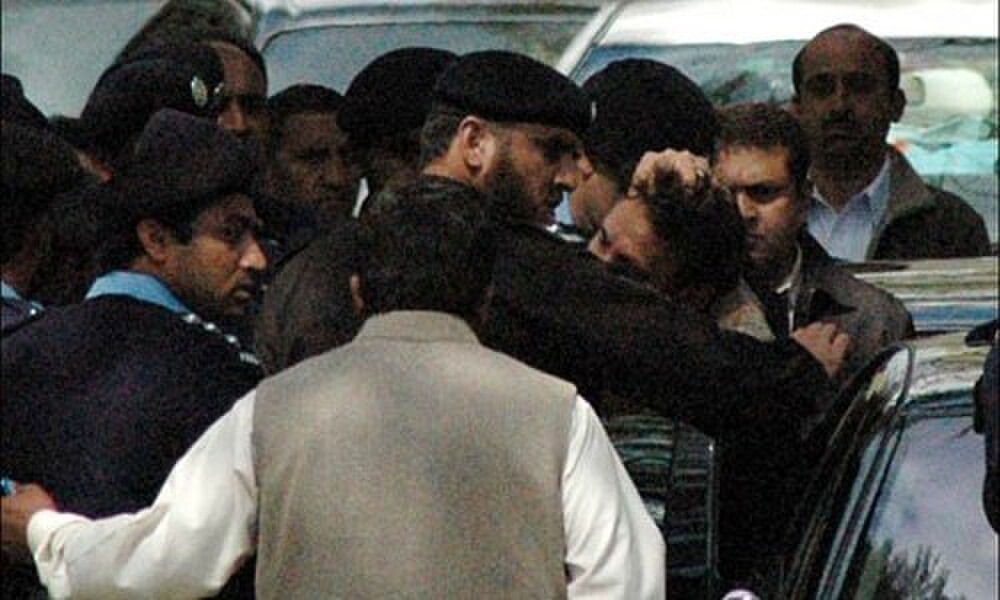
Fast-forward two decades, and we find ourselves in another country. What Mr Malik referred to as some of his worst days seem generous by comparison. No television channel, private or otherwise, will tell us what conditions the human rights fighters Imaan Mazari and Hadi Chattha are being kept in. What they will tell us is that they have been sentenced to 10 years this past week, for no more than removing a road barrier.
Thorny new defamation laws also seek to curb forbidden thoughts, while an all-seeing eye hovers over social media. State organs issue flurries of call-up notices over what they dub anti-state posts: “You are not clicking alone,” one official said two weeks ago. (The tagline from Orwell’s 1984, “Big Brother is watching you,” comes to mind.)
In what other place, after all, can a man be sentenced to seventeen years for hitting the retweet button?
The judiciary, then and now
It was an ashen-faced Pervez Musharraf who declared the emergency on November 3, 2007. “Inaction at this moment is suicide for Pakistan,” the general said, “and I cannot allow this country to commit suicide.”
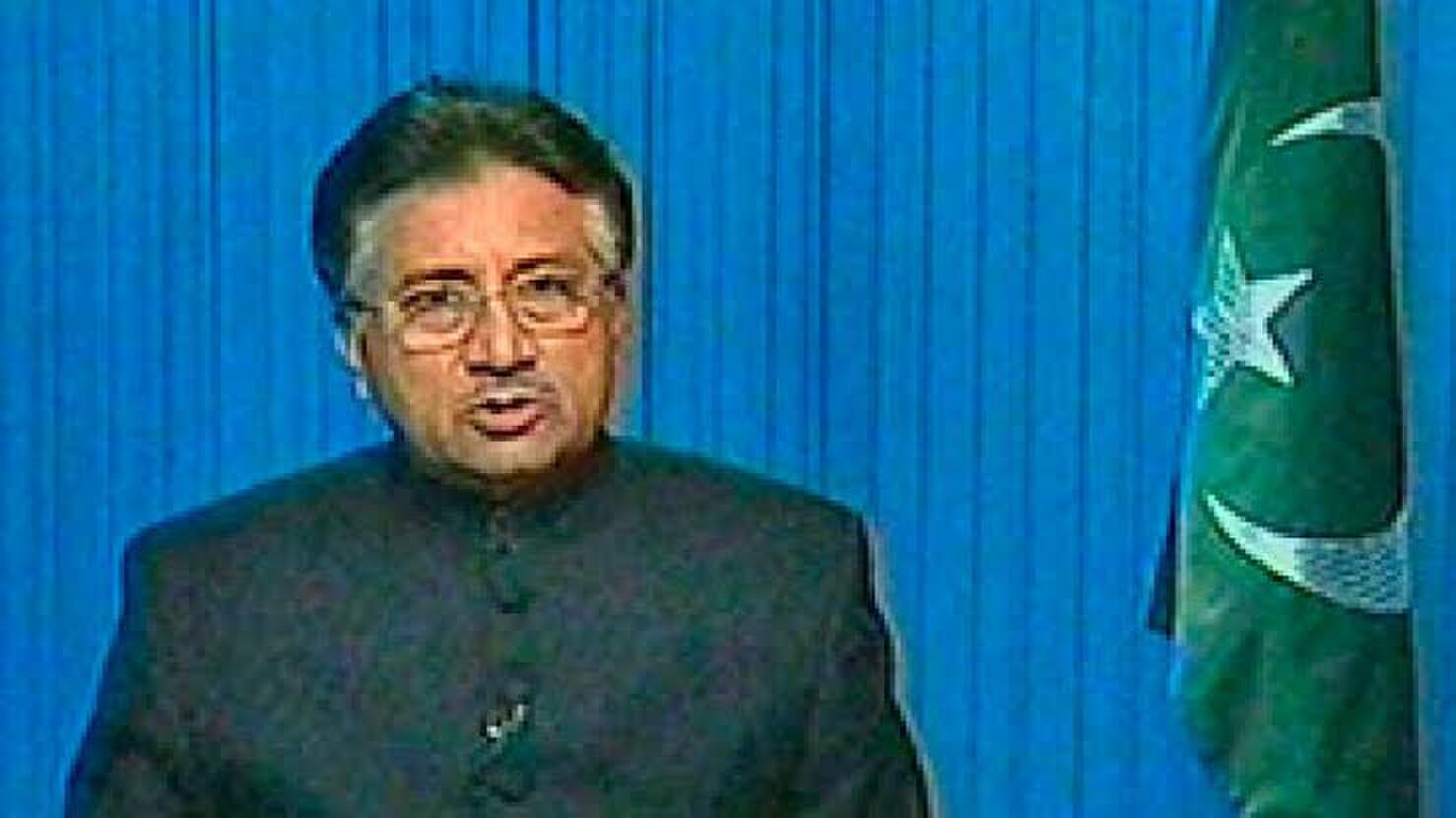
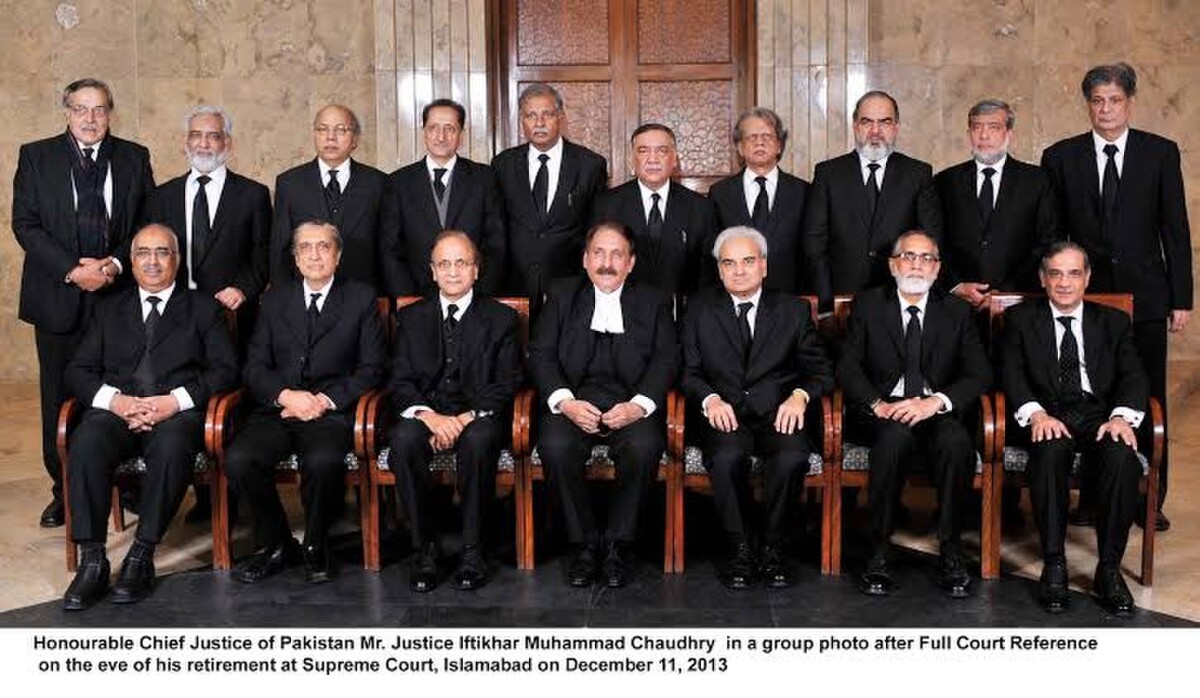
Though he blamed terrorism, it was all a bit of a ruse: Musharraf was dreading an imminent Supreme Court decision on whether he could continue to cling to the presidency while still in his khakis. The Court, led by Iftikhar Chaudhry, sprang into action: it declared the proclamation of emergency unconstitutional and directed fellow judges not to take Musharraf’s new oath. By nightfall, most of the bench was under house arrest.
But the point had been made, and it broke new ground: when the courts had poked the bear in the past, it was often after the bear had gone into hibernation. (Asma Jilani slammed the Yahya junta when the general was already under house arrest; detailed reasons in Darwesh M. Arbey came out years after Bhutto had sought martial law and military trials of civilians; the court rejected Zia’s party-less elections while he was still alive but only gave effect to Benazir Bhutto after the plane crash.)
Musharraf’s emergency was different: it was defied by the judges in real time, when the regime was in full swing. As the Supreme Court said of itself in Sindh High Court Bar Association, “Certainly, it was the first time in the history of Pakistan that the judiciary, instead of accepting or acquiescing in the situation as per past practice, acted boldly and independently and took the most-ever needed step, which conspicuously lacked in the past.” This would also set the stage for the victory of the Lawyers’ Movement, and the judges’ eventual restoration.
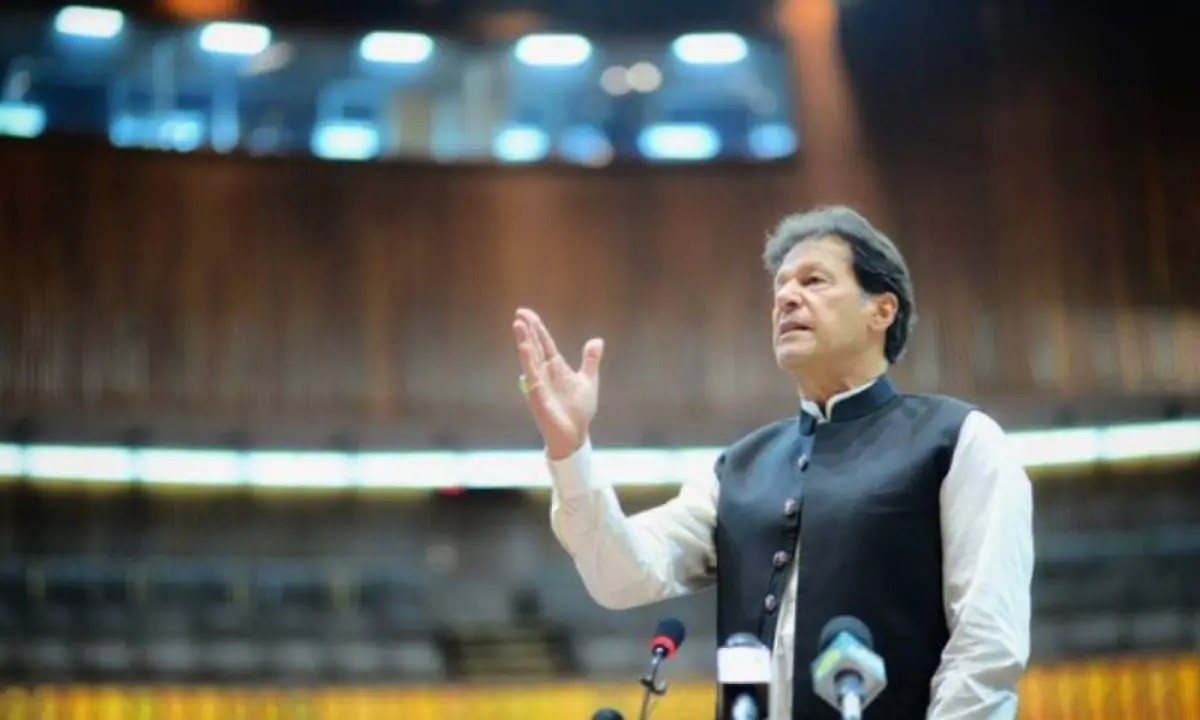
We come now to emergencies of the present. While terrorism is trotted out again as an excuse, Prime Minister Shehbaz Sharif was quite clear in his messaging on October 11: the Pakistan Tehreek-i-Insaf’s long march on Islamabad was “a nefarious plan”; the president declared emergency in Khyber Pakhtunkhwa the same day.
Almost a month later, the Peshawar High Court has yet to weigh in on the displacement of a provincial assembly elected by the most thumping mandate in the history of Khyber Pakhtunkhwa, and it has yet to weigh in on the matter of Chief Minister Sohail Afridi’s “preventive detention”.
Equally unresolved is the birth of a brand-new creature called the Area Representative and Development Council, which appears to have taken a bureaucrat’s butterfly knife to the Federally Administered Tribal Areas merger, and administratively de-merged the former tribal areas all over again.
That this flies in the face of the 25th Amendment, a watershed parliamentary consensus between the Pakistan Muslim League-N, Pakistan Peoples Party, and PTI, and between centre and province, has gone unnoticed.
Turning points, then and now
In fairness, the challenges to the 26th Amendment, which disempowered the Supreme Court, and to the 27th Amendment, which displaced it altogether, haven’t been heard either. Compare this to the Chaudhry bench which, for all its excesses, met its moment on November 3, 2007.
If that was the turning point in the past, the most recent one occurred not in Peshawar last month, but in Islamabad three years ago, in the form of the ninety-days election case.
Why was ninety-days, and not some other matter, so crucial? First, because it set the ball rolling for all else that would happen to the higher judiciary, and second, because of the deadline’s gravity: our Constitution mandates ninety days for elections in the plainest terms, and it does so because the country has learned—at the cost of half of itself—what happens when the polls are frustrated. It goes to the very heart of a peaceful transfer of power, which in turn goes to the heart of democracy.
But the heart of democracy, it turns out, takes a backseat to silly office politics. The Bandial Court required unanimity. What it got was an imaginary 4-3 verdict—that was, by every measure, 3-2—on the backs of bizarre dissenting opinions; the unity regime then seized on the confusion. (This very week, in fact, the Election Commission defended its refusal to hold the 2023 polls on the grounds that, by the dissenters’ own count, the Bandial Court’s order was a “minority decision”.)
Meanwhile, Qazi Faez Isa, at the helm of another bench, attempted to freeze every suo motu in the land around the same time.
None of this is to say unanimity would have led to elections being held. It’s to say the unity regime had a far easier time defying the court once the court’s own brethren were needlessly defying it too.
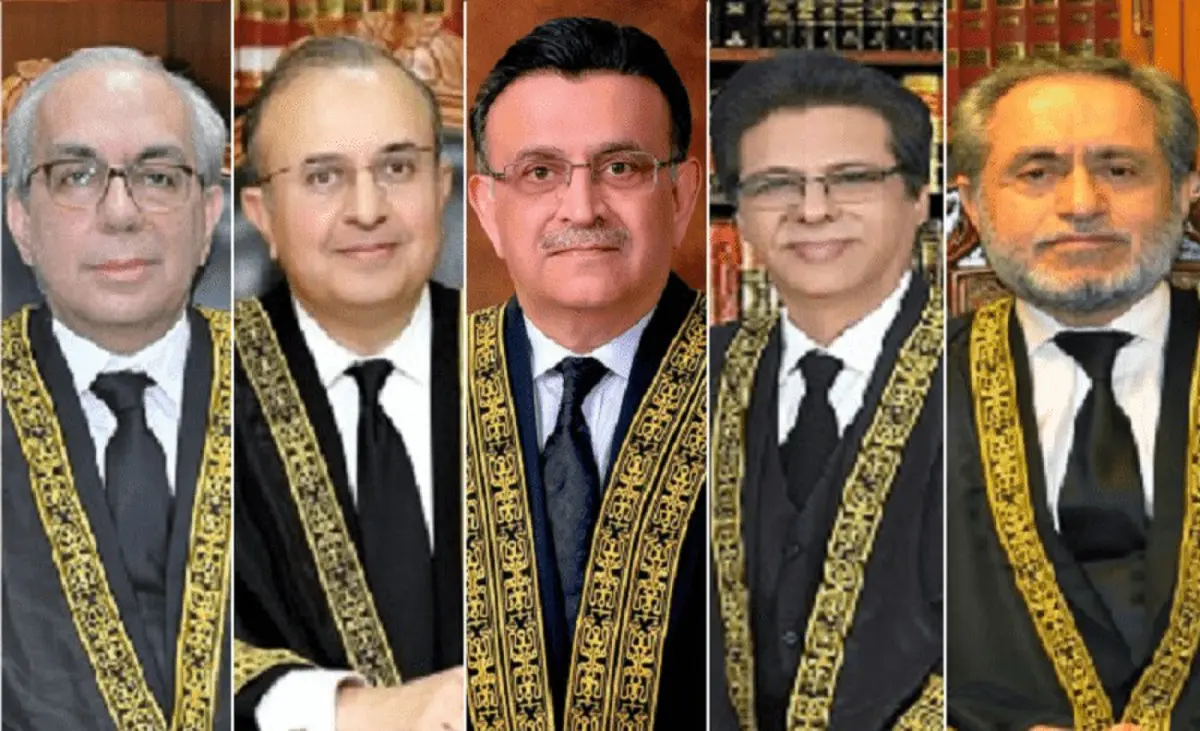
And then the moment was over: Qazi Faez Isa took oath as chief justice, and some of the worst verdicts in the life of the country ensued. Instead of May 2023, Punjab and Khyber Pakhtunkhwa went to the polls in February 2024, after the country’s largest party had been safely dismantled. The Supreme Court’s powers would be next.
Yet, even here, there was space to hold out, to salvage at least some of the Court’s hard-won independence. But if the past had seen Iftikhar Chaudhry step up—his restoration the one cause that had put lawyers in the streets—the present had no judges willing to stake that claim. In the absence of a challenger, any budding movement would be faceless and leaderless. What would be their cause? And to restore whom?
Justice Yahya Afridi, among the dissenters in the ninety-days case, is now the chief justice of Pakistan. He will also be the last, courtesy of the latest amendment, to hold that title without a Federal Constitutional Court judge also being in contention for it. Given all that has been lost over the past two years, it’s scarcely a fair trade.
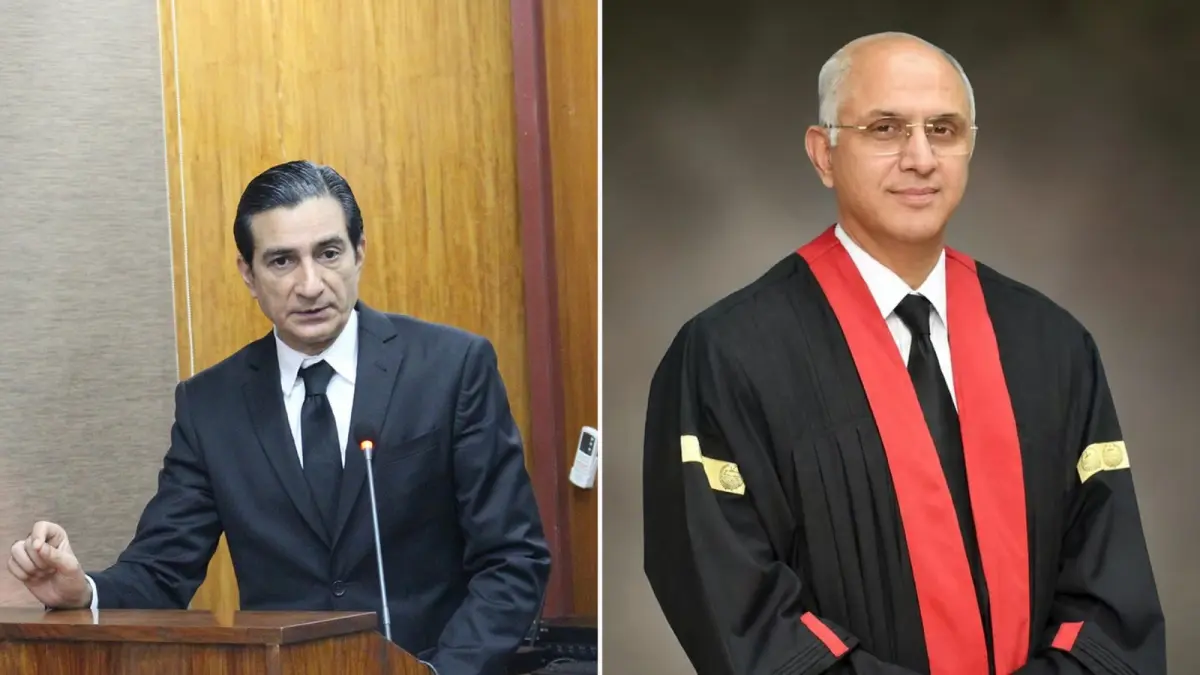
In any event, the restoration era stands well and truly over, even if glimpses remain: by resigning last week, Justice Mohsin Akhtar Kayani joined Justice Shams Mehmood Mirza, another outstanding judge of the high court, in walking away at the height of his service. Both refuse to sit on benches the recent amendments have sawn into executive armrests.
The parties, then and now
When Musharraf was yet to fall, Pakistan’s two big parties, the PPP and PML-N, promised to put the knives away and coexist with one another, in the hope that the military establishment would no longer thrive in the daylight between them.
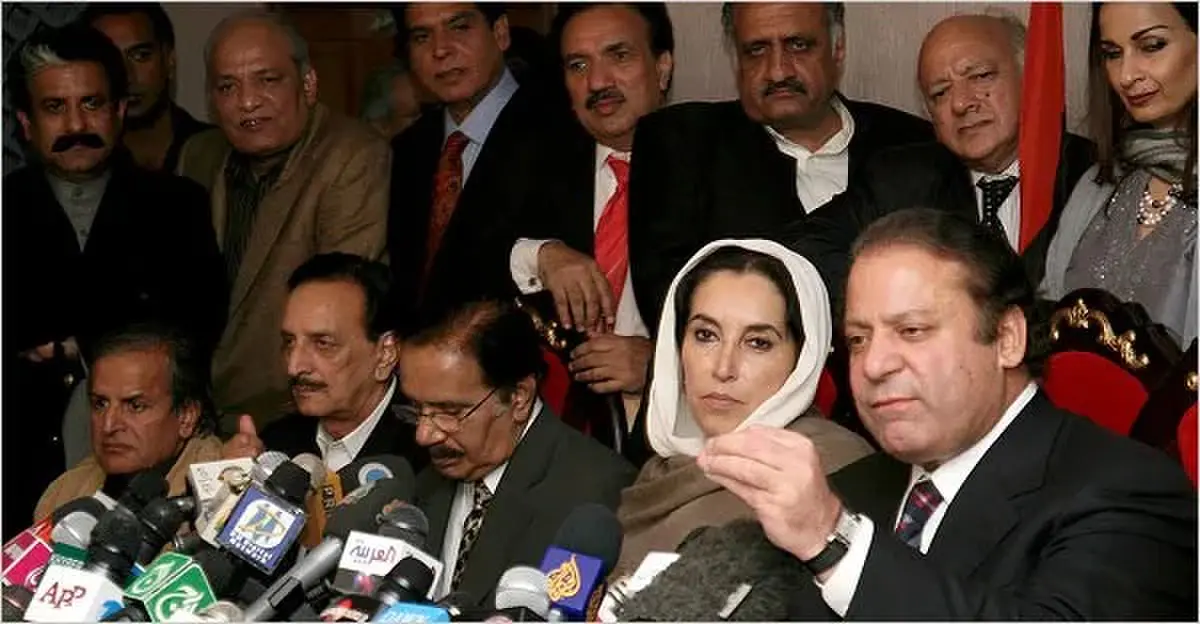
This new friendship, however fraught, helped Islamabad chug through to two clean transfers of power. “We shall not join a military regime or any military-sponsored government,” the Charter of Democracy reads, and, “no party shall solicit the support of the military to come into power or dislodge a democratic government.”
Turn to the present, and we find the inverse. “This is a hybrid model,” Nawaz League’s Khawaja Asif said last year. “It’s not an ideal democratic government.” And further, “If this sort of model was adopted way back in the nineties, things would have been much, much better.”
There was a reason it wasn’t adopted, at least as completely, in the late nineties or early 2010s. Back then, Mr Asif’s party had relied on actual votes to win power. Today’s “model” reflects no change in political philosophy; it is just the only means of ascent left when the voters want someone else. The unity parties have thought it best to sacrifice popular will for high office. Better them, after all, than the PTI.
Of course, it was Imran Khan and the PTI that had framed the Charter of Democracy as a cartel agreement between two royal families; that had formed government in Punjab in 2018 despite the PML-N having won the most seats; that had dumped an entire roster of political opponents, corrupt or honest, in jail; and that had outsourced parliament to the shadowlands. The deep state loomed far larger when Mr Khan left than when he took charge.
But if the PTI had punched holes through the charter, it was the author parties that would shred it after 2022: the Sharif-Bhutto unity regime clung to office for sixteen months, dodged two provincial elections, held a national one and lost it, pretended to have won it anyway, and then—to secure this bogus arrangement—destroyed the same judicial independence the charter had been centred on.
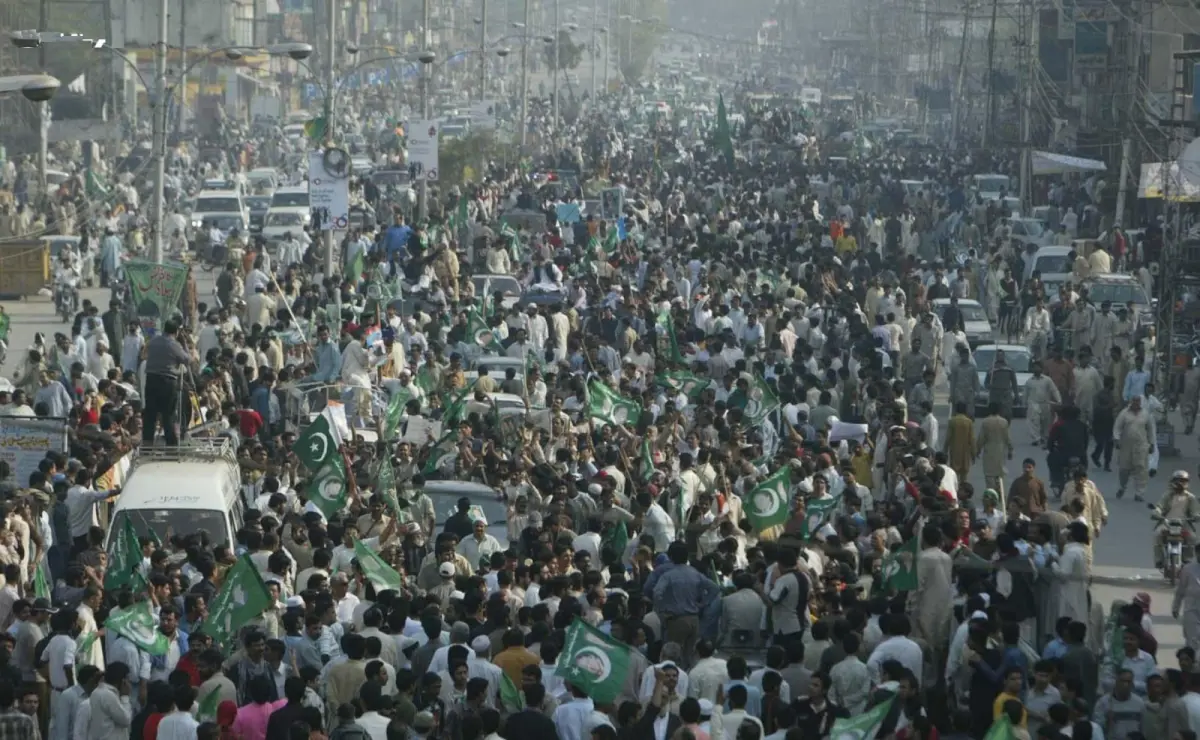
Compare this to Nawaz Sharif joining the Long March in 2009, which pushed the establishment to tell Asif Zardari to settle, and to restore the judges. Today, the same civilian actors are content with the military establishment’s supremacy, and have no higher object than to cling to office without votes – their position is more in common with emergency-era Musharraf than not. As for political mobilisation, whereas Nawaz Sharif was free to hit the streets in 2009, Imran Khan remains locked up.
The bar, then and now
In 2007, the bar had a one-point agenda: to return Iftikhar Chaudhry and the deposed judges to their benches.
Today, no one is seeking restoration in the first place. Nor can the bar put the cart before the horse: it works best when it amplifies a resistant judge; it cannot be a substitute for one. Nor is there much to go on: this time round, the senior judiciary has kept its old offices or moved into new ones, to say nothing of an entirely new court in the form of the FCC.
If, in the alternative, the plan is to reverse the 26th and 27th amendments, that can only happen through parliament, where a much-rigged majority leaves little room for such a push.
Systems also adapt. If the bar was the key to 2007’s fightback, it has been actively co-opted in the years since to prevent an encore: two decades of penetration have smoothed over any rough edges, and two decades of partisanship have wrongly recast a struggle for judicial independence as yet another political brawl between the Pakistan Democratic Movement, PTI, and the establishment.
At the fore are the lawyers and ex-Provisional Constitutional Order judges once sympathetic to Musharraf or to his equally anti-Chaudhry successor, Asif Ali Zardari—and for whom subordinating the judiciary to the executive is in mutual interest. It was the same bloc that had opposed the restored Court, and it is the same bloc that cheers the amendments steamrolling it.
Yet all this experiment has yielded, as Justice Kayani noted, is a far worse place for the ordinary litigant. Mass confusion abounds between two competing apexes, the Supreme Court and the FCC; a century of precedent has been flushed down the drain, with the FCC bound by none of it. Judges, their tenure in executive hands, are loath to give relief against the same executive. And, to our great and abiding shame, Imaan Mazari and Hadi Chattha remain in jail.
This is an old uncle trope: to strip all Pakistanis of their agency, and to attribute every gain to differing factions within the deep state.
False excuses, then and now
If conspiracies comfort the powerless, they also comfort those who choose to do nothing with whatever individual willpower they’ve been given. In 2007 and onwards, it was common to hear that the Lawyers’ Movement, the restoration of the judges, and the return to parliamentary democracy were little more than the knock-on effects of an establishment reshuffle; of General Kayani and the high command wanting Musharraf gone.
This is an old uncle trope: to strip all Pakistanis of their agency, and to attribute every gain to differing factions within the deep state. While it is correct that Musharraf had exhausted the patience of his top brass, it is equally correct that there was no course-correction in sight long after he had gone: the PCO judges remained on the bench, and the executive resolutely declined to restore Iftikhar Chaudhry. It would take yet another mass mobilization, in March 2009, for all the judges to return.
Today’s version of this spin has been to blame the victim: that the current amendments are a result of judicial overreach; of putting the courts back in their place. Enough has been written in these pages to rebut this, and needn’t be gone into again. Put simply, the judges were punished not for what they got wrong, but for what they got right: elections on time, no military trials of civilians, no external interference.
The rest is noise by those complicit: Lady Macbeth scrubbing her hands.
In 2027
“It would do well to remember,” Muneer A. Malik concluded in his book on the Lawyers’ Movement, “that in this unprecedented struggle, we have forever changed the mindset and consciousness of the people of Pakistan. This is an everlasting gain.”
But the Pakistan of 2007 is not the Pakistan heading into 2027. Sociologist Umair Javed summed up the new system well when he said, “The reprisals and tightening of the last few years have now decisively changed mechanisms of control and acquiescence within the Pakistani state, and have consequently changed the limits of what is possible within mass politics.”
The challenge, then, is to eke out political, judicial, and redistributive space even amid so much tightening. Though this hard country has grown harder, what is required has stayed the same—a political settlement that restores constitutional rule, respects the right to choose one’s representatives, and carries with it all those left behind. And if history is anything to go by, constitutional arrangements that appear entrenched today are not necessarily permanent.
As Fanon once said, “Each generation must, out of relative obscurity, discover its mission, fulfill it, or betray it.”
There’s little else to do but choose.
Header art: The bowler hat and cog eye come from A Clockwork Orange, Anthony Burgess’s novel about a state that “cures” a man by taking away his ability to choose. Here the figure wears a lawyer’s black coat and tie, and has no face: the bar of 2007, made into a part of the machine. Rendered with AI.