In the rent-a-loan business, you can pay but you can never leave
Alamgeer Khan appears in a white shalwar kameez with a waistcoat at Quetta Chai Cafe near Jamali Pul in Ayub Goth. He parks his motorcycle and takes his spot. The waiter brings the usual: green tea with ginger. Alamgeer makes a few entries in small diaries and a few phone calls. After the cup is drained, he starts on the roster of visits. They are rarely pleasant.
The fifty-five-year-old would rather euphemistically introduce himself as a businessman involved in financing than the less elegant ‘moneylender’. The business model is simple: the money is the product. People need it, he provides it, and he earns by charging for its use, a return on the capital he has invested. A less charitable definition is usury.
“Banks do the same thing,” he says, “but they write ‘Islamic’ in front so their work is considered halal, while ours, because we are uneducated commoners of society, is called usury, haram.”
He believes men like him are doing society and the government a favour by providing a service because banks aren’t doing their job. How is a daily wage plumber supposed to rustle up a Grade 10 government officer as a guarantor or provide gold or a credit history as a guarantee? Or a housewife? Would chickens work? Banks just don’t accept the kind of surety the plebs have. And what do the poor have in this society anyway? Except pain? If you could fill in details of your track record of survival for a Guzara Scheme, that might work.
Men like Alamgeer meet a need and earn a little money from doing so, but what is their recompense? “My money isn’t laying eggs in a box,” he adds, leaning heavily on a blunt idiom. It loses value to inflation. “We put it to use so that its value remains equal.”
What Alamgeer is failing to mention is that his ‘business’ of ‘financing’ is actually renting his money out. It locks the borrower in because the principal never gets paid.
The desperate office worker
Simon is still living with the psychological scars from being locked in the jaws of a loan shark. The office helper at a large private sector organisation makes Rs46,000 as a salary. He lived with his parents, six siblings and then his wife and children in a katchi abadi with an uncle’s family. When a family dispute turned nasty, they decided to split from the uncle’s family and move out. His father’s work had dried up and not all of the siblings were earning steadily. So money was already tight.
When the cost of living crept up, he began to struggle with household expenses, and covering needs for his wife and child, and contributions in a joint family. At one point he thought a bank loan might be a safer option to tide him over but after a review of his documents, salary and family circumstances, it turned him down. When he did the math, it didn’t make sense anyway. The amount he had asked for would have to be repaid over two years, but the monthly repayment was higher than his salary.
An acquaintance introduced Simon to a ‘lender’ who gave him Rs50,000, which he had to repay at a monthly interest rate of 10pc or Rs5,000. The agreement was that the first month’s Rs5,000 interest was deducted upfront and so, although the loan was for Rs50,000, Simon took home Rs45,000 in cash.
After that, he had to pay Rs5,000 every month. “The lender was surprised because I paid him back promptly every month because my salary would come on time,” Simon says. “He said he had never had a client who paid before the end of the month.” The lender usually had to go bang on doors after the 15th to demand payments amid a lot of unpleasantness. This goodwill with Simon was rewarded as a five-hundred-rupee reduction, so the monthly repayment sank to Rs4,500.
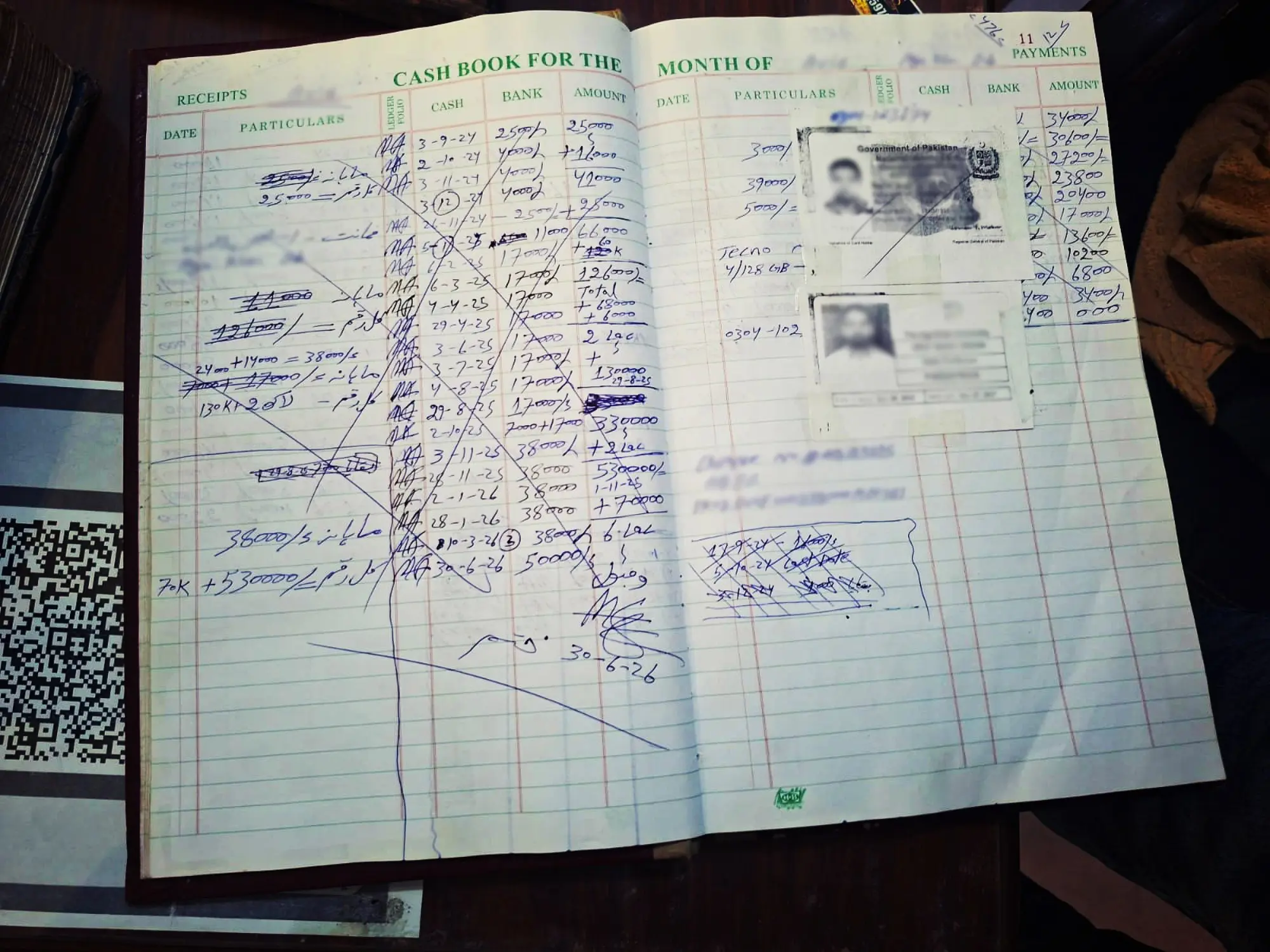
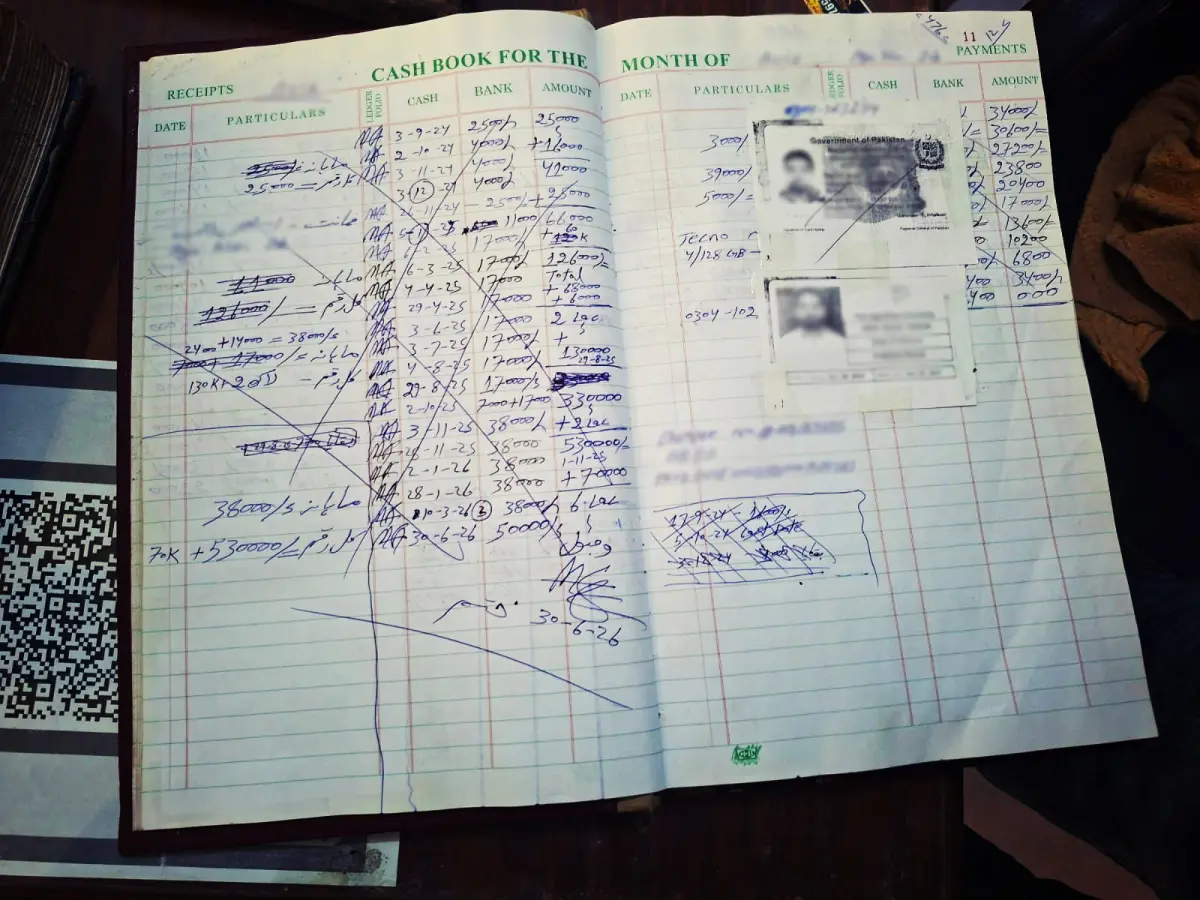
This continued for a year. By the end of those 12 months, he had paid Rs60,000 in interest alone, while the principal amount of Rs50,000 remained undented. “The Rs50,000 is blocked,” Simon explains. “Unless you return the full amount in one go, the loan is not forgiven.” By this rationale, a borrower isn’t paying ‘interest’ but ‘rent’ on having borrowed a lump sum.
Meanwhile, he went further into debt for his sister’s, and later his brother’s weddings, so his principal ballooned to Rs500,000. This took his monthly rental payments to Rs50,000 at 10%. To make matters worse, he was unable to pay at all for three months in the middle. That unpaid Rs135,000 was added to the principal, increasing his debt to Rs635,000. Now, at the new 10pc rental, he had to cough up Rs63,500 a month. That was more than his salary. “Every month when it hit the 20th, I would start going crazy,” he says. He couldn’t sleep for the stress that he’d have to make the payments. “I went out of control,” he says, describing himself mentally and behaviourally.
At work, he began eating into his health insurance by making increasingly frequent trips to the ER. His diabetes was out of control and the doctors said it was stress. Then his heart started to waver. “I was in serious trouble,” he says. There was little room for him to simply walk away. The lender had kept signed cheques as security, along with his employment records, home address and the agreement. “If I gave him a hard time, he could always just try to cash a check I’d given him for Rs200,000 and it would bounce. Then there’s an FIR. This is how they’d drag you through the mud.” The threat of the lender turning up at his workplace and making “drama” was enough to keep landing Simon in the ER.
Eventually, Simon received help from someone to clear the Rs635,000 debt in one fell swoop. It was only then that the register was crossed out.
The law, in principle
Pakistan has a difficult relationship with usury. The Constitution says it should be abolished, and more recently the Federal Shariat Court said the country had to go interest-free by the end of 2027. But it still works in banks and is legal for now.
All the provinces have taken a hard line against the kind of predatory financial schemes Simon was ensnared in. They all ban private money lending on interest and attach punishments and fines, but enforcement is fraught.
Clever bargains
Rent-a-loan methods are perhaps the most damning financial schemes. Others are more creative in their use of compounding interest and methods of using frontmen.
Ustaad Ghulam Khan tells the story of how he was ensnared almost 20 years ago, when he needed Rs100,000. He went to an acquaintance who ran a tyre shop but was known to lend money, even though he maintained a pretense around it. The shop owner said he would not give Ghulam Khan the cash directly, but truck tyres worth Rs100,000 instead.
The shopkeeper then introduced Ghulam Khan to a man sitting at the shop, who he said was his ‘cousin’ who would buy the tyres.
Thus, Ghulam Khan ‘bought’ the tyres on credit for Rs100,000 and immediately ‘sold’ them to the other man for Rs90,000 in cash. The tyres never moved from the shop.
The rule was that he had to return the full Rs100,000 within a month. If he failed, he would have to pay 25 pc interest every month while the original principal remained outstanding. Needless to say, he never managed.
That was the first time the lender made him sign a stamp paper, says Ghulam Khan. People close to the lender were brought in as witnesses, and the agreement stated that whenever Ghulam Khan failed to pay the interest for a particular month, the unpaid interest would be added to the principal and the following month’s interest would be calculated on the increased amount. In this case too, if payments were skipped some months, they would compound.
He struggled to pay for over three years and watched the original amount swell to Rs600,000, with monthly payments hitting Rs150,000. “How I managed to arrange that money is known only to me and my Allah,” he says. “I did all kinds of good and bad things just to keep paying the interest.”
Whenever he missed a payment, the lender would come to his house and bang loudly on the door so the neighbors could hear that he owed him money. Going to the police was out of the question because he feared the man had connections.
The lender would offer him new loans, sometimes in goods and sometimes in cash, to pay off old ones. The old account would be closed and a new account with a new interest burden would begin.
Eventually, Ghulam Khan sold ancestral land, grew indebted to his own brothers and sisters and used that money to set himself free. But by then, his life had been shattered.
“To this day, I have never been able to stand on my own feet again,” he says.
In kind
The lending business has moved beyond cash, say people familiar with the market. Money lenders have branched into electronics and the auto sector. They provide televisions, refrigerators, washing machines and other goods on installments. Motorcycles and cars are given on credit, often at higher prices.
This is how it works: according to one market expert, some goods sold on installments are priced 30pc higher than if you paid cash. The lender orders lower-priced products from companies, and recovers the cost through the down payment and early instalments, and treating the remaining instalments as their interest-based profit.
Rajab Khan explains the car financing business he got into in 2018-19. He started with one car, paid half its price, and was given one year to pay the rest. After using the car for some time, he sold it at a profit, giving that buyer a year to make the remaining payment. He then bought another car and continued doing the same thing.
For a while, the business worked. But after 2020 or 2021, car prices skyrocketed. Customers who had managed to pay a down payment of half the price could no longer do so. Then Rajab was introduced to Shah-ji, a car showroom owner off Khalid Bin Waleed Road in Karachi. Shah-ji offered cars at much lower down payments, sometimes as little as 10 per cent. Customers could get cars without arranging half the price upfront, and Rajab saw an opportunity to continue with his business.
The problem began when one customer failed to pay the Rs6 million that remained outstanding on a car worth Rs12.5m. Rajab told the customer that he had two choices: either have the car auctioned or pay an additional Rs500,000 for another month. The customer agreed, while Shah-ji took a cheque from Rajab as a guarantee.
When the customer again failed to pay the Rs6m the following month, Rajab had to pay the Rs500,000 himself. The same thing happened again, and the additional amount kept accumulating. The original Rs6m, he says, eventually reached Rs15m.
Shah-ji was holding on to the files that Rajab had arranged for other customers so he began repossessing those cars, even in cases where their owners had been paying installments. Because one party had failed to return the outstanding amount, the cars of other customers were also being taken back.
Rajab was trapped from both sides. The people whose cars had been repossessed were demanding that he return their money or get their cars back, while Shah-ji continued increasing the amount he owed.
Rajab grew bankrupt, reduced to unsuccessfully pleading with Shah-ji for mercy and offering to recover the amounts or repossess the cars. As he feared, the next stops were the police stations and courts over the bounced blank checks. He secured pre-arrest bail and appeared on June 16, 2026 before the Karachi City Court, expecting the matter to proceed through the legal system.
However, as he came out of court, police officers stopped him and took him away in a private vehicle. He describes what followed as an arrest that felt like an abduction. Instead of being taken directly to a police station, he was allegedly driven around the city for eight hours, with the complainant accompanying the police. He says he was pressured to sign new cheques and when he refused, he was eventually taken to a police station in Gulshan-e-Iqbal, where another FIR was registered against him.
He was sent to judicial custody. When he secured bail in the new FIR, his arrest was shown in yet another case. He eventually spent 17 days in jail before securing bail in all three FIRs.
By then, the cases had begun to take on a character that Rajab found difficult to understand. One vehicle dispute, he says, had resulted in FIRs at two different police stations in Karachi. In another FIR registered in Thatta, he was accused of buying a buffalo but failing to pay for it. “They have my cheques. By using their influence, they are making up all kinds of cases against me from wherever they can,” Rajab says.
Under Section 489-F of the Pakistan Penal Code, a dishonoured cheque issued dishonestly towards repayment of a loan or fulfilment of an obligation can lead to criminal proceedings. In such a case, the person holding the cheque can become the complainant and the person who issued it can face an FIR as the accused. Thus, while Rajab describes himself as the victim of a lending arrangement, the legal process can place the showroom owner, who holds his cheques, on the other side of the case.
Rajab approached the Sindh High Court through his lawyer, arguing that the same underlying dispute was being presented in different forms through different FIRs. He asked the court to have all the cases brought on record and to stop what he described as the registration of further false cases. According to him, the police have neither provided a complete list of the FIRs against him nor stopped the registration of new cases. At present, there are eight FIRs against him at different police stations in Karachi and Thatta. He has secured bail in them and is waiting for the cases to proceed, but remains afraid that he could be arrested again whenever he appears for a hearing.
Two sides of a coin
As anyone will tell you, getting a loan from a bank is one of the hardest financial moves to pull. You need a valid CNIC, a steady job and salary slips, in fact a minimum salary. It is small wonder, then, that the State Bank’s own figures show banks lending far more to the government than to people. In the first half of this year, 79.4pc of the growth in banks’ assets came from investments, almost all in government securities. Loans made up just 8.7pc. Men like Ghulam Khan were never in line, and men like Alamgeer can sneer at the system that doesn’t cater to the poor.
“When there were no banks, people like us were the ones running this entire system,” Alamgeer says. But now banks have the protection of the state and the law, while small financiers like him are on their own. “Universities, schools, colleges, even madrasas defend the banking system, while we are made to appear as devils in all this.”
Ghulam Khan spent over three years trying to keep up with his payments before selling land. Simon needed someone to bail him out. Rajab remains in court over the consequences of a car-financing arrangement.
Meanwhile, at around 7am each day, Alamgeer will return to Quetta Chai Café. The waiter will bring his green tea with ginger. He will take the small diaries from his waistcoat and begin going through the accounts before setting out for his rounds.
Note: All names have been changed to protect victims.
The author is a journalist from Balochistan writing on conflict and humanitarian issues. He can be reached at @zareefrind