

Prism Reflections: The recipe that puts Sindh's thirstiest crop on less water
Agronomists just figured out a new way to grow the famous household fruit, the banana. This recipe uses half the water, saves 57 per cent of irrigation water, and also lifts yields by 12 to 23pc.
Local practices like flat-basin irrigation and erratic watering schedules push annual use up to nearly 5000mm. A banana crop actually needs only 2000mm of evapotranspiration in its first year, rising to 3500mm from the second to fifth years. The suggested furrow method changes that math: about 1228mm a year, at a 50pc soil moisture deficit level, roughly half the usual bill and a genuine alternative for Sindhi farmers. It also solves the salinity problem, since the method works with canal water instead of the often-saline groundwater farmers currently rely on, as long as watering is scheduled properly so salts don’t build up in the soil.

Prep time: 5–6 months to a proper mat
Yield: One mat per pit; a mother plant and two suckers
What you’ll need
A disc harrow, a cultivator, a laser leveller, a spade, banana corms, farmyard manure (half a kilo per pit), NPK fertiliser (Nitrophous/NP, Di-ammonium Phosphate/DAP, and Sulphate of Potash/SOP), and water — canal, or groundwater of marginal quality — that checks out on salinity.
Method
1. Preparation of bed and furrows
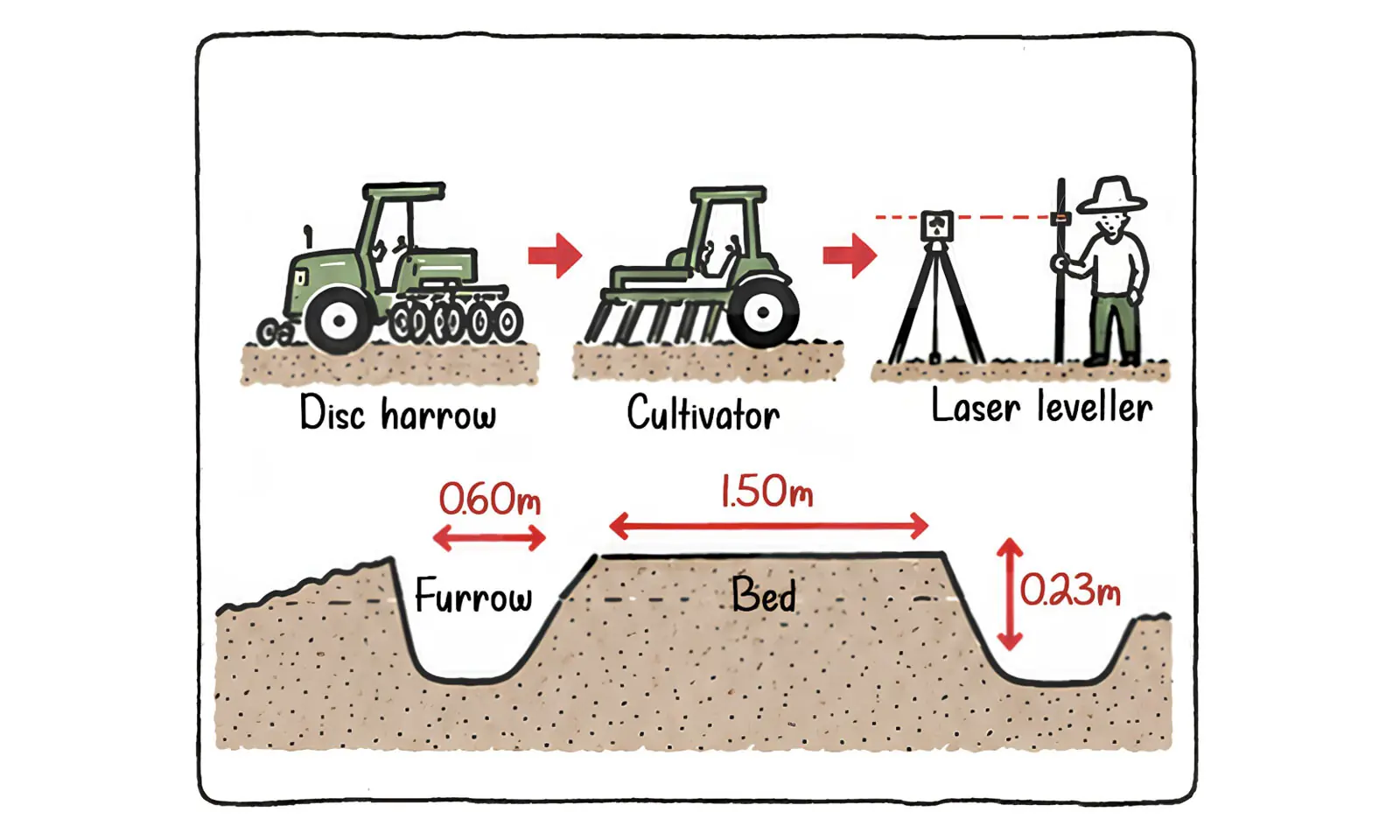
The land should be prepared using disc harrow followed by cultivator and then be levelled using a laser land leveller. After ploughing, make furrows and raised beds. Initially, the furrow and raised bed widths be maintained at 0.60 m and 1.50 m, respectively.
2. Dig the pits
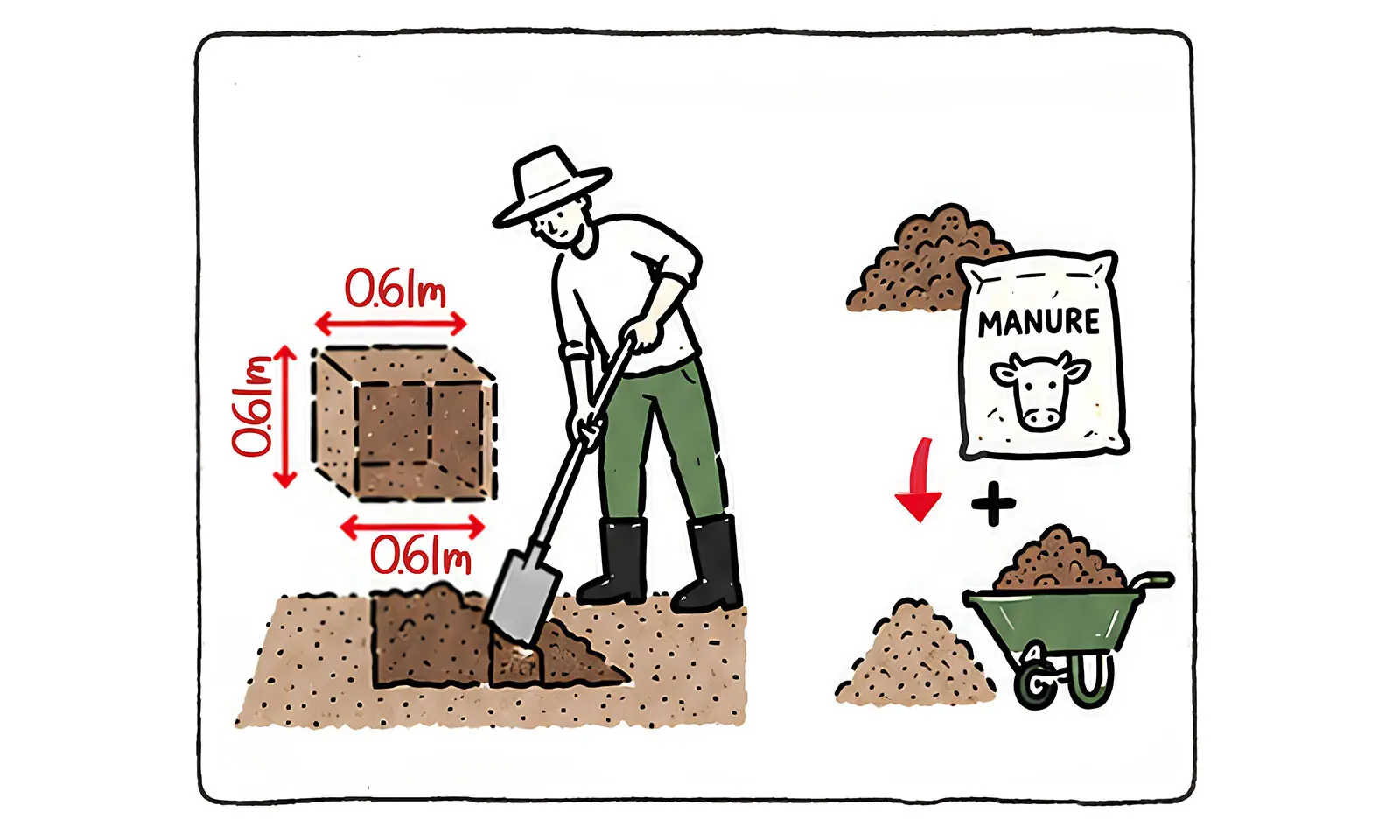
The pits (length = 0.61 m, width = 0.61 m and depth = 0.61 m) should be dug manually using a spade for the transplantation of banana corms. The farmyard manure (0.50 kg/pit) should be mixed with the soil obtained from the pits.
3. Plant the corm
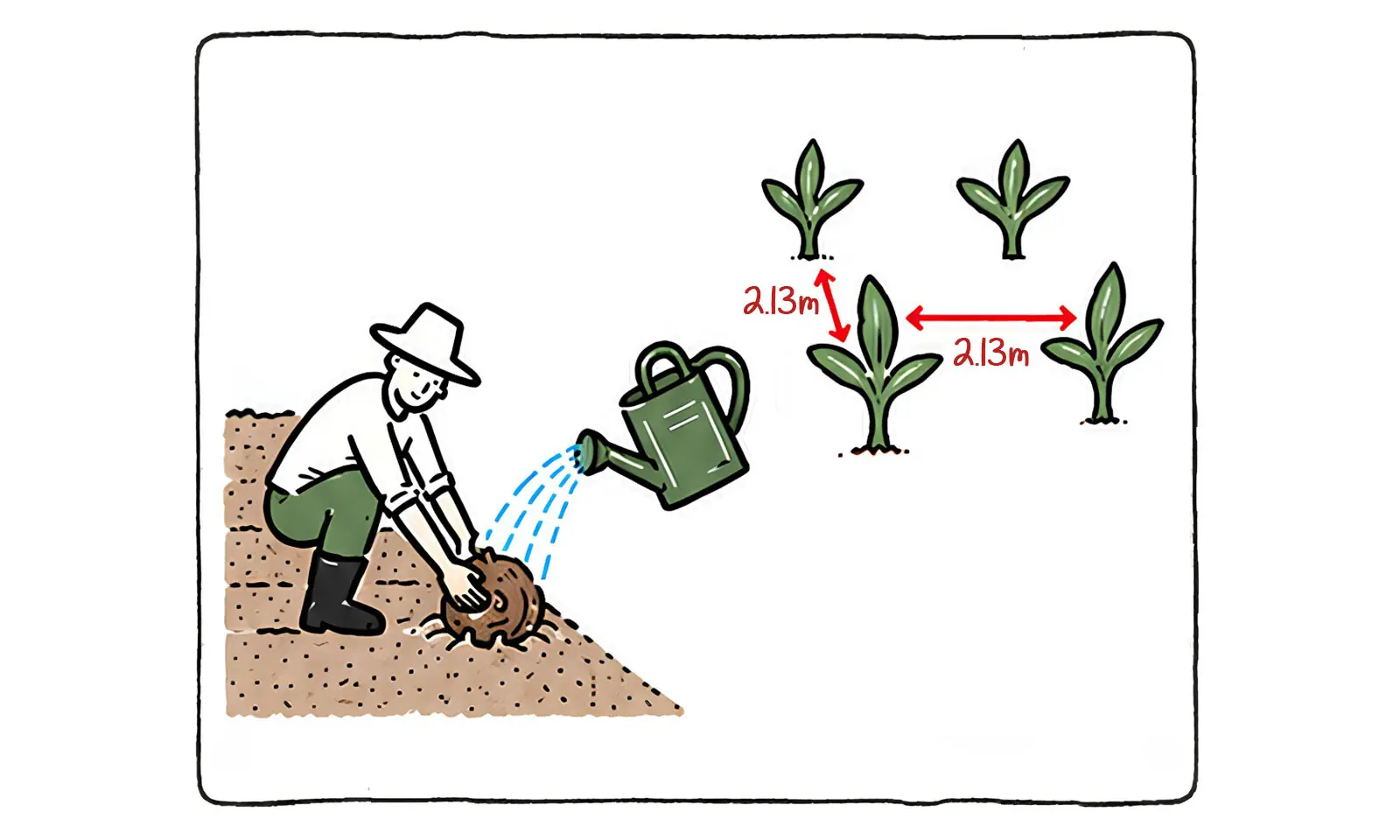
One healthy banana corm should be transplanted in each pit, and the pit should be refilled with the soil. The corms should be transplanted on the edge of the furrows. The field should then be irrigated immediately after transplanting the corm. The plant and row spacing should be kept the same,* i.e. 2.13 m × 2.13 m.
4. Wait for the first shoot
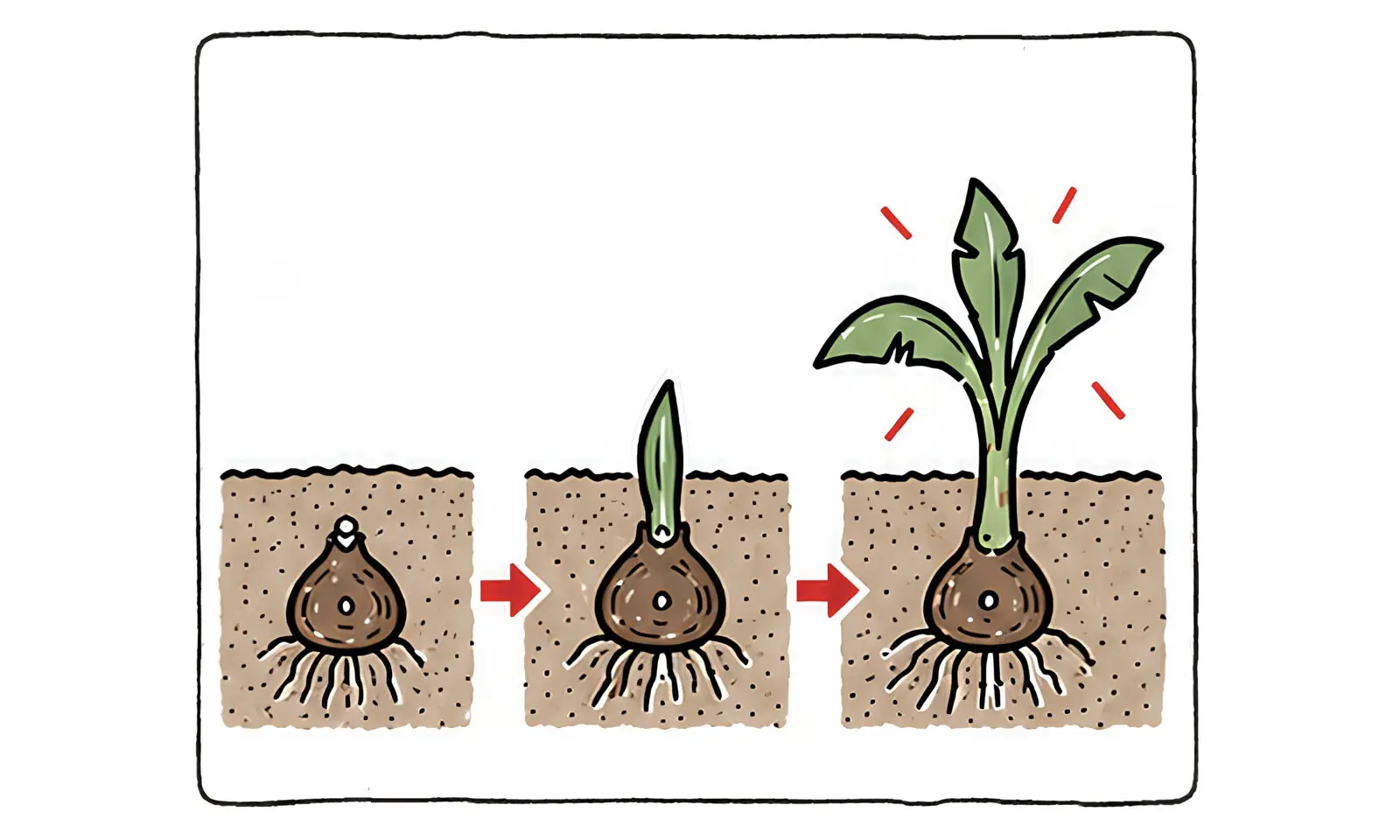
The suckers push through (germinate) within 10 to 15 days, though how many emerge from a given corm varies. Choose one and let it become your mother plant.
5. Build the mat
Five months on, let two more suckers join her, staggered five months apart, with the mother plant acting as the “follower” for this first ratoon crop. Together, that’s your finished mat: one mother, two suckers. The same selection pattern repeats for the second and third ratoons, keeping the cropping uniform across cycles.
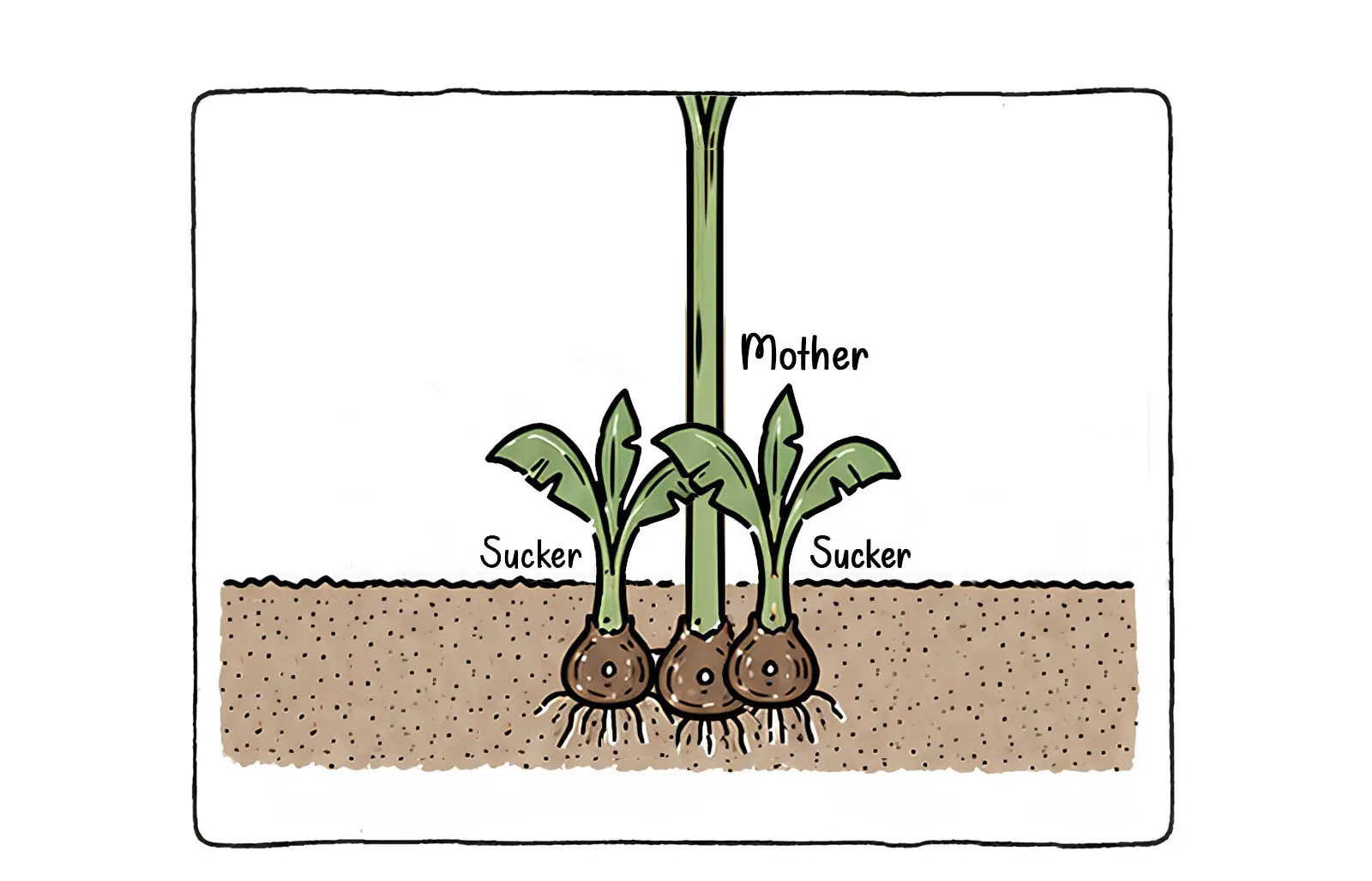
6. Widen the furrow, narrow the bed
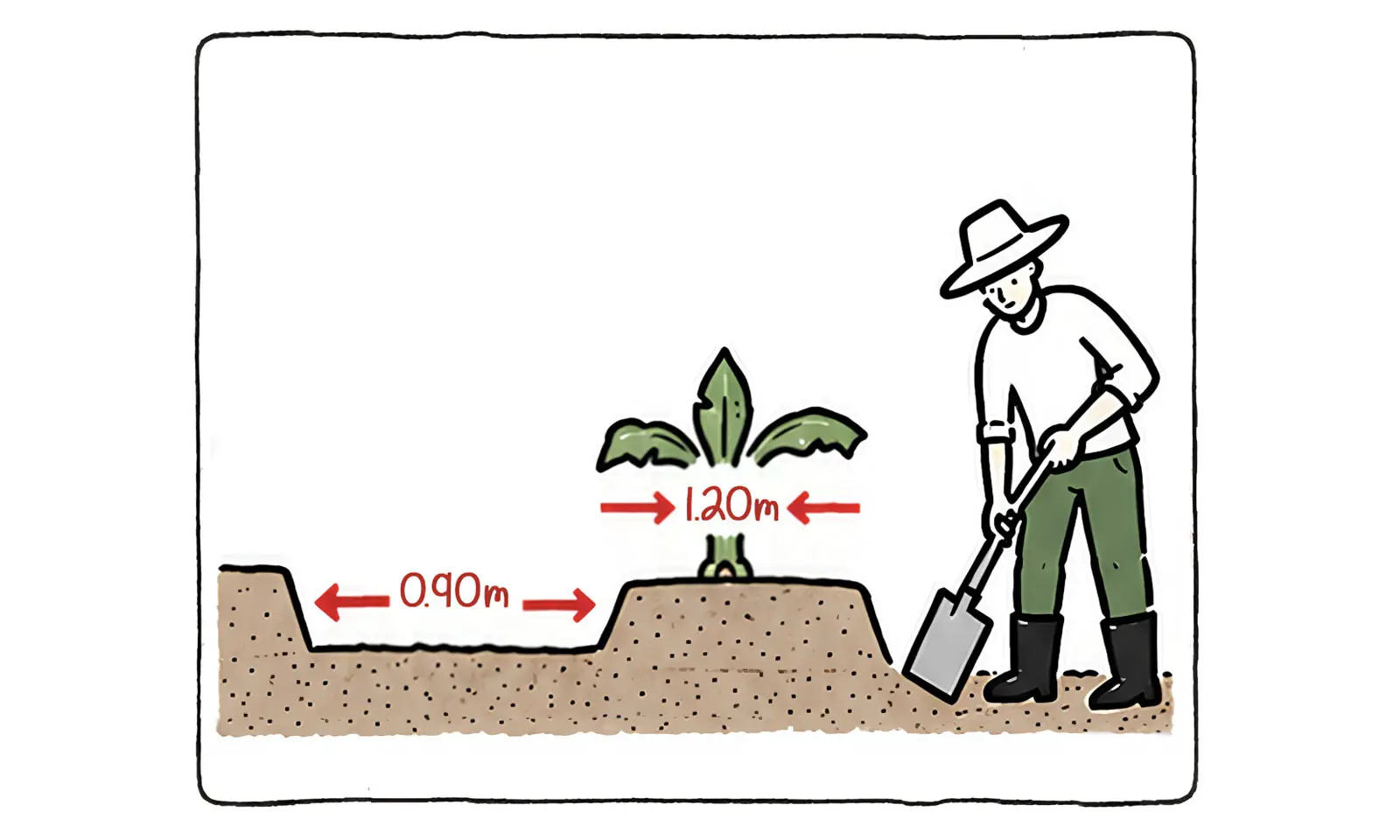
Around month five or six, once the plant has settled in, take the spade back out and widen the furrow from 0.60m to 0.90m — and as it grows, the raised bed narrows in turn, from 1.50m down to 1.20m. Use the spade, not machinery, to avoid the reduction in flow of water in furrows due to sucker germination and to keep suckers population within the furrow.
Feeding schedule
Feed the field NPK at 544–227–494 kg/ha/year every two months, and water it in right after.
Upkeep
Hoe every two months until the plant fills its canopy around the one-year mark, then ease off to quarterly. Keep de-suckering on the same quarterly rhythm to hold the one-mother-two-suckers balance. On that same quarterly schedule, trim away both partially and fully dried leaves. Don’t discard the cuttings; scatter them, along with the old stem once harvested, back over the bed as mulch. It does triple duty: feeds soil fertility, locks in moisture, and slows evaporation, which in turn keeps salt from settling where it shouldn’t.
Watering
Because the plant’s roots stay within the furrow, water goes straight there rather than across the whole bed. Fill each furrow to three-quarters height. Water every 10 to 15 days in summer (March–October), stretching to every 15 to 21 days in winter (November–February).
Before you pour: check the water
Not every water source agrees with a banana plant. The key measure is Residual Sodium Carbonate (RSC), essentially, how likely a given water source is to make the soil more alkaline over time:
-
Safe: RSC ≤ 1.25
-
Use with caution: RSC 1.25–2.50
-
Risky: RSC ≥ 2.5
-
Skip it: RSC > 5
If your water tests too high, cut it with a cleaner source and work in calcium-based amendments along with organic manure to bring it back in line.
Note: this method doesn’t demand fancy equipment or specialised training; it’s built to work for small and medium-scale farmers just as well as larger operations.
The views expressed in Prism Reflections are those of the author and do not necessarily reflect the editorial policy of Dawn.
Prism Reflections is a space for voices and experiences that shape, and are shaped by, Pakistan’s defining news stories. Do you have a personal story that intersects with the news? Send it to prism@dawn.com.
Dr Nazar Gul is the deputy director (Lysimeter & Research), Drainage and Reclamation Institute of Pakistan, Pakistan Council of Research in Water Resources in Islamabad.