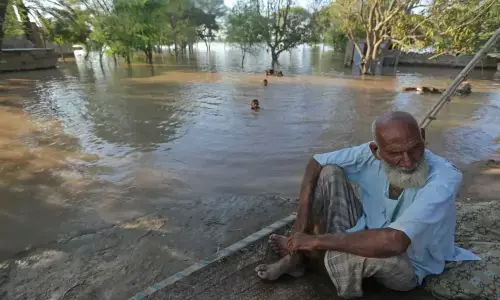
The boatpeople basti who bothered a barrage
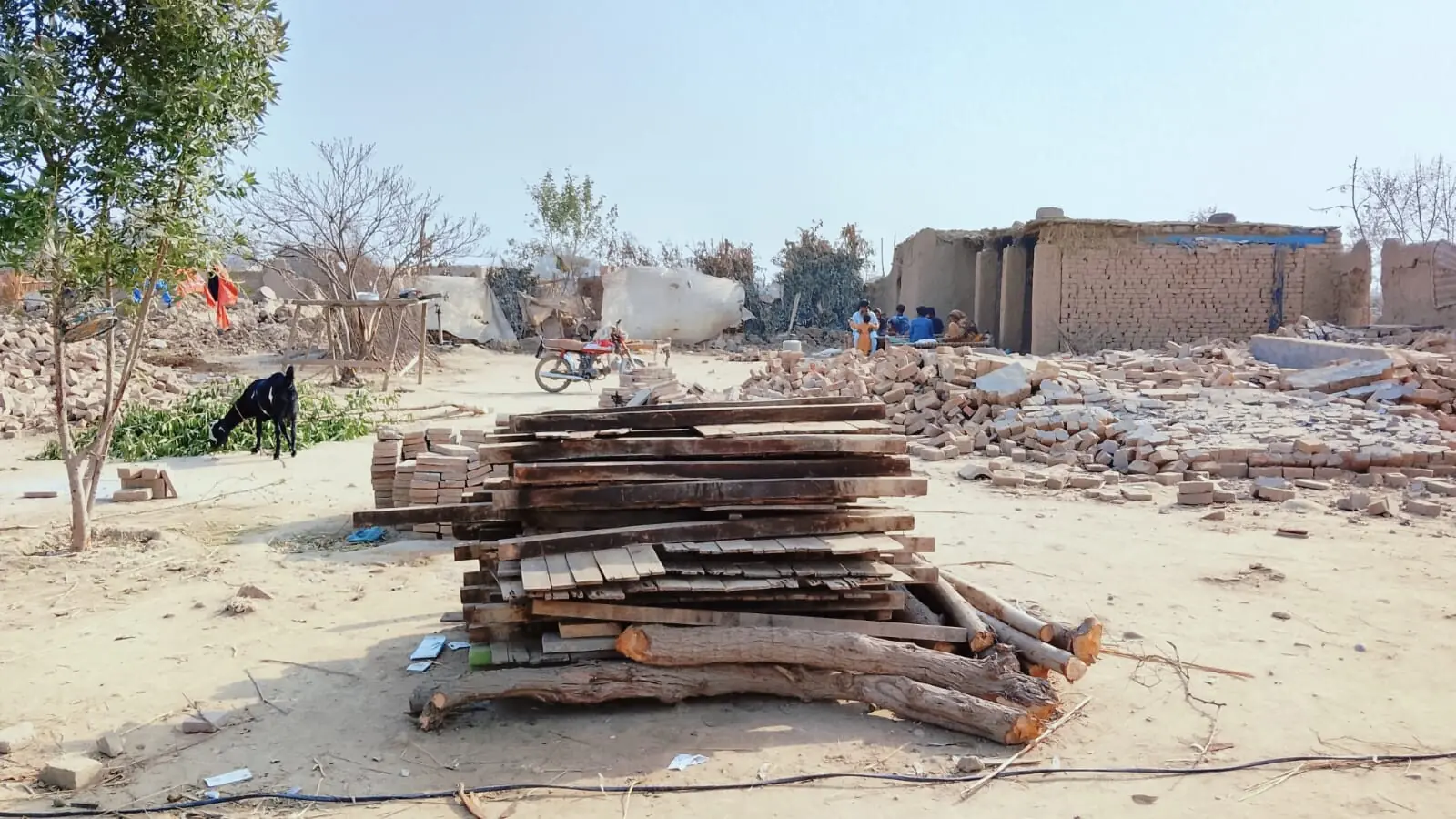
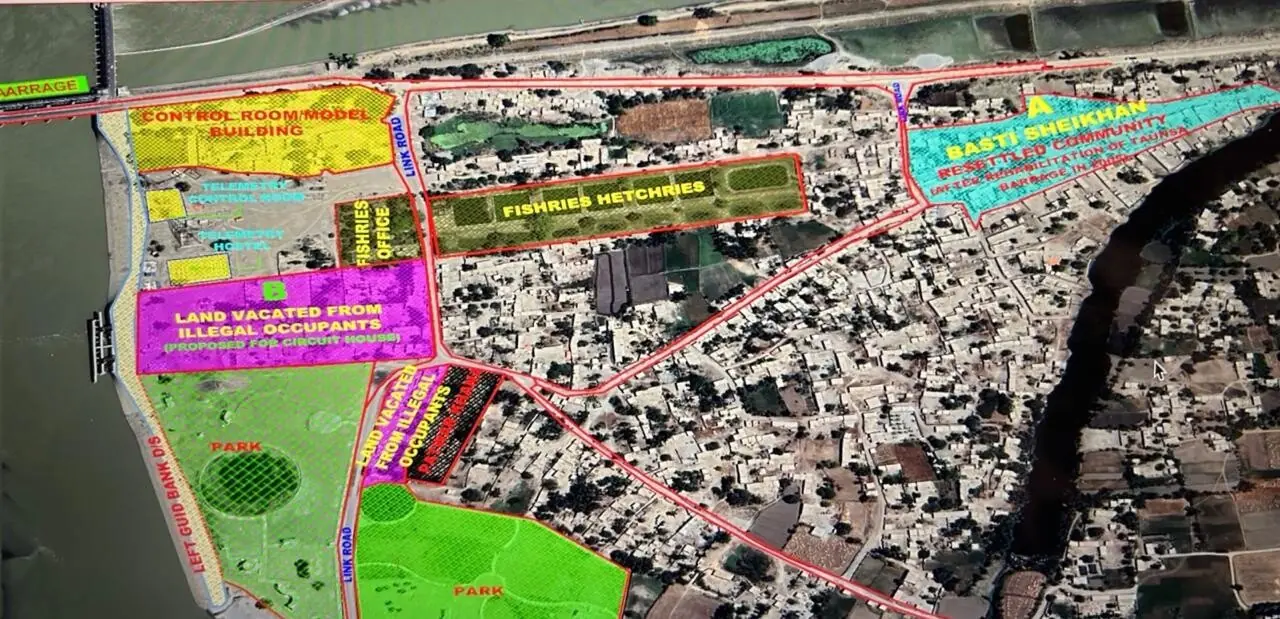
On a cold day in January, a hundred and fifty armed policemen descended on Taunsa Barrage near Kot Addu with two bulldozers to raze a settlement spread over 47 kanal of government land. Many of the homes belonged to the famous boatpeople of the River Indus, the Mohanas. As they also go by the name Shaikh, their settlement, Basti Shaikhan, was marked on the official map for demolition. Also on the map, in the corner, was a box that said: proposed for Circuit House.
The operation was carried out by the new Punjab Enforcement and Regulatory Authority (Pera) which was assisted by Deputy Commissioner Bilal Saleem. But the people who have lived there for generations, challenge the notion that they are squatters. And even though Pera’s Director-General for Monitoring and Implementation, Ahmed Zaheer, says they issue encroachers a digital Emergency Prohibition Order, activist Fazl-e-Rab maintains the basti had no idea the bulldozers were coming.
As Bilal Saleem is the second DC in three years since Kot Addu became a district, many people believe that the new district government, whose departments are not even fully developed yet, are incapable of understanding the area’s history and their relationship with the land and river.
How does the government explain, for example, that it provided the basti electricity, schools and drainage, which counts as the surest proof that it recognises it as a settlement, asks Seraiki Lok Sanjh activist Fazl-e-Rab. “Then how is it encroachment?”
The DC says the government also plans to build a cluster of buildings for an IRSA Flood Monitoring system. Yet, this begs the very question: how does it make sense to undertake so much construction in an area that is vulnerable to flooding?
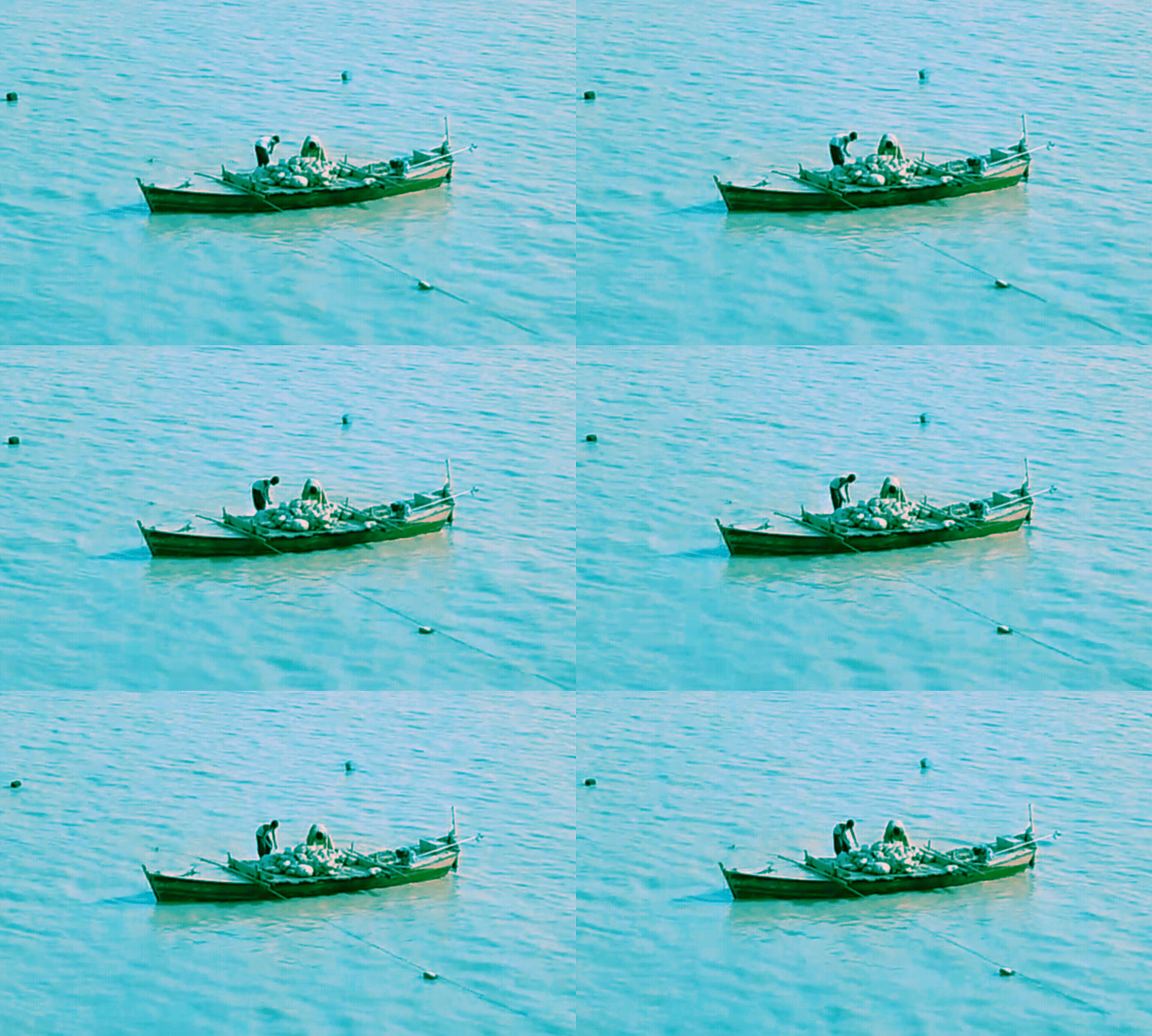
What is even more ironic, says Khadim Khar Hussain of the Sindhu Bachao Tehreek, whose home was also destroyed, is that the boatpeople are the ones transporting the government construction materials for spaces where they have been thrown out of. It is even more cruel that these displaced people are the very same ones who supply catch to the fisheries and generate an estimated ten million rupees in revenue.
The government’s planning, thus, fails to factor in the ways in which the Indus has historically supported millions of people across Pakistan, including fishing communities that lived along its banks for generations and formed an integral part of the river’s economic and ecological system. This context is not considered in the face of commercial concerns.
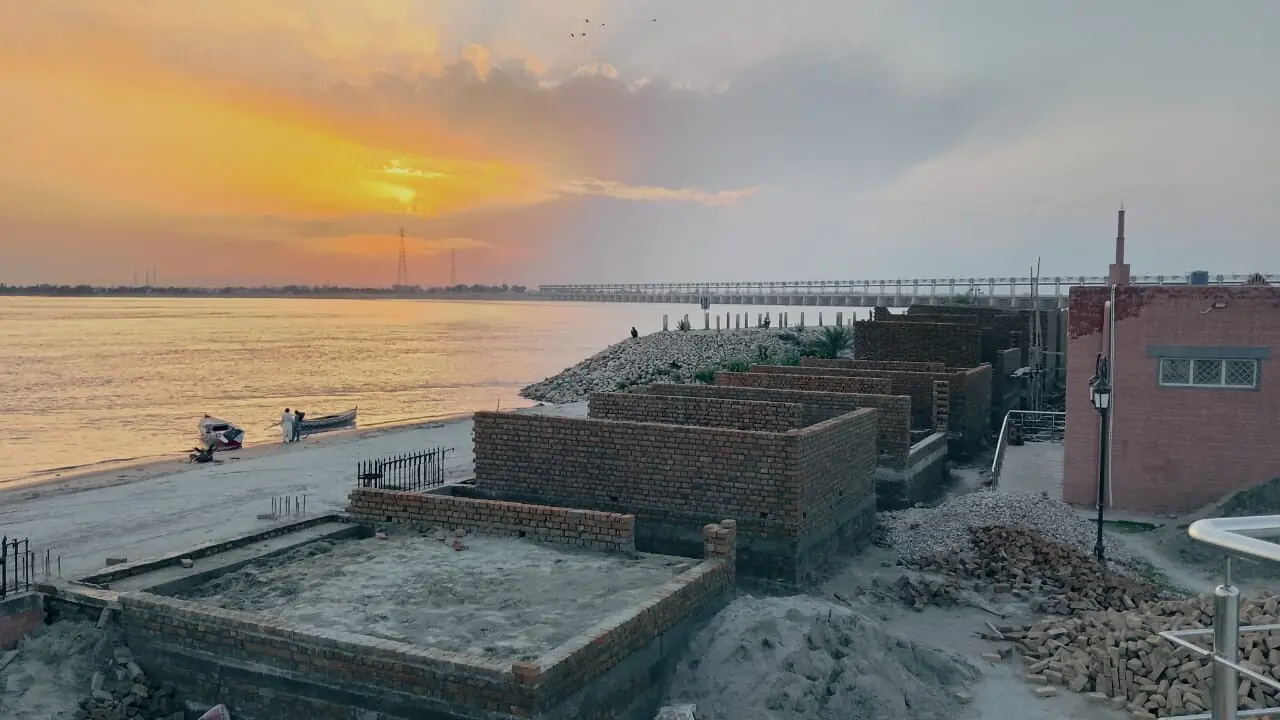
The Mohanas are boat people who used to come ashore only when they needed to bury their dead. Over time, they transitioned to land, but brought the houseboat’s spatial sensibility with them. They had to build on the safest, flattest patches they could find next to the unpredictable river (and obviously not on the grid of a planned neighbourhood).
Every home opens into a courtyard that spills into the next, giving the settlement the feel of a cluster. The alleys are tight arteries as living on a boat taught the Mohanas to use every inch of space. This also keeps their settlement closed off, more secure, and the animals don’t wander. All of this complicates the state’s ability to measure and manage such a population.
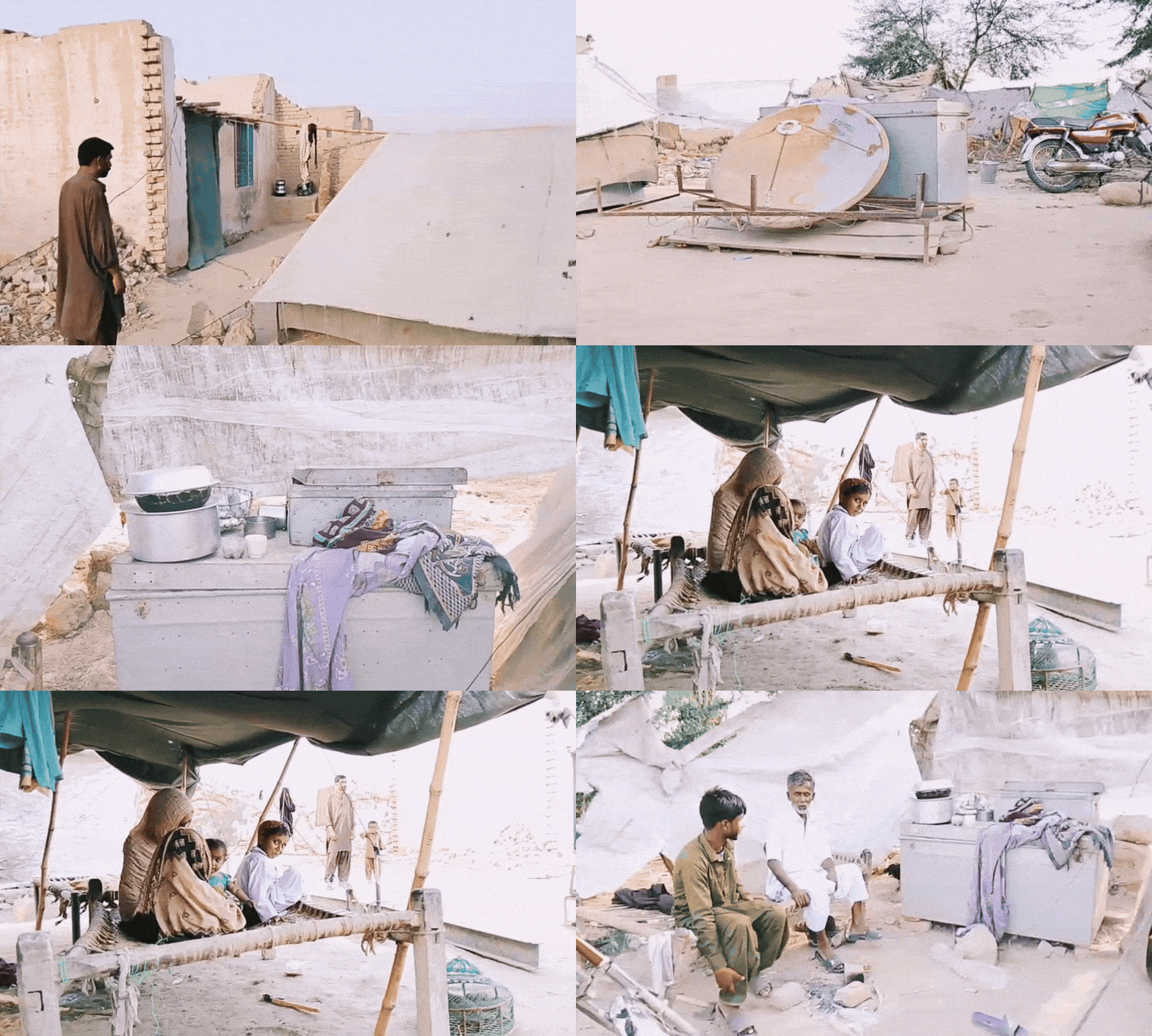
Evicted resident Muhammad Shareef filed a petition against Pera, which is in the process of being heard. So far, the government’s plans for a Circuit House have to wait.
Basti Sheikhan’s Achilles heel
Shortly after Independence, the Taunsa Barrage was built on the Indus to give farmers in Punjab and Balochistan water. The hope was that it would last fifty years, but the system began to immediately show signs of wear and tear after being unveiled in 1958. Shortcuts had been taken to save money that had been scarce post-Partition.
Patchwork repairs staved off the crisis for 45 years, but by 2003, the barrage was in danger of immediate failure, which would have cut off water for millions. The emergency solution was to build a weir to protect the main structure. World Bank documents, all of which are available on its website, say that the 2005 planners did not initially figure that the fisherfolk would be displaced by all this rehabilitation.
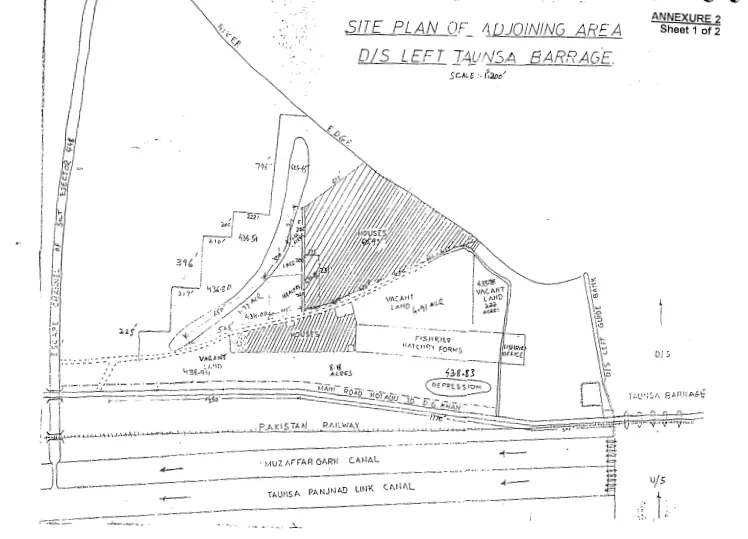
It took a fight by the pro-poor Alternative Law Collective for the World Bank to recognise that the people must be compensated and resettled to make room for machinery and workers. According to the collective’s Asad Farooq, the families were moved two thousand feet away in the first wave of evictions. They were allowed to remain next to the river but were not granted legal rights over the land.
This makes them vulnerable to Pera today. “Twenty years later, exactly what we had feared has happened,” said Farooq. “When development pressure increases, they are the first to be removed,” he said.
Raids on repeat
Away from Basti Sheikhan in South Punjab, similar Pera-led anti-encroachment operations have been ramped up for Chief Minister Maryam Nawaz’s Saaf Suthra Punjab initiative. The goal is to improve urban cleanliness and aesthetics through coordinated municipal action to remove waste and informality.
Encroachment drives gained renewed vigour after Pera was launched in July 2025, with Maryam Nawaz announcing that the complete operations across Punjab would be implemented by December to usher in a “new era” of implementation of the law through Pera.
The authority was launched under the Punjab Enforcement and Regulation Act, 2024. Passed in October last year, the law granted the provincial government sweeping powers to remove encroachments from public property across the province. Before this, municipal committees and union councils were in charge of anti-encroachment activities, and most matters were resolved amicably.
So far, Pera has conducted 232,194 raids across Punjab. (The highest number, 55,562, was in Lahore). The authority says it was able to take back 7,790.33 kanal worth Rs13,237,422,578 in 532 raids.
In a “grand” operation in March, Pera tore down structures along Murree’s high-value Mall Road to free up 20 kanal for a theme park. One of the buildings that was demolished was the colonial era iconic stone Habib Bank Limited. Architect Fauzia Qureishi says it was conserved by the Urban Unit in 2016.
Last year in August, Pera appeared in Mandi Bahauddin’s Chelianwala, whose fortune was to be declared a model village under Saaf Suthra Punjab to demonstrate the best roads, sewers, pipes, schools and clinics. Villagers who resisted were arrested.
Necessary evils
Pakistanis feel ambivalent about anti-encroachment drives depending on which class they spring from. Some hail this kind of application of force if it widens their streets, supposedly eases their traffic jams, and promises cleanliness and “beautification”. But ask those whose lives are demolished why they were there in the first place.
Non-government endorsed, or informal solutions, emerge for many reasons: population grows, job shortages spur village-to-city migration, where low-income housing is in short supply. “In the absence of adequate state planning to accommodate these shifts, such informal developments, which the state calls najaiz or ghair qanooni, inevitably take shape,” argues Aasim Sajjad Akhtar of the left-wing Awami Workers Party.
Thus, informal settlements and food markets are symptoms of a state failure. “When the state fails to provide affordable housing, security of tenure, or adequate livelihood opportunities, people are forced to create their own solutions,” says urban planning researcher Fizzah Sajjad. “These spaces emerge out of necessity.”
Furthermore, none of this happens without the government knowing. “Structures do not proliferate at this scale without some level of official awareness, if not tacit approval,” adds Fizzah. “Whether through weak enforcement, administrative neglect, or outright rent-seeking, space is informally negotiated and controlled. Payments are made, boundaries are blurred, and over time, the illegal becomes normalised.”
More formal encroachments, such as upscale housing schemes, commercial expansion, and even the systematic occupation of sidewalks, do not carry the same precarity. “They are not accidental. Their existence points less to failure and more to selective enforcement,” she says.
Then, she added, at a certain political moment, the same state reverses course. Anti-encroachment drives are launched, often abruptly. Informal structures are cleared in the name of beautification or to make way for cityscapes. “Everything else that obstructs that purpose is removed, be it shopkeepers, street vendors, and katchi abadi settlers.”
This reflects an elitist model of development in which formal projects are prioritised, and others are pushed out. “Such processes amount to a form of exclusion that can be understood as class-based violence against the poor,” he says. “Resistance within this framework is often suppressed, and those who resist are frequently subjected to harsh punishment, particularly when they are already marginalised. The consequences are banal, in fact, catastrophic.”
What this ultimately points to is not just state failure, but a deeper structural problem — “one that requires rethinking how cities are planned and governed. Because as long as formal systems fail to accommodate lived realities, people will continue to build informally — and remain exposed to the cycles of tolerance and demolition that define urban governance, Sajjad argues.
Remove Basti Sheikhan, and a gleaming hotel may rise up along the serene banks of the Indus. The Mohanas will scatter. The old structures that held fragments of history, like the one on Murree’s Mall Road, will disappear too. When future generations visit the leisure park for some fleeting amusements, they will be unaware of what came before.
Header image: Mohanas ferrying bricks across the River Indus for a government construction project. — photo by Khadim Khar Hussain
Additional reporting by Dawn’s Kot Addu correspondent Tariq Birmani and Dawn-Adenauer fellow Zil E Huma


 0
0
The author is a freelance journalist based in Lahore. She can be reached at alefiath@gmail.com