War Diary Day 8: Raging conflict, cautious diplomacy
Eight days into the war between the United States–Israel coalition and Iran, the conflict has settled more firmly into a pattern that began to emerge over the previous 48 hours; a high-intensity confrontation fought largely through missiles, drones and proxy forces and widening steadily across multiple theatres. At the same time, quiet diplomatic activity gathered momentum to contain the widening fallout for the region.
The past 24 hours demonstrated that despite the scale of coalition air power deployed against Iran and its allies, Tehran’s asymmetric military capabilities remained largely intact and continued to shape the tempo of the war, along the area stretching from the Strait of Hormuz through Iraq to Lebanon, where attacks on American facilities, shipping lanes, and Israeli military positions have continued in a calibrated but persistent manner.
One demonstration of this capability was seen in the Strait of Hormuz on Saturday, when the Islamic Revolutionary Guard Corps confirmed that one of its drones had struck the Malta-flagged oil tanker Prima after it allegedly ignored repeated warnings. Videos circulating online showed a fire burning on the deck of the tanker while commercial shipping in the vicinity began diverting away from the narrow waterway. This underlined Tehran’s enduring ability to threaten traffic through one of the world’s most sensitive energy corridors even while under sustained aerial pressure.
The episode also carried a political undertone as US President Donald Trump had earlier promised that the US Navy would provide escorts for tankers transiting the Strait, along with political risk insurance to restore commercial confidence, but the assurances have not materialised as yet.
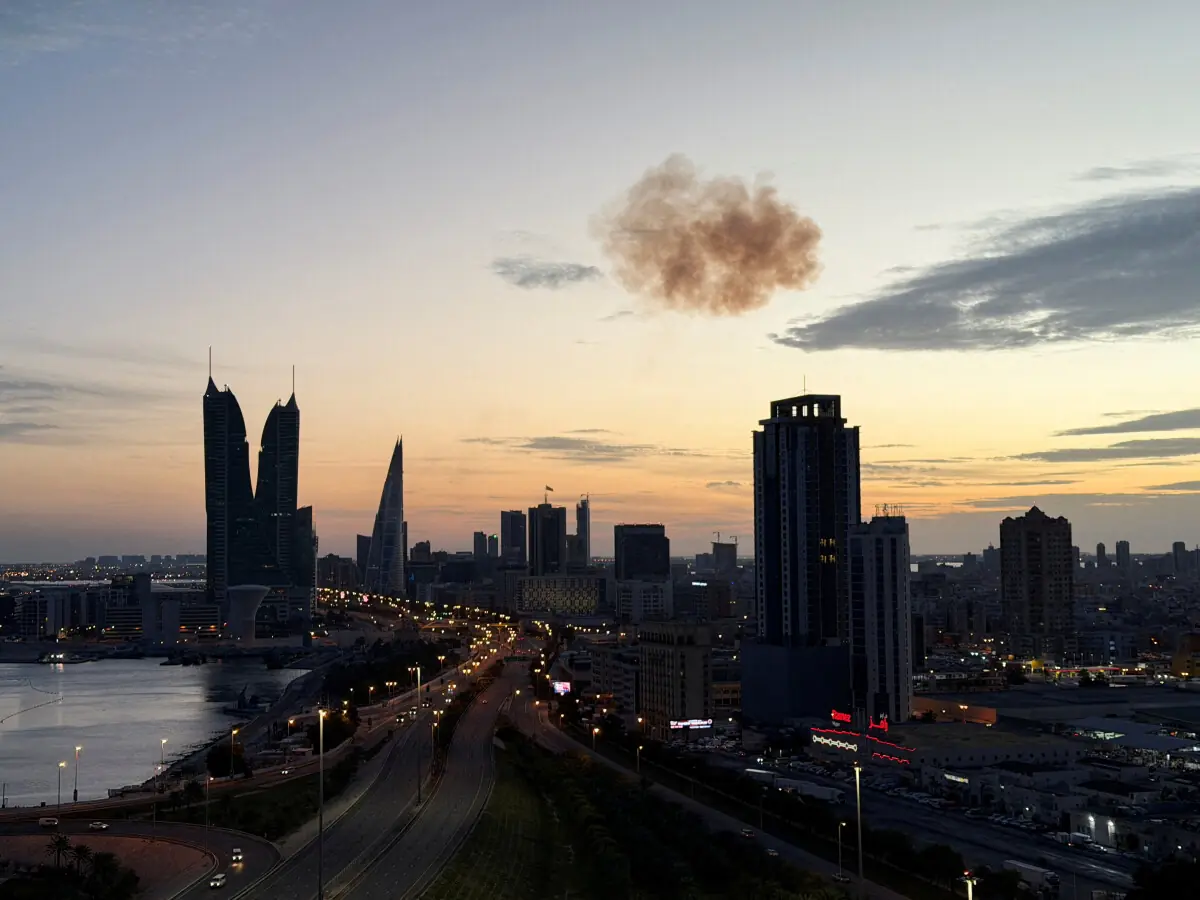
Iranian pressure was also visible across the Gulf. In Bahrain, several drone and cruise missile strikes were reported in residential areas located near facilities associated with US military presence. Although there were no confirmed casualties, American military transport aircraft were observed departing Muharraq airfield carrying personnel and equipment, suggesting that Washington has begun temporary evacuation measures from some of its positions after Iranian strikes on regional bases.
Further north, Iraq remained in focus as an active theatre of the conflict. Drones struck the US Victoria Base in Baghdad while additional attacks targeted the headquarters used by Halliburton and KBR within the Basra oil complex, where fires were reported after the impacts. Iraqi resistance factions, particularly the Kata’ib Sayyid al-Shuhada Brigades, entered into direct contact with US forces in the Mosul area, triggering retaliatory strikes by American Apache helicopters. Simultaneously, the Iraqi Resistance Coordination Committee issued warnings that any Israeli attack on Beirut’s southern suburbs would trigger retaliatory strikes against American and coalition diplomatic facilities in Iraq and neighbouring Gulf states. This was a clear indication that the war is steadily binding together several theatres, which until now had remained partially separate.
Inside Iran, meanwhile, the humanitarian cost of the campaign continued to mount. In the suburbs of Shiraz, a coalition strike reportedly hit an ambulance station and a nearby children’s playground, in which more than 20 civilians, including several children and medical personnel, perished. The incident adds to the growing strain already visible in the Iranian medical system, where hospitals have begun reporting shortages of essential medicines as the war enters its second week.
At the political level, Tehran attempted to signal a limited recalibration of its approach. President Masoud Pezeshkian announced that Iran would no longer attack neighbouring countries unless an attack on Iran originated from them, presenting the statement as evidence that Tehran’s principal military objectives, particularly damaging the hostile radar and sensor networks in the region, had already been achieved. Almost immediately, Iran’s Revolutionary Guard Corps issued another statement that strikes against American and Israeli assets would continue regardless of their location, leading to confusion about Tehran’s policy on striking neighbours hosting US facilities.
Events on the ground also reinforced that ambiguity demonstrating that the military campaign continues largely independent of the diplomatic messaging directed toward regional capitals.
Reports from the Gulf indicate that Saudi Arabia has intensified contacts with Tehran in search of a possible de-escalatory framework. At the same time Riyadh invoked its Strategic Mutual Defence Agreement with Pakistan, signed in September 2025, triggering urgent high-level consultations between Saudi Defence Minister Prince Khalid bin Salman and Chief of Army Staff and Chief of Defence Forces Field Marshal Asim Munir to review coordination mechanisms under the pact, which stipulates that an attack on either party may be treated as an attack on both.
Meanwhile, several Gulf governments have continued to reassess the scale of their economic commitments to Washington. Investment plans worth tens of billions of dollars have reportedly been frozen as governments quietly review their exposure to a conflict that is increasingly threatening regional infrastructure and financial stability.
For the US, the military posture in the region has become heavier but also more defensive. Three carrier strike groups, USS Abraham Lincoln, USS Gerald R. Ford and USS George H.W. Bush, are now operating in the theatre, representing roughly a quarter of the navy’s deployable carriers. Yet officials privately acknowledge that the deployment is primarily intended to protect bases and shipping lanes rather than prepare for a large offensive operation.
The reason for augmenting the naval presence lies partly in the pace of the missile exchanges. Besides some of the US facilities getting badly bruised by Iranian attack, American interceptor stocks in forward Patriot and THAAD batteries have reportedly been heavily depleted after days of constant launches against Iranian drones and missiles, highlighting the financial and logistical strain of defending widely dispersed installations across the Gulf.
The most dramatic military development of the day, however, occurred on the Lebanese front, where Israel attempted an airborne special-forces raid into the town of Nabi Chit in the Bekaa Valley following hours of preparatory bombardment. According to multiple sources, the helicopters inserting the commandos were quickly engaged by Hezbollah fighters, who had anticipated the move. What followed were intense close-range clashes lasting several hours, after which Israeli aircraft carried out heavy bombardment to cover the withdrawal of the surviving forces. It is claimed that Israel lost at least 10 soldiers in the operation.
Hezbollah later released footage claiming to show the wreckage of an Israeli Apache helicopter shot down during the engagement, while also announcing that anti-tank missiles had destroyed a Merkava tank near the border area. Rockets were fired toward Israeli territory and drones targeted military installations, including the Talat al-Hamames site.
Whether the Israeli operation was intended as reconnaissance, retaliation or an attempt to re-establish deterrence remains unclear, but its outcome has already altered the tone of the northern front. Hezbollah leaders warned that any future ground incursion would result in retaliatory strikes deeper inside Israel itself.
Elsewhere, the conflict remains contained for now. Yemen’s Houthi movement has not yet entered the fighting despite repeated signals that it could do so if the war widens further. Along Iran’s western frontier, the possibility of Kurdish involvement appears to have receded after Kurdish leaders’ ambivalence towards a request from Washington to participate in operations against Iran following explicit warnings from Tehran. Although over the past couple of days, there were reports of exploratory incursions into Iran by some of the Kurdish factions.
Taken together, the events of the eighth day suggest that Iran was combining diplomatic signalling toward neighbouring states with continued asymmetric pressure on American and Israeli assets. Meanwhile, the US and Israel, despite military superiority, were increasingly confronted with the financial, logistical and political costs of sustaining a conflict that is steadily widening in both geography and consequence.
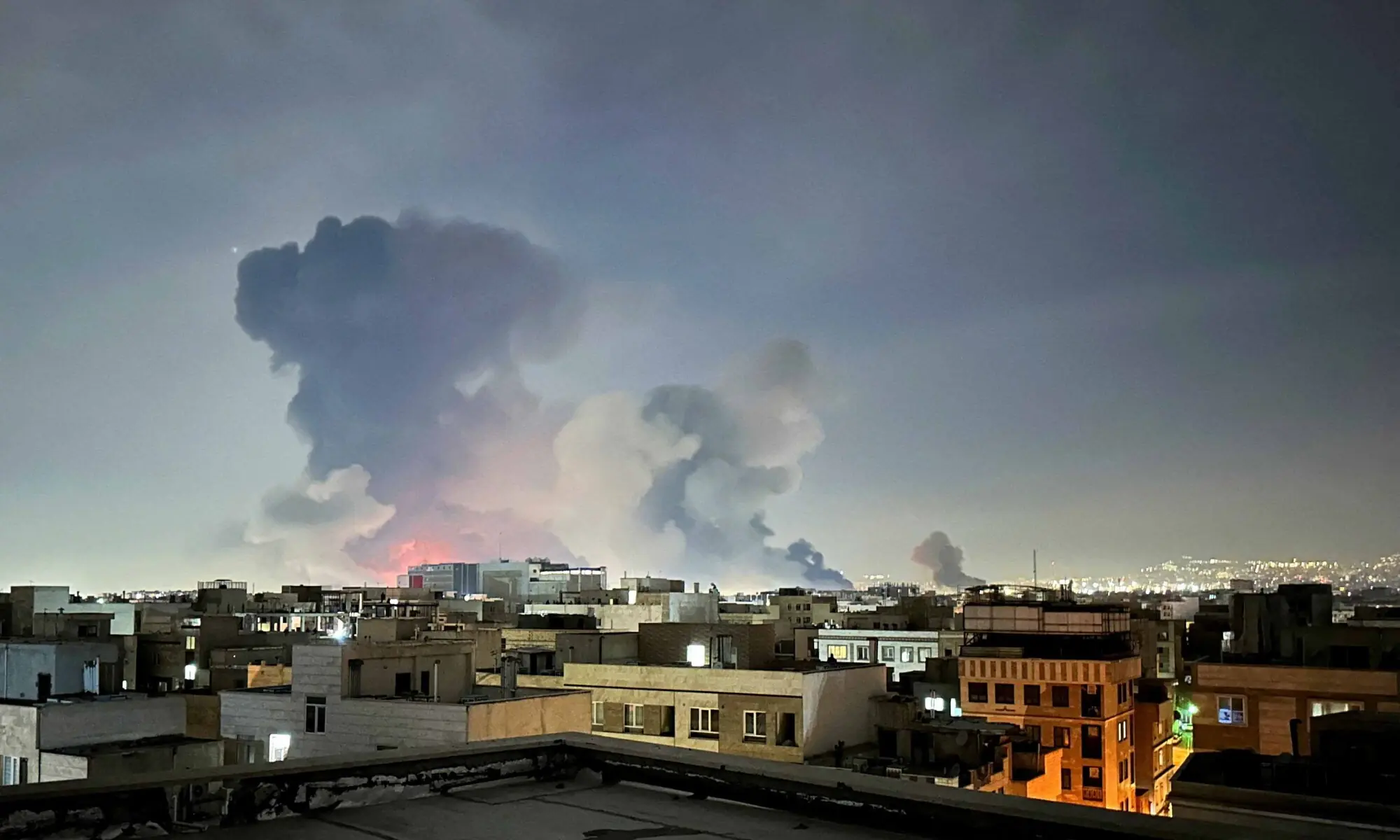
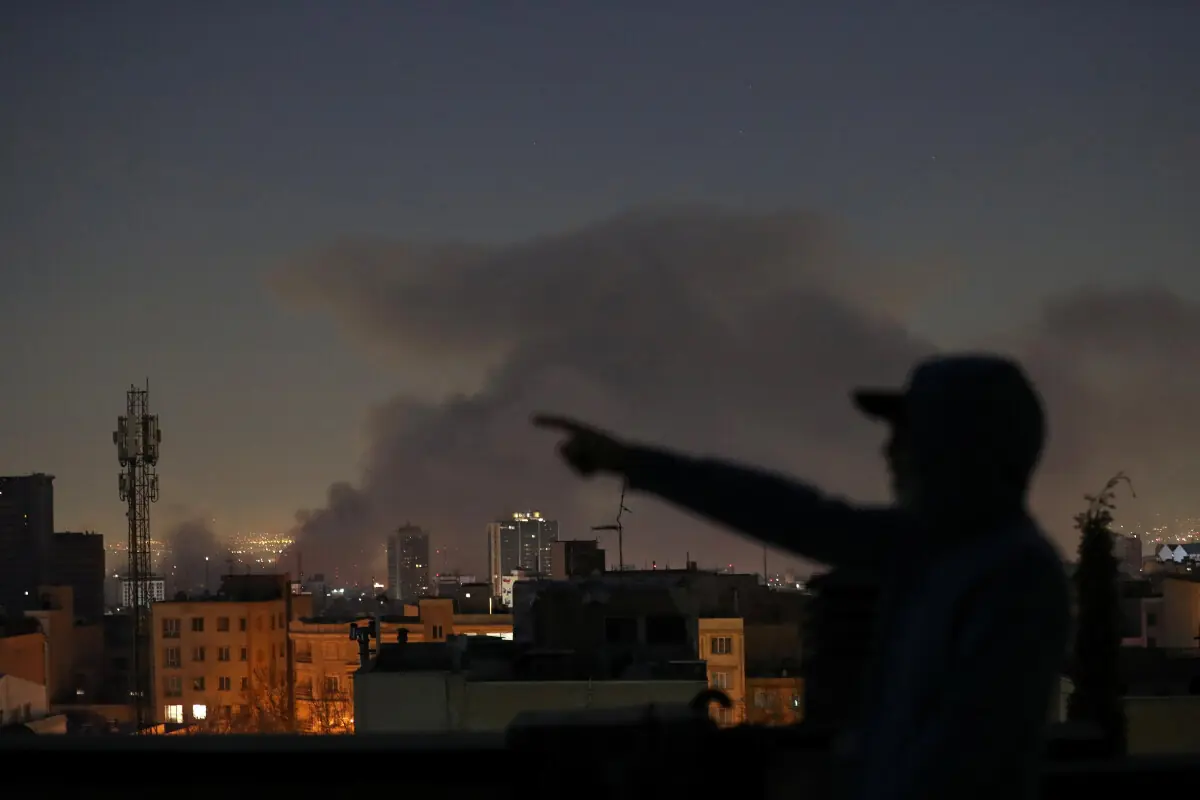
Header image: Smoke rises following an explosion, amid the US-Israeli conflict with Iran, in Tehran, Iran, March 7, 2026. — Reuters
Baqir Sajjad Syed is the Foreign Affairs and National Security Correspondent for Dawn. His career of over 25 years spans print and broadcast journalism. He is a former UN Reham al-Farah Fellow and held a Pakistan Fellowship at the Woodrow Wilson Centre in Washington, DC. He tweets @baqirsajjad