The US and Israel on Feb 28 launched what they described as a “pre-emptive” joint strike against Iranian targets, with Trump announcing start of “major combat operations”
Pakistan hosted the first round of face-to-face talks between the US and Iran in 47 years in April; the talks ended without a breakthrough, but also without a breakdown
Islamabad stays in frame for hosting US-Iran deal signing ceremony
Iran’s foreign ministry spokesman Esmaeil Baqaei has said that the European Union’s (EU) statement blaming Iran for “exercising its right to self-defense against US aggression launched from bases in neighboring countries is a masterclass in selective moral outrage; it is hypocritical and reckless”.
“The EU must remain faithful to the rule of law and the principles of the UN Charter that it has long claimed to uphold. It must stop appeasing aggressors while blaming those who respond to unlawful attacks,” he said.
“Iran’s strikes against those bases and assets that are used to launch unlawful attacks against Iran are a lawful exercise of self-defense. States have an established legal obligation not to allow their territory or assets to be used for invading other countries,” he said.
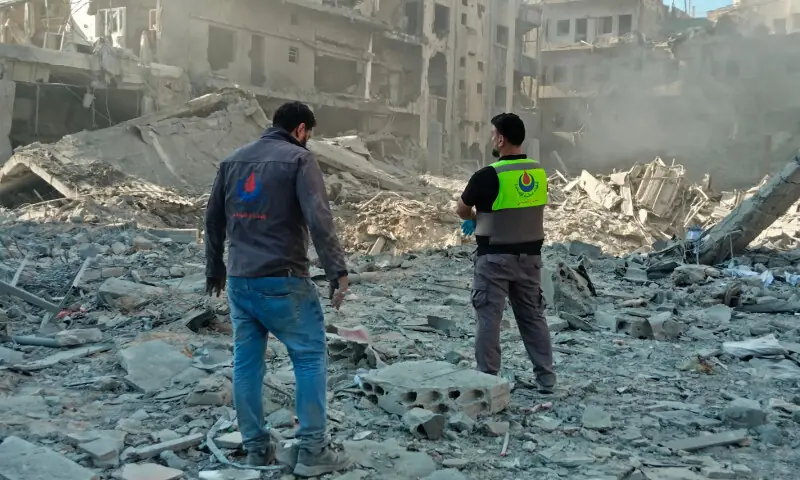
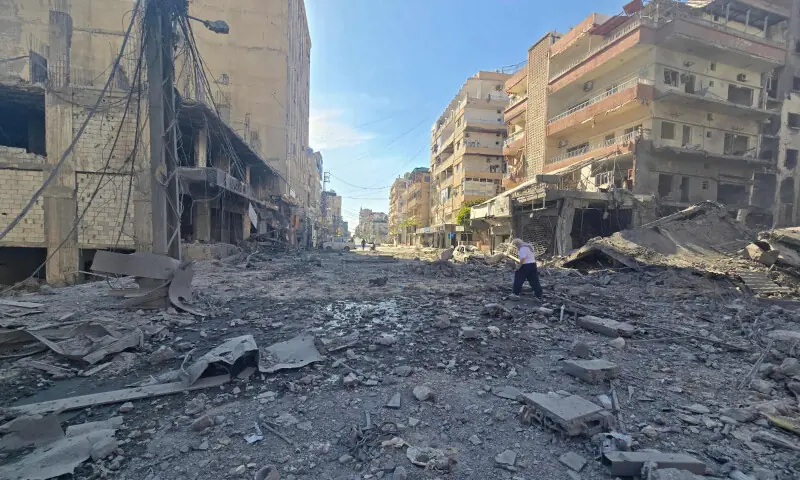
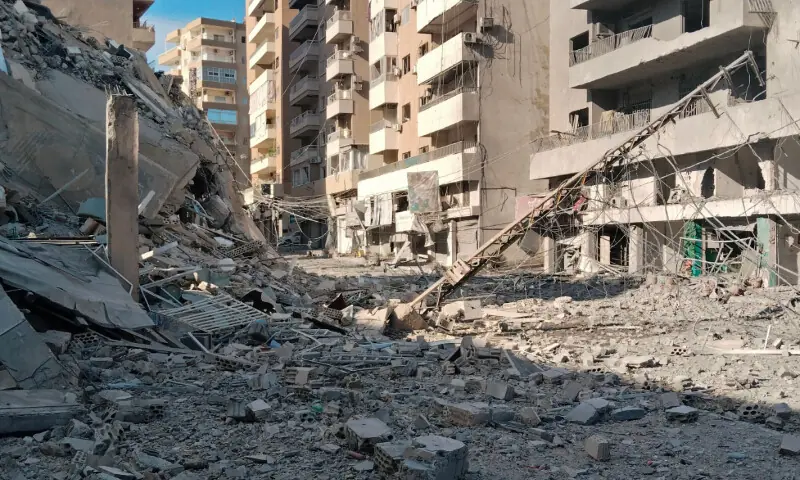
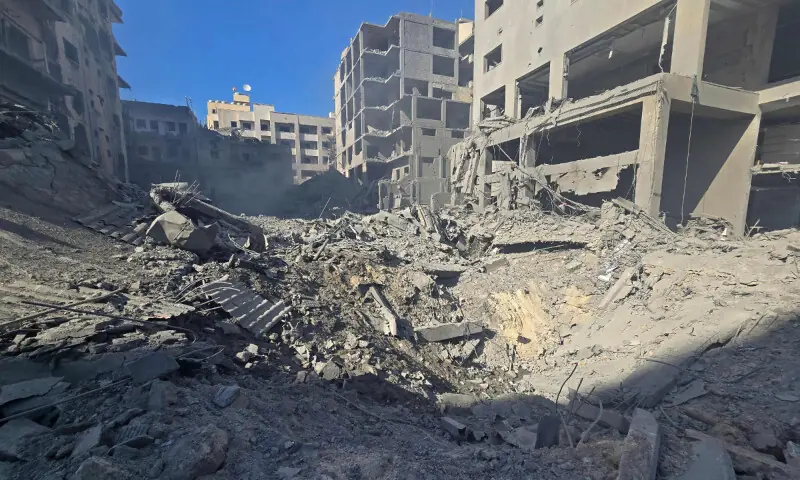
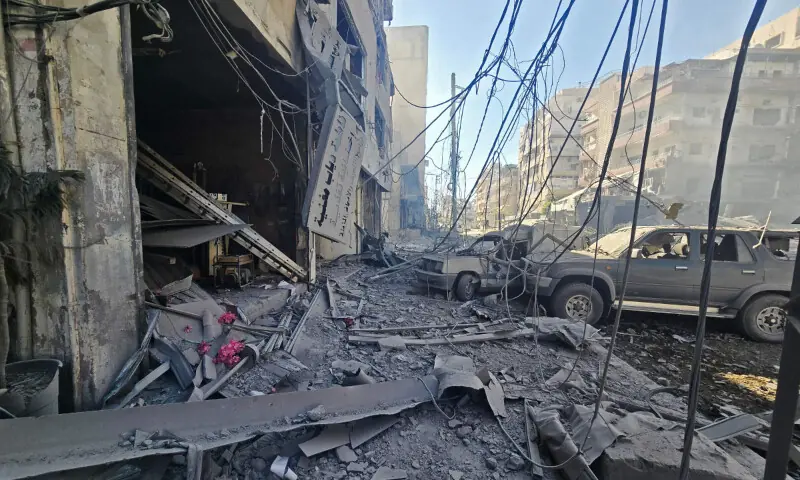
Israel’s military has issued warnings of imminent attacks for the Lebanese towns of Mlikh and Kfarhounah, telling their residents to immediately flee their homes, Al Jazeera reports.
In an Arabic-language post on social media, the Israeli military warned it would soon “act forcefully” in the areas against Hezbollah.
It said residents of the two towns should “immediately evacuate” their homes and “move at least 1,000 metres [0.6 miles] away from the villages and towns to open areas”.
Lebanese President Joseph Aoun said that his country was facing “a vicious and reprehensible Israeli aggression”, after Israel stepped up its offensive against Hezbollah with the capture of the medieval Beaufort Castle, AFP reports.
Aoun condemned the Israeli offensive in a post on X and pledged to “work to end the suffering of the Lebanese people, and people in the south in particular”.
On Monday, the UN Security Council is set to hold an emergency meeting on Lebanon, after Israeli Prime Minister Benjamin Netanyahu said the castle’s seizure marked a “dramatic shift” in the fighting.
The UN Security Council is set to hold an emergency meeting today on the fighting in Lebanon after Israel’s military took over the medieval castle of Beaufort in Lebanese territory, diplomatic sources tell AFP.
Diplomatic sources told AFP that the United Nations Security Council would hold an emergency meeting over Israel’s expansion of its offensive in the country.
The meeting was requested by France, whose President Emmanuel Macron said “nothing justifies the major escalation under way in south Lebanon”, calling for an end to fighting.
A senior US official told AFP yesterday that US Secretary of State Marco Rubio spoke with Lebanese President Joseph Aoun and Israeli Prime Minister Benjamin Netanyahu about the ongoing diplomatic negotiations and asserted that Hezbollah must be the first to cease its attacks.
Iran has executed two men convicted over their role in antigovernment protests in January, according to the Mizan news agency.
The men were found guilty of setting fire to a mosque, damaging public property and clashing with security forces, Mizan reports.
The news outlet identified the men as Mehrdad Mohammadinia and Ashkan Maleki and said they were among the main perpetrators of an attack on the Jafari Mosque in Tehran’s Gisha neighbourhood.
United States President Donald Trump said that Iran really wanted to make a deal with the US and that it would be a good one for Washington and its allies, Reuters reports.
“Iran really wants to make a deal, and it will be a good one for the USA and those that are with us,” Trump posted on Truth Social.
Emerging Asian equities rose to a record, propelled by continuing enthusiasm for the artificial intelligence trade that’s bolstered global stocks despite the Iran war, Bloomberg reports.
MSCI’s emerging markets index climbed as much as 2 per cent to an all-time high, driven by AI leaders in South Korea and Taiwan.
US Secretary of State Marco Rubio spoke with Lebanese President Joseph Aoun and Israeli Prime Minister Benjamin Netanyahu about the ongoing diplomatic negotiations, a senior US official told AFP, asserting that Hezbollah must be the first to cease its attacks.
“To advance those talks, the United States proposed a clear sequence: Hezbollah must stop all attacks on Israel. In return, Israel would refrain from escalation in Beirut,” said the official, who spoke on condition of anonymity, about the conversations between the three leaders.
Iran’s elite Islamic Revolutionary Guard Corps said its aerospace force targeted an air base used in what it called a US attack on a telecoms tower on Sirik Island, but did not give the location of the base, Reuters reports.
The US conducted strikes on Iranian radar and command and control sites for drones in Iran’s Goruk and Qeshm Island over the weekend, the military said, Reuters reports.
The strikes were in response to “aggressive Iranian actions that included the shootdown of a US MQ-1 drone that was operating over international waters,” the US Central Command said in a post on X.
Kuwaiti air defences intercepted “hostile missile and drone attacks”, the military said, as air raid sirens howled across the country, AFP reports.
“The General Staff of the Army wishes to advise that any sounds of explosions heard are the result of air defense systems intercepting these hostile attacks,” the Kuwait Army said in a post on its official X account.
KUNA, the state news agency, reported that air raid sirens rang across the Gulf nation, despite a US-Iran ceasefire in place.
Bangladesh has raised retail fuel prices for the second time in six weeks, increasing petrol and kerosene prices by 5 taka per litre in a move that could add to inflationary pressures in the import-dependent economy, Reuters reports.
The new rates set petrol at 140 taka ($1.15) per litre and kerosene at 135 taka per litre. Prices of diesel, the country’s most widely used fuel, remain unchanged at 115 taka per litre.
The US has put forward a proposal aimed at de-escalating hostilities in Lebanon, a US official told Al Jazeera, adding that Secretary of State Marco Rubio has held separate talks with Lebanese President Joseph Aoun and Israeli Prime Minister Benjamin Netanyahu.
Under the “roadmap”, Hezbollah would halt all attacks on Israel in exchange for Israel refraining from further escalation in the Lebanese capital, Beirut, the official said.
The US proposal aims to create a conducive environment for a gradual de-escalation and a complete and comprehensive cessation of all hostilities, the official added.
Oil prices rose more than two per cent in early trading after Israel ordered troops to move further into Lebanon in the battle with Hezbollah, despite a ceasefire announced more than six weeks ago.
US crude futures rose $2.37 or 2.71pc to $89.73 a barrel as of 0028 GMT. Brent futures rose $2.16 or 2.37pc to $93.28 a barrel.
The UN Security Council will hold an emergency meeting on Monday over Israel’s expansion of its offensive in Lebanon, following the capture of the medieval castle of Beaufort, diplomatic sources have told AFP.
The meeting was requested by France and will take place immediately after an emergency meeting over the crash of a Russian drone into a Romanian apartment building, which is scheduled for 1900 GMT, the sources said.
Qatar has condemned Israel’s continuing attacks on Lebanon and the expansion of its ground offensive in the south, describing the campaign as a serious escalation and violation of international law.
Lebanon’s Parliament Speaker Nabih Berri says he can “guarantee a full, comprehensive and immediate commitment to a ceasefire” by Hezbollah, Al Jazeera reports, citing Lebanon’s National News Agency.
But, he added, “the question is, who will compel Israel to stop its aggression, by land, sea and air, and its demolition of villages and homes?” he was quoted as saying.
French President Emmanuel Macron has maintained that “nothing justifies the major escalation underway in south Lebanon,” where Israeli forces have launched a new offensive against Hezbollah, AFP reports.
In a message on X after speaking with regional leaders, Macron said it was “essential” for an agreement to be reached quickly between the United States and Iran.
“France will continue to support the Lebanese authorities in their efforts to restore the sovereignty of the state and the country’s territorial integrity,” Macron wrote.
Regional stability “must begin with Lebanon, where it is urgent that all weapons fall silent, for good.” More broadly, he said a ceasefire must be a “priority” between the United States and Iran, and called for the immediate reopening of the Strait of Hormuz “without any conditions and in accordance with international law”.
“Talks must then continue in order to reach a comprehensive and robust agreement on other issues, particularly the nuclear and ballistic programmes and regional stability,” he added. “France stands ready to fully play its part by helping to restore maritime traffic through the independent multinational mission set up with the United Kingdom,” he said.
Iranian Minister of Roads and Urban Development Farzaneh Sadegh says the country has been undergoing reconstruction efforts following the destruction from the US-Israeli war on Iran, AL Jazeera reports.
She said more than 50 points of road and rail routes – including highways, tunnels and bridges – were targeted during the military operation.
“We are facing a war of corridors, and under such conditions, plans were made to ensure that the import and export process would not stop. Additionally, collaborations were held with some neighbouring countries to expand the transport fleet,” said Sadegh.
Jordan has condemned the continuation of the Israeli aggression against Lebanon, urging the international community to shoulder its responsibilities and adopt a firm position that obliges Israel to cease its violation.
In a statement, the foreign ministry also stressed support for the Lebanese government’s efforts to impose its sovereignty over all its territories