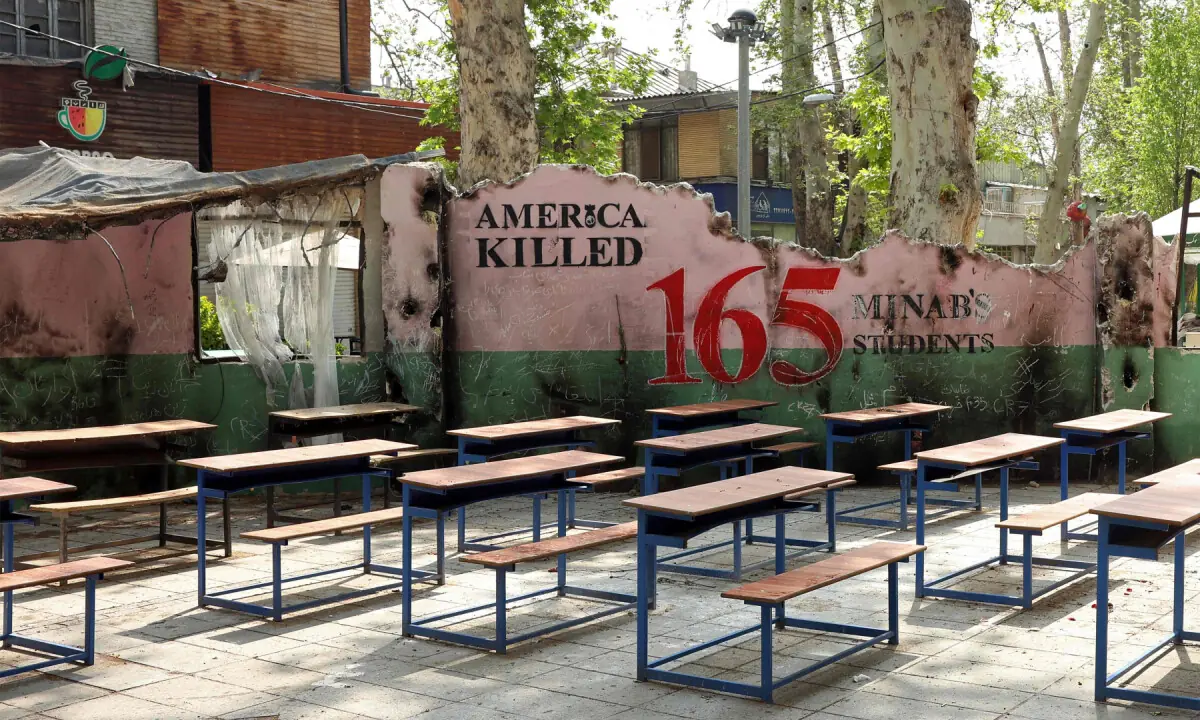
The US and Israel on Feb 28 launched what they described as a “pre-emptive” joint strike against Iranian targets, with Trump announcing start of “major combat operations”
Iran, US agreed to a two-week on April 8; the truce was later extended indefinitely and remains in place
Pakistan hosted the first round of face-to-face talks between the US and Iran in 47 years in April; the talks ended without a breakthrough, but also without a breakdown
US and Iran exchanged fire on May 8 despite the ceasefire
Even as hostilities briefly renewed, Washington said it was awaiting Iran’s response to a US proposal that would stop the fighting but leave the most contentious issues unresolved for now
China’s trade grew faster than expected last month, official data showed, withstanding pressure from war in the Middle East and reversing a decline in exports to the United States, AFP reports.
The war with Iran, launched by the United States and Israel in late February, has produced new risks for China’s economy, though its trade has so far appeared to be weathering the disruptions.
Exports from the manufacturing powerhouse were up 14.1 percent in April compared to the same month last year, the General Administration of Customs said.
Iran’s Ambassador to Pakistan Dr Reza Amiri Moghadam believes the region could witness new political alignments once the ongoing war involving the United States and Israel comes to an end.
The Iranian envoy, reflecting the thinking in Tehran, said Iran considers its relationship with Pakistan a priority in the neighbourhood.
While noting that Iran maintains relations with other states, including India, he said Pakistan remained a key partner and the relationship was steadily growing stronger.
Talks between the US and Iran could resume as early as next week in Islamabad, the Wall Street Journal reported, citing people familiar with the matter, according to Anadolu.
The Journal said the two sides are working with mediators to formulate a one-page, 14-point memorandum of understanding that would set the parameters for a month of talks aimed at ending the war.
US President Donald Trump has warned that Washington may escalate its military posture in the Strait of Hormuz if a deal with Iran is not finalised, threatening to revive and expand the paused “Project Freedom” operation, Anadolu reports.
“We’ll go a different route if everything doesn’t get signed up, buttoned up,” Trump told reporters at the White House.
When asked whether the US would return to “Project Freedom,” Trump responded, “I don’t think so,” but added that it still “might do it.”
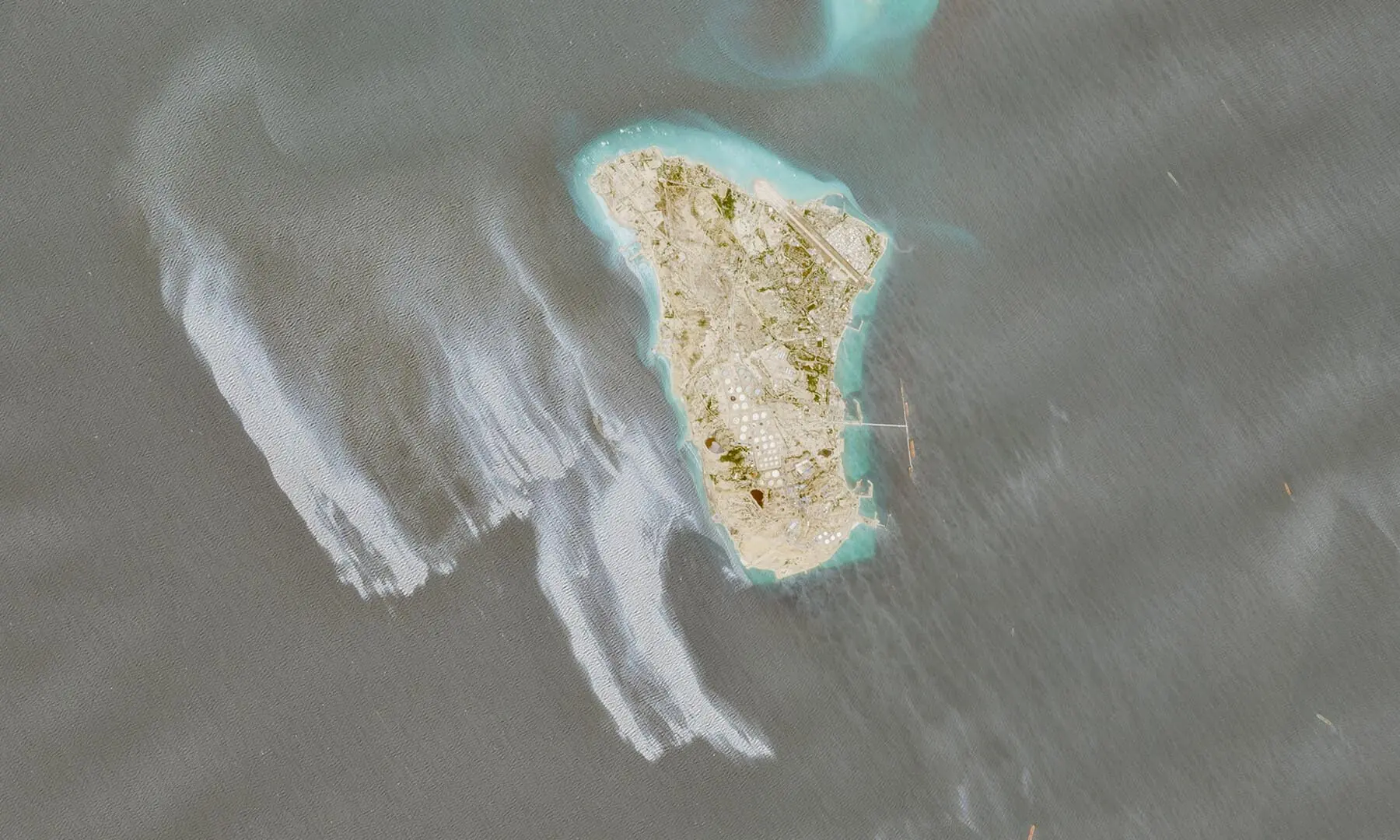
Satellite images appeared to show an oil slick spreading off the coast of Iran’s Kharg Island, a key oil export terminal for the Islamic republic, AFP reports.
It was not immediately clear what had caused the apparent spill, which was located off the small Gulf island’s west coast.
The spokesman for Iran’s Foreign Ministry has mocked Donald Trump’s recent threat of a nuclear strike on Iran, Al Jazeera reports.
“It is a grotesque absurdity that they claim to seek peace and prevent a nuclear crisis, yet their proposed solution is ‘one big glow’,” Esmaeil Baghaei said in a post on X.
He accompanied the post with a clip from the 1964 American film, Dr Strangelove or: How I Learned to Stop Worrying and Love the Bomb, by director Stanley Kubrick.
US President Donald Trump has said that he is expecting Iran’s response to Washington’s latest proposal on a deal to ending the Middle East war by “tonight”, AFP reports.
“I’m getting a letter supposedly tonight, so we’ll see how that goes,” Trump told reporters outside the White House.
Employers in the United States delivered 115,000 new jobs last month, despite the economic shock from the US-Israeli war on Iran, Al Jazeera reports.
The number of new hires exceeded the 65,000 jobs forecasters had expected, but the total was below the 185,000 jobs created in March. The unemployment rate remained at a relatively low 4.3 per cent, according to the US Labour Department.
Egypt has condemned the latest Iranian attacks on the United Arab Emirates, which left three people injured.
“Egypt affirms that the continuation and repetition of these attacks constitute a flagrant violation of the sovereignty of the sisterly United Arab Emirates, a clear breach of international law and the Charter of the United Nations, and a direct threat to the security and stability of the region,” the Egyptian foreign ministry has said in a statement.
Expressing solidarity with the UAE, it calls the attacks an unacceptable escalation which “undermines all regional and international efforts aimed at de-escalation and establishing stability”.
According to the United Arab Emirates’ Knowledge and Human Development Authority (KHDA), a meeting has been slated for May 10 to decide on whether to have educational institutions continue distance learning or resume on-site schooling.
“This decision will follow an assessment of the current situation in coordination with the concerned authorities, in a manner that ensures the safety of the educational community and the continuity of the educational process,” the authority adds.
US Secretary of State Marco Rubio has urged European allies to move beyond rhetoric and take concrete action against Iran as it blocks the Strait of Hormuz, Al Jazeera reports.
Speaking after meetings with Italian Prime Minister Giorgia Meloni, Rubio has warned that Tehran is attempting to assert control over the strategic waterway, calling the move “unacceptable” and a threat to global security.
“Everybody says Iran is a threat. Everybody says that Iran can’t have a nuclear weapon … but you’ve got to do something about it,” Rubio telss reporters in Rome. “If the answer is no … then you better have something more than just strongly worded statements to back it up.
“The world has to start asking itself, what is it willing to do if Iran tries to normalise control of an international waterway? I think that’s unacceptable.”
US Central Command (Centcom) says 57 commercial vessels have been redirected by the naval blockade.
“As of today, Centcom forces have redirected 57 commercial vessels and disabled 4 to prevent the ships from entering or leaving Iranian ports,” it says on X.
Gold has drifted higher and headed for a weekly gain as optimism over a potential end to the US-Israel war on Iran helped ease concerns about inflation and elevated interest rates, Al Jazeera reports.
Spot gold has added 0.5 per cent at $4,709.89 per ounce by 1551 GMT and gained 2.1pc this week. US gold futures have increased 0.2pc to $4,719.60.
Gold, typically seen as a haven during periods of global turmoil, faces pressure in a higher interest-rate environment because of its non-yielding nature.
“Gold is trading like a risk asset rather than a safe haven. The rebound in gold is tied to the prospects of de-escalation in Iran. With energy prices coming down, we’re seeing the prospects for Fed rate cuts increase down the road,” says David Meger, director of metals trading at High Ridge Futures, referring to the US Federal Reserve.
An adviser to Iran’s supreme leader has compared control over the Strait of Hormuz to having an “atomic bomb”, vowing not to relinquish it.
Adviser Mohammad Mokhber says Iran has long “neglected” its privileged position along the strait, a vital conduit for oil and gas shipments that Tehran shut early in the Middle East war, throwing markets into turmoil and stranding hundreds of vessels.
“The Strait of Hormuz represents an opportunity as precious as an atomic bomb,” he says in a video published by the Mehr news agency. “Indeed, having in one’s hands a position that allows you to influence the global economy with a single decision is a major opportunity.”
Pledging not to “forfeit the gains of this war”, he went on to say Iran would “change the [legal] regime of this strait”, through international law if possible, and unilaterally if not.
Qatari Prime Minister Sheikh Mohammed bin Abdulrahman Al Thani has landed in Washington, DC for meetings with US officials, where talks on the peace proposal with Iran are expected, according to Al Jazeera.
“I am delighted to welcome the peacemakers to Washington, DC, His Excellency Sheikh Mohammed bin Abdulrahman Al Thani, Prime Minister and Minister of Foreign Affairs of Qatar,” Hamad al-Muftah, deputy chief of mission at Qatar’s US embassy, says on X.
A suspected oil spill covering dozens of square kilometres of sea near Iran’s main oil hub of Kharg Island has been seen on satellite imagery this week, Reuters reports.
The likely spill — appearing on images as a grey and white slick — covered waters to the west of the 8-kilometre-long island, pictures from Copernicus Sentinel-1, Sentinel-2 and Sentinel-3 satellites showed from May 6-8.
The slick appears visually consistent with oil, says Leon Moreland, researcher at the Conflict and Environment Observatory, who estimates that it covered an area of approximately 45 square km.
Louis Goddard, co-founder of consultancy Data Desk, which focuses on climate and commodities, agrees that the images likely show an oil slick, which he said was potentially the largest to occur since the start of the US-Israel war against Iran 70 days ago.
The US military and Iran’s mission to the United Nations in Geneva did not immediately respond to requests for comment on the images.
The cause of the possible spill and the point of origin are currently unknown, Moreland adds, noting that images from May 8 showed no evidence of additional active spills.
A satellite image shows likely oil spill covering dozens of square kilometers near Iran’s Kharg Island on May 6, 2026. — Reuters
In a post on X, Iranian President Masoud Pezeshkian has stated that the policy of “colonialism and exploitation” will “have no place in the future world”.
“The established policy of the Islamic Republic of Iran is to expand friendly relations based on mutual respect and shared interests,” he writes. “The policy of colonialism and exploitation will have no place in the future world.”
He notes that in the same way tolerance is “deeply rooted” in Iran’s culture, “the struggle against oppression shines throughout the history of this land.
“This identity will continue in order to elevate the name of Iran.”
Iranian Foreign Minister Abbas Araghchi has briefed his Turkish counterpart, Hakan Fidan, about recent regional developments and “what he described as repeated US violations of the April 8 ceasefire understanding”, according to state broadcaster IRIB.
“He (Araghchi) said insecurity in the Persian Gulf and [Strait of Hormuz] stems from US actions,” the broadcaster adds.
Lebanon’s National News Agency reports that four people have been confirmed killed from an earlier attack on the town of ad-Doueir, including one child, according to Al Jazeera.
In addition, the agency says a new Israeli attack targeting a motorcycle in the town of Jebchit killed another person.
Hezbollah has claimed a series of new attacks on Israeli positions in southern Lebanon, including in areas around Biyyada and Rashaf, Al Jazeera reports.
In statements shared by Lebanon’s National News Agency, Hezbollah claims it hit Israeli forces travelling on a road near Biyyada, as well as an Israeli command post in the town.
In Rashaf, Hezbollah claims it targeted a group of Israeli soldiers and vehicles.
Iranian foreign ministry spokesperson Esmaeil Baghaei says that the consequences of the United States’ “whimsical adventurism and roguish behaviour have now become clear to the entire world”.
“Vermin-like nocturnal scheming and naive euphemisms such as ‘a light slap’ can do nothing to erase the profound disgrace born of narcissism, greed, reckless miscalculation, and lawless irresponsibility,” Baghaei writes in a strongly worded post on X.
He notes that “disjointed [and] delusional” posts on social media hold no sway on reality, in an apparent reference to US President Donald Trump’s posts on Truth Social.
“As ever, ‘the deeper they sink into folly, the more inventive they become in justifying it,’” Baghaei adds.
Hezbollah says it has launched missiles at a military base in northern Israel in retaliation for Israeli attacks on southern Lebanon and Beirut’s southern suburbs despite a truce, AFP reports.
In a statement, the group said it targeted a base south of the Israeli city of Nahariya. The Israeli military had said earlier that sirens sounded in several northern cities.
US forces have fired on and disabled two Iranian-flagged tankers that attempted to violate the American blockade of Iran’s ports, US Central Command (Centcom) says.
A US Navy F/A-18 Super Hornet “disabled both tankers after firing precision munitions into their smokestacks, preventing the non-compliant ships from entering Iran”, Centcom said in a post on X, alongside footage of the strikes on the two vessels.