The US and Israel on Feb 28 launched what they described as a “pre-emptive” joint strike against Iranian targets, with Trump announcing start of “major combat operations”
The Israeli military’s spokesperson, Avichay Adraee, has told the residents of Beirut’s southern suburbs to “evacuate immediately”, saying that the military will target infrastructure belonging to Hezbollah, reports Al Jazeera.
The Iranian military has said it will target the United Arab Emirates Ras al Khaimah if Iran’s Gulf islands are attacked from there again, reports Al Jazeera, citing the Tasnim news agency.
“We warn the United Arab Emirates, in case of repeated encroachment from the source of that country to the Iranian islands … in the Persian Gulf, the powerful Iranian armed forces will put Ras al Khaimah … under their crushing blows,” that Iranian military spokesperson has been quoted as saying by Tasnim.
Iran has said that the spokesperson for Islamic Revolutionary Guard Corps (IRGC), Ali Mohammad Naeini, has been assassinated by Israel.
“Dear brother and mujahid, IRGC Brigadier General martyr Ali-Mohammad Naeini, the brave spokesman of the Islamic Revolutionary Guard Corps, was martyred in a terrorist attack by the Zionist regime, leaving a profound grief in the hearts of his friends and companions,” says an X post by Iran’s foreign ministry.
Al Jazeera team on the ground has reported that Israel has carried out an air strike on the town of Bir al-Salasil in southern Lebanon’s Bint Jbeil district.
Iran has said it has no surplus crude oil to offer to international markets, after the US treasury secretary said Washington could lift sanctions on Iranian oil at sea, reports AFP.
“Currently, Iran basically has no surplus crude oil left on the water or for supply in other international markets, and the US treasury secretary’s statement is solely aimed at giving hope to buyers,” Iranian oil ministry spokesman Saman Ghoddoosi wrote on X.
Sources have told CBS News that Pentagon officials have made detailed preparations for deploying US ground forces into Iran.
“Senior military commanders have submitted specific requests aimed at preparing for such an option as President Trump weighs moves in the US-Israel-led conflict with Iran,” the report quoted the sources as saying.
United States Central Command (Centcom) has claimed that an Iranian drone manufacturing plant has been destroyed by American strikes.
In a post on X, Centcom has attached two photos: one shows the complex intact on March 3, while the other from March 12 shows the facility destroyed.
“The Esfahan Khomeynishahr Drone Production Plant produced Shahed one-way attack drones that have been used by the Iranian regime to attack targets across the region,” Centcom has said.
“The photo dated March 3, 2026, shows the plant before US strikes. The photo taken on March 12, 2026 shows the same site following a barrage of US precision weapons strikes — another major blow [to] Iran’s defence industrial base.”
US President Donald Trump has replied, “I think so”, when asked if Israel would be ready to end the war against Iran once the United States completes its military action, Reuters reports.
Iranian Foreign Minister Abbas Araghchi has said that by allowing the US to use UK bases to carry out military operations, British Prime Minister Keir Starmer is “putting British lives in danger”, warning that Tehran will “exercise its right to self-defence”.
“[The] vast majority of the British People do not want any part in the Israel-US war of choice on Iran,” Araghchi has said on X.
US President Donald Trump says the United Kingdom should have acted faster in offering help to Washington in its military operations in Iran, Reuters reports.
US President Donald Trump has ruled out reaching a ceasefire agreement with Iran, saying Washington has the upper hand in the three-week-old war, AFP reports.
“I don’t want to do a ceasefire. You know you don’t do a ceasefire when you’re literally obliterating the other side,” Trump has told journalists at the White House.
A series of blasts have been heard from Jerusalem after sirens sounded in northern Israel, AFP journalists report, following a warning that Iran had fired missiles.
“A short while ago, the IDF (Israeli military) identified missiles launched from Iran toward the territory of the State of Israel. Defensive systems are operating to intercept the threat,” the Israeli military has said on its official Telegram channel.
Iran’s supreme leader, Mojataba Khamenei, denied on Friday Tehran’s role in recent attacks in Turkiye and Oman, claiming that it was a “false flag tactic” by Israel instead.
“I should also remark that the attacks against Turkiye and Oman – both of which have good relations with us — targeting certain locations in these countries, were in no way carried out by the armed forces of the Islamic republic or the other forces of the Resistance Front.
“This is a ploy by the Zionist enemy (Israel), employing the false flag tactic to create discord between the Islamic republic and its neighbours, and it may also occur in some other countries,” Khamenei said in a statement published on his Telegram channel and official Iranian media on the occasion of Nowruz, the Persian New Year.
This is Mojtaba’s second message since becoming Iran’s supreme leader following the assassination of his father and the previous supreme leader, Ayatollah Ali Khamenei.
During the war, Gulf countries have also come under attack, and while Tehran accepts responsibility for some of the attacks targeting US bases and assets, it denies having a role in others.
Iraq’s Oil Minister Hayan Abdel-Ghani says crude production at Basra Oil Company has been cut to 900,000 barrels per day (bpd) from 3.3 million bpd after exports from the country’s southern ports were halted, Reuters reports, citing the ministry.
The produced quantities are being pumped to operate refineries, the ministry added in a statement.
Iran’s Islamic Revolutionary Guard Corps (IRGC) says it has struck targets in Israel, Kuwait, and Saudi Arabia in attacks, Al Jazeera reports.
In a statement carried by state media, the IRGC said it hit Tel Aviv, Acre and Haifa Bay in Israel, as well as Kuwait’s Ali al-Salem Air Base and Saudi Arabia’s Prince Sultan Air Base, southeast of Riyadh.
On the twenty-first day of the US-Israeli war on Iran, a sombre Nowruz and Eidul Fitr eve set the domestic mood in Iran, as fresh military developments and a shifting coalition posture pointed to an imminent widening of the war.
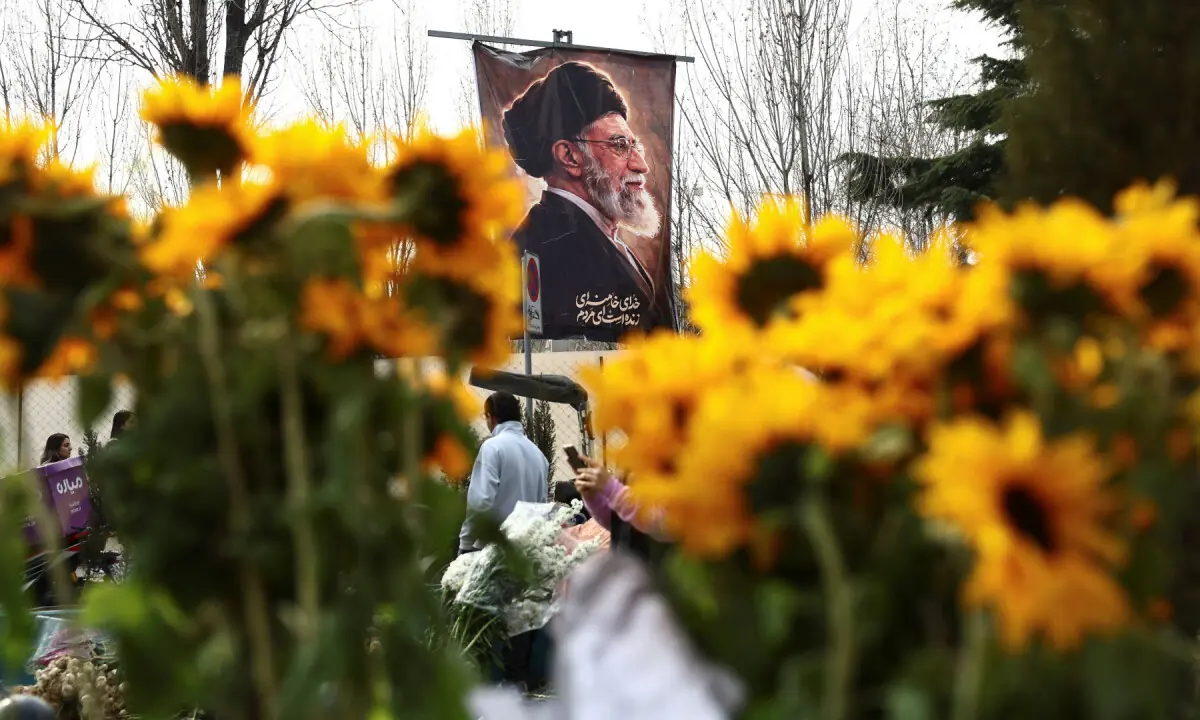
Across Iran, the Persian New Year arrived without usual festivities associated with it. Celebrations were scaled down, with war, blackouts and economic strain shaping public sentiment. Markets remained open but subdued, and even among diaspora communities, observances lacked the usual fervour.
Against this backdrop, a reported Iranian air defence success provided a rare morale boost.
Iranian systems are said to have damaged a US F-35 during a combat mission, forcing it to make an emergency landing at Al-Dhafra Airbase in the United Arab Emirates. While the operational impact appears limited, the symbolic value of hitting a stealth fifth-generation aircraft would be considerable.
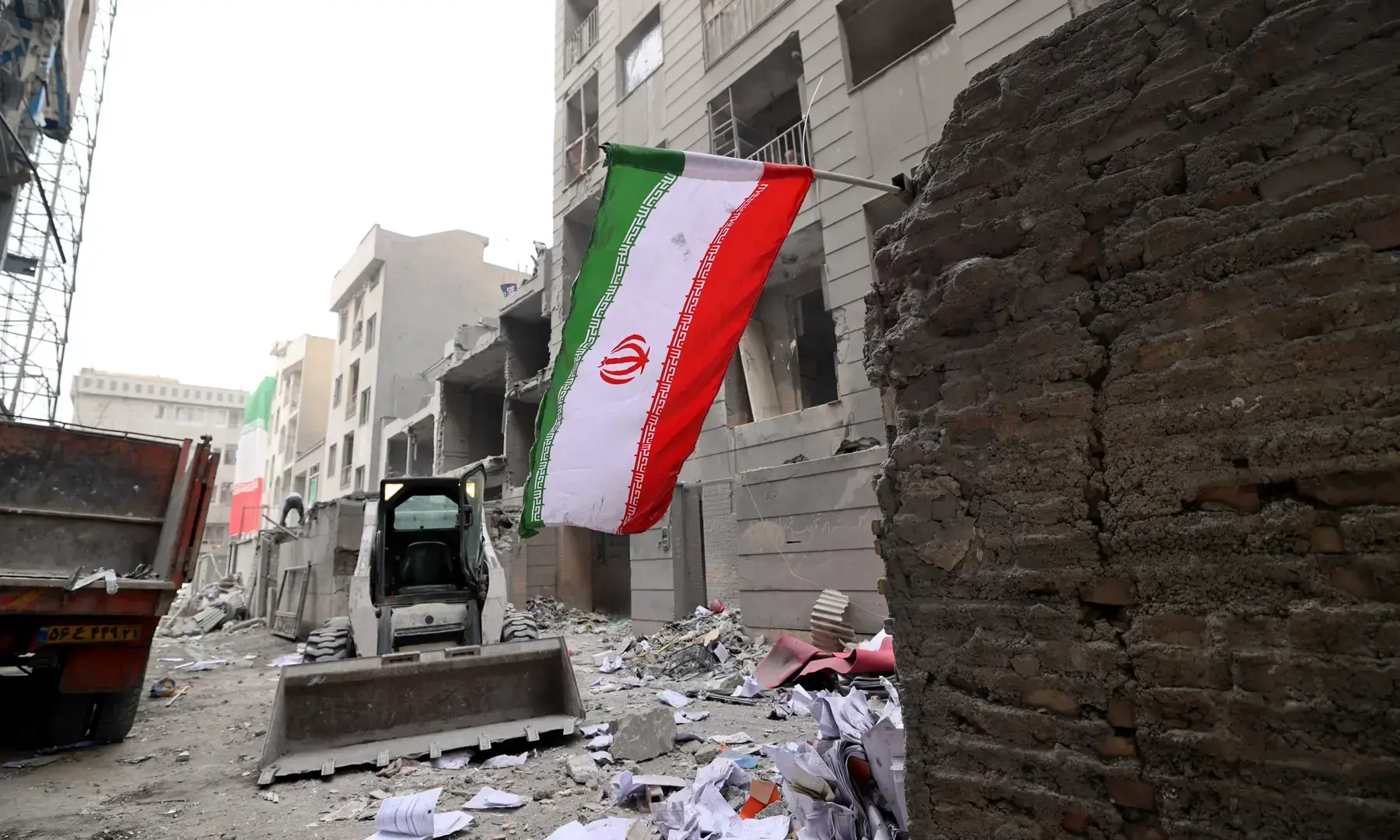
An Iranian flag flutters as a digger arrives to help remove the debris from destroyed buildings following a military strike on the Iranian capital Tehran on March 15, 2026. — AFP/ File
The head of the World Health Organisation (WHO) has condemned attacks across the Gulf, warning of growing humanitarian and health impacts following a meeting with the United Arab Emirates’ UN envoy, Al Jazeera reports.
WHO Director-General Tedros Adhanom Ghebreyesus has said missile strikes in countries including the UAE, Oman, and Kuwait caused deaths and injuries, while attacks on energy facilities across the Middle East risk worsening public health conditions.
In a meeting with UAE Ambassador Jamal al-Musharakh in Geneva, the pair discussed the broader health impacts of the escalating conflict, as well as the role of the WHO’s Dubai-based logistics hub in delivering medical supplies across multiple regions.
Mexican state-run oil firm Pemex is waiting to see how oil prices behave in the mid-term before altering its strategy on crude exports, Finance Minister Edgar Amador tells Reuters.
“Our perspective is that this should be a relatively temporary effect,” Amador said in an interview at Mexico’s annual banking convention, referring to the recent climb in prices tied to the conflict in the Middle East.