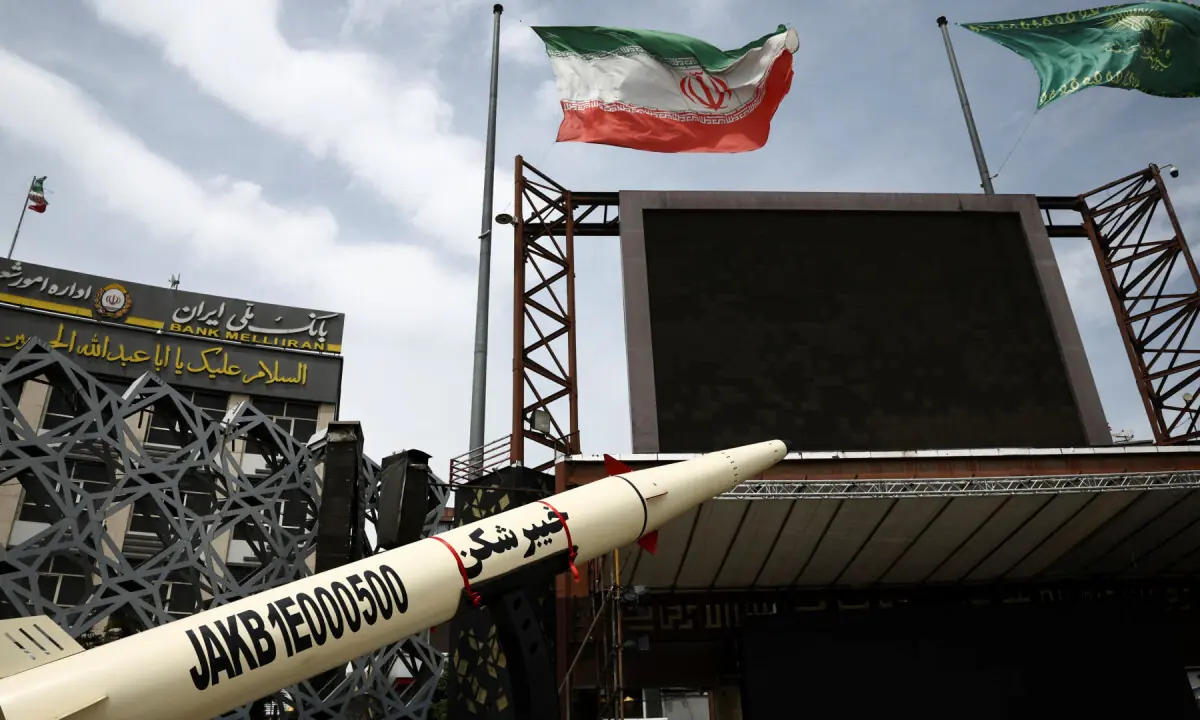
The US and Israel on Feb 28 launched what they described as a “pre-emptive” joint strike against Iranian targets, with Trump announcing start of “major combat operations”
The United Arab Emirates’ Industry Minister Sultan Al Jaber, who also serves as managing director of the Abu Dhabi National Oil Company (ADNOC), has said in a post on X that his country has taken “a sovereign decision in line with its long-term energy strategy”, Al Jazeera reports.
As for ADNOC, he says the state-owned company’s focus remains “unchanged”, and it will meet “the growing energy needs of our customers and partners around the world with reliability, responsibility, and the ambition to deliver more … across oil, gas, chemicals, and low carbon and renewable energy”.
British Minister for the Middle East Hamish Falconer summoned the Iranian ambassador to the UK over “unacceptable and inflammatory” comments on social media, a statement from the Foreign, Commonwealth and Development Office (FCDO) says.
“The minister made clear that these actions and comments were completely unacceptable, and that the Embassy must cease any form of communications that could be interpreted as encouraging violence in the UK or internationally,” the statement reads.
The FCDO states that the UK will continue to call out “Iran’s brutal and repressive regime” for “malign activities on UK soil, its reckless attacks against our allies in the Gulf, and its violence against its own people”.
A Russian super-yacht trapped in the Gulf by the Middle East war carried stranded Filipino seafarers out through the perilous Strait of Hormuz, AFP reports citing the Philippine government.
The Russia-flagged Nord, a 142-metre-long yacht reportedly linked to the Russian billionaire Alexei Mordashov, passed the strait on Saturday, the Department of Migrant Workers (DMW) says in a statement.
On board the yacht and a bulk cargo ship that also passed that day “were 36 Filipino seafarers, bringing the total Filipino crew of vessels out of the Strait to close to 1,200”, it adds.
The US average gasoline price has risen to near $4.18 a gallon, hitting its highest since August 2022, Reuters reports citing data from the American Automobile Association.
National average retail gasoline prices have climbed about $1.19 a gallon, or about 40 per cent, since the US and Israel attacked Iran at the end of February.
The European Union and the Association of Southeast Asian Nations (Asean) have urged the US and Iran to end the war through peaceful means, stressing maritime safety and security via the Strait of Hormuz, Anadolu reports.
Welcoming the US-Iran ceasefire mediated by Pakistan, the two blocs in a joint statement have reaffirmed the “importance of upholding freedom of navigation in and overflight above straits used for international navigation, in accordance with international law, as reflected in the 1982 UNCLOS (UN Convention on the Laws of the Sea)”.
The statement was released after the EU-ASEAN 25th Ministerial Meeting in Bandar Seri Begawan, the capital of Brunei. EU foreign policy chief Kaja Kallas represented the bloc, while Brunei Foreign Minister Prince Mohamed Bolkiah hosted the joint meeting on behalf of ASEAN.
They expressed “deep concern over any discriminatory or unilateral measures that may impede or obstruct vessels passing through the Strait of Hormuz, or any straits used for international navigation”, the statement says.
For Iran, “it is still a war situation and there is continuous monitoring … surveillance”, Iran’s Fars news agency has quoted an army spokesperson as saying, according to Al Jazeera. “If the enemy takes a new action, they will be faced with new tools, methods, and arenas.”
United Nations Secretary General Antonio Guterres spoke by telephone with Deputy Prime Minister and Foreign Minister Ishaq Dar, with the discussion revolving around the latest regional developments and Islamabad’s diplomatic efforts to end the US-Iran war.
“Commending Pakistan’s ongoing efforts, the UNSG conveyed [the] international community’s deep appreciation and support for Pakistan’s constructive role for regional and international peace and stability,” the Foreign Office has said, adding that Guterres expressed the UN’s full support for Pakistan’s diplomatic efforts.
Al Jazeera’s Michael Appel reports that the two main issues discussed at the GCC meeting were opening up the Strait of Hormuz and crafting a strategy that shows unity and coordination within the GCC nations.
“Since February 28, when the war kicked off, some GCC states were targeted more than others. The UAE, in particular, felt the brunt of Iranian munitions,” Appel says.
“So, these leaders came together in Jeddah. A very brief meeting took place against the backdrop of an announcement from the UAE that it is indeed going to pull out of OPEC.”
Qatar’s Emir, Sheikh Tamim bin Hamad Al-Thani, says the Gulf consultative summit in Saudi Arabia “embodies the unified Gulf stance towards the current situation, and the need it entails for intensifying coordination and consultation”, Al Jazeera reports.
He adds in a social media post that the gathering “enhances the active role of our countries in supporting diplomatic paths, preserving the security of the region and the stability of its peoples, and achieving their aspirations towards development and prosperity”.
Iranian state news agency IRNA is reporting that six airports in the country are now operational: Mehrabad, Mashhad, Shiraz, Zahedan, Gorgan and Urmia, according to Al Jazeera.
The agency reported that flights from Kerman (Ayatollah Hashemi Rafsanjani), Yazd and Birjand airports will begin in the “next phase”, citing a report from the Iranian Airports and Air Navigation Company.
IRNA says, “The provision of safe conditions in the country’s airspace, domestic and international flights will gradually increase, and the eastern airspace of the country will also witness flights passing through Iranian skies.”
US President Donald Trump claims that Iran has informed him that it is in a “state of collapse” and that they want the US to “‘open the Hormuz Strait’, as soon as possible, as they try to figure out their leadership situation (which I believe they will be able to do!),” according to a post on Truth Social.
Israeli attacks on southern Lebanon have continued despite the ceasefire, with Al Jazeera’s correspondents reporting artillery shelling targeting the vicinity of the town of Zawtar al-Sharqiya, and a drone attack on Qabrikha.
The United Arab Emirates (UAE) said on Tuesday it quit Opec and Opec+, dealing a heavy blow to the oil exporting groups and their de facto leader, Saudi Arabia, at a time when the war in Iran has caused a historic energy shock and unsettled the global economy.
The stunning loss of the UAE, a longstanding Opec member, could create disarray and weaken the group, which has usually sought to show a united front despite internal disagreements over a range of issues from geopolitics to production quotas.
UAE Energy Minister Suhail Mohamed al-Mazrouei told Reuters the decision was taken after a careful look at the regional power’s energy strategies.
Asked whether the UAE consulted with Saudi Arabia, he said the UAE did not raise the issue with any other country.
Opec Gulf producers have already been struggling to ship exports through the Strait of Hormuz, a narrow chokepoint between Iran and Oman through which a fifth of the world’s crude oil and liquefied natural gas normally passes, because of Iranian threats and attacks against vessels.
Air India, IndiGo and SpiceJet, which hold 95 per cent of India’s aviation market, have told the government that the airline industry is on the verge of “stopping operations”, Al Jazeera reports citing the Press Trust of India.
The Middle East war and the near-complete closure of the Strait of Hormuz have ramped up oil prices in India, the world’s fifth-largest aviation market. Alongside that, airspace restrictions have increased airlines’ operating costs, particularly on long-haul routes.
The airlines sought a revision to aviation turbine fuel pricing, which accounts for around 40pc of a carrier’s operational expenses.
At the same time, the Federation of Indian Airlines has asked the civil aviation ministry to extend a fuel pricing mechanism to both domestic and international operations.
Saudi Crown Prince Mohammed bin Salman chaired a consultative meeting of the Gulf Cooperation Council in Jeddah, state media said, the first in-person meeting of Gulf leaders since their states became a front in the war on Iran two months ago, Reuters reports.
A Gulf official, speaking on condition of anonymity, said the meeting aimed to craft a response to the thousands of Iranian missile and drone attacks Gulf states have faced since the US and Israel launched the war with strikes on Iran on February 28.
Saudi state media said the summit discussed “topics and issues related to regional and international developments, and the coordination of efforts regarding them”.
Israel’s top diplomat on Tuesday said Israel was not seeking to take territory in Lebanon, as its military presses operations in the south against Hezbollah despite a ceasefire, AFP reports.
“Israel has no territorial ambitions in Lebanon. Our presence in the areas by our northern border serves one purpose: protecting our citizens,” Foreign Minister Gideon Saar said at a joint news conference with his Serbian counterpart Marko Djuric.
Iran has banned the export of steel products, local media reported, citing customs authorities, according to AFP.
Fars news agency reported a directive from the Islamic republic’s customs authorities “regarding the prohibition of the export” of steel products, effective from April 26.
Iran has warned that submarine cables in the Strait of Hormuz were a vulnerable point for the region’s digital economy, raising concerns about potential attacks on critical infrastructure.
The narrow waterway, already a chokepoint for global oil shipments, is equally vital for the digital world.
Several fibre-optic cables snake across the seabed of the strait, connecting countries from Southeast Asia to Europe via the Gulf states and Egypt.
Qatar’s foreign ministry spokesman Majed al-Ansari has said that Qatar is giving Pakistan “ample room” for its mediation efforts, Al Jazeera reports.
He stressed that diplomacy is the “safest and most reasonable way” to end the war. Al-Ansari also noted that the Gulf states have been under “daily attacks”.