The US and Israel on Feb 28 launched what they described as a “pre-emptive” joint strike against Iranian targets, with Trump announcing start of “major combat operations”
Pakistan hosted the first round of face-to-face talks between the US and Iran in 47 years in April; the talks ended without a breakthrough, but also without a breakdown
Ceasefire falters as US, Iran exchange attacks on each other’s military sites; Kuwait, Bahrain targeted in retaliation
Deferring jet orders due to uncertainty and higher jet fuel prices caused by the war in Iran would be unwise for Middle Eastern carriers, as the decision could be costly in the long term, Reuters reports quoting a vice president of the airline trade group IATA.
Kamil Al-Awadhi, Regional Vice President for Africa and the Middle East, tells reporters that he does not expect the war and higher costs to affect aircraft orders from Middle Eastern carriers. The region’s airlines are major buyers of jets from planemakers Boeing and Airbus.
Deferrals are “not wise because that deferral will cost you,” he says, citing long waiting times for aircraft.
“Given the waiting time for Airbus’ latest generation of single-aisle planes, it would take years for operators to get their planes,” Al-Awadhi says. “The plan is to continue where we’re going … even though this is a hiccup.”
The Saudi Ministry of Foreign Affairs has strongly condemned “continued Israeli aggression against the sisterly Republic of Lebanon, affirming its complete rejection of targeting Lebanon’s sovereignty and its army”.
“The Kingdom expresses its deepest condolences to the families of the victims, the government, and the brotherly people of Lebanon for the loss of members of the Lebanese army, including officers, while performing their national duty, and expresses its solidarity with Lebanon and its brotherly people in the face of all threats to its security and stability,” it says in a statement posted on X.
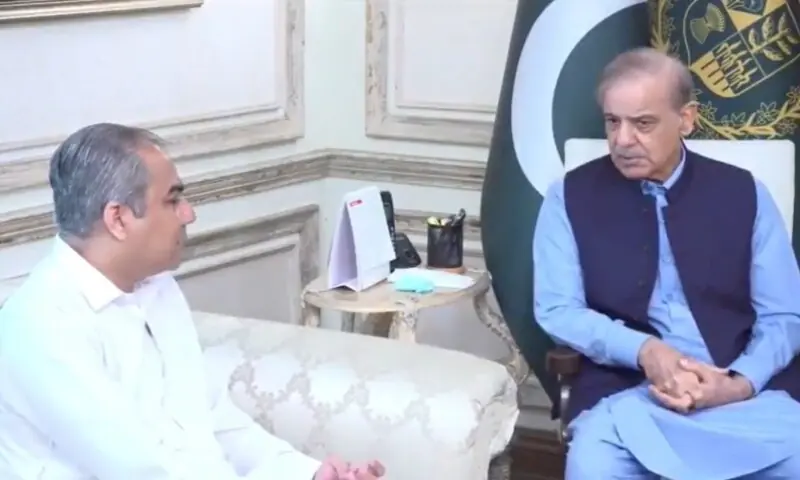
Prime Minister Shehbaz Sharif on Saturday held a meeting with Interior Minister Mohsin Naqvi, during which they discussed the latter’s upcoming visit to Tehran, according to a statement from the Prime Minister’s Office (PMO).
“Consultations also took place between the prime minister and the interior minister regarding his upcoming visit to Tehran. The prime minister provided guidance related to the visit,” the statement added.
Lebanese Prime Minister Nawaf Salam has condemned an Israeli strike that killed three Lebanese army personnel in the south of the country, describing it as “a heinous crime and an attack on Lebanon and all Lebanese people”, Al Jazeera reports.
In a statement, Salam has extended his condolences to the families and colleagues of Brigadier General Wassam Sabra, Captain Elie Khoury and soldier Hussein Ghozal, as well as to the Lebanese army as an institution.
Bahrain has stated its support for Lebanon’s “sovereignty” and rejected external interference in its internal affairs, voicing backing for President Joseph Aoun’s efforts to extend state authority and restrict weapons possession to the state alone, Al Jazeera reports.
The Bahraini foreign ministry says in a statement that it supports Aoun’s government in implementing the Taif Agreement and UN Security Council Resolution 1701, which calls for the disarmament of non-state armed groups in Lebanon.
Bahrain also expressed appreciation for US mediation efforts led by President Donald Trump to reach a permanent ceasefire in Lebanon, and praised the Lebanese government’s commitment to ending hostilities, protecting civilians, and securing the return of displaced people.
The ministry called for strengthening international and regional efforts to provide urgent humanitarian support to Lebanon and back UNIFIL peacekeeping forces.
Iran has condemned a nighttime US attack on coastal radar installations in the Gulf, calling it a “flagrant” violation of the ceasefire in place since April, AFP reports.
The foreign ministry says it was an attack “on the national sovereignty and territorial integrity of the Islamic republic”, denouncing Washington’s “hostile and provocative behaviour”.
Hezbollah has condemned the Israeli attack on a Lebanese army vehicle that killed three soldiers, calling the strike “a deliberate crime”, Al Jazeera reports.
In a statement, the Lebanese group has deemed the strike “a deliberate and premeditated crime that adds to the series of crimes the enemy continues to commit against our Lebanese people, particularly in the south and the Western Beqaa”.
Hezbollah has also criticised the Lebanese state authorities, saying the attack was “a natural consequence of the authorities’ disregard for the country’s sovereignty and the blood of its people, as well as their gratuitous concessions”.
“The latest of these concessions was their complete surrender to the enemy’s conditions in Washington, encouraging it to violate the blood of our people and our army with impunity,” the group says. “We condemn this sinful aggression and reaffirm our steadfast support for our national army.”
Iran has denounced a report by the International Atomic Energy Agency (IAEA) expressing concern over its lack of access to Iranian nuclear sites, a “tool of political pressure”, AFP reports.
“If the agency wants to be part of a diplomatic solution, it must refrain from turning a technical report into a tool of political pressure,” Deputy Foreign Minister Kazem Gharibabadi writes on X.
In a confidential report seen by AFP on Thursday, the IAEA stated that the lack of access to nuclear sites in Iran constitutes a “proliferation concern”.
Kuwait’s fire brigade says it has responded to three incidents of shrapnel caused by defensive interception operations, according to Al Jazeera.
Brigadier General Mohammed Al-Gharib, director of the public relations and media department and official spokesman of the fire brigade, has said in a statement that the incidents resulted from falling shrapnel from the interception.
“Firefighters responded early morning today to three unusual incidents resulting from defensive interception operations, including two fire cases caused by falling debris and one case involving site security and precautionary measures.”
Qatar has condemned the repeated Iranian attacks on Kuwait and Bahrain, describing them as a flagrant violation of the two Gulf nations’ sovereignty and a blatant breach of international law, Al Jazeera reports.
In a statement, the Qatari Ministry of Foreign Affairs has called for de-escalation and stressed the necessity of sparing the region the consequences of “unjustified attacks”.
The ministry reiterates Qatar’s full solidarity with Kuwait and Bahrain, voicing support for any measures the two countries take to preserve their sovereignty and security.
Iran still has “21, 22 per cent” of its missiles left, US President Donald Trump says, after Tehran fired dozens across the region during a week marked by repeated violations of a fragile ceasefire, AFP.
“They still have capacity. They have some missiles, they have some drones. I would say, percentage-wise, maybe 21, 22pc of their missiles,” Trump tells NBC News in an interview.
That estimate for Iran’s remaining missile stockpile is higher than the 18pc Trump gave in May, and he has often claimed to have completely destroyed Iran’s war-fighting capacity.
Weeks of complex talks marked by threats and flare-ups of violence have failed to secure a deal to end the war. But Trump said Iran has “got no choice” except to reach an agreement.
“They’re strong, they’re proud, there are things they never thought they’d be doing that they’re going to have to do,” he tells NBC.
Jordan has condemned Iranian attacks on Bahrain and Kuwait, describing them as a “flagrant violation” of their sovereignty, a threat to regional security, and a dangerous escalation undermining efforts to restore stability, Al Jazeera reports.
The Jordanian foreign ministry says in a statement that the attacks constitute a blatant breach of international law and the United Nations Charter.
Jordan affirms its “absolute solidarity” with both Gulf nations and its support for any steps they take to protect their sovereignty, security and the safety of their citizens and residents.
The United States, one of the three host countries of the 2026 World Cup, has refused to grant visas to 15 members of Iran’s delegation, AFP reports citing state television.
“Visas have been issued for the national team and the technical staff, and there are 15 members of the administration and management whose visas are problematic and have not been issued by the US,” a state television correspondent reports from the Turkish city of Antalya, where the team is holding a training camp.
In a separate statement, Kuwait has also expressed strong denunciation of the “reprehensible Iranian aggressions” against Bahrain, declaring them a “direct assault on the security of the Kingdom of Bahrain, its stability, and the safety of its people”.
Kuwait’s foreign ministry stressed that the aggressions “constitute an extremely dangerous escalation and reveal a hostile approach in dealing with neighbouring countries, undermining opportunities for de-escalation and pushing the region toward further tension”.
Kuwait emphasised that the security of Bahrain and other GCC countries was “indivisible” and renewed its support for Manama to take all measures needed to preserve its security, sovereignty, and stability.
Bahrain’s army has said its air defence systems “successfully intercepted and destroyed three missiles and several drones” sent by Iran.
“The General Command affirms that all its weapons and units are at the highest levels of readiness and are fully prepared to defend the Kingdom,” the army said in a statement.
Kuwait has condemned the “repeated Iranian aggressions” against it in the strongest terms.
In a statement, its foreign ministry said the latest attack “disregards international demands calling for an end to these practices and shows utter indifference to the direct threat they pose to the lives of citizens and residents, as well as to the security and stability of the region”.
Terming it a blatant breach of international law, Kuwait said the attack represented a “dangerous escalation that drives the region toward further tension and turmoil, at a time when the international community is exerting tireless efforts to halt combat operations and spare the region additional escalation”.
The ministry reiterated that Kuwait reserved its “full right to take all necessary measures to preserve its security and defend its territories and vital facilities against any aggression or threat”.
Lebanon’s President Joseph Aoun has condemned the Israeli attack on a Lebanese army vehicle, which killed two officers and a soldier, Al Jazeera reports.
In a statement posted on X, his office said that he considered the attack a “flagrant violation of Lebanese sovereignty [and] of international laws and norms”.
He added that the attack comes at a time when “ongoing escalation threatened stability and security in the south [of Lebanon] despite the efforts Lebanon is exerting in the Washington negotiations”.
He offered his “deepest condolences” to those killed and called on the international community to “assume its responsibility and put an end to these repeated attacks”.
The Israeli army, via its Arabic-language spokesperson Avichay Adraee, has defended its attack on a Lebanese army four-wheel-drive vehicle in southern Lebanon, which killed two officers and one soldier, Al Jazeera reports.
Adraee claimed that the vehicle was “moving suspiciously” in an “active combat zone” that had been evacuated, referring to forced displacement orders issued earlier. However, he added that the incident was under investigation.
“Following the identification of the vehicle, and based on the warning information and the danger it posed to the troops, it was targeted,” the military spokesperson added.
He emphasised that the Israeli troops operate against Hezbollah and not against the Lebanese army.
Kuwait’s Public Authority of Civil Aviation has announced the reopening of Kuwait’s airspace after a temporary closure as a precautionary measure due to Iran’s ballistic missile attacks on the country, Kuna reports.
In a statement to Kuna, the aviation authority said the authorities concerned have activated procedures and plans to deal with emergencies, to ensure the safety of passengers, crews and facilities.
Egypt has strongly condemned the “heinous Iranian attack that targeted Kuwait and Bahrain”, terming them a flagrant violation of the sovereignty of the two countries and “a dangerous escalation that threatens the security and stability” of the entire region.
The foreign ministry said Egypt affirmed its “full support” for Kuwait and Bahrain in “confronting this heinous attack” and expressed its “support for all measures they take to preserve their security and stability and protect their territories and vital facilities”.
“Egypt also reiterates its affirmation that the security and stability of the Arab Gulf states represent a fundamental pillar of Arab national security, and categorically rejects any actions or practices that violate the sovereignty of states or threaten their security and territorial integrity, which threatens the security and stability of the entire region,” the statement added.