The US and Israel on Feb 28 launched what they described as a “pre-emptive” joint strike against Iranian targets, with Trump announcing start of “major combat operations”
Pakistan hosted the first round of face-to-face talks between the US and Iran in 47 years in April; the talks ended without a breakthrough, but also without a breakdown
Iran says no final decision made on deal that Trump hopes could be signed soon
Israel’s Prime Minister Benjamin Netanyahu has said his country would not be party to the peace agreement between US and Iran, Reuters reports.
Netanyahu has clashed with Trump in recent weeks over US demands that Israel curb military action in Lebanon to allow Washington to reach a deal with Tehran.
Araghchi said the agreement would end the war in Lebanon, implying an Israeli withdrawal from occupied areas.
Israel’s defence minister said it would not withdraw. A senior Israeli official has said Israel expects to retain its freedom to act against threats.
In a telephone conversation, Pakistan and Switzerland’s foreign ministers have expressed hope for a US-Iran deal, according to a post on X by the Ministry of Foreign Affairs.
Deputy Prime Minister and Foreign Minister Ishaq Dar and Swiss Foreign Minister Ignazio Cassis have discussed “the encouraging progress towards an understanding between the United States and Iran”.
The Pakistani and Swiss ministers look forward to peace and stability in the region, according to the ministry.
“Both sides agreed to remain in close contact,” the post says.
Lebanese MP Amin Sherri has said there are “positive indicators” for a deal between the US and Iran, adding that Israel would be the biggest loser in that case, Al Jazeera reports.
“We are waiting to see how the American president will deal with this agreement, and we hope to reach a happy conclusion that will reflect on the situation in Lebanon,” he told Voice of all Lebanon radio station, according to Lebanon’s National News Agency.
Sherri, who is part of Hezbollah’s Loyalty to the Resistance bloc, has said that “no one will be able to disarm” the group.
He has criticised the recent talks between Lebanon and Israel in Washington, saying that the Lebanese government “made concessions to Israel without any guarantees” for the country.
Lebanese President Joseph Aoun has said the country is at a “fateful juncture” as it stands to decide between “a sovereign state that monopolises arms and upholds the rule of law” or to remain “hostage to the logic of militias and the culture of exclusion”, Al Jazeera reports.
Speaking on the anniversary of the assassination of former minister Tony Suleiman Frangieh in 1978 by armed factions, Aoun has said national unity was an “existential necessity”.
“We are at a moment that tolerates neither sectarian luxury nor regional tug-of-war,” he was quoted as saying.
Aoun, a former armed forces chief, has faced the difficult task of disarming Hezbollah without pushing Lebanon into renewed civil conflict.
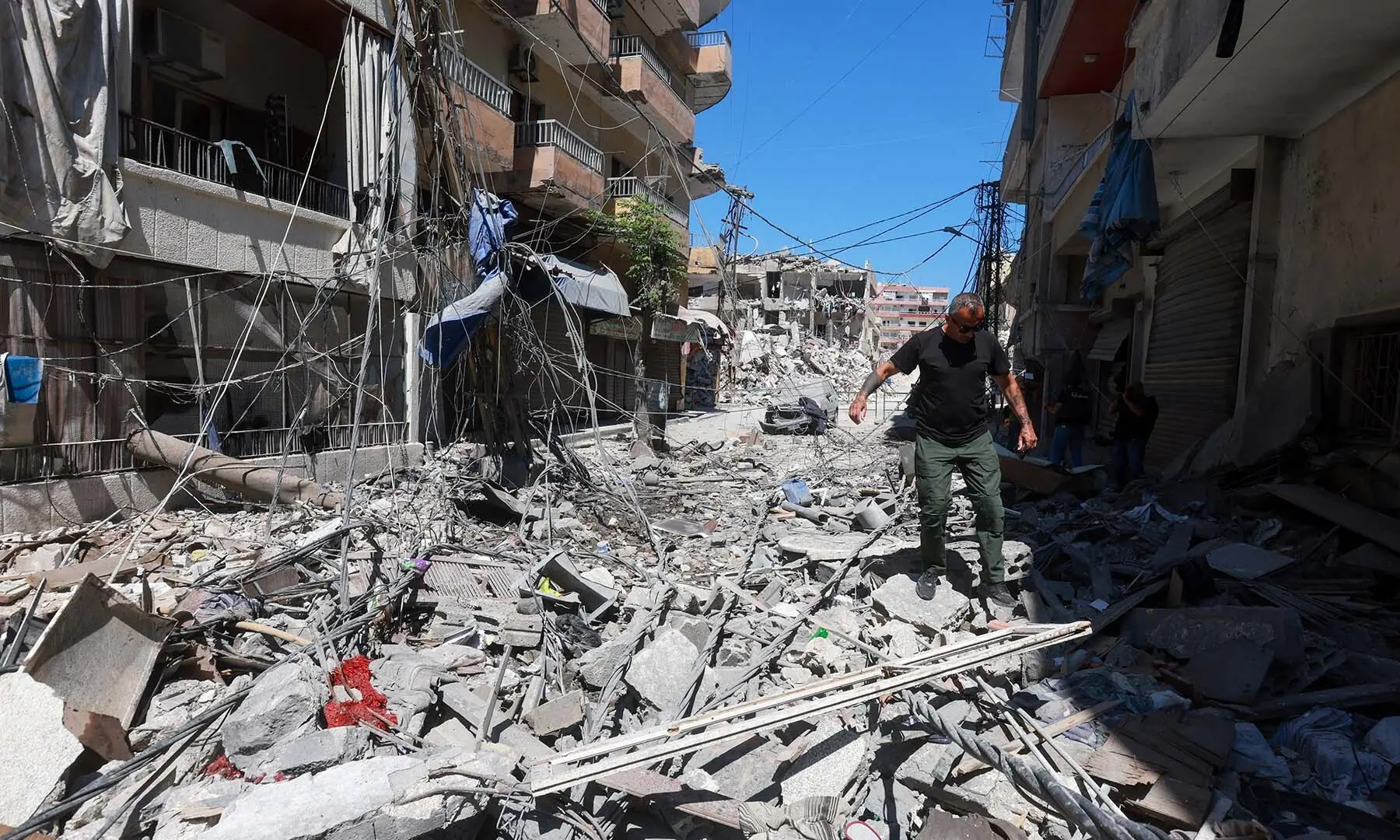
Lebanese state media reported Israeli strikes on the country’s south on Saturday shortly after the Israeli army issued an evacuation warning for 20 locations including the city of Nabatieh ahead of raids there, AFP reports.
National News Agency (NNA) reported Israeli airstrikes in several areas covered by the evacuation warning, including the villages of Rihan and Sujud, located not far from Nabatieh.
The Israeli military warned of imminent strikes on south Lebanon, telling residents of 20 towns and villages including many near Nabatieh city to evacuate despite a ceasefire in its war with Lebanese militant group Hezbollah, AFP reports.
“For your safety, you should evacuate your homes immediately and move to the north of the Zahrani River,” the military’s Arabic-language spokesman Avichay Adraee said in a post on X.
“Anyone who is in the vicinity of Hezbollah installations or means of warfare is endangering their lives,” he added, accusing the movement of violating the truce.
The United Arab Emirates has agreed to unlock billions of dollars for Iran, four sources said, in a tactical shift after weeks of Iranian attacks on the wealthy Gulf Arab state during the US-Israeli war with the Islamic Republic, Reuters reports.
Word of the move, which has not been previously reported, coincides with the final stages of broader negotiations between Tehran and Washington on ending the war, talks that diplomats say could involve the release of tens of billions of dollars in Iranian oil revenues frozen in foreign banks under US sanctions.
Iranian authorities have identified and seized the assets of 100 people in Isfahan province who have been accused of treachery for siding with the enemy, the country’s IRIB broadcaster reports.
The report said Isfahan’s chief justice ordered the action against people accused of supporting “the crimes of the enemies in Iran in various ways”.
Even though the United States and Iran signalled that an agreement to end their war was close, with a senior US administration official saying Washington expects to sign an initial deal in the coming days, Strait of Hormuz again witnessed military action, Reuters reports.
Iranian Foreign Minister Abbas Araghchi said that while changes in the deal were still possible, the tentative agreement showed his country had emerged stronger from the conflict.
“Iran is the winner of the war with the US,” he said on state television.
Araghchi said Iran would, along with Oman, retain control of traffic through the strait, which before the war handled one-fifth of the world’s oil and gas supply.
“Our sword will always hang over the Strait of Hormuz,” he said.
Hours after those remarks, US forces shot down multiple Iranian one-way attack drones heading toward the Strait of Hormuz, a source familiar with the matter told Reuters. Centcom later confirmed the action and said the waterway was open for transit.
Iranian news agencies had reported that explosions were heard along the strait in Iran’s Sirik port and Qeshm island, which residents and local officials attributed to shots fired by Iranian forces to warn vessels attempting to cross the waterway without permission from the IRGC navy.
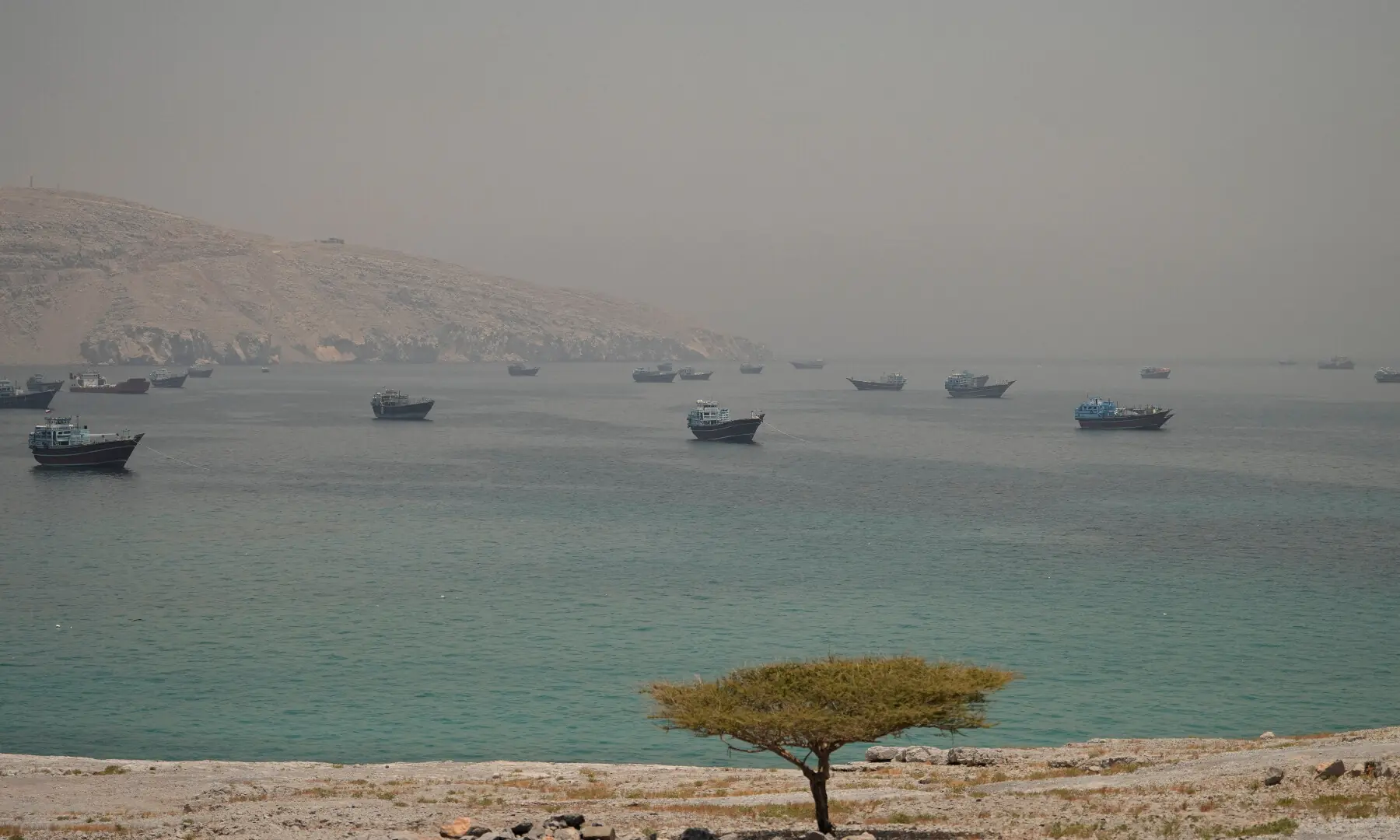
Vessels are anchored in the Strait of Hormuz, as seen from Musandam, Oman on June 11, 2026. — Reuters/File
Free Patriotic Movement leader Gebran Bassil has said that Hezbollah has made “mistakes” since the 2006 war with Israel, but that the wrongdoings of any Lebanese factions does not justify siding with Israelis, Al Jazeera reports.
Bassil, who is the son-in-law of former President Michel Aoun and whose party represents the Maronite Christian community, stressed that Israel was the one waging war on Lebanon and destroying its economy, homes, and social fabric.
He added that condemning Hezbollah’s actions does not mean ignoring the reality on the ground.
Divisions have been deepening in Lebanese society since President Joseph Aoun took the unprecedented decision of holding direct talks with Israel.
“According to international laws, it is not possible to impose tolls on the Strait of Hormuz, but service fees will be collected, and this will be established in the negotiations,” Iran’s FM Abbas Araghchi has asserted, according to Tasnim.
“Our sword will always remain poised above the Strait of Hormuz, and whenever necessary, Iran’s armed forces will intervene,” he was quoted as saying.
The Iranian foreign minister has also said that the nuclear issue has been deferred to the final agreement, revealing that the negotiations are “two-stage”, Tasnim reports.
“America’s nuclear demands at this stage were in no way acceptable to us. The text of the understanding has so far been changed in many rounds,” he was quoted as saying.
Deputy Prime Minister and Foreign Minister Ishaq Dar spoke late last night with Egypt’s FM Badr Abdelatty, the Foreign Office says.
“The two leaders discussed the latest developments in the regional situation and welcomed the positive momentum in ongoing diplomatic efforts aimed at promoting regional peace and stability,” it said.
They also “expressed hope that an early and constructive outcome in the ongoing engagement between the United States and Iran would be reached, contributing to lasting peace and stability in the region”.
Both sides also agreed to remain in close contact and continue consultations on matters of mutual interest, the FO noted.
Iran’s Foreign Minister Abbas Araghchi has said fees for services will be collected for the Strait of Hormuz, and these services will no longer be free, Tasnim reports.
“The administration of the Strait of Hormuz will not return to the pre-war era,” he was quoted as saying.
“We are dealing with entities in America that do not fulfil their commitments; we must close the path of their breach of promise,” he added.
Members of the United Nations Security Council have issued a joint statement condemning the killing of a Serbian peacekeeper from the UN Interim Force in Lebanon (Unifil) on June 4, AlJazeera reports.
“The peacekeeper died from critical injuries sustained when mortar shells struck his position,” the statement said, noting that two other peacekeepers were injured in the attack.
The council “paid tribute to the dedication and service of all United Nations peacekeepers who risk their lives in service of international peace and security and expressed their deep appreciation to Unifil’s troop-contributing countries”.
The US military’s Central Command has shared a photograph it says shows an F-16 fighter jet “patrolling the skies above the Middle East”, AlJazeera reports.
“American forces maintain regional presence and vigilance,” the brief post added.
The US has deported an Iranian pro-democracy activist to Central African Republic, her lawyer said, describing it as a “super dangerous” transfer to a country with which the activist has no connection, according to Reuters.
The Iranian American Legal Defense Fund (IALDF) has said that three Iranian women who fled persecution were at risk of deportation, including one who had converted to Christianity.
In the end, only the activist was on the flight which took off from Louisiana, said her lawyer, Emily Trostle, while not ruling out that the others could potentially be deported later.
The plane landed in Bangui, the capital of Central African Republic, shortly before 10 pm local time (2100 GMT), after a stop in Ghana’s capital Accra, according to the ICE Flight Monitor managed by Human Rights First.
“They have absolutely no connection to this place. In all of my filings I submitted tons of information about how this was super dangerous,” Trostle told Reuters.
US forces have “downed” several Iranian drones targeting commercial ships in the Strait of Hormuz, the military has said, according to AFP.
“Iran launched multiple one-way attack drones in an attempt to strike commercial ships transiting the Strait of Hormuz,” US Central Command (Centcom), which oversees operations in the region, posted on X.
Centcom insisted that the strait “remains open for transit”.