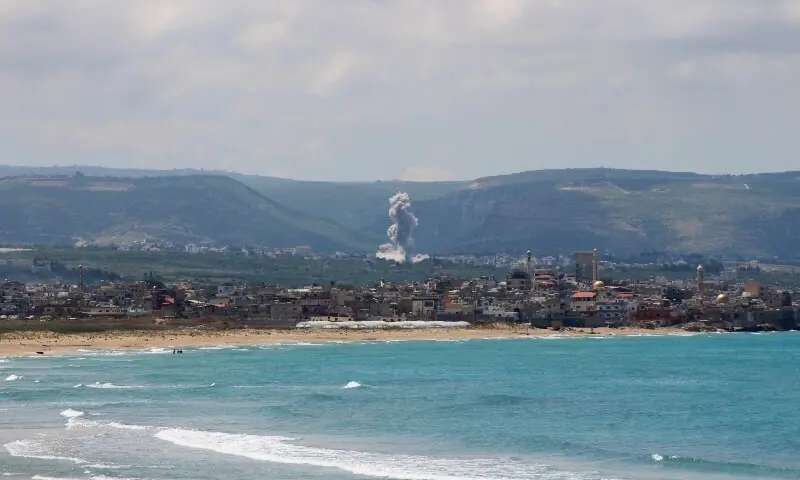
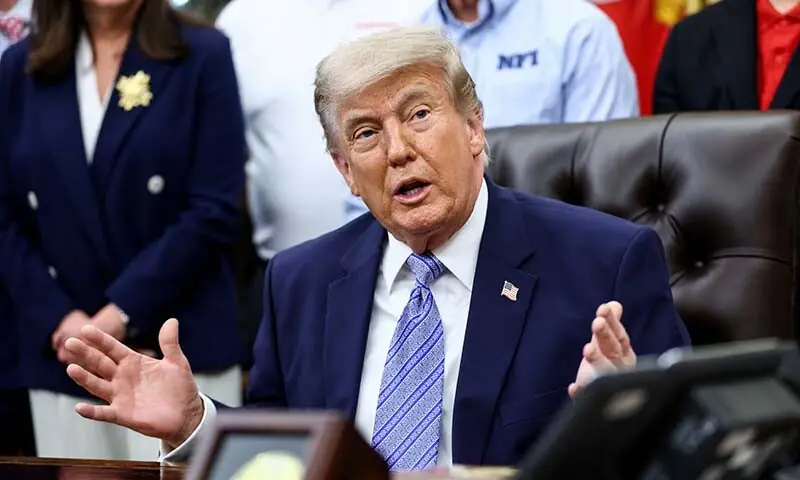
The US and Israel on Feb 28 launched what they described as a “pre-emptive” joint strike against Iranian targets, with Trump announcing start of “major combat operations”
Pakistan hosted the first round of face-to-face talks between the US and Iran in 47 years in April; the talks ended without a breakthrough, but also without a breakdown
Sri Lanka’s central bank stunned markets by raising its benchmark policy rate by an outsized 100 basis points, as policymakers scrambled to stem inflation and support a currency buckling under soaring energy prices, Reuters reports.
The Central Bank of Sri Lanka CBSL) raised the overnight policy rate to 8.75 per cent from 7.75pc, blaming higher inflation and a depreciating rupee due to the US-Israeli war on Iran.
Sri Lanka, fully reliant on imported fuel, has been battered by the Iran war-driven energy shock that has forced a 40pc fuel price hike, rationing, and even public holidays on Wednesdays.
US Secretary of State Marco Rubio said that the Strait of Hormuz has to be open, “one way or the other”, when referring to recent US strikes on Iran, Reuters reports.
“The straits have to be open, they’re going to be open one way or the other, so they need to be open,” Rubio told reporters on his plane in India’s Jaipur.
He said the negotiating language of the deal with Iran could “take a few days”.
US Secretary of State Marco Rubio said that a deal with Iran was still possible despite new American strikes that cast doubt on their fragile ceasefire, AFP reports.
“There were some talks going on in Qatar today, so we’ll see if we can make progress. I think it’s a lot of talking back and forth going on about specific language in the initial document, so it’ll take a few days,” Rubio told reporters in Jaipur during an official visit to India.
“The president’s expressed his desire to make it. He’s either going to make a good deal or no deal,” he said.
In a post on his Truth Social platform, the US president has reiterated that Iran’s enriched uranium should be turned over to the US to be destroyed, or destroyed at an acceptable location.
“The Enriched Uranium (Nuclear Dust!) will either be immediately turned over to the United States to be brought home and destroyed or, preferably, in conjunction and coordination with the Islamic Republic of Iran, destroyed in place or, at another acceptable location, with the Atomic Energy Commission, or its equivalent, being witness to this process and event,” he said.
The US military carried out strikes on Monday in southern Iran against targets including boats attempting to lay mines and missile launch sites, in what it described as defensive actions, Reuters reports.
US Central Command said in a statement the strikes were designed “to protect our troops from threats posed by Iranian forces”.
“US Central Command continues to defend our forces while using restraint during the ongoing ceasefire,” said Navy Captain Tim Hawkins, a Central Command spokesperson.
US Senator Chris Murphy has written a post on X noting that the country’s war on Iran has given Tehran control of the Strait of Hormuz, regardless of whatever agreement is reached.
“What a masterclass in incomptence by Trump and his team,” he writes.
Iranian parliamentarian Mahmoud Nabavian says in a post on X, “Relinquishing management and sovereignty over the Strait of Hormuz in an agreement with the enemy, for any reason, would be a pure loss and would lead to the defeat of the Iranian nation.”
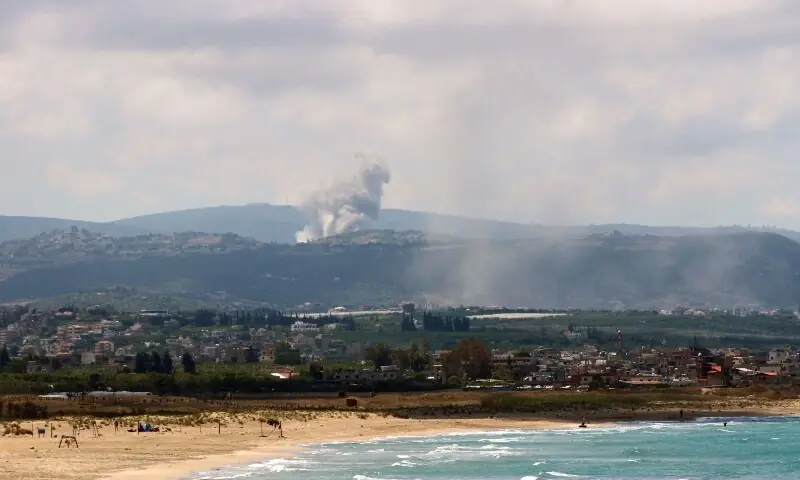
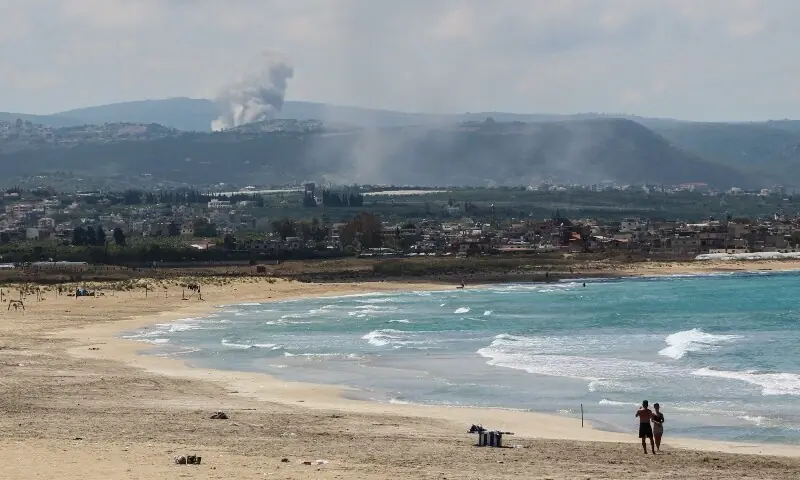
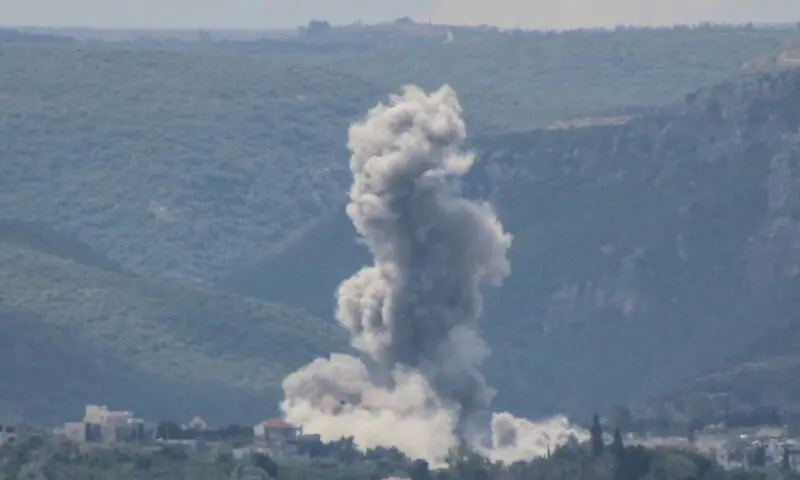
Israeli Prime Minister Benjamin Netanyahu says he ordered the military to intensify its offensive in Lebanon in an effort to “crush” Hezbollah, accusing the group of targeting Israeli forces with drone attacks, according to AFP.
“I have ordered an even greater acceleration of our operations,” Netanyahu says in a video statement posted on his Telegram channel.
“It is true that they are attacking us with drones, including fibre-optic drones, but we have teams working on countermeasures and we will solve this issue… We will intensify our blows, increase our firepower, and we will crush them.”
National Assembly Speaker Ayaz Sadiq has congratulated his Iranian counterpart, Mohammad Bagher Ghalibaf, on his re-election as the speaker of Iran’s parliament.
In a statement, he said Ghalibaf’s re-election is a “profound testament to the trust, confidence, and unwavering support reposed in his visionary leadership by the esteemed Members of the Islamic Consultative Assembly of Iran”.
Recalling Ghalibaf’s visit to Pakistan last year, Sadiq remarked that the visit significantly contributed towards strengthening parliamentary diplomacy, people-to-people linkages and government-to-government engagements between Islamabad and Tehran.
Sadiq also expressed confidence that under his counterpart, parliamentary cooperation and institutional exchanges between Pakistan and Iran would witness further expansion and consolidation.
Iran’s President Masoud Pezeshkian has issued an order to reopen international internet access, Reuters reports citing Iranian state media reports, which cited the head of public relations at Iran’s communications ministry.
Most Iranians have been unable to access the World Wide Web for 87 days, according to the internet observatory NetBlocks, with only a few citizens having access to expensive and advanced VPNs that circumvent the restrictions.
US President Donald Trump says the country lost “13 wonderful” troops killed in combat operations in Iran, reiterating his claim that Tehran will never have a nuclear weapon.
The president is addressing a Memorial Day ceremony at Arlington National Cemetery.
“The focus of the delegation’s visit to Doha is on issues relating to the Strait of Hormuz and highly enriched uranium,” Al Jazeera reports citing a regional diplomat.
“The governor of the Central Bank is part of the delegation to discuss the issue of frozen funds, which is addressed in the [memorandum of understanding] as part of an eventual final deal,” the source adds.
Lebanon’s Ministry of Public Health says that a total of 3,185 people have been killed by Israel since it entered a state of open war with Hezbollah on March 2, Al Jazeera reports.
A further 9,633 people have been wounded over that same period, it adds.
Mexican President Claudia Sheinbaum says her government has agreed to allow the Iranian national football team to stay in Mexico during the World Cup, adding that the United States did not want to host the team, Reuters reports.
The head of Iran’s soccer federation said on Saturday that the team’s base will be in the Mexican border city of Tijuana during the tournament.
Iran’s Deputy Foreign Minister for Political Affairs, Majid Takht-Ravanchi, has called Indian Foreign Secretary Vikram Misri to discuss recent developments in the region, Indian foreign ministry spokesperson Randhir Jaiswal says on X.
According to the spokesperson, the two diplomats also reviewed bilateral cooperation between their countries.
US President Donald Trump has seemingly predicated an emerging Iran peace deal on Muslim-majority nations across the Middle East and beyond normalising relations with Israel.
This brand new demand comes on the heels of a potential memorandum of understanding (MoU) between the US and Iran to end the war on all fronts and potentially lift oil waivers.
In a lengthy social media post, Trump has listed countries whose leaders he spoke with on Saturday about efforts to end the war with Iran.
“After all the work done by the United States to try and pull this very complex puzzle together, it should be mandatory that all of these countries, at a minimum, simultaneously sign onto the Abraham Accords,” he writes.
“Those countries discussed are Saudi Arabia, the United Arab Emirates (already a Member!), Qatar, Pakistan, Turkiye, Egypt, Jordan, and Bahrain (already a Member!)”
He adds, “It may be possible that one or two have a reason for not doing so, and that will be accepted, but most should be ready, willing, and able to make this settlement with Iran a far more historic event than it would otherwise be.
“It should start with the immediate signing by Saudi Arabia and Qatar, and everybody else should follow suit. If they don’t, they should not be part of this deal in that it shows bad intention.”
Being in Makkah has been nothing short of blissful for Hassan Qadiri, where participating in the festivities of the Haj pilgrimage is a welcome relief after weeks of devastating war back home in Iran, according to AFP.
Qadiri and his family took cover as intense Israeli and American bombing raids targeted his native city of Isfahan in central Iran until an April ceasefire began.
“We hear the call to prayer every day, not explosions here,” he tells AFP. “I’m very happy.”
Like many Iranians at this year’s Haj, Qadiri and his family are staying in a hotel near the Grand Mosque under the protection of Saudi security personnel, who actively prevent others from approaching the grounds to meet or speak with the pilgrims. The protocol is not provided to other visiting pilgrims.
“The Saudi treatment of us is good and everything is fine,” Qadiri adds.
His wife, who did not give her name and wore a black abaya with a turquoise vest that read “Isfahan”, agrees.
“Being here makes the war easier for us to bear,” she adds.
Oman’s top diplomat Badr bin Hamad Al-Busaidi, has spoken to Qatar’s Prime Minister and Foreign Minister Sheikh Mohammed bin Abdulrahman bin Jassim Al Thani this morning by phone, Al Jazeera reports according to Oman’s foreign ministry.
The ministry said the call took place within the framework of ongoing regional consultations and the “coordination of visions”.
It added that the officials discussed ways to support efforts to achieve the “desired consensus” on several issues, including resuming maritime navigation through the Strait of Hormuz.
An Iranian official says the reopening of the Strait of Hormuz would proceed in phases, with an initial stage involving the release of frozen Iranian assets by the United States, the start of minesweeping operations and the easing of the current US blockade, Anadolu reports, citing a report published by The Washington Post.
Speaking anonymously to the paper, the Iranian official says the first phase will include the release of $12 billion in frozen Iranian assets, minesweeping operations in the Strait of Hormuz and the lifting of the US blockade.
The official adds that the proposed memorandum of understanding will not constitute a nuclear agreement, but rather a commitment to conduct future negotiations on nuclear-related issues. The official further says that a more detailed announcement could be made later today.