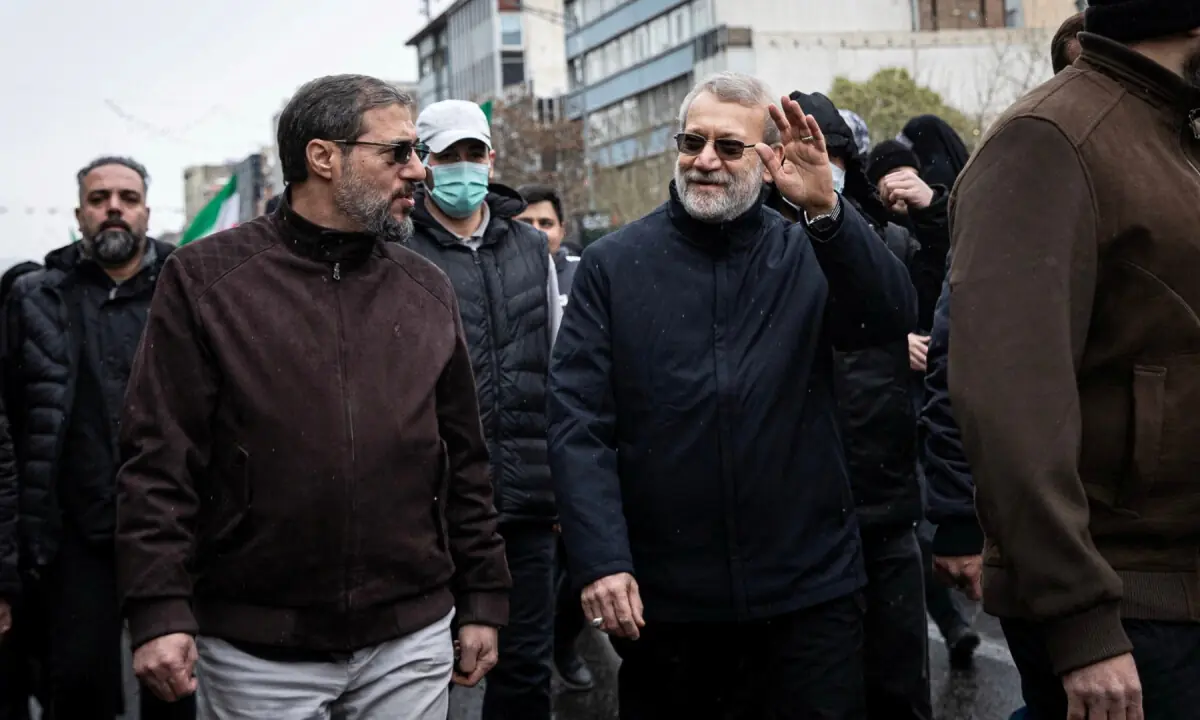
The US and Israel on Feb 28 launched what they described as a “pre-emptive” joint strike against Iranian targets, with Trump announcing start of “major combat operations”
A meeting of the foreign ministers of the regional countries, hosted by Saudi Arabia, has condemned Iran’s retaliatory campaign against Gulf countries, calling on the country to “immediately” cease the aggression
Trump has threatened to destroy Iran’s key South Pars gas field if there are further attacks against Qatar’s main gas plant
Isreali Prime Minister Benjamin Netanyahu has said he he believes pipelines should be built to transport Middle East oil and gas across the Arabian Peninsula and up to Israeli ports to avoid threats by Iran in the Hormuz Strait and other Gulf waters, reports Reuters.
Netanyahu said that he believed alternative routes to Hormuz would need to be found, appearing to point to a potential benefit for Israel from a prolonged closure of the choke point.
“Just have oil pipelines, gas pipelines, going west through the Arabian Peninsula, right up to Israel, right up to our Mediterranean ports and you’ve just done away with the choke points forever,” Netanyahu said.
“I see that as a real change that will follow this war.”
The US military has claimed it struck Iran’s surface-to-surface missile plant Karaj.
The plant was used to “assemble ballistic missiles that threatened Americans, neighbouring countries, and commercial shipping,” the US Central Command claims.
Qatar’s energy minister has said the attacks on the country’s energy installations will slash the export capacity of Liquefied Natural Gas (LNG) by 17 per cent, costing an estimated loss of $20 billion in annual revenue, reports AFP.
“The damage sustained by the LNG facilities will take between three to five years to repair. The impact is on China, South Korea, Italy and Belgium,” said energy minister Saad Sherida Al-Kaabi in a statement.
“This means that we will be compelled to declare force majeure for up to five years on some long-term LNG contracts,” the minister added, referring to the legal term meaning events beyond its control may lead it to miss export targets.
Iran’s foreign ministry spokesperson Ismail Baghaei has emphasised the “urgent need for regional countries to prevent the continued use of their territory and facilities by America and the zionist regime for conducting military aggression against Iran”.
He also termed the remarks made by the foreign minister of Saudi Arabia at the Arab-Islamic countries’ summit “unfair, one-sided, and contrary to the requirements of a responsible approach toward regional developments”, a statement on the foreign ministry’s X account said.
It added that the spokesperson clarified: “No party can ignore the clear fact that the root cause of the current crisis in the region is the imposed war by America and the Zionist regime, and these two regimes use military bases and facilities stationed in regional countries to plan, execute, and support their aggressive actions against Iran.”
Baghaei, emphasising Iran’s inherent right to defend itself against “military aggression by America and the Zionist regime”, noted that according to the principles of the United Nations Charter and international law, including General Assembly resolutions 2625 and 3334, no country is permitted to place its territory and facilities at the disposal of third parties for military aggression against another country.
The US military’s request for $200 billion in additional funding for the war on Iran has met stiff opposition in the US Congress, reports Reuters.
Democrats and even some Republicans questioned the need for the money after large defense appropriations last year.
Trump has not yet sent a request for the Senate and House of Representatives to approve the huge sum and his administration made clear the number could change.
“We just heard that the Pentagon is putting forward a request for $200 billion more for this war. How on Earth are we going to pay for that? It is absolutely ridiculous,” Democratic Representative Pramila Jayapal of Washington said in a speech in the House.
Republican Senator Susan Collins, who chairs the Appropriations Committee, told reporters on Wednesday night the total is “considerably higher than I would have guessed, but I don’t know how it’s broken down.”
Early indications suggest that the war will be the most expensive for the US since the long conflicts in Iraq and Afghanistan.
France’s Foreign Minister Jean-Noel Barrot will go to Israel on Friday, in an unscheduled visit, after visiting Beirut as part of efforts to secure a ceasefire in Lebanon, Reuters reports.
The French foreign ministry added, as it announced Barrot’s visit, that Barrot would discuss regional security and humanitarian aid issues, and attempts to de-escalate the conflicts in the Middle East with Israeli authorities.
Israeli Prime Minister Benjamin Netanyahu has hailed his close cooperation with US President Donald Trump on the war in Iran, AFP reports.
“I don’t think any two leaders have been as coordinated as President Trump and I. He’s the leader. I’m, you know, his ally,” the Israeli prime minister has said.
Israeli Prime Minister Benjamin Netanyahu has reiterated in a press conference that the war on Iran aims to remove the nuclear and ballistic missile threats “before they’re buried deep underground and become immune from aerial attack”, Al Jazeera reports.
He has also said it will create conditions for the Iranian people to “grasp their freedom to control their destiny”.
Netanyahu has said Israel and the US were “destroying the factories that produce the components to make missiles, wiping out their industrial base in a way we didn’t before”, claiming that Iran’s “command and control structure is in utter chaos”.
He added that Israel was “helping in its own way, in intel and other means” the American effort to open the Strait of Hormuz, and explained that price spikes “go up and come down”.
The Israeli prime minister says he us “seeing cracks” in the Iranian leadership, with the country’s new supreme leader yet to make a public appearance, AFP reports.
“I’m not sure who’s running Iran right now. Mojtaba, the replacement ayatollah, has not shown his face. What we see is that there is a lot of tensions inside the people who are edging for the top,” Benjamin Netanyahu has said in a televised press conference.
“We’re seeing cracks, and we’re trying to propagate them as fast as we can, not only in the top command, we’re seeing cracks in the field.”
Israeli Prime Minister Benjamin Netanyahu says that Israel had acted unilaterally in striking Iran’s massive South Pars gas field, AFP reports.
“Israel acted alone against the Asaluyeh gas compound… President Trump asked us to hold off on future attacks, and we’re holding out,” he has said at a televised press conference.
Israeli attacks on southern Lebanon earlier today put a main power substation out of service, a sign of expanding Israeli attacks on Lebanese infrastructure, Al Jazeera reports citing the Lebanese state electricity company.
In a statement carried by Lebanon’s state-run National News Agency, the electricity authority said the attack damaged various parts of the station in Bint Jbeil, impacting power provision in the city and surrounding towns.
Israeli Prime Minister Benjamin Netanyahu says it is unclear if the Iranian people will rise up and take control of the country from the authorities of the Islamic republic, Al Jazeera reports.
“It’s too soon to tell if Iranians will take to [the] streets. You can’t do a revolution from the air; there needs to be a ground component as well. There are many possibilities for a ground component, I won’t share what they are,” he told reporters.
Spanish military personnel deployed to Iraq have been evacuated to Turkiye, Al Jazeera reports, citing Spain’s Defence Minister Margarita Robles.
Fifty-seven were serving with the US‑led coalition against Islamic State, and 42 were part of the Nato mission in Iraq. Robles said there were missile exchanges near the latter group’s base, which hindered the operation.
Israeli Prime Minister Benjamin Netanyahu has denied what he called “fake news” that Israel had dragged US President Donald Trump into war with Iran, AFP reports.
“Does anyone really think that someone can tell President Trump what to do?” Netanyahu asked journalists at a press conference.
Iran no longer has the capacity to enrich uranium or make ballistic missiles after 20 days of US-Israeli air attacks, Israeli Prime Minister Benjamin Netanyahu has claimed in a news conference, Reuters reports.
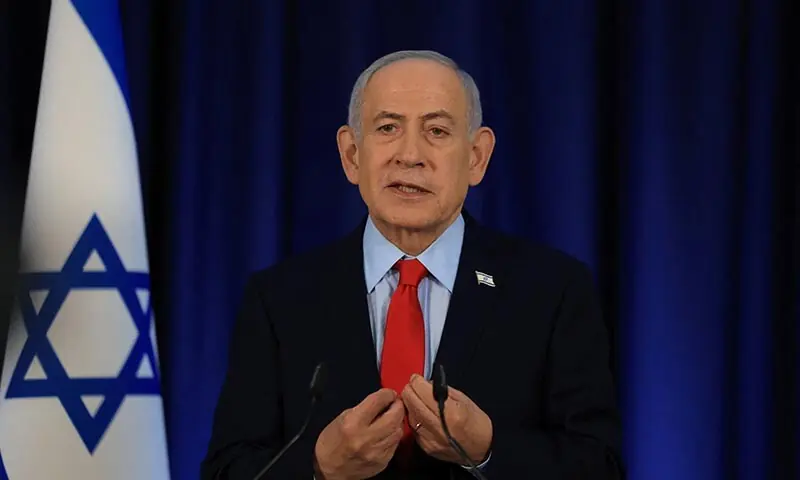
Israeli Prime Minister Benjamin Netanyahu speaks during a press conference, amid the US-Israel war with Iran, in Jerusalem, Israel on March 19. — Reuters
The International Energy Agency (IEA) has detailed the breakdown of its previously agreed record release of around 400 million barrels of oil from strategic stockpiles to deal with the effects of the US-Israeli war with Iran, adding that crude oil would make up the bulk of it, Reuters reports.
“The overall release of emergency stocks will largely consist of crude oil, while in Europe, the contributions will primarily take the form of refined oil products. This is being complemented by additional production from countries in the Americas,” the IEA has said, publishing a breakdown of the release in a table on its website.
Some 65 per cent of Americans believe US President Donald Trump will order troops into a large-scale ground war in Iran, but only 7pc support the idea, Reuters reports citing a Reuters/Ipsos poll.
The three-day poll showed Trump’s broader standing with the public holding largely unchanged at 40pc, up 1 percentage point from a Reuters/Ipsos poll carried out in the hours after the US and Israel attacked Iran on February 28.
The poll, which gathered respondents from 1,545 US adults nationwide, had a margin of error of about 3 percentage points.
International Atomic Energy Agency (IAEA) Director-General Rafael Grossi says once the US and Israel’s war on Iran ends, “we will still inherit a number of major issues”, including Iran’s inventory of enriched uranium that is believed to be under rubble, Al Jazeera reports.
In an interview with CBS’s ‘Face the Nation’, he said, “The focus on the campaign does not seem to be specifically the nuclear facilities.”
Asked how difficult it would be for the US to come in and remove enriched material from Iran, Grossi said, “We’re talking about cylinders containing gas of highly contaminated uranium hexafluoride at 60 per cent, so it’s very difficult to handle.”
Decoys may also be in place, he added. While Iran has a contractual obligation to allow UN inspectors in, “nothing can happen while bombs are falling.”
Grossi said a lot of Iran’s nuclear programme has survived. “They have the capabilities, they have the knowledge, they have the industrial ability. This is why we need to go back to a negotiating table.”