The US and Israel on Feb 28 launched what they described as a “pre-emptive” joint strike against Iranian targets, with Trump announcing start of “major combat operations”
Pakistan hosted the first round of face-to-face talks between the US and Iran in 47 years in April; the talks ended without a breakthrough, but also without a breakdown
Trump rejects Iran’s response to latest US proposal that would stop the fighting but leave the most contentious issues unresolved for now
Anwar Gargash, an adviser to the United Arab Emirates’s president, says that the UAE remains committed to political solutions and diplomacy amid regional tensions, while stressing the country’s right to defend its sovereignty, Reuters reports.
He adds that the UAE had not sought conflict and had worked to avoid it, adding that relations between the Arab states and Iran should not be based on confrontation.
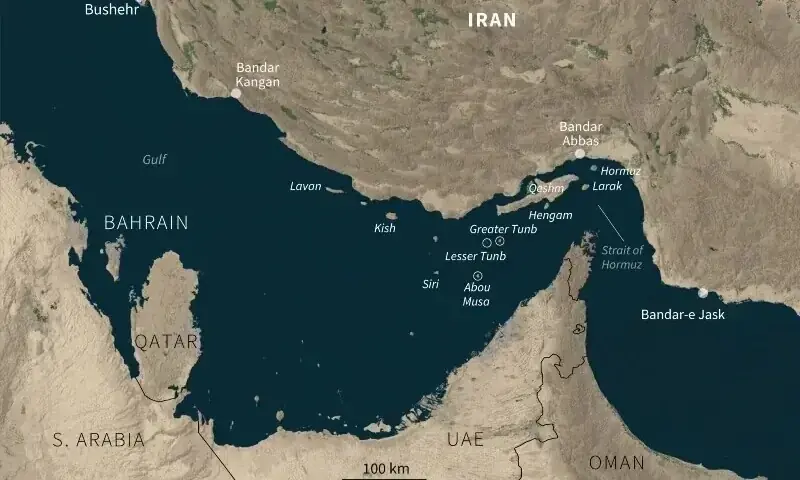
Iranian First Vice President Mohammad Reza Aref says the country’s “right to the Strait of Hormuz is established, and the matter is closed”, Al Jazeera reports.
Iran’s ISNA news agency quotes him as saying that Iran’s plans “were tailored to the sanctions and pressures of our enemies, but now we must plan for the security and well-being of our country and the region”.
Mahmoud Nabavian, member of Iran’s negotiating team, says the US had two main demands during the Islamabad talks: the complete opening of the Strait of Hormuz and the withdrawal of all 60 per cent- enriched nuclear material from Iran, Al Jazeera reports.
In comments shared by the ISNA news outlet, Nabavian is quoted as saying that Iran’s Parliament Speaker Mohammad Bagher Ghalibaf said that although the US could strike Iran’s infrastructure, Iran could also “raze all the infrastructure in the region to the ground in less than half a day”.
“The US said $6 billion in frozen assets [would] be released if Iran cooperated with the demands,” Nabavian adds.
He further says that after contacting US President Donald Trump, Vice President JD Vance suggested that negotiations continue based on the plan presented by Washington, to which Ghalibaf agreed.
“However, Vance suddenly announced that Trump would not accept the agreement,” Nabavian says.
Two people have been killed and one wounded by an Israeli attack on al-Abbasiya, in southern Lebanon’s Tyre district, Al Jazeera reports citing the state-run National News Agency.
This comes after at least three people were killed and several wounded in an Israeli air attack in Roumin that we just reported on.
US senators have rejected a resolution curbing President Donald Trump’s power to wage war on Iran — their first vote on the conflict since a 60-day deadline expired for the White House to seek formal authorisation, AFP reports.
The measure, introduced by Oregon Senator Jeff Merkley, was the seventh failed attempt by Democrats to rein in Trump’s war powers since the conflict began more than 10 weeks ago.
Democrats say that, under the War Powers Act, the administration had until May 1 to secure congressional approval for military action after Trump notified lawmakers in early March of strikes against Iran.
The administration disputes that interpretation, arguing that the clock was paused by a ceasefire announced more than a month ago.
Israeli Prime Minister Benjamin Netanyahu visited the UAE during the war on Iran, his office has just announced, according to Al Jazeera.
“In the midst of Operation ‘Roar of the Lion’, Prime Minister Benjamin Netanyahu made a secret visit to the United Arab Emirates and met with the President of the United Arab Emirates, Sheikh Mohammed bin Zayed,” a statement reads.
“This visit led to a historic breakthrough in relations between Israel and the United Arab Emirates,” it adds.
More than 10,000 homes have been damaged or destroyed in Lebanon since a ceasefire in the war between Israel and Hezbollah, AFP reports the head of the country’s National Council for Scientific Research.
“Since the current ceasefire … we have witnessed 5,386 housing units that were completely destroyed, and 5,246 housing units damaged,” CRNS chief Chadi Abdallah tells a news conference broadcast by local media.
Iranian Foreign Minister Abbas Araghchi alleges that Kuwait has “unlawfully attacked” an Iranian boat and detained four Iranian nationals in the Persian Gulf, adding, “This illegal act took place near [the] island used by the US to attack Iran.
“We demand [the] immediate release of our nationals and reserve [the] right to respond,” he says in a post on X.
Deputy Prime Minister and Foreign Minister Ishaq Dar has discussed the consequences of Iran closing the Strait of Hormuz during a telephone conversation with Kuwaiti Foreign Minister Sheikh Jarrah Jaber Al-Ahmad Al-Sabah, according to the FO.
“The two leaders discussed the wider implications of the closure of the Strait of Hormuz on the global economy and expressed hope for a peaceful, durable, and early resolution of the ongoing situation,” the FO has said in a post on X.
It adds that Sheikh Jarrah expressed his appreciation for Pakistan’s diplomatic efforts to encourage dialogue between the US and Iran, and “commended Pakistan’s constructive role in advancing regional peace and stability”.
About 80 per cent of war-damaged sites in Iran’s capital have been repaired, Al Jazeera reports citing state broadcaster IRIB.
“More than 60,000 residential and commercial units in Tehran province were hit by American-Zionist attacks during the third imposed war,” Deputy Governor of Tehran Seyyed Kamaleddin Mirjafarian is quoted as saying.
Estimates indicate Iran suffered about $270 billion in direct and indirect damage since the start of the US-Israel war on February 28.
Bridges, ports and railway networks, universities and research centres, and several power plants and water desalination plants were directly hit, while a large number of hospitals, schools and civilian homes were also damaged or destroyed.
The top diplomats of Iran and Azerbaijan have held talks over the phone to discuss regional developments, as Tehran says it is seeking to develop arrangements aimed at strengthening and facilitating safe transit through the Strait of Hormuz, Anadolu reports.
A statement by the Iranian foreign ministry says Foreign Minister Abbas Araghchi has discussed the latest developments related to diplomacy, regional issues and bilateral relations with his Azerbaijani counterpart, Jeyhun Bayramov.
According to the ministry, Araghchi described what he called the United States’ “maximalist approach”, threatening rhetoric and “lack of good faith” as the main obstacles to a permanent end to the war and any potential agreement.
He adds that the “main source” of the current situation in the Strait of Hormuz was the US and Israeli military attacks against Iran, followed by repeated ceasefire violations and the continued blockade of Iranian ports.
Advocacy groups have warned that higher energy prices, due to the closure of the Strait of Hormuz, would drive up the cost of fertilisers, agrochemicals and transport — and ultimately worsen hunger in the world’s poorest regions, Anadolu reports.
Sabine Minninger, a senior policy advisor at Bread for the World, says that many low-income countries already struggling with the impacts of global warming now face another major crisis, as the prolonged conflict with Iran severely affects those heavily dependent on oil and energy imports.
“If this war goes on and if the Strait of Hormuz remains closed, it will have a tremendous impact on food security, especially in the poorest countries, such as those in Africa,” she tells Anadolu. “We are very concerned that a hunger crisis is on the way.”
With the war between the US and Israel in its eleventh week, disruption has intensified along the Strait of Hormuz. Hundreds of vessels are reportedly stranded in a narrow waterway that serves as a vital artery for petrochemicals, fertilisers, and other refined products.
Iranian Army spokesperson Brigadier-General Mohammad Akraminia says the armed forces are maintaining “the highest level of readiness” as the ceasefire with the United States hangs in the balance, Al Jazeera reports.
Speaking from Mashhad, Akraminia emphasises Iran’s military “prevented the enemy from achieving any of its objectives, and after this war, there is no room for retreat”, he said.
He has praised “Iran’s capabilities, which the enemy had not anticipated”.
At least 12 people have been killed by a series of Israeli strikes on vehicles in Lebanon, including children, Al Jazeera reports.
Israel’s attacks include three drone strikes targeting vehicles well beyond the main theatre of conflict in the south on the coastal highway, 20 kilometres south of Beirut. The health ministry says those strikes killed eight people, including two children.
A fourth attack killed one person near the southern city of Sidon, 40km from Beirut, while three more people were killed in Israeli air strikes on cars in three locations further south in Tyre district, the ministry says.
Russian Foreign Minister Sergey Lavrov has accused the Trump administration of attempting to “usurp” influence over the global energy market, Al Jazeera reports.
The US objective is to force Russian energy firms such as Lukoil and Rosneft out of international markets as part of a broader strategy to control global energy flows, Lavrov says in an interview with broadcaster RT India.
“The United States has adopted a series of doctrinal documents, one of which proclaims that the US must dominate global energy markets,” he adds. “So their goal is entirely clear: they want to bring every significant energy supply route under their control.”
Iran’s military spokesman says Tehran’s control over the Strait of Hormuz could generate “significant” economic revenue and strengthen the country’s international position, AFP reports.
Iran has largely blocked shipping through the strait since the outbreak of war with the United States and Israel on February 28. In peacetime, the route accounts for roughly a fifth of global oil and liquefied natural gas shipments, along with other key commodities.
“Our oversight of the Strait of Hormuz will generate significant economic revenues for our country – potentially even doubling our oil income – and will strengthen our influence on the international stage,” military spokesman Mohammad Akraminia says, according to the ISNA news agency.
More than half of drivers in Norway say their next car will be electric as a response to soaring fuel prices, the country’s auto association has said, AFP reports.
Norway is the largest oil producer in Europe, after Russia, but the Scandinavian country is already a champion of electric vehicles (EVs), which account for over 95 per cent of new registrations. But the surge in fuel prices since war erupted in the Middle East is convincing even more motorists to make the switch.
In April, 51pc of drivers surveyed said their next car would be electric, according to a study by the Norwegian Automobile Federation (NAF). In the same month last year, the figure was just 46pc, and NAF described the increase as “the biggest jump in several years”.
“It’s quite clear that high fuel prices and uncertainty about energy supplies are affecting people’s choice of car,” NAF spokesman Nils Sodal said in a statement.