The US and Israel on Feb 28 launched what they described as a “pre-emptive” joint strike against Iranian targets, with Trump announcing start of “major combat operations”
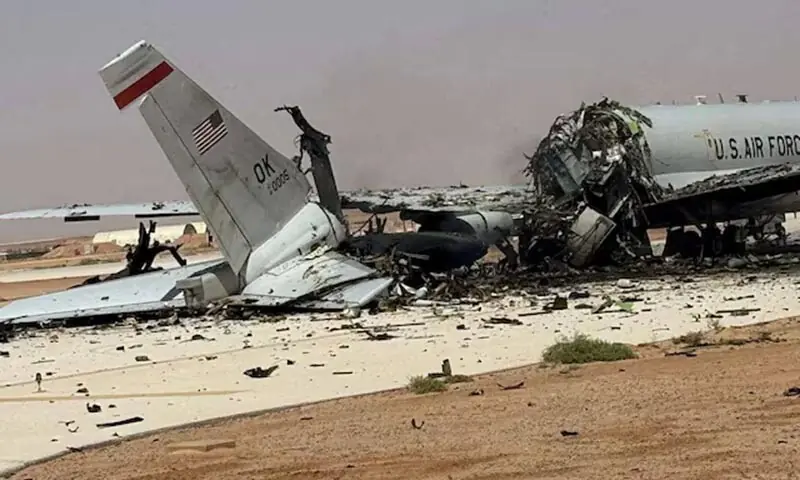
Iran and its allies have damaged at least 16 US military installations across eight Middle Eastern countries, rendering some of those positions virtually unusable, a CNNinvestigation finds.
According to the American broadcaster, the report drew on dozens of satellite images and interviews with sources in the United States and Gulf Arab nations.
The damaged facilities constitute the majority of US military positions in the region, according to one congressional aide familiar with the damage assessments.
“There has been a spectrum of assessments,” the source says. “From a pretty dramatic side … the whole facility is destroyed and needs to be shut down, to leaders who say these things are worth repairing due to the strategic benefit they give the US.”
“I’ve never seen anything like this before,” says another US source familiar with the situation.
Satellite images show that Tehran’s main targets included advanced radar systems, communications systems and aircraft. Many of those assets are expensive and difficult to replace.
“It’s notable they really identified those facilities as the most cost-effective targets to hit,” the congressional aide said. “Our radar systems [are] our most expensive and our most limited resources in the region.”
A damaged US Boeing E-3 Sentry airborne warning and control aircraft following an Iranian strike on the airbase, amid the US-Israeli war on Iran, at Prince Sultan Air Base in Saudi Arabia, in this picture obtained from social media released on March 29, 2026. — Reuters/File
The US oil benchmark falls 5 per cent after Iranian media reported that Tehran had delivered a new proposal for talks with the United States via mediator Pakistan, AFP reports.
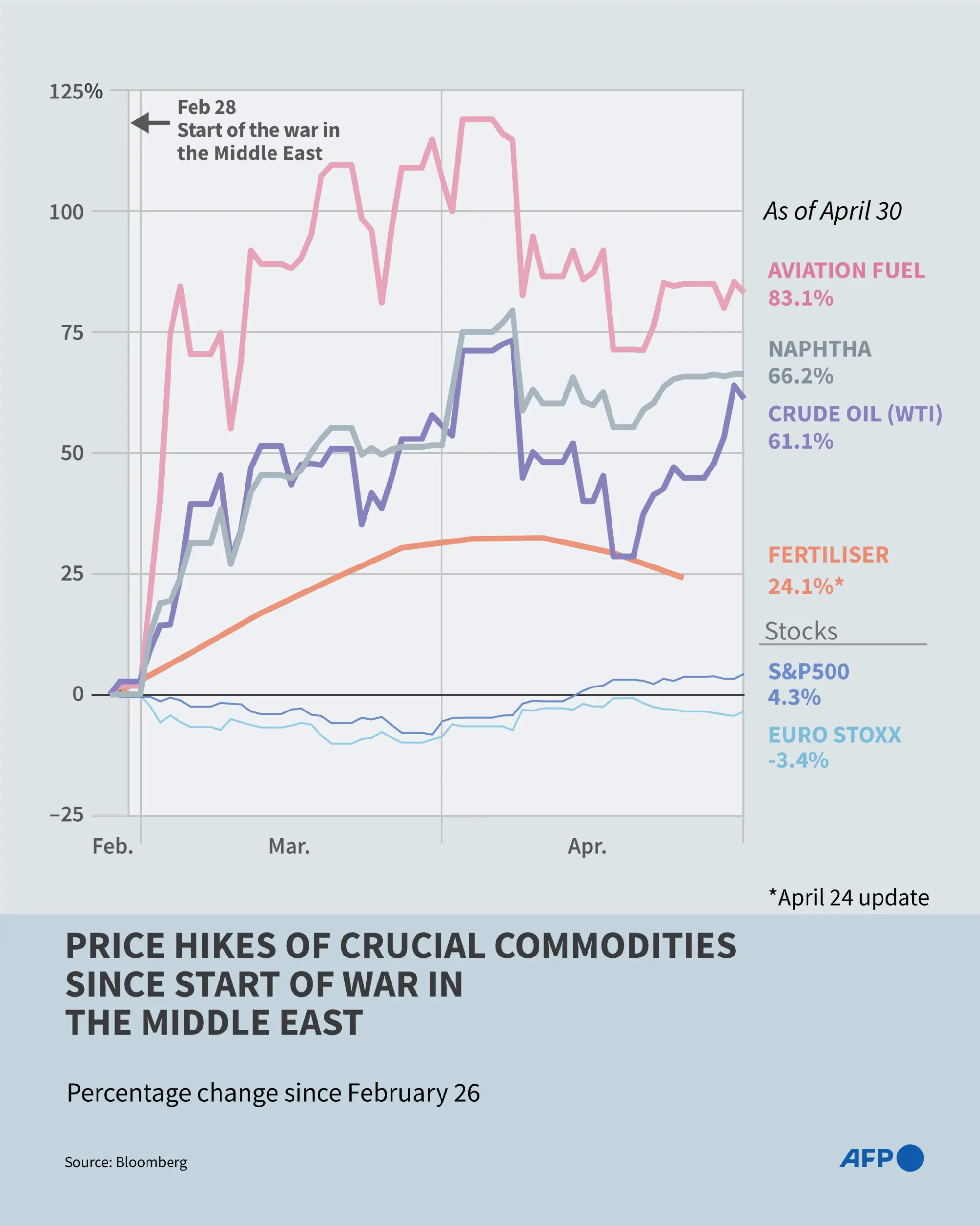
A barrel of West Texas Intermediate (WTI) was trading at $99.85 down 4.97pc, after briefly losing more than 5pc, while Brent North Sea crude dropped 3.10pc to $106.98.
Lebanon’s National News Agency reports that Israel has demolished a monastery and a nuns’ school in the border village of Yaroun after blowing up homes, shops, roads and various landmarks in the town, according to Al Jazeera.
United Nations Chief António Guterres has warned that with the Middle East war in its third month, the “whole of humanity is paying the price”.
In a post on X, the UN chief said, “The Middle East crisis is in its third month & the whole of humanity is paying the price”.
He called on all parties to “refrain from actions that could undermine the ceasefire”. He added that the world needed a “peaceful, comprehensive, and durable resolution to the conflict”.
In phone calls with the foreign ministers of six regional countries, including Turkiye, Egypt, Qatar, Saudi Arabia, Iraq, and Azerbaijan, Iran’s Foreign Minister Abbas Araghchi has outlined the latest positions and initiatives concerning the end of war and aggression by the United States and Israel, state-run news agency IRNA reports.
The USS Gerald R Ford aircraft carrier has left the Middle East after taking part in operations against Iran, a US official has said, leaving two of the massive American warships in the region, AFP reports.
The Ford is currently in the US European Command area of responsibility, according to the official, who put the number of remaining US Navy ships in the Middle East at 20, including the USS Abraham Lincoln and USS George HW Bush aircraft carriers.
Iranian Foreign Minister Abbas Araghchi has “exchanged views on the latest regional and international developments” during a phone call with EU foreign policy chief Kaja Kallas, the state-run IRNAnews agency reports.
The UN refugee agency says the Middle East war has sent its freight rates soaring, hitting the delivery of aid to refugees in the wider region and Africa, AFP reports.
Shipping rates from UNHCR’s three main source countries for emergency supplies — India, Pakistan and China — have shot up by nearly 18 per cent, the agency says, while delivery delays and port congestion are also having an impact.
Every extra dollar spent on fuel and higher war-risk shipping insurance premiums is a dollar less that can be spent in the field, UNHCR adds.
“The Middle East crisis has generated far-reaching ripple effects well beyond the region, with growing consequences for global humanitarian supply chains and the delivery of aid,” spokeswoman Carlotta Wolf tells a press conference in Geneva.
The agency has rerouted sea cargo via Jordan’s Aqaba Red Sea port, and has switched to land corridors, including truck routes from Dubai across the Arabian peninsula and Turkey.
“For some shipments, costs have more than doubled, such as transport costs for relief items from UNHCR’s global stockpiles in Dubai to our Sudan and Chad operations, which have increased from around $927,000 to $1.87 million,” says Wolf.
Oil prices have dropped after Iran sent a fresh proposal for US negotiations, but prices remain on track for weekly gains, with Tehran still blocking the Strait of Hormuz and the US Navy blocking exports of Iranian crude, Reuters reports.
Brent crude futures for July were down 26 cents, or 0.2 per cent, at $110.14 a barrel by 1316 GMT (6:16pm PKT). West Texas Intermediate futures lost $1.83, or 1.7pc, to $103.24.
Still, the Brent benchmark was poised for a 4.2pc gain over the week while WTI was on track to finish the week up 9.2pc.
“Thursdays sharp reversal underscores a market that is taking the stairs up but risks the elevator down on any sudden easing headline, making conditions exceptionally challenging for traders,” says Ole Hansen at Saxo Bank.
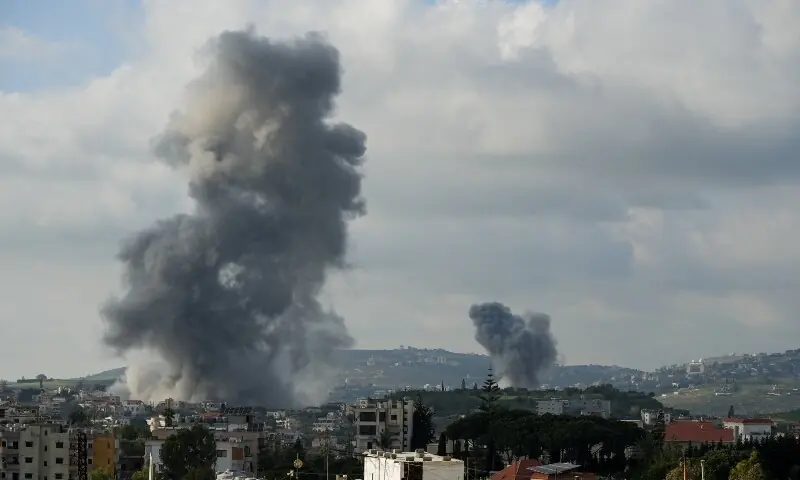
At least two people have been killed and two injured in Israeli air strikes on the southern town of Deir Qanoun Ras Al Ain, Al Jazeera reports, citing the National News Agency.
The agency also reported separate strikes on the towns of Haboush, Kfar, Majdal Zoun, as well as the outskirts of Tyre.
The Pentagon says it has reached agreements with seven AI companies to deploy their advanced capabilities on the Defence Department’s classified networks as it seeks to diversify the range of AI companies working across the military, according to Reuters.
The statement notably excludes Anthropic, which has been in dispute with the Pentagon over guardrails for how the military could use its artificial intelligence tools.
The Pentagon labeled the AI start-up, which is widely used across the Department of Defence, a supply-chain risk earlier this year, barring its use by the Pentagon and its contractors.
SpaceX, OpenAI, Google, NVIDIA, Reflection, Microsoft and Amazon Web Services, several of which already work with the Pentagon, will be integrated into the Pentagon’s Impact Levels 6 and 7 network environments giving more of the military access to their products, the Pentagon said in a statement.
Iran has delivered a new proposal for talks with the United States via mediator Pakistan, state media IRNA reports.
“The Islamic Republic of Iran delivered the text of its latest negotiating proposal to Pakistan, as the mediator in talks with the United States, on Thursday evening,” the official IRNA news agency said.
India has raised the prices of commercial liquified petroleum gas and jet fuel for international airlines, AFP reports, citing a state-run energy firm, as supply pressures from the war mount.
“Prices of bulk and commercial LPG cylinders have been revised,” the state-run Indian Oil Corporation Limited (IOCL), the country’s leading energy marketing company, says.
IOCL’s price chart shows an increase of 993 rupees in the price of a 19-kilogramme LPG cylinder meant for commercial use. That amounts to a nearly 48 per cent rise in the capital New Delhi. Local levies mean rates vary across cities.
The oil company said that the price of jet fuel for international airline operations has also “been adjusted upward”.
Aviation turbine fuel (ATF) has gone up by around five per cent in Delhi, according to IOCL’s catalogue.
The Foreign Office (FO) said that Turkiye’s ambassador to Pakistan, Irfan Neziroğlu, called on Deputy Prime Minister and Foreign Minister Ishaq Dar.
“During the meeting, the ambassador conveyed President Recep Tayyip Erdogan’s appreciation and support for Pakistan’s ongoing efforts to promote peace and stability in the Middle East region,” the FO said.
It added that Dar reaffirmed Pakistan’s continued commitment to advancing lasting peace in the region.
“Appreciating the close coordination and regular high-level exchanges, Dar reaffirmed Pakistan’s resolve to further deepen Pakistan-Turkiye strategic partnership,” it said.
Oil prices steadied and stocks diverged in thin holiday trading, as investors awaited the next move in the Middle East crisis and digested corporate earnings, reports Reuters.
Several markets were shut in Europe and Asia for the May 1 holiday, including in France, Germany, Hong Kong and mainland China. Among markets that were open, Tokyo climbed while London fell, weighed by British bank NatWest, which reported higher quarterly net profit but warned economic conditions were deteriorating.
International oil benchmark Brent edged back up to around $111 per barrel following Thursday’s wild swings on worries about a resumption of hostilities in the Middle East.
“If oil stays in the $100-a-barrel range for an extended period, the broader economic costs will eventually be harder to ignore,” said Matt Britzman, senior equity analyst at Hargreaves Lansdown.
“But for now, earnings are the bigger fish, and markets are happy to keep swimming with the current,” he added.
The cost of sending some aid to Sudan — the world’s largest displacement crisis — has more than doubled due to the Iran war, the UN refugee agency says, Reuters reports.
Heightened insecurity around key Gulf shipping routes, including the Strait of Hormuz, as well as congestion at ports, rising fuel prices and higher insurance premiums have all hampered the delivery of aid, particularly in Africa, the agency said.
Ships with aid that previously passed from Dubai through the Strait of Hormuz are being replaced by ships coming from Europe around the Cape of Good Hope, adding up to 25 days to delivery times, UNHCR spokesperson Carlotta Wolf told reporters in Geneva.
“People in dire need are receiving things that are ready later than what’s needed,” she said.
The US Navy is ramping up its AI capabilities to hunt for Iranian mines in the Strait of Hormuz, one of the world’s most critical shipping lanes, a recently awarded contract shows, Reuters reports.
The up to $100 million contract for the San Francisco artificial intelligence company Domino Data Lab could quicken this process with software that can teach underwater drones to identify new types of mines in a matter of days.
“Mine-hunting used to be a job for ships,” Thomas Robinson, Domino’s chief operating officer, said in an interview with Reuters.
“It’s becoming a job for AI. The Navy is paying for the platform that lets it train, govern, and field that AI at a speed required for contested waters that block global trade and imperil sailors.”
UAE presidential advisor Anwar Gargash has said no unilateral Iranian arrangement can be trusted regarding freedom of navigation through the Strait of Hormuz, following its “treacherous aggression” against its neighbours, Al Jazeera reports.
“The collective international will and provisions of international law emerge as the primary guarantor of freedom of navigation through this vital passage, serving the stability of the region and the global economy in the post-war phase,” Gargash said on X.
Iranian Foreign Minister Abbas Araghchi says that Israeli Prime Minister Benjamin Netanyahu’s “gamble” in the Middle East has cost the United States $100 billion.
In a post on X, Araghchi said, “The Pentagon is lying.”
He added that the $100bn figure was four times what has been claimed: “Indirect costs for US taxpayers are FAR higher.”
Iran’s Supreme Court Chief Justice Gholam-Hossein Mohseni-Ejei says Tehran never stopped negotiating with the US, Al Jazeera reports, citing IRIB.
“We do not welcome war, but we are not afraid of it,” he said.
“If our dignity is threatened, we will fight for our dignity, this is the firm position of our nation.”
He added that while Iran “always welcomed negotiations”, diplomacy is “based on logic and rationality”.
“We certainly do not accept imposition. An enemy that has not achieved any of its goals and objectives through aggression and threats cannot be imposing or demanding at the negotiating table either.”
The chief justice also said Iran would be pursuing legal action against Washington.
“We will pursue and punish war criminals and obtain compensation from them,” he said.
Iran stands for “peace and friendship”, but will respond strongly when faced with aggression, says Deputy Communication for Iran’s President’s Office, Seyyed Mehdi Tabatabaei, Press TV reports.
“Iran stands for peace and friendship in the world, but anyone who speaks to it in the language of force will face a strong response,” the report quoted him as saying.