The US and Israel on Feb 28 launched what they described as a “pre-emptive” joint strike against Iranian targets, with Trump announcing start of “major combat operations”
Pakistan hosted the first round of face-to-face talks between the US and Iran in 47 years in April; the talks ended without a breakthrough, but also without a breakdown
Ceasefire falters as US, Iran exchange attacks on each other’s military sites; Kuwait, Bahrain targeted in retaliation
Italy supports the ceasefire between Lebanon and Israel and stands ready to help strengthen Lebanese state institutions and its regular armed forces, Foreign Minister Antonio Tajani has said, according to Al Jazeera.
In a post on X following a call with his Lebanese counterpart, Youssef Raggi, Tajani says Hezbollah must cease any military action against Israel and accept the decisions of Lebanon’s legitimate government to uphold the truce.
“We are convinced that Israel, too, must renounce military escalation,” he stressed. “The path of diplomacy is the only way to achieve peace.”
Hezbollah chief Naim Qassem has called the Lebanese government’s negotiations with Israel “shameless” in a much-anticipated address, according to Al Jazeera.
He said the truce deal between Israel and Lebanon amounts to “surrender and defeat”.
Oil prices have fallen by more than 3 per cent after a ceasefire deal between Israel and Lebanon boosted hopes for a broader agreement to end the US-Israeli war with Iran, which could lead to a reopening of the Strait of Hormuz, Reuters reports.
Brent futures are down $3.05, or 3.1 per cent, at $94.76 a barrel as of 1224 GMT, while US West Texas Intermediate crude is down $3.24, or 3.4pc, at $92.78.
Hezbollah chief Naim Qassem has sharply criticised the latest ceasefire announcement with Israel, describing it as a “roadmap to annihilate part of the Lebanese people”, Al Jazeera reports.
Qassem has also underlined the group’s core demands, saying Hezbollah cares only about a complete ceasefire and the withdrawal of Israeli forces from the south.
Hezbollah chief Naim Qassem says that as long as Lebanese villages are being bombed and people are being killed, “northern Israel will not be safe”, according to Reuters.
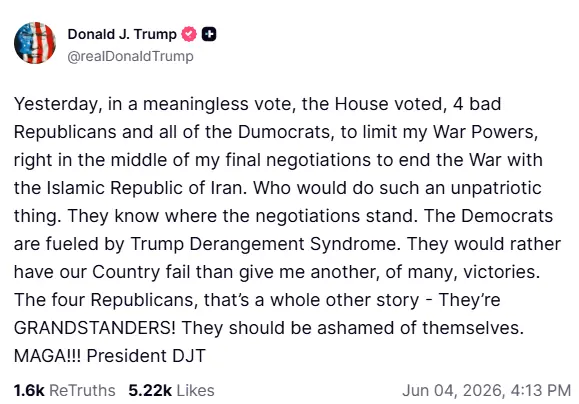
US President Donald Trump has slammed a vote in the US House seeking to order the withdrawal of American troops from the Iran war, suggesting the “unpatriotic” move disrupted negotiations with Tehran, AFP reports.
The largely symbolic vote came “right in the middle of my final negotiations to end the War with the Islamic Republic of Iran”, Trump said in a post on his Truth Social platform.
“Who would do such an unpatriotic thing. They know where the negotiations stand.
“(Democrats) would rather have our Country fail than give me another, of many, victories,” Trump said.
“The four Republicans, that’s a whole other story — They’re GRANDSTANDERS! They should be ashamed of themselves.”
The Pentagon is facing mounting financial pressure from a growing number of unexpected costs, with rising fuel expenses among the most significant, Anadolu reports citing a report by ABC News.
War Department records show the average fuel price paid by the military rose from $154.14 per barrel in October 2025 to $195.72 in April this year, marking an increase of nearly 27 per cent in six months.
These figures reflect average costs across roughly two dozen fuel types, including gasoline and jet fuel, the report says.
These figures reflect average costs across roughly two dozen fuel types, including gasoline and jet fuel.
Saudi Arabia’s Foreign Minister Prince Faisal bin Farhan Al Saud has denounced Iranian attacks targeting Bahrain and pledged Riyadh’s full solidarity with Manama, according to Al Jazeera.
Prince Faisal has made the remarks in a phone call with Bahraini Foreign Minister Abdullatif bin Rashid Al Zayani, affirming Riyadh’s support for any measures Bahrain takes to protect its security, territorial integrity and citizens.
The ministers also discussed the “dangerous regional developments”, stressing the need to coordinate efforts to preserve security and stability across the region, the foreign ministry says in a statement.
The UN peacekeeper killed in southern Lebanon earlier was Serbian, Lebanon’s Defence Ministry confirms according to Al Jazeera, specifying he died from injuries caused by a strike on a UN base.
“Senior Sergeant Milovan Jovanovic was given emergency medical care at a hospital inside the base after being wounded and then transported by helicopter to the University Medical Centre in Beirut where he died,” a ministry statement said.
Lebanese state media reports that the death toll from the Israeli attacks on Sohmor has risen to three, while an unspecified number of people were wounded, according to Al Jazeera.
The baseline demand in Lebanon is for Israel to withdraw to positions it held prior to the start of the US-Israel war on Iran, IRGC’s Quds Force Commander Esmail Qaani has said, Reuters reports, citing state media.
He added that Lebanese fighters would soon see the results of their resistance and said supporting the resistance in Lebanon was the duty of all Muslims.
Hezbollah chief Naim Qassem will deliver a speech today at 3pm local time (5pm PKT), Al Jazeera’s Zeina Khodr reports from Lebanon.
Lebanon’s Hezbollah Chief Naim Qassem gives a televised speech from an unknown location, on July 30, 2025 in this screen grab from video. — Al Manar TV via Reuters/File
Lebanon’s President Joseph Aoun has met with French presidential envoy Jean-Yves Le Drian and welcomed the assistance of friendly and brotherly countries to consolidate the ceasefire with Israel, the presidency says.
Aoun emphasised the “need to avoid giving Israel any pretexts for not withdrawing and that every effort in this regard will have positive” effects on the negotiations, the statement said.
On his part, Le Drian confirmed that his visit to Lebanon was to express French support and solidarity.
Lebanon’s Prime Minister Nawaf Salam has met French presidential envoy and former foreign minister Jean-Yves Le Drian, accompanied by French Ambassador to Beirut Herve Magro, the National News Agency (NNA) reports, according to Al Jazeera.
According to NNA, the talks focused on the results of recent negotiations in Washington and ongoing efforts to achieve a ceasefire with Israel.
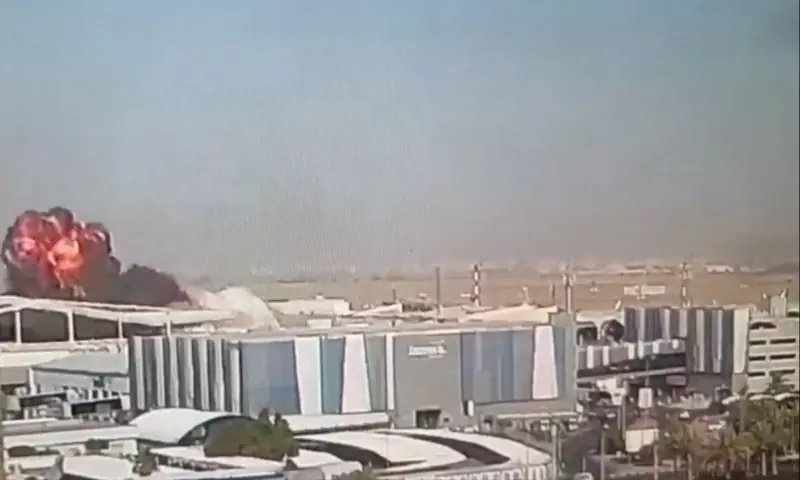
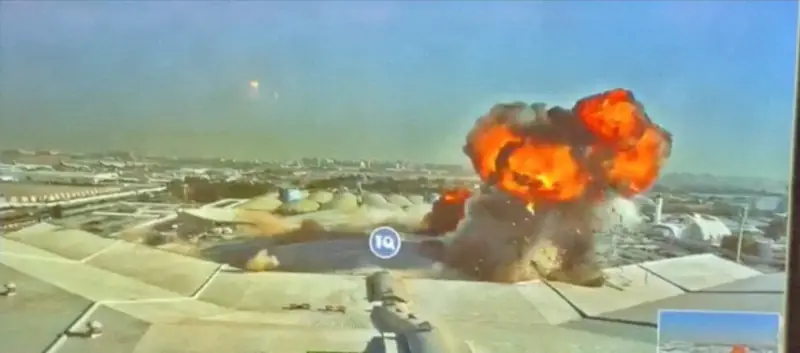
A CCTV footage shows fire and smoke rise following a strike on Kuwait International Airport, in Kuwait City, on June 3, 2026, in this screengrab from a video. — Civil Aviation Kuwait via Reuters
CCTV footage shows fire and smoke rising following a strike on Kuwait International Airport, in Kuwait City, on June 3, 2026, in this screengrab from a video. — Civil Aviation Kuwait via Reuters
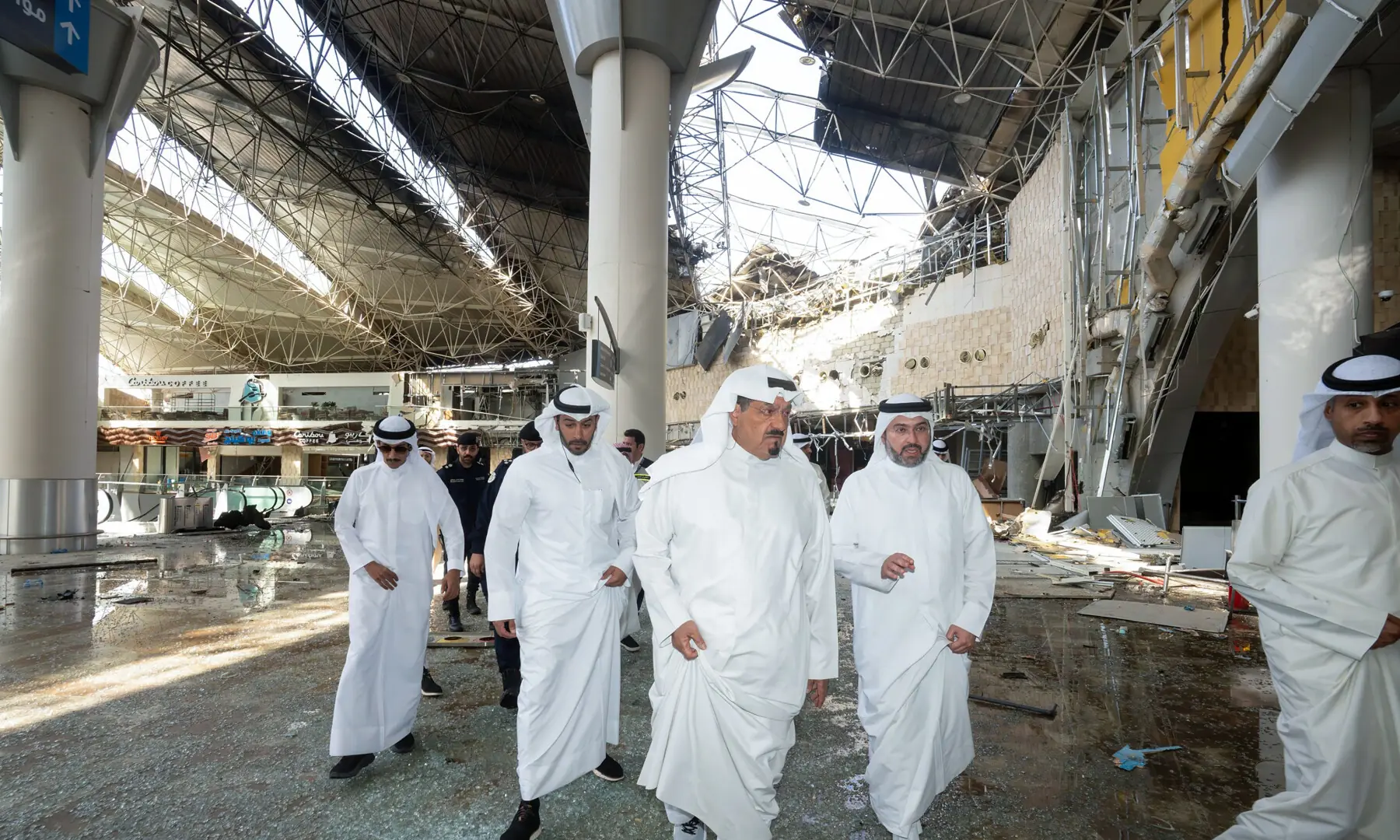
This handout photo provided by the Kuwaiti News Agency (KUNA) on June 3, 2026 shows Kuwaiti Prime Minister Sheikh Ahmad al-Abdullah al-Sabah (C) inspecting the damaged airport after an Iranian attack, in Kuwait City. — KUNA via AFP
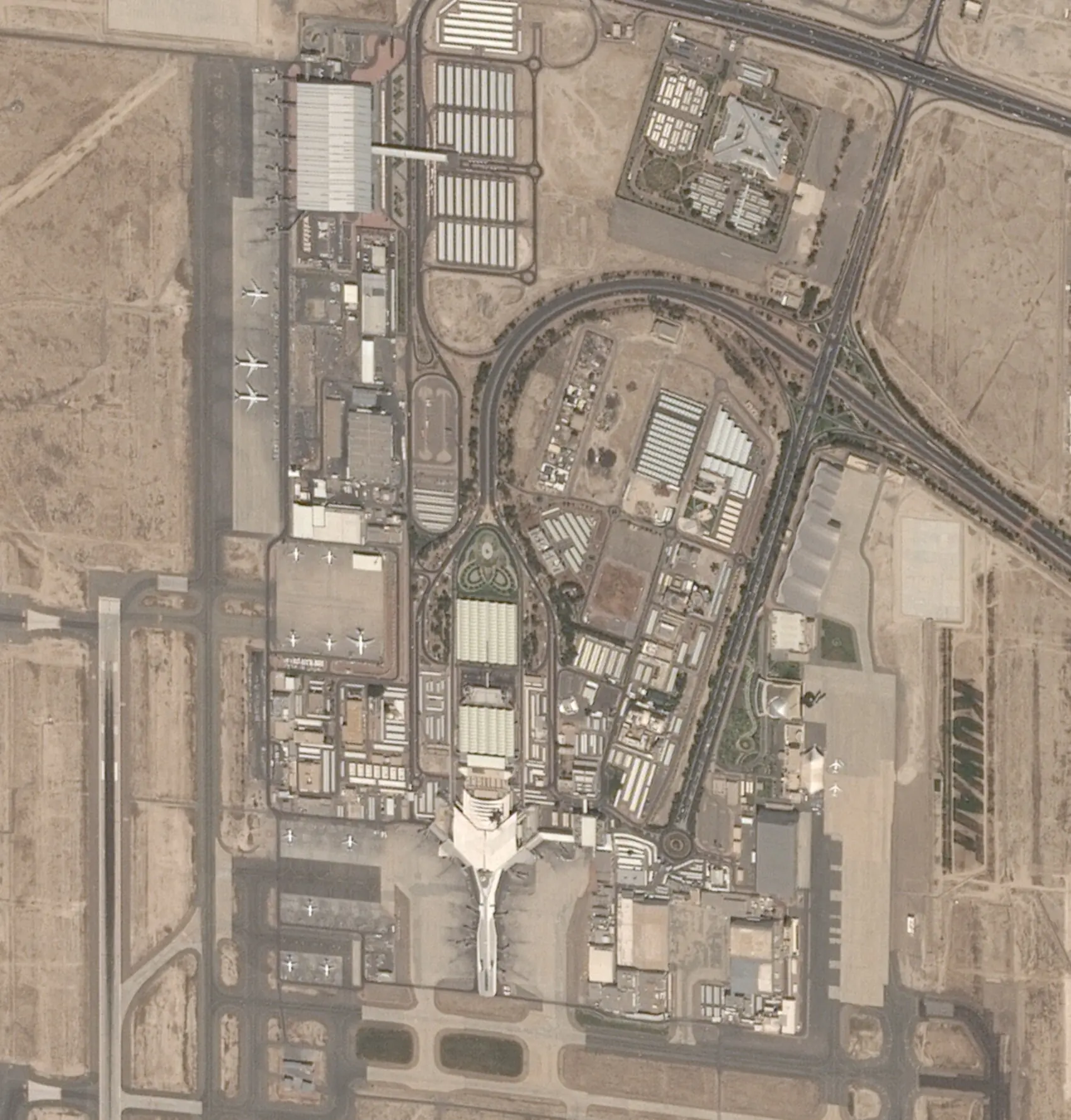
A satellite image shows damage to infrastructure at Kuwait International Airport following a strike in Kuwait City, Kuwait, June 3, 2026. Distribution Airbus DS via Reuters
Lebanese President Joseph Aoun has described the latest ceasefire negotiations as difficult, Al Jazeera reports.
Speaking to journalists, Aoun said the head of the Lebanese delegation, Simon Karam, had at one point suspended participation due to what he described as Israeli intransigence, prompting US Secretary of State Marco Rubio to intervene to resume the talks.
He added that the agreement represents a “last opportunity”, warning that otherwise each side would bear its own responsibilities.
Aoun added that implementation could begin within 24 hours once all parties grant their approval and the necessary guarantees are submitted.
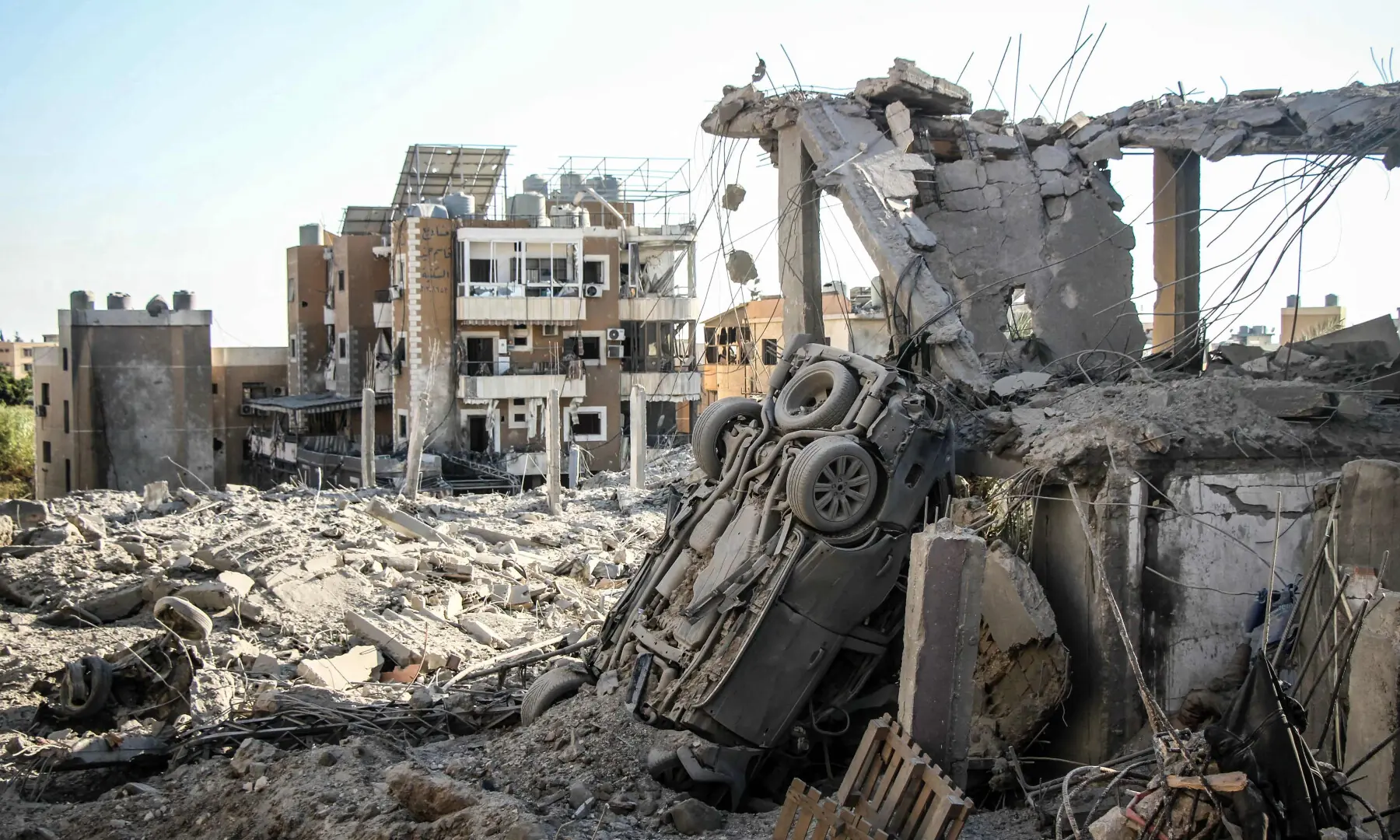
A photograph shows the aftermath of Israeli airstrikes in the Burj al-Chamali area near the southern city of Tyre, on June 2, 2026. — AFP
Iran’s Supreme Leader Ayatollah Mojtaba Khamenei says that US “imperialism” was willing to do anything to deter Iran’s progress.
In a post on X, the supreme leader also said that Israel was a “military base” built by the US, which did not “accept the existence of a strong, independent Iran” on its eastern border.
A Hezbollah drone struck the vehicle of Israel’s Northern Command chief in southern Lebanon today shortly after he stepped out of it, Al Jazeera reports citing Israel’s public broadcaster Kan.
Major General Rafi Milo was on a field visit to a village in southern Lebanon with officers and fighters when an explosive FPV drone directly hit his vehicle. Milo and an aide had exited the vehicle shortly before impact.
The dollar has traded near a two-month high as renewed Gulf hostilities sapped risk appetite, while traders were alert to the possibility of intervention as the Japanese yen hovered near the key 160 level, Reuters reports.
The dollar index, which measures the greenback against major peers, was little changed at 99.46, just below the two-month high of 99.56 reached in the previous session.
The euro rose 0.1pc to $1.161. A Reuters poll showed that the European Central Bank is set to raise its deposit rate to 2.25pc on June 11 to curb inflation. The British pound also climbed 0.1pc to $1.343.
“It’s hard to argue against dollar strength at this juncture,” said Francesco Pesole, currency strategist at ING. “Data continues to paint a picture of resilience for the U.S. economy,” he added.
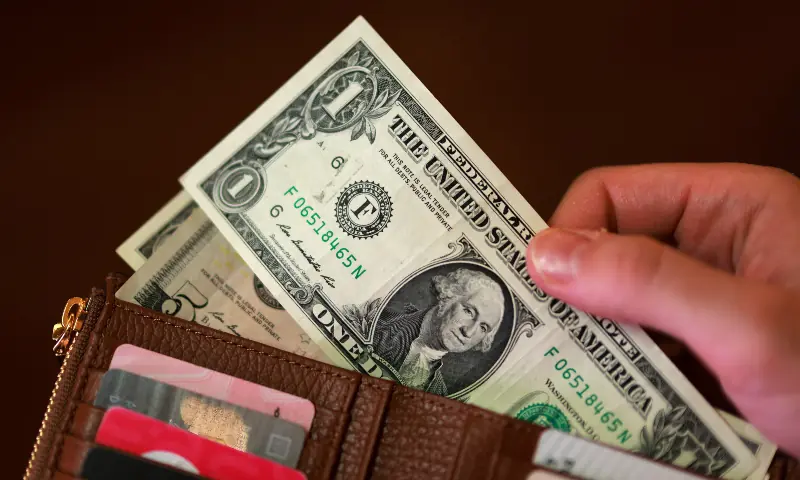
US dollar banknotes are seen in this illustration taken on March 24, 2026. — Reuters/File
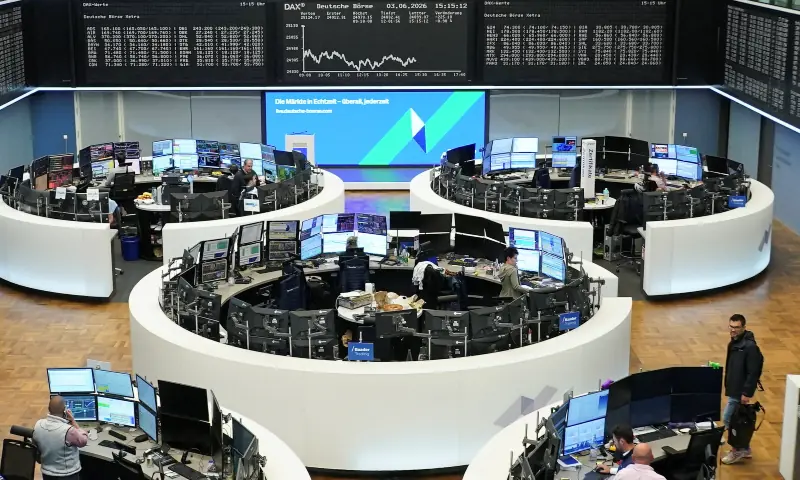
European shares are steady, as investors assessed whether developments in the Middle East would lead towards a peace deal to end the months-long conflict, Reuters reports.
Crude prices eased about 1pc to $96 a barrel after Israel and Lebanon reached an agreement to implement a ceasefire, raising hopes for a broader deal to end the US-Israeli war on Iran.
Wary investors awaited clearer signs that a peace deal could be imminent this time after several rounds that have led nowhere.
The pan-European STOXX 600 index inched up 0.1pc to 621.85 points by 08:49am GMT, with retailers and luxury stocks leading gains, each with a more than 1pc rise.
The benchmark is on track to end the week marginally lower as the Strait of Hormuz, a key global oil shipping route, remained mostly shut.