The US and Israel on Feb 28 launched what they described as a “pre-emptive” joint strike against Iranian targets, with Trump announcing start of “major combat operations”
Pakistan hosted the first round of face-to-face talks between the US and Iran in 47 years in April; the talks ended without a breakthrough, but also without a breakdown
Islamabad stays in frame for hosting US-Iran deal signing ceremony
Iran’s Deputy Foreign Minister for legal and international affairs, Kazem Gharibabadi, says that the regional instability in the Gulf is the result of “crimes and impunity” by Israel.
In a post on X, Gharibabadi said, “The current transformations in Lebanon, Syria, and the occupied Al-Quds have made one reality even clearer: the regional crisis is not the result of ‘scattered tensions’; it is the product of the crimes and impunity of the Zionist regime”.
He said that Israel has violated “the sovereignty of governments, renders ceasefires meaningless, and desecrates the sanctities of the Palestinians”.
He called on the UN Security Council to “move beyond the stage of expressing concern and issuing general calls, and adopt punitive and binding decisions against the Zionist regime.
“International law is not upheld through low-cost and ineffective condemnations,” he added.
Lebanese parliament speaker Nabih Berri, a Hezbollah ally, will guarantee the group’s adherence to a “global ceasefire” with Israel, his adviser has told AFP.
Berri, who heads the Hezbollah-allied Amal party, has long acted as an intermediary between the group and the United States.
Adviser Ali Hamdan told AFP that “Speaker Berri’s main demand is a global ceasefire. If a global ceasefire deal is reached, he will guarantee Hezbollah’s respect for it.”
Hamdan said a “global ceasefire means a halt to Israeli strikes by air, land or sea, and that it will not carry out detonations or demolitions” in the south, where Israel is accused of razing entire villages.
UAE presidential adviser Anwar Gargash says the Gulf is “paying the price for Iran’s inflated regional ambitions”.
In a post on X, Gargash said, “From the Arabian Gulf to Yemen, Lebanon, and Iraq, we are all paying the price for Iran’s inflated regional ambitions,” adding that no state should play a role at “the expense of shared security, stability, and prosperity”.
“Review is required and inevitable, on clear foundations: respect for sovereignty, good neighbourliness, and non-interference in others’ affairs,” he added.
Bahrain has banned citizens from travelling to Iran and Iraq until further notice citing regional security concerns, the interior ministry has said, Reuters reports.
Iran and groups favouring it in Iraq have launched attacks against Gulf countries, including Bahrain, since the onset of the US-Israeli war on Iran.
The Lebanese army says two of its soldiers have sustained moderate injuries from an Israeli drone attack on the Haboush-Deir al-Zahrani road in the Nabatieh district, Al Jazeera reports.
It has not provided details about the soldiers’ identities or the Israeli attack.
The Israeli military has warned residents of the southern Lebanese city of Nabatiyeh to evacuate ahead of planned strikes in the area, AFP reports.
“In light of the Hezbollah terrorist organisation’s violation of the ceasefire agreement, the IDF is compelled to act against it with force,” the military’s Arabic-language spokesman, Colonel Avichay Adraee, posted on X.
“For your safety, you must evacuate your homes immediately and move north of the Zahrani River.”
Israeli Prime Minister Benjamin Netanyahu has said that Iran has already paid a “very heavy” price, adding the country will “fall in the end”.
“The price Iran has already paid is very heavy. The foundations of this terrorist regime in Iran have cracked. It will never return to what it was, and I tell you – it will fall in the end,” Netanyahu has said, according to a post on social media platform X by the PM’s office.
According to the post, Netanyahu made the remarks during the farewell ceremony for Mossad Director David Barnea.
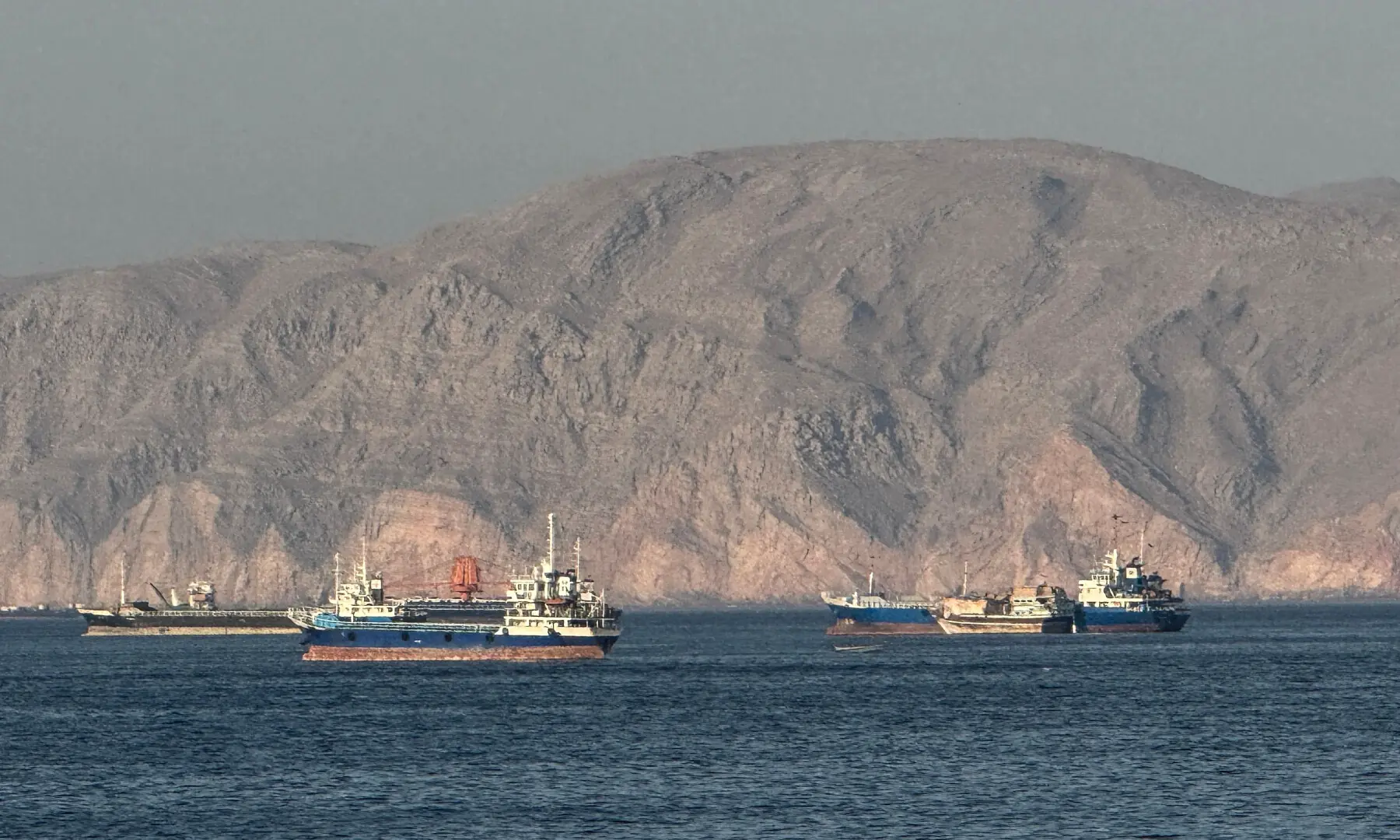
Iran’s Revolutionary Guards Navy says 24 ships have passed through the Strait of Hormuz after obtaining permission from Iran in the last 24 hours, Reuters reports.
Vessels are seen anchored in the Strait of Hormuz, off the port city of Khasab on Oman’s northern Musandam Peninsula on May 17, 2026. — AFP
Two tankers carrying oil products exited the Strait of Hormuz over the past week, while a liquefied natural gas carrier loaded cargo in the United Arab Emirates, shipping data showed, Reuters reports.
Aframax tanker Cy Victorious, carrying at least 80,000 metric tons (over 508,000 barrels) of high-sulphur straight-run fuel oil, exited the strait on May 30, ship-tracking data from Kpler and LSEG showed.
The vessel last loaded at Iraq’s Khor al Zubair port in early April and is expected to reach Malaysia in the second half of June.
Another Long-Range 2 tanker, Sti Elysees, loaded with clean products from Kuwait in late February, exited the strait on May 29, according to Kpler data. Its destination is unclear.
Lebanese official media has said an Israeli strike a day earlier killed a man, his son and daughter in the country’s south, while a local priest told AFP they were returning from doing university exams.
The man, a dentist from the border village of Qlayaa, “was killed with his son and daughter when an enemy drone targeted his car on the Nabatieh-Khardali road”, AFP reports, citing Lebanon’s state-run National News Agency (NNA).
Father Antonios Farah, a priest for the Qlayaa parish where some people are still holding out despite sweeping Israeli evacuation orders to leave, told AFP that the man had been returning home with his son and daughter, both in their early 20s, after they did university exams.
“The man and his two children went to the university in the morning so they could do their examinations, and on their way back the Israeli drone hit their car,” he said.
Lebanon’s Finance Minister Yassine Jaber has said losses caused by the war have exceeded $20bn and could climb towards $25bn if hostilities with Israel continue, AlJazeera reports.
The minister warned that the full scale of the economic and social damage may not become clear until the fighting ends and displaced residents begin returning to devastated communities.
People inspect the damage in the aftermath of an Israeli strike that hit near a hospital in Tyre, Lebanon on June 2, 2026. — Reuters
At least four people have been killed in the latest Israeli attacks in southern Lebanon, Al Jazeera reports, citing the state-run National News Agency (NNA).
In the town of Jebchit, two Syrians were killed in an attack on the plant nursery where they were working, NNA said.
A drone also hit a motorcycle on Martyr Sabra Street in Toul and a car in the Dhi’at al-Arab neighbourhood of Ansar, killing two people.
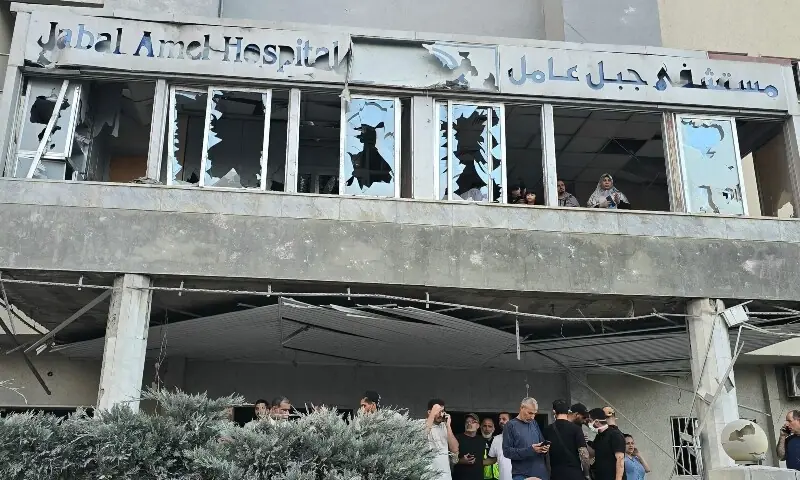
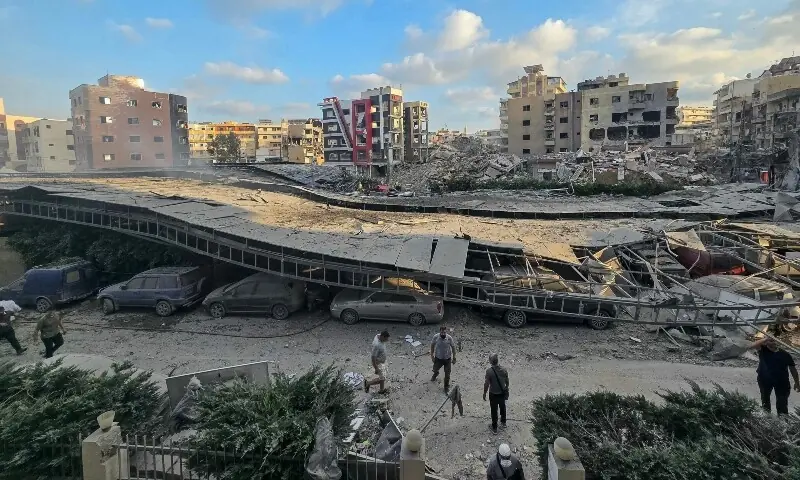
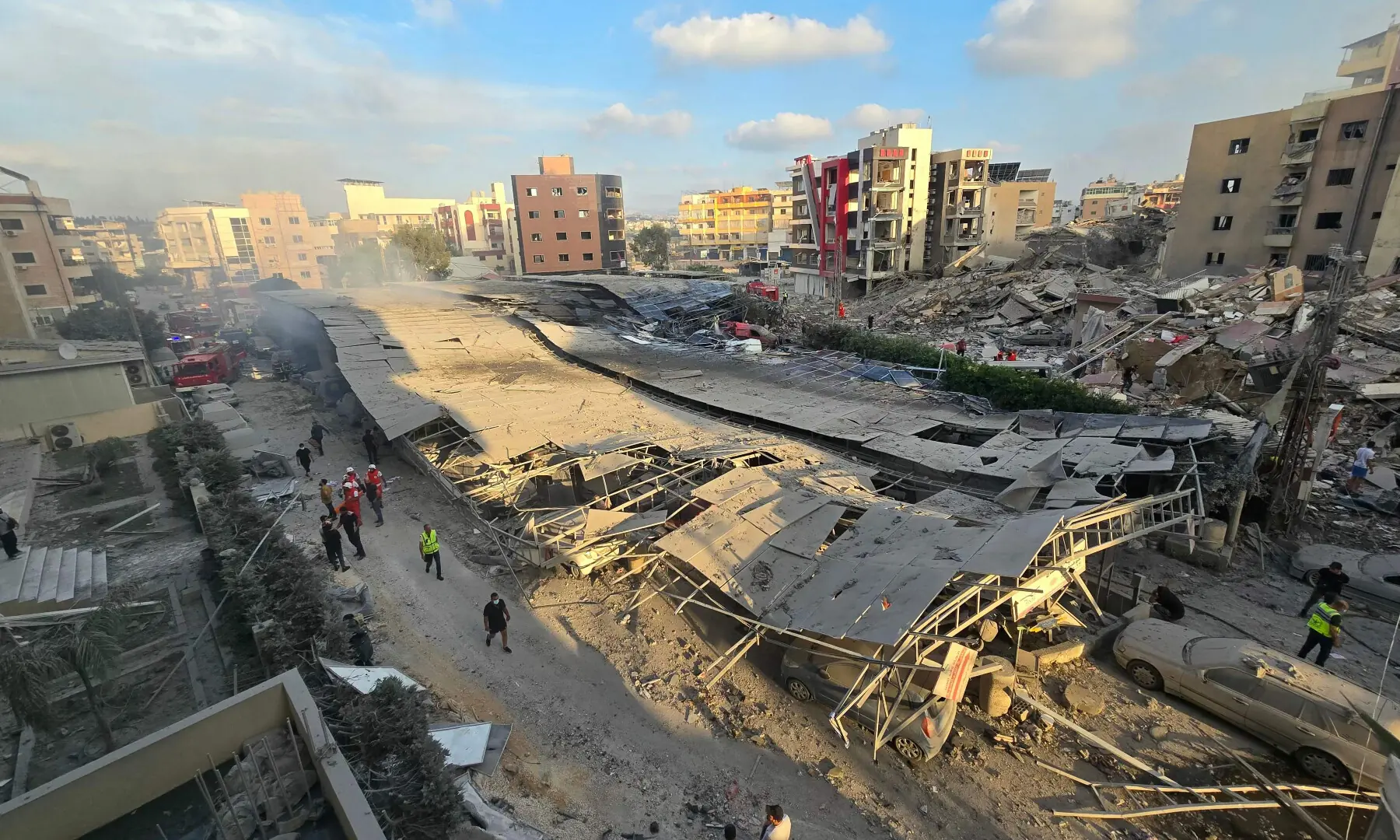
NNA said the death toll in yesterday’s attack on Jabal Amel Hospital in Tyre has risen to four people, with 50 people injured. There was significant damage to the hospital wards, the parking garage and neighbouring buildings. NNA described this toll as “preliminary”.
Israeli warplanes also hit the Lebanese civil defence centre on the Masil road in the town of Kfarsir, and the Kassar al-Zaatar neighbourhood in the city of Nabatieh was subjected to an air raid.
First responders gather at the site of an Israeli strike that hit near a hospital in the southern Lebanese city of Tyre on June 1. — AFP
People gather while others look through damaged hospital windows at the site of an Israeli strike that hit near the hospital in the southern Lebanese city of Tyre on June 1. — AFP
People gather at the site of an Israeli strike that hit near a hospital in the southern Lebanese city of Tyre on June 1. — AFP
Israeli forces have continued their attacks across southern Lebanon, carrying out air strikes on the town of al-Mahmoudiya and the city of Nabatieh, Al Jazeera reports.
Israeli drones also struck the town of Sarafina and carried out raids on the towns of Jibshit and Ansar.
The Israeli military also targeted the towns of Hadata and al-Haniya in southern Lebanon.
Deputy Inspector of Khatam al-Anbiya Central Headquarters, Brigadier General Asadi, says that Iran remains prepared for war and will never surrender, Press TV reports.
In a statement carried by Press TV, the military official said, “We have repeatedly stated that we have not yet revealed all our capabilities. We possess many options that we will utilise if necessary”.
“US demands our total surrender, but the Iranian nation will never surrender,” he added.
He further stated: “Since surrender is not an option, war is inevitable. We are prepared for it and have no issue with war; therefore, even if NATO enters the conflict, we have no concerns.”
Mohsen Qomi, the deputy for international affairs of the supreme leader’s office, has said that missile and drone power are the backbone of the country’s deterrence against a powerful enemy, Tasnim reports.
Qomi stated: “These two questions, namely ‘why the enmity’ and ‘how to win’ are of fundamental importance for understanding contemporary developments in Iran, the Islamic world, and the resistance front.”
He emphasised: “It is this independence that is intolerable to America. The problem is not just Iran; America has problems with any country that wants to be independent.”
He made the remarks at the unveiling ceremony of the collection of translated works of former supreme leader Ayatollah Khamenei in Bengali.
Commodities are in a “super-squeeze” that will worsen if the Strait of Hormuz remains effectively shut, according to HSBC Holdings Plc, Bloomberg reports.
“The longer the strait is closed, the more inventories are run down, the more likely it is that we reach ‘tipping points’ in the markets for some commodities,” analysts including Paul Bloxham said in a June 1 report.
A dentist was killed along with his son and daughter in an Israeli drone attack on their car while they were travelling in southern Lebanon on the Nabatieh-Khardali road, the National News Agency (NNA) reports, according to Al Jazeera.
Their car was reportedly targeted while they were returning home from Sidon.
France’s Foreign Minister Jean-Noel Barrot has said that nothing could justify Israeli troops remaining deep inside Lebanon, AFP reports.
“Nothing can justify the continuation of military operations and Israel’s prolonged occupation deep inside Lebanese territory,” Jean-Noel Barrot told France TV.
Iran has not yet responded to a proposed final agreement with the United States aimed at ending the conflict between the two countries, and discussions on the final text are continuing in Tehran, a source close to the Iranian negotiating team told Mehr news agency, according to Reuters.
The source said Iran was reviewing the proposal cautiously because of what it sees as a history of US non-compliance and longstanding mistrust.
“Based on previous experiences, Iran is seeking tangible and real benefits,” the source said.
Israel and Hezbollah clashed overnight despite US President Donald Trump’s announcement that both sides had agreed to halt fighting ahead of US-hosted talks between Israel and Lebanon today.
The overnight clashes came after Lebanon said Hezbollah had accepted a US proposal for a “mutual cessation of attacks” after Trump said he persuaded the warring sides to de-escalate.
Under the arrangement, Israeli strikes on Dahiyeh, Beirut’s southern suburbs, would cease in exchange for Hezbollah refraining from launching attacks against Israel, according to a statement from the Lebanese embassy in Washington.
A fourth round of US-hosted direct negotiations between Israel and Lebanon is set for today and tomorrow. Military delegations held security talks last week.
First responders gather at the site of an Israeli strike that hit near a hospital in the southern Lebanese city of Tyre on June 1, 2026. — AFP
Israeli forces have continued their attacks across southern Lebanon, firing artillery near Nabatieh and striking the villages of Shukin and Kafr Tibnit, Al Jazeera staffers report.
Israeli drones also carried out three strikes on the town of Tallet Tol in the Nabatieh district, according to reports.
Gold edged higher, supported by lower Treasury yields and a partial ceasefire between Hezbollah and Israel, while investors awaited details on the status of US-Iran peace talks amid conflicting news, Reuters reports.
Spot gold rose 0.5 per cent to $4,507.56 per ounce by 0420 GMT. US gold futures for August delivery gained 0.7pc to $4,538.
“It seems that because of the ceasefire between Israel and Hezbollah, we’re seeing a bit of an uptick in terms of gold prices,” said GoldSilver Central Managing Director Brian Lan, adding that lower Treasury yields were further supporting the metal.