The US and Israel on Feb 28 launched what they described as a “pre-emptive” joint strike against Iranian targets, with Trump announcing start of “major combat operations”
Pakistan hosted the first round of face-to-face talks between the US and Iran in 47 years in April; the talks ended without a breakthrough, but also without a breakdown
US, Iran reached a preliminary agreement to end the war; hold high-level talks in Switzerland
Turkish Foreign Minister Hakan Fidan says Ankara has discussed with allies at every opportunity possible measures to stop Israel from its military push throughout the region, Al Jazeera reports.
“[Israeli Prime Minister Benjamin] Netanyahu’s expansionist policy is one that supports chaos, instability, war, tears, destruction, and genocide in the region,” Fidan warns.
Iranian President Masoud Pezeshkian says some financial and currency restrictions on the country have been eased, Al Jazeera reports citing the semi-official Fars news agency.
Pezeshkian says the continued export of oil, the easing of some financial and foreign-exchange restrictions and new opportunities for economic cooperation are among the results of Iran’s recent agreements.
US President Donald Trump says Iran has “come a long way” in negotiations with Washington.
“We hit them very hard last week. I think they’re fine,” he tells reporters. “It’s the denuclearisation of Iran, it’s very simple, and Iran can never have a nuclear weapon.”
Iran’s Deputy Foreign Minister Kazim Gharibabadi has said that the negotiations for a final deal with Washington have yet to begin.
“Follow-up working groups for implementing the understanding and negotiating the final agreement have been formed, but no negotiations have yet begun in these formats,” he is quoted by Iranian news agency Fars as saying.
German Chancellor Friedrich Merz has signalled possible financial support for reconstruction after the war, but adds that hostilities between Tehran and Washington need to stop before any action can be taken, Al Jazeera reports.
“As soon as it comes to rebuilding the destroyed infrastructure in the region, then we can discuss everything, but first of all, the fighting must stop,” he says at a news conference in Berlin.
The United Kingdom’s Maritime Trade Operations (UKMTO) Centre says the small craft which approached an oil tanker off the coast of Yemen has moved away from the vessel, but remains “active in the area and could possibly be a risk to other vessels”.
“CSO (company security officer) reports the vessel has minor damage on the bridge and confirms it’s one suspicious small craft with four POB (persons on board), armed with [an] RPG,” UKMTO adds in a statement.
In a separate statement, UKMTO says the crew of the vessel “are reported as safe and the vessel is continuing on its voyage”.
Iran’s deputy foreign minister says talks in Doha have focused on the implementation of the interim deal between Tehran and Washington, Reuters reports citing state media.
Heading a delegation with representatives from Iran’s foreign ministry, central bank and agriculture ministry, Kazem Gharibabadi has held a meeting with Qatar’s prime minister and participated in a trilateral meeting between Iran, Qatar and Pakistan to review the interim deal’s implementation.
Israeli Defence Minister Israel Katz says Israel could target Iran again “if it deems it necessary”, despite ongoing US efforts to pursue diplomacy, Al Jazeera reports.
Speaking at a memorial ceremony for those killed in the 2006 war in Lebanon, Katz says: “We have attacked twice with proactive, preemptive strikes in Iran and, if necessary, we will strike a third time as well.”
Iran’s Foreign Minister Abbas Araghchi has warned that any threat against the Iranian people and leadership would receive an “immediate powerful response”.
In a post on X responding to comments by Israel Katz, the Israeli defence minister, Araghchi said, “POTUS (Donald Trump) has committed the US to muzzling its pets in Tel Aviv. If they ignore their master, Iran will school them.”
A vessel reported being approached by multiple small craft with several people on board bearing small arms, 76 nautical miles south of Yemen’s Balhaf, United Kingdom Maritime Trade Operations has said, Reuters reports.
Israeli opposition leaders have accused Prime Minister Benjamin Netanyahu of falsely claiming that Iran had already possessed nuclear weapons, saying he was distorting the facts to justify his policies, Ynet news reports.
Gadi Eisenkot, leader of the opposition Yeshar party and a former IDF chief, rejected Netanyahu’s remarks, saying, “Netanyahu made arrogant statements. Iran did not have any nuclear bombs.
“He is making up a reality to frighten the Israeli public,” he added.
Former PM Naftali Bennett also disputed Netanyahu’s account, calling the statement false. “Yesterday it was said that Iran already possessed nuclear bombs. That’s a lie. It’s an attempt to rewrite history,” Bennett said at the same conference.
Iran is determined to win international recognition of its control over the Strait of Hormuz and ability to levy fees on ships entering or leaving the Gulf even if it has to do so by force, two senior Iranian sources tell Reuters.
It is also determined to secure lasting formal acceptance of this control once the interim phase expires, and its negotiators will not move to other areas of dispute in ongoing peace talks with Washington until that has been agreed, the sources were quoted as saying.
Iran interprets the MoU as meaning it can maintain control over all passage through the Strait, though without collecting fees during the interim phase of the deal, and that while it has to discuss arrangements with Gulf states, it is not obliged to reach an agreement with them, the sources said.
One of the senior officials said Iran would not let the situation return to the pre-war status quo.
Instead, the source said, it believes new arrangements must govern Hormuz, including Iran choosing how vessels enter and leave the Strait, holding the right to deny entry to any it suspects of threatening Iranian security, and charging fees for compulsory services it provides.
The European Union Aviation Safety Agency (EASA) has said flight routes over Iraq and Lebanon should also not be used because of uncertainty surrounding the US-Iran ceasefire, Al Jazeera reports.
It advised commercial aircraft to remain cautious when flying throughout the Middle East.
The EASA said it’s extending its conflict-zone advisory for the region until July 8 after previously extending it to July 1.
Israel’s defence minister has said that Israeli forces will remain in self-proclaimed “security zones” established in Lebanon, Syria and Gaza, without any timeline for withdrawal, AFP reports.
“We will not withdraw from the security zones,” Katz said at a function held in honour of Israeli soldiers killed during the 2006 war in Lebanon.
Katz also reiterated an earlier warning to Iran, saying the country would be struck with “full force” if it attacked Israel over its operations in Lebanon.
A foreign container ship has run aground in the Strait of Hormuz after entering shallow waters outside the shipping route designated by Iranian authorities, Al Jazeera quotes Iran’s state media as saying.
The news report reiterated IRGC’s warning that vessels should transit only through the corridor south of Iran’s Larak island, which Tehran says is the sole approved entry and exit route for ships passing through the strait.
The extent of damage sustained remains unclear, Al Jazeera notes.
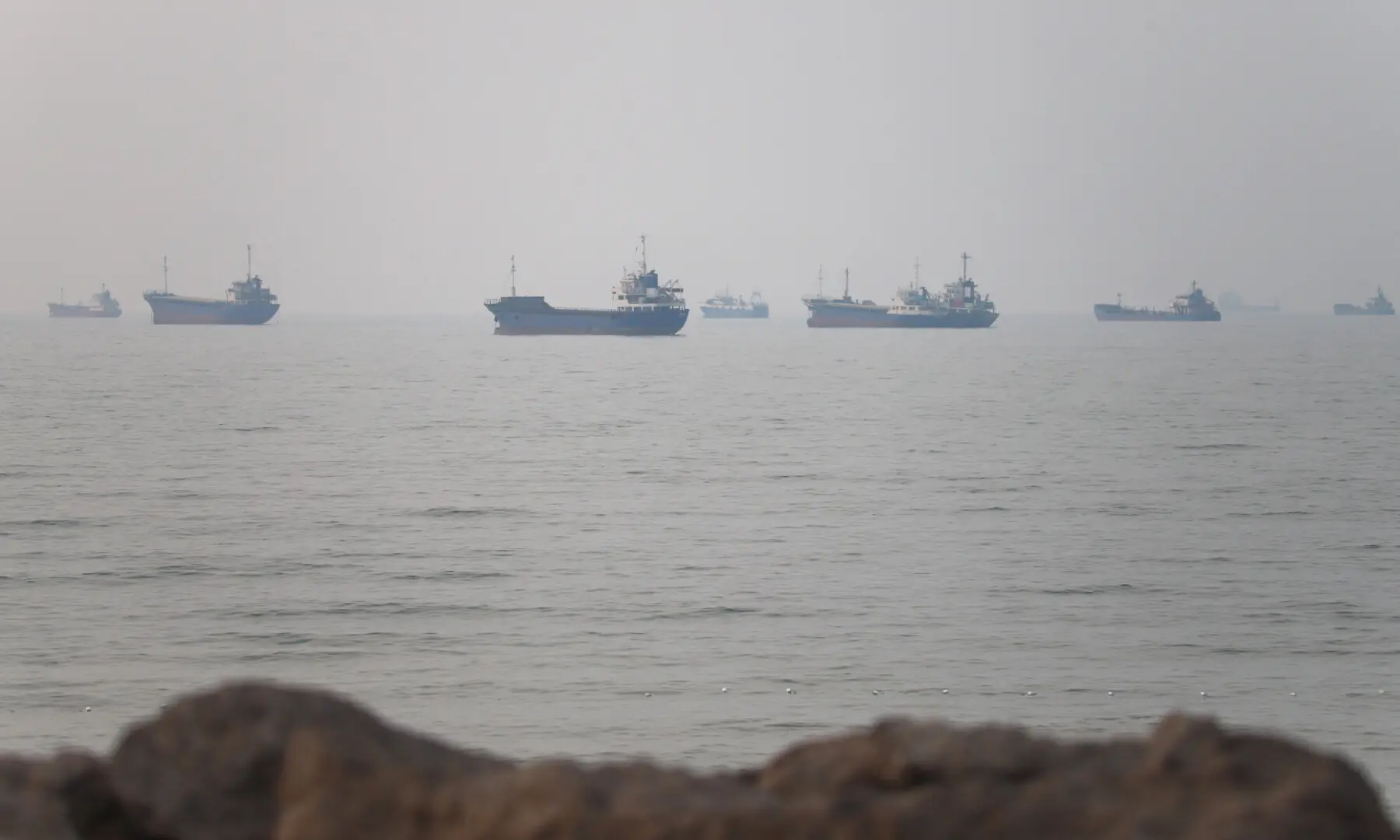
Vessels in the Strait of Hormuz near the beach of Bandar Abbas, Iran on June 30, 2026. — ISNA via WANA via Reuters
Nepal has rolled back fuel prices by up to 17pc, an official statement says, as the Himalayan nation responded to a fall in global prices following progress towards ending the war in Iran, Reuters reports.
State-owned Nepal Oil Corporation (NOC), the sole importer and distributor of fuel products in the country, reduced the retail prices of petrol by 9.2pc, of diesel by 13.3pc and of cooking gas by 4.6pc.
Jet fuel prices for the domestic sector have come down by 14.8pc and for the international sector by 14.47pc from Kathmandu, by 16.9pc for jets operating from Pokhara and by 17.04pc from Bhairahawa, it said.
A worker puts up a sign reading “no petrol” at a petrol pump as fuel crisis continues in Kathmandu, Nepal on Oct 1, 2015. — Reuters/File
Iran’s Supreme National Security Council has said that the “commanders and perpetrators” of late supreme leader Ayatollah Ali Khamenei’s assassination and the killing of Iranians in US-Israeli strikes will “face justice in due time”, IRIB reports.
“The file on avenging the blood of Martyr Ayatollah Khamenei and Iran’s martyrs remains open. The commanders and perpetrators of these crimes will face justice in due time, which will not be long, at the hands of righteous elements,” IRIB quoted the SNSC as saying.
Indirect technical talks between the United States and Iran are underway in Doha, with Qatar and Pakistan serving as mediators, a source with direct knowledge of the discussions tells Reuters.
US envoy Steve Witkoff and Trump’s son-in-law Jared Kushner met Qatar’s prime minister yesterday to lay the groundwork for today’s technical sessions but are not attending the talks themselves, the source said.
Ambassador Ali Bahreini says Iran will not allow the world to forget the attack as he held a virtual meeting with survivors and witnesses, Al Jazeera reports.
According to Iranian state media, Bahreini said: “The duty of justice demands that we ensure the victimisation … and crimes against civilians are not forgotten over time. Today, there is no country that does not recognise the criminal nature of this attack or is unfamiliar with the name of Minab school.”
US and Iranian officials will hold indirect lower-level technical talks with mediators today on a deal aimed at permanently ending the Middle East war, a diplomat with knowledge of the talks told AFP.
“US and Iranian officials are to hold indirect technical talks on Wednesday in Doha with Qatari and Pakistani mediators on the memorandum of understanding and building on the progress made at the Lake Lucerne Summit,” the diplomat said.
US envoys Jared Kushner and Steve Witkoff would not be taking part in the technical talks, the diplomat added, after they met with Qatar’s Prime Minister Sheikh Mohammed bin Abdulrahman Al Thani on Tuesday.
Former Israeli Prime Minister Naftali Bennett says Netanyahu is “incapable of governing” because he is controlled by far-right ministers Itamar Ben-Gvir and Bezalel Smotrich and ultra-Orthodox groups, according to AlJazeera.
“He is incapable of governing his own government because Ben-Gvir and Smotrich and Haredim, they all control him,” the opposition politician said in an interview with podcast host Mario Nawfal.
Bennett says he would not have allowed people like Ben-Gvir and Smotrich, who he said make “really stupid statements”, into a government. He said he would have called any of his ministers who make comments such as theirs “to order”.
But “Netanyahu can no longer do that because he depends upon them,” Bennett added.
He acknowledged that Israel’s international standing has deteriorated badly, saying it stems from the government’s conduct and ministers inflicting “ongoing self-inflicted wounds” while the country conducted “zero public diplomacy”.
The former prime minister has argued that prolonged Israeli wars in the Gaza Strip and Lebanon and the Iran war were contrary to Israel’s military doctrine and were draining the country. “It’s not Israel’s doctrine,” he said.
Lebanon’s Head of the Finance and Budget Committee Ibrahim Kanaan met President Joseph Aoun to discuss the “ceasefire” deal with Israel signed in Washington, DC, and the next course of action for the government, Al Jazeera reports.
“The state’s right to bear arms is a Lebanese matter and a necessity for the protection of Lebanon, particularly in the aftermath of the war,” the Lebanese Presidency quoted Kanaan as saying in a post on X.