The heir from the bath: Messi, Yamal and the long shadow of La Masia
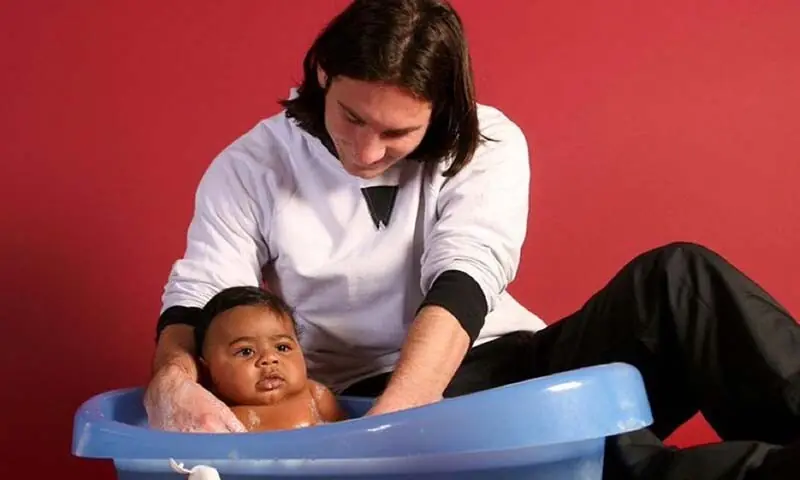
In the summer of 2007, Lionel Messi was a 20-year-old Barcelona player still establishing himself as one of the most gifted young footballers in the world. Lamine Yamal was a six-month-old baby.
During a Unicef charity photoshoot, Messi held the infant and bathed him in a small plastic tub. The photograph, which emerged years later, became one of football’s most remarkable images — not because anyone knew what either of them would become, but precisely because nobody did.
Nearly two decades later, on Sunday, Messi and Yamal will meet on opposite sides of the biggest stage football has to offer: the 2026 World Cup final.
Argentina against Spain. Messi against Yamal.
The man who once bathed the baby could face him as the established great against the potential great. Football, occasionally, has a remarkable sense of theatre.
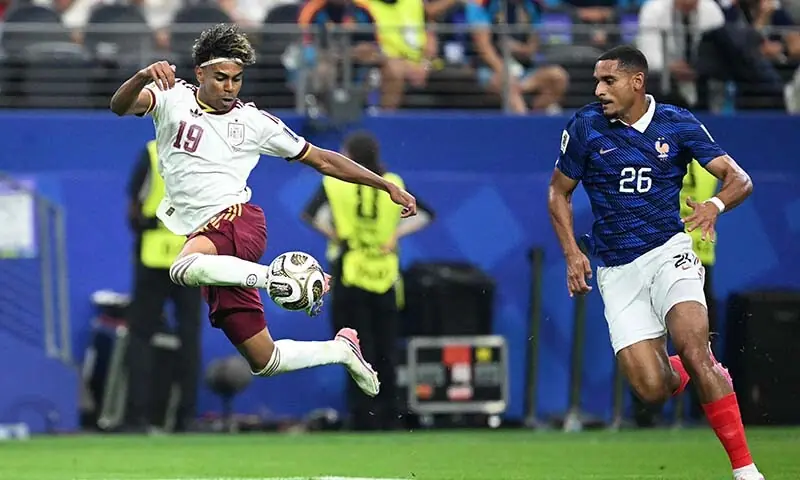
The photograph has acquired an almost surreal quality with time. Messi was still at the beginning of his journey then, although the talent that would eventually redefine an era was already evident.
Yamal, meanwhile, was not yet old enough to know that he had been held by a player who would go on to become one of the greatest footballers in history.
The connection between them, however, goes beyond that extraordinary photograph.
Both came through Barcelona’s famed La Masia academy. Both are left-footed attacking players who can change the course of a match with a touch, a dribble or a pass.
Both became the attacking reference points for their national teams. Both have carried the weight of being their side’s most gifted player. And both have worn the number 10 shirt for Barcelona.
The similarities, however, should not be allowed to obscure the differences.
Messi arrived at La Masia from Rosario as a slight Argentine boy whose growth hormone deficiency threatened to complicate his footballing dream.
Yamal came through the academy in a different era, one in which every performance, every highlight and every teenage breakthrough is instantly magnified around the world.
Messi’s rise was gradual before it became unstoppable. Yamal’s has been astonishingly rapid.
Messi spent years turning promise into dominance before eventually carrying Argentina to the World Cup title in Qatar in 2022.
Yamal’s rise has been astonishingly rapid. At 17, he helped Spain win Euro 2024, becoming the youngest player to win the European Championship and being named the tournament’s Young Player of the Tournament. He had already become a champion before he was old enough to vote in most countries.
The difference in their journeys is striking. Messi was 35 when he finally lifted the World Cup, the trophy that had eluded him for so long. Yamal was only 17 when he lifted the European Championship.
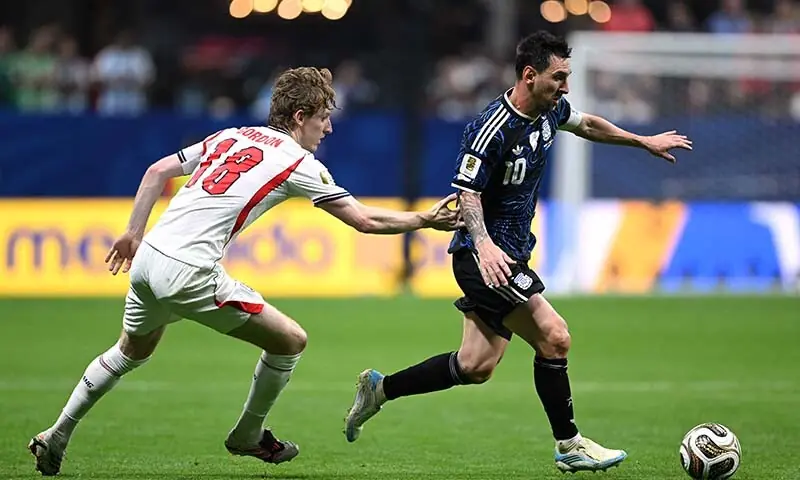
One arrived at the summit after a career spent climbing towards it. The other reached a major international summit before his career had properly begun.
The comparison, though inevitable, has never been entirely fair. Messi was unique. Yamal is trying to become himself.
Their games are not identical. Messi operated with an extraordinary combination of acceleration, close control, passing range and an almost unmatched ability to read the game several seconds before everyone else.
Yamal, while possessing a similarly gifted left foot, has developed his own identity — a player capable of attacking from the right, creating chances, taking on defenders and producing decisive moments with a confidence that seems remarkable for his age.
Yet there is one similarity that is impossible to ignore. When the ball reaches them, something seems possible.
Messi himself has acknowledged the connection.
“From the new generation of players, I think Lamine Yamal is the one who reminds me the most of myself when I started,” the Argentine has said. “I have no doubt, for me Lamine is the best of this new generation … because of what he has done so far and the future he could go on to have.”
Yamal, however, has been careful not to accept the comparison.
“I think that in every match he shows that he is the best player in history,” he has said of Messi. “If someone has doubts, it is because they are looking for them. For me, he is the best.”
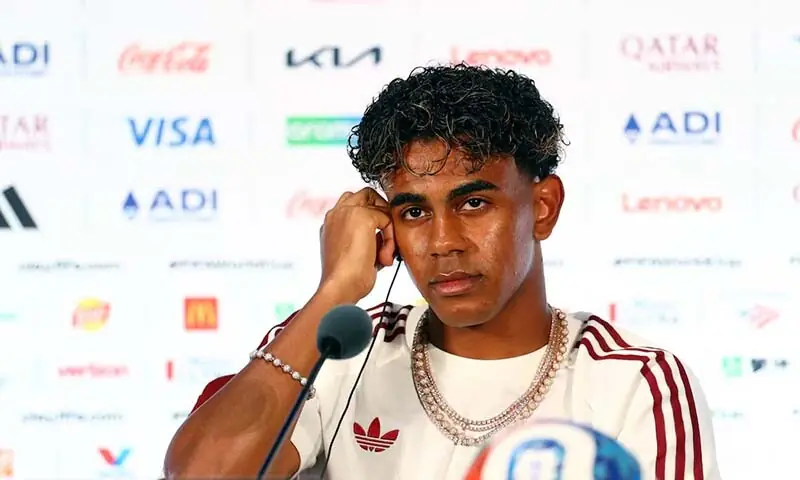
But when asked about comparisons between the two, Yamal has insisted, “I don’t compare myself to him, because I don’t compare myself to anyone — and much less with Messi … I’m going to enjoy myself, and be myself.”
That may ultimately be the most important distinction between them. Messi is what football already knows. Yamal is what football is waiting to find out.
Luis Suarez, who shared a dressing room with Messi and played alongside Yamal at Barcelona, has described the comparison as one of “the same but different”.
They share a left foot of rare quality, Suárez has suggested, but are ultimately “completely different players”.
Spain coach Luis de la Fuente has also urged caution.
“The worst mistake we could make would be to compare him to anyone,” he has said of Yamal. “Messi has been, is and will always be … he is football.”
There is also a difference in the point at which the two men arrive at the possible meeting.
Messi would enter the final as a player whose place in football history is already secure. He has won almost everything there is to win and has already lifted the World Cup.
Yamal, however, would not be arriving as an untested prodigy. He would be a European champion who had already helped Spain win a major international tournament before turning 18.
That is what makes the possibility of their meeting so compelling.
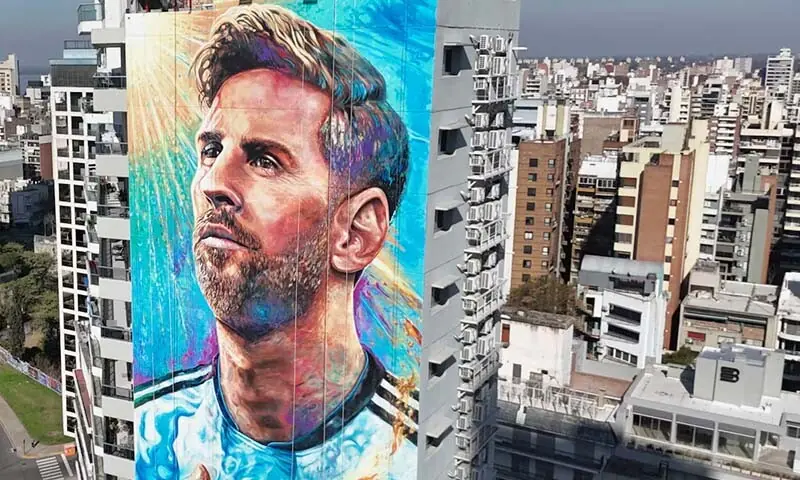
One would represent the conclusion of a career that has already transformed the sport. The other would represent the possibility of what comes next.
And between them would be the long shadow of La Masia.
The academy that helped shape Messi is also where Yamal developed. The same footballing culture that produced one of the sport’s most extraordinary players has now produced another teenager capable of making a stadium hold its breath.
The photograph from 2007 would suddenly acquire another layer of meaning.
Messi, then a young footballer, holding Yamal, then a baby. Yamal, nearly 20 years later, standing across from Messi with the World Cup at stake.
It would be tempting to describe the moment as a passing of the torch. But that may be too neat. Messi has not disappeared, and Yamal is not yet his successor. The old era and the new one can still exist together.
That is precisely what makes the possible encounter so fascinating. For one night, the past and the future of Barcelona’s footballing tradition could stand on the same pitch.
The boy in Messi’s arms would no longer be a boy. He would be one of the men expected to carry his country’s hopes.
And Messi, who once held him without knowing what he would become, will be standing on the other side.
Football rarely offers such a perfect connection between its past and its future.
When Messi and Yamal meet in the 2026 World Cup final, the photograph from that Unicef shoot will suddenly seem less like a curious piece of football trivia and more like the beginning of a story whose ending took nearly two decades to arrive.
The photograph will remain the same. Everything else will change.