Blood, iron and water: India's riparian hypocrisy
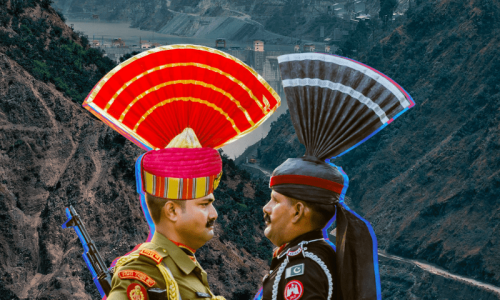
South Asia teeters precariously upon a powder keg of existential volatility, ironically fuelled by water itself. This dangerous moment has been propelled by Prime Minister Narendra Modi’s flagitious and untenable proclamation that the waters of the Indus basin belong exclusively to India.
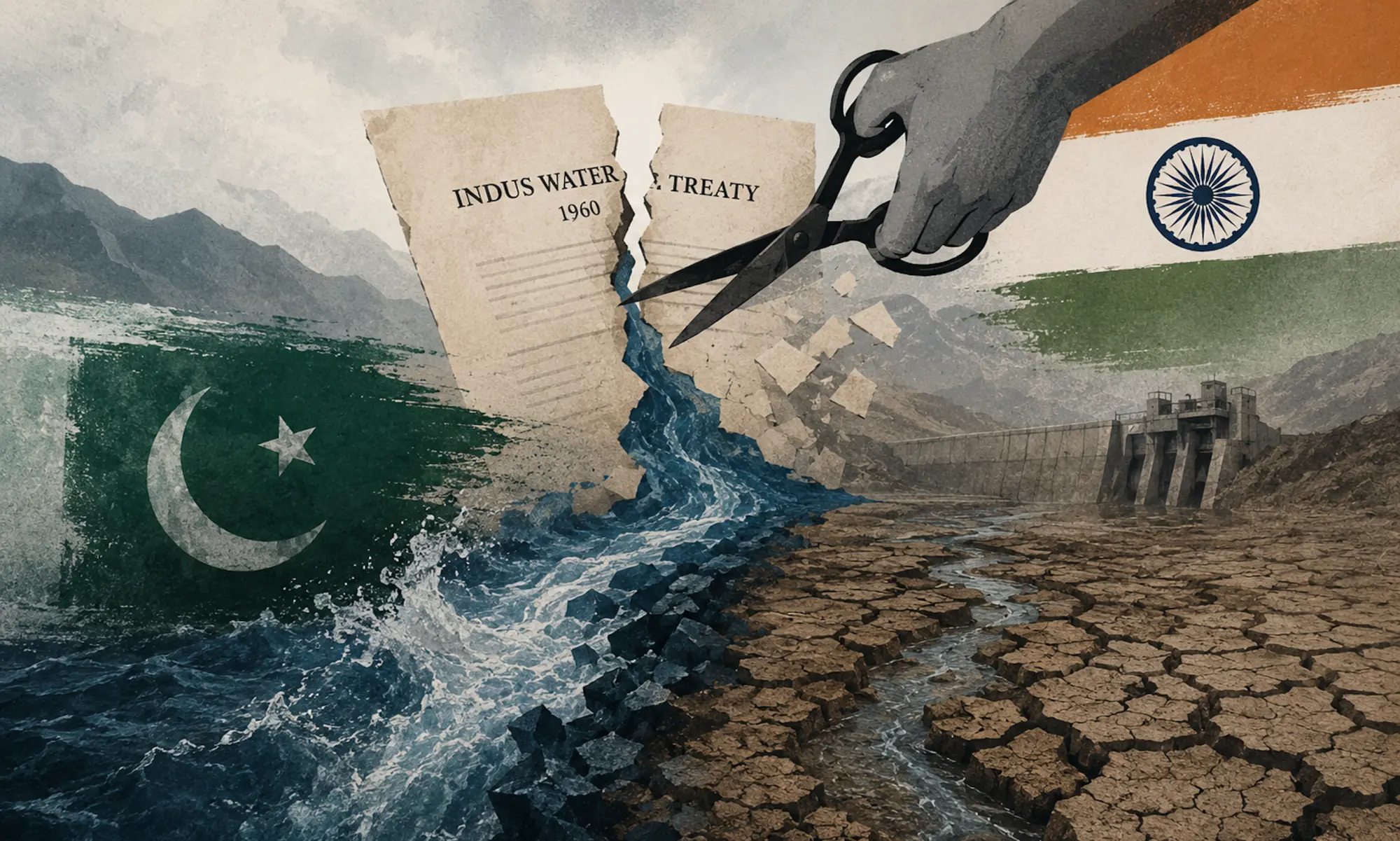
One reaches this sombre conclusion after reading the incisive column by Ahmar Bilal Soofi, titled “Dams on Chenab — a target?”. A leading jurist, Soofi has consistently advocated rigorous legal remedies against Modi’s malevolent suspension of the Indus Waters Treaty (IWT) of 1960 — an act tantamount to de facto abrogation, devoid of legitimacy under the principle of pacta sunt servanda.
This assertion by New Delhi not only repudiates solemn treaty obligations but weaponises a vital shared resource, imperilling the agrarian lifelines of downstream Pakistan.
India’s hypocrisy
Indian policy discourse seeks to cloak accelerated projects on the Chenab, including the colossal Sawalkote endeavour, under the guise of legitimate upper-riparian rights and energy needs. While claiming adherence to run-of-the-river constraints, such literature conveniently ignores the foreseeable consequences: diminished flows, ecological devastation, and an existential threat to food sovereignty for over 250 million people dependent on the Indus irrigation system.
The hypocrisy stands glaringly exposed when juxtaposed against India’s vehement remonstrations as a lower riparian state in regards to river Brahmaputra on its north-eastern border. As a lower riparian, New Delhi invokes principles of equitable utilisation and the duty to cause no significant harm — yet behaves with unrestrained imperiousness when occupying the upper riparian position.
Pakistan’s position rests on firm juridical foundations. The IWT’s annexures strictly limit Indian activities on the western rivers to preserve perennial flows. By explicitly linking dam construction to punitive objectives, as evidenced by ministerial declarations that not a single drop will reach Pakistan, India has converted ostensibly civilian infrastructure into instruments of strategic coercion. This is no longer a technical infraction or legal nicety; it constitutes a brazen act of war — a deliberate assault upon the sovereign lifeblood of a nation.
Under jus ad bellum, Pakistan holds the inherent right of anticipatory self-defence under Article 51 of the UN Charter when facing existential threats to its agriculture and societal survival.
Under jus in bello, Article 56 of Additional Protocol I to the Geneva Conventions (1977) offers conditional protection to dams and installations containing dangerous forces. This protection lapses where such works are used for other than their normal functions in regular, significant and direct support of military operations, and where attack is the only feasible way to terminate that support (Article 56(2)).
Likewise, Article 52 designates as military objectives those structures whose purpose or use makes an effective contribution to hostile action. When a nation’s survival hangs by a thread, history delivers its thunderous verdict.
Lessons from history
In 1943, as Nazi war machine ravaged Europe, the Allies executed Operation Chastise — the legendary Dam Busters raid. In a breathtaking feat of courage, 617 Squadron of the Royal Air Force breached the Möhne and Eder dams using revolutionary bouncing bombs. They acted not from vengeance but necessity, to cripple the industrial heart powering a campaign of annihilation. Those dams, civilian in appearance, had become instruments of totalitarian aggression.
It is precisely for such moments of existential peril that the drafters of Additional Protocol I inserted the critical exception in Article 56(2). When a dam or dyke is transformed into a weapon of war — deployed to slowly suffocate an entire population — its legal protection is extinguished.
Water is not a mere commodity; it is the sacred essence of life, explicitly recognised as a fundamental human right under the UN Charter, the Universal Declaration of Human Rights, and international covenants. When every peaceful remedy is exhausted and a downstream nation confronts deliberate hydrological warfare aimed at engineering famine and national collapse, Article 56(2) stands as the international community’s solemn acknowledgment: in the final extremity, a sovereign people possess both the moral right and legal justification to destroy the structure that threatens their very existence.
Geostrategic realities further amplify Pakistan’s options. Several of these Indian projects on the Chenab lie at distances of mere tens of kilometres from the Line of Control. Nestled in precipitous, sediment-choked Himalayan gorges, they offer limited fortification and dangerously short reaction windows. India’s air defence system, despite augmentation, faces inherent topographic and temporal constraints against low-level or standoff threats. These vulnerabilities render calibrated interdiction both feasible and potentially decisive.
The way ahead for Pakistan
Pakistan has and must pursue a robust legal encirclement. This includes invoking IWT Article IX for arbitration, seeking provisional measures at the International Court of Justice under Statute Article 41, approaching the International Criminal Court over starvation tactics prohibited by Rome Statute Article 8(2)(b)(xxv), and engaging the UN Human Rights Council on rights to water, food, and life.
These steps reaffirm the primacy of rules-based order over unilateral fiat. As a country, we must endevour for a peaceful resoltion. The IWT survived past conflicts through mutual forbearance, not inherent strength. Its current crisis arises from politicised hydrology rather than actual scarcity.
PM Modi’s selective riparian ethic — imperious upstream, plaintive downstream — gravely weakens India’s moral and legal standing.
For Pakistan, confronting hydrologically induced existential coercion, the full panoply of lawful measures persists: diplomatic, adjudicatory, and, where thresholds of imperative necessity are traversed, proportionate defensive action to safeguard the corpus of national survival.
International law, far from enjoining supine acquiescence, equips sovereign nations with doctrinal instruments to repel existential duress. The Indian ignition of the Indus basin, emblematic of intertwined geography, law, and power, now tests whether precept or predation shall govern transboundary waters in an era of climatic flux.
While Pakistan must continue to navigate this crucible with juridical precision and strategic clarity, extending every reasonable opportunity for peace, the belligerent designs of India may ultimately compel the rights of Pakistan over the Indus basin to be determined not by treaties alone, but by the cold Bismarckian logic of Eisen und Blut — iron and blood.
The writer is an attorney based in Islamabad.