Game review — I get why Clair Obscur: Expedition 33 won Game of the Year
TL;DR
Pros:
-
Spectacular visuals and unique art style
-
Incredible voice acting that brings characters to life
-
Turn-based combat system is well-thought-out, tactical and fun
-
Soundtrack is very good, especially vocal tracks
-
Compelling story with plenty of twists
-
Stable and performs well
Cons:
-
Combat can be unforgiving
-
You can easily get lost in some of the levels
-
Some of the game’s lore is poorly explained or not at all
Price: Rs14,000 (physical copy, PS5), $49.99 (digital, PS5 and Steam)
Score: 7/7 - Stop reading this and go buy it!
Reviewed on PlayStation 5; available on PlayStation 5 and PC (Microsoft Windows)
When it came out last April, I’d heard good things about Clair Obscur: Expedition 33, about its art style, soundtrack and graphics.
I didn’t play it at the time, but then it swept a record nine accolades at The Game Awards last month, including Game of the Year and Best Direction. It effectively won ‘Best Picture’ at the Oscars for games, so I had to check it out.
Clair Obscur deserves its awards, especially for its aesthetic, music and combat, which exceeded my expectations. While it can be difficult, you’ll be playing in a visually striking environment with a crew of charming characters.
As 30-member French developer Sandfall Interactive’s first major project, it’s genuinely impressive to see what such a small team has accomplished.
All aboard
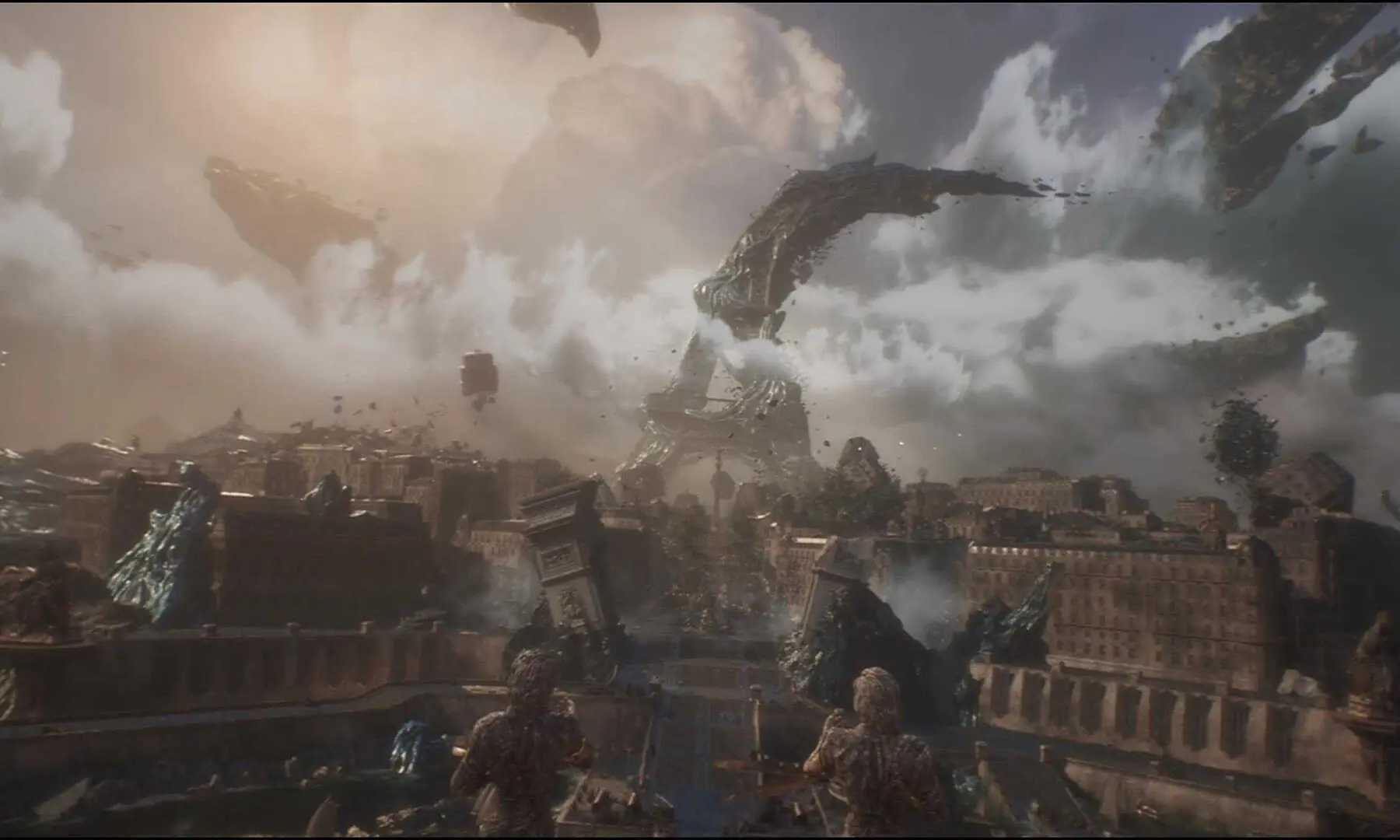
Clair Obscur has a gripping premise: the world was split apart in an event known as the Fracture. It’s why Lumiere — the game’s rendition of Paris — has floating rocks and distorted landmarks.
With the Fracture came an entity known as the Paintress, who erases all people of a certain age from the world every year in an event called the gommage (French for erasure).
This is implied by a monolith in the distance, with the number 34 inscribed on it. When the Paintress changes the inscription to ‘33’ in the prologue, every 34-year-old in the world turns to dust as if they’re in Avengers: Infinity War.
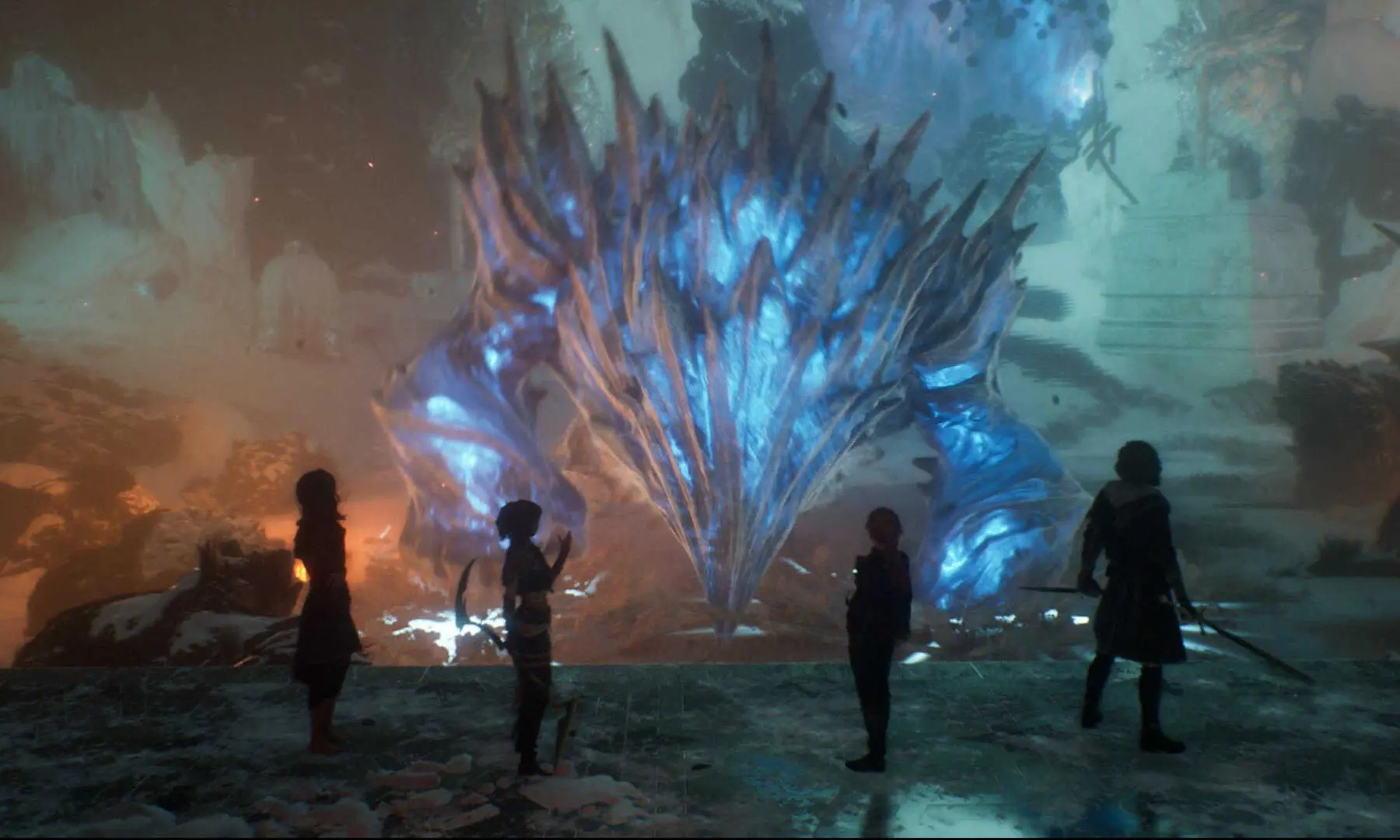
Those 33 years old and younger spend their final year of life on an expedition to hunt down and destroy the Paintress, so that nobody else in Lumiere is wiped from existence. You’re off to stop the end of the world.
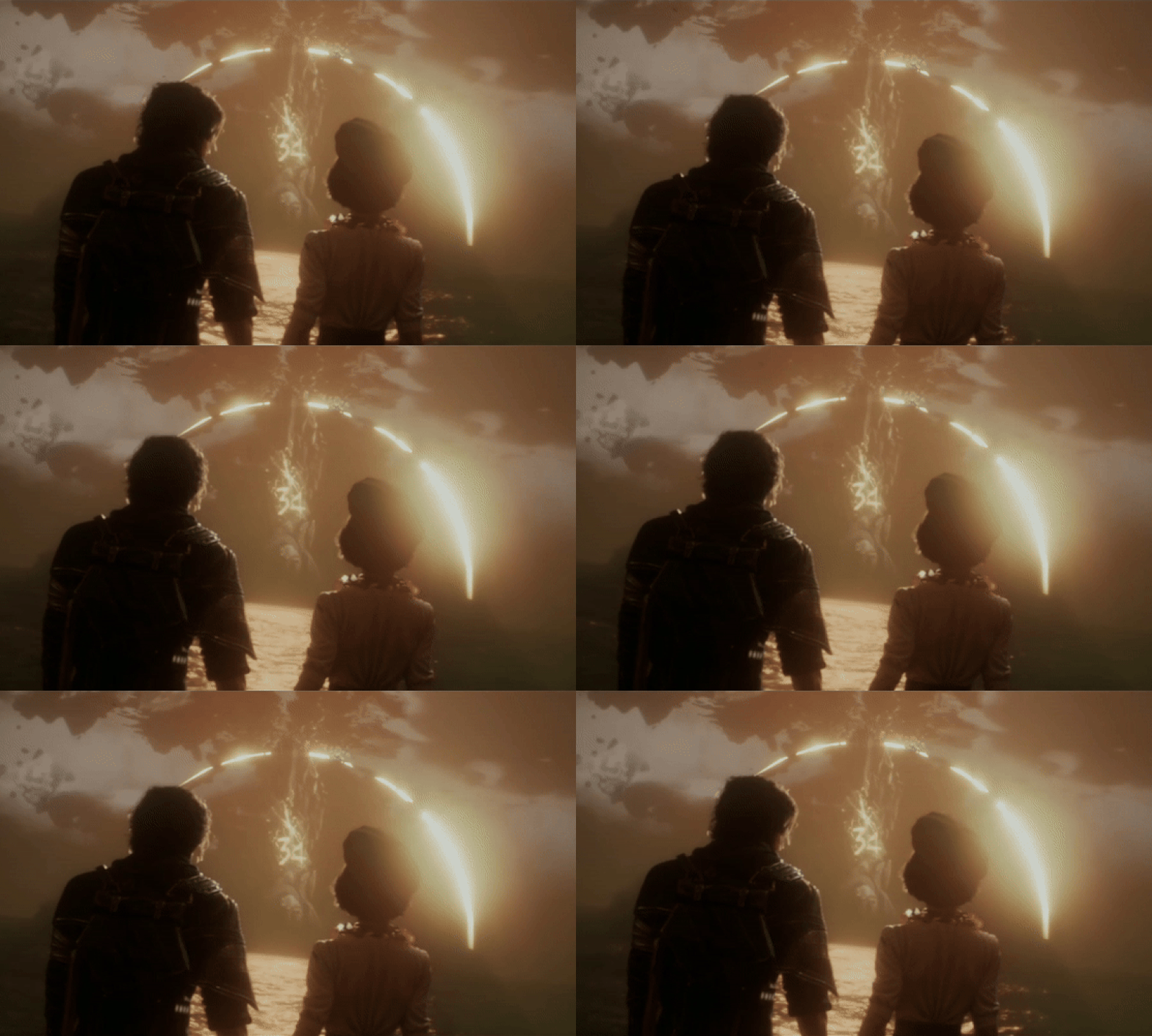
It’s a compelling story with decent twists and memorable moments. I won’t spoil it, but you will be laughing out loud or staring in shock at certain points. The cinematography of the cutscenes makes the game more cinematic.
The expeditioners themselves are well realised and have good writing, helped by a voice cast that did a truly stellar job. Emotions feel palpable, and the line delivery is excellent, like when the character Lune snaps fellow expeditioner Gustave out of abandoning the mission early in the game.
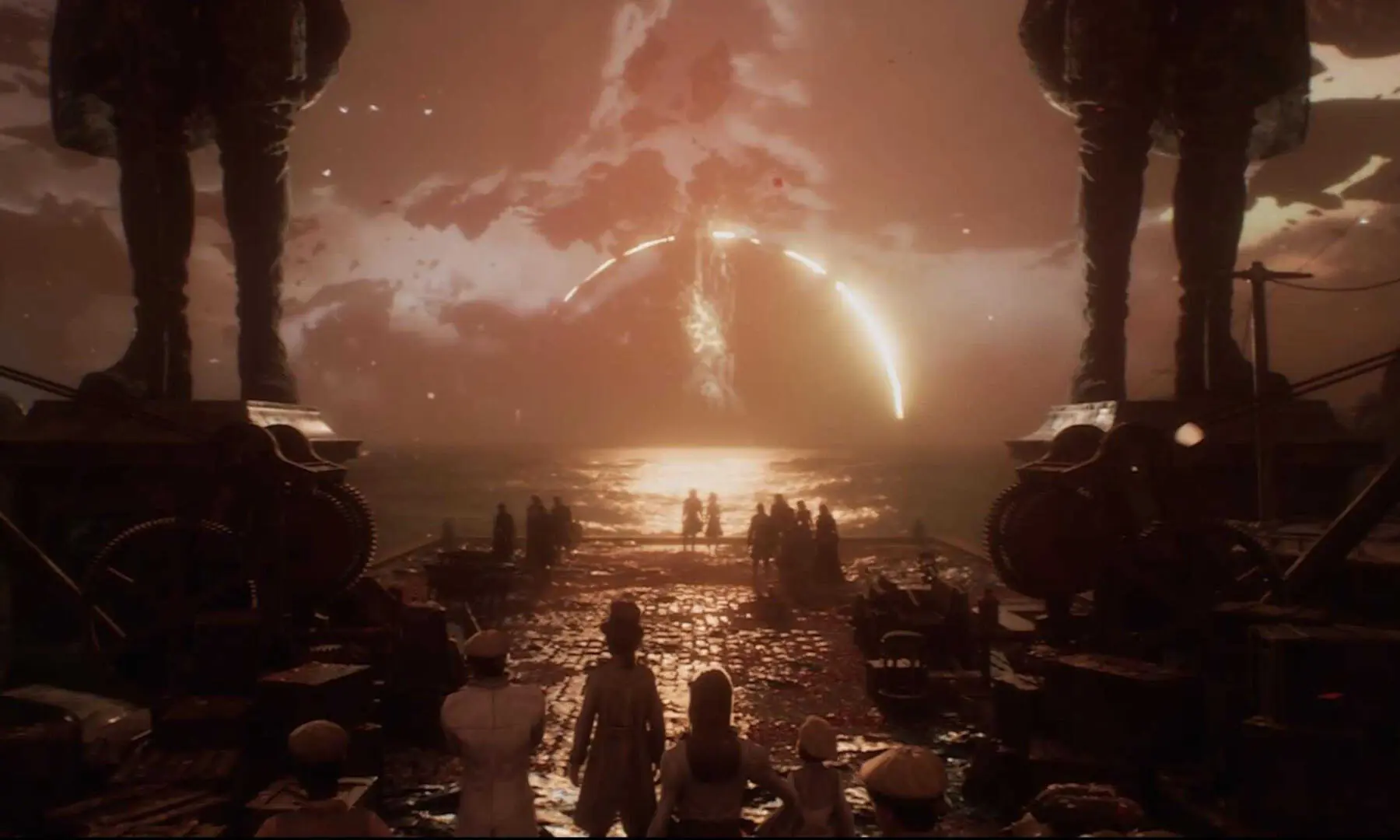
However, there are details tossed around which don’t make sense immediately, but you’ll learn what they are through gameplay. Mostly.
For instance, nevrons are the enemies you fight, but when they’re mentioned, it’s never explained what they are, how they exist, or why you fight them. You learn about that the hard way.
Looks good, sounds better
Something that stood out to me immediately was Clair Obscur’s art design and soundtrack.
Though I felt the colours were slightly muted in the prologue, the actual aesthetic — a cross between fantasy and traditional French architecture — creates a really unique environment.
Iconic French landmarks like the Eiffel Tower and the Arc de Triomphe are shown distorted or broken apart. The tower, in particular, is bent over to one side, and it looks beautiful.
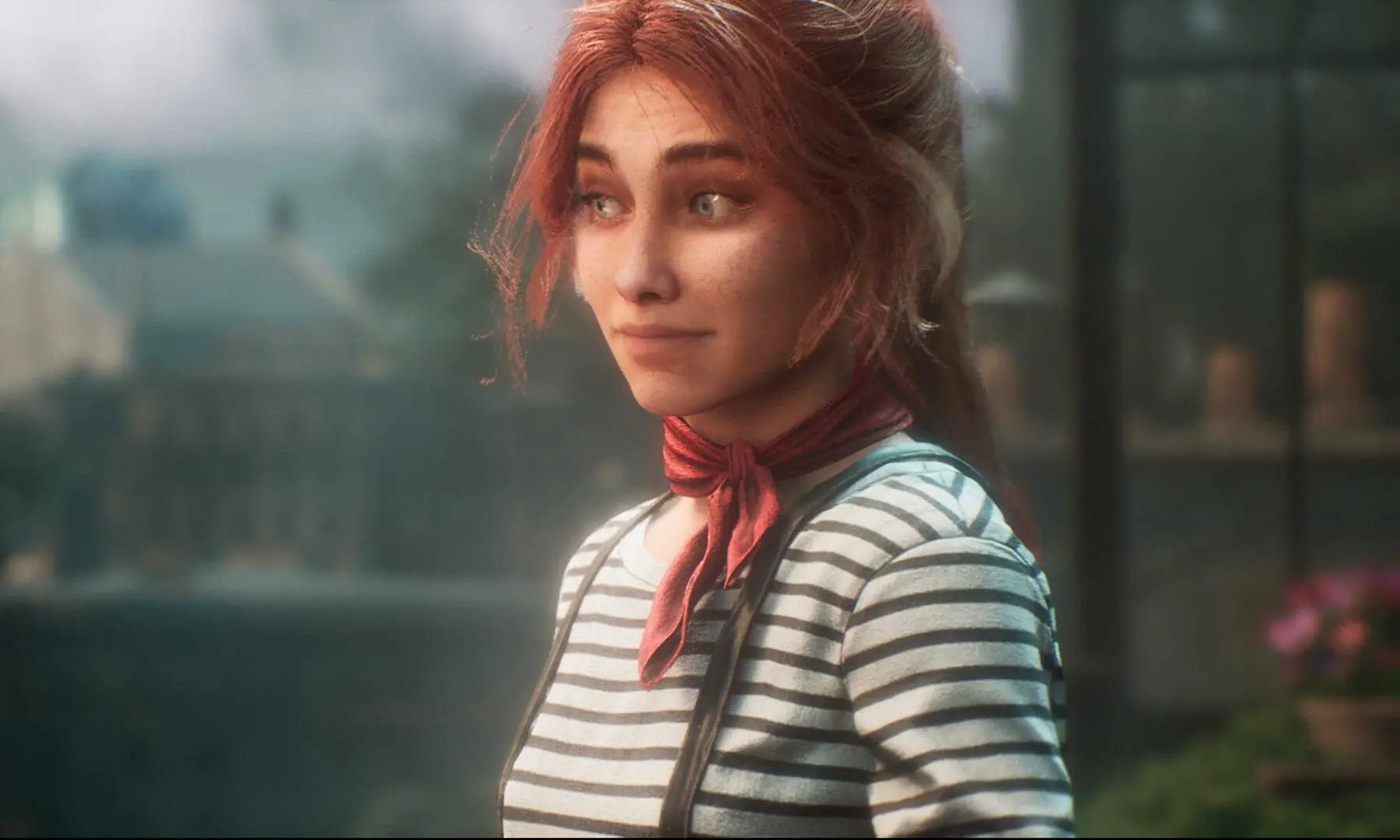
That aesthetic carries through to outfits as well, which clearly take inspiration from French fashion. Maelle sports a striped black and white shirt, black trousers and a red scarf; the only thing missing is a beret, a bicycle and a cigarette.
In fact, character models in general are very well detailed and individual strands of hair and fabrics are rendered in real time. The enemy designs stood out, with unique foes that matched the environments in which you face them.
There are issues with lip-syncing when they speak, though. Maybe because they were initially synced for French?
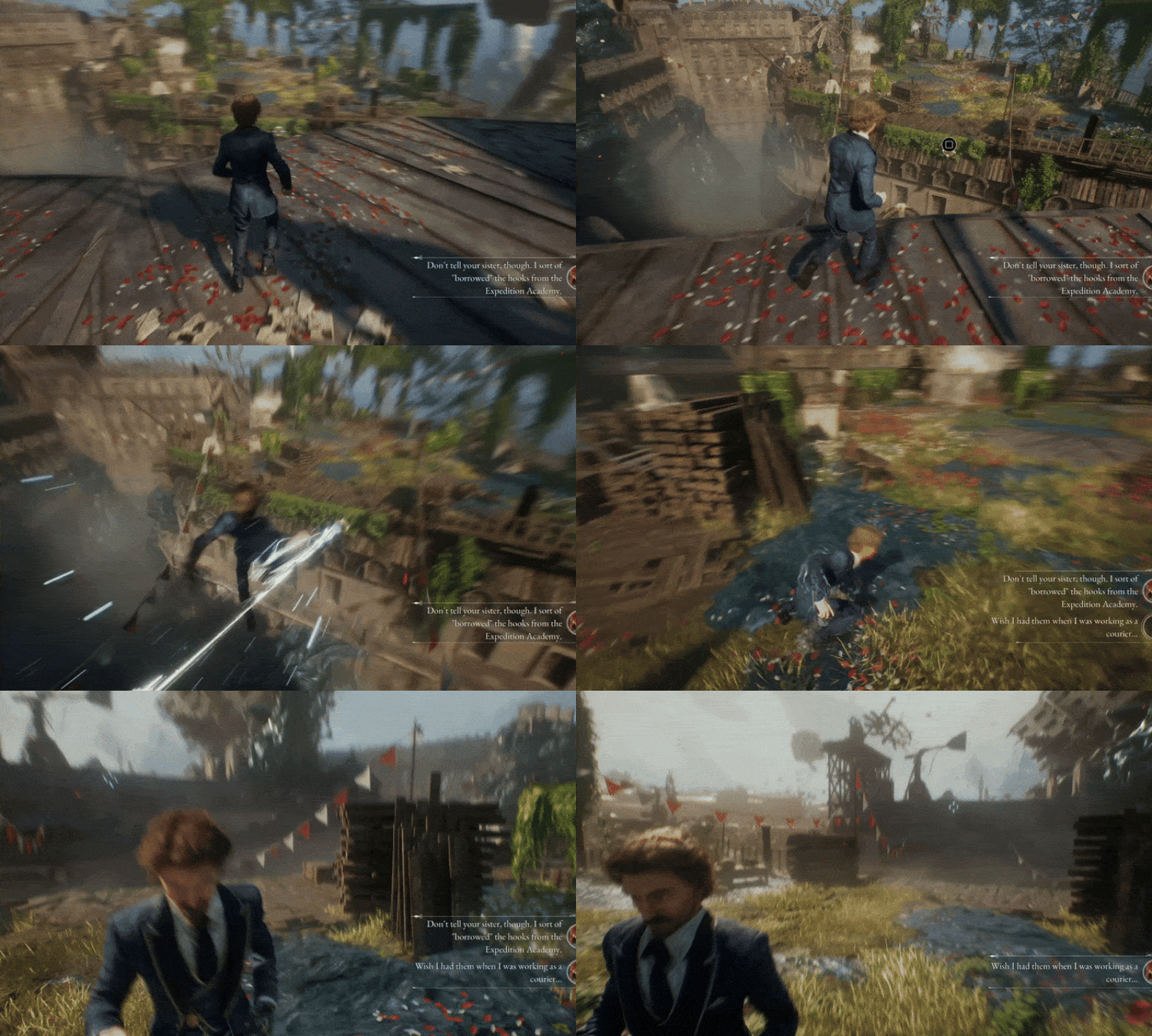
The game is mostly stable, with no crashes or other major issues that render it unplayable. I’m impressed with how well optimised it is, considering Unreal Engine 5’s reputation for poor performance.
Throughout all this, you’re treated to an eclectic soundtrack ranging from peaceful, ambient pieces with hints of classical guitar thrown in, to grander, faster and louder tracks. I love it.
The ambient tracks for Lumiere and Flying Waters are my favourites by far. However, track changes are sometimes jarring; within ambient tracks, random changes in music will occur, which affect immersion.
The Continent
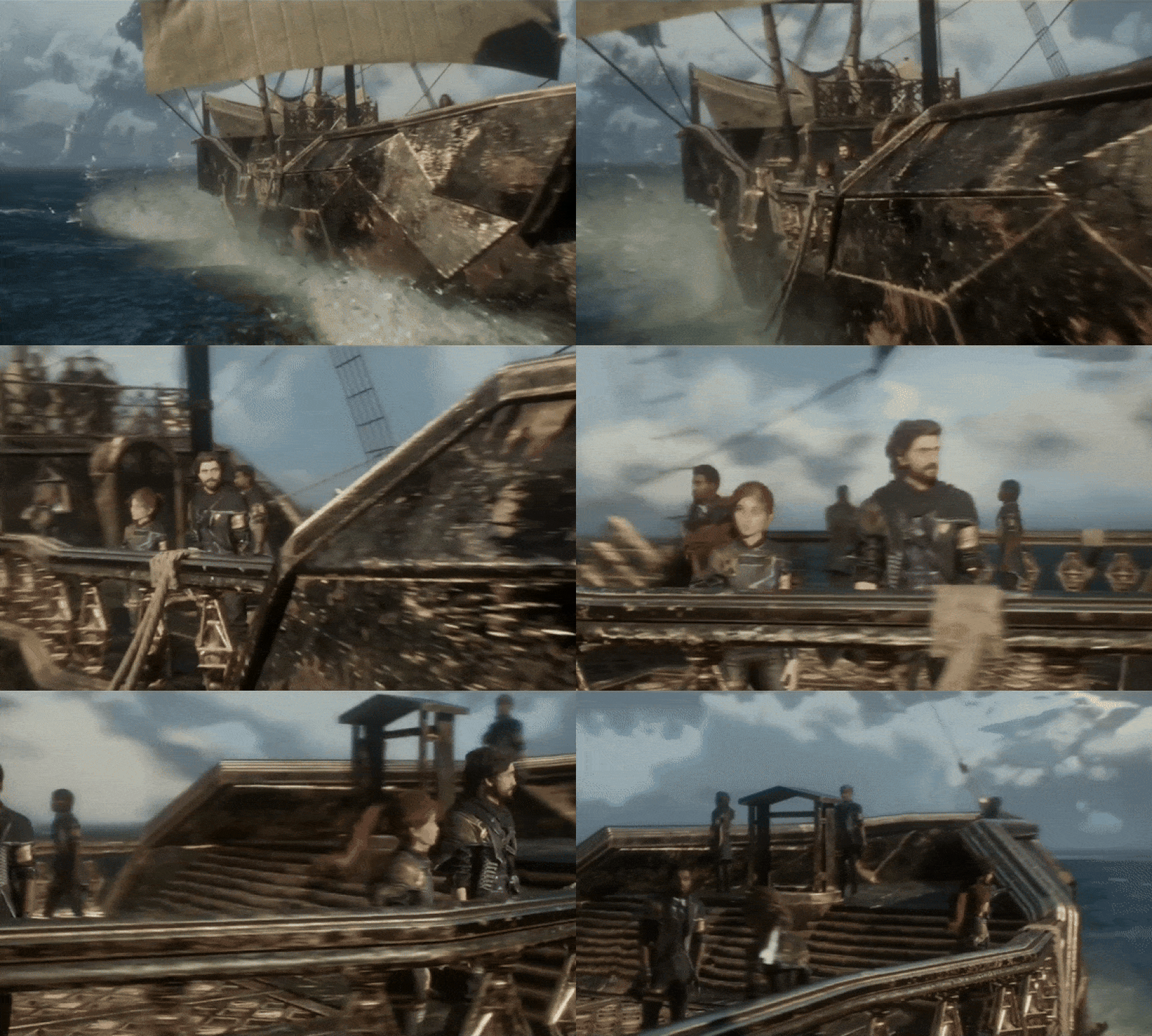
As Expedition 33 is dispatched to the Continent — the remnants of the old world — to find the Paintress, the core gameplay loop revolves around exploration and combat.
We‘ll get to combat in a minute, but you’ll be exploring different environments such as the aforementioned Flying Waters, Stone Wave Cavern or the Gestral Village.
Flying Waters looks like the bottom of the sea, with enemies themed like sea creatures, and coral reefs and oceanic plants making up the landscape.
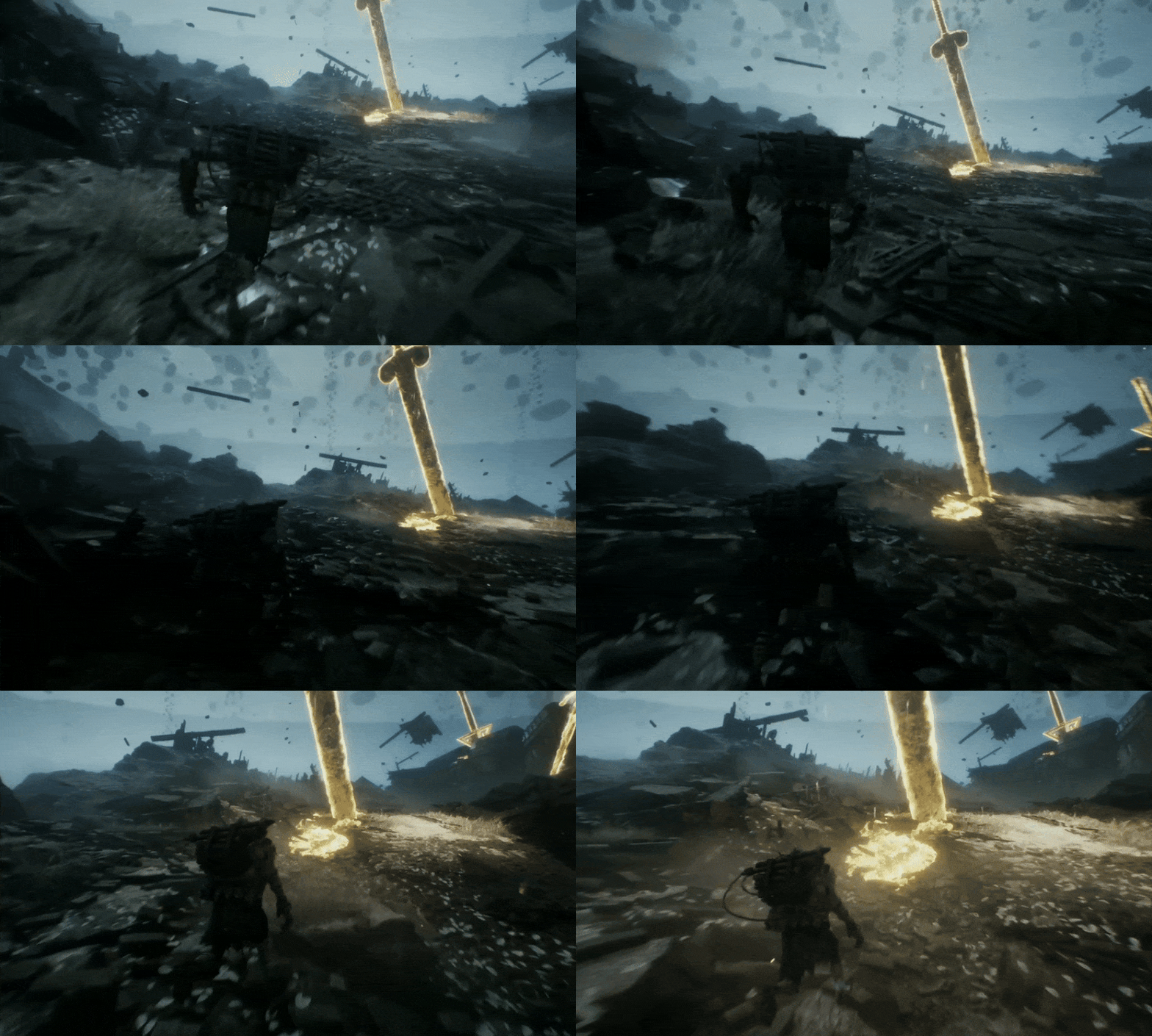
The skyboxes are what truly stood out to me, with floating rocks and destroyed architecture, and the monolith in the background. Sometimes these are dotted with stars or blazing with auroras, but they’re all incredible.
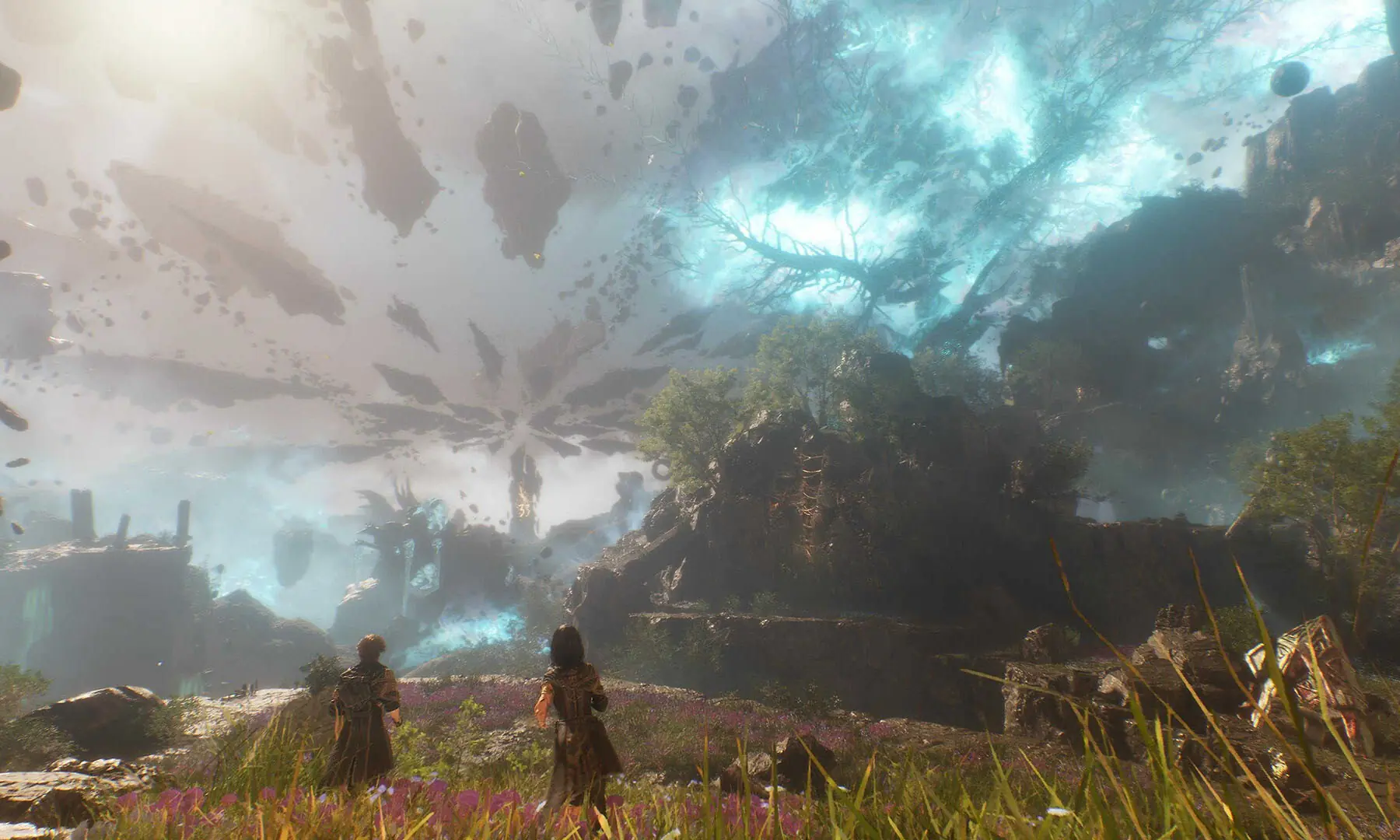
The levels are beautiful and easy to get lost in, both in the literal and figurative sense. It’s very easy to lose your sense of direction since parts of a level look very similar.
In Flying Waters, you’ll end up going in circles sometimes, since streets will bear the same coral and destroyed buildings. There’s also no map for these areas, which makes the problem worse.
Fortunately, you’ll end up fighting enemies while roaming, so you can get some free experience while searching for the right way forward.
Blades, big enemies and blasts of fire
Clair Obscur features a turn-based combat system similar to the Final Fantasy games. I’ve never really been into turn-based combat; in my opinion, it’s less immersive, since enemies are politely waiting for their turn while you’re busy whaling on them. But this one is quite special.
You have multiple characters in your party, each with unique moves and abilities, which look amazing when executed. Effects like flashes of light and shockwaves really sell how powerful the expeditioners really are.
Visually, it’s a spectacle to behold, even if at times it feels like there’s too much happening on screen.
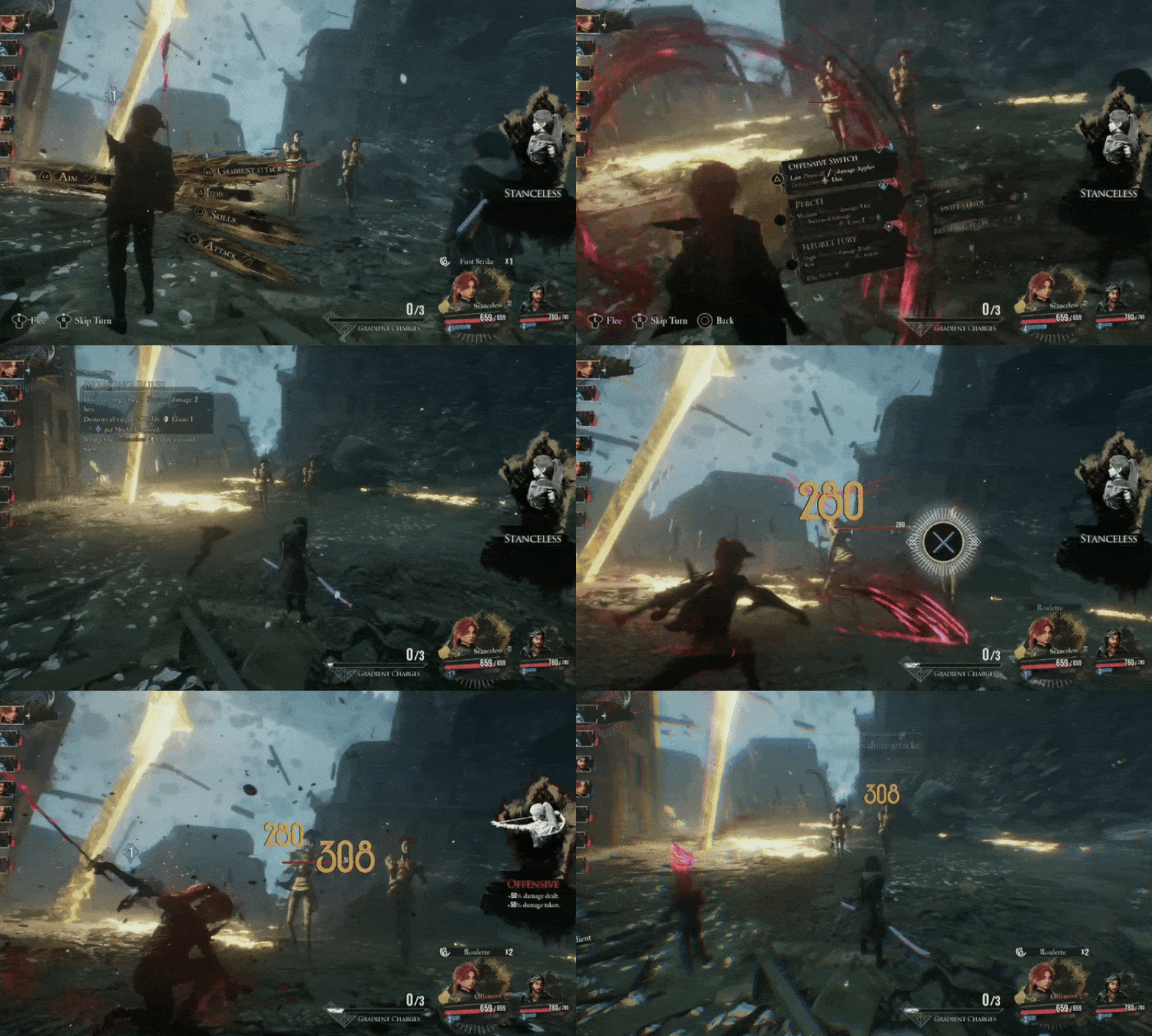
The player can dodge and parry attacks during the enemy’s turn, while also hitting button prompts with the right timing to boost their own. It’s an interesting twist on a system which previously put me off games like this.
With parrying in particular, blocking multiple attacks in a row triggers an automatic counterattack. Not only does it look awesome, but there’s a bass-boosted sound effect, which is very satisfying to hear.
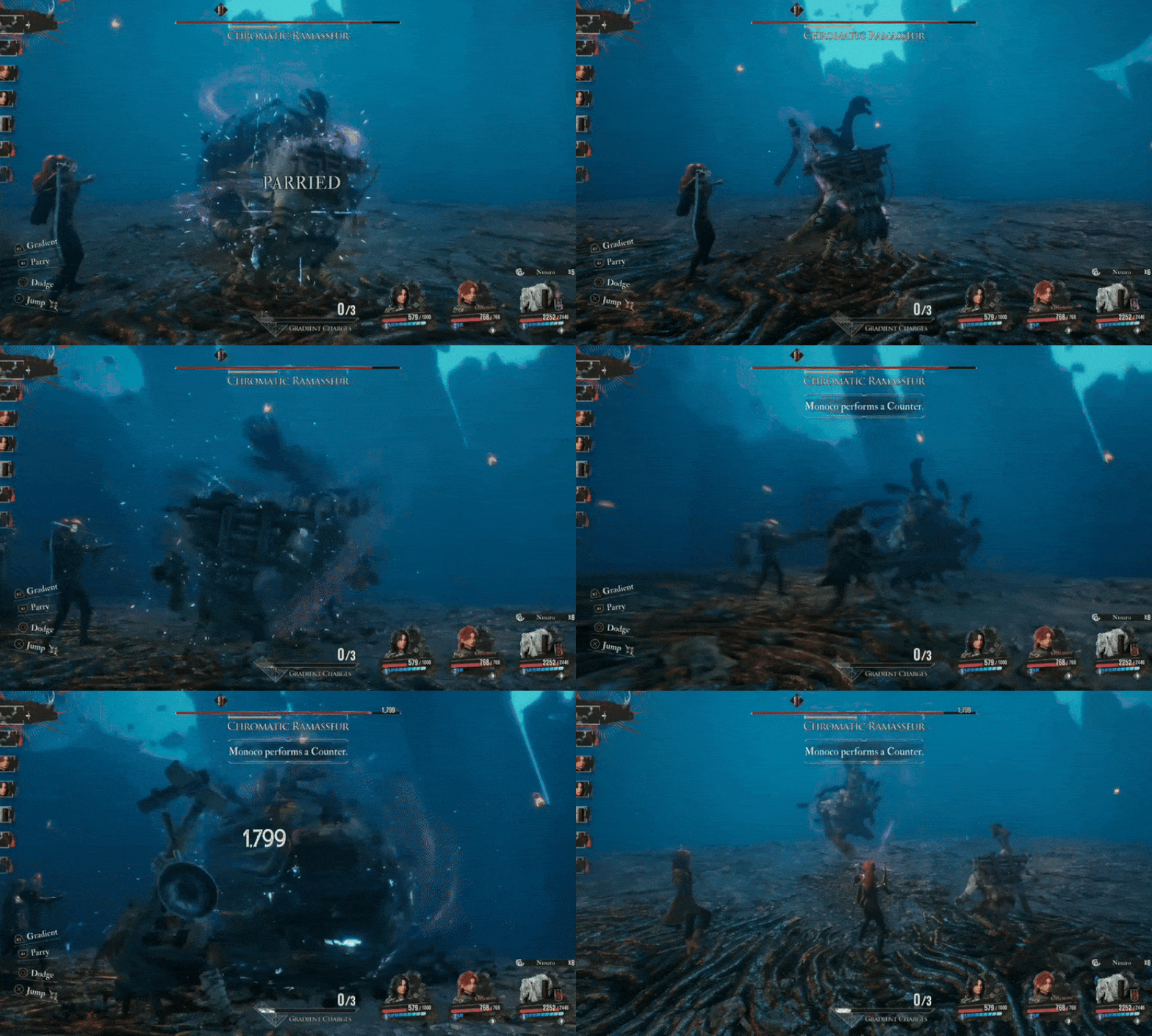
Clair Obscur’s combat feels engaging and tactical, with a variety of attacks and character builds that allow you to develop synergy among your team. Characters can perform moves that set up even more powerful attacks by another team member in the next turn.
There is a learning curve to the combat system, though; players have to learn the timing for dodges and parries. Expeditioners are fairly squishy and can go down in a couple of hits, so failing to repel or avoid enemy attacks will lead to many failed battles.
This was demonstrated by a mini-boss whose moves can kill characters in two hits if not dodged or parried in time. I was stuck on this one fight for at least 20 minutes trying to learn the timing before just barely defeating him. I found it’s better to lose fights and learn an enemy‘s attack patterns, so that you have a better approach upon a restart.
I wasn’t expecting to enjoy the combat system as much as I did. It’s very well thought out, with all the various systems working well together.
Je t’aime, Clair Obscur
Having played Clair Obscur: Expedition 33, I can absolutely see how it earned Game of the Year.
It looks beautiful, it sounds amazing, combat is fun and engaging, and you‘re treated to a compelling story with a likeable cast of characters. I haven’t found anything I outright hate, and criticisms feel like nitpicking.
I would have expected this from a bigger studio, and the quality just goes to show the talent at Sandfall Interactive. It also bodes well for the team’s future. It’s also good to play a game that was meant to provide players with a fun, immersive experience, not be a cash cow.
Personally, Ghost of Yotei was my pick for Game of the Year, but this comes in a very close second place. It absolutely deserves a spot in any gamer’s library.
C’est magnifique! Bravo!
Mikail Ahmed Shaikh is a senior sub-editor on Dawn’s online news desk with four years of experience in the field. His reporting focuses on defence, security, and terrorism, and he also reviews video games for the publication. He can be found on X at @MikailAhmedShaikh.