

URBANISM: THE GEOGRAPHY OF PAKISTAN’S POPULATION GROWTH
Urbanisation patterns over the past two decades dictate that the future is decidedly city-bound. The UN-Habitat’s World Cities Report 2022 shows that the global urban population will increase from 54 percent in 2015 to 62 percent by 2036.
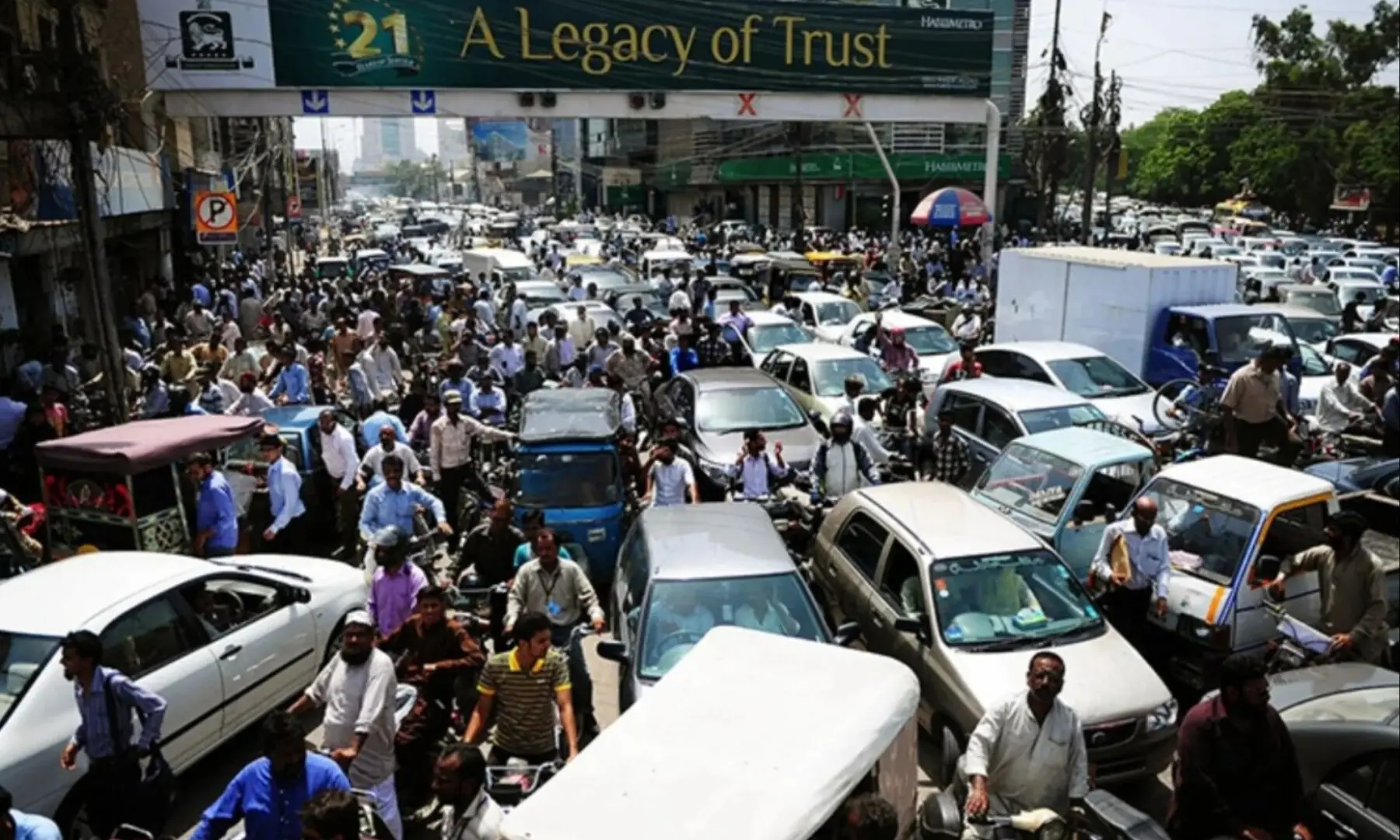
Pakistan is no stranger to this trend. We are living through the greatest demographic shift of our time and Pakistan’s cities are woefully unequipped to deal with the fallout. Unlike conventional urbanisation, which is driven by economic success, Pakistan’s is fuelled by population increase — 2.55 percent annually, the highest in South Asia.
A recent World Bank study argues that Pakistan is far more urban than official figures suggest — closer to 88 percent rather than the reported 39 percent. The surge in population, combined with waves of rural-to-urban migration, is driving an explosion in demand for housing, water, transport and jobs.
CITIES SPREADING THIN
The UN-Habitat’s 2022 report estimates that over the next 50 years, most of the physical expansion of cities — 141 percent of city land growth — will occur in low-income nations, with another 44 percent in lower-middle-income countries, such as Pakistan.
However, city authorities lack the resources or capacity to keep up. The influx of migrants rapidly overwhelms local governments, creating a service delivery crisis. Pakistan’s major cities are spreading outwards into suburbs and peripheral zones, converting land for urban use far faster than services or natural buffers can keep pace.
Pakistan’s cities are expanding outward at unprecedented rates, replacing vegetated land with concrete sprawl. This isn’t just an urbanisation story, it’s a climate crisis in the making
What this also means is that the country’s population challenge is playing out most visibly at its urban edge, where sprawling growth is replacing green fields, orchards and open land with concrete, asphalt and housing colonies.
THE VULNERBALE EDGE
Expanding cities consume landscapes that once kept them habitable. Lahore’s edges, lined with farmland and tree belts two decades ago, are now covered in paved housing schemes. Data from the Urban Unit of Punjab’s Local Government and Community Development department shows that Lahore’s built-up area expanded by 326.23 square kilometres between 1990 and 2020, replacing vegetated, open land and water bodies across the metropolitan region.
Karachi follows the same pattern. WWF-Pakistan has documented how protected mangroves and coastal green spaces have been cleared for housing schemes and urban development, weakening ecosystems that regulate coastal temperatures and humidity.
Even meticulously planned Islamabad has succumbed to this relentless sprawl. The capital has experienced one of the steepest increases in its built-up area nationwide. According to WWF-Pakistan’s GIS analysis, Islamabad’s concrete footprint exploded nearly seven-fold (a 686 percent increase) in just three decades, growing from 2,693 hectares in 1990 to 18,469 hectares in 2020.
Alarmingly, much of this rapid expansion has occurred on the city’s fringes, encroaching upon the sensitive ecosystems of the Margalla Hills National Park and vital open scrublands.
THE THERMAL SHIFT
As cities expand, what disappears is nature’s cooling system: fields, orchards, wetlands and tree belts that store moisture and regulate airflow. Replacing these landscapes with concrete, asphalt and brick alters the thermal behaviour of the entire city. Land that once cooled rapidly at night now traps heat long after sunset. Surfaces that once absorbed rainfall now accelerate runoff and leave little water in the ground.
This outward expansion matters because, as cities sprawl, they alter the physical and climatic conditions of their environment. Studies across Pakistani cities show that land surface temperatures in peripheral zones are rising much faster than in central cores, pushing millions of people into heat-exposed housing before they even cross the threshold of “urban liveability.”
For example, a recent Pakistan-based study found nighttime land surface temperature differences between city centres and outskirts of 4.1-5.0 degrees Celsius in major cities, with strong correlations between population density, built-up area and surface temperature.
FROM PERIPHERY TO FRONTLINE
The country’s population crisis is fundamentally a land-use crisis. It is happening because a growing population is being pushed into more vulnerable, hotter and flood-exposed places, built through sprawling development. The true climate tension will play out in the coming decades in Pakistan’s peri-urban belts, where demographic pressure and poorly managed land conversion dangerously magnify the risks of increasing heat and environmental collapse.
Heat disrupts how people live, move and earn. Pakistan’s demographic boom concentrates in peri-urban areas, where thermal stress accumulates, generating social and economic pressures: reduced labour productivity for outdoor workers, intensified air pollution in low-tree-cover housing schemes, and heightened public health crises from heatstroke and related illnesses.
Without tree cover or shade, peripheral temperatures remain high into evening, limiting activity and raising cooling costs. For millions of low and middle-income families that cannot afford air-conditioning, this means prolonged exposure to temperatures that exceed thresholds for health and productivity.
Sprawl also strains services that were never designed to accommodate this scale of outward growth. As cities stretch, municipal water networks thin out, leaving newer neighbourhoods dependent on private bore wells or tanker supplies.
In hotter microclimates, this intensifies demand on already stressed aquifers, increasing extraction precisely where natural recharge has been reduced by paved surfaces. Power grids in peri-urban areas, often the last to be upgraded, struggle during peak heat months, when cooling needs spike. When power outages coincide with heatwaves, the consequences can be fatal, particularly for children, the elderly and outdoor workers.
Low-density expansion also forces longer commutes and near-total reliance on private vehicles, raising emissions and exposing more people to peak temperature. For women, the lack of shaded walkways, safe public transport and covered waiting areas limits mobility further, constraining access to education, employment and healthcare during summer months.
RETHINKING URBAN GROWTH
As these patterns deepen, the geography of Pakistan’s population growth will begin to resemble the geography of its climate risk.
New households are being absorbed into localities where temperatures remain elevated after sundown, where water must be sourced privately, and where roads, schools, clinics and parks arrive long after residents do. Essentially, the population boom is increasing the number of urban Pakistanis living in conditions shaped by heat.
It is important to ask how many people Pakistan will have in 2050, but it is also equally important to ask where those people will live and in what kind of urban environments. If the sprawl continues to guide this expansion, the next several decades will trap millions into hotter climates, with limited public infrastructure and declining ecological buffers. The physical form of our cities will shape demographic futures far more than demographic futures will shape the cities.
Slowing this trajectory requires rethinking how urban growth is managed. It means protecting the vegetated belts and agricultural lands that still exist on city edges, encouraging compact and mixed-use development and planning for density rather than extension.
It also means strengthening metropolitan governance, so that land-use, transport and environmental management are coordinated rather than fragmented across competing authorities. None of this will halt population growth, but it will determine whether that growth intensifies climate exposure or is absorbed into more resilient, liveable urban forms.
Pakistan’s population challenge is inseparable from the spatial choices its cities are making today. If sprawling expansion continues unchecked, the urban edge will become the country’s most enduring climate frontier, where demographic pressure, land conversion, and rising heat converge to shape the everyday realities of a rapidly growing nation.
Bakhtiar Iqbal is an urban economist and climate strategist. He can be reached at iqbalbakhtiar@gmail.com
Sheheryar Khan focuses on environmental issues and is currently associated with WWF-Pakistan. He can be reached at sheheryarkhan95@gmail.com
Published in Dawn, EOS, December 14th, 2025
Header Image: A congested road in Karachi | AFP