WILDLIFE: THE FADING BIRDS OF PAKISTAN
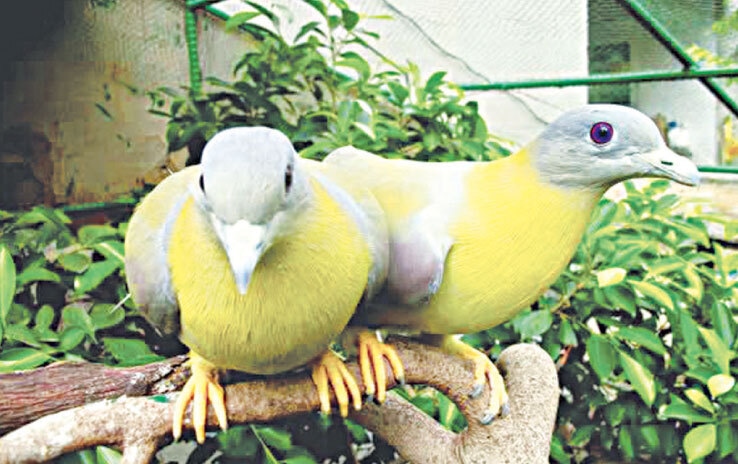
It all began one ordinary evening, after dinner, with steaming cups of tea in hand. I showed a short video clip of a harial — a yellow-footed green pigeon — carefully weaving its nest in a tall tree. The reaction from my friends was telling: surprise, even disbelief.
“Such a pigeon exists? And in Pakistan?” Their faces betrayed the fact that, while we live among one of the richest avian ecologies in Asia, many of its residents remain strangers to us.
We celebrate the falcon, romanticise the dove and mourn the sparrow’s decline. Yet, Pakistan shelters more than 700 bird species and most of them live outside our cultural memory. Among those forgotten neighbours are three birds remarkable in their own right: the harial pigeon, the roller and the hornbill.
Each plays a role in our ecosystems and each tells a story about what it means to coexist with nature in a time when attention is our scarcest resource.
Pakistan’s ecological crisis is not just due to habitat loss, but also because of the loss of cultural memory. The harial, roller and hornbill are fading from our landscapes because they have first faded from our stories…
Harials — The Ghosts of the Canopy
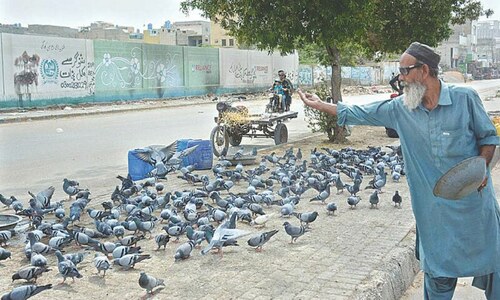
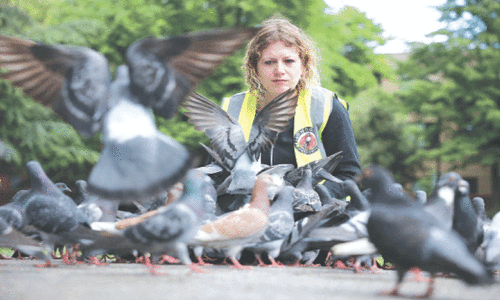
Unlike the familiar rock pigeons scrabbling for crumbs in Lahore’s Saddar or Liberty Market, the harial, scientifically known as Treron phoenicoptera, is a creature of the canopy. Olive-green and blending perfectly with foliage, it often goes unnoticed even when perched in plain view.
Harials are strict frugivores — animals that thrive mainly on fruits. They feed on banyan, peepal [sacred fig], neem and other fruiting trees, swallowing whole figs and berries. By dispersing seeds over long distances, they serve as gardeners of Pakistan’s groves. Their nests are simple platforms of twigs, often high in trees. The female lays two white eggs, which both parents incubate. Their soft cooing is gentler than that of city pigeons, almost meditative.
Harials are largely homebodies, though local movements occur depending on fruiting cycles. When certain trees ripen, entire flocks shift temporarily, following the food source. Classified as birds of “least concern” by the International Union for Conservation of Nature (IUCN), harials remain common in South Asia. Yet in Pakistan, their habitat is increasingly fragmented. The slow felling of old trees in villages and towns means fewer nesting grounds and fruit sources. Their invisibility to the public eye makes them doubly vulnerable.
The harial is a quiet presence, a reminder that not all pigeons are scavengers of dust and concrete — some carry the scent of wilderness and the memory of fruiting forests.
Rollers — The Acrobats of the Sky
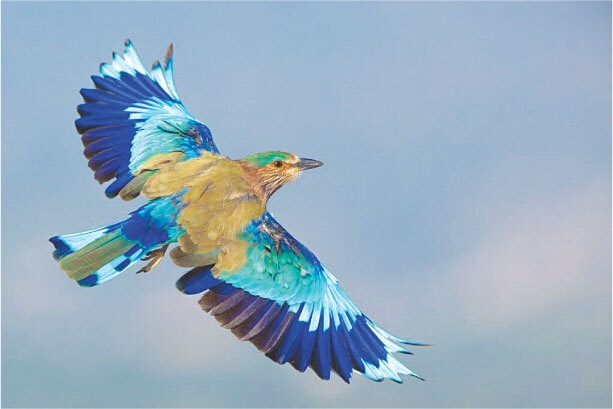
If the harial hides in plain sight, the Indian roller (Coracias benghalensis) flaunts. This bird is flamboyance on wings: shades of turquoise, cobalt and brown flash brilliantly in sunlight, as it performs tumbling dives and aerial somersaults during its courtship displays. It is these manoeuvres that earned it the name “roller”.
Rollers feed on large insects, beetles, grasshoppers and, occasionally, small reptiles. Perched on electric wires or poles along fields, they swoop down on prey with startling speed. Farmers quietly appreciate their appetite for pests, even if they rarely speak of it.
Rollers make their nests in tree holes or, sometimes, in building crevices. They lay around three to five eggs. During breeding season, their aerial displays become even more extravagant, turning the sky over farmlands into a stage.
They are largely resident across Pakistan’s plains, though northern populations may shift south in winter. They are highly visible along highways and agricultural belts. Also, listed as birds of “least concern”, the roller is still common but, like so many farmland birds, it is at risk from pesticide-heavy agriculture. Declines have been noted in places where insect populations collapse under chemical pressure.
The roller is Pakistan’s airshow: a burst of colour and aerobatics above the monotony of fields. Yet most of us pass it by, eyes fixed on roads, never lifting our gaze to the small spectacles above.
The Hornbill — Keeper of Ancient Forests
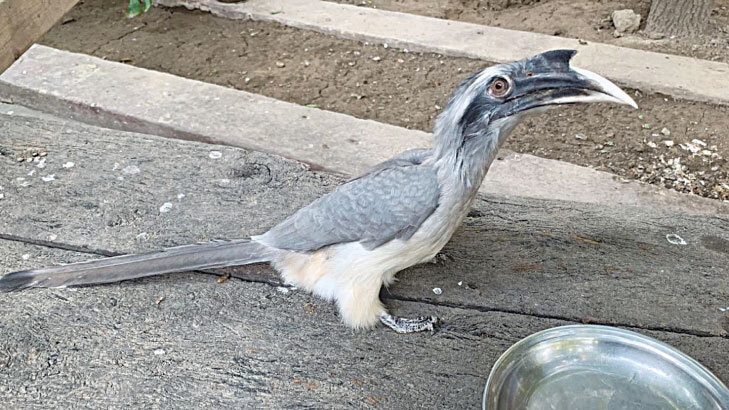
Where the roller dazzles and the harial disappears, the hornbill commands attention. With its large curved bill and the casque crowning it, the hornbill looks almost prehistoric, as if it carries an echo of dinosaurs. In Pakistan, the Indian Grey Hornbill (Ocyceros birostris) is the most widespread, found in Sindh, southern Punjab and patches of old trees elsewhere.
Hornbills are primarily frugivorous but they also eat insects, lizards and even small mammals. Their role as seed dispersers is unmatched — they consume large fruits whole and deposit seeds far from the parent tree, ensuring forest regeneration.
Their nesting ritual is one of the most extraordinary in the avian world. The female enters a tree cavity and seals herself inside with mud, leaving only a narrow slit. The male dutifully passes food to her and, later, to the chicks through this opening. The female hornbill remains sealed in until the chicks are strong enough to break out. This ritual reflects not only cooperation but the intimate dependence of the species on old-growth trees.
Hornbills are non-migratory. They live year-round in their territories, which makes them especially vulnerable when forests are cleared. The Indian Grey Hornbill is still listed as a species of “least concern”, but its dependence on large trees makes it acutely sensitive to habitat loss. Urban expansion and the clearing of old groves are steadily pushing it out of many areas where it once thrived.
A hornbill flying overhead, with its loud wingbeats and clumsy majesty, feels like a visitation from deep reaches of time. To lose it would be to erase an ecological story still unfolding in our forests.
In conversations about Pakistan’s environment, we often leap to extremes — the snow leopard, the Indus dolphin, the mangrove forests. Yet, the quiet survival of less glamorous birds tells us more about the health of our everyday landscapes. The harial speaks for fruiting trees, the roller for insect-rich fields, the hornbill for ancient forests. To notice them is to notice what still survives around us.
Our problem is not simply loss of species, but loss of attention. Once a bird becomes invisible in culture, its decline goes unremarked. If my friends, educated and well-read, did not know of the harial pigeon’s existence, what chance does it have of finding defenders when its groves are cut down?
It takes little to begin reversing that invisibility. Keep an eye on fruiting trees — that flash of olive-green may be a harial. Stop the car by a wheat field and watch the turquoise acrobatics of a roller. Walk through an old grove in Sindh and, if fortune allows, listen for the heavy whoosh of a hornbill’s wings.
The birds are here. They have always been here. What is missing is our habit of noticing. And in noticing lies the first act of protection.
Header image: Indian roller | Courtesy Bird Count India
The writer is a banker based in Lahore. X: @suhaibayaz
Published in Dawn, EOS, November 9th, 2025