

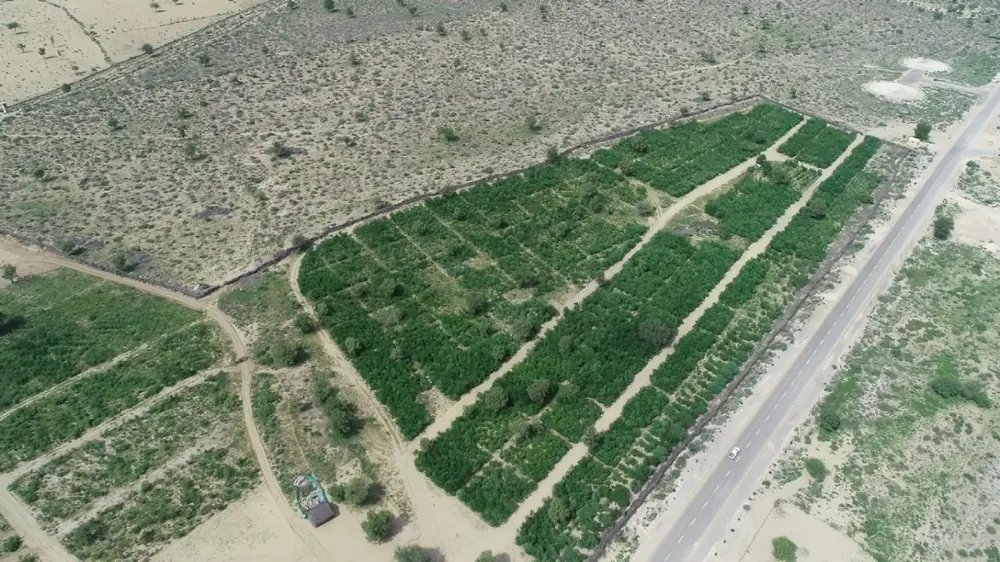
How Thar Foundation and IUCN Pakistan are turning Thar into a model of sustainability
In Tharparkar, a land often associated with scorching heat and scarce rainfall, a quiet miracle is taking root. Over the past few years, it has become home to one of Pakistan’s most ambitious community-driven biodiversity conservation efforts, led by Thar Foundation and IUCN Pakistan. Their collaboration spanning over a million tree plantations, the protection of critically endangered bird and plant species, enhancement of rangeland ecology, saline agriculture and environmental education for local communities is reshaping the desert’s story for both environmental sustainability and community wellbeing.
These initiatives took centre stage at the IUCN World Conservation Congress 2025 in Abu Dhabi, the world’s largest event dedicated to nature conservation, where the IUCN and Thar Foundation’s model of community-driven environmental action in Thar drew international attention.
Taking Thar’s story to the world
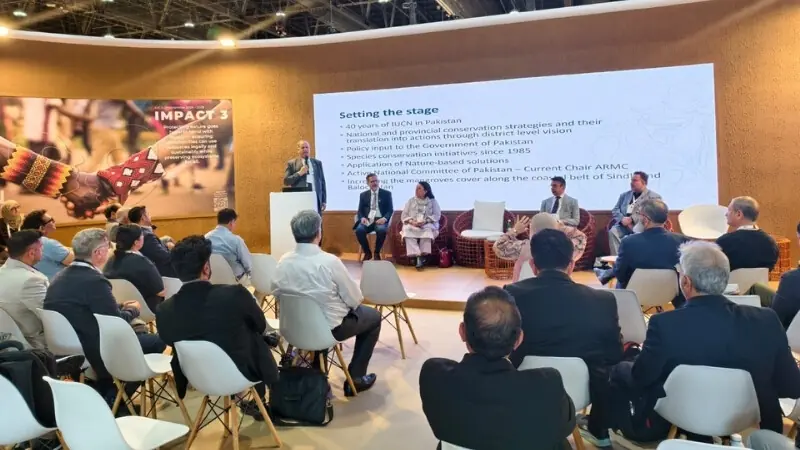
At the Congress, IUCN Pakistan hosted a dedicated pavilion session to present the country’s biodiversity conservation success stories. The session showcased the Upscaling Green Pakistan Programme, innovative community-led ecotourism initiatives, efforts to strengthen coastal resilience, biodiversity conservation and the implementation of a gender action plan in environmental management.
Among the speakers was Amir Iqbal, CEO of Sindh Engro Coal Mining Company (SECMC) and Thar Foundation, who highlighted the Million Tree Plantation, saline agriculture projects, and vulture and flora conservation initiatives that are restoring ecological balance in Thar.
Amir shared, “Our biodiversity conservation projects with IUCN in Thar align closely with the broader national agenda. These projects show that sustainability has always been at the core of our business strategy. It strengthens our social licence to operate and reinforces our commitment to responsible growth.”
A forest that tells the story of Thar’s resilience
In Thar’s arid landscape, where rainfall is scarce and temperatures often exceed 45°C, even maintaining a small garden is a challenge. Yet Thar Foundation set out to achieve a bold goal: the Thar Million Tree Programme.
Under this initiative, more than 1.2 million trees have been planted across Tharparkar to combat desertification and transform a 100-acre stretch of barren land into a thriving forest using the Miyawaki technique. Native species such as Roheero (Tecomella) and Kandi (Prosopis) were selected for their resilience in desert conditions.
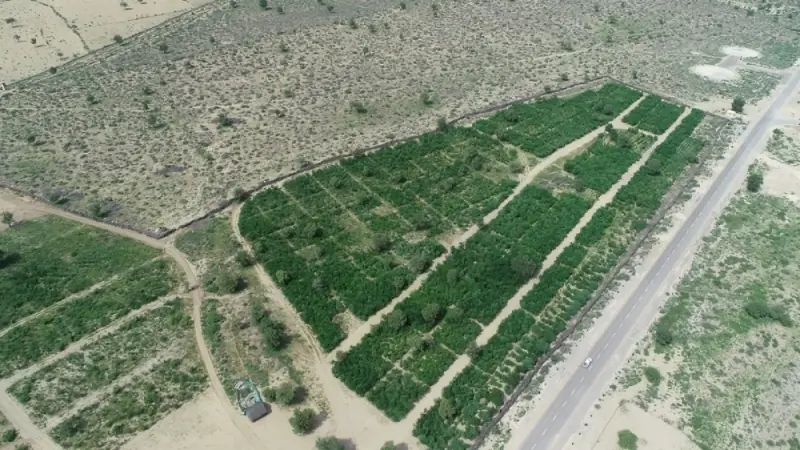
A 2022 IUCN study found that these trees have already absorbed over 123,000 tonnes of carbon. With a survival rate of 72 per cent, the forest stands as a living symbol of endurance and renewal.
“This project is special because it reflects the resilience of Thar’s people. When nurtured well, just like these trees, they thrive and turn what once seemed impossible into reality,” said Amir, reflecting on the programme’s success.
To sustain this green cover, drip irrigation and saline water utilisation techniques have been deployed, showing how technology and indigenous knowledge can come together to transform life in the desert.
An agricultural revolution against all odds
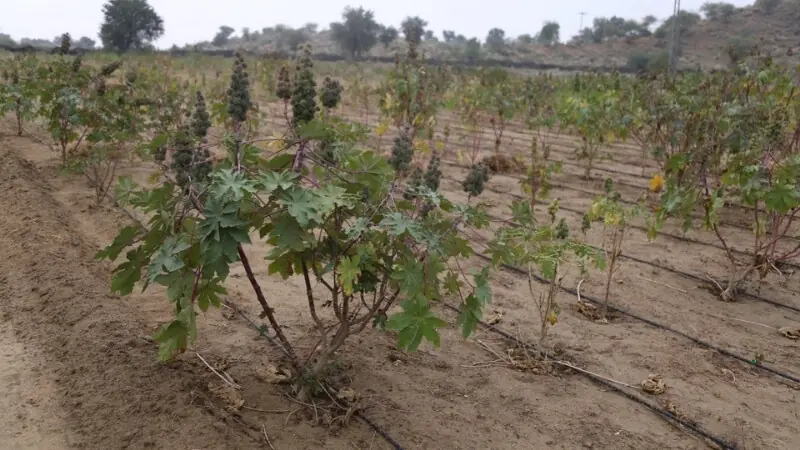
Frequent drought cycles in Thar create a domino effect for communities that depend on rainwater for growing fodder and crops. To counter this, Thar Foundation and IUCN have introduced saline agriculture, an innovative method of cultivating salt-tolerant crops that offers new hope and livelihoods to local farmers.
“We had no idea that crops could grow using saline water,” said 33-year-old farmer Manzoor Das. “The SECMC and Thar Foundation teams guided us and encouraged us to try it. Now we are seeing real results.”
With technical support, Manzoor began cultivating ladyfinger and tomatoes, both of which now thrive on his land and meet his family’s food needs. Encouraged by this success, he expanded to groundnuts and nutrient-rich fodder crops like Rhodes and King grass, ensuring feed for his livestock throughout the year.
Adding to his achievements, Manzoor also planted apple ber (jujube) trees on one acre of land. “The trees have grown well,” he said proudly. “This year, they will bear fruit for the first time.”
Across Thar, more than 165 acres of once-barren land have been transformed into productive farmland through modern irrigation systems and crop trials. Farmers are now cultivating apple ber, sesbania grass and other drought-resistant species.
For farmers like Manzoor, who had never experienced a steady income from agriculture, this means self-reliance and dignity. The saline agriculture project has tested over ten crop species, proving that Thar’s communities can grow food, earn livelihoods and conserve biodiversity at the same time.
Conserving biodiversity for future generations
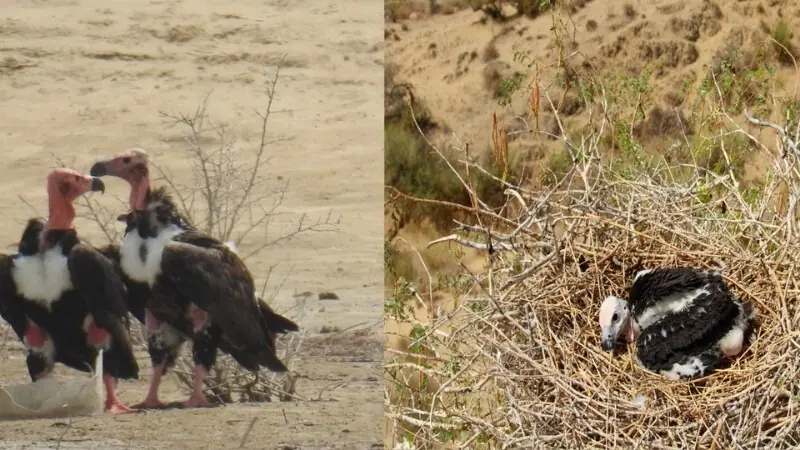
Biodiversity loss is often invisible until it is too late. In Thar, however, some of the most visible guardians of nature are its birds, particularly vultures. When vulture populations collapsed across South Asia due to toxic veterinary drugs, Thar became one of their last remaining safe havens.
In 2018, Thar Foundation and IUCN launched a vulture conservation project to protect nesting sites and raise awareness among nearby communities. Through extensive engagement, they identified and safeguarded 250 nests, installed artificial nesting platforms and involved 15,000 residents across 48 villages. More than 2,000 young people were trained on the ecological importance of vultures.
Thanks to these sustained efforts, Thar is now recognised as a Vulture Safe Zone, with its vulture population recovering and making it a rare conservation success story in Pakistan.
The IUCN-SECMC partnership continues to build on over four years of work, including a comprehensive ecological baseline survey of Tharparkar’s flora and fauna. The survey documented 149 plant species, including two globally threatened trees, the Indian Bdellium and Desert Teak. Many of these native species provide essential ecosystem services that sustain both wildlife and local livelihoods.
“The Thar flora includes some of the most unique and threatened plant species in the world, including those listed on the IUCN Red List,” said Mahmood Akhtar Cheema, Country Representative, IUCN Pakistan. “The collaboration between IUCN and Thar Foundation is not only contributing to local ecological resilience but also advancing global biodiversity goals.”
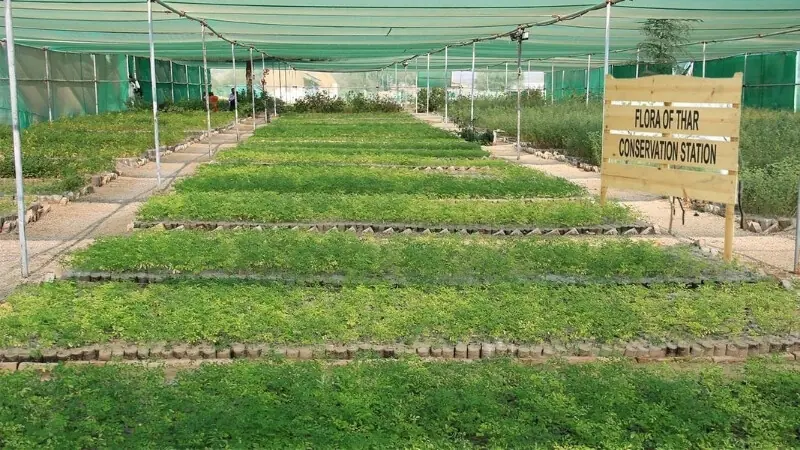
Building on these findings, Thar Foundation and IUCN established Pakistan’s first Flora Conservation Station in Thar, a sanctuary for native plant species and a hub for ecological research. Managed on ground by Baanhn Beli, the facility reflects a long-term commitment to conservation and community-led ecosystem management.
A journey of hope and resilience
The IUCN World Conservation Congress 2025 brought these success stories from Thar to a global stage. They serve as a powerful reminder that with partnership, innovation and a shared sense of purpose, even one of Pakistan’s harshest landscapes can become a living model of resilience.
While substantial progress has been made, much more remains to be done to scale these initiatives across the country. For now, the dense forest in Thar, the green fields of saline agriculture and the vultures soaring overhead tell a story of what is possible when people and nature work together.
This content is produced in paid partnership with Thar Foundation and IUCN Pakistan under DAWN’s Breathe Pakistan initiative to highlight actionable solutions and collective efforts for environmental protection in Pakistan.