SMOG IS THE FIFTH SEASON
IT is not rare anymore for Lahore to be the most polluted city in the world, with the Air Quality Index (AQI) crossing all known hazard zones. Just days ago, it was 180 when it should have been less than 100 to be acceptable.
Alarmingly, it was September, which is not even considered part of the dreaded smog season when AQI values soar past the 1,000 mark; twice of the upper cap of the AQI hazardous range.
In the IQAir country ranking for 2024, Pakistan was third on the list of countries having the worst air quality, following only Chad and Bangladesh. In 2024, AQI in several cities of Punjab crossed the hazardous level.
Other than Lahore, these cities were Multan, Faisalabad, Gujranwala, Sialkot and Rawalpindi/Islamabad. In November last year, the AQI crossed 1,000 for the first time since the monitoring of smog started in Lahore. In the same month it touched 1,173.
According to the Pakistan Air Quality Initiative (PAQI), the pollution of PM2.5 — fine particulate matter in the air that causes the most damage to health — pollution increased by 25pc in Lahore in 2024 compared to 2023. The average pollution level also went up by 23pc compared to last year. These are serious numbers demanding serious actions.
Activist Dr Ajaz Anwar, spearheading the Lahore Conservation Society, says there was a time when most people would walk in the city and ride bicycles. “One cannot even think of these activities in contemporary Lahore because the city has been expanded in such a way that there is no space left for either pedestrians or cyclists.” Lack of public transport, he says, has led to an influx of motorcycles and rickshaws that emit smoke and pollute the air.
LIFE EXPECTANCY IN PUNJAB HAS GONE DOWN IN THE LAST FEW YEARS. WHAT SHOULD WE EXPECT NEXT?
Zainab Naeem, an environmental scientist working with the Sustainable Development Policy Institute (SDPI), also believes that other than the natural phenomena involved, human activities — vehicular emissions, stubble burning, brick kilns and industrial emissions — are behind the spike in air pollution.
Worryingly, the expert expects to have a more severe spell of smog this winter due to heavy floods across Punjab in both Pakistan and India. “There were long spells of rains and heavy flooding in the riverine areas of Ravi, Sutlej and Chenab across the border. The floods brought silt and mud with them and left it behind on the planes when the floodwater receded. The moisture in the air holds dust particles rising from the silt left behind by floodwater for a longer time and this can cause more pollution, hence more smog,” she warns.
However, environmental lawyer Ahmed Rafay Alam sees a silver lining, saying that many areas in the rice belt of Pakistan had the crop washed away completely by the floods, which means there would be less crop residue burning this season.
The eastern wind that takes smog and air pollution away from Pakistan may come in October this year instead of November when it normally starts blowing. “The early wind and less crop burning may lead to less intense smog, and, if it happens, the change would occur only owing to the natural phenomenon,” he stresses.
Talking about the administrative issues involved, Rafay points out that after the 18th Amendment, the environment became a provincial subject, and the provinces made their own laws. The problem, he points out, is that they just copied the earlier federal law without doing any extensive work on it. Punjab was no different. While hearing a public interest petition in 2016, the then chief justice of the Lahore High Court asked the provincial government to make a policy on environment which the relevant department subsequently presented in the high court. A Smog Commission was formed on the order of the court, which prepared a policy document to mitigate and control smog and air quality in 2017, recalls Rafay, regretting that a political change in 2018 changed everything. He suggests the formation of new laws as the current ones were drafted 30 years ago.
The government, says Zainab, should take steps to increase buffer zones to improve air quality, and focus on building a circular economy that may utilise crop residue as raw material for other products. “Industrial emissions should be controlled, and air pollution data should be collected to make effective strategies to fight air pollution.
Data should be collected from the Indian Punjab as well, using satellite technology in case the Indian government does not share it voluntarily. Cycling should be promoted, and the entry of heavy vehicles in cities should be banned except for certain days of the week,” she adds. Dr Ajaz also suggests increasing the green cover in the cities, but regrets that even though trees produce oxygen, “it is tragic that trees are being taken down in the name of development”.
While all these suggestions sound good, Rafay throws a spanner in the works by pointing out that even if Punjab starts taking all the required action to control air pollution today, it would take at least eight to 10 years to make a significant change, or bring the air back to bearable level. “And it will require massive investments at each stage.” Life expectancy in Lahore has already been reduced by eight years.
Punjab needs urgent action without hoping for an early result. This is quite a conundrum.
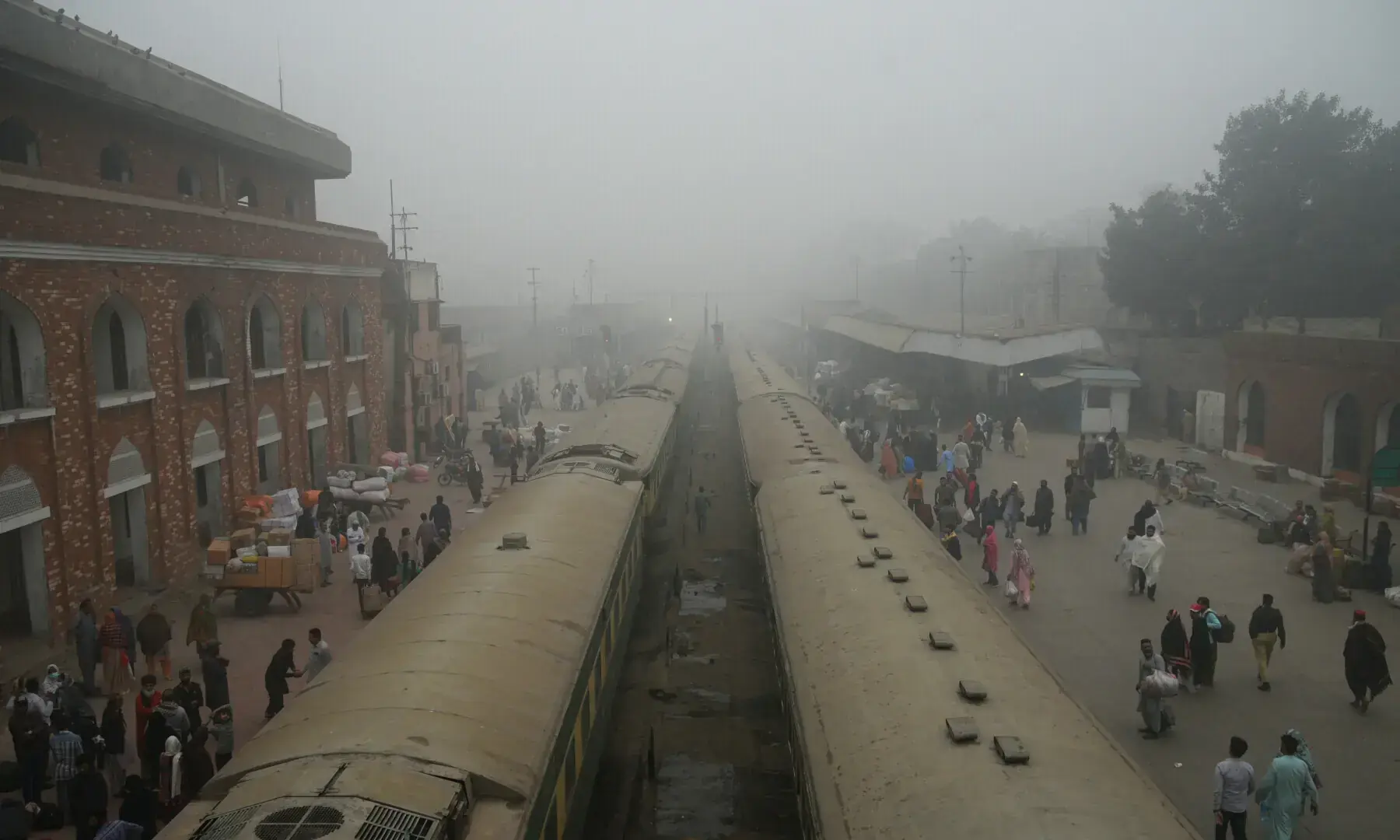
Header image: People walk to board trains amid smog and air pollution at a railway station in Lahore, on Nov 14, 2024. — Reuters
The writer is a member of staff