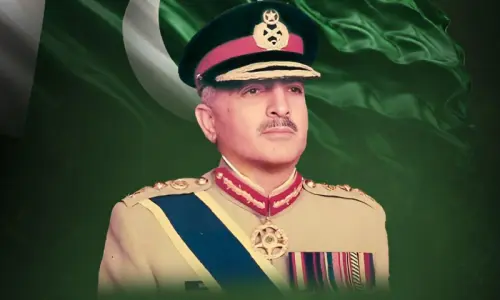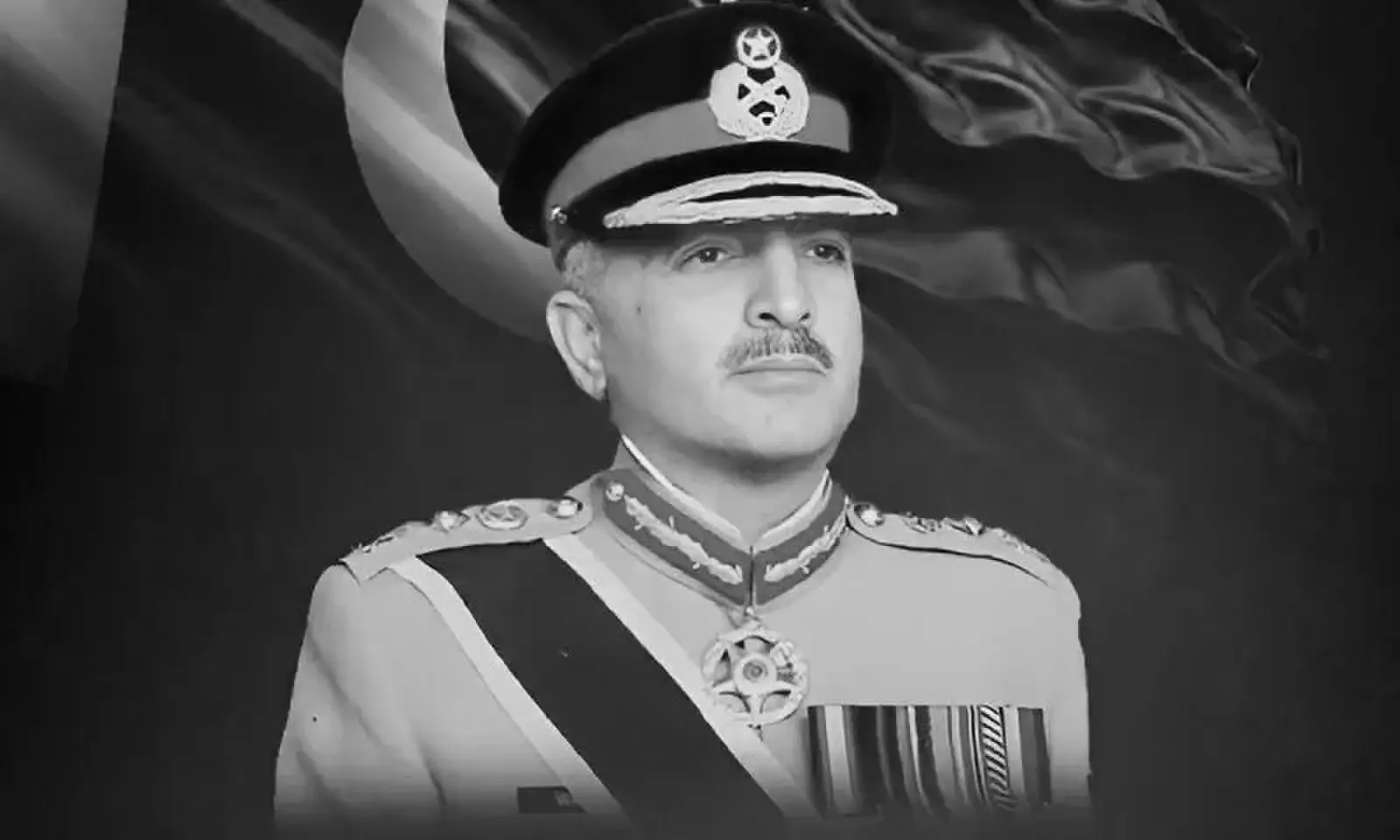
Remembering former army chief Gen Abdul Waheed Kakar
Former army chief retired Gen Abdul Waheed Kakar, who played a decisive role in resolving Pakistan’s 1993 political crisis, passed away in Rawalpindi on Monday at the age of 89. He leaves behind a legacy that will continue to figure in discussions on the country’s civil-military relationship.
His passing was announced by Inter-Services Public Relations, which said in a note that the Chief of Defence Forces and Chief of Army Staff, Field Marshal Asim Munir, and all ranks of the Pakistan Army expressed sorrow over his passing and paid tribute to his “distinguished military career, leadership and invaluable services”. President Asif Ali Zardari and Prime Minister Shehbaz Sharif also conveyed their condolences.
Gen Kakar is best remembered for helping end a serious confrontation between then-president Ghulam Ishaq Khan and then-prime minister Nawaz Sharif in 1993, when the country seemed on the brink of another prolonged political crisis and the government stood paralysed. His intervention led to the resignations of both the president and the prime minister, the installation of a caretaker government, and fresh elections that brought the late Benazir Bhutto back to power. The whole episode popularly came to be known as the “Kakar Formula”.
That episode is still referenced in modern discourse because the army under Gen Kakar not only avoided getting involved in the ongoing politics, but also stopped well short of imposing martial law or assuming direct governance. The Kakar Formula instead gave the stakeholders a way out of the political dispute, allowing the political process to continue.
Professional career
Born on March 23, 1937, in Peshawar, he belonged to the Kakar tribe, whose roots lie in Balochistan. Gen Kakar studied at Edwardes College in Peshawar before joining the army and was commissioned into the Frontier Force Regiment in October 1959. He saw combat in both the 1965 war with India, where he served in the Chawinda sector, and the 1971 war, where he served as a brigade major in the Sulemanki sector.
His subsequent career included command and staff appointments, including commanding the 16th Infantry Division and serving as chief of staff of II Corps in Multan. He attended the Command and Staff College in Canada, and later studied at the National Defence College in Rawalpindi.
As adjutant general at General Headquarters (GHQ) from 1987 to 1989, Kakar acquired a reputation for insisting on professional standards and merit. He was appointed commander of XII Corps in 1989 and positioned in Quetta.
Gen Kakar assumed command of the army on Jan 12, 1993, after his predecessor, Gen Asif Nawaz Janjua, died suddenly just months before the Ishaq-Nawaz dispute blew up.
His appointment by president Ishaq had come as a surprise because several lieutenant-generals senior to him were superseded, journalist Mariana Baabar, who had met Gen Kakar at the Armoured Mess shortly after his appointment, told Dawn.
Gen Kakar’s tenure saw Pakistan continue its missile development programme, including work that contributed to the Shaheen missile series.
Kakar resisted intense diplomatic pressure from the Clinton administration, which had offered to deliver the blocked F-16s if Pakistan agreed to a verifiable cap on its nuclear programme. He stood firm, refusing to compromise on the country’s strategic deterrent for conventional hardware.
In 1995, the army uncovered a conspiracy, which came to be known as Operation Khilafat, involving serving and retired military officers who were plotting to overthrow the government and assassinate Kakar and then-prime minister Benazir. The plot was foiled before it could be carried out.
Honours and retirement
Gen Kakar completed his three-year term on Jan 12, 1996, and declined an extension. He later retired from public life and settled in Rawalpindi, staying largely out of the public eye.
Baabar, who met him multiple times, recalled that he never showed an inclination towards any party, neither during his service nor afterwards. She also described him as moderate on religion, noting that he always advocated keeping professionalism and religion separate.
Gen Kakar received several military honours during his career, including the Nishan-i-Imtiaz (Military) and the Hilal-i-Imtiaz (Military). However, his place in the country’s history books rests less on the decorations he received and more on the events of 1993 and his decision, three years later, to retire without seeking to prolong his service.
Gen Kakar, who was said to be bedridden for several years before his passing, is survived by his wife, a son and a daughter.
Baqir Sajjad Syed is the Foreign Affairs and National Security Correspondent for Dawn. His career of over 25 years spans print and broadcast journalism. He is a former UN Reham al-Farah Fellow and held a Pakistan Fellowship at the Woodrow Wilson Centre in Washington, DC. He tweets @baqirsajjad