RETHINKING REHABILITATION


Large infrastructure projects are often presented as symbols of progress. New transport corridors promise faster mobility, greater regional connectivity and economic growth. Yet, the success of such projects depends not only on engineering but also on the way they transform the lives of the people who occupy the spaces through which they pass.
In Karachi, the proposed modernisation of Pakistan Railways’ Main Line-1 (ML-1) and the revival of the Karachi Circular Railway (KCR) illustrate this contradiction.
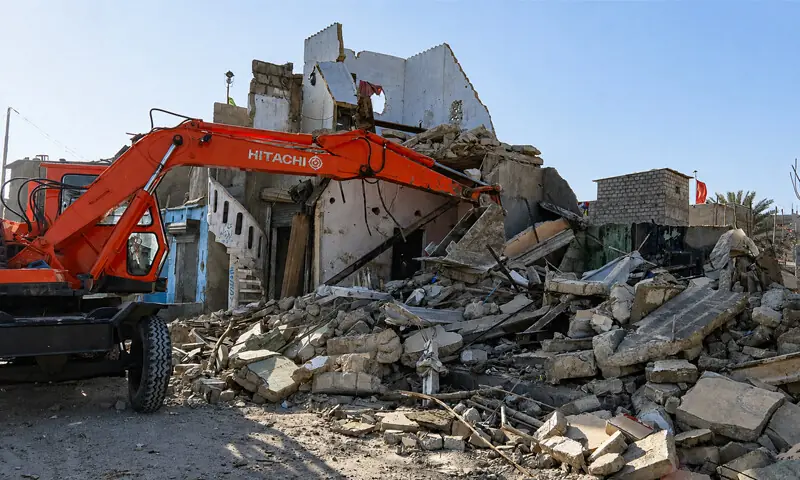
Both projects promise substantial improvements to the country’s transport network, but both also require extensive clearance of settlements that have existed for decades along the railway corridors. The discussion surrounding these demolitions has largely focused on removing what are considered ‘encroachments’ and reclaiming public land. Far less attention has been paid to the rehabilitation of the displaced population, despite the fact that it is rehabilitation, not demolition, that ultimately determines the fabric of urban life.
The much-needed ‘modernisation’ of Karachi's railway infrastructure may transform the city's and region’s future, but also involves displacing thousands of residents and informal communities currently living along its corridors. Too often, large projects are planned solely around efficiency and not keeping in mind the lives of those most affected. The question is not whether such infrastructure should be built, but how projects are envisioned and those facing dislocation and disrupted lives are rehabilitated…
A CITY OF INFORMAL SETTLEMENTS
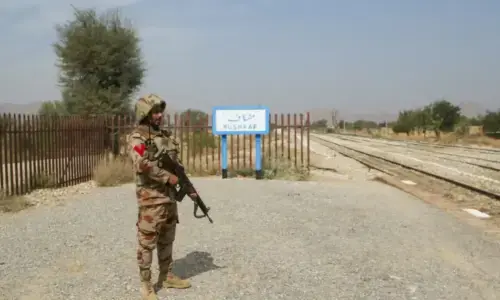
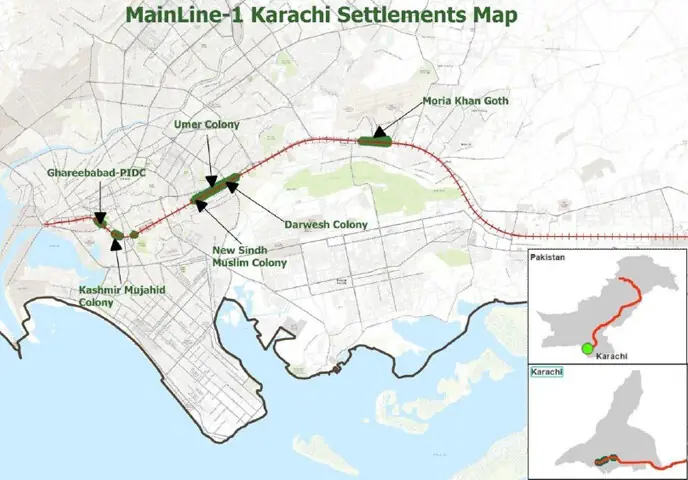
The scale of ML-1 displacement is expected to be significant. The railway corridor passes through some of Karachi’s most densely populated low-income settlements, including Ghareebabad-PIDC, Kashmir Colony, Kala Pul, Moria Khan Goth and several adjoining neighbourhoods. The defunct Karachi Circular Railway corridor, left unused for decades, gradually became home to thousands of households who settled there because formal housing remained inaccessible.
Current estimates suggest that Karachi formally contains approximately 582 katchi abadis [informal settlements]. However, unofficially, the number is much larger. In total, they contain nearly 62 percent of the city’s population. Most of these settlements have developed informally and exist because successive governments have failed to provide affordable housing despite rapid urban growth. Informality, therefore, is not an isolated legal issue but a structural outcome of the city’s housing system.
The official justification for demolition is straightforward: these settlements occupy railway land and, therefore, constitute illegal encroachments. Legally, this argument appears simple. In practice, however, it ignores the institutional failures that produced these settlements in the first place. It is also selective in its application.
Across Karachi, land reserved for public purposes has frequently been occupied by commercial enterprises, influential institutions, and politically protected developments, without attracting comparable enforcement. The removal of low-income settlements, while other forms of encroachment persist, raises important questions about consistency, equity and the public interest.
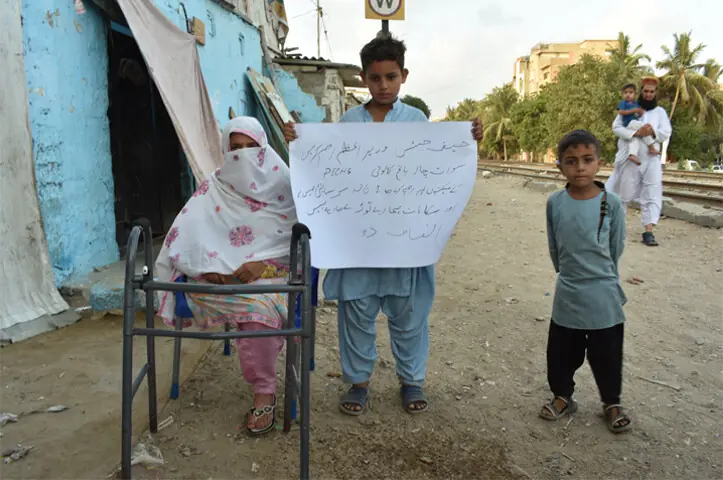
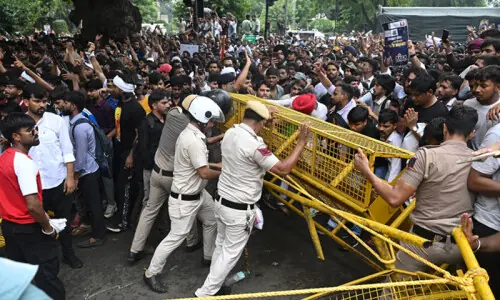
Urban planning cannot be reduced to determining whether an occupation is technically legal or illegal. It must also examine why certain forms of informality emerge, why they persist for decades, and why enforcement is often directed at those with the least capacity to negotiate with the state — as has been obvious in the recent demolitions in Orangi, Mehmoodabad and Gujjar Nullah in Karachi, and in Islamabad as well.
Perhaps the greatest misconception among planners and academia surrounding informal settlements is that demolition resolves the problem of urban informality. In reality, demolition addresses only its physical manifestation. The conditions that produce informal settlements — rapid urbanisation, inadequate public housing, inaccessible land markets, limited household incomes and weak planning institutions — remain unchanged.
THE POLITICS OF INFORMALITY AND DISPLACEMENT
The Constitution of Pakistan places responsibility on the state to facilitate housing for its citizens. Yet, every public housing policy (whenever there has been one) has consistently failed to meet housing demand.
As formal housing became increasingly unaffordable, low-income households relied on informal land markets and incremental construction to secure shelter. The settlements now facing demolition are therefore not temporary camps established in anticipation of compensation. Many have evolved over several decades into functioning neighbourhoods, with an extensive social network. They represent long-term processes of urbanisation rather than isolated cases of illegal occupation.
This distinction is important because infrastructure projects typically evaluate land as an engineering requirement, while residents experience it as a social and economic resource. A railway alignment may identify buildings as physical obstacles. Families experience those same buildings as homes connected to employment, education, healthcare, neighbourhood support systems and everyday mobility.
When rehabilitation planning focuses exclusively on structures, it overlooks the relationships that allow communities to function. The loss created by demolition, therefore, extends beyond the physical destruction of houses. It disrupts livelihoods, weakens social networks, increases transport costs and often pushes already vulnerable households deeper into poverty.
For this reason, rehabilitation surveys should also be of people rather than just buildings. Conventional surveys frequently measure the number of structures affected by a project, classify ownership and estimate compensation according to physical assets. While these exercises are administratively convenient, they fail to capture the complexity of displacement.
Effective rehabilitation requires understanding household size, income sources, employment locations, school attendance, disability, tenancy arrangements and dependence on neighbourhood-based services. Such surveys are not difficult to do and have been carried out for projects in many countries of the world.
For example, a family renting a single room may lose as much as a property owner when demolition occurs, yet tenants often receive limited recognition in conventional compensation frameworks. Similarly, informal businesses operating from homes may disappear entirely (as they almost always do) if relocation deprives them of their access to customers. Counting buildings without understanding the lives they contain inevitably produces incomplete and inequitable rehabilitation policies, promoting a new cycle of homelessness.
TRANSPARENCY AND TIMELY COMPENSATION
Transparency is equally essential. Rehabilitation surveys are frequently treated as administrative documents with almost no public access. This weakens accountability and creates uncertainty among affected communities.
Survey reports should be publicly available before demolition begins, allowing residents, civil society organisations and independent experts to review findings, identify omissions and challenge inaccuracies. Public access also reduces opportunities for manipulation, political interference, and unequal distribution of rehabilitation benefits. In large-scale displacement projects, transparency is not simply an administrative preference but a prerequisite for public trust.
Compensation presents another structural weakness in current rehabilitation practices. Too often, compensation is determined after demolition has already begun, leaving affected households uncertain about both the amount they will receive and the timeline for payment. This reverses the logical sequence of rehabilitation.
Compensation should be assessed, publicly communicated, and fully disbursed before displacement occurs. Families cannot make informed decisions regarding relocation, employment or education if they do not know what resources will be available after eviction. Delayed compensation transforms demolition into an immediate humanitarian problem, while rehabilitation becomes an uncertain future promise.
For example, the Supreme Court of Pakistan ordered in October 2018 that the rehabilitation process should be undertaken for the evictees of the circular railway demolitions. To this day, the order has not been implemented, and the residents of the demolished homes are still living on the ruins of their homes. Land for their rehabilitation has already been identified, but the development of infrastructure required for the rehabilitation process has yet to be initiated.
REHABILITATION BEFORE DEMOLITION
Alternative housing should exist before settlements are cleared, not after displacement has already occurred. Once demolition takes place without prepared rehabilitation sites, homelessness and informal resettlement become almost inevitable.
Families seek shelter wherever opportunities exist, often creating new informal settlements elsewhere in the city. Demolition without prior rehabilitation, therefore, fails to eliminate informality — it merely relocates it. Rather than solving the housing problem, it reproduces it in a different location.
This pattern reflects a broader weakness within urban governance. Planning institutions frequently treat rehabilitation as a secondary administrative exercise (demolitions being the primary one) attached to infrastructure projects, instead of recognising it as a central component of project design, such as the ML-1. Engineering plans, financial arrangements and construction schedules are often finalised long before rehabilitation strategies receive serious attention.
As a result, social impacts become problems to manage after implementation rather than factors shaping the project from its inception. This institutional imbalance explains why ambitious infrastructure programmes repeatedly encounter resistance, litigation and prolonged disputes over compensation, despite substantial investment in physical construction.
The experience of previous rehabilitation programmes demonstrates that relocation is not simply a matter of providing another house. It is a process of reconstructing an entire urban life.
A PROBLEM OF GOVERNANCE
Much of the discussion surrounding displacement in Karachi assumes that, once an affected family is offered accommodation in a peripheral settlement such as Surjani Town, the state’s responsibility has been fulfilled. In reality, relocation often shifts the burden of adjustment entirely on to displaced households. While the physical structure may be replaced, access to employment, education, healthcare, transport and community support is frequently lost. Consequently, many relocation schemes reduce housing insecurity only by creating new forms of economic and social insecurity.
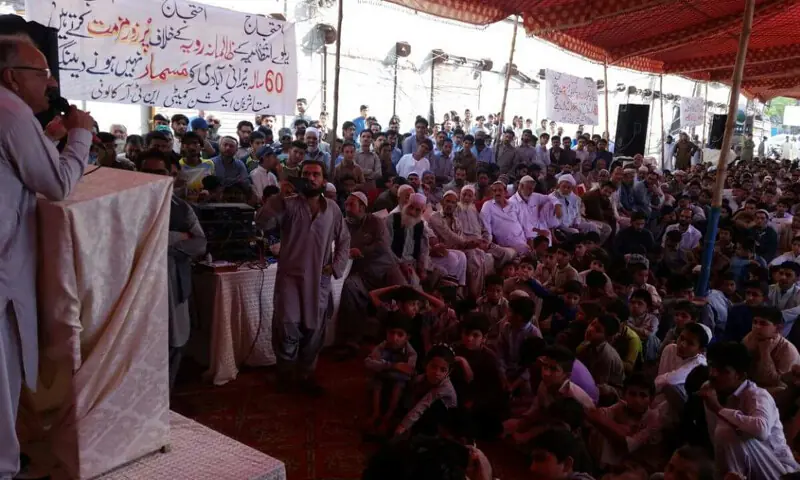
Residents affected by railway-related demolitions have consistently expressed concern about an increase in their social and financial poverty due to relocation. While many acknowledge that infrastructure projects require land acquisition and are prepared to consider relocation, they also insist that compensation should reflect the market value of their homes, and that rehabilitation should not force them into distant settlements disconnected from the city’s economic core.
The preference for financial compensation over compulsory relocation is not simply a matter of property ownership. It reflects a desire to retain agency over where and how families rebuild their lives.
A household that receives adequate compensation can choose housing that corresponds to its workplace, children’s schools, extended family, and social networks. Relocation decided exclusively by the state removes that choice. The state also provides land for relocation in one big chunk. However, land can be provided easily in smaller chunks of land in different locations, giving the community the choice of location.
Distance itself has significant economic consequences. Many households living near the railway corridor depend on employment in Karachi’s industrial areas, commercial centres and informal markets. Moving them to peripheral settlements increases commuting time, transport costs, and uncertainty of employment.
For daily wage labourers, domestic workers, street vendors and informal service providers, even modest increases in travel costs can substantially reduce household income. Children may also be forced to leave schools because daily travel becomes unaffordable or impractical. Access to healthcare, similarly, becomes more difficult when families are relocated far from existing hospitals and clinics. These costs rarely appear in official compensation calculations, despite having long-term effects on household welfare.
The disruption extends beyond economics. Informal settlements often possess dense social networks built over several decades. Families share childcare responsibilities, borrow money from neighbours, exchange information about employment opportunities, and rely on community organisations during emergencies. These forms of social capital cannot be measured through property valuations, yet they constitute an important part of household resilience.
Demolition fragments these networks almost immediately. Neighbours who once supported one another may be relocated to different parts of the city or receive entirely different rehabilitation arrangements. The resulting isolation increases vulnerability, particularly for elderly residents, women-headed households and families dependent on informal community support.
BEYOND RELOCATION
The proposed construction of boundary walls along sections of the railway corridor has generated additional concerns among residents. Beyond serving operational and security purposes, continuous walls have the potential to alter everyday movement within neighbourhoods.
Communities fear that walls may block established pedestrian routes connecting homes with schools, mosques, markets and workplaces. They also raise concerns regarding access to existing gas and water infrastructure that currently passes across or beneath the railway corridor.
Such issues illustrate an important limitation within infrastructure planning. Physical barriers designed to improve transport efficiency can simultaneously reduce accessibility for surrounding communities if local patterns of movement are ignored during project design. Urban infrastructure cannot be evaluated solely according to the speed of trains or the efficiency of transport corridors. It must also be assessed according to how it affects the daily functioning of adjacent neighbourhoods.
Underlying all these issues is a more fundamental question of land.
The shortage that shapes Karachi’s housing crisis is not primarily a shortage of construction capacity but a shortage of accessible land available to low-income households. Karachi still contains substantial tracts of vacant land under various public agencies and institutions. Some of this land requires servicing and infrastructure investment before habitation, but its existence demonstrates that physical space is not the city’s principal constraint. The challenge lies in governance, allocation and political control over urban land.
FACILITATING THE PEOPLE THEMSELVES
The debate surrounding demolitions often assumes that the state must build houses for displaced communities. Karachi’s own development history suggests otherwise. An estimated two million houses across the city have been constructed incrementally by residents themselves, with little or no direct assistance from government agencies or non-governmental organisations. This represents one of the largest examples of self-built housing in the region.
Families acquire land, begin with modest structures, and gradually expand or improve their homes as incomes permit. Construction often occurs over many years, reflecting household savings rather than formal mortgage finance. The process is neither perfect nor uniform, but it has provided housing at a scale that formal public programmes have never achieved.
This reality has important implications for rehabilitation policy. The central requirement is not necessarily the direct construction of complete housing units but the provision of secure access to land, combined with affordable credit and basic infrastructure, so as to initially build a one-room house, toilet and kitchen, which can then be expanded over time as finances permit. Once tenure is reasonably secure, households have repeatedly demonstrated the ability to organise construction independently.
The state’s role should, therefore, focus on enabling rather than replacing the community capacity. Providing serviced plots, ensuring legal security and facilitating incremental development may produce more sustainable outcomes than expensive relocation schemes based entirely on publicly constructed housing.
Self-built housing also generates significant economic activity. Every stage of incremental construction creates employment for masons, carpenters, electricians, plumbers, transport operators, hardware suppliers, building material manufacturers, and countless small contractors. Money invested in housing circulates through local economies, supporting livelihoods far beyond the household undertaking construction.
Unlike large-scale housing developments, managed by a limited number of formal sector contractors and developers, incremental building distributes economic opportunities across thousands of small enterprises. Rehabilitation policies that recognise and support this process, therefore, contribute not only to housing provision but also to employment generation.
Ignoring these realities often results in rehabilitation programmes that are financially expensive yet socially ineffective. Large housing schemes constructed without reference to residents’ livelihoods, transport needs or economic practices frequently experience low occupancy, informal resale, or gradual abandonment. Families either return to informal settlements closer to employment opportunities or modify the new settlements to reproduce the economic activities that previously sustained them.
Such outcomes demonstrate that housing cannot be treated as an isolated physical commodity. It functions as part of a broader urban system, linking land, employment, transport and community life.
HOUSING, LAND AND THE FUTURE OF REHABILITATION
Another persistent weakness concerns the administration of rehabilitation funds.
Budgets are commonly allocated for compensation and resettlement, yet disputes frequently emerge over eligibility, valuation and distribution. Political influence, bureaucratic delays and inconsistent documentation often determine who receives assistance and when. In settlements where property ownership has evolved informally over decades, establishing legal entitlement can become particularly complex.
Residents without formal documentation may face exclusion, despite having occupied the same location for many years. Others may receive compensation that bears little relationship to the replacement cost of housing in the formal market. These administrative failures deepen mistrust between communities and public authorities, while prolonging uncertainty long after demolition has occurred.
For this reason, compensation mechanisms require clear and publicly available criteria, established before implementation begins. Valuation methods should be transparent, appeals procedures should be accessible, and payments should precede displacement. Rehabilitation cannot depend upon discretionary administrative decisions made after homes have already been demolished. Once displacement has occurred, affected households possess significantly weaker bargaining power, making delays and disputes far more damaging.
As a result, over the years, standard documents related to sale, rent control, land transfer and goodwill ‘pagrri’ money transfer for property have emerged. Communities have had these prepared by lawyers and, in Karachi, they are almost universally used and accepted by the communities. Thus, the informal legal system is accepted by the communities and respected in property transactions.
DISPELLING MISCONCEPTIONS
Perhaps the greatest misconception among planners and academia surrounding informal settlements is that demolition resolves the problem of urban informality. In reality, demolition addresses only its physical manifestation. The conditions that produce informal settlements — rapid urbanisation, inadequate public housing, inaccessible land markets, limited household incomes and weak planning institutions — remain unchanged.
Unless these structural causes are addressed, displaced households inevitably seek alternative informal solutions elsewhere. New settlements emerge, or old settlements densify heavily, because the underlying demand for affordable urban land continues to exist. Urban policy, therefore, cannot succeed by removing informal settlements while leaving intact the forces that continually recreate them.
The debate surrounding the ML-1 and the Karachi Circular Railway ultimately illustrates a broader challenge confronting Karachi. Infrastructure projects are necessary and railway modernisation has the potential to improve mobility across the country. Yet, transport infrastructure cannot be considered successful if its implementation deepens housing insecurity, fragments communities and reproduces cycles of displacement.
The quality of an infrastructure project should be judged not only by the speed of trains or the value of investment but also by its ability to integrate social rehabilitation into the planning process from the very beginning.
Only then can development avoid becoming a process in which the benefits enjoyed by the city are achieved through disproportionate costs borne by its most vulnerable residents.
Arif Hasan is an architect and urban planner. He can be reached at arifhasan37@gmail.com and through the website www.arifhasan.org
Hamna Syed is a researcher whose work centres on cultural critique and social realities. She can be contacted at hamnasyed66@gmail.com
Published in Dawn, EOS, July 26th, 2026