Game review — Unbeatable’s story mode could have been a movie, and maybe it should have
TL;DR
Pros:
- Powerful voice work that understands the assignment
- Unique and colourful visual style, with excellent cutscene direction
- Varied, soulful music that leans towards fun and rock-out-friendly
- Great arcade mode with punchy gameplay and lots of challenge levels
- Conceptually innovative with heartfelt delivery
Cons:
- Still needs so many bug fixes it’s unreal
- Polarising story mode, with janky pacing and unclear storytelling
- Gameplay in major scenes can be unintuitive and alienating
- Audio latency can render it nigh-unplayable
Score: 3.5/7 — Really messy, but saved by its earnestness
Reviewed on PC; available on Windows, Xbox Series X/S, PlayStation 5, Nintendo Switch 2 (July).
Price: $13.49 (Steam); $27.99 (PlayStation Store, Microsoft Store). Breakout Edition: $17.80 (Steam); $34.99 (PlayStation Store, Microsoft Store).
When I first discovered D-Cell Games and Playstack’s 2025 rhythm adventure game Unbeatable a few months ago, I was really excited about it. Not only did it look gorgeous and unique, but the concept — “a world where music is illegal and you do crimes” — held the promise of a good fun romp if nothing else. For me, a novice rhythm gamer looking to expand her repertoire, a story-driven rhythm game was a point of fascination and I couldn’t wait to be blown away.
What I got instead was a surprising amount of irritation — followed by even more surprise that I didn’t resent the game for it. Strangely enough, this game, just by existing in the very messy state it currently does, drives home how critical it really is to put everything you’ve got into the art you create — it commits hard to itself in a way that, despite everything, makes it difficult not to like.
Two ways to play
Unbeatable (stylised as unbeatable or UNBEATABLE, but I’ll acquiesce to our style guide) comes with two modes of play: an arcade mode and a story mode.
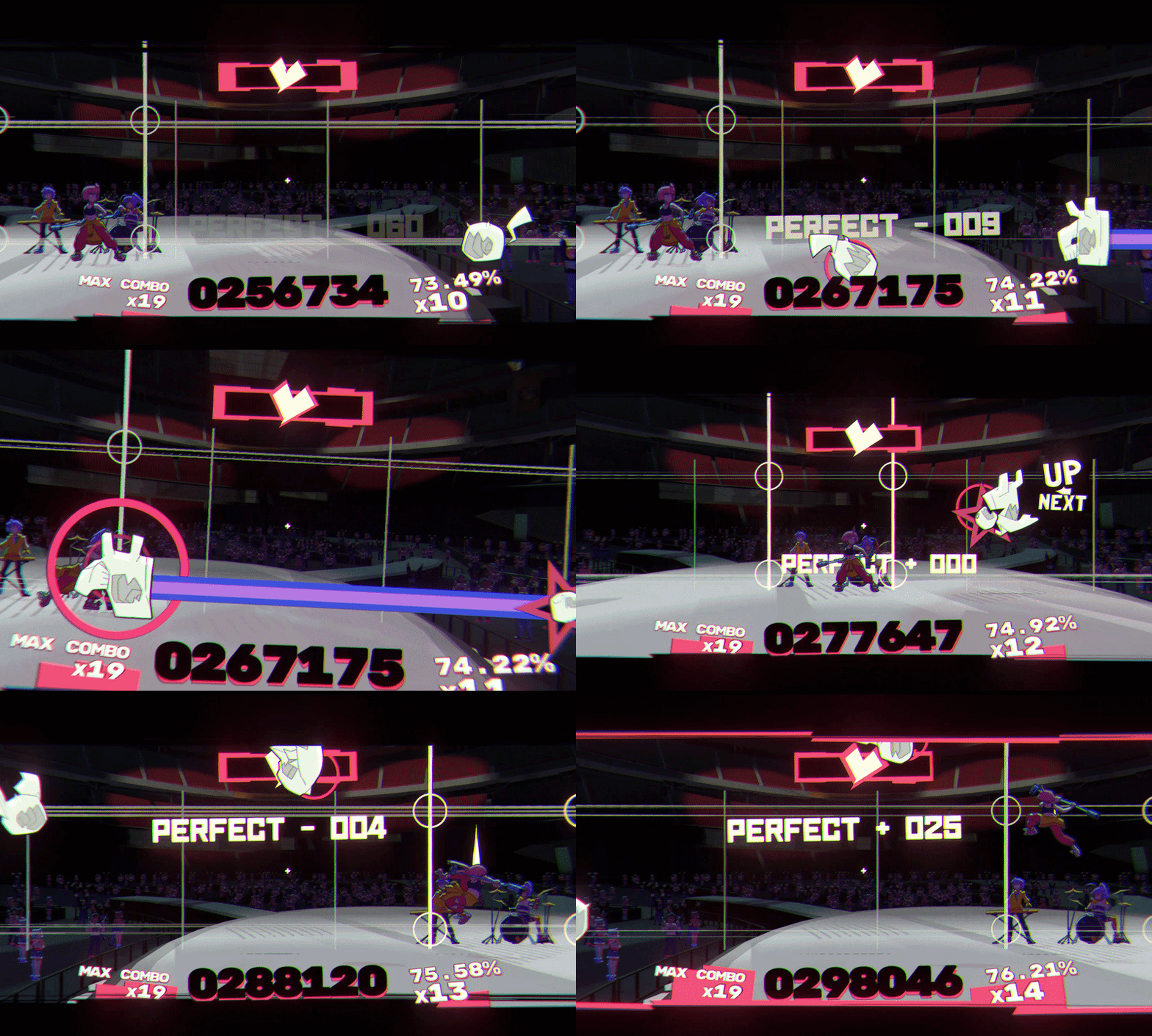
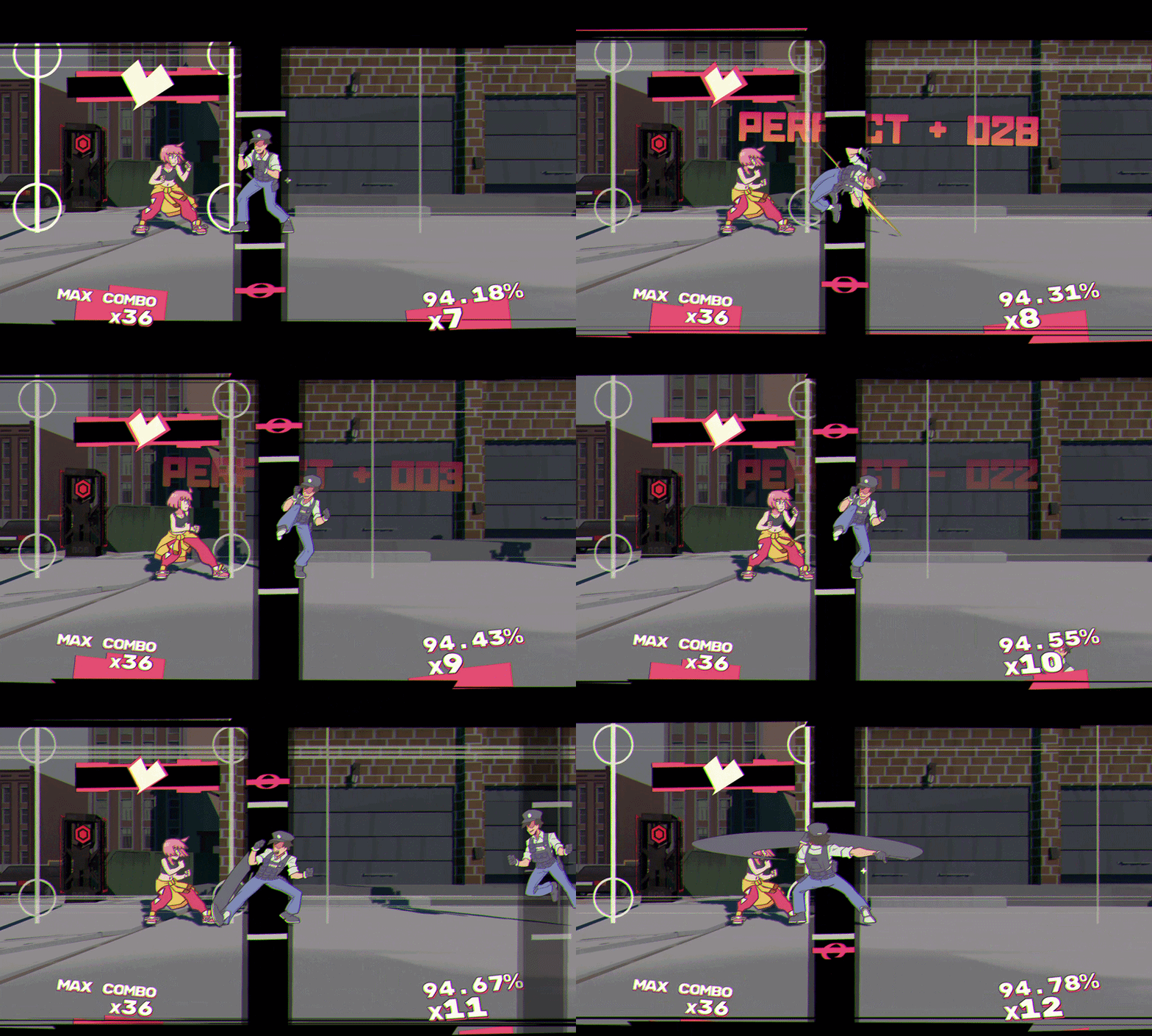
The arcade mode is straightforward, and true to the concept of a rhythm game: you press buttons in time to music, as prompted by your screen, and the result is a pleasing or messy rendition of songs depending on how good you are at it. There are only two buttons to worry about, so play is intuitive and easy to pick up; the fact that the ‘notes’ are cartoon monsters and you ‘hit’ them with punches elevates the whole experience significantly.
In the story mode, you play as a girl named Beat, exploring a world where music has been outlawed because it summons monsters known as ‘Silence’. Forming a band with a 12-year-old girl named Quaver, and twins Treble and Clef, you’re always on the run from the law, beating up troublesome cops and monsters alike while performing underground shows.
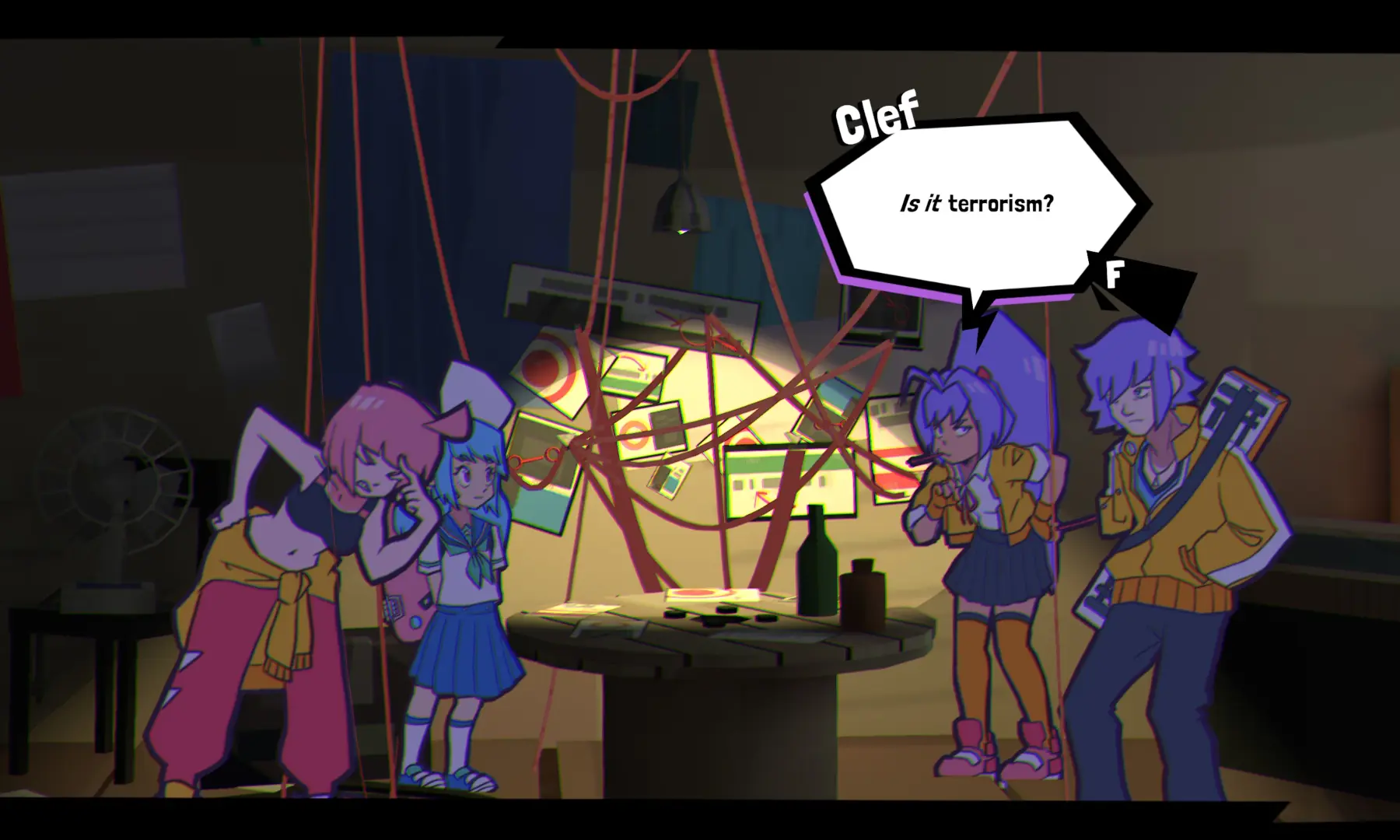
This is where the story integrates gameplay, which takes new, context-specific visual forms for extra immersive play via quick time events (QTEs): hit the notes right to dodge enemy fire, jump rails in high-speed chases, and wallop a lot of policemen.
The good stuff
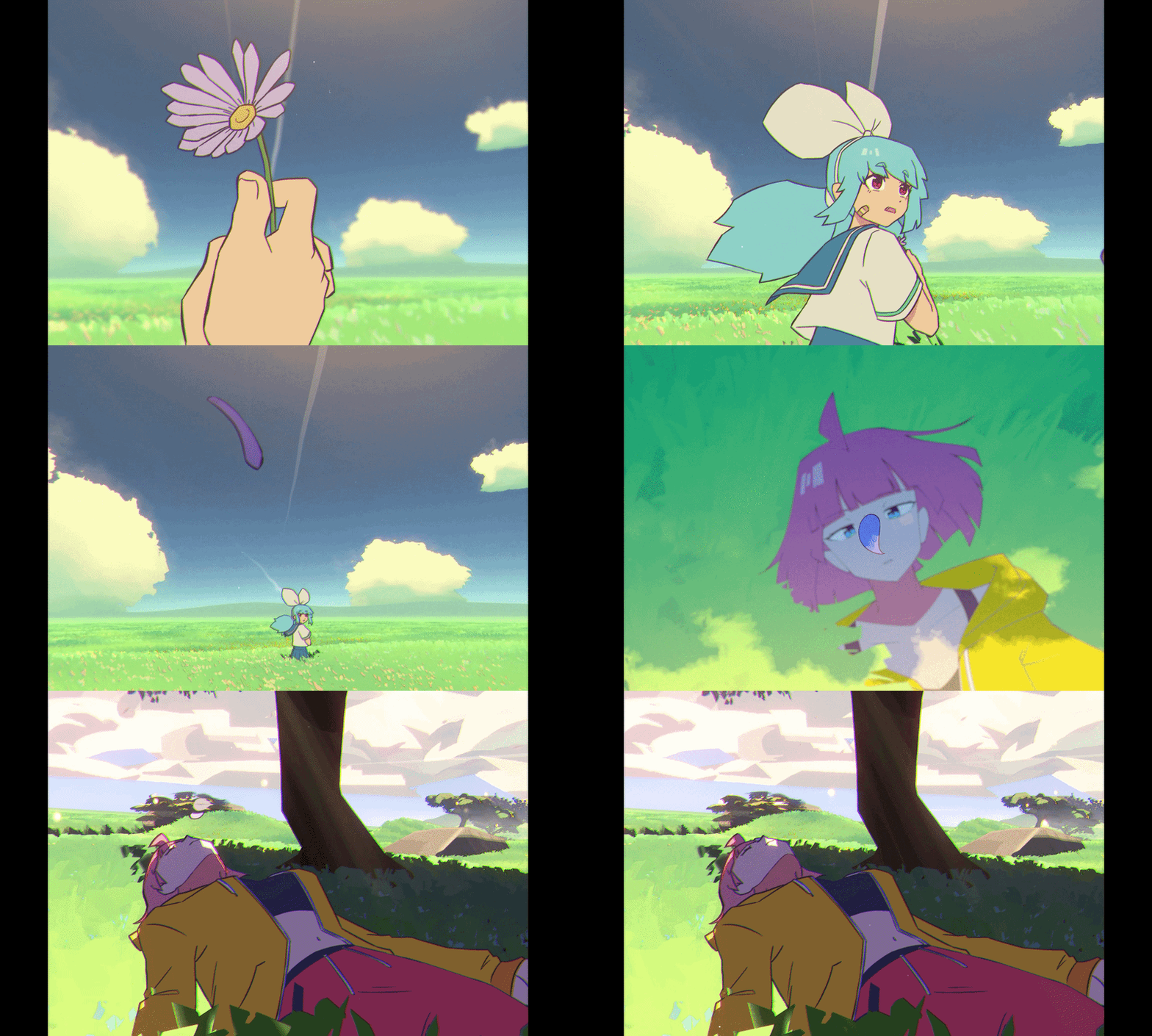
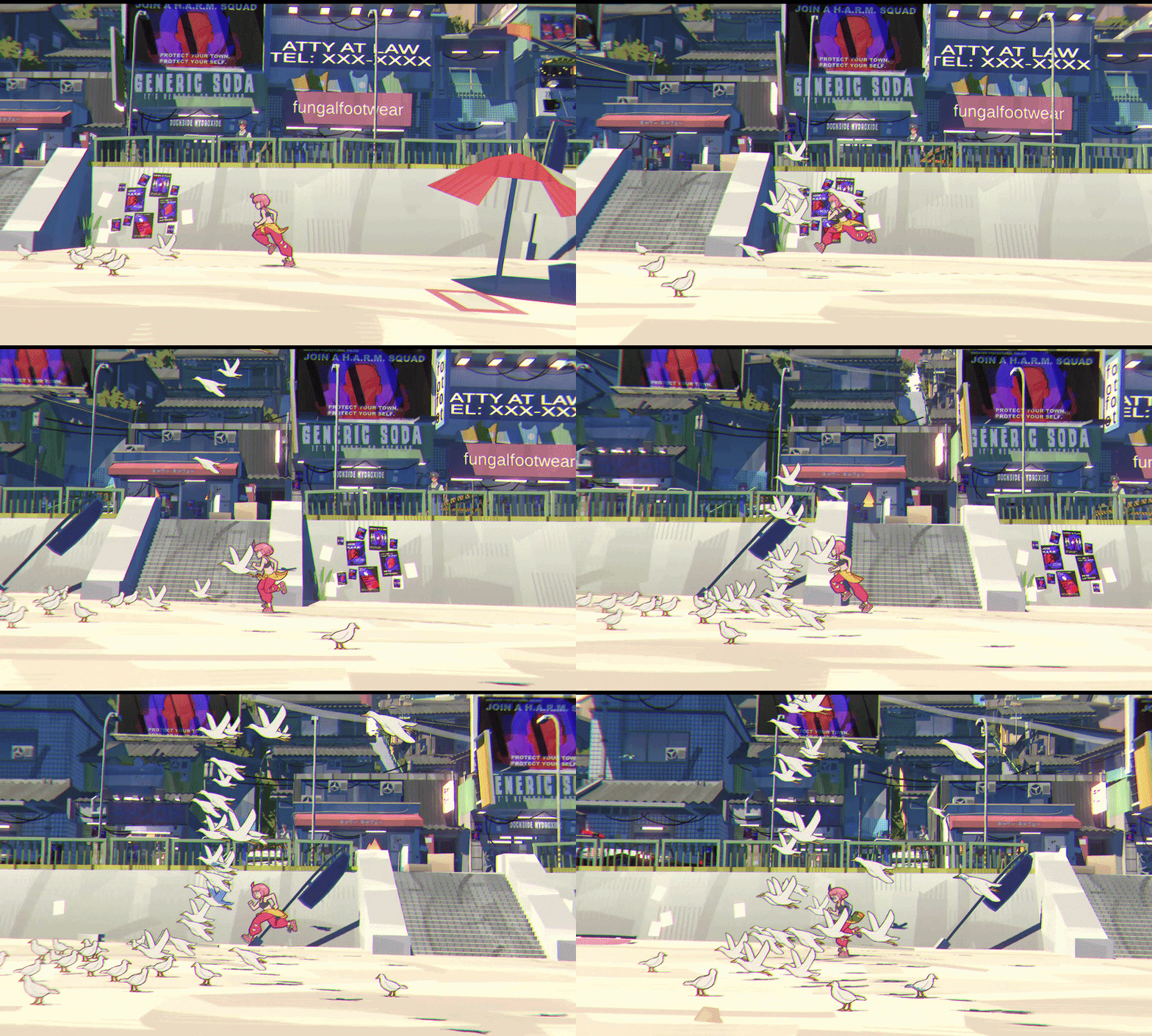
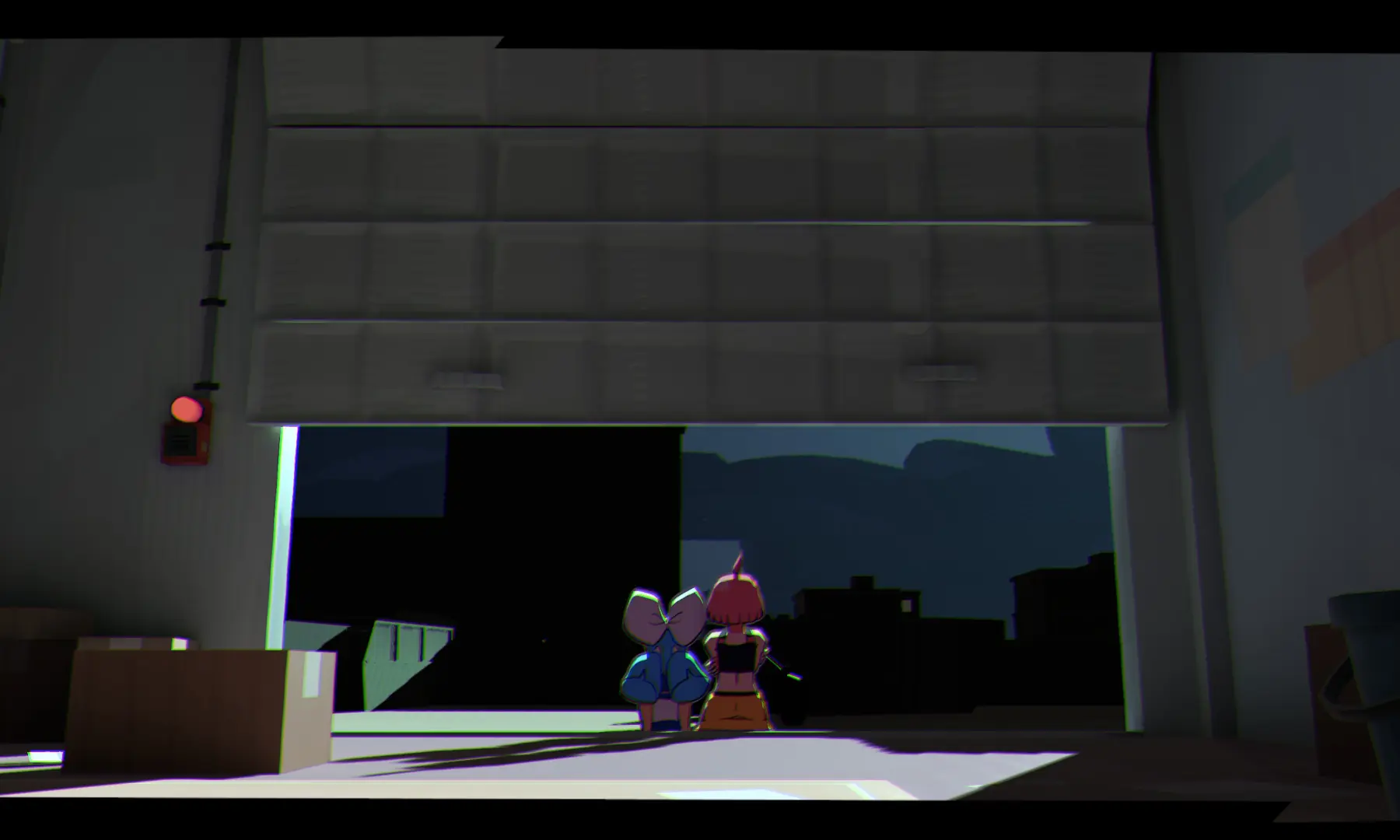
Before we get into the complaints, I’ll shout out some of the things I really like about this game. Firstly, its visual concept is fantastic, being unapologetically anime-inspired but not anchored too heavily by that inspiration. It blends vibrant 2D sprite art with 3D maps, which takes a minute to get used to but provide something unique and cool, and its cutscene direction and animation is often genuinely phenomenal.
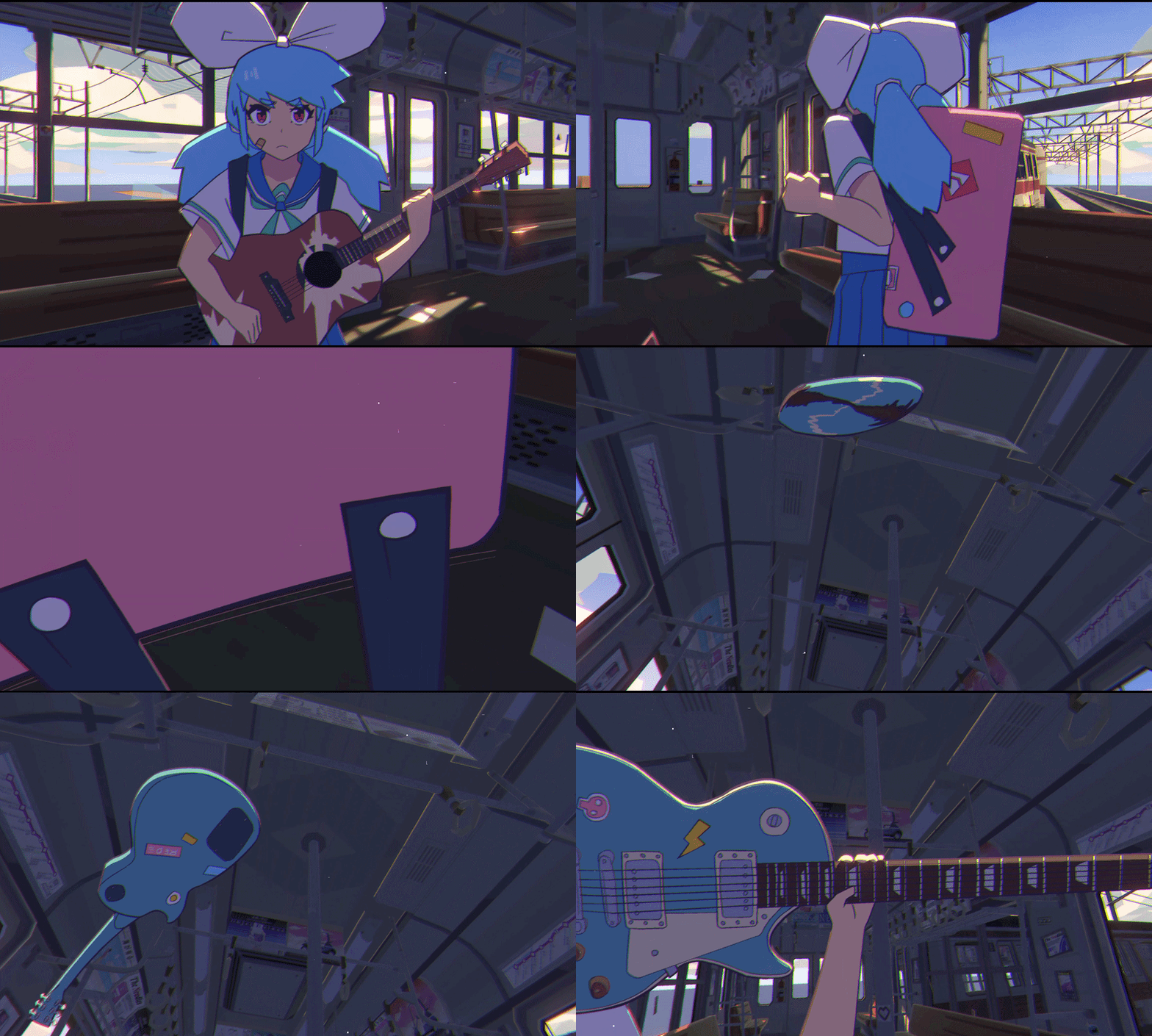
Secondly, and of course, this is paramount for a music-based game: great music. In particular, the songs the in-game band performs are often loud, fun and electric-guitar-heavy, but there’s enough variation in tone and composition on all sides to keep it from getting samey. It’s consistent, but not too consistent to be interesting. The rest of the soundtrack has some swings and misses, but ultimately still falls squarely in the ‘pretty good’ category.
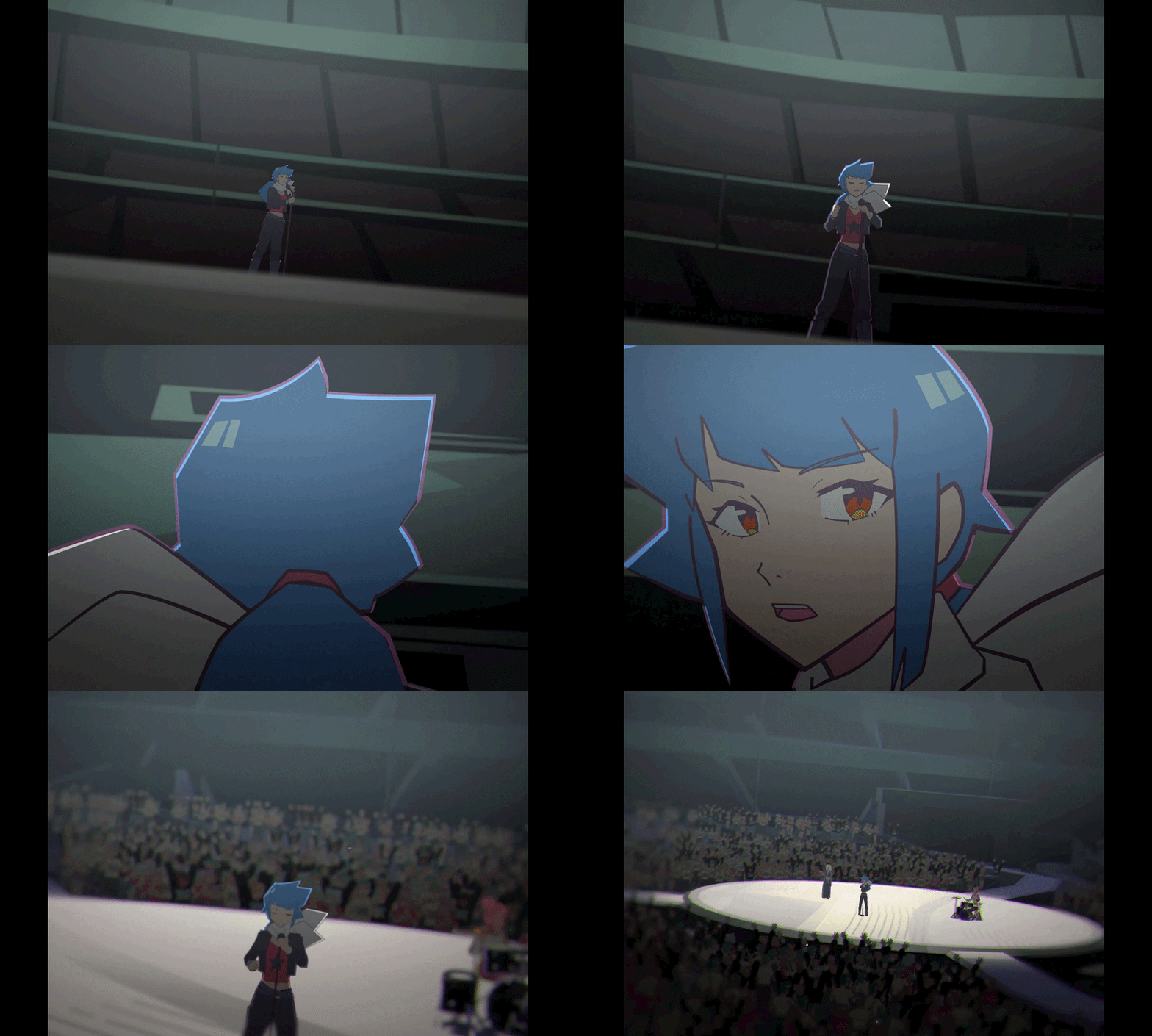
The voice acting is probably one of the biggest strengths of this game, featuring a small but powerful cast that delivers every line of (well-written) dialogue with passion. It’s realistic and appropriately funny in cadence, cinematic in tone, and sells even the silliest or campiest of moments without an ounce of self-consciousness.
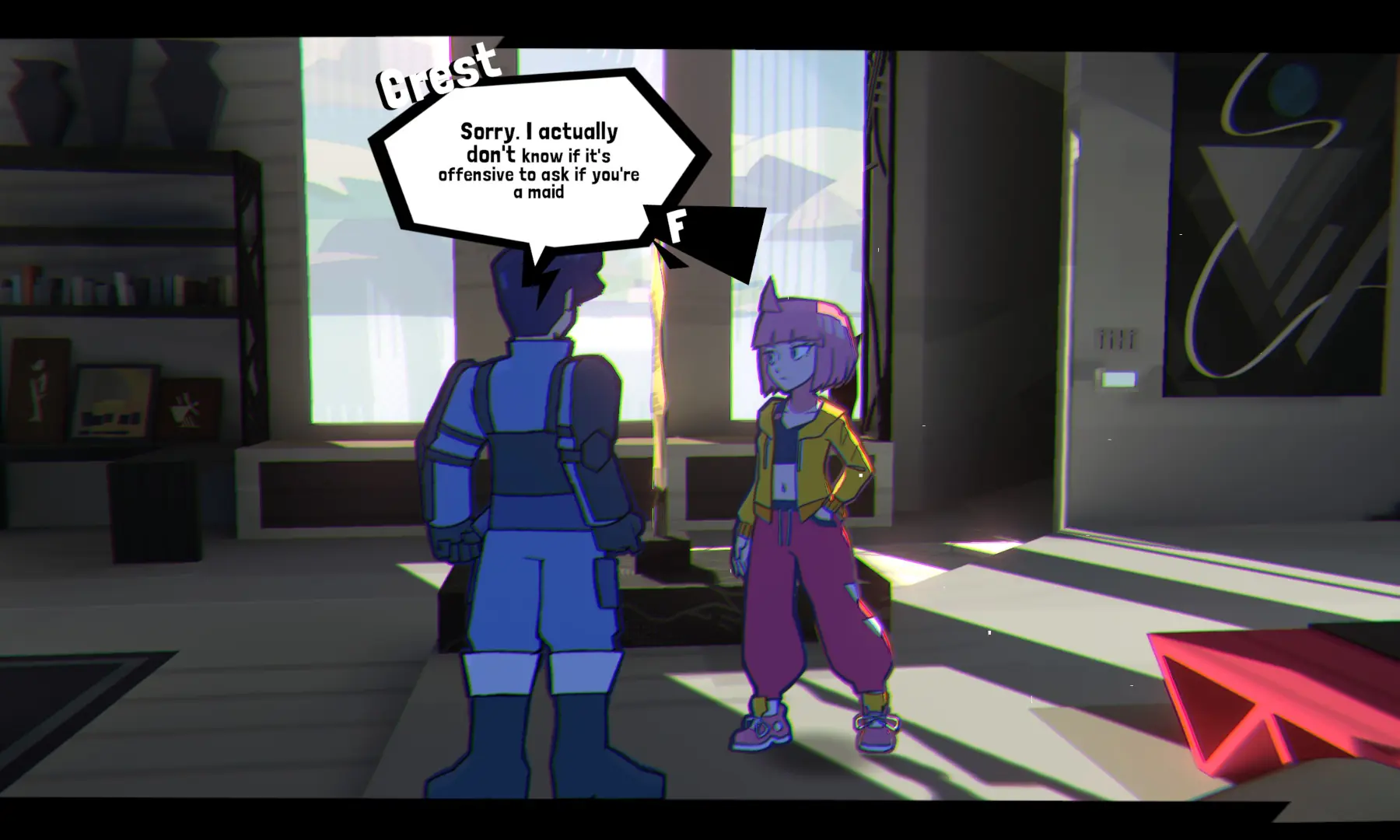
Also, the arcade mode is delightful. It takes a simple, familiar style of game and does it very well, features a pleasing variety of songs, even ones from other games.
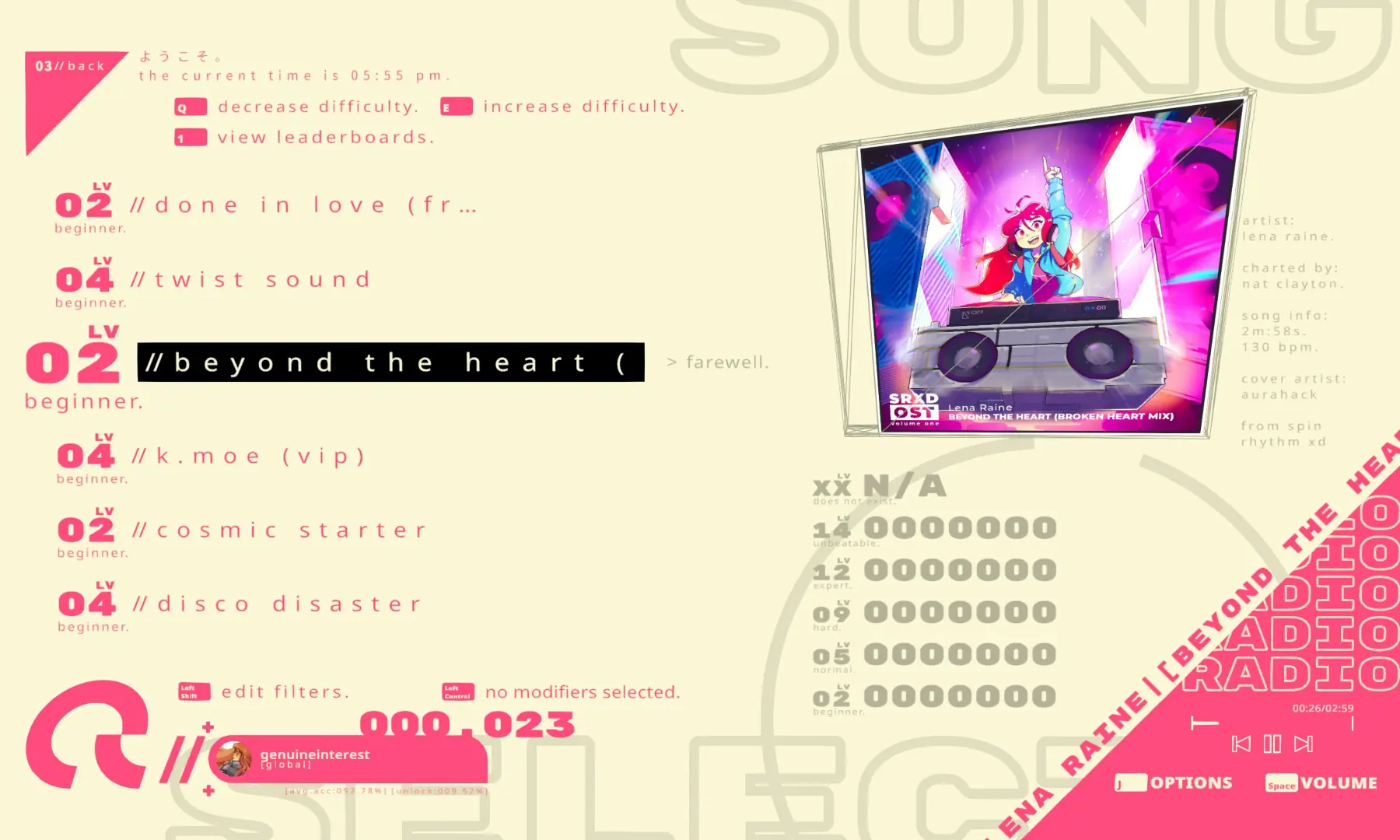
All of these boast several challenge levels so that you can pick what’s right for you or challenge yourself to more. Removed from the chaos of the story mode’s climactic action scenes, it’s a much more zen experience than you’d expect, but always extremely fun. I’m a big fan and I will be revisiting.
A story designed for vibes
The story mode, though, is a polarising one, and not just because it’s functionally held together with spit and a prayer.
The narrative pacing, scene cuts and dialogue of Unbeatable all read more like a screenplay than a game — which is interesting enough once you get used to it. That said, while the dialogue is punchy and many scenes extremely cinematic, I found myself wondering: why make it a game at all? Everything about the writing format screams ‘movie’, or maybe ‘heartfelt music-themed animated miniseries’ instead.
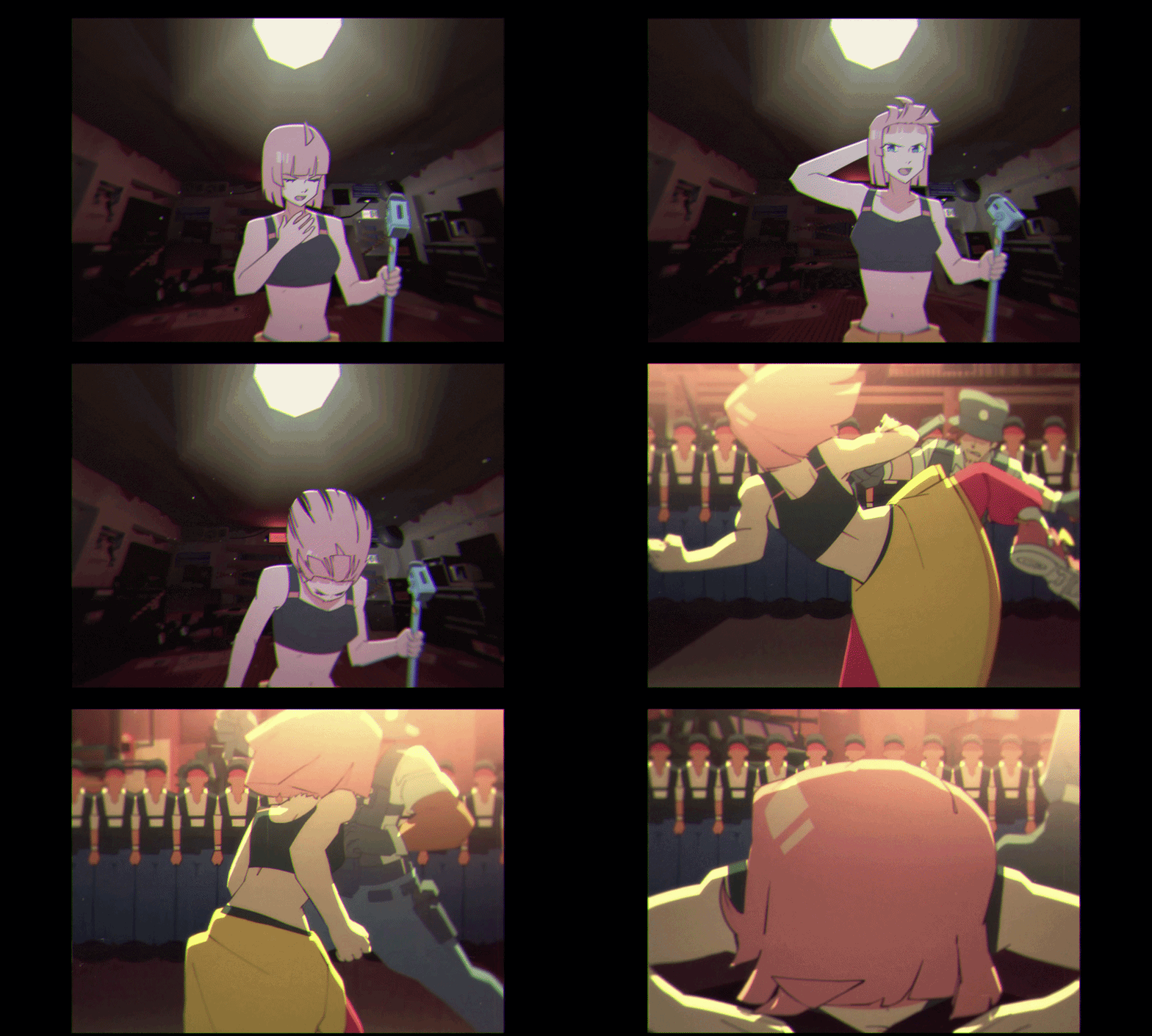
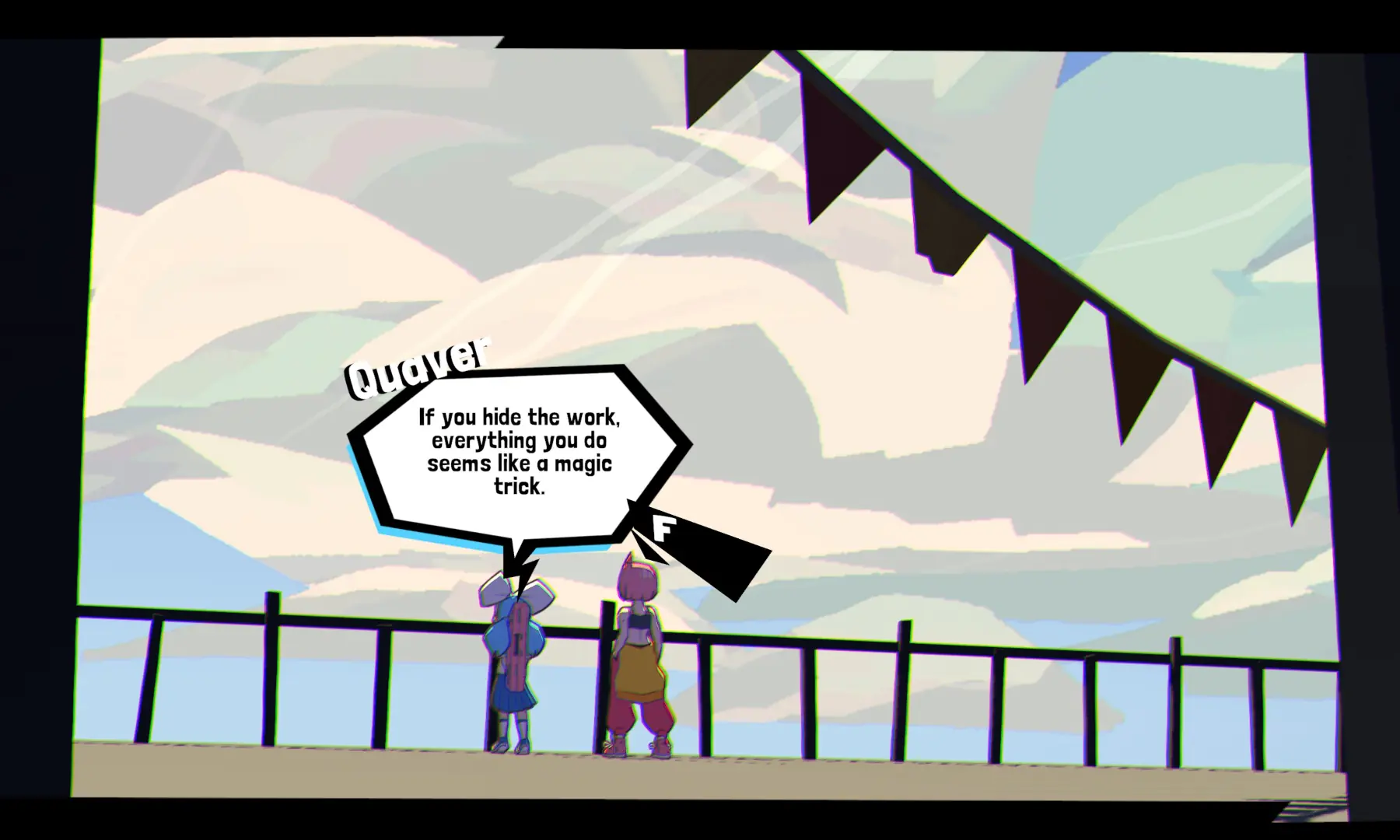
The story is at its best when it lets its emotional core shines through; I’m glad I bothered to finish it before reviewing the game, as the latter half is where the real heart of it lies. Plot-wise, too, the narrative pacing starts at a bit of a crawl, then takes flight three chapters in.
The plot itself, however, is a bit of a mirage: more unclear than just intentionally mysterious. This is largely because, despite being conceptually intriguing, the writing refuses to step away from its snappy movie dialogue and anime-esque cutscenes to actually explain what’s going on when needed — particularly noticeable at crucial and climactic moments where you’re just sort of along for the ride.
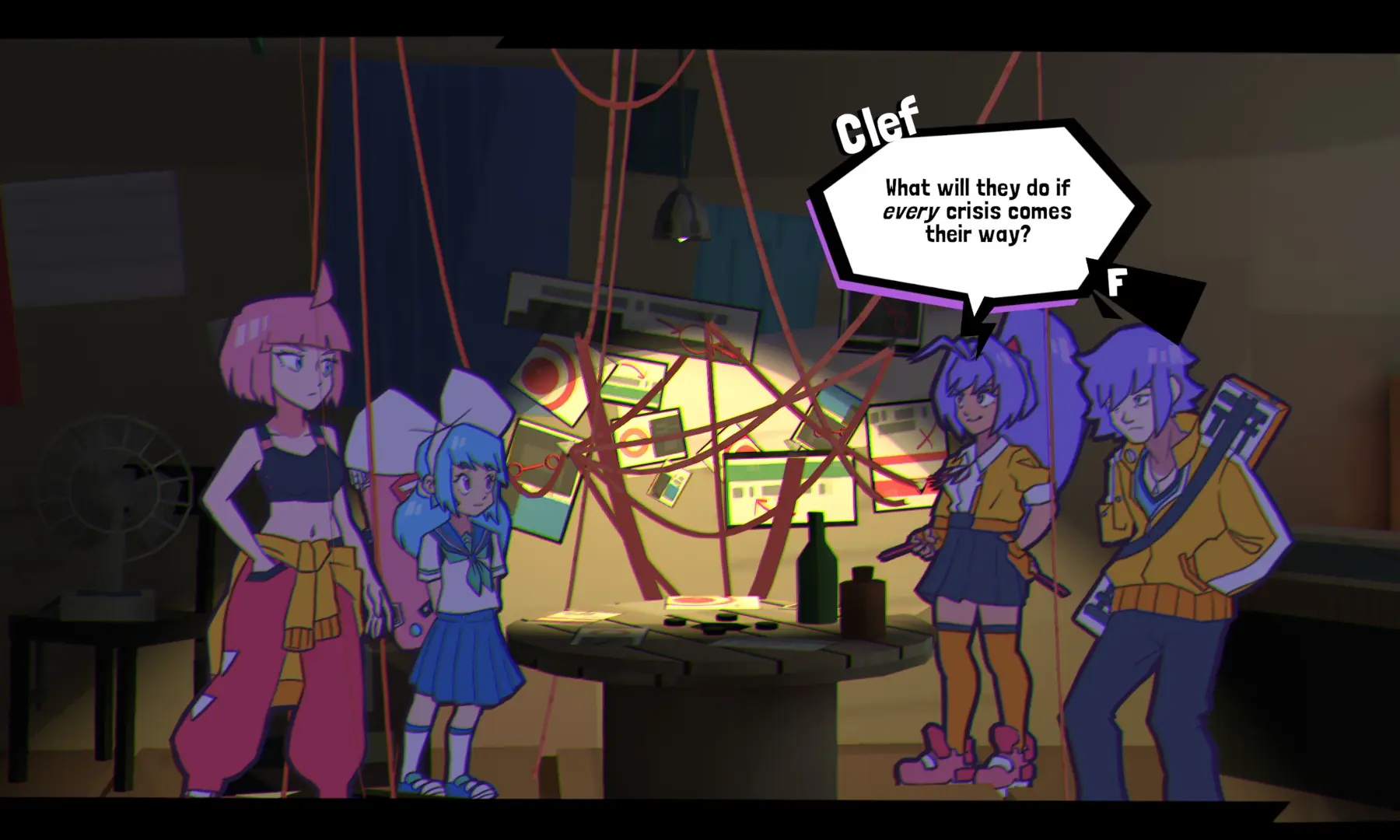
I’m a fan of ‘show, don’t tell’, but if anyone would like to show or tell me what’s actually happening in this story, I am all ears. Rather than a real storyline, major elements feel like a careful arrangement of dramatic ‘movie moments’: much like a Steven Moffat season of Doctor Who, it holds the general shape of a story, but collapses if you look directly at it.
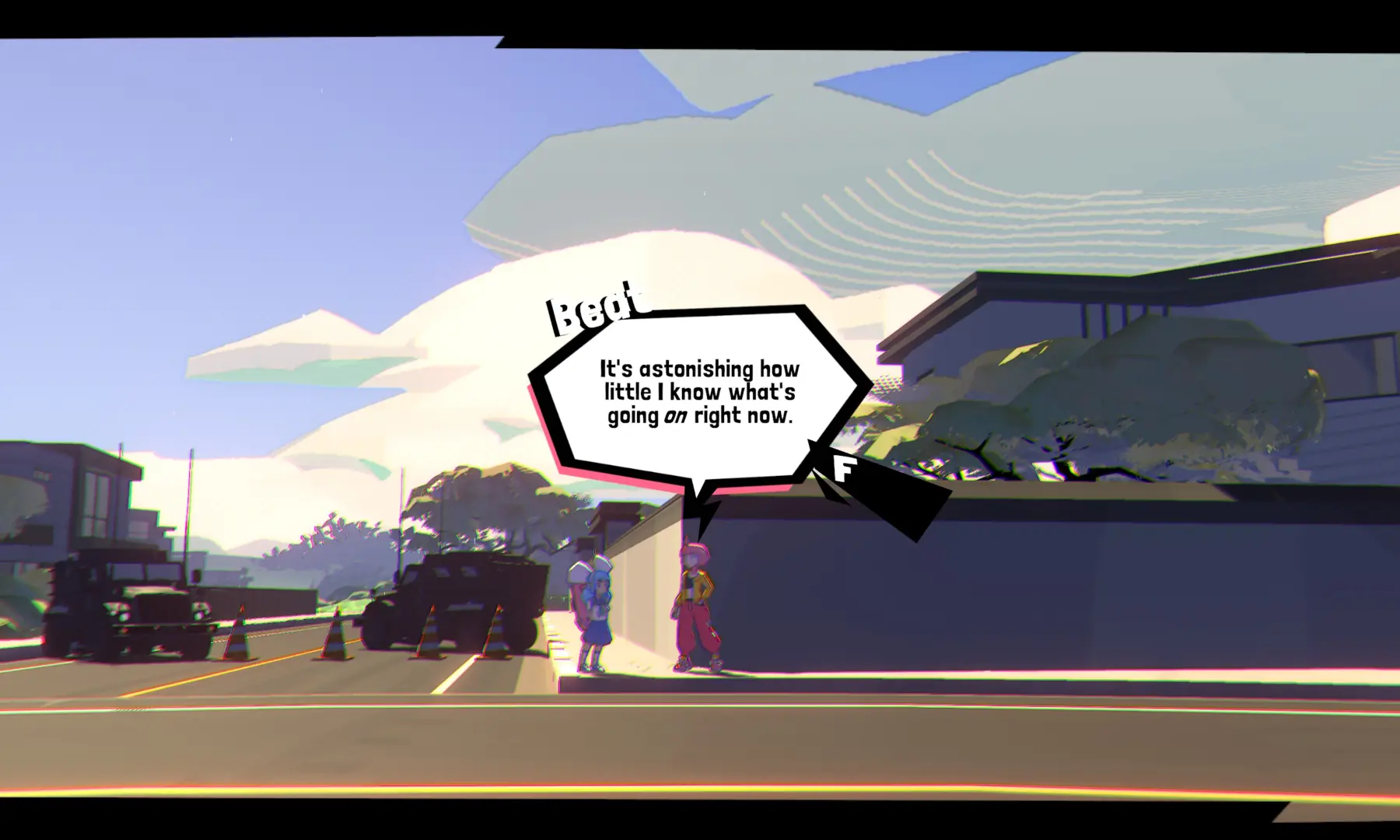
Still, the plot is more of a vessel to tell Beat’s own story, which is more introspective, heartfelt and mature than the otherwise somewhat campy, comfortably predictable action-adventure. Even though the delivery of both is clunky, the emotionality of the writing always sparkles.
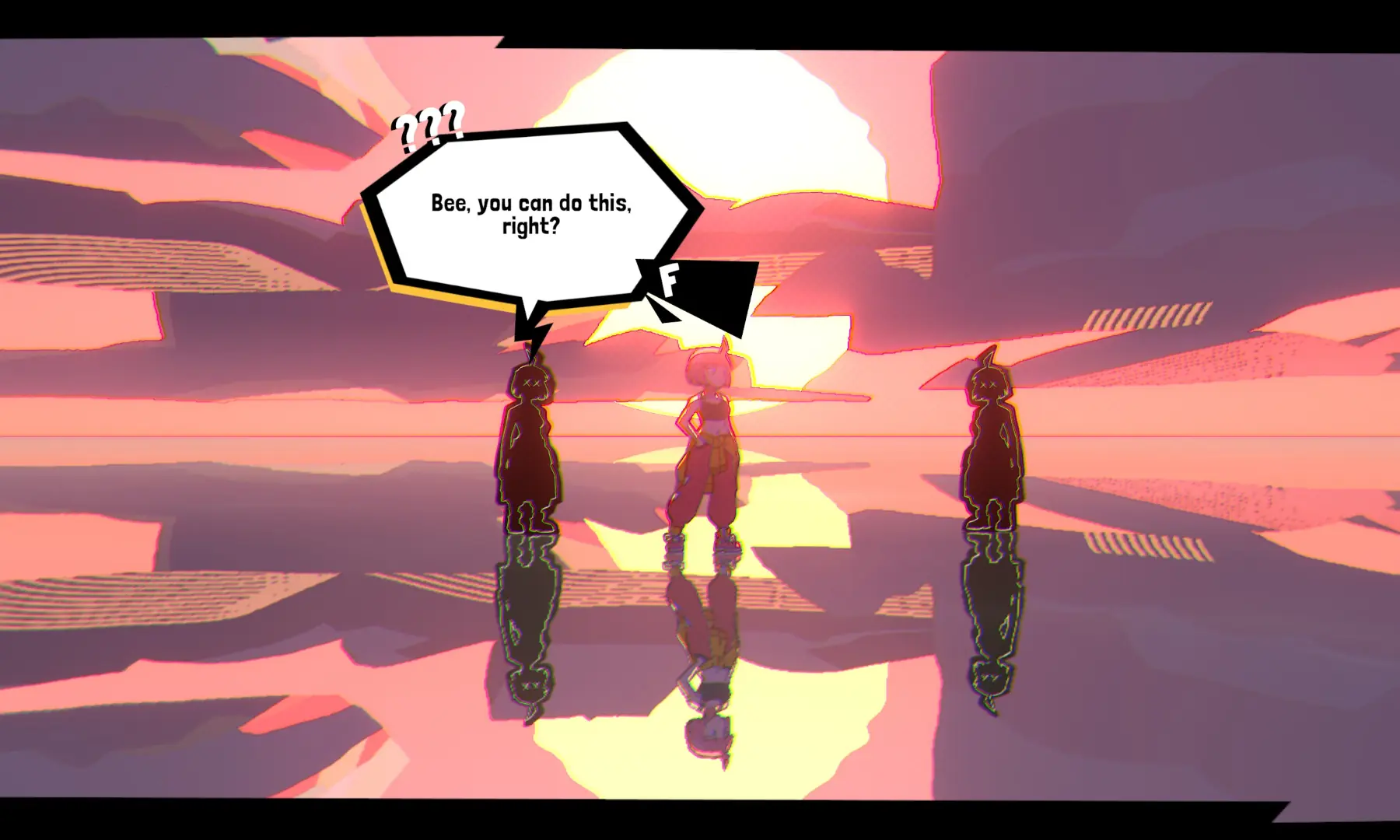
Basically: the writing is designed more to evoke emotion than to make sense. I enjoyed that well enough… but also I couldn’t explain the plot with a gun to my head. So, if you give it a try, be warned that comprehensibility is not the point. The point is to feel.
Unstable as my mental health
Despite this game having been fully released at the end of last year, I experienced so many glitches, crashes, and various little bugs that I felt like an unwilling beta tester. Who decided this was ready for release?
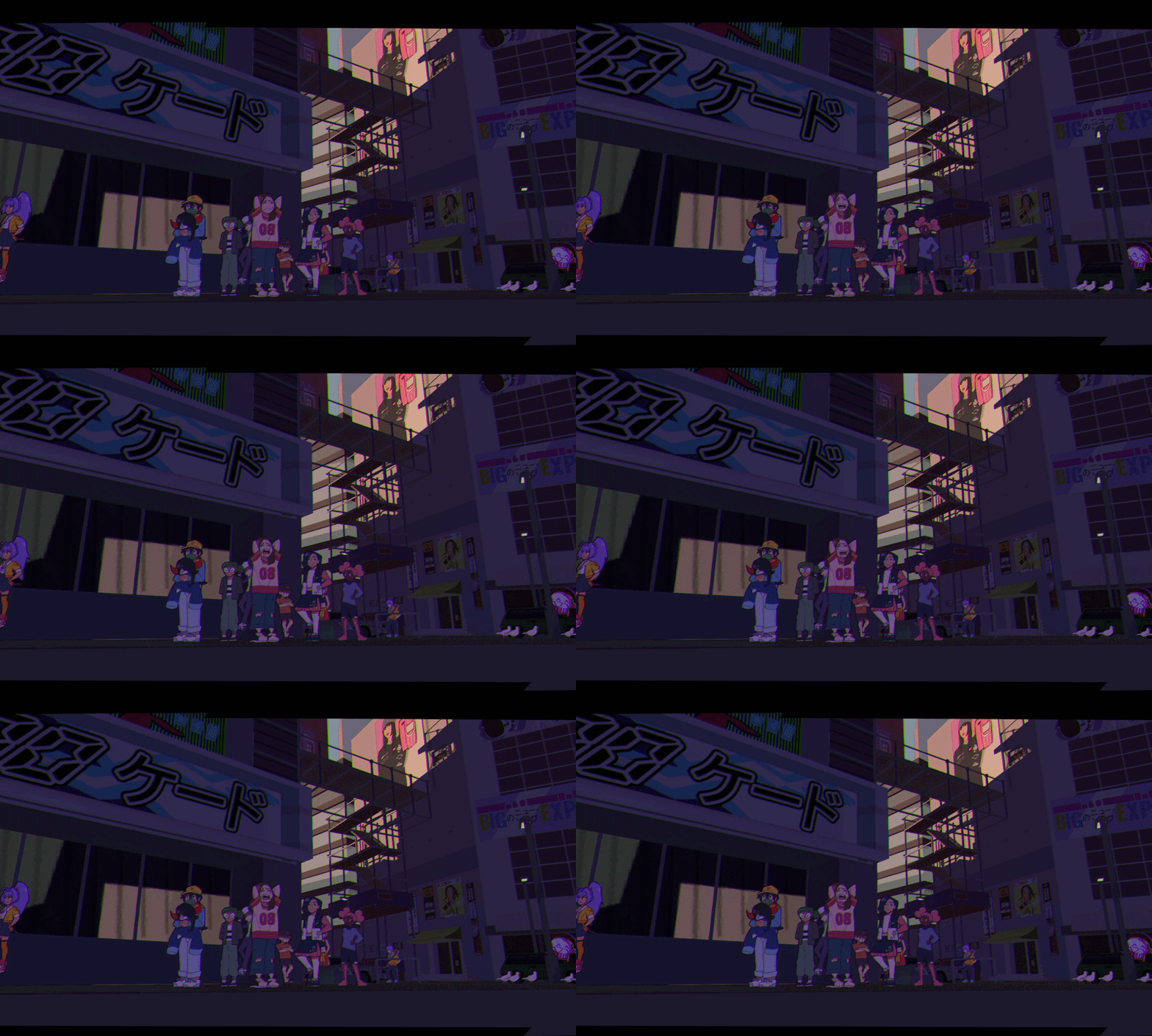
The dialogue is fun, but the voicing of it is inconsistently applied, taking you out of the experience. Visual and interfacing glitches are annoying at best, and actively softlock you at worst. The game also runs so needlessly hot that sometimes I can’t hold down a key without feeling like I’m burning off my own fingerprints.
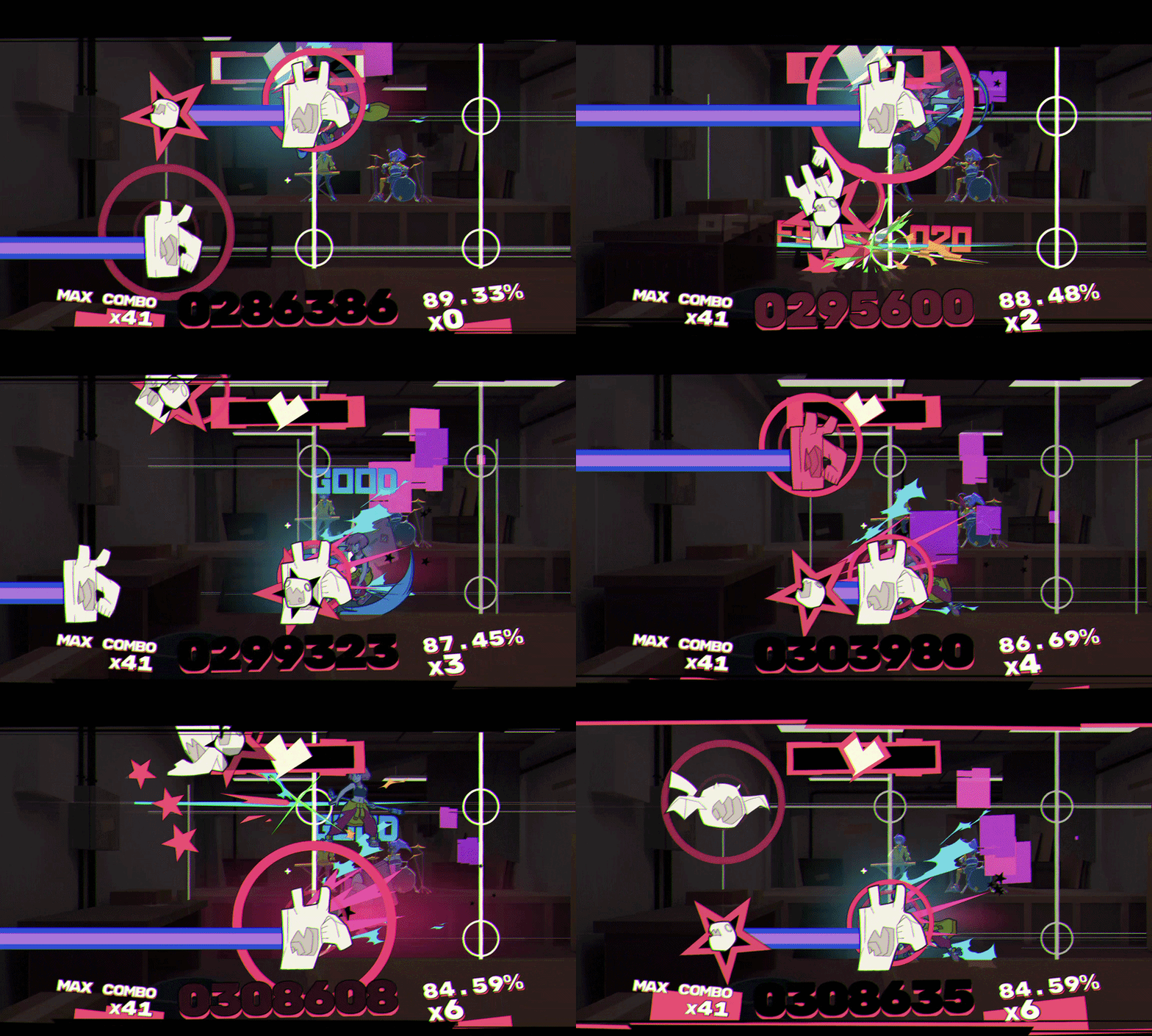
I actually put the game down for a few months because, honestly, I wasn’t having any fun amid the game’s frequent crashes and refusal to save my progress. Thankfully, the team is still rolling out patches, which have made at least some difference, although softlocks and various visual glitches are still abundant. I can’t even nitpick these, though, because there are bigger problems.
Frustrating gameplay experience
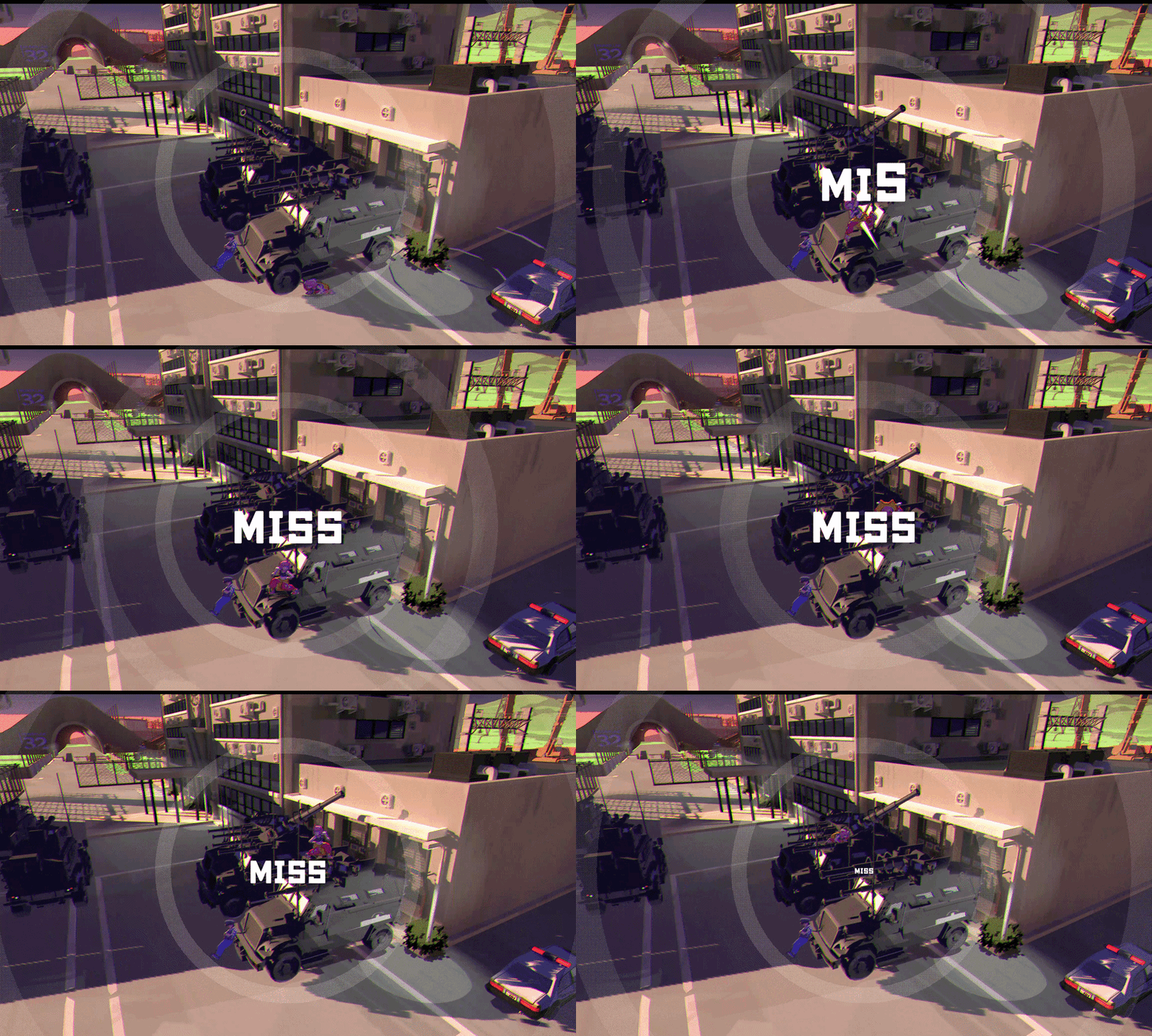
When it’s fun, it’s really fun. But something I absolutely hated was that much of the gameplay in the story mode’s climactic scenes — as immersive as it looked — did not seem to care whether I hit a single note and just ploughed ahead while I struggled. With no penalty for failure, the experience was jarring, making me feel like I had no impact on the game.
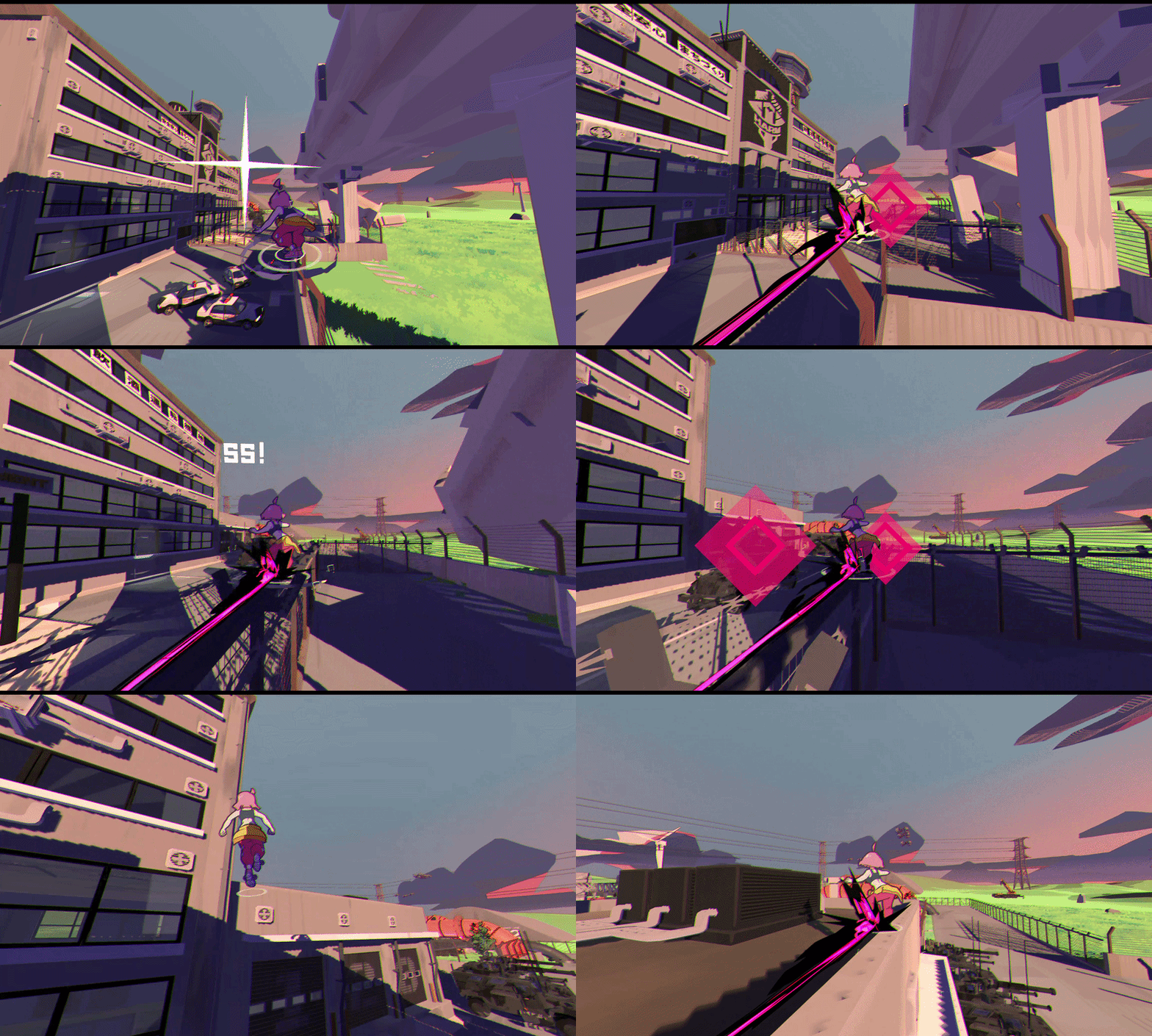
This is far more noticeable in some scenes than others — maybe because they’re largely in-the-moment QTEs, where you’re given seconds to pick up on less-intuitive mechanics. But if I am choosing between several difficulty levels, I expect at least some positive or negative consequences for doing well or badly. So for many major scenes, I was disappointed by how little my efforts seemed to matter. Luckily, there’s a significant improvement in later chapters that ultimately saves this game from my wrath.
I went back and forth about this and landed on the following take. In a rhythm game that strives for immersive play, making input affect output feels like a high priority for me. As a friend put it, “A game is a game, and you should want to game when you’re playing a game.” Maybe it’s just the difficulty scaling and pass-fail threshold that needs a look-over? I hope they get to that soon.
I won’t even bother cribbing about my long list of other issues, including the visual noise, the distracting zooms in and out of the beatmaps and the way you’re frequently thrown into them with no warning. I will flag that, the one time I tried playing with Bluetooth headphones, I experienced audio latency so severe that it rendered all gameplay completely unintuitive, and therefore unfulfilling. Take heed, test your inputs in the arcade mode, and play without headphones if you must.
So why play it?
Honestly, because I don’t remember the last time I played a game so earnest.
For all its flaws, Unbeatable wears its heart on its sleeve in a way that feels astonishingly vulnerable. There’s not a trace of irony to be found here — only dreams, punk rock guitars, and wholehearted themes of love, grief, joy, finding yourself, and the unquestionable power of music. Even having just spent most of this review whining, I can’t help but like it, in all its messy glory.
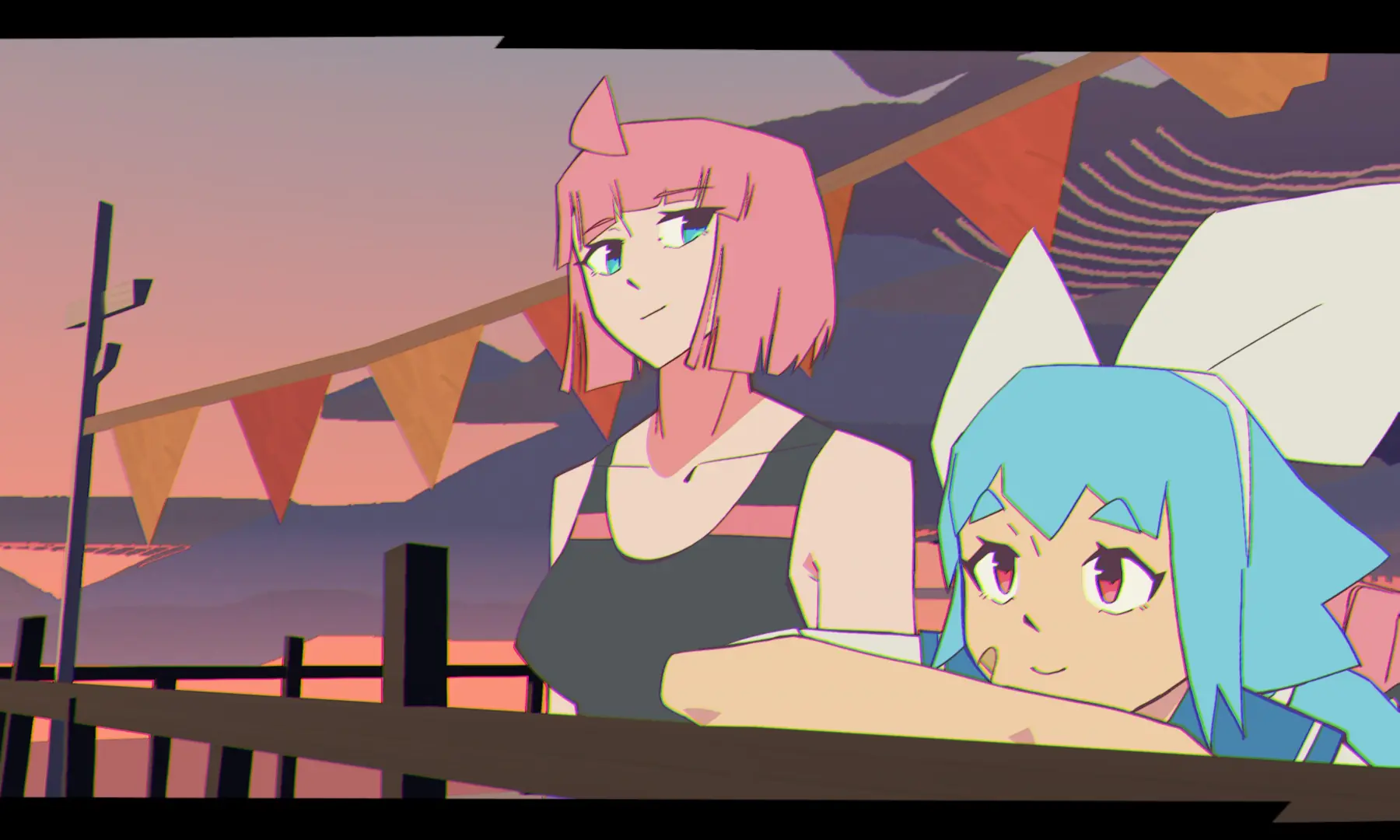
Conceptually, it’s sound. Stability and gameplay-wise… yes, it needs serious, serious work before I can recommend it in good conscience. But patches are still rolling out, and I consider the real issue with the writing to be a mismatch of format. Just as the arcade mode hones in on clean gameplay, I think the story would do well if given the breathing space to hone in exclusively on its storytelling in a different medium.
Which is to say that as an animated movie or series, I think Unbeatable could be something very special. As it stands, with such a unique concept and tone, it won’t be everyone’s cup of tea, but it owns what it is so proudly that I can’t help but respect it.


 0
0
Nazish Talati is a sub-editor on Dawn’s online news desk with a year of experience in communications and teaching. Her work focuses on global culture and entertainment news, particularly Japanese culture. She also reviews video games for the publication.