Breathe Pakistan: Business leaders, experts stress need to tackle climate change's impact on agri-economy
The second Breathe Pakistan International Climate Change Conference kicked off in Islamabad on Wednesday, with business leaders and experts highlighting the impact on the country’s agricultural sector and vulnerable communities, and the need for determined implementation of legal and policy frameworks, as well as climate finance.
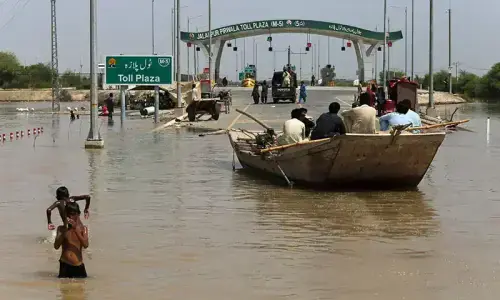
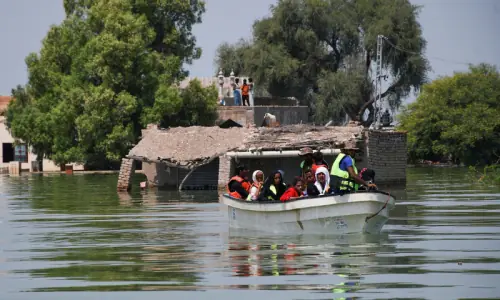
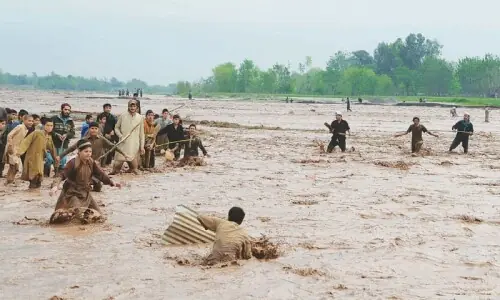
Despite contributing minimally to global emissions, Pakistan remains among the most climate-vulnerable nations, underscoring the critical need for coordinated, locally grounded, and globally informed responses.
The two-day conference, organised by DawnMedia, brings together policymakers, experts, and stakeholders from across sectors to examine intersecting challenges and chart a path forward.
Federal ministers, government officials, business leaders, and agriculture and water experts were among the various speakers who presented their perspectives on tackling the climate crisis.
Key takeaways:
- Pakistan must be disciplined in management of energy transition: Dawn CEO Nazafreen Saigol Lakhani
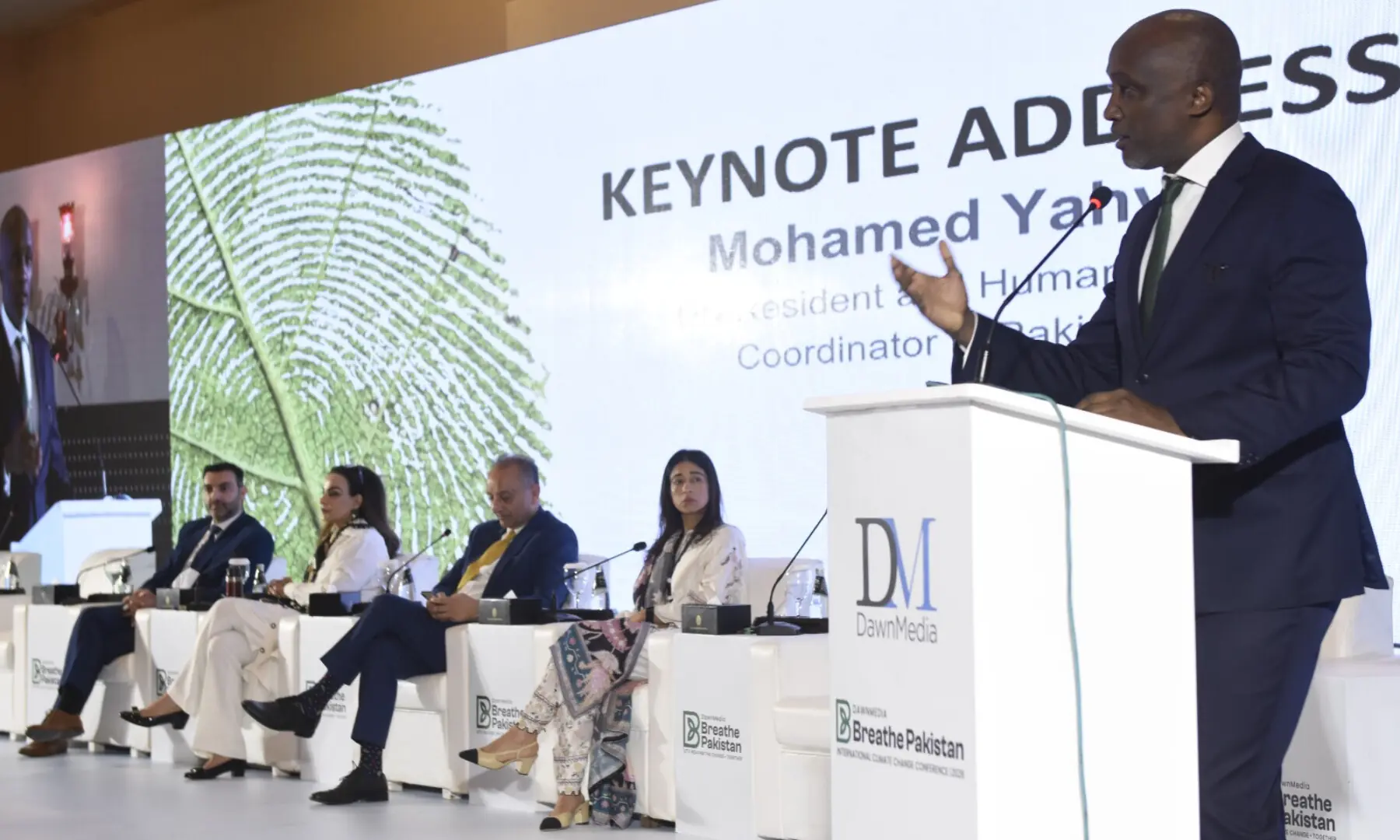
- Pakistan can be a test case for solutions: UN Resident and Humanitarian Coordinator Mohamed Yahya
- Pakistan must build resilience in the entire shock cycle with layered system, better risk data: WFP Country Representative Coco Ushiyama
- Pakistan’s plan to slash greenhouse gas emissions by 50pc requires more than $550m in financing: SBP Deputy Governor Saleemullah
- Think of nature as infrastructure, create alternatives to grey infrastructure: AIIB’s Dr Murtaza Syed
- Food security lost in outdated supply chain: PBC Chairperson Dr Zeelaf Munir
The first edition of Breathe Pakistan sparked national dialogue and global collaboration around vital climate challenges — from climate justice and finance to renewable energy transitions, disaster risk reduction, and inclusive public-private partnerships.
View the full agenda here.
5:31pm — Day 1 of conference ends
5:28pm — MPA Fakhar Zaman says Sindh ‘living in reality many debate’
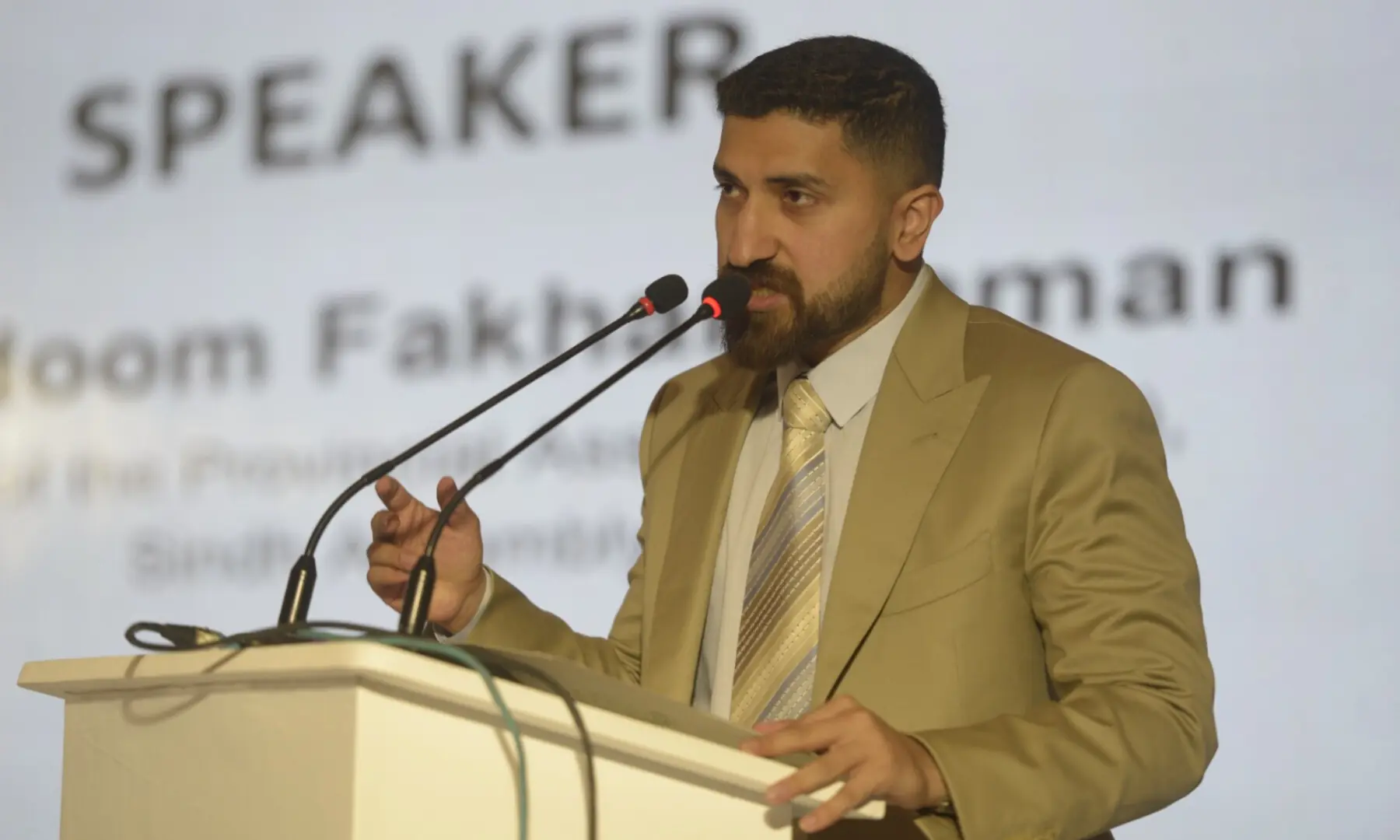
Sindh MPA Makhdoom Fakhar Zaman detailed the climate realities faced by Sindh, noting that the province was “living in a reality that many still debate”.
He recalled that in 2022, Sindh faced floods, displacing over 12m people. He added that the province also represented 90pc of Pakistan’s coastal exposure while the Indus Delta had shrunk by “over 90pc”.
“It is not just a crisis, but a turning point,” Zaman said, stressing that Sindh should not be seen as a “victim” of climate change but rather the focus should be towards “moving from response to resilience”.
“We must legislate for reality and not theory,” Zaman added.
5:25pm — Law minister urges public to ‘change its attitude’, adopt environment-friendly practices
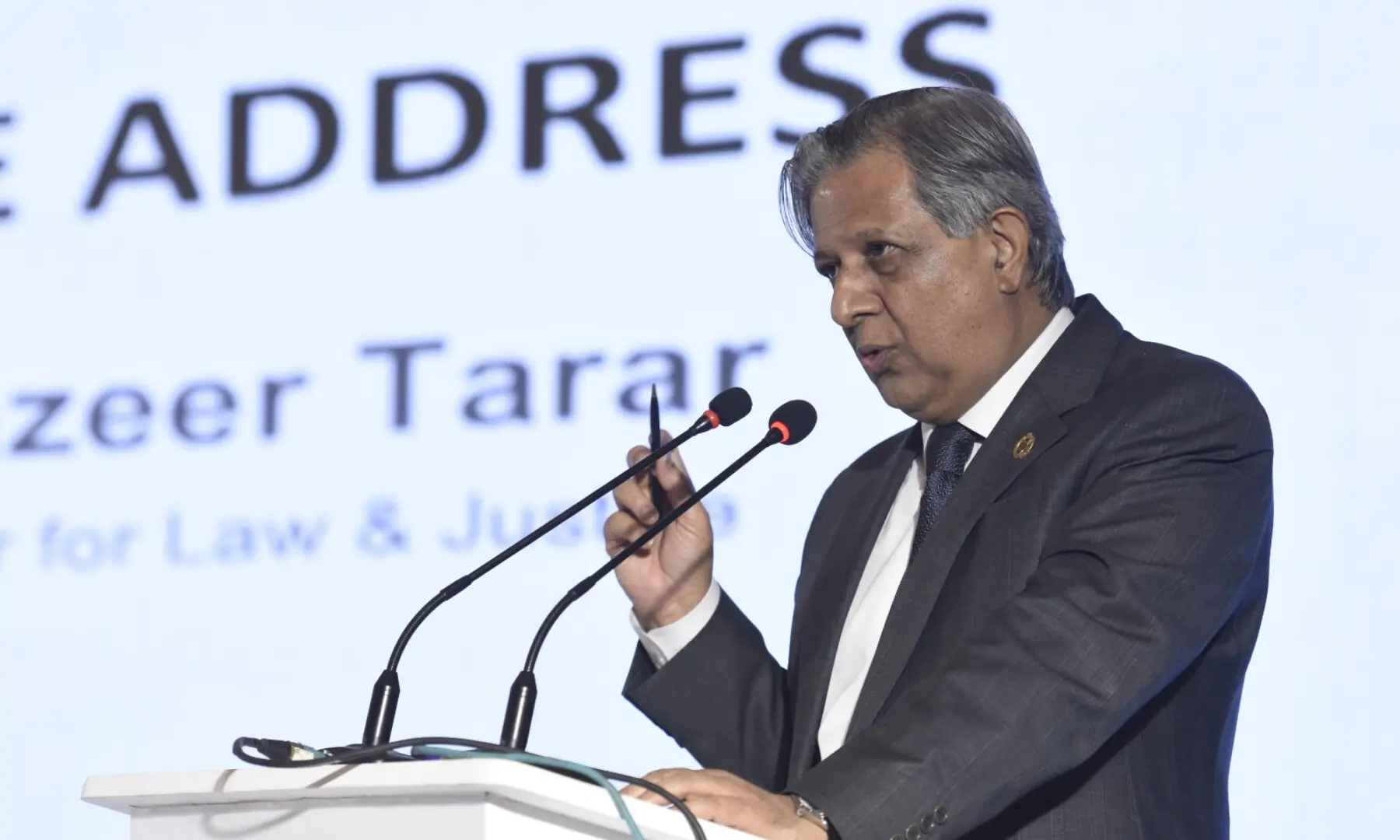
Law Minister Azam Nazeer Tarar urged the public to change its practices, especially regarding using public transport.
“We drive huge vehicles for minor tasks,” he said, lauding Lahore’s Orange Train for providing fast and clean transport.
“Change your attitude. Start from yourself. I am not defending any government or person, but this is not one person’s duty alone,” he said.
5:18pm — Law minister decries ‘lack of will’ in tackling climate crisis
Minister for Law & Justice Azam Nazeer Tarar decried the “lack of will” in tackling the climate crisis.
Delivering a keynote address of the day’s last session, the law minister highlighted, “There are not a lot of gaps in the legal framework, but there is in the will to do.”
He warned that “unless these gaps are addressed, our kids will grow up in the same environment”.
Tarrar recalled that for the past 20 years, “we have been hearing that plastic bags are banned, but we still see them everywhere”.
5:11pm — Climate action requires strong coordination between Centre, provinces: NA deputy speaker
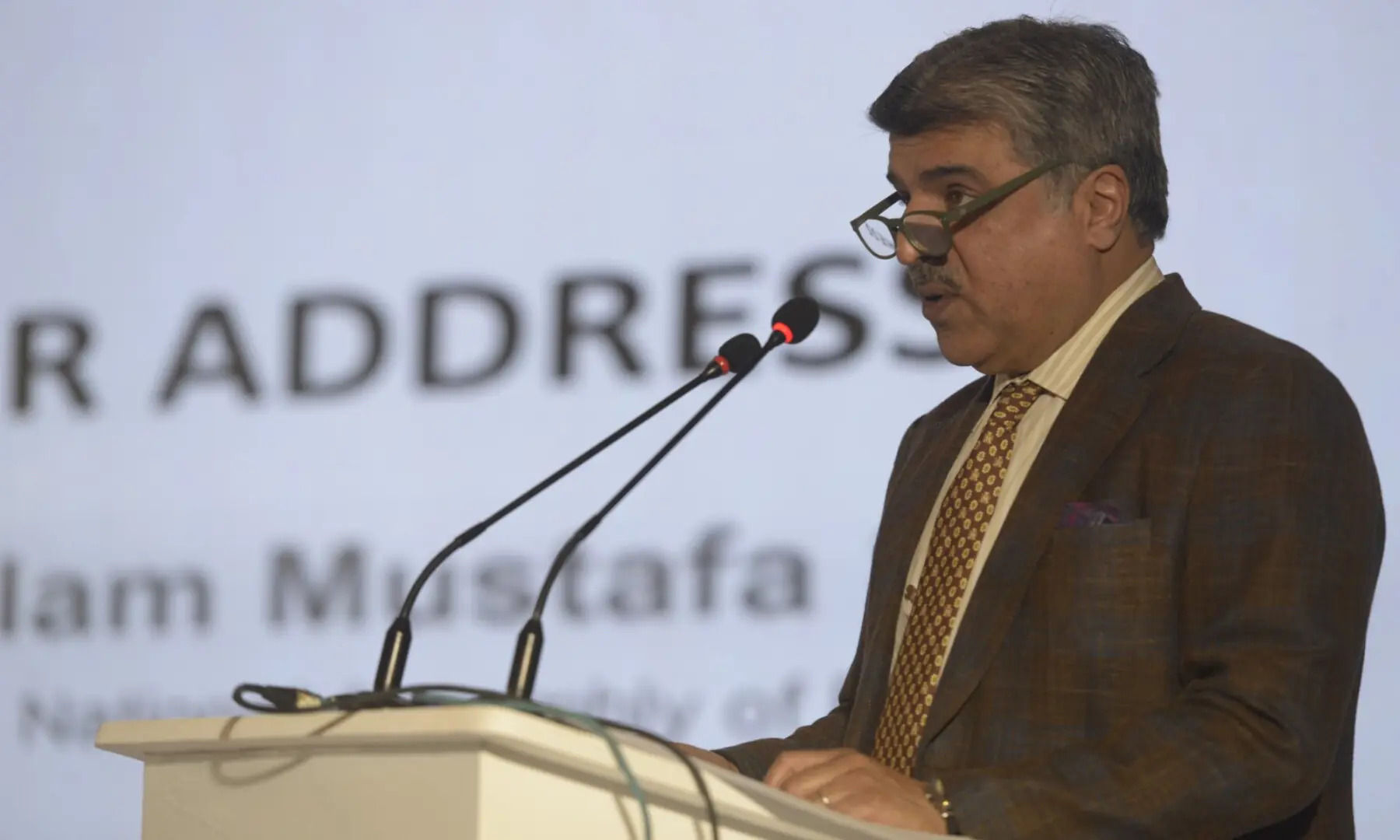
National Assembly Deputy Speaker Ghulam Mustafa Shah emphasised that climate action required strong coordination between federal and provincial governments.
He noted that the 18th and 26th Amendments accorded greater constitutional significance to climate change and the role of Parliament.
“The challenge is no longer policy formation; it is effective enforcement,” the deputy speaker contended.
5:06pm — ‘Robust legislative backbone’ required to tackle climate impacts: NA deputy speaker
The NA deputy speaker called for the need for a “robust legislative backbone” to tackle the climate crisis.
Shah noted that the climate-induced calamities “have exposed how vulnerable our economy and infrastructure are to climate shocks,” recalling the 2022 and 2025 floods.
He maintained that the present challenge was not the “absence of policy but the urgency of the implementation”. He pointed out that under Article 9-A, the Constitution had recognised the right to “a clean and healthy environment as a fundamental right”.
4:58pm — Green Pakistan Initiative CEO calls for facilitating farmers
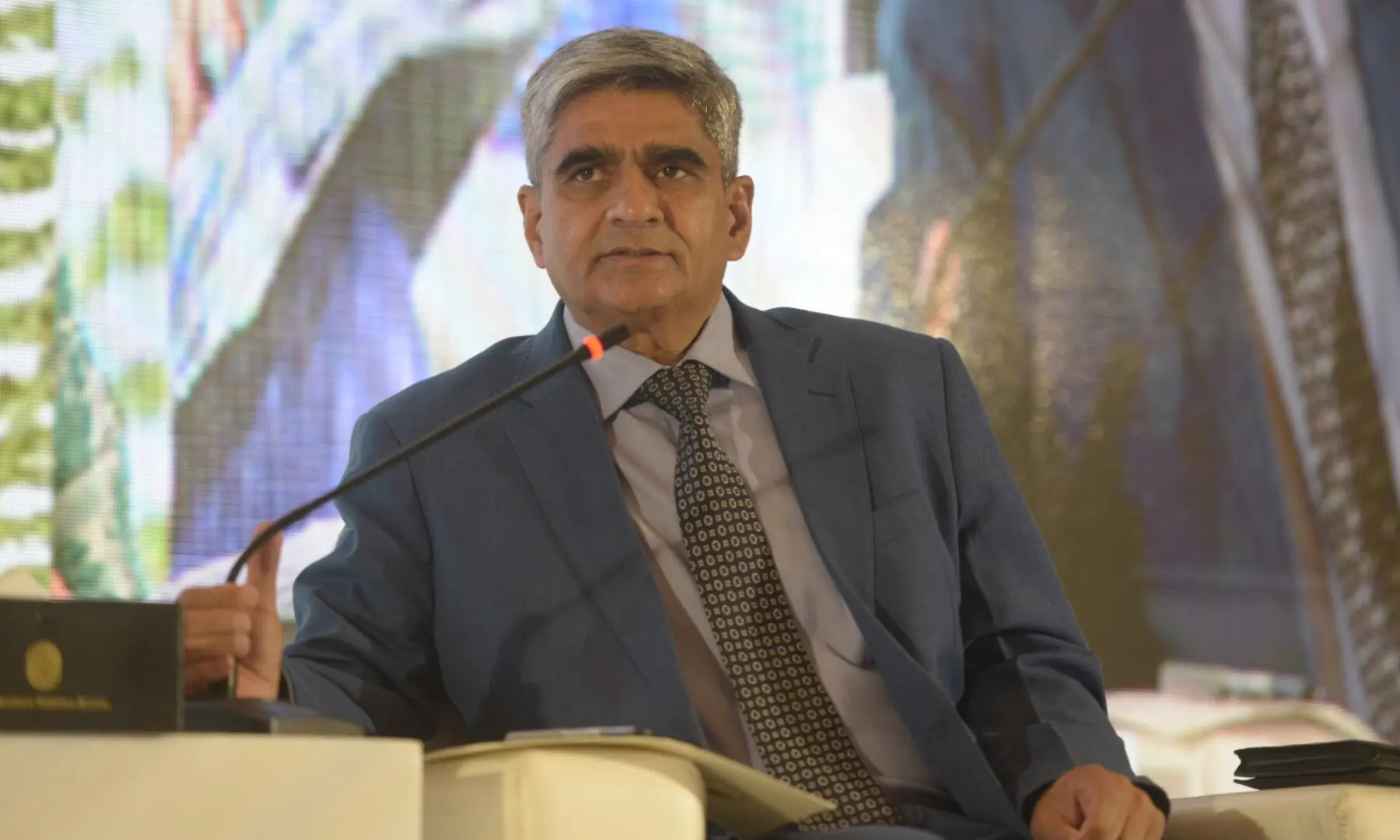
Green Pakistan Initiative CEO Major Gen Shahid Nazir stressed the need for changing the way of living to offset the challenges of climate change.
“A very simple solution: we have to shift from wheat-based breads to multi-grain,” he said, pointing out that Pakistan produced various crops such as barley and corn that could be used as a staple crop.
He also called for facilitating the farmers, noting they were “feeding almost the entire nation” and the non-farmer community.
Major Gen Nazir underscored the need to invest in developing drought-resistant and pest-resistant seeds, adding that international collaborations were also needed.
4:50pm — ‘Turning brown into green’: Green Pakistan Initiative CEO
Green Pakistan Initiative CEO Major Gen Shahid Nazir, speaking about the country’s agriculture, said the biggest challenge was climate change.
He noted unpredictable weather patterns, scarcity of water at times and excess on some occasions. “We are turning brown into green,” he said about the GPI.
The GPI CEO noted that Pakistan had vast stretches of deserts that were “very, very fertile provided we approach those deserts with the crops and with the patterns that are suitable”.
4:46pm — Acumen official emphasises role of agri finance
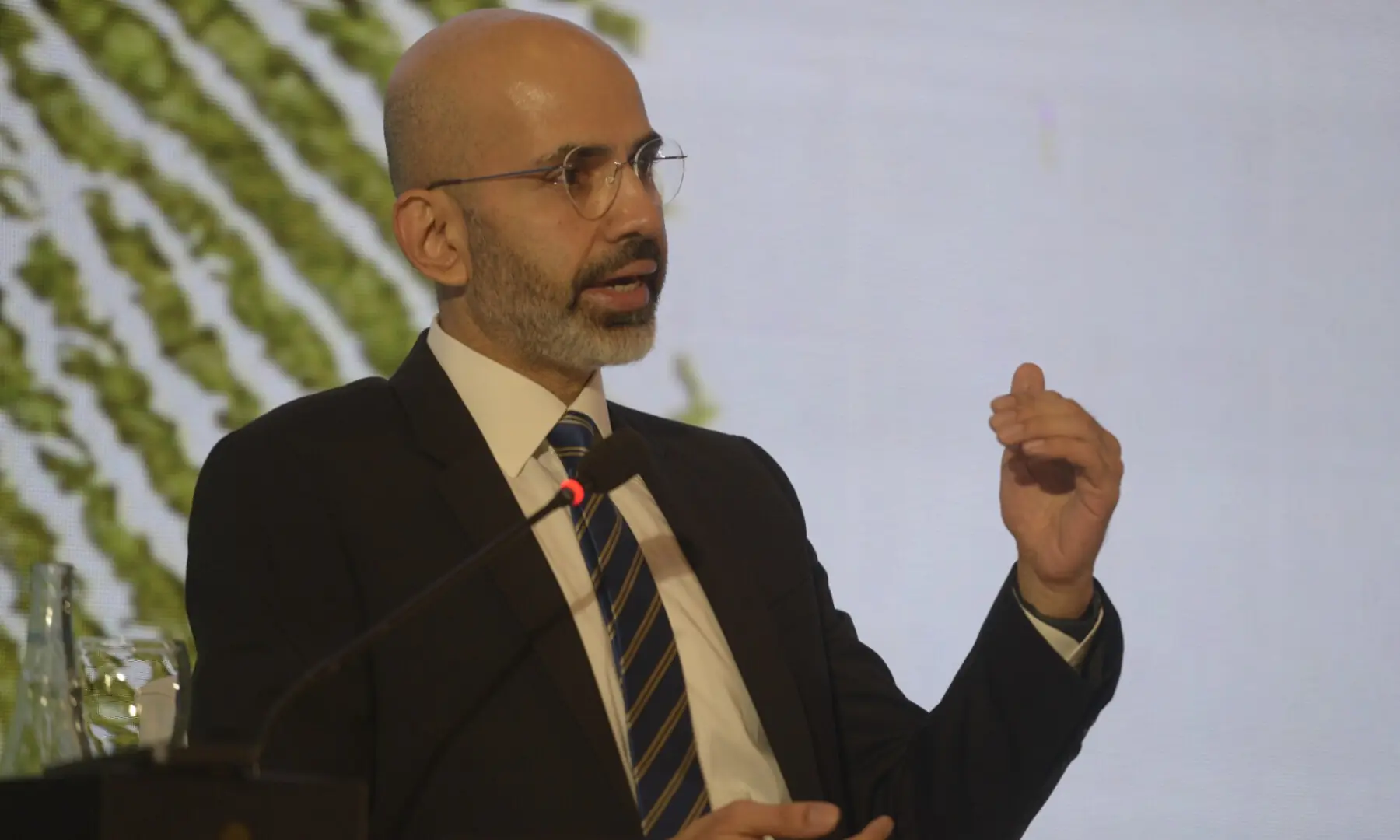
Acumen Investment Director Kashif Thanvi emphasised the significance of having access to agricultural finance for farmers.
He pointed out that the increased risk of “rainfall, pest attacks, floods, droughts further constrained resources such as land and water”. Citing the above, he termed access to agricultural finance as playing a “pivotal role” in cushioning farmers from adverse impacts.
“A farmer who has access to crop insurance, farm debt, advisory services, will always be able to invest in better seed, appropriate fertiliser, effective water irrigation and mechanisation,” he said.
He reiterated that a farmer with access to such services will be able to “absorb the loss”.
4:41pm — WFP official stresses need for resilience in ‘entire shock cycle’
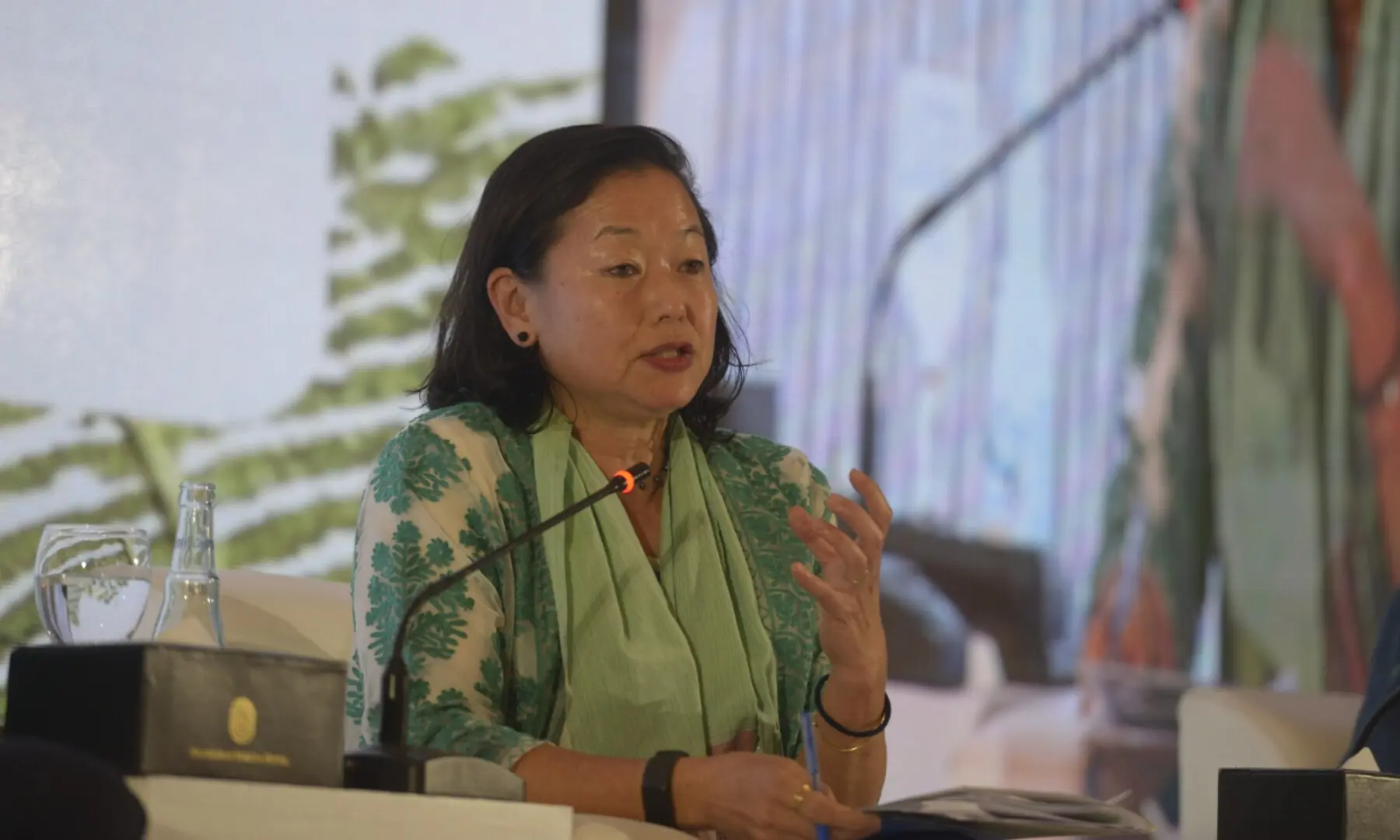
Coco Ushiyama, country representative for the World Food Programme (WFP) in Pakistan, contended that Pakistan could also offer solutions to food security.
“Build resilience in the entire shock cycle — before, during and after these shocks,” she emphasised.
Ushiyama mentioned the Philippines and Bangladesh as examples, adding that Pakistan did not need to stick to any one model, but rather build on a “layered system” and build on better risk data and early warning systems.
“Pakistan is already doing many of these things,” she observed.
4:30pm — Egypt’s satellite-based water management system cited as case study
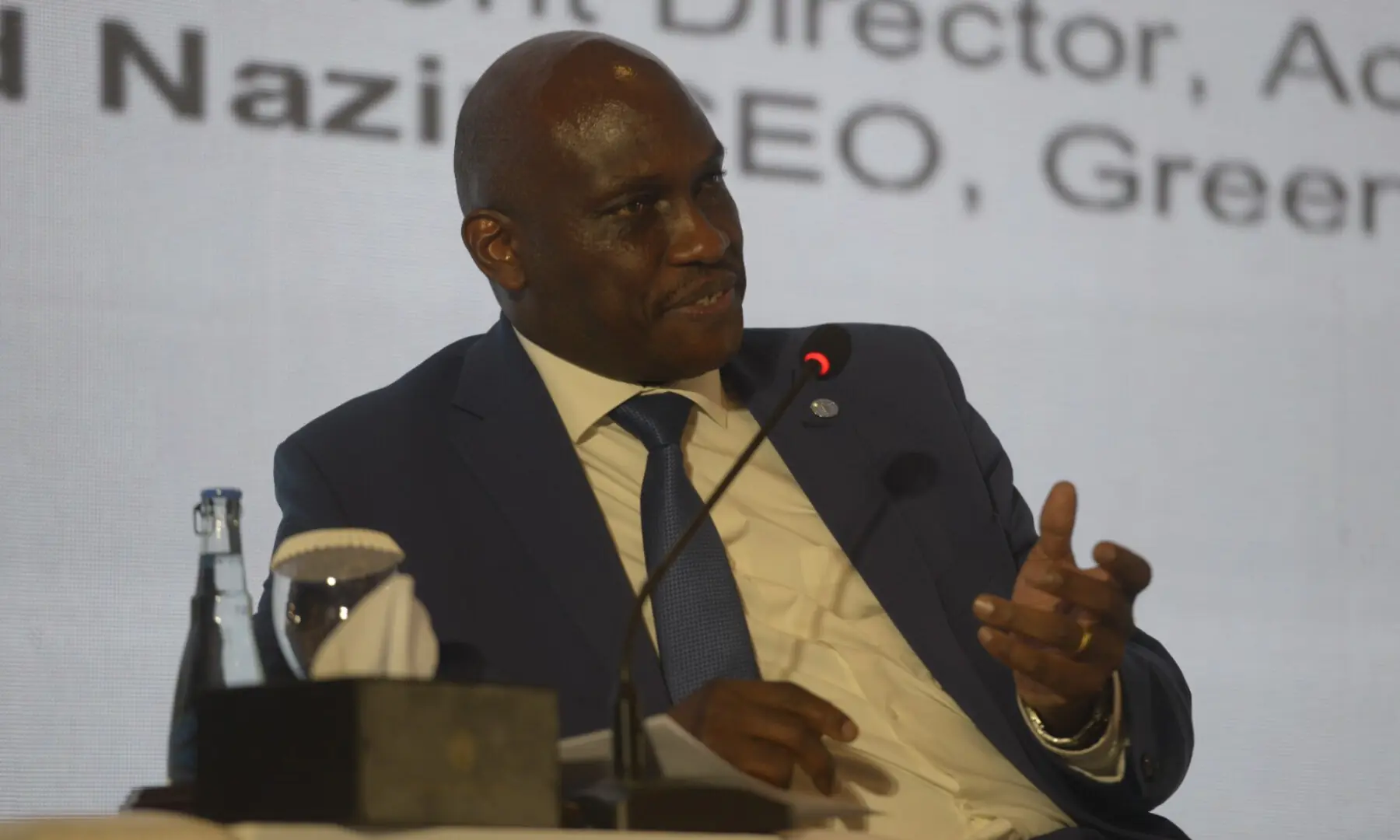
James Robert Okoth, the acting country representative at the Food and Agriculture Organisation (FAO) in Pakistan, wondered whether farmers were included in the discussions held on climate change.
He cited Egypt as an example, noting that the North African country adopted a satellite-based water management system. He further compared Morocco to Balochistan in terms of water scarcity.
4:25pm — Pakistan’s milk yield lowest in world: Pakistan Dairy Association chair
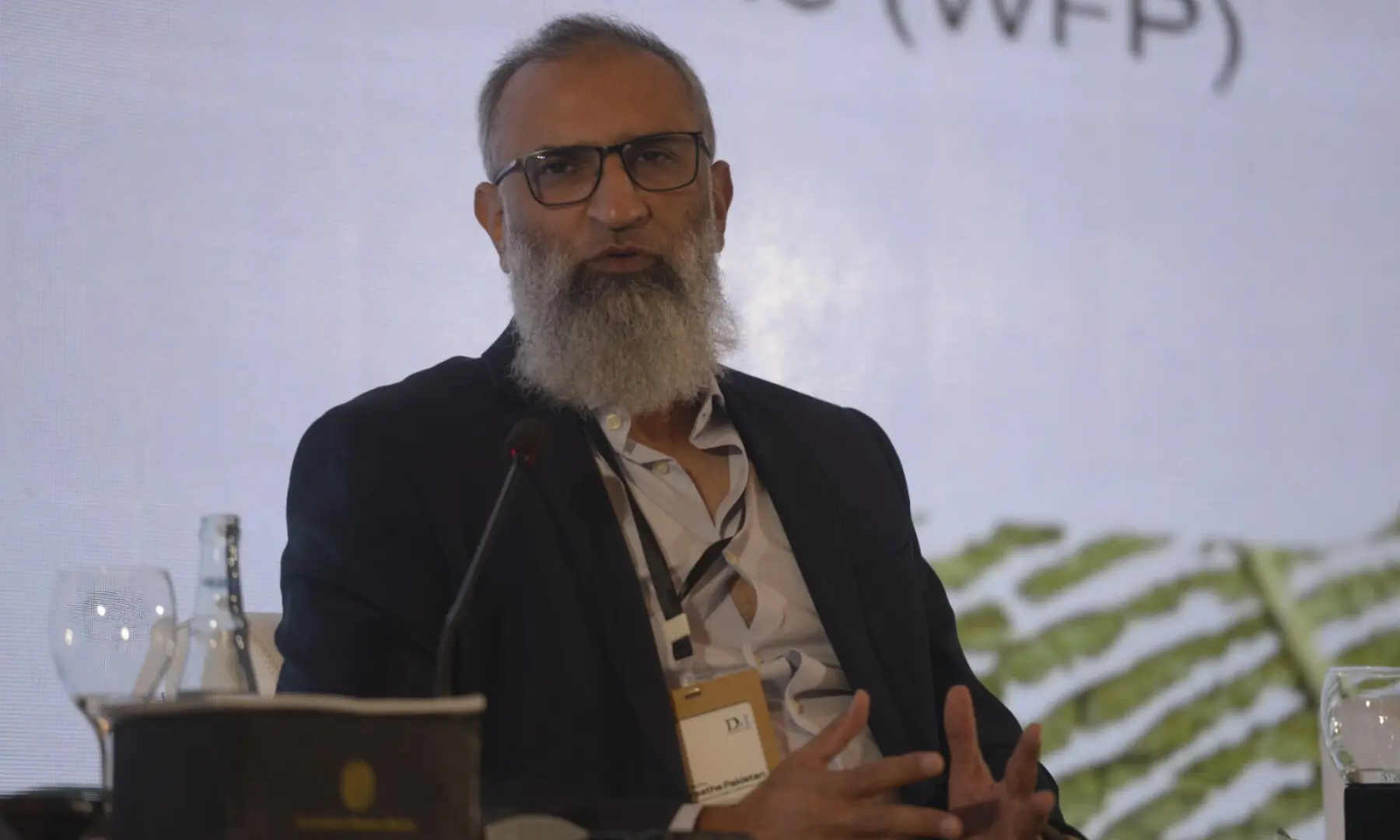
Pakistan Dairy Association (PDA) Chairman & Fauji Foods CEO Usman Zaheer Ahmad highlighted that Pakistan’s milk yields were the lowest in the world, averaging at one litre per animal.
He pointed out that this was “far behind the regional average of six litres”.
Highlighting the potential of the dairy sector, Ahmad said that “only an improvement of one litre would roughly add Rs3 trillion to GDP”.
He also noted that 98 per cent of the dairy sector was informal, with Nestle and Engro making up “only 2pc of the sector”.
4:18pm — Only need to modify our agri practices by small margin, says panellist
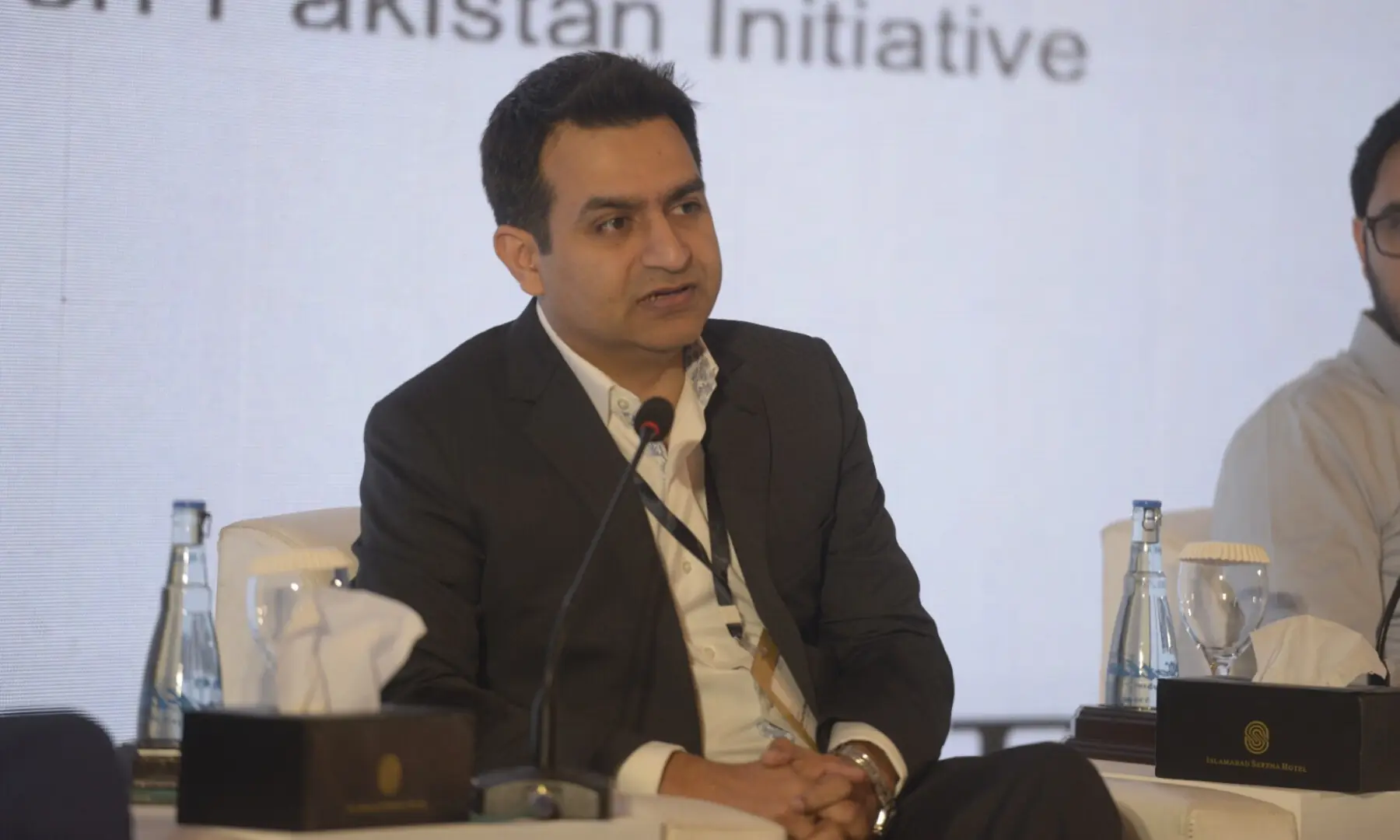
Hamza Kamal, marketing head at Syngenta Pakistan, speaking about innovation and technology in agriculture, stressed the need for accurate forecasting of weather and climate conditions.
He noted that there were organisations present in Pakistan that forecast weather so farmers could plan their crops and inputs based on those patterns.
“We don’t have to reinvent anything. We know how to do it. […] We only need to modify our practices by a small margin and then the result would be greater productivity,” Kamal noted.
4:11pm — Farmer Hanif warns of increasing risk to agri economy
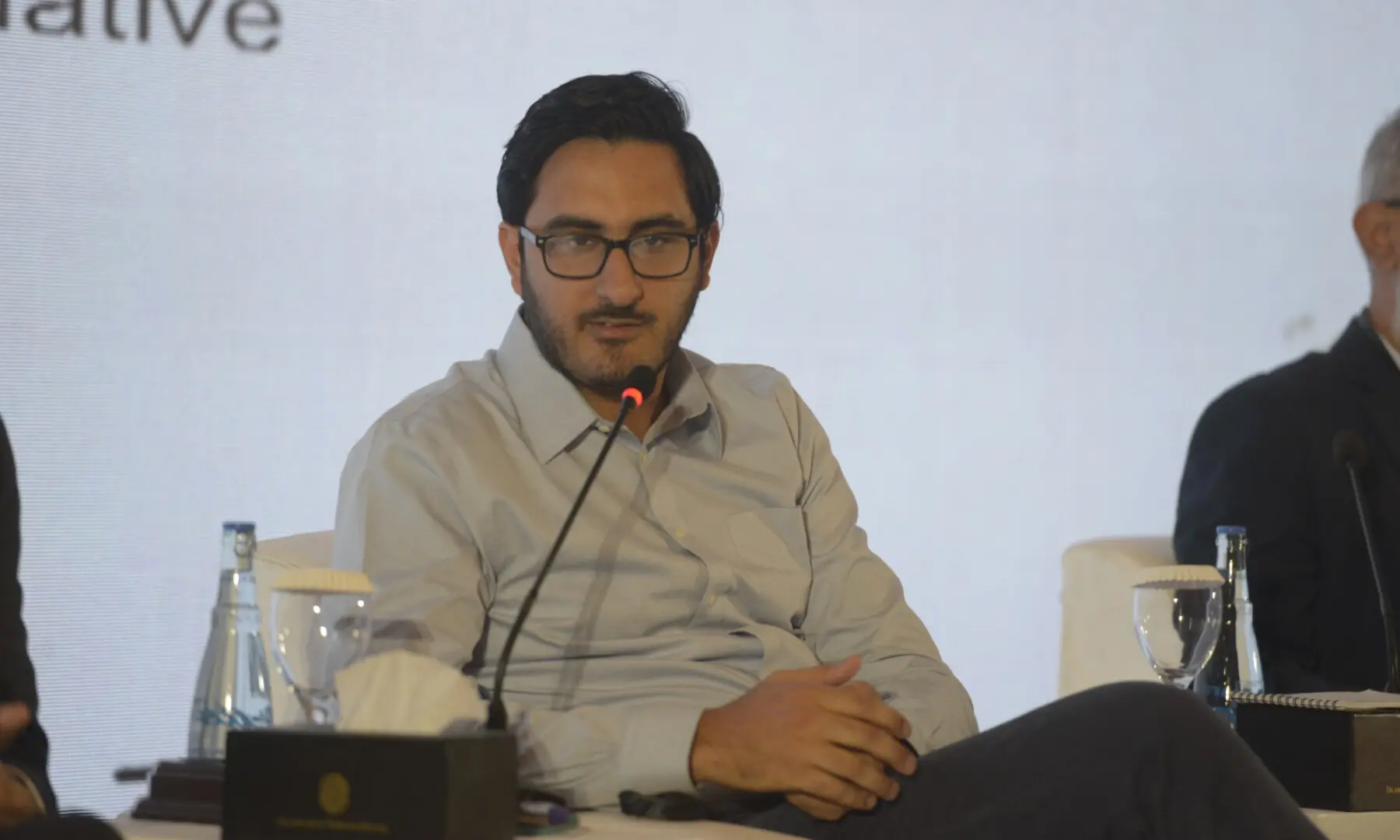
Progressive farmer and agri consultant Hasan Khurrum Hanif spoke about the stress climate risk injected into the agricultural economy, noting that there was already “a lot of unpredictability in the economy”.
He held that under such circumstances, people may not choose to opt for the profession and “not invest in it as much as needed”.
4:05pm — Food security ‘made or lost’ in supply chain
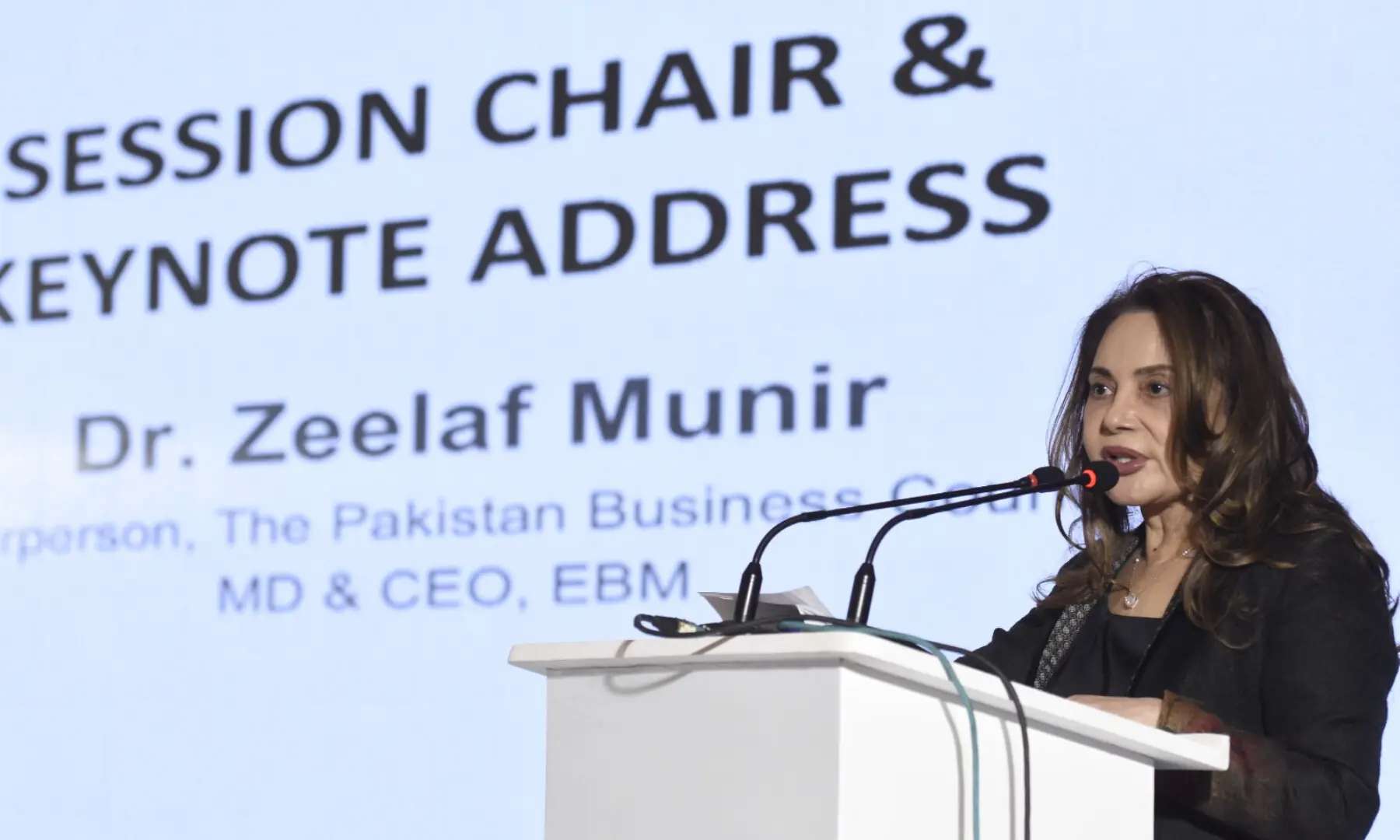
English Biscuit Manufacturers CEO Dr Zeelaf Munir, in her keynote address, spoke of food security, maintaining that it was not “made on the farm alone, but it is made or lost in the supply chain that follows”.
She recalled that last year, Punjab received 12 spells of rain during corn harvest. “The corn rotted, prices climbed, and it all ended predictably: with government raids.”
“This is what climate change looks like when it collides with a supply chain that was never modernised,” she added.
3:58pm — Agriculture ‘most vulnerable’ sector of Pakistan’s economy: PBC chairperson
Dr Zeelaf Munir, EBM CEO and chairperson of the Pakistan Business Council, is presenting her keynote address.
“Which sector of our economy is most vulnerable to climate change? The answer is agriculture,” she stated.
She recalled the impact of the 2022 floods on agriculture and the 2025 monsoon floods, adding that these were “not freak events anymore” but the new climate of Pakistan.
“Pakistan’s agriculture is not facing a future crisis from climate change. It is living one right now.”
3:55pm — 5th session begins
Today’s fifth session, titled “Agriculture, Food Security & Climate Resilience”, is now underway.
3:46pm — ‘Think of nature as infrastructure’
In his closing address, Asian Infrastructure Investment Bank’s (AIIB) Dr Murtaza Syed noted that the bank thought about infrastructure “for tomorrow”.
“We’ve begun thinking about how to think of nature as infrastructure, including mangroves and tree restoration and how to use that as much as possible as opposed to grey infrastructure,” he said.
Dr Murtaza stressed that to ensure a robust water cycle, it was necessary to invest in soft infrastructure.
“We will not just need investment in hard infrastructure but also in soft infrastructure, particularly in terms of improved governance, data collection,” he said,
Murtaza observed that water risks were increasingly becoming macroeconomic risks, as well as political and social risks. He pointed out that while Pakistan was short on water resources, it also exported products that were “water-intensive”.
3:35pm — Need to ‘plan for the system’: Aga Khan Agency for Habitat official
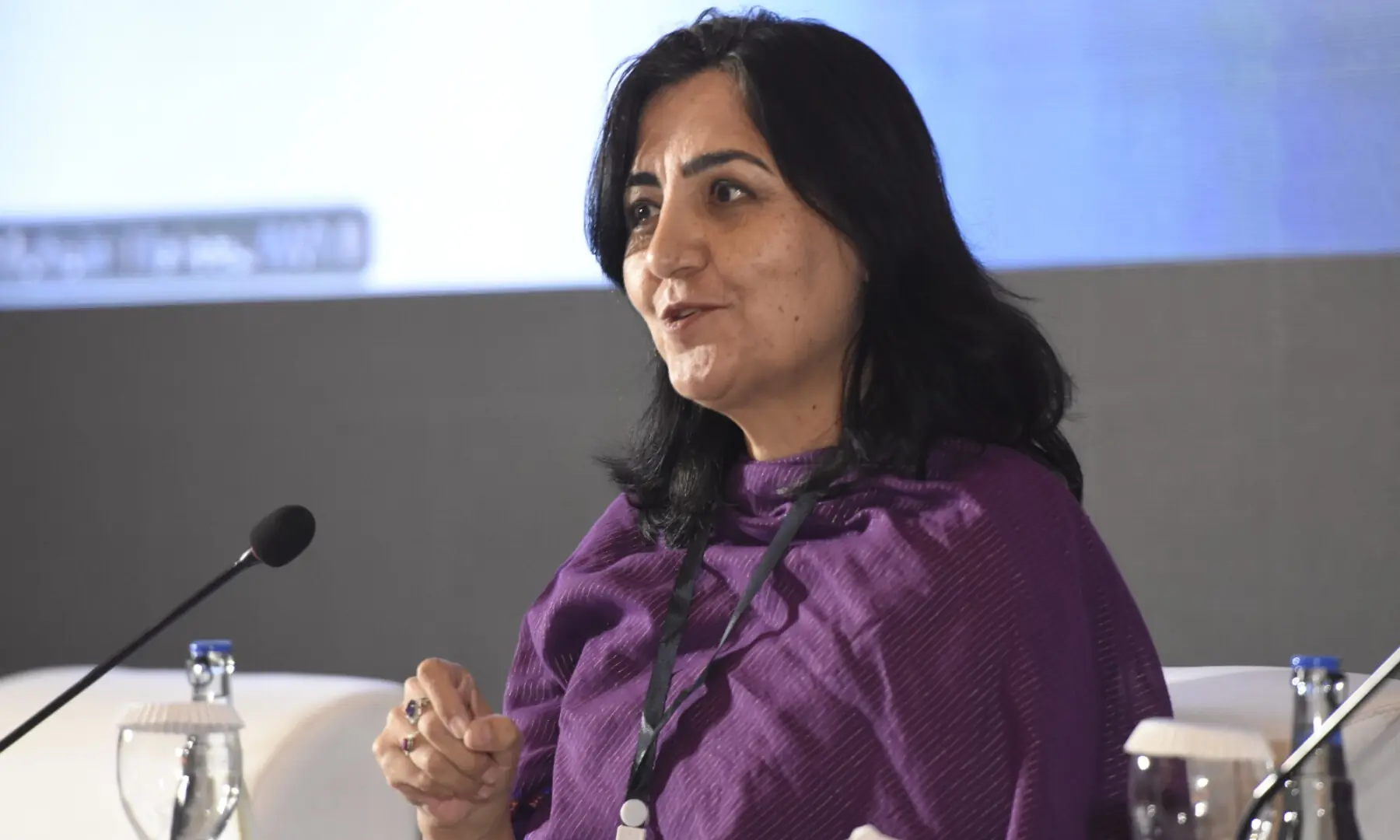
Nusrat Nasab, country director at the Aga Khan Agency for Habitat (AKAH), stressed the need to work together rather than in silos.
“I think it is more important that when we plan, […] we plan for the system.”
Nasab contended that “sustainable water governance was the solution”.
3:30pm — Panellist stresses need for improvising solutions with available resources
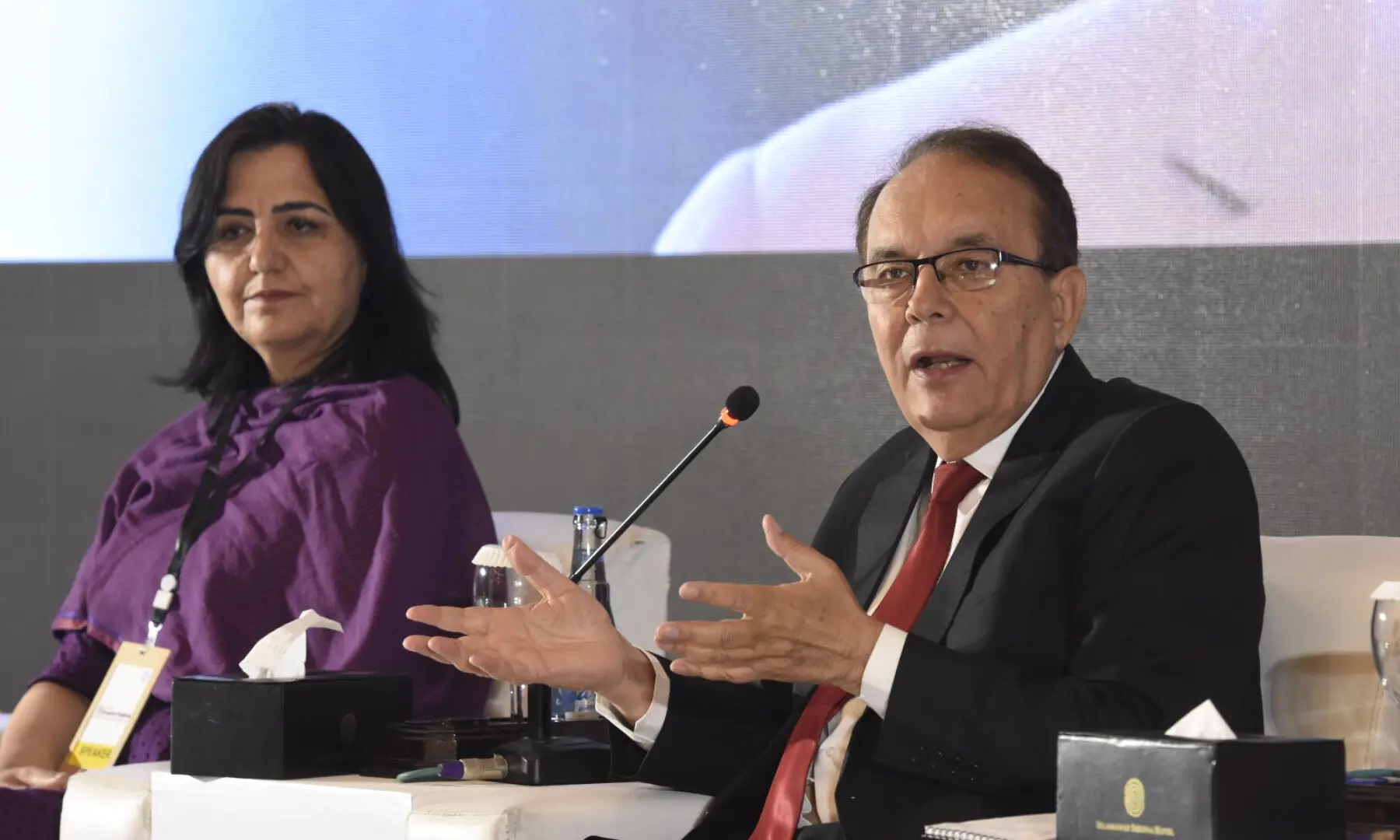
Sarhad Rural Support Programme Chief Executive Officer Masoodul Mulk, speaking at the panel, emphasised the need for improvising solutions with the available resources.
He recalled that “during 2015 floods in Chitral, we found that the town was without drinking water, and the solution that we came up with was small drinking water wells”.
He added that “53 wells were built by the community, and they provided water to thousands of people”.
3:26pm — Panellist warns against working on ‘ad hoc’ policies
The director for water, food & ecosystems at International Water Management Institute, Dr Mohsin Hafeez, warned against working on “ad hoc policies” and pointed out the need for “greater planning” or developing relevant tools.
He called for moving beyond short-term planning and steering policy towards “scientific approaches or evidence-based approaches”.
3:19pm — Hisaar Foundation head calls for local govts
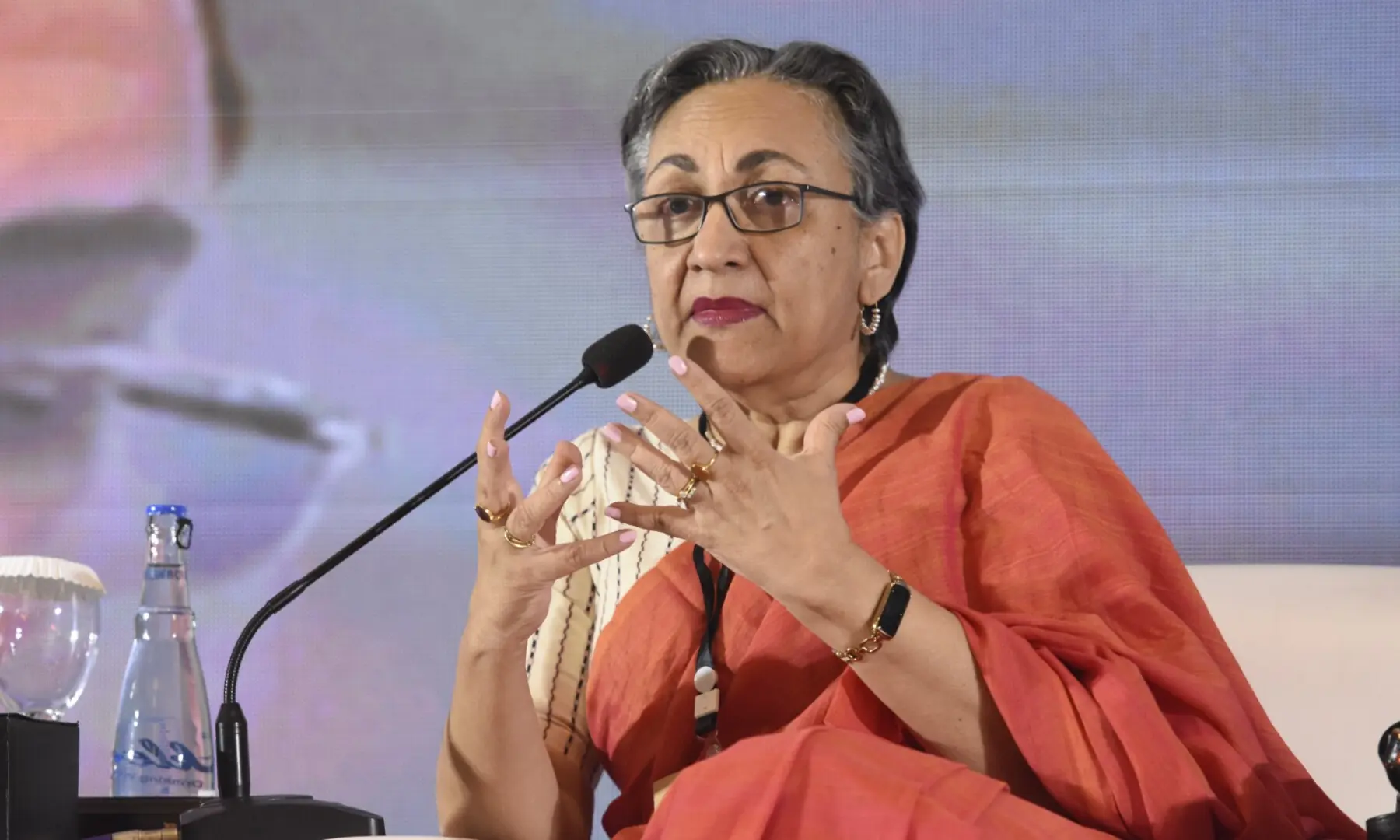
“Build no more heavy infrastructure, go for nature-based solutions,” suggests Simi Kamal, chairperson of Hisaar Foundation.
Kamal called for a functioning local government, saying that the water issues would not be addressed until one was formed.
She noted that there was a “plethora of institutions”, with an institutional disconnect that needed to be fixed.
“It is the time to think locally and act globally,” she contended, calling for preserving the country’s water bodies.
3:13pm — Panel talk on Indus Basin begins
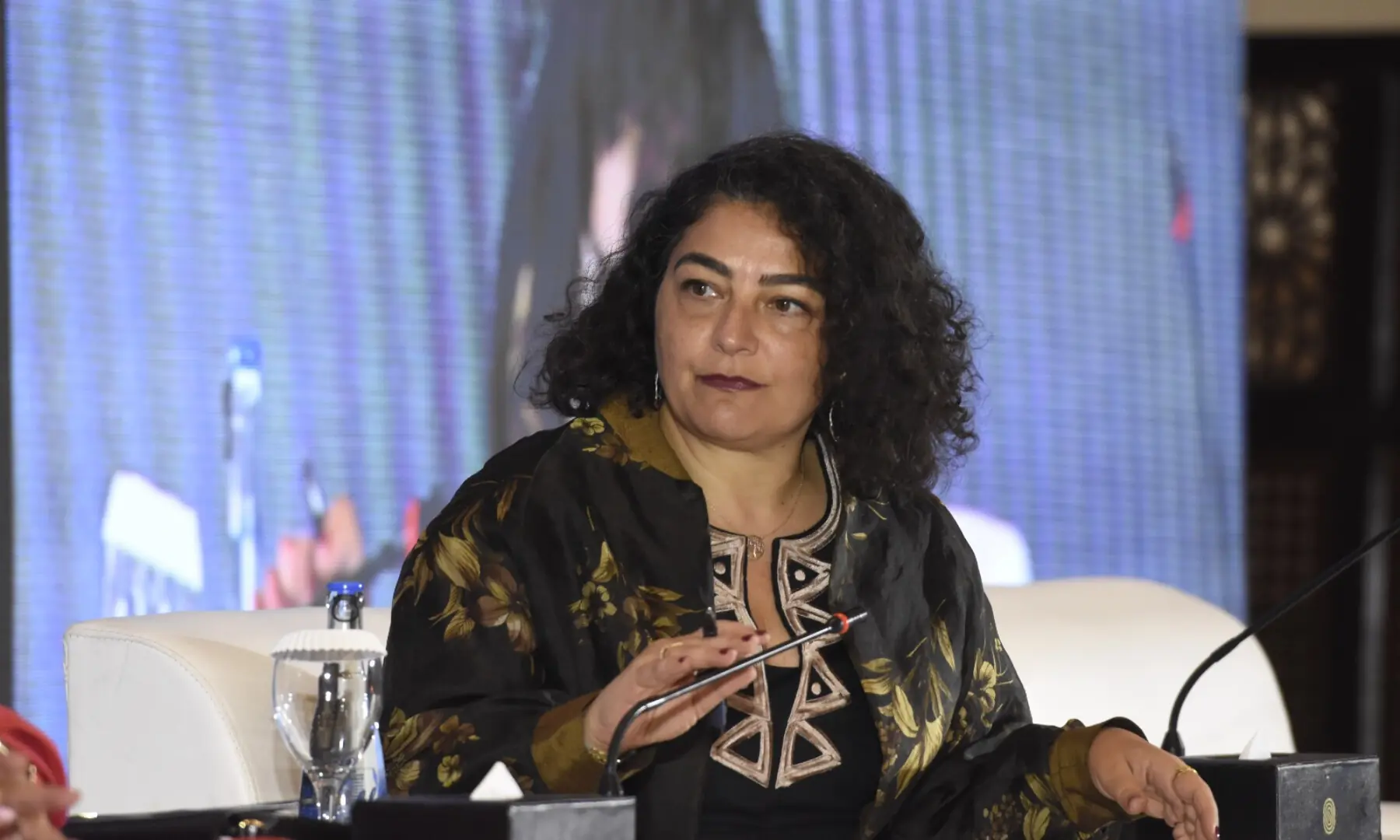
A panel talk, titled “The Indus Basin: Sustainable Governance or Ad Hoc Responses?” has begun.
Mirey Atallah, head of adaptation and resilience at the United Nations Environment Programme (UNEP), is moderating the panel.
3:05pm — Researcher presents findings from glacier study project
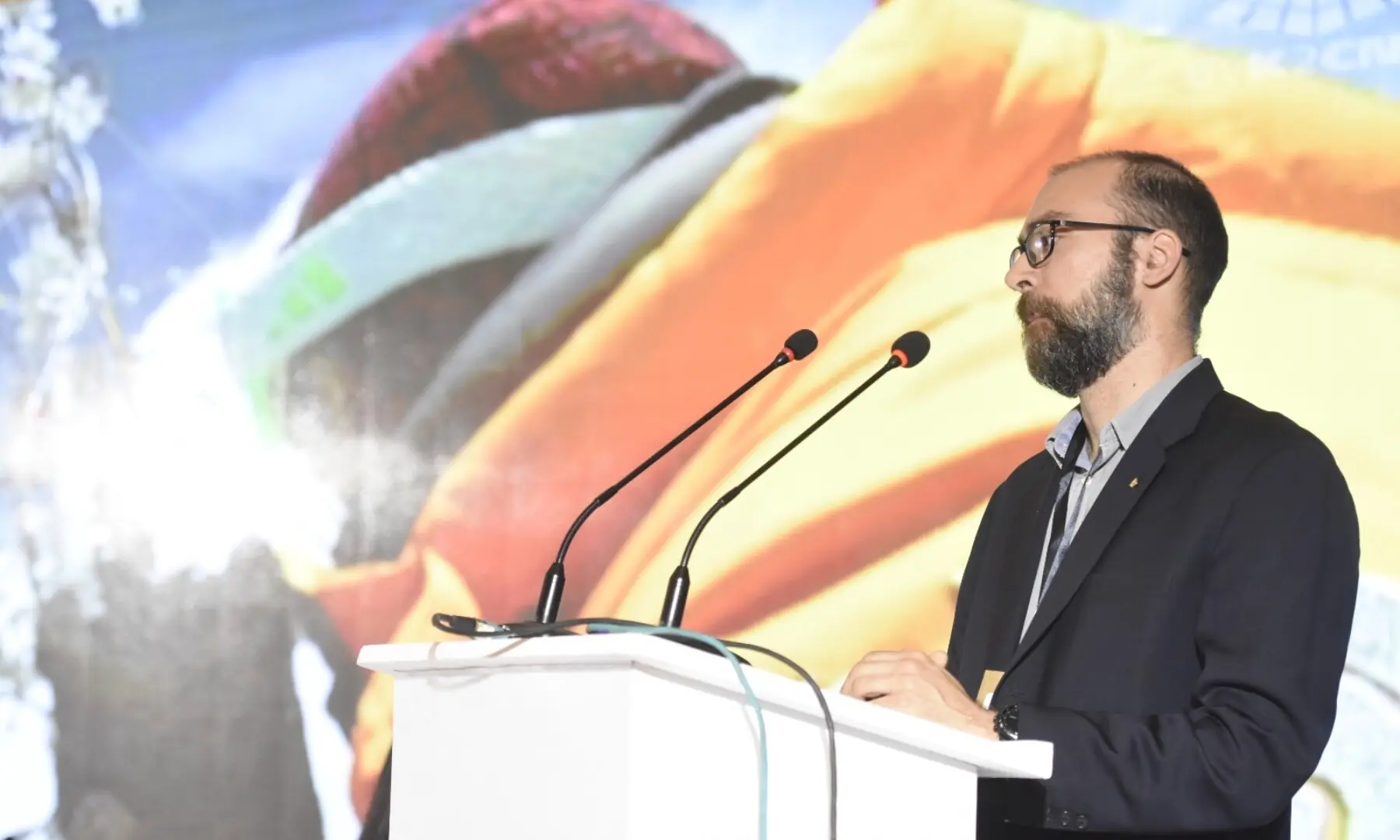
Dr Davide Fugazza, a glaciologist and a faculty member at the University of Milan, is giving a presentation on a research project done on glaciers.
He spoke about the phenomenon of “Karakoram Anomaly”, adding that even if the glacier area was still, they might be losing glacier mass.
“I personally visited these glaciers last year […] and we’re going again this year. We are performing investigations using satellite data to really look at the […] debris and identify the mineralogical properties and what it means for the glacial melt,” he said.
2:58pm — Cannot escape responsibility by evading it today: Erum Sattar
Sattar, speaking at the panel, highlighted the need for action to ensure the conservation of the Indus Delta.
“The Indus River has sustained civilisations for thousands of years, and what happens next will be determined by the choices Pakistan makes,” she asserted.
She further said that Pakistan cannot “escape responsibility” for the Indus River by “evading it today”. Sattar contended that political will and moral courage were required to tackle the issue.
2:53pm — What is ‘ethical leverage’ and why Pakistan can claim it
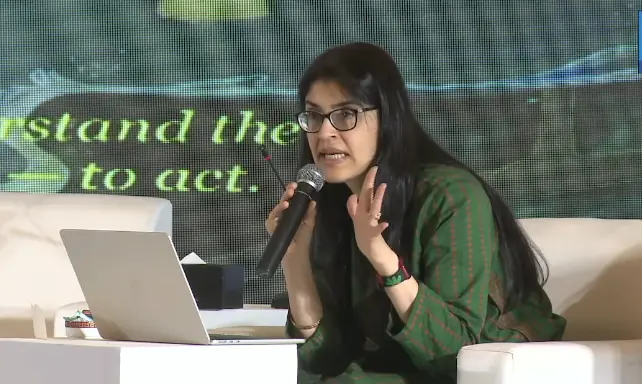
Dr Erum Sattar shed light on the concept of “ethical leverage” in climate diplomacy, explaining that it meant “the strategic power that accrues to a nation when it bears a legitimate moral claim with a demonstrated governance competence”.
She asserted that Pakistan has “one of the most legitimate moral claims” as it contributed even less than one per cent of global emissions but still absorbed some of the “worst storms”.
2:47pm — Water expert warns Indus Delta is shrinking
Dr Erum Sattar further noted that the Indus Delta, which she said was “once one of the most productive ecosystems”, is now “shrinking” and its fisheries “collapsing”.
“An estimated 50 million people in Sindh alone have livelihoods that depend on the way the river functions,” she noted.
Sattar observed that in a world with fracturing global supply chains and climate disruptions impacting harvests, every drop of water saved and every unit of food grown efficiently was part of “national security”.
2:38pm — Indus basin being squeezed: Erum Sattar
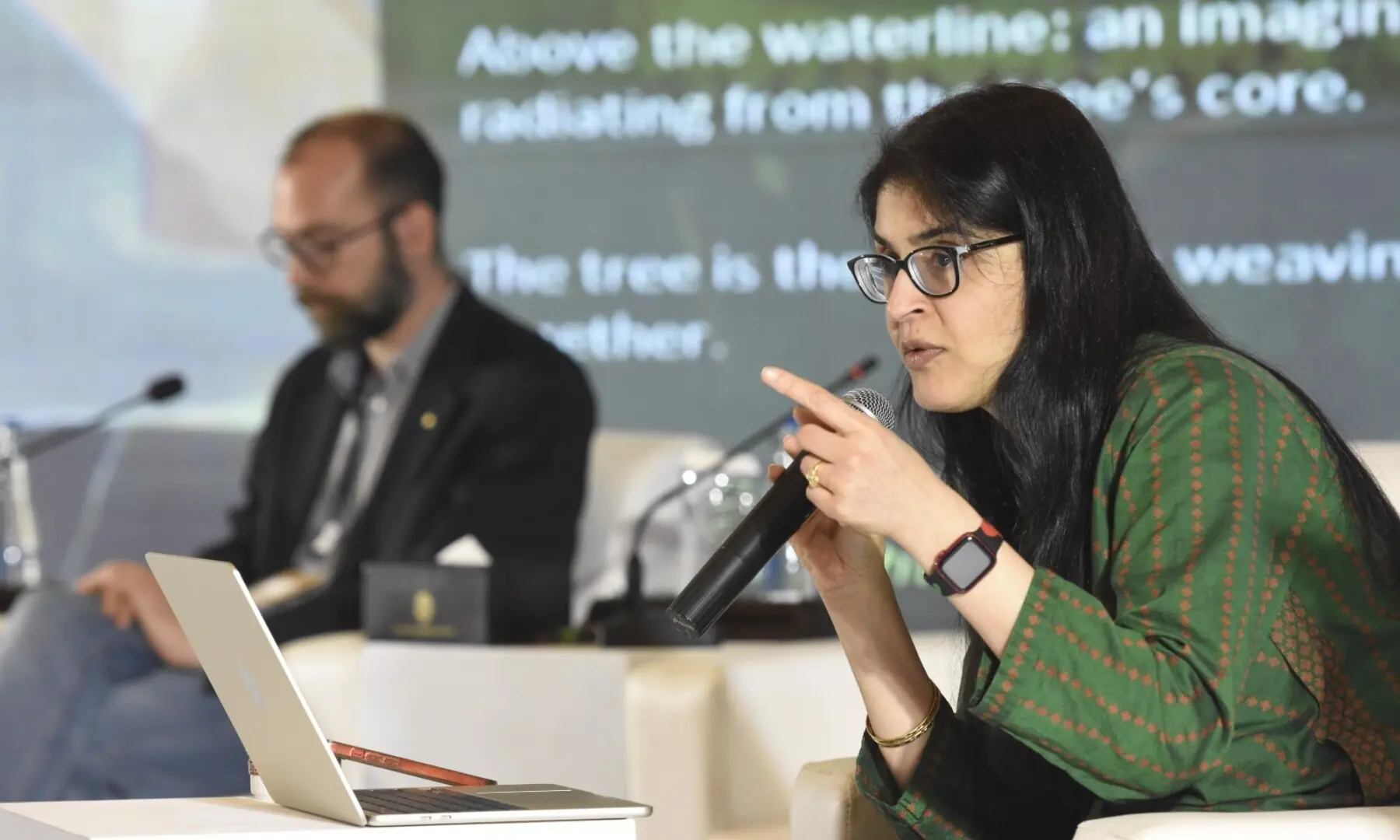
Dr Erum Sattar, a water law and policy expert, noted that the Indus Basin was being squeezed “by climate change from above, from north by glacial disruption, from east by an extremely revisionist neighbour and from within a governance system that is designed for a much more stable world”.
She pointed out that the Indus river irrigates about 90pc of Pakistan’s food production, yet half of all irrigation water no longer comes from the river but from aquifers.
“We are quite literally mining the water beneath our feet.”
2:26pm — Water management no longer optional but a necessity: minister
Water Resources Minister Mian Muhammad Mueen Wattoo highlighted the need for efficient water usage, stressing that the country cannot afford wastage.
Noting that the agriculture sector consumed the largest share of the country’s water, he said the ministry was focusing on efficient use.
“Better irrigation practices [..] and rational water management are no longer optional but necessary,” he added.
“Water must be an area of discipline, not dispute,” he said, highlighting that the water issue was about national food security and economic stability.
“Above all, we must keep the people at the centre, the farmers, the villagers, the communities,” he said, adding that the Indus basin would require “careful management, strong institutions and consistent policy direction” for long-term sustainment.
2:20pm — Pakistan’s ‘lifeline’ Indus River basin under pressure: water minister
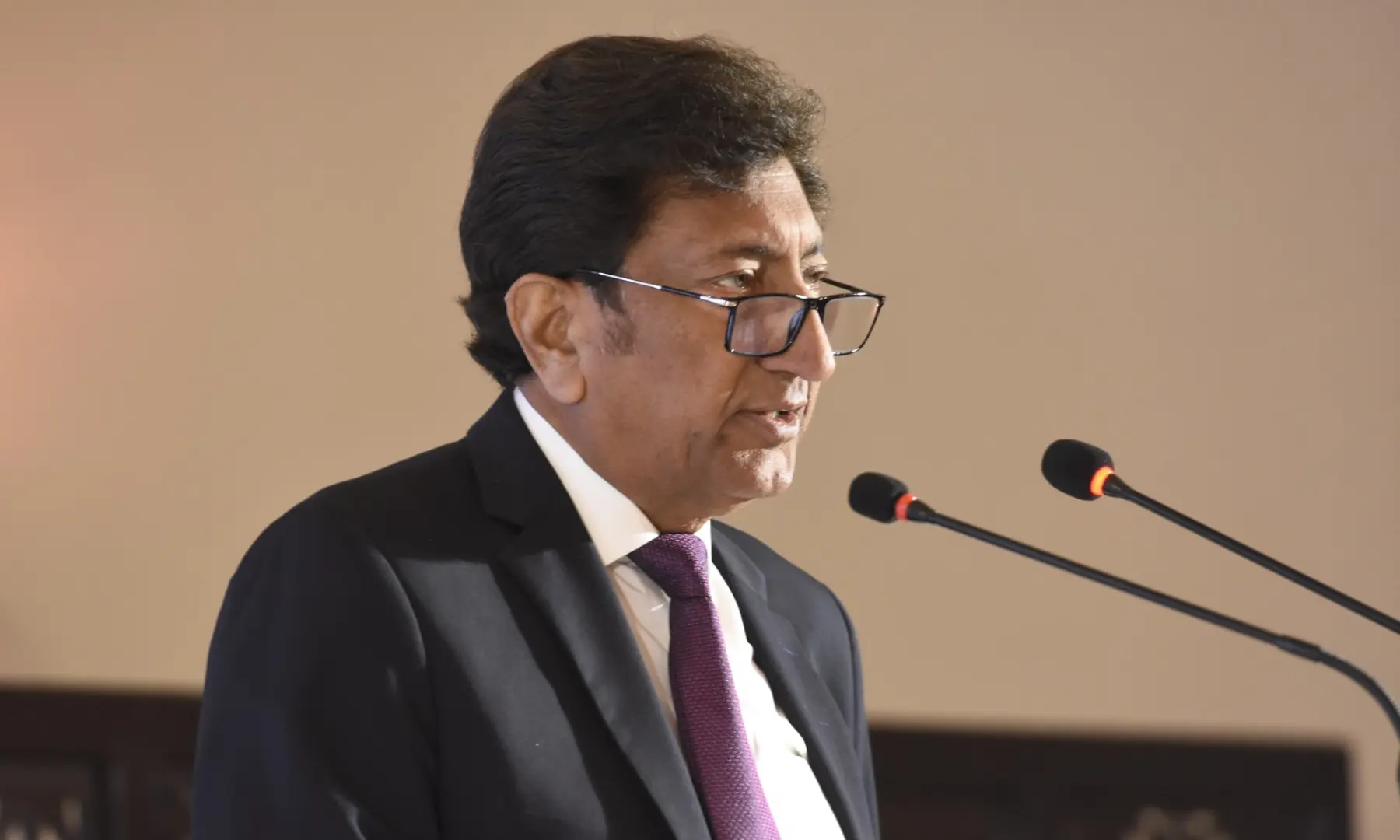
In his chairperson address, Water Resources Minister Mian Muhammad Mueen Wattoo emphasised the importance of the Indus River basin for Pakistan’s agriculture and the livelihoods of the people.
“If it is secure, Pakistan is secure. But today, that lifeline is under pressure,” he said, pointing out that the behaviour of glaciers in the north was “no longer predictable”.
“Downstream, the Indus delta is shrinking, sea intrusion is advancing, communities that once thrived are now at risk,” Wattoo said.
2:15pm — Fourth session begins
The day’s fourth discussion, titled “From Glacial Melt to Delta Discharge”, is now underway.
1:35pm — Lunch break till 2pm
1:25pm — ADB official notes lack of ‘concessional finance’
Speaking on climate financing, Anouj Mehta, an adviser at the Asian Development Bank, said there was an absence of the “amount of concessional finance that we would like to have to make a lot of things work”.
He also highlighted the issue of affordability, asking whether green bonds could be made more affordable. He cited Thailand and Uruguay’s bonds as examples.
The ADB official said there were two approaches: instruments that can raise money from outside sources and developing projects. “And the last part of that is institutions which can implement projects’ will,” Mehta added.
1:18pm — Climate minister calls for investment in youth-led projects
The climate minister called on investors to fund youth-led climate projects.
“Come to the table, listen to these guys, and if it makes sense, give them money,” Musadik Malik said, stressing the need for investing in youth.
He stressed that the solutions had to “come from the youth and for the youth”.
1:02pm — Conversations do not save people, something real has to happen: Musadik Malik
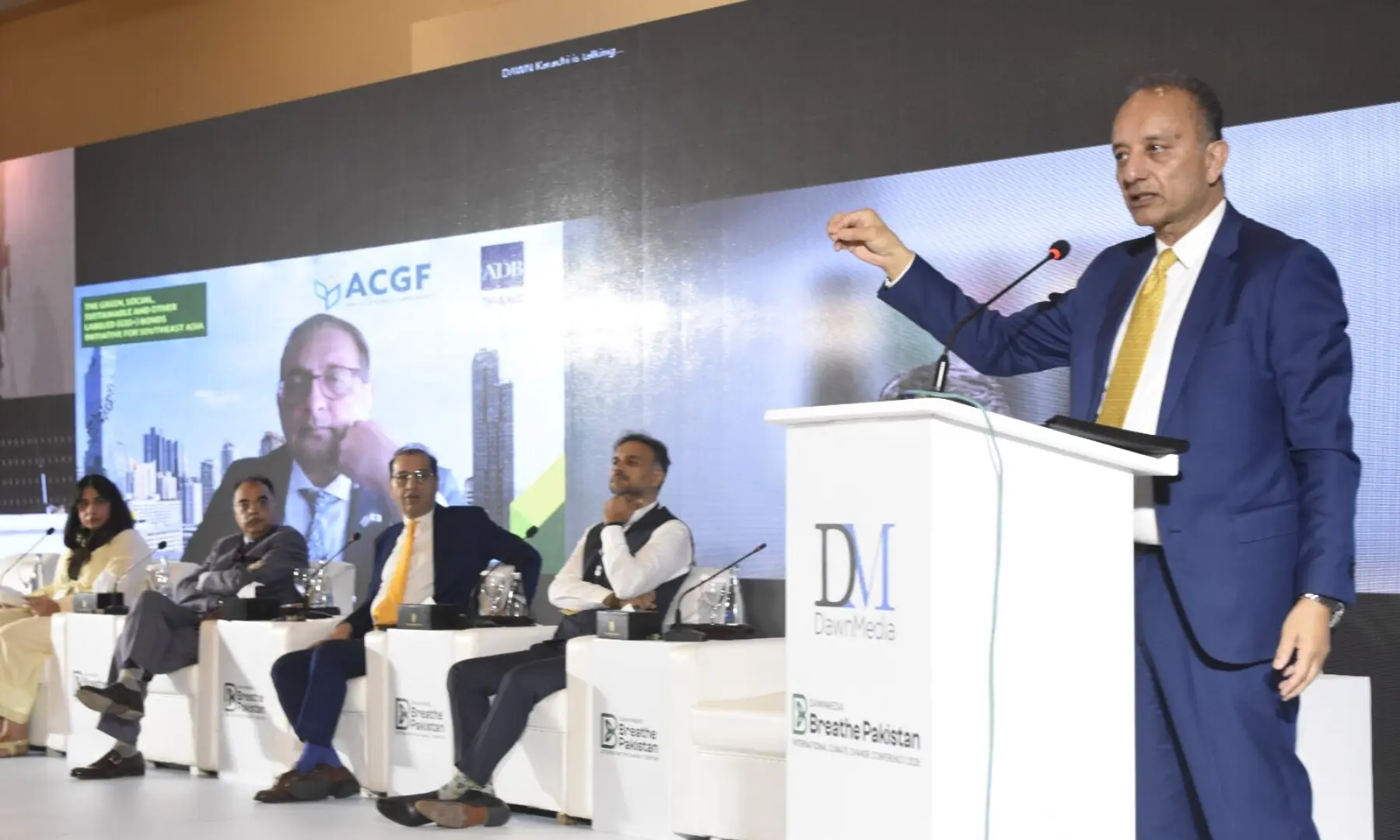
In his closing remarks of the session, minister Musadik Malik asserted that the gap between what we are talking about and the reality” needs to be acknowledged.
“Conversations do not save people. Conversations do not improve air quality. Something real has to happen between all of these billions and billions of dollars of conversations and the reality that I’m struck with when I go to Gilgit-Baltistan,” he said.
WATCH: A glimpse into this year’s Breathe Pakistan conference
12:58pm — Banker Zafar Masud calls for ‘climate emergency’ to be declared
Zafar Masud called for a climate emergency to be declared, “not just as a policy statement but as an action”.
He asserted that this was the right time as there was a “feel-good factor” in the international community, underscoring the need to grab the opportunity.
He further proposed the “radical idea” of having a climate-specialised bank.
12:51pm — Climate repercussions do not have any borders: Zafar Masud
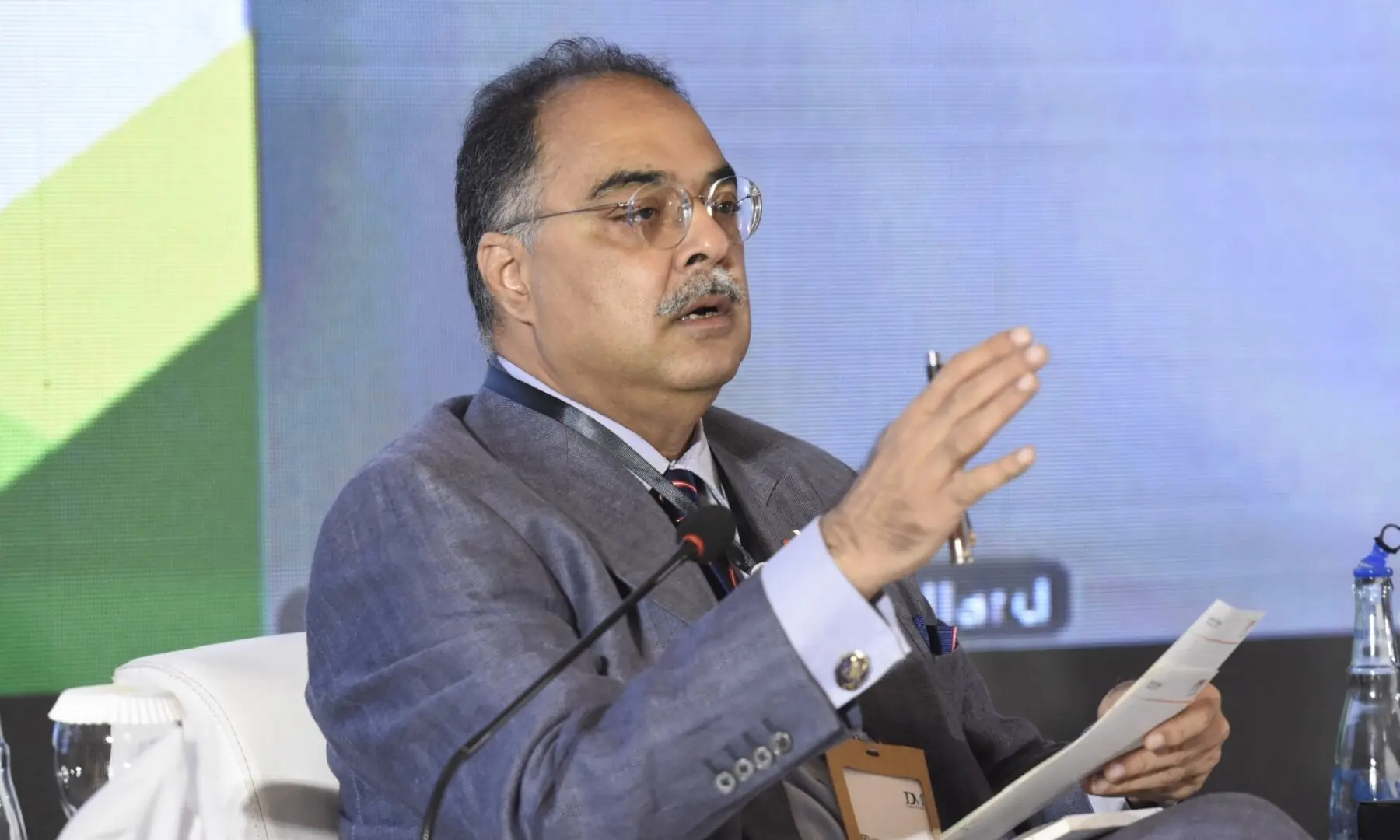
Pakistan Banks Association Chairman Zafar Masud has pointed out that “climate repercussions do not have any borders”, calling for “collective work” to address them.
He also noted that there was no lack of funding “both locally and internally”; however, it was an issue of “mindset and awareness”. He held that people need to be made aware of how climate change can impact them directly.
Masud, also the Bank of Punjab CEO, further wondered why “we are so averse to the idea of not asking for support from the federal government”.
12:40pm — ADB official says $50bn allocated for ‘regional Asian grid’
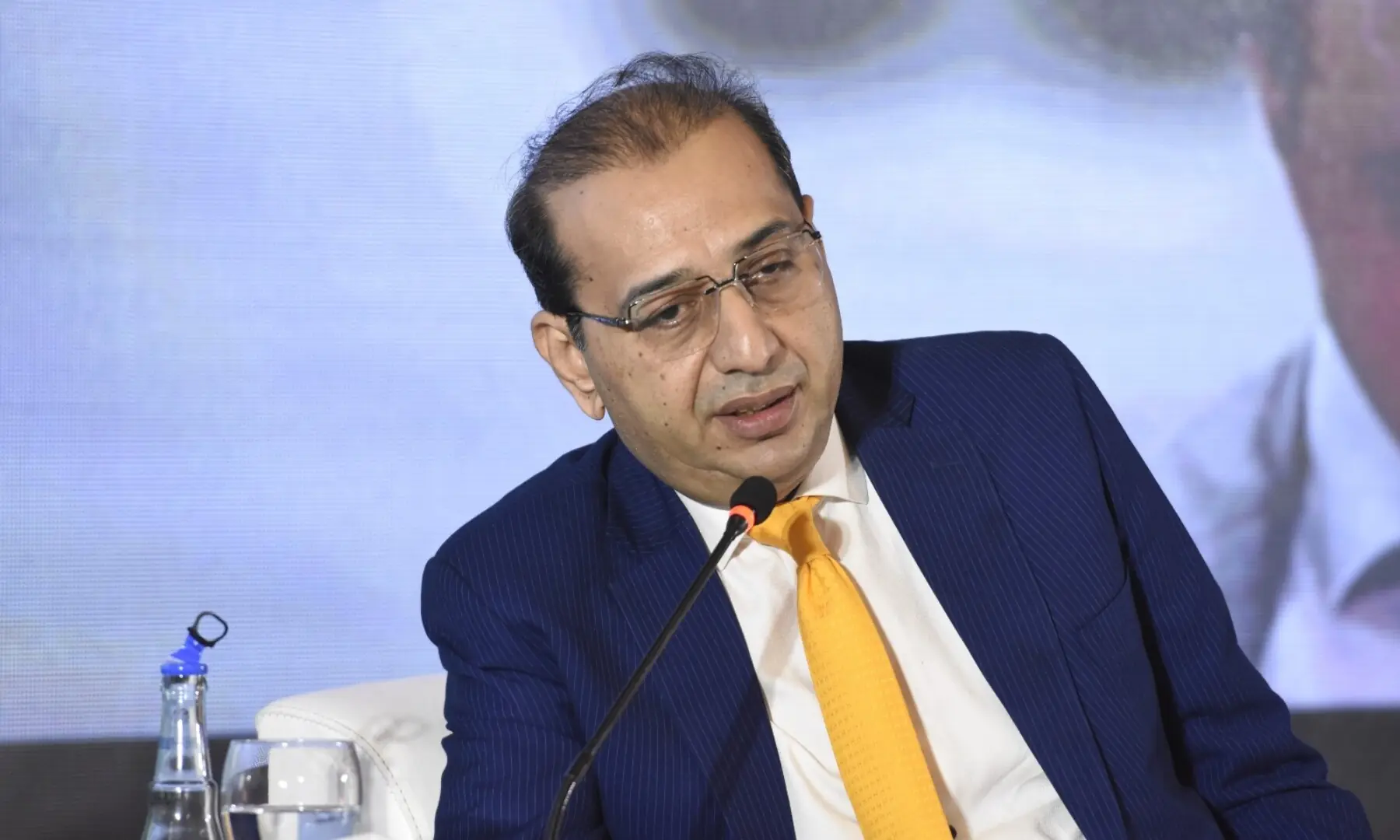
ADB Principal Project Officer Shauzab Ali said ADB has allocated about $50bn for a “regional Asian grid” and another $20bn for transformation in the same project.
He highlighted the need to simultaneously work with all stakeholders, including on how to improve the air quality. He also underscored the importance of having “the right kind of data”.
“We will be providing technical assistance and grant facilities to all stakeholders who can actually bring things to fruition,” Ali affirmed.
12:33pm — AIIB official highlights challenges for developing countries in accessing climate financing
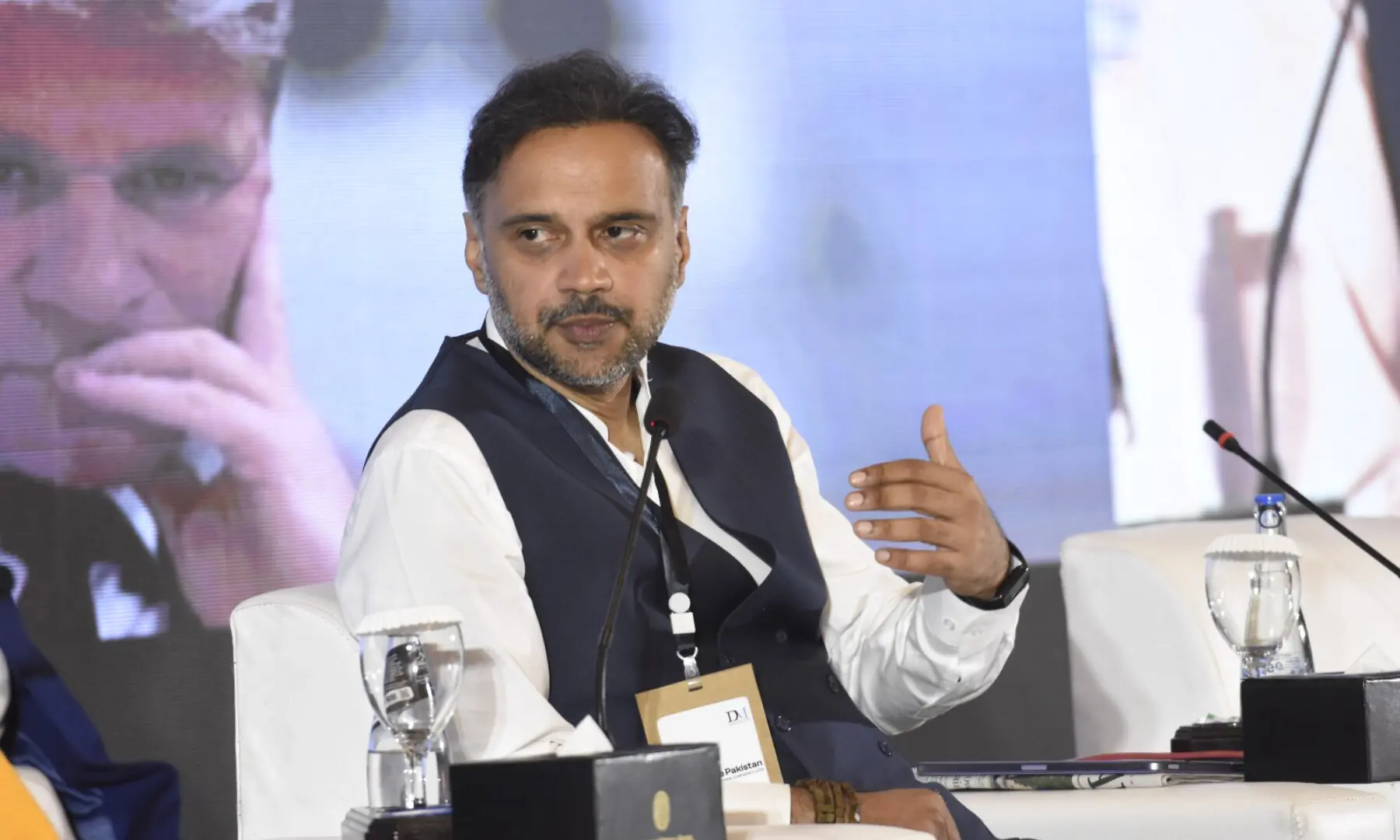
Dr Murtaza Syed of the Asian Infrastructure Investment Bank noted that fiscal risks and macroeconomic vulnerability make it “very difficult” for developing countries to access climate finance.
“We don’t have enough financing going for emerging markets and developing economies, and yet the global fight against climate change cannot be won without these countries on board.”
He contended that countries like Pakistan could not rely solely on external financing to mobilise the needed funds.
12:26pm — Green Climate Fund official stresses importance of coordination
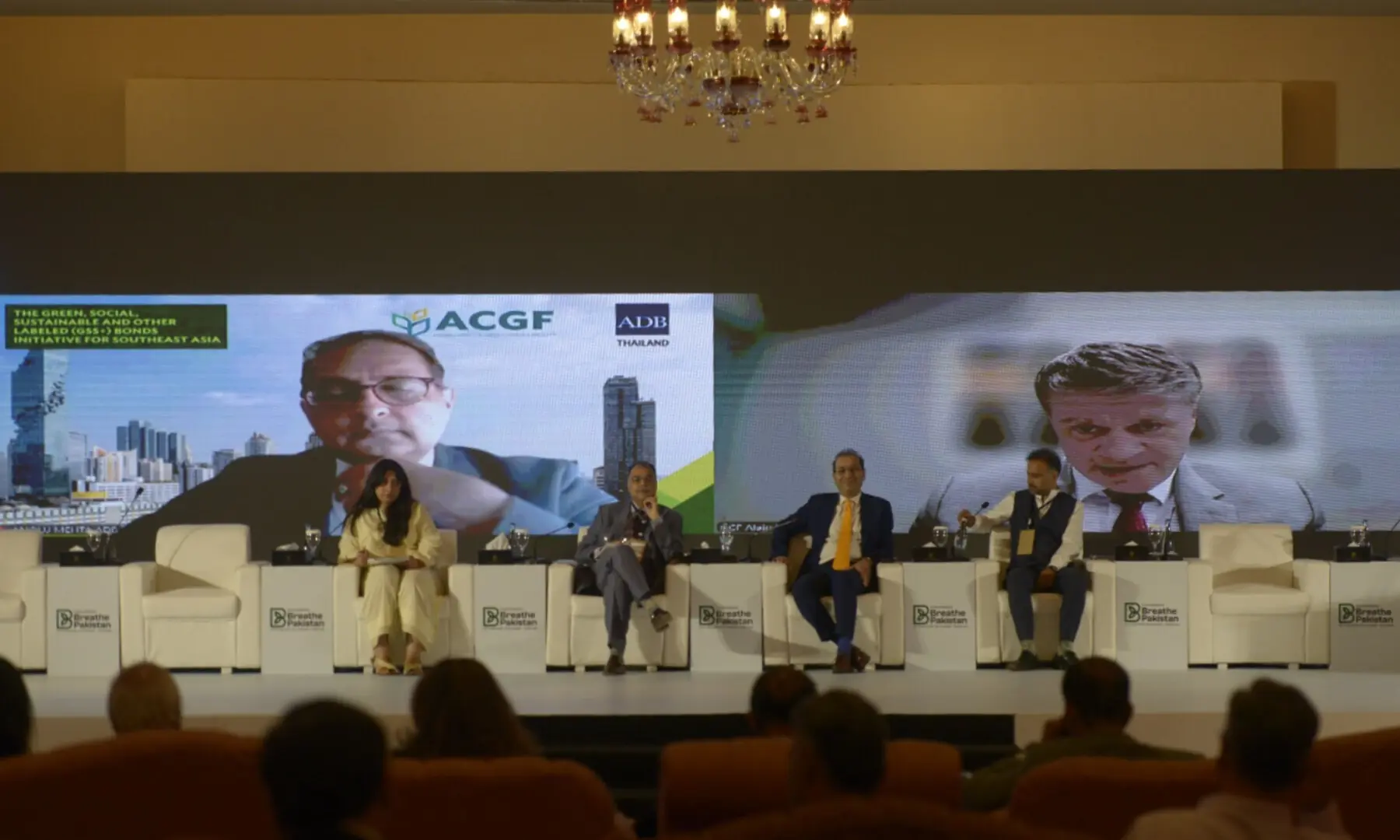
Alain Beauvillard, director of Department of Strategy, Policy, and Innovation at Green Climate Fund (GCF), stressed the need for coordination.
“You need to be able to coordinate them (different players) around the pipeline that you want to push in your country,” he said.
12:14pm — Panel talk on climate finance begins
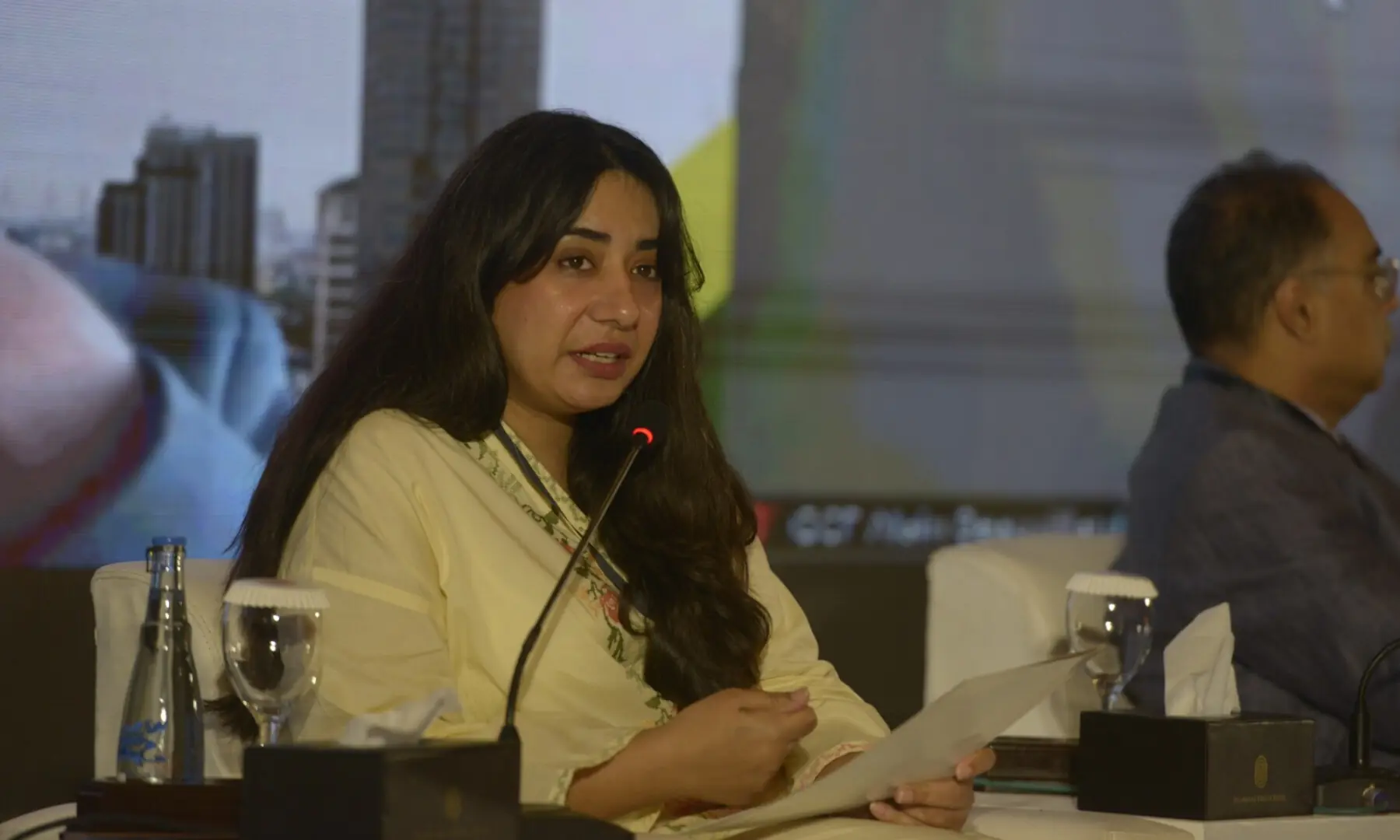
A panel discussion, titled “From Pipelines to Capital: Delivering Climate Finance at Scale”, has begun.
Anam Rathor, programme lead for Pakistan at CVF-V20, is moderating the panel.
12:07pm — ‘Plans should not end up collecting dust, but cheques’: Hamza Ali Haroon
Hamza Ali Haroon, regional director for South and West Asia at CVF-V20 Secretariat, delivering an online address at the conference, said that Pakistan’s climate plans must not “end up collecting dust, but rather cheques”.
“Let me be candid here, we are experts at making plans, and carefully designed plans,” he said; however, he maintained that they must focus on mobilising capital and must deliver.
11:58am — Intensity of 2025 floods ‘much larger’ but govt deemed int’l aid not needed: Aurangzeb
Speaking about what his ministry could do regarding climate change, Aurangzeb underscored the importance of macroeconomic stability, terming it as necessary as “basic hygiene”.
He mentioned the disastrous floods of 2022, as well as 2025, adding that “this time around, the intensity was much larger” as three rivers and almost the entire country were facing floods.
The minister noted that despite demands to seek international funding, the government decided not to, as it deemed there was “fiscal buffer and fiscal space available”.
“Let’s first use the funds which are available now and put them to good and effective use,” he said.
11:50am — Aurangzeb warns against climate change ‘remaining academic discussion’
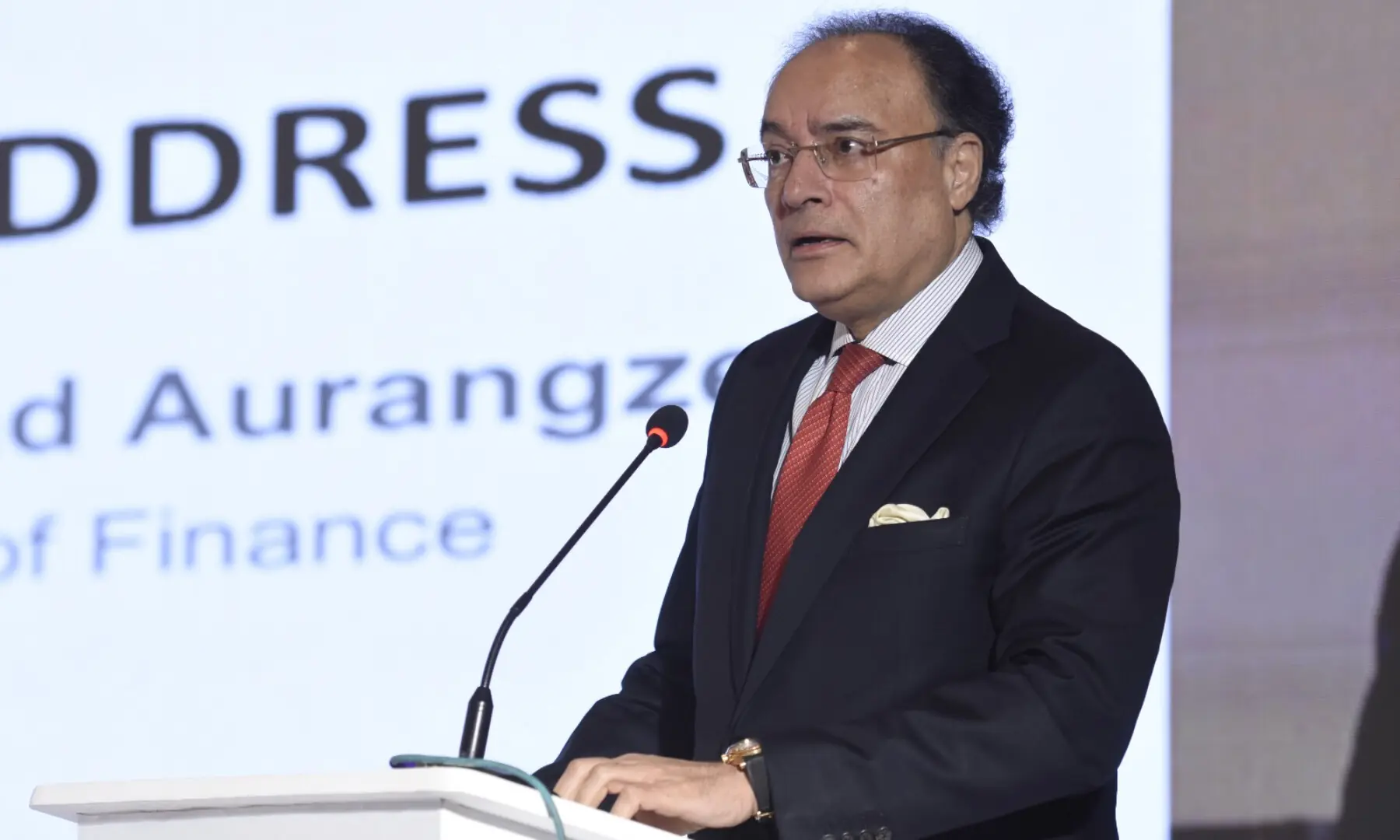
Finance Minister Muhammad Aurangzeb stressed the need for all ministries to work together and bring the climate change discourse “into the mainstream”, otherwise it would “remain an academic discussion”.
“It is quite clear that we have to work very closely with our counterparts, ministers of climate change, planning ministry, we need to take a whole of government approach,” the finance minister said.
He asserted that Pakistan was now in a “very very good place”, hailing the NDMA’s work and highlighting that “AI-led early warning systems” were in place.
The minister noted that the country now had “very scientific data” available about what actions were ought to be taken.
11:42am — World Bank official explains climate financing
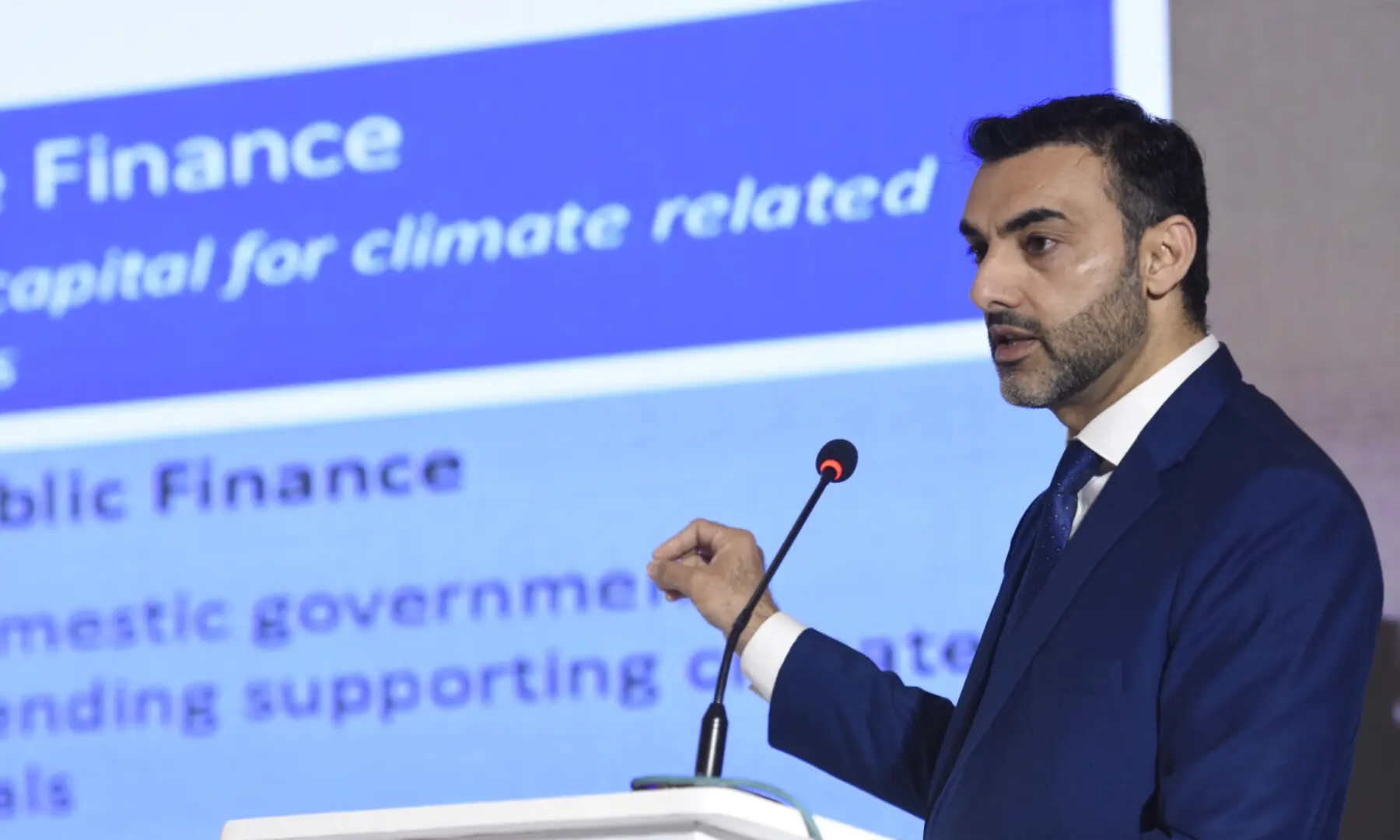
Adeel Abbas, senior climate change specialist (Regional Climate Lead) at World Bank Group, presented global statistics on climate financing.
He noted that combatting climate change was a collective responsibility, stressing the need to bridge the “huge financing gap”.
Explaining what climate financing comprises, Abbas noted the “innovative instrument” of using revenues from carbon finance.
“While we say $6.3bn are required for climate, we know that there are more than $28 trillion invested last year in long-term structure financing. So those resources are there in the global economy,” he noted.
11:30am — Over $550m needed for ‘very ambitious plan’ to reduce emissions by 50pc: SBP official
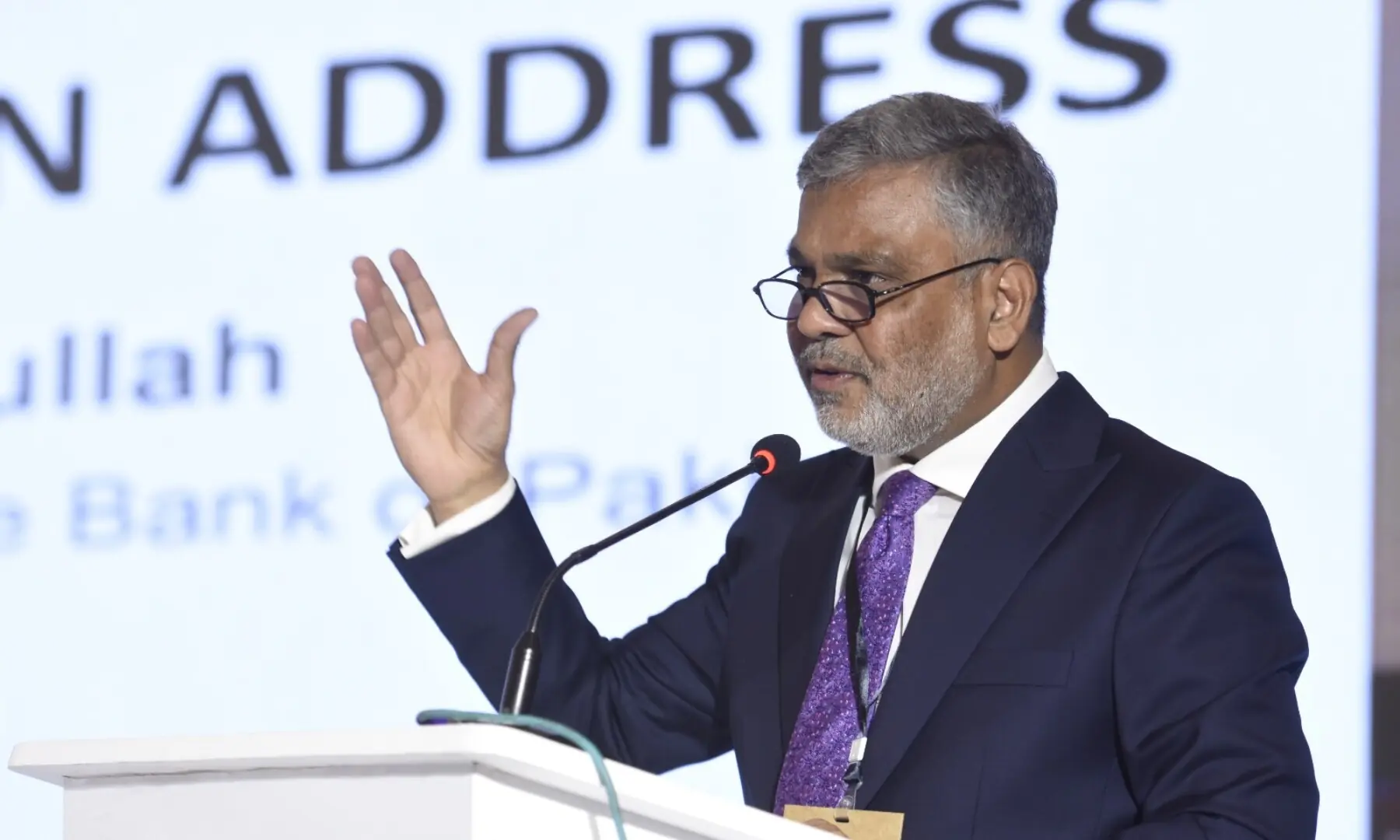
SBP’s Saleemullah highlighted that heatwaves in Pakistan were intensifying, with temperatures above 50°C no longer being a rare event.
He noted that while the losses from the 2025 floods remained “relatively contained”, they displaced millions and caused great disturbance and losses.
He noted that Pakistan’s aim to reduce its greenhouse gas emissions by 50pc was a “very ambitious plan” that requires financing to the tune of more than $550m.
11:22am — Third session begins
The next session, titled “Mobilising Climate Finance for Pakistan” has begun.
Saleemullah, State Bank of Pakistan’s deputy governor, is addressing as the session chair.
11:15am — NDMA official stresses need for district-level action
NDMA official Idrees Mahsud, asked about synergy within the authority and other institutions, pointed out that the PDMAs were now working actively.
“Personally, I would like to see a dedicated department assisting the deputy commissioner or the district disaster management authority championing DRR and adaptation measures at the district level,” he added.
11:11am — ‘NDMA working on initiatives to make better mitigation decisions’
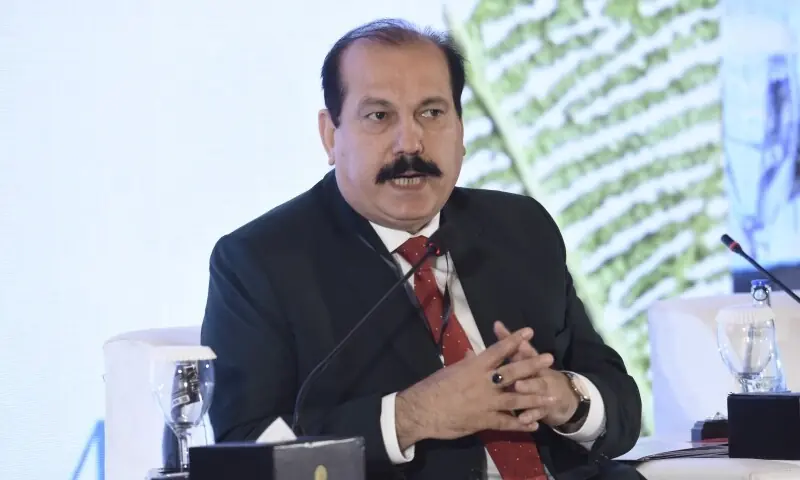
Idrees Mahsud highlighted that the NDMA has been working since 2007 on different initiatives, including multi-hazard vulnerability risk assessments, to better make decisions to mitigate the impact of those hazards.
He stressed that NDMA’s “prime importance” was building resilient infrastructure and community, along with other interventions.
11:05am — Pakistan doesn’t see adaptation, DRR as ‘very different’
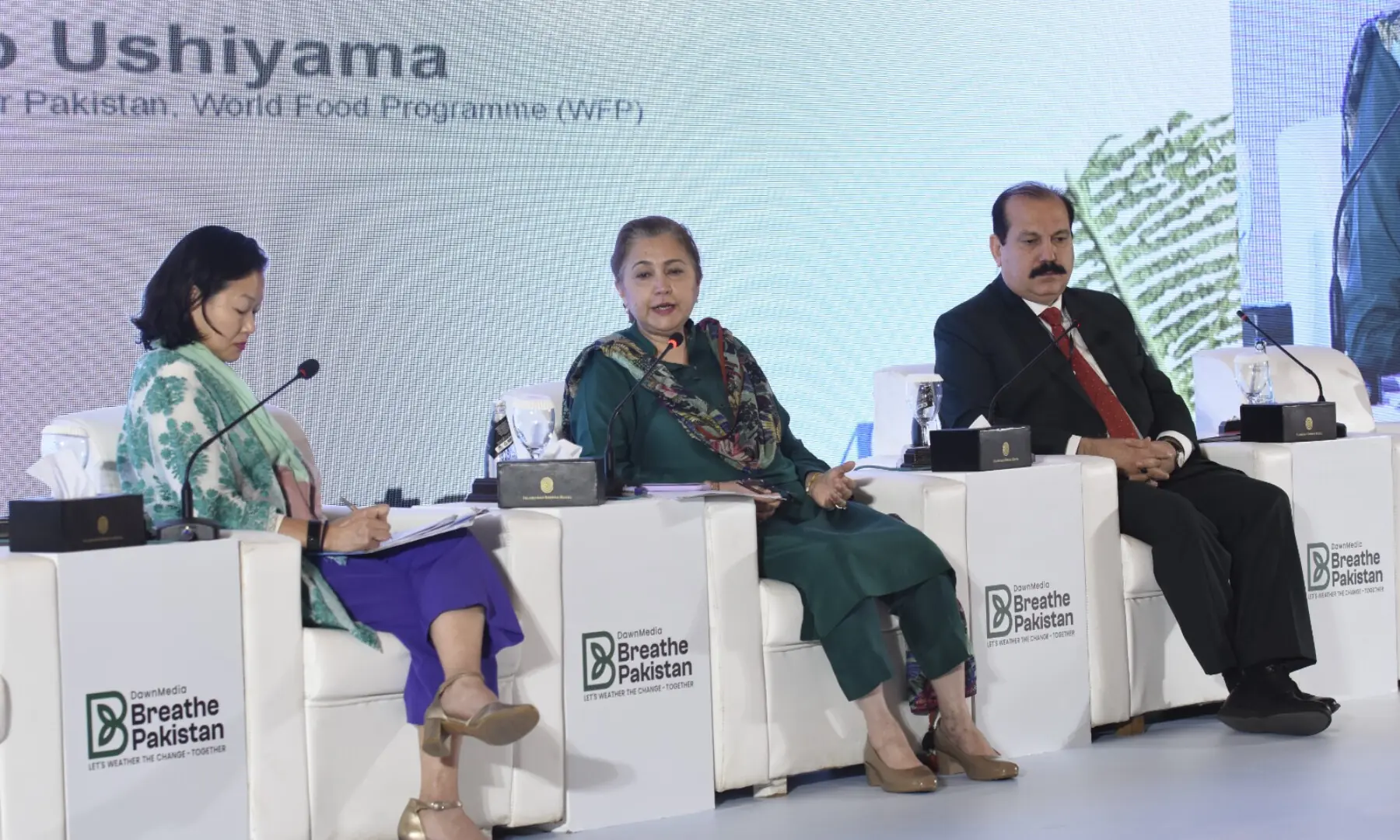
Idrees Mahsud, member of the National Disaster Management Authority’s Disaster Risk Reduction unit, said Pakistan did not see “climate change adaptation and disaster-risk reduction as very much different”.
He said climate change adaptation “is actually disaster-risk reduction, mostly against hydrometeorological” hazards, adding that DRR, on the other hand, could be broader.
11:00am — Govt ‘very actively engaged’ with all provinces: official
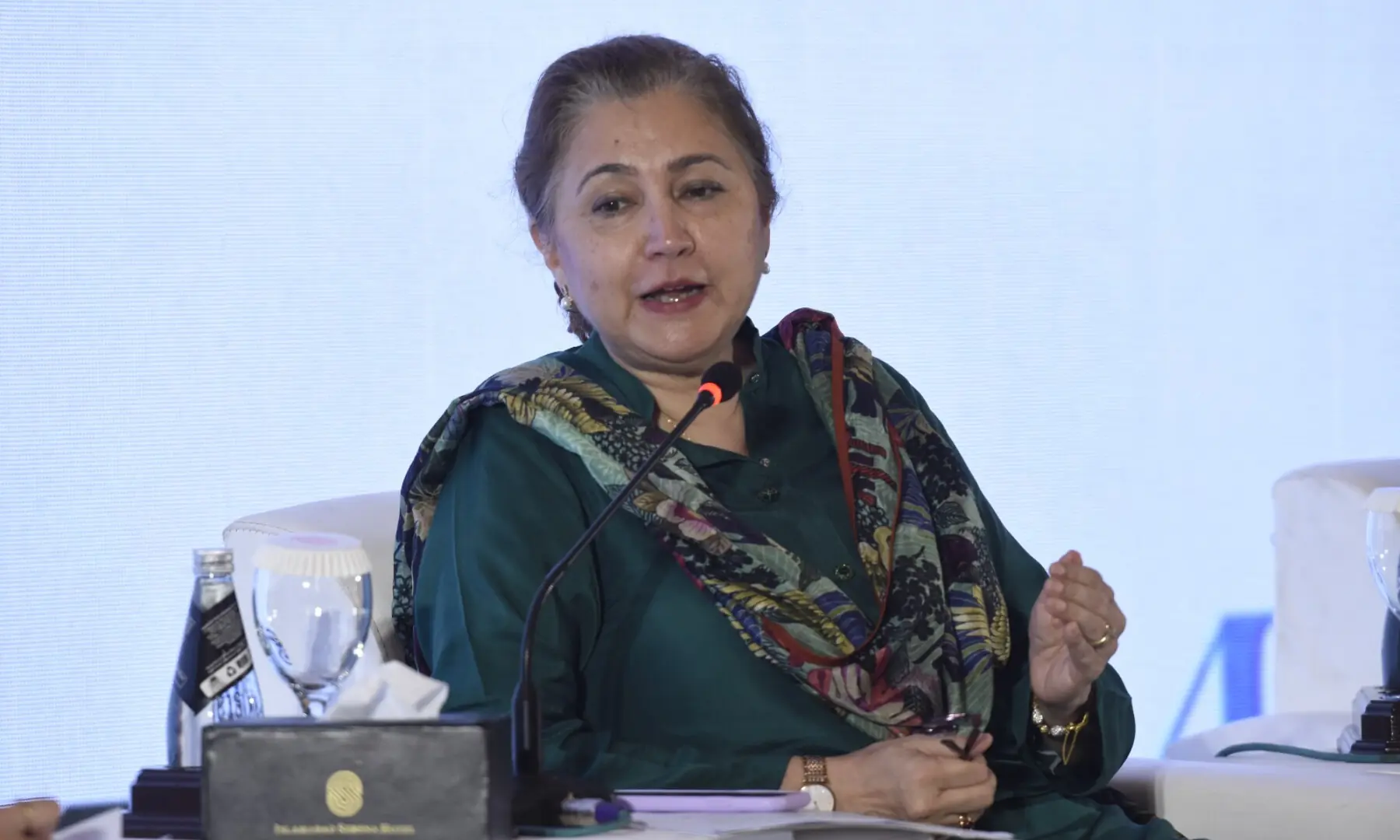
Speaking during the session, Aisha Humera Chaudhry, secretary of the climate change ministry, said climate challenges have “forced us to choose between” disaster-risk reduction and adaptation.
She stated that adaptation has more than 170 actions, adding that the government was “very actively engaged” with all the provinces.
Chaudhry said district adaptation plans were the “main building blocks”, noting they included hazard mapping, which was important for disaster-risk reduction.
The official affirmed that Prime Minister Shehbaz Sharif was “regularly taking stock” of the steps, commending the level of seriousness of the leadership.
“Adaptation is an area where Pakistan is very seriously working,” she asserted.
10:52am — Climate change leading to ‘long-term developmental challenges’
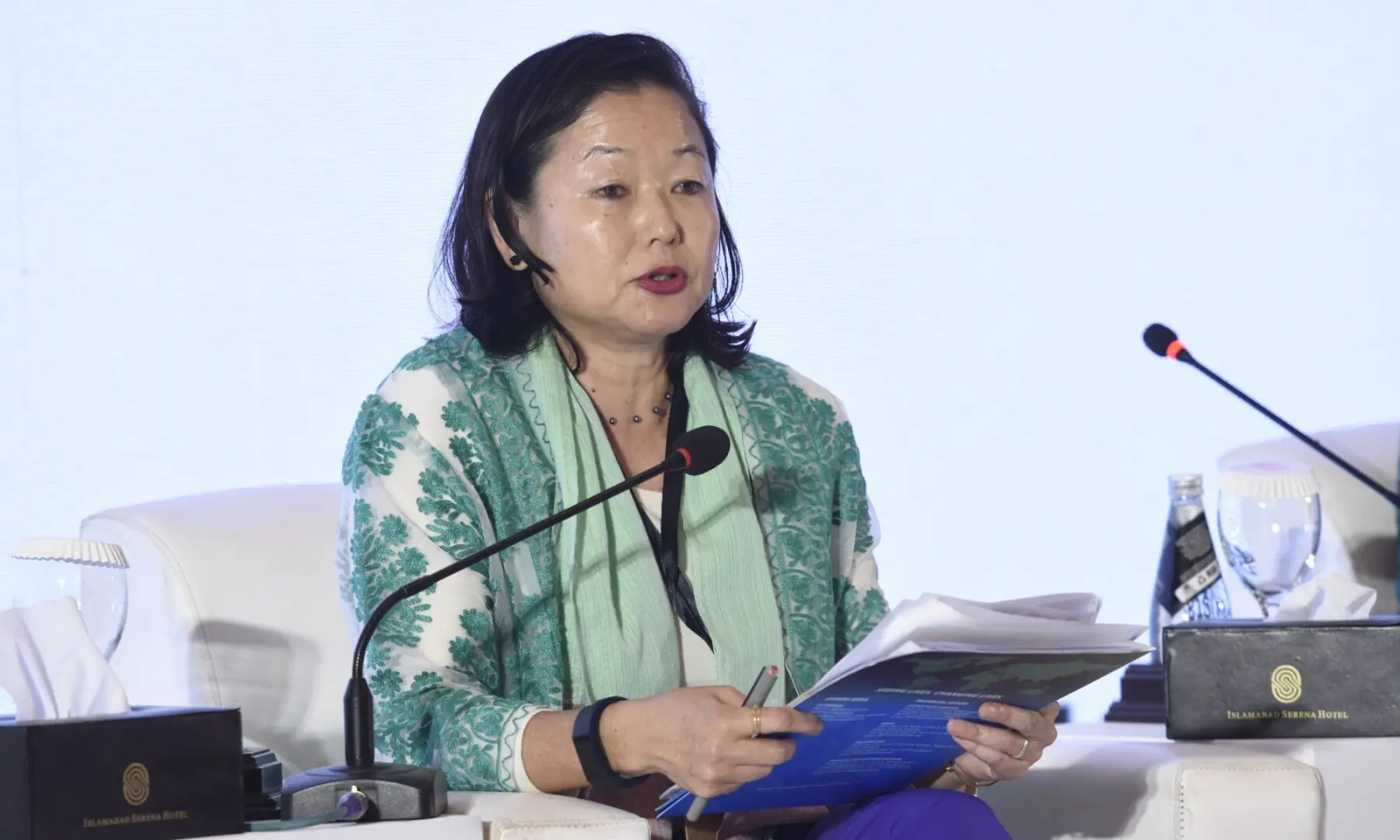
Coco Ushiyama, country representative for the WFP in Pakistan, noted that climate change was transforming disasters from emergencies to long-term developmental challenges.
“Adaptation and disaster-risk reduction need to come together, not just in theory but in practice,” she stressed, adding that much of the climate-related finance was “reactive”, mobilised after disaster struck.
Ushiyama also underscored the importance of governance and strengthened inter-ministerial coordination.
10:47am — Second session begins
Today’s second session, titled “Synergies Between Adaptation and Disaster Risk Reduction”, has begun.
10:38am — Youth can find the solution, says climate change minister
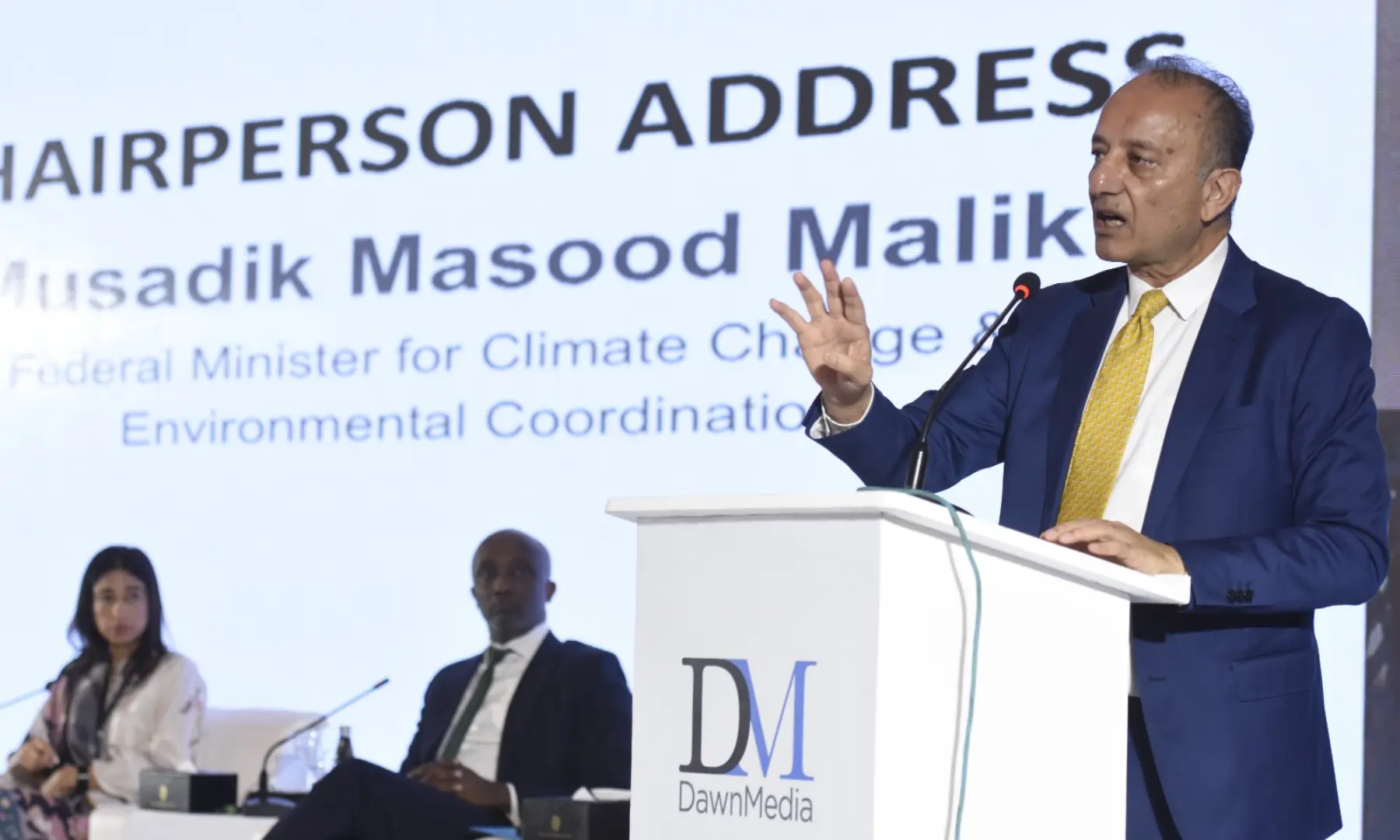
Speaking further, Musadik Malik noted that about two-thirds of Pakistan’s population comprised the youth.
He lauded the good education provided by several universities across Pakistan.
“It is their air. They are breathing; they will find the solution,” he said, contending that the youth could find innovative solutions to climate change.
“And what if they fail?” he added. The minister also floated the idea of a “green university” for conducting research in collaboration with Italian experts.
10:25am — Musadik Malik highlights impact of global emissions
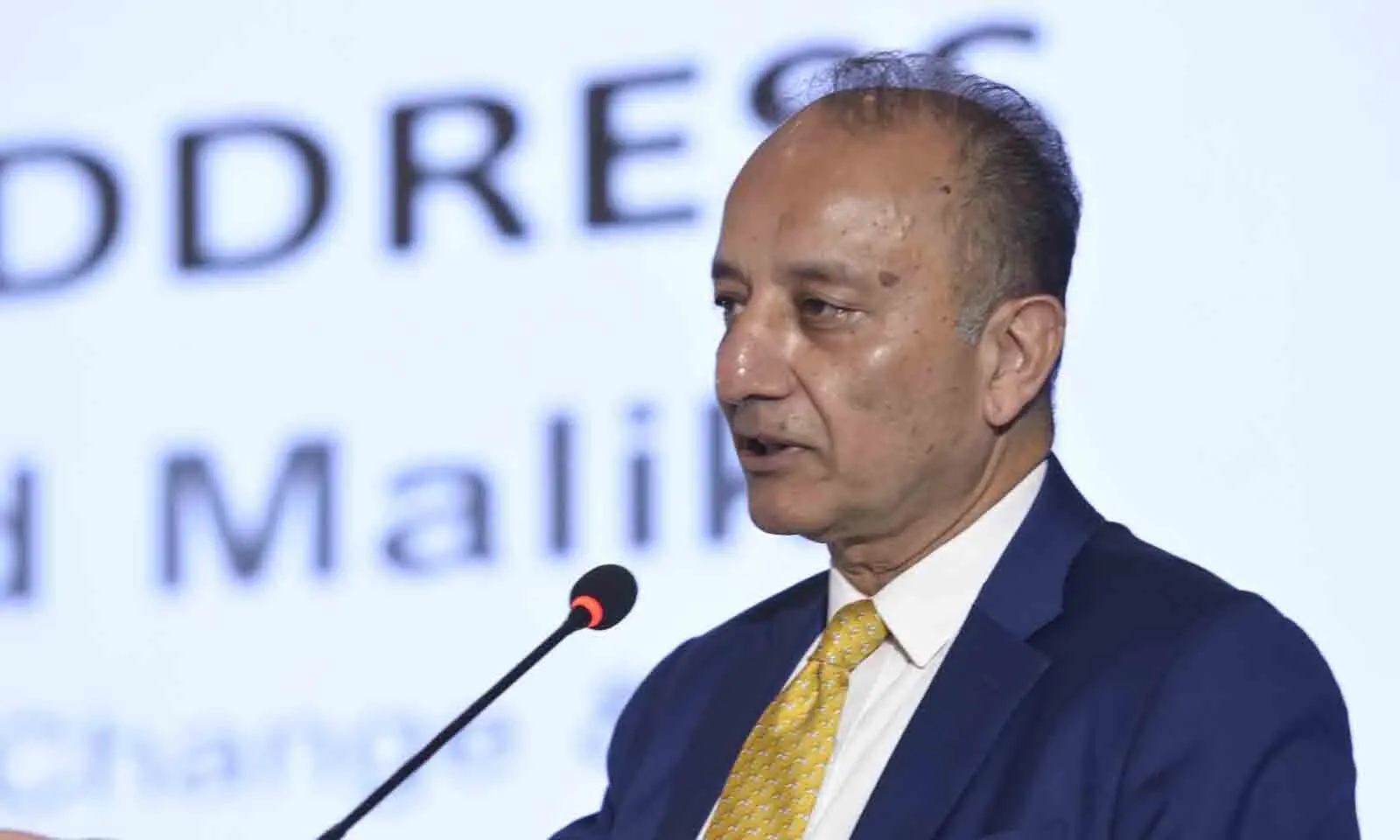
Speaking on the impact of air pollution on life expectancy, Climate Change Minister Musadik Malik highlighted that Pakistan did not even contribute 1pc to global carbon dioxide emissions.
He further pointed out that 10 countries produced about 78pc of the global emissions, quipping that those facing the impact of climate change in Gilgit-Baltistan were not the ones responsible for it.
“Is this about rights or justice or political will, and even our political will, not just international?” he wondered.
10:17am — Pakistan also a ‘test case for solutions’: UN official
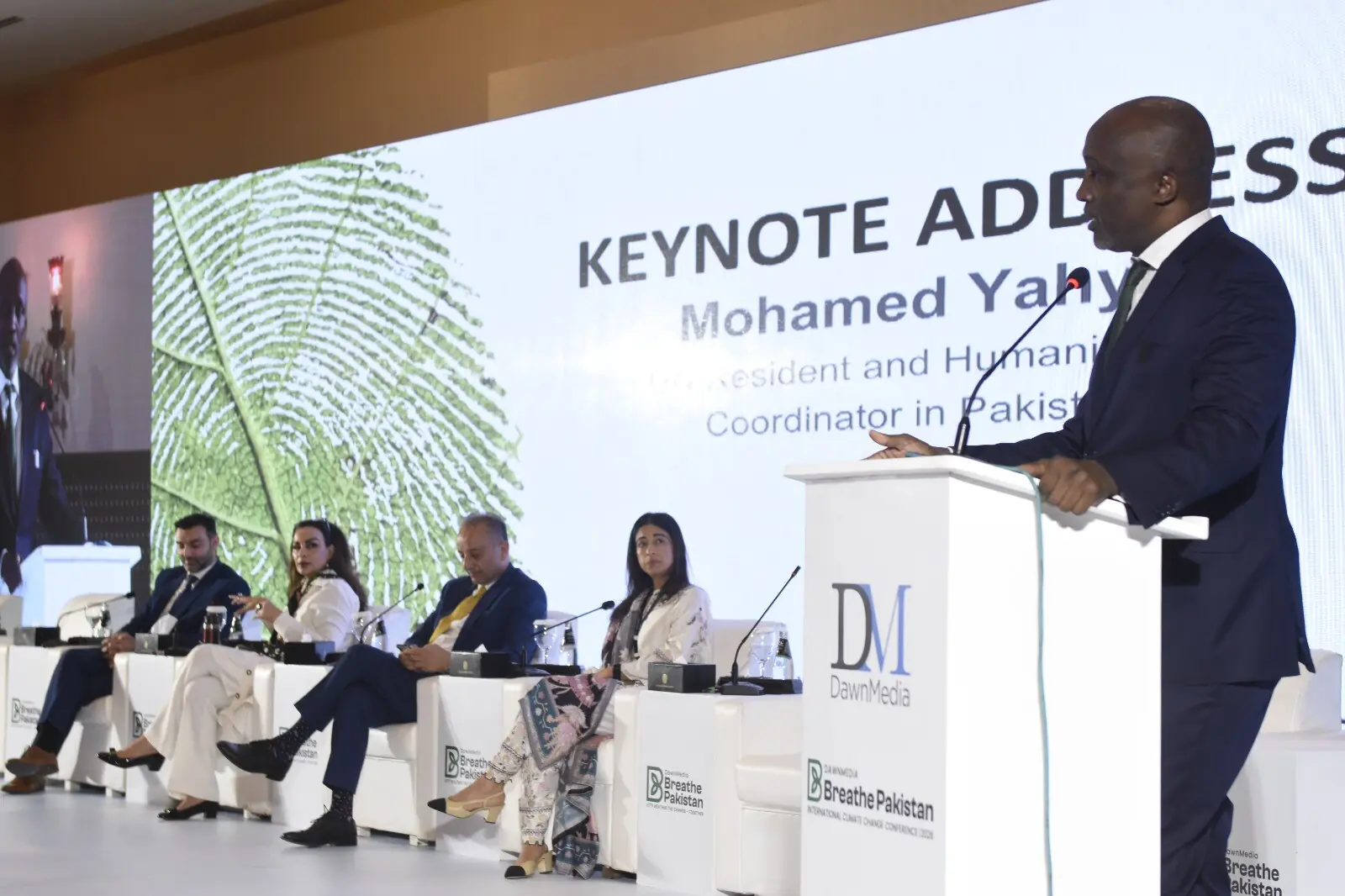
Mohamed Yahya, the UN resident and humanitarian coordinator in Pakistan, has said that the cost to build resilience is growing and financing is “nowhere to be seen”.
He said that in the global debate, there was a tendency to frame countries like Pakistan as “victims of climate change”. He said that while it was true, Pakistan was also a “test case for solutions”.
“If progress is to be accelerated, especially in a country like Pakistan, it will send a powerful signal to the world,” he said.
10:14am — UN official says execution is major challenge to tackling climate challenge
Mohamed Yahya, the UN resident and humanitarian coordinator in Pakistan, in his keynote address, said that Pakistan has witnessed constant floods that cost billions of dollars. He said that the losses every year were probably equal to the IMF programme. He also pointed to the high temperature in Karachi on Monday.
“The constraints and the challenges overall is one of execution … we are seeing very little implementation,” he said.
10:05am — World Bank official recognises Pakistan’s efforts to tackle climate change
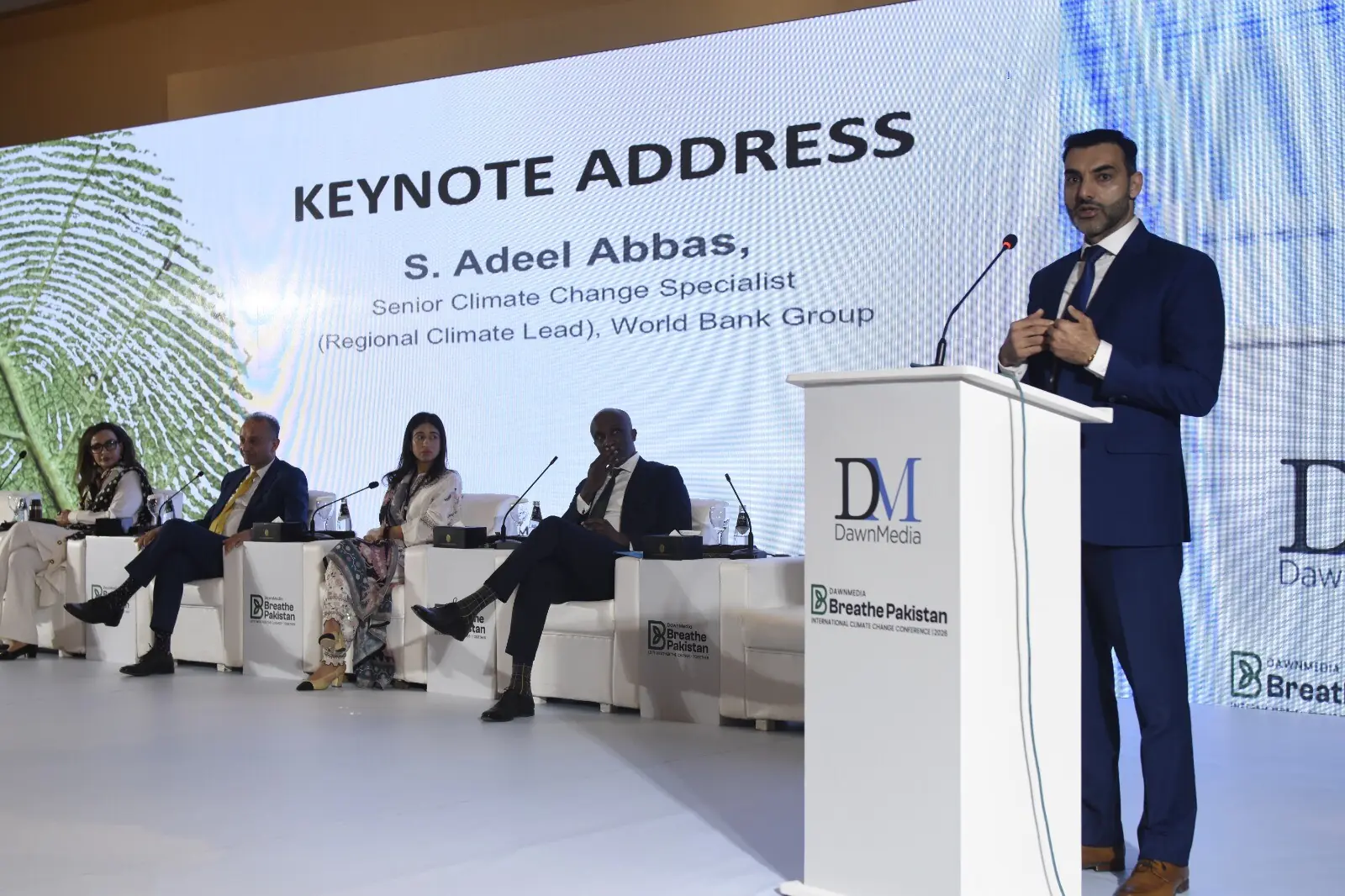
S. Adeel Abbas, the regional climate lead at the World Bank Group, has acknowledged the government’s commitment and policy toward tackling climate change.
“I work on 24 countries in the region on climate change. I think Pakistan is among one of those countries that have set the agenda right,” he said, calling for moving toward action.
He said that the World Bank was supporting various climate projects in Pakistan.
9:56am — Sherry Rehman asks why the cost of conflict is not being counted
“Why is the cost of conflict not being counted? That carbon footprint is missing,” PPP Senator Sherry Rehman said. She said that geopolitics was “devouring the future”.
9:53am — PPP Senator Sherry Rehman says conflicts are costing the environment
PPP Senator Sherry Rehman said that “conflicts are costing the environment much more than we know, compute or understand”. She said that there were more than 60 active conflicts in the world.
She also said that data on this was missing. She also said that there was very little discussion on the impact of these wars on the environment.
9:50am — PPP Senator Sherry Rehman highlights gap between action and ambition
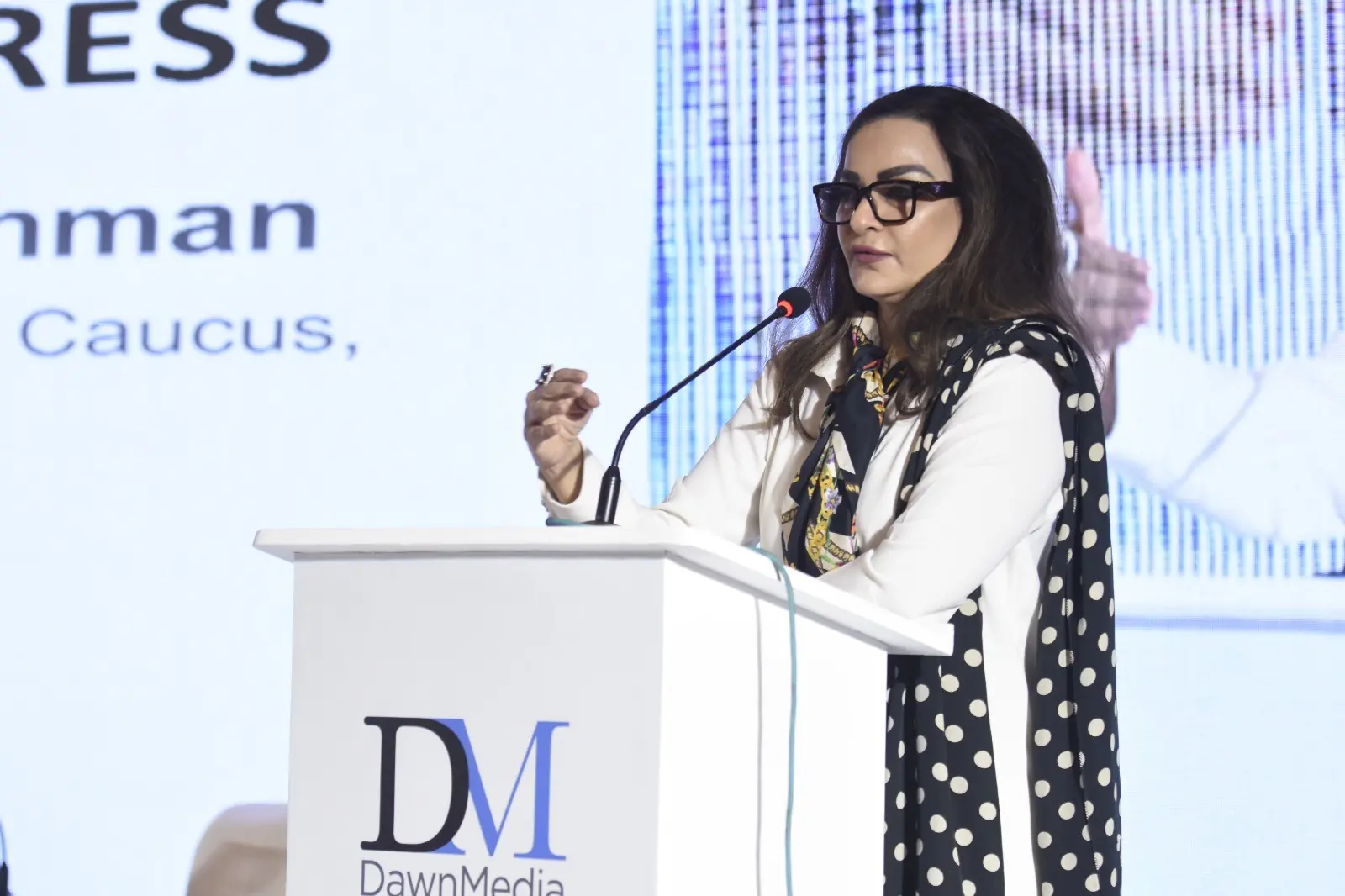
PPP Senator Sherry Rehman, in her keynote address, said, “All state climate action … there is a splintered, fragmented movement”.
“While the global crisis is staggering, what is equally devastating is the state of the global movement itself. It is defunded and derided,” she said.
9:47am — Dawn CEO calls for shift in priorities at home
Dawn CEO Nazafreen Saigol Lakhani has called for shifting priorities at home.
“Pakistan must place far greater emphasis on adaptation,” she said, adding that this was not enough.
“At the global level, climate finance must be rebalanced to reflect the reality on the ground, not just global ambition. Adaptation needs to sit alongside mitigation, not behind it,” she said.
“At the same time, we must be disciplined in how we manage the energy transition. We need to scale renewables without constraining growth, invest in modernising our grid, and ensure that transition financing supports development rather than creating unsustainable debt burdens,” she said.
9:44am — Dawn CEO says urgency for Pakistan is immediate
Dawn CEO Nazafreen Saigol Lakhani has said that no single actor can address the challenge of climate change alone.
“Governments provide policy direction and frameworks. The private sector drives investment, innovation, and execution. Communities bring lived experience and accountability. Media plays a critical role in informing the public, shaping discourse, and holding all stakeholders accountable. Real progress depends on aligning these roles into a coherent whole,” she said.
“For Pakistan, this urgency is immediate, and it sits alongside deep economic and development pressures that are already shaping national priorities. Decisions made today on energy, infrastructure, agriculture, and urbanisation will define not just our climate resilience, but the direction of our economic future,” she said.
9:42am — Dawn CEO says climate change threat to Pakistan’s economic stability
“Pakistan is among the most climate-vulnerable countries in the world, facing increasingly severe floods, heatwaves, water stress, and dangerously poor air quality. These are no longer abstract risks or rare phenomena; they are recurring shocks,” Dawn CEO Nazafreen Saigol Lakhani said.
“Behind every statistic showing up on our screens are real lives. Farmers are losing entire harvests, families are forced to leave their homes, children are growing up in hazardous air, and communities are rebuilding after each disaster only to face the next one,” she said.
She said that climate change was not just an environmental crisis.
“It is a threat to Pakistan’s economic stability, public health, and the country’s development trajectory. And the burden is not shared equally,” she said.
9:40am — Dawn CEO delivers opening remarks
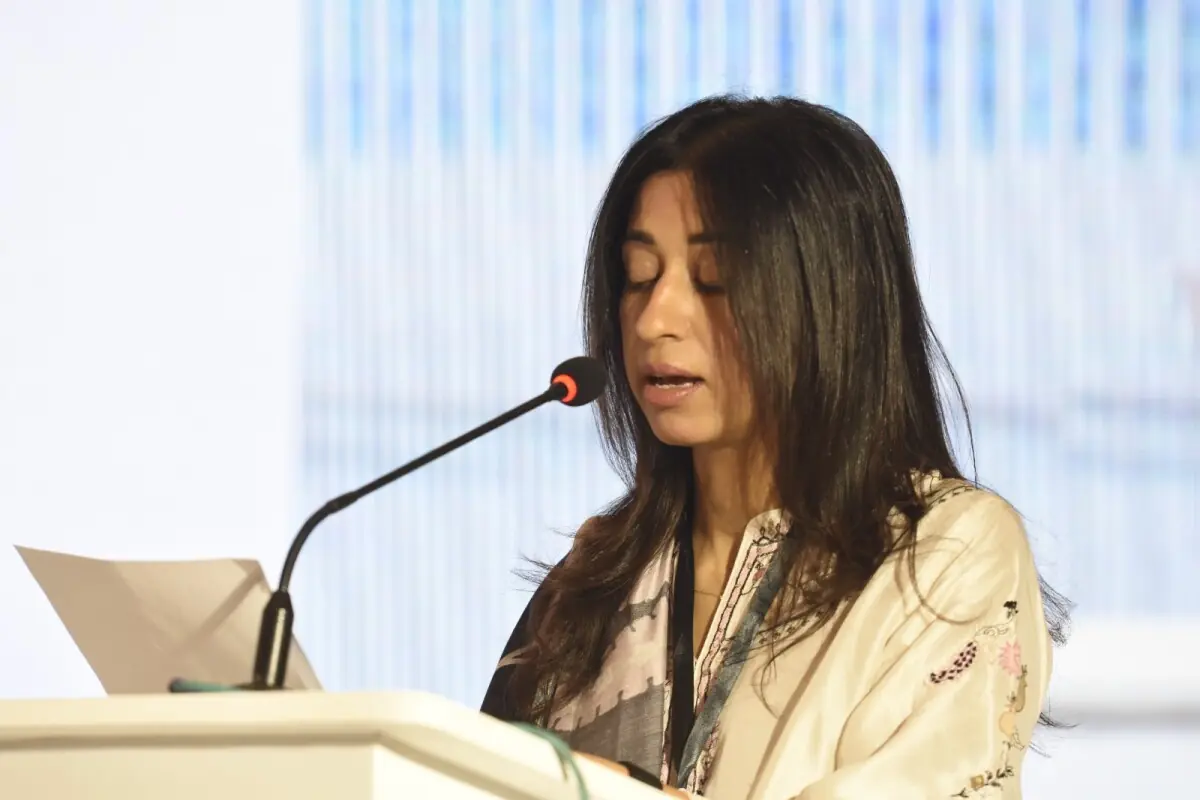
Dawn CEO Nazafreen Saigol Lakhani addressed the second edition of the Breathe Pakistan International Climate Change Conference. In her remarks, she said that the platform had grown into “an important space for dialogue, collaboration and action on one of the defining challenges of our time”.
“When we first convened this platform in 2025, we did so with a clear belief that climate change is no longer a distant threat. It is not a conversation for tomorrow. It is a lived reality for Pakistan, for South Asia, and for millions across the globe. Today, as we gather again, that reality has only intensified,” she said.
9:34am — 2-day conference begins
The two-day conference has officially begun. It is being held at the Sheesh Mahal Hall of Serena Hotel, Islamabad. The conference began with the national anthem and the recitation of the Holy Quran.
Header image: Mohamed Yahya, the UN resident and humanitarian coordinator in Pakistan, addresses the Breathe Pakistan conference in Islamabad on May 6, 2026. — White Star/ Tanveer Shahzad