

'Where Silence Falls and Survival Speaks': The last guardian of Gabral Valley
High in the remote Hindu Kush, along the mountainous edge between Pakistan and Afghanistan, lies Gabral Valley. It is a place cut off by geography and season alike. For most of the year, life moves with the rhythm of the land rather than any fixed measure of time. There are no strict calendars here. Instead, people read the signs of nature, the first fall of snow on the peaks, the changing of pasture, and the cold wind that signals what is to come.
Each year as October draws to a close, families begin to prepare for migration. It is a familiar and difficult routine. Homes are emptied, livestock is gathered, and belongings are packed with care. Entire communities move together towards lower and safer ground, often travelling to places such as Mardan. They leave behind their houses knowing they will be buried soon under heavy snow. By winter, Gabral Valley becomes silent and cut off, a frozen landscape where movement is almost impossible.
Yet not everyone leaves.
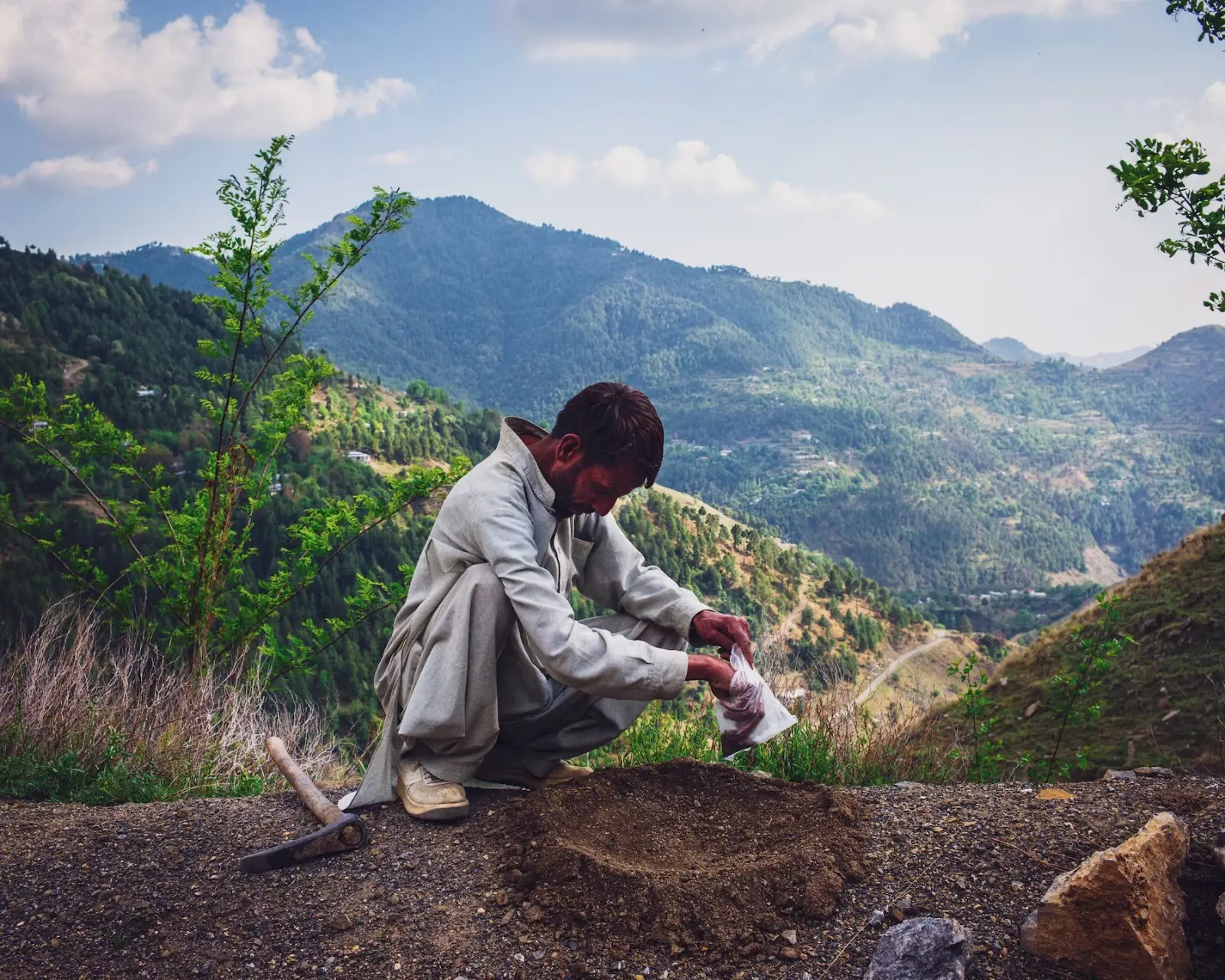
Among those who remain is Dua Khan, an elder and messenger whose presence has become central to the valley’s winter life. When the rest of the community descends, he stays behind. His decision is not driven by isolation alone but by duty. He watches over abandoned homes, protects what is left behind, and carries messages between scattered valleys when needed.
Life for Dua Khan is shaped by distance and effort. There is no mobile signal in these mountains, no quick means of contact. Every message must be carried on horseback across narrow paths, through deep snow and unstable ground. In severe weather, journeys can take days. At times, they stretch into a week. The risk is constant, but so is the responsibility.
Before winter closes the valley, he prepares carefully. Firewood is gathered and stored. Food supplies are secured. Herbs known for their medicinal value are collected, knowledge passed down through generations rather than written records. He also ensures the small watermill continues to function as long as possible, so that flour can be produced for the months ahead.
His understanding of the environment comes from experience rather than instruction. He reads the sky with familiarity. The direction of wind, the formation of clouds, and sudden shifts in temperature all carry meaning. These signs help him anticipate storms and floods long before they arrive. It is knowledge earned through years of living in close contact with the land.
Gabral Valley does not only face winter. Summer brings its own challenges. As the snow retreats, the land opens into grazing fields and life returns. Families rebuild, repair, and resettle. But the season also brings monsoon rains. These can be just as destructive as winter, turning streams into floods that sweep away homes, paths, and fields without warning. Survival here is never secure. It is a continuous effort shaped by uncertainty.
The valley is sustained by a network of roles that have existed for generations. Elders preserve memory and guidance. Messengers connect distant settlements. Shepherds move with the land and its seasons. Fishermen depend on cold rivers for their livelihood. Each role is tied closely to the landscape, forming a system of life that depends on balance and endurance.
At the centre of this world is Dua Khan. His solitary presence during the long winter months has come to symbolise quiet resilience. He remains when others leave, not out of stubbornness alone but out of commitment to a way of life that continues to exist at the edge of survival. His journey is not marked by spectacle but by repetition, preparation, and duty carried out in silence.
The story of Gabral Valley is ultimately a story of endurance. It is about people who move with the seasons, who live within limits set by nature, and who adapt without abandoning their place. In an age where distance is often measured in seconds and communication is instant, this valley still relies on footsteps, horses, and memory.
As winter settles each year, the valley becomes quiet once more. Snow covers the homes, paths disappear, and the world narrows to survival. In that silence, Dua Khan continues his watch, holding together a fragile link between isolation and continuity, between departure and return.
This content is produced in paid partnership with the Khyber Pakhtunkhwa (KP) government - a partner of DawnMedia’s Breathe Pakistan initiative.