‘Principles before commercial interests’: Cricketers, politicians react to Pakistan boycotting India match in T20 World Cup
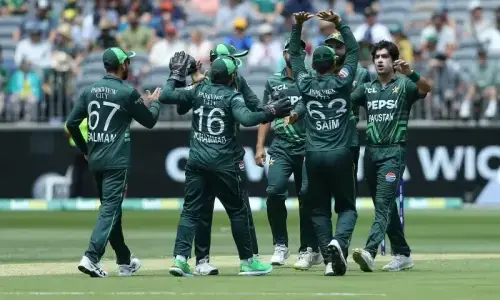
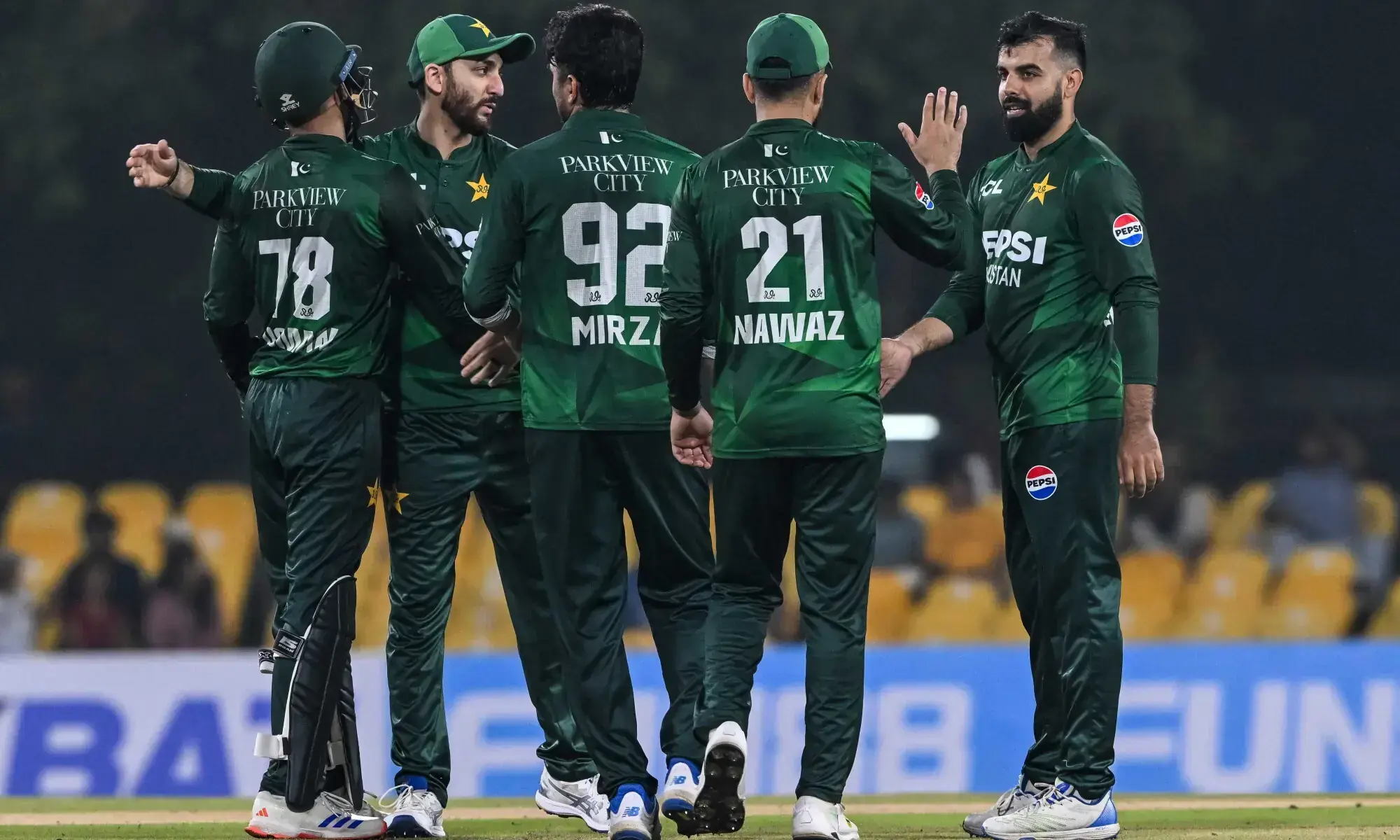
The government on Sunday gave the cricket team the nod to participate in the upcoming T20 World Cup 2026, but said the Green Shirts would not play their match with arch-rivals India, scheduled to be held on Feb 15 in Colombo.
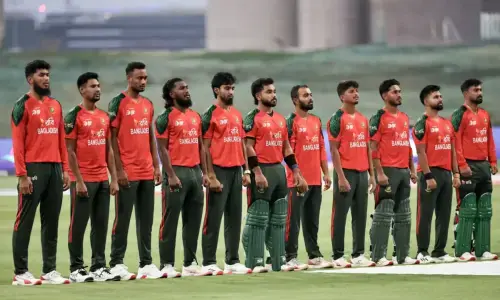
The development came after uncertainty over the country’s participation in the tournament following Bangladesh’s withdrawal amid tensions with India, which is one of the co-hosts of the tournament.
A government source told Dawn that Pakistan had refused to play against India to express solidarity with Bangladesh. According to the government source, the primary reason for boycotting the match with India was the ICC’s “biased decision” towards Bangladesh.
In response to the development, even before the official communication from the Pakistan Cricket Board (PCB), the International Cricket Council (ICC), in a statement, mentioned the position of “selective participation is difficult to reconcile with the fundamental premise of a global sporting event where all qualified teams are expected to compete on equal terms per the event schedule”.
Here is what athletes, politicians, and journalists had to say about the development:
Former Pakistan all-rounder Shahid Afridi, in a post on X, termed the development “regrettable” but voiced support for the government’s decision nonetheless.
“I’ve always believed cricket can open doors when politics closes them. It’s regrettable that Pakistan won’t play India at the #T20WorldCup, but I stand behind my government’s decision,” Afridi said.
“This is the moment for ICC to lead and prove through decisions, not statements, that it is impartial, independent and fair to every member,” he added.
Former cricketer Muhammad Hafeez also took to X to express disappointment at the development.
He stated that the current tensions began with “no handshake by the Indian [side]” — in a reference to the September controversy where the Indian team refused to shake hands with their rivals at the toss and after an Asia Cup match.
“Not [an] ideal situation for fans of cricket. Worried,” Hafeez added.
Former Pakistan batsman Muhammad Yousuf was of the opinion that the government had taken a “tough but necessary stand”.
“Principles must come before commercial interests. The ‘selective’ influence in world cricket needs to end for the game to truly be global. We play with pride, but we also stand for equality and justice in sports,” he posted on X.
In another post, Yousuf expressed regret that Pakistan vs India “is one of the greatest sporting events in the world, yet it continues to suffer from political interference that damages the spirit and pride of the game”.
“In such an unfair environment, choosing not to play becomes an act of principle — an eye‑for‑an‑eye response to protect the integrity of the sports,” he asserted.
Former England cricketer Kevin Pietersen was curious to know if Pakistan would also not play against India in the final.
“Not sure if India can meet Pakistan in this World Cup final due to groups and play-offs, but if they can, would Pakistan refuse to play the World Cup final?” he posted on X.
Sports journalist Yahya Hussaini, meanwhile, commented that in international cricket, the PCB “is a reality”.
After the government’s decision, there remains “no legal standing for any action against the board. There are two weeks available to persuade the Pakistan Cricket Board”, he said.
Former senator Mushahid Hussain welcomed the announcement, lauding the PCB for standing in solidarity with Bangladesh.
In a post on X, he said: “Good decision PCB. After blatant double-standards demonstrated by ICC at the cricket world cup when India refused to play in Pakistan, ICC bowed before India unconditionally but when, similarly, Bangladesh sought a change of venue in India, they were denied!”
Author Nadeem Farooq Paracha welcomed the move as well.
“A clever response to toothless ICC and its master, the BCCI (Board of Control for Cricket in India).
“This will put them in a fix. A checkmate move,” Paracha said.
Similarly, former Pakistan captain Rashid Latif said ICC’s “efficiency” in reacting to Pakistan’s decision “seemed more of a panic”.
“First, not welcoming Pakistan’s selective participation and towards the end, requesting PCB to reconsider preserving cricket’s ecosystem,” he said about the ICC’s statement.
Latif also questioned, “Where was ICC when Australia and West Indies forfeited their matches in 1996, England refused to travel to Harare and New Zealand to Nairobi in 2003?”
He said that Zimbabwe did not participate in the T20 World in 2009 and were still compensated with the participation fee.
“ICC must realise they have been checkmated. Interesting times ahead?” he asked.
On the ICC’s reaction to Pakistan’s decision, former human rights minister Shireen Mazari said: “The ICC is fast deteriorating into the Indian Cricket Council, promoting Indian bullying — time for some restructuring.”
Veteran Indian commentator Harsha Bhogle said if there was an “inevitable reduction in the ICC’s revenue caused by Pakistan’s forfeit and future uncertainty, the least affected countries, given other strong sources of revenue, will be India, Australia and England”.
“The most affected will be those completely reliant on revenues from the ICC; not just the smaller and associate nations but also the West Indies, Sri Lanka, Bangladesh and …… Pakistan!”