

Resecurity to equip Pakistan with Security Operations Centres (SOCs) and threat intelligence
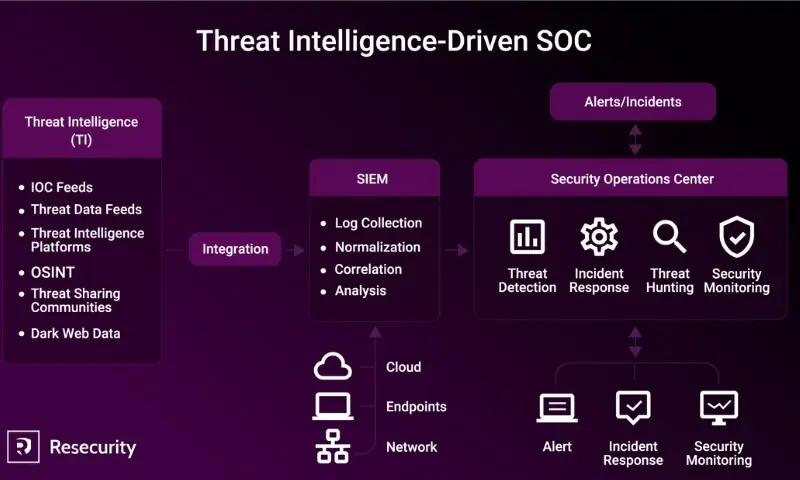
Resecurity, a US-based cybersecurity company protecting leading Fortune 100 enterprises, has announced a new initiative to support the development of advanced Security Operations Centres (SOCs) and the implementation of actionable Cyber Threat Intelligence (CTI) in Pakistan. Delivered through its local office in Islamabad, the programme is designed to accelerate incident response, enhance threat detection and assist both government institutions and private enterprises in establishing and managing effective SOC environments capable of addressing modern cyber threats.
In line with the latest mandatory data protection guidelines issued this month by the National Cyber Emergency Services Response Team (PKCERT), threat intelligence sharing has been identified as a key long-term measure. The PKCERT advisory further highlights the need to facilitate Indicators of Compromise (IOC) sharing following incident analysis, and to establish ongoing processes for exchanging threat landscape trends between critical stakeholders.
This advisory applies to all public and private sector entities that collect, process, store or transmit Personally Identifiable Information (PII) of Pakistani citizens, including financial services, telecommunications and internet providers, commerce and logistics, government agencies, healthcare institutions, educational entities as well as third-party and outsourced service providers. These obligations extend equally across on-premises, cloud and hybrid environments, and remain binding regardless of the scale, nature or duration of personal data processing.
Extending presence in Pakistan
This initiative marks a significant expansion of Resecurity’s footprint in Pakistan. Earlier this year, the company hosted the first Cyber Threat Intelligence Conference in Islamabad (threatintelligence.pk), which brought together senior government officials, industry leaders and cybersecurity experts to explore strategies for protecting national and corporate digital assets. The event emphasised the urgent need to strengthen detection and response capabilities across critical sectors and underlined the importance of collaboration between the public and private spheres. Resecurity is now translating these discussions into tangible outcomes by enabling the design and deployment of modern SOCs across the country.
Strengthening cyber defence capabilities
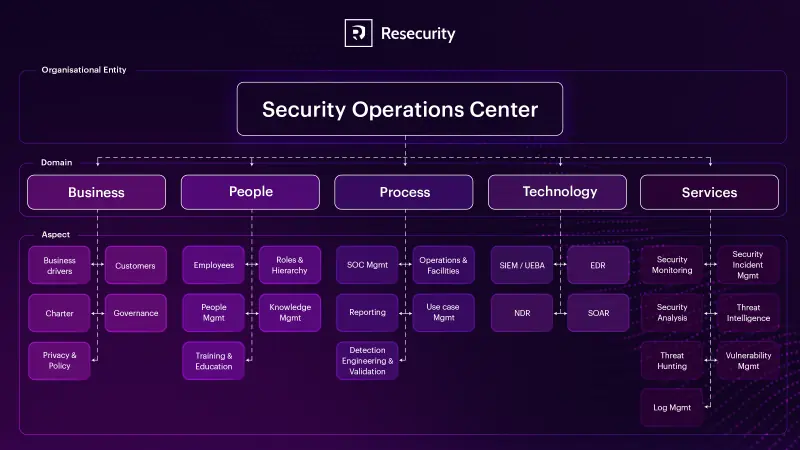
SOCs serve as operational hubs for continuous monitoring, rapid detection and coordinated incident response, playing a central role in defending organisations against cyberattacks. With cybercriminal groups, state-sponsored actors and hacktivist collectives increasingly targeting South Asia, the requirement for resilient security operations has never been greater. Resecurity will support Pakistan in developing SOCs that integrate advanced monitoring technologies with tailored operational processes, ensuring organisations are prepared to counter both current and emerging threats. This includes architecture planning, technology integration and workflow optimisation aligned with international frameworks such as NIST and MITRE ATT&CK®.
Training and knowledge transfer
Resecurity acknowledges that technology alone is insufficient without skilled professionals who can maximise its potential. To address this, the initiative will include specialised training and certification programmes for SOC teams, focusing on practical skill development and applied scenarios. Analysts will gain expertise in real-time threat detection, incident triage, malware analysis and digital forensics, while managers will be trained to oversee SOC operations, enforce policies and coordinate response across departments. Through structured knowledge transfer, Resecurity aims to build local capacity and empower Pakistani cybersecurity teams to operate independently while continually advancing their expertise.
Empowering SOCs with actionable threat intelligence
The effectiveness of a SOC depends not only on detection and response but also on its ability to anticipate threats. Resecurity will embed actionable Cyber Threat Intelligence (CTI) into SOC workflows, enabling analysts to track adversarial campaigns, assess vulnerabilities and proactively mitigate risks. This intelligence-led approach will allow Pakistani SOCs to shift from reactive defence to proactive security, where operational decisions are guided by a clear understanding of attacker tactics, techniques and procedures. By integrating CTI directly into daily operations, Resecurity ensures that every SOC analyst has access to the insights required to stay ahead of evolving threats.
“Pakistan is at a pivotal stage in strengthening its cyber defence posture,” said Sharafat Khan, the managing director of Resecurity in Pakistan. “By combining advanced SOC technology with actionable threat intelligence and practical training for local teams, we are not only delivering solutions but also building sustainable capacity. Our objective is to equip Pakistan’s government and business community with the tools and expertise necessary to safeguard critical assets, ensure resilience and support secure growth in the digital economy.”
Resecurity’s initiative forms part of a long-term commitment to Pakistan’s cybersecurity landscape. By delivering advanced SOC solutions, developing local expertise and ensuring continuous access to threat intelligence, the company aims to establish a sustainable foundation for both national and enterprise cyber defence. This holistic strategy combines technology, people and intelligence to create an environment where Pakistan’s public and private sectors can thrive securely in an increasingly digital economy.
This content is an advertisement by Resecurity and is not associated with or necessarily reflective of the views of Dawn.com or its editorial staff.