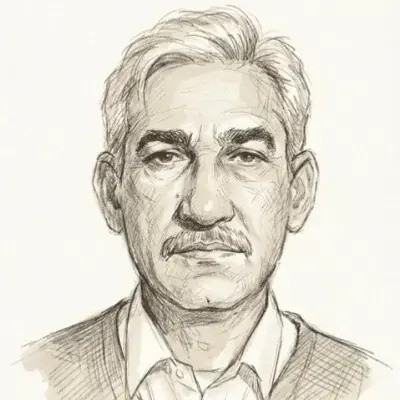
KARACHI, Feb 7: The Asian Development Bank (ADB) has allocated $200-250 million for the restructuring of Pakistan’s energy sector in 2003.
This was stated by Country Director, ADB, Marshuk Ali Shah in a chat with Dawn on Thursday after addressing on the topic Private Sector Investment in Energy Sector: Case of Pakistan, in a seminar on Public Private Partnership (PPP) in Infrastructure. The seminar was organized by the National Institute of Public Administration (NIPA).
However, there has been no major lending by the Bank in the current year as compared to $300 million in the year 2000 for energy sector’s restructuring.
ADB’s total lending to Pakistan in the last 30 years stands at $2.9 billion of which $2.3 billion have been to the power subsector and $0.6 billion to the natural gas and petroleum subsectors, he said adding that the Bank has been a major source of external assistance in the energy sector in Pakistan having provided about one third of the total external resources to the sector.
Three fourths of the assistance to the power subsector worth $1.575 billion has been provided to Wapda and the rest to the KESC, he said.
On entire Pakistan basis, he said, the ADB has targeted a total lending of one billion dollars this year for key seven to eight sectors, which include capital market restructuring, quality primary education, rural development and rural finance projects.
The ADB has, however, initiated a major intervention in 2002 to assist the government in restructuring the power sector under the Energy Sector Restructuring Programme ($300 million). The programme aims at improving sector economic efficiency and consumer satisfaction. He said the reform programme is to restructure the power sector by breaking up the sector’s monolithic vertically integrated power projects, transmission and distribution facilities and introducing market reforms into this sector.
Marshuk said the power sector is to be unbundled — the state owned assets in distribution, generation and transmission to be sold as separate entities to the private sector to minimize the cost of electricity by matching supply and demand under market- based conditions.
Under the programme, he said, the strategy is to include integration of Wapda and KESC into the restructured power sector.
Earlier, addressing the seminar, he said, Pakistan’s energy sector is facing three main issues: governance, institutional weakness and tariff structure and subsidy.
He said weak governance has resulted in inefficient utility operations, power theft, illegal power supply, reduced billing and tariff collections and non-payment of arrears.
ADB director said that institutional organizational weakness had led to politicisation of decisions on investments, electricity tariff determination and appointment of senior management and staff. Over time, lack of financial and commercial skills have become major obstacles to the accountability, quick decision making and commercial orientation to deal with IPPs. He said WAPDA and KESC have lost the confidence of their customers, financiers and the government.
Marshuk said that the tariff structure was not based on a regional and consumer-specific long-run marginal cost but was used as an instrument to achieve political and socio-economic objectives. He said the tariff structure in the natural gas and petroleum subsectors does not reflect the true cost of exploration, production, transmission and distribution.
On privatization, he said, the government and the ADB are now actively involved in completing the privatization of the KESC and Wapda by September this year and December 2003 respectively.
These views of privatization were also shared by former federal secretary Water and Power, Syed Shahid Hussain in his address.
Chief Executive Officer (CEO), Hub Power Company (Hubco), Vince Harris highlighted the points as to what went wrong with the Hubco. He termed the Hubco project as “over ambitious” saying it was better to have 600 mw at $800 million as against 1,292 mw and $1.5 billion. Other things which went wrong were: inexperience of government that led to problems, wishful thinking of investors, listing of single power project, choice of oil against world trend, government’s guarantee it could not meet, no customer/supplier ethos with Wapda, overly complicated financing and project arrogance.
He said the row between Wapda and Hubco has been resolved and it can be proved as a model for future foreign direct investment in Pakistan. “Pakistan now needs market environment and improve its image abroad,” he added.
Managing Director, Pak-Kuwait Investment Company (PKIC), Zaigham Mahmood Rizvi on financing of PPP said that the government needs to facilitate and maintain macroeconomic stability, promote appropriate structural policies and eliminate ad hocism in policy planning and create enabling environment for private sector involvement.
He said financier looks for transparency and commercialism in project planning and execution, role in decision process, independent project management responsive to stake holders and reliable and efficient arbitration.